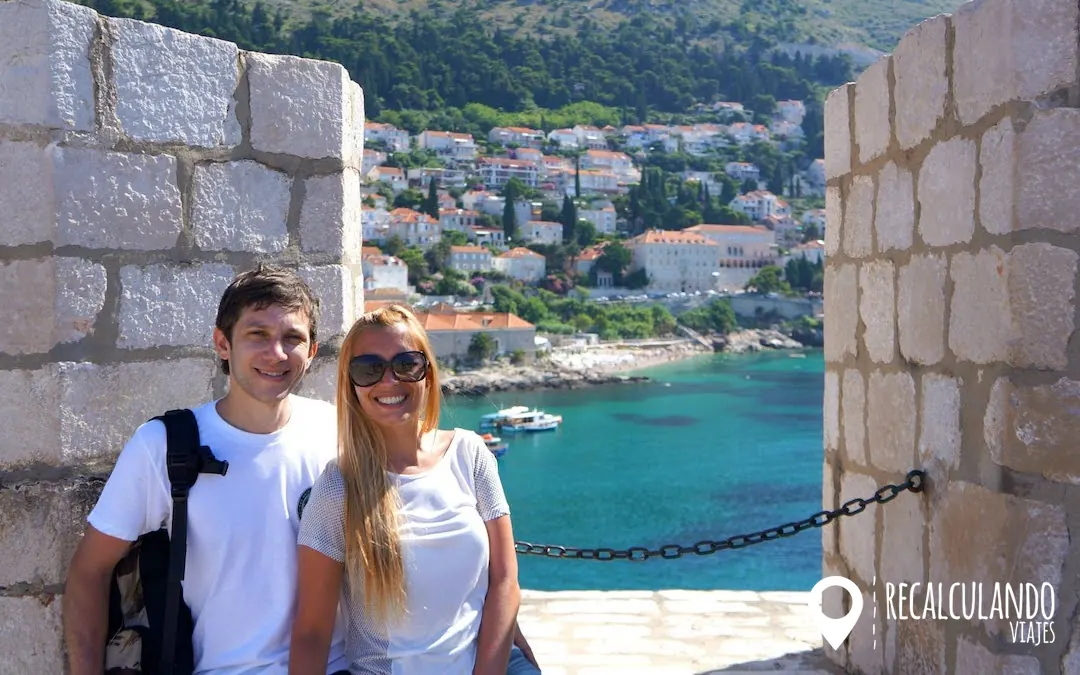
If you are looking for things to do in Dubrovnik, we’ll tell you based on our own experience: we’ve been twice, both times in summer, for three nights each time, with a rental car to explore the surroundings. In this guide, we list 22 must-see spots, including a map, beaches, 2026 updated prices, where to stay, how to get there, and one, two, and three-day itineraries. The walled city fascinated us… but what surprised us most was found down a hundred steps, outside the city walls.
🌍 Travel Insurance: 5% Off with IATI Seguros! 🌟
Take advantage of this offer and travel safe.
Things to do in Dubrovnik: quick facts before you travel
| Category | Key details |
|---|---|
| Best time to visit | May, June, September, and early October (avoid July and August due to heat and crowds). |
| Recommended duration | 2 days for the city; 3 nights if including beaches and nearby excursions. |
| Daily budget | Between 90 and 140 € per person (accommodation, meals, and visits). |
| Official currency | Euro (€). Credit cards widely accepted. |
| Must-do | Walk the Dubrovnik Walls first thing in the morning (8:00 AM). |
| Airport transport | Official shuttle (10 €, 30-40 minute journey). |
| Must-visit spot | Sveti Jakov Beach (100 steps away, but much quieter than Banje). |
| Savings tip | Avoid eating on the Stradun; use pekare (bakeries) and local markets. |
| Game of Thrones | Key locations: Jesuit Stairs, Lovrijenac Fortress, and Minceta Tower. |
| Documentation | Passport or ID required for excursions to Bosnia (Mostar) and Montenegro (Kotor). |
1. The Dubrovnik Walls, the walk that justifies the trip
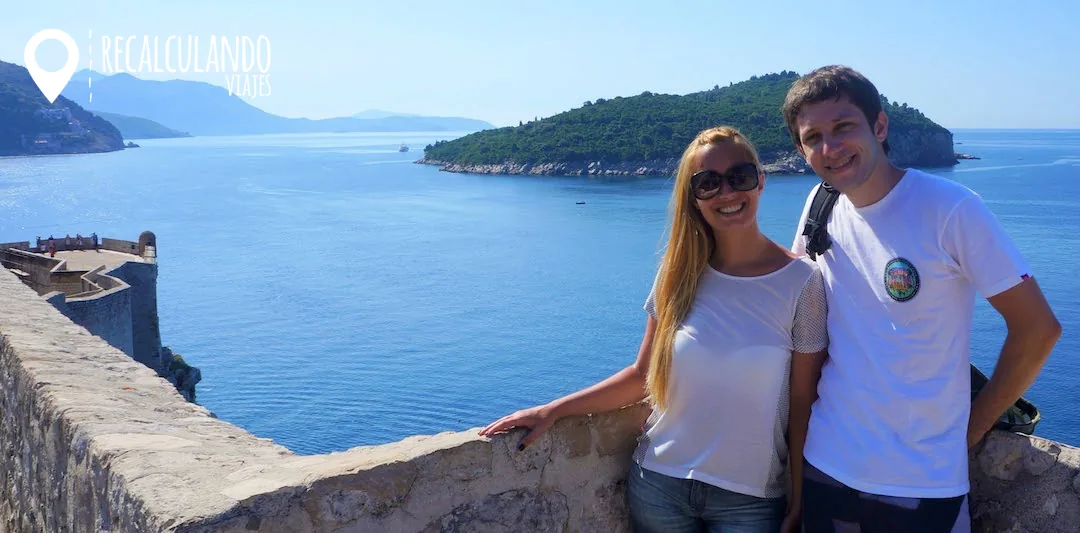
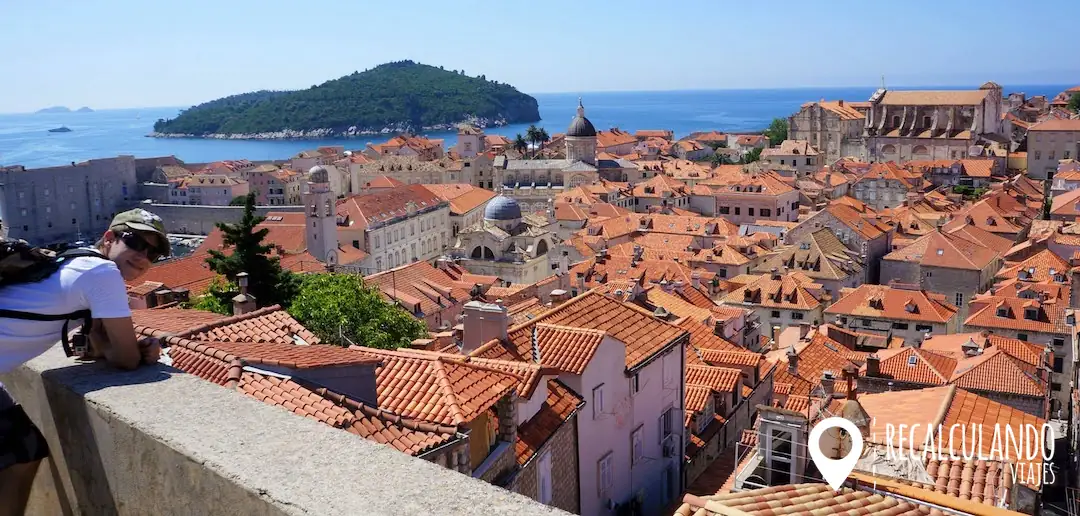
If you could only choose one thing to do in Dubrovnik, this would be it. The walking circuit is about 2 km long, encircling the entire old town, and takes about an hour and a half to two hours, depending on how often you stop for photos (we stopped a lot, obviously).
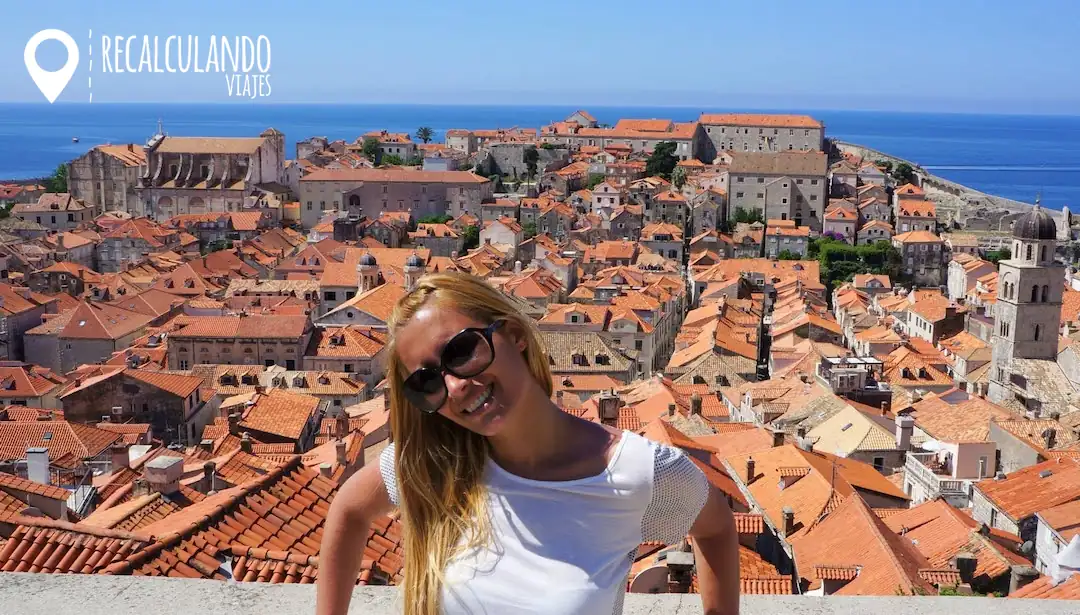
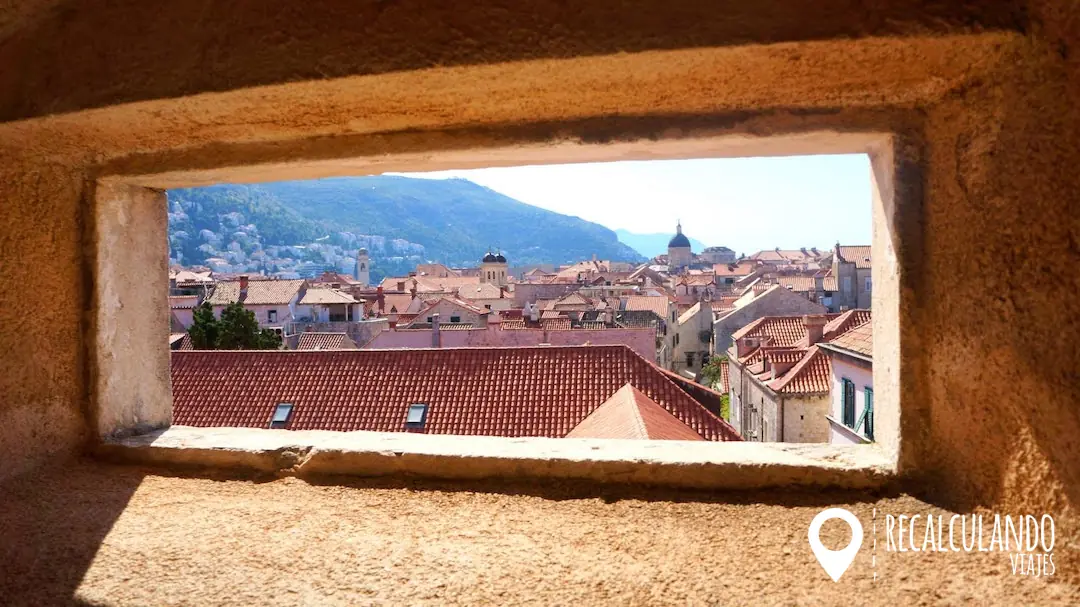
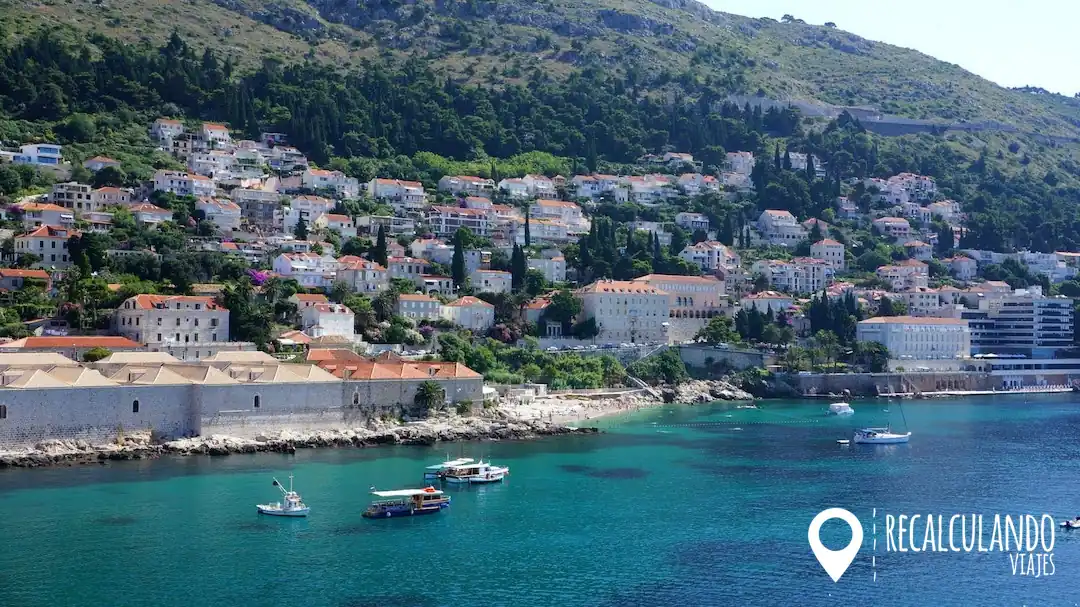
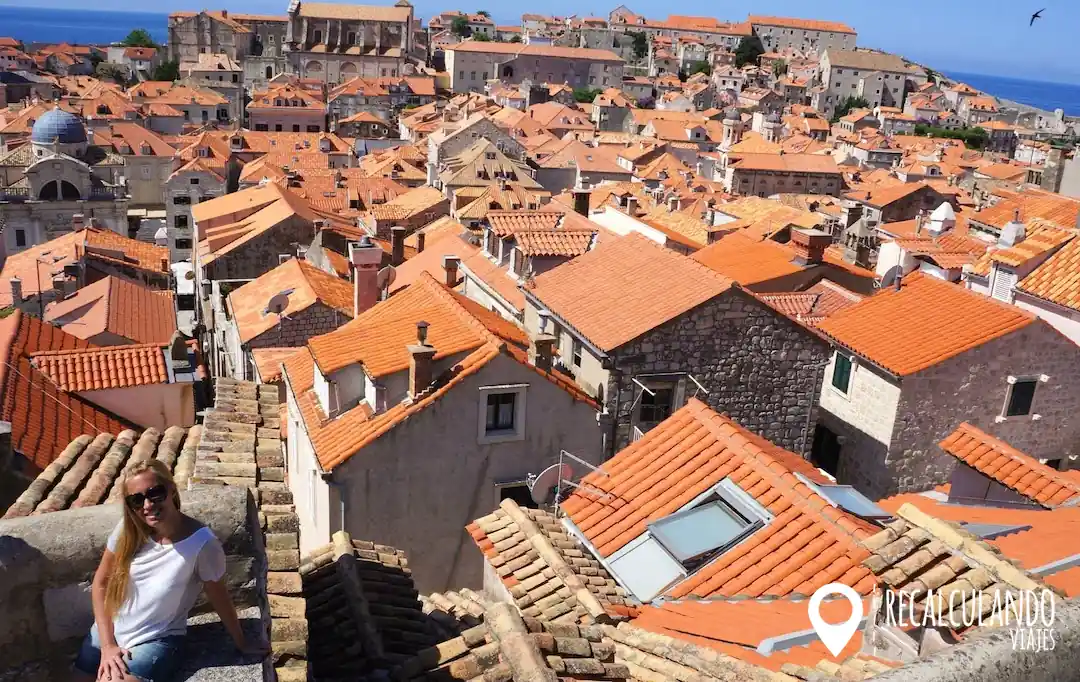
From above, you see the orange roofs, the impossibly blue Adriatic, Lokrum island in the distance, and the life of the inner courtyards: laundry hanging out, cats sleeping, people eating breakfast. It’s a perspective you can’t get any other way.
Highly recommended TIPS:
- Go as soon as they open, at 8:00 AM. By 10:30 AM, cruise ship groups arrive, and the walk turns into a slow line in the sun.
- Enter via Ploče Gate instead of Pile: there are far fewer stairs to climb. We got this tip from our host and it was excellent.
- The route has over 1,100 steps and a one-way path. If you leave, you cannot re-enter with the same ticket.
- Bring water and a hat. There is no shade up there and the white stone reflects the sun intensely.
- If the day is cloudy, take advantage of it for the walls. In August, with full sun, it gets really hot.
In 2026, the adult ticket costs 40 € between March and October (about 15 € in the low season, from November to February) and includes the Lovrijenac Fortress, with three days of validity. Hours and prices are updated by the Society of Friends of Dubrovnik Antiquities, so it’s worth checking before you go and buying on the official website: resellers are usually much more expensive.
2. The Old Town and the Stradun, the heart of the city
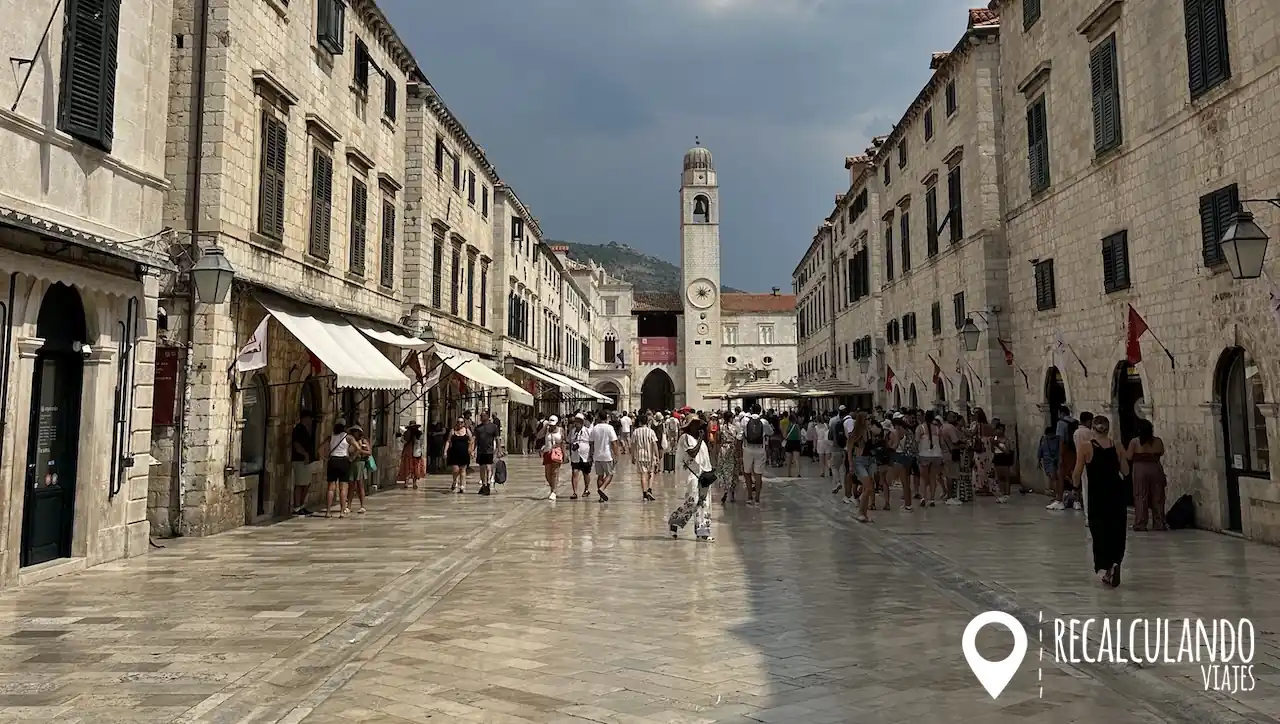
The entire old town is a UNESCO World Heritage site and you can walk it end-to-end in ten minutes, but you could spend hours getting lost in the side streets. The Stradun (or Placa) is the main street: 300 meters of limestone so polished by the centuries that it looks like a mirror.
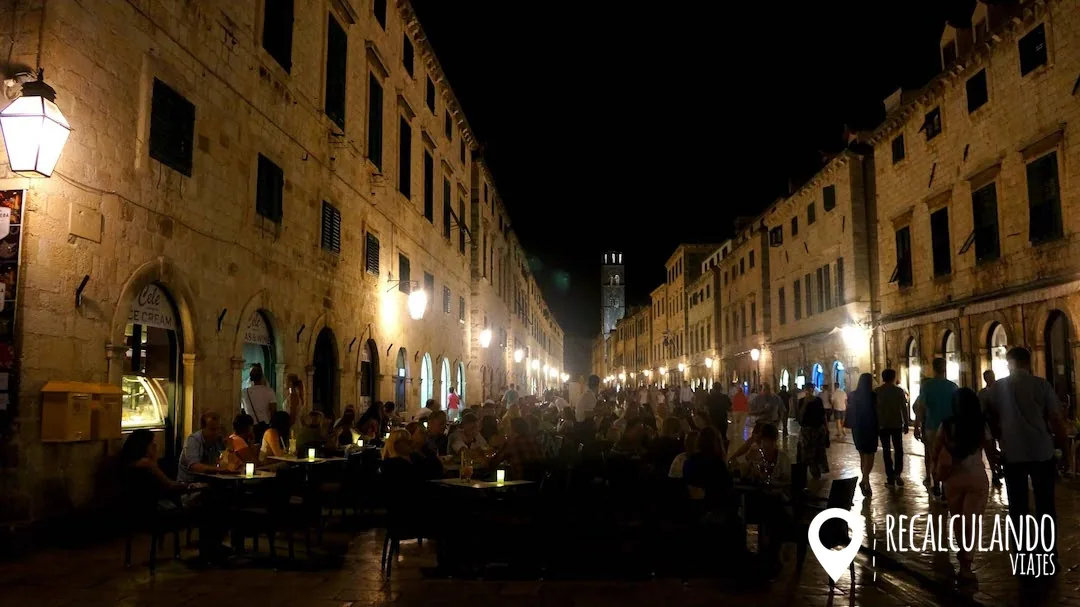
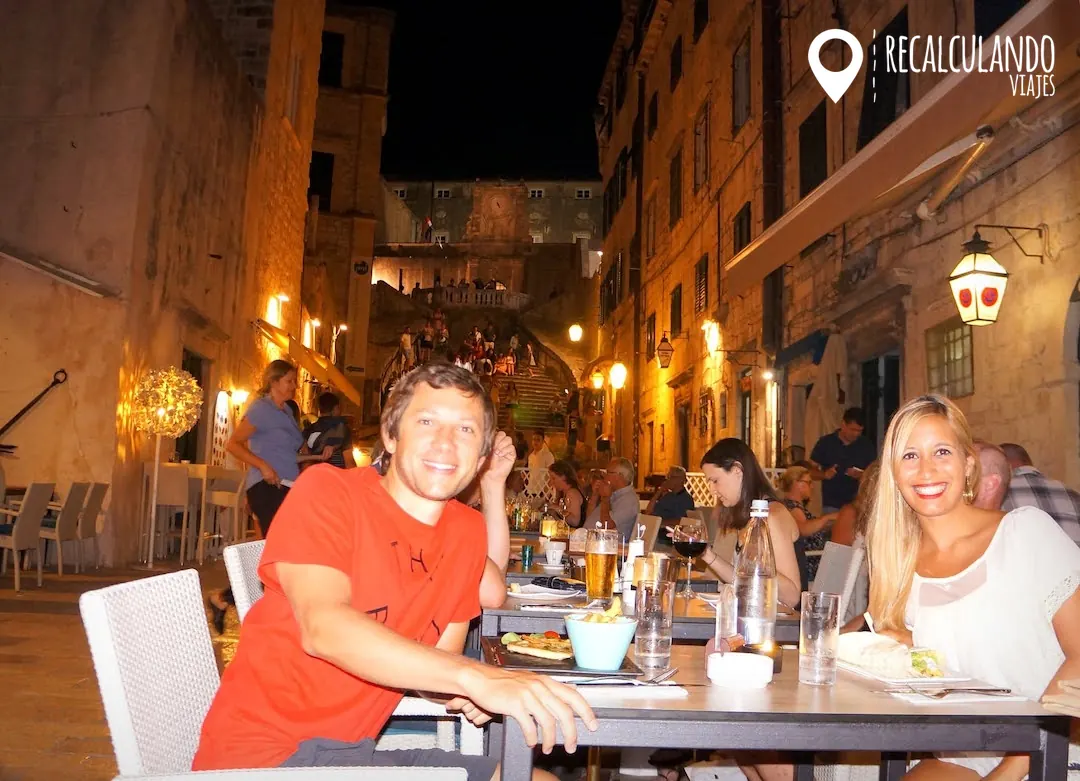
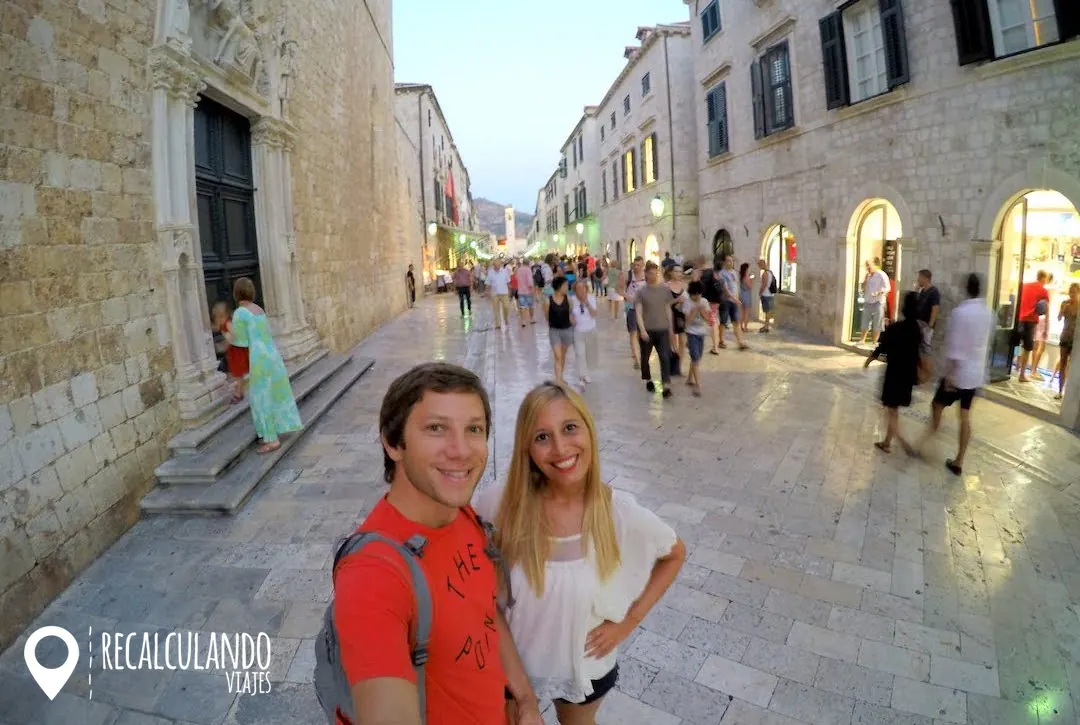
We did something we highly recommend: return at night. With the streetlamps lit, the marble floors gleaming, and without the midday crowds, it feels like a different place. Incredible! And if you’re an early bird, it gets light in Croatia around 5:30 AM, so at 7:00 AM you have the Stradun practically to yourself.
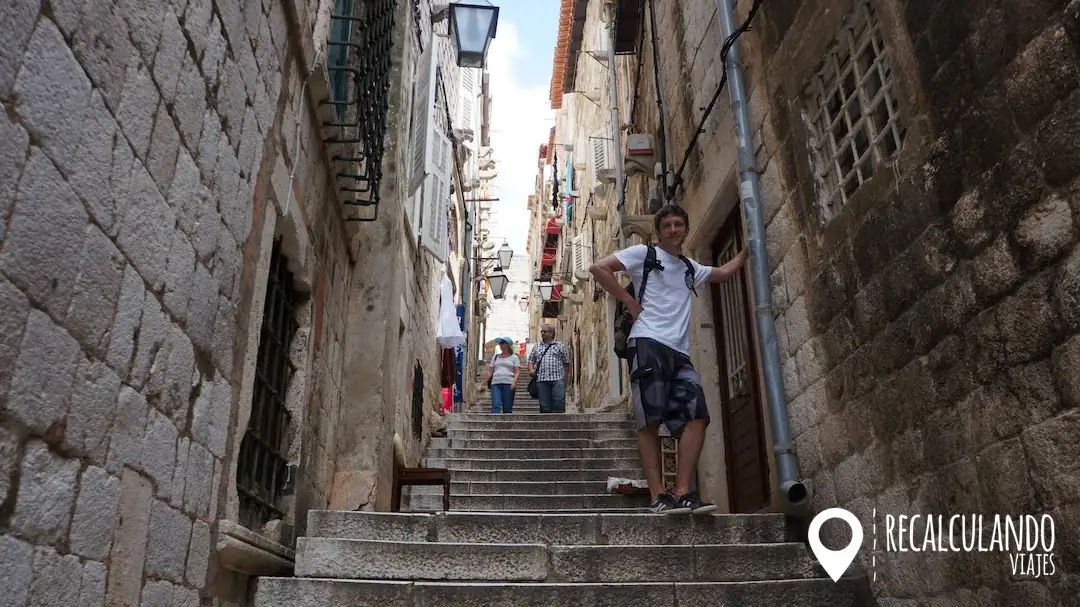
A lovely detail: the narrow side streets climbing north are steep and narrow, with potted plants, hanging laundry, and tiny bar tables. That’s the Dubrovnik that doesn’t appear on postcards.
3. Pile Gate and Onofrio’s Fountain
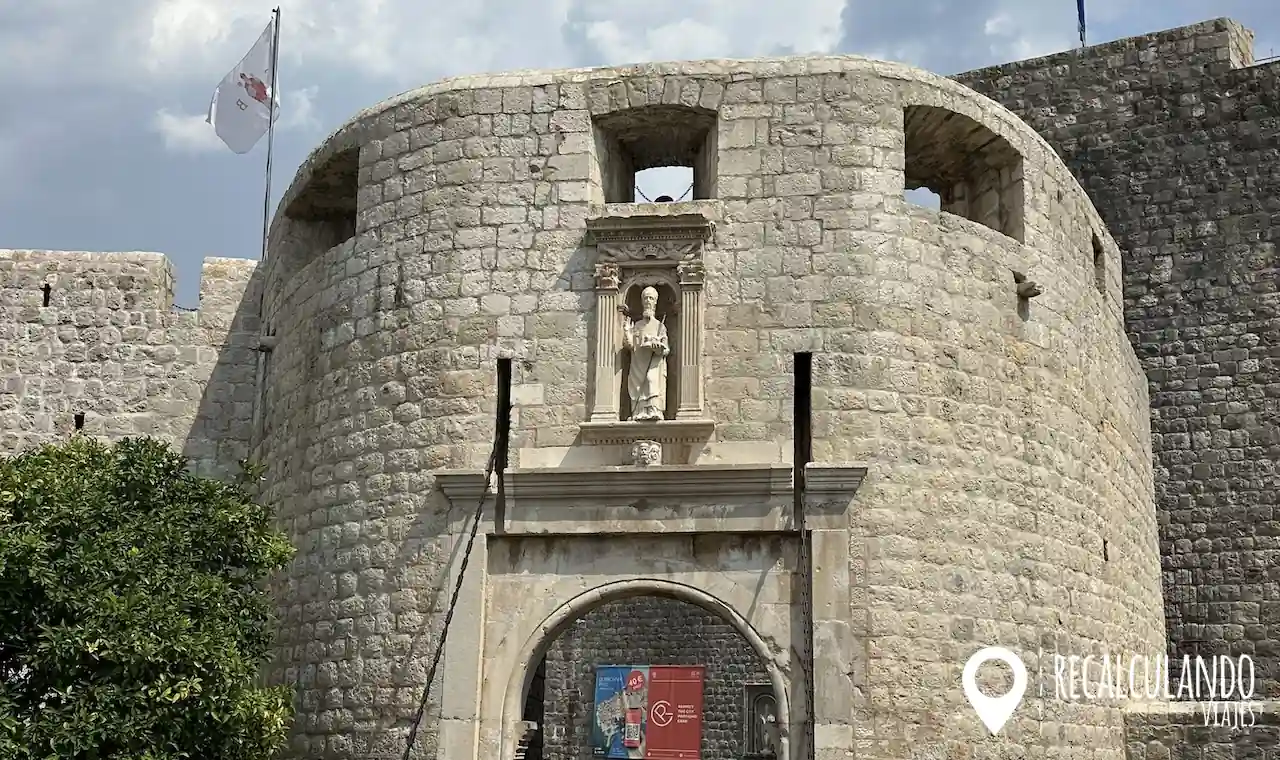
Pile Gate is the main entrance, with its stone bridge and arched access. It is the meeting point for all tours and where you get off the bus, so by mid-morning, it is an anthill.
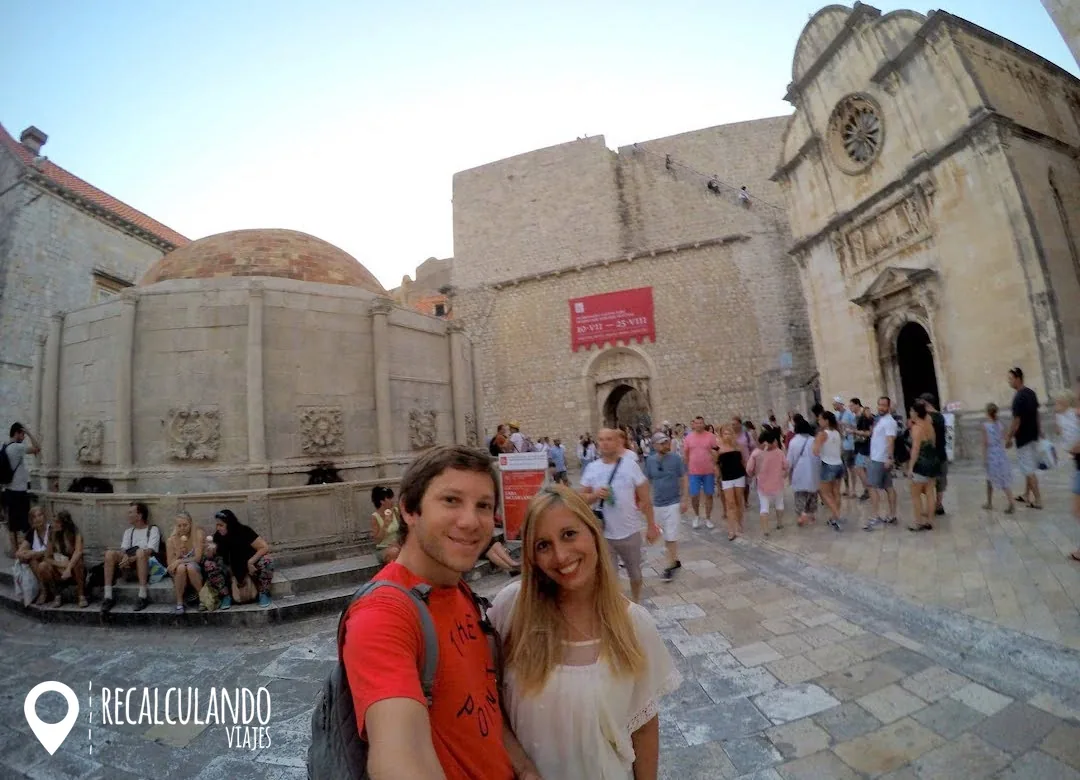
As soon as you cross it, the Great Onofrio Fountain appears, a 15th-century circular building with sixteen pipes that still work. It was part of the system that brought water from 12 km away, and today it is where everyone fills their bottles. We used it several times: the water is drinkable, cool, and greatly appreciated in summer.
On the other side of the old town, next to the Clock Tower, is the Small Onofrio Fountain, much more discreet, decorated with mascarons, and quite a bit quieter. Almost no one stops there, and it is a little gem.
4. St. Saviour Church, the one that survived the earthquake
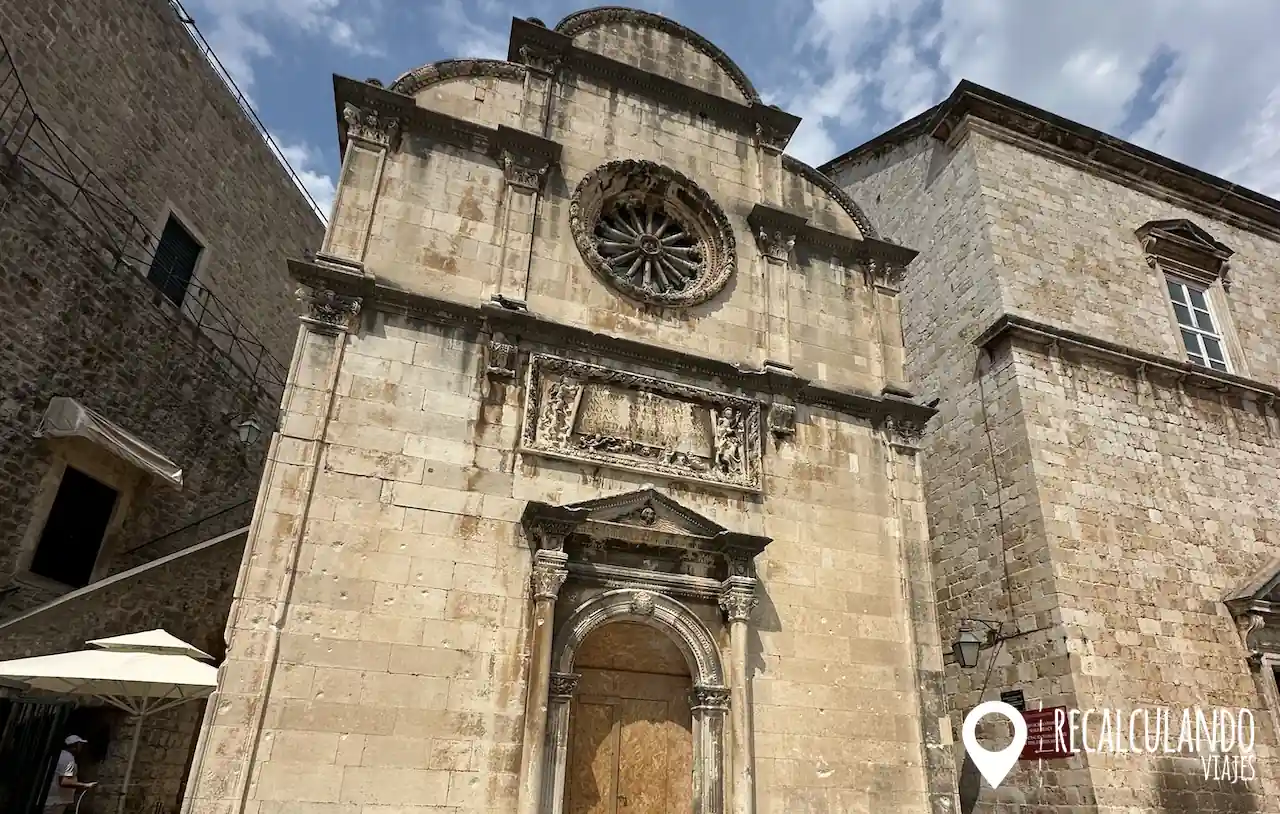
Right next to Onofrio’s Fountain is a small Renaissance church that usually goes unnoticed among the hurried tourists. It was built as an act of gratitude after the earthquake of 1520, and, curiously, it was one of the few buildings that withstood the great earthquake of 1667, which destroyed half the city.
Today it serves as an exhibition and concert hall. We didn’t go inside, but the facade alone makes a two-minute stop worthwhile: it’s one of those interesting spots in Dubrovnik that most people walk past without a glance.
5. The Franciscan Monastery and one of the oldest pharmacies in Europe
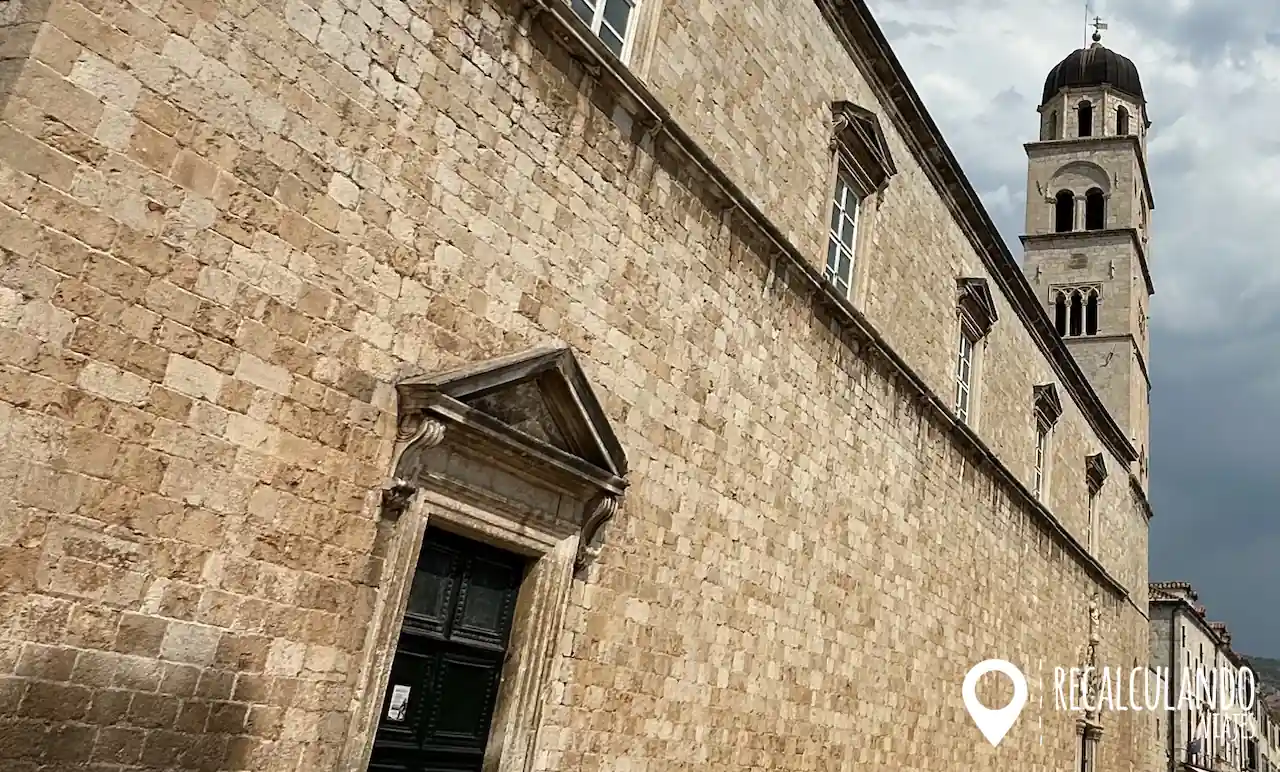
Next to St. Saviour Church is the Franciscan Monastery. Inside, there is a pharmacy that opened in 1317 and is still operational: it is one of the oldest in Europe to have never closed. That fact blew our minds.
The Romanesque cloister, with its double columns and garden in the middle, is one of the most beautiful and cool corners of the old town. Many travelers point to it as the best indoor visit in the city, especially at noon when the heat intensifies. Entrance is included in the Dubrovnik Pass.
6. Luža Square: Clock Tower, Orlando’s Column, and Sponza Palace
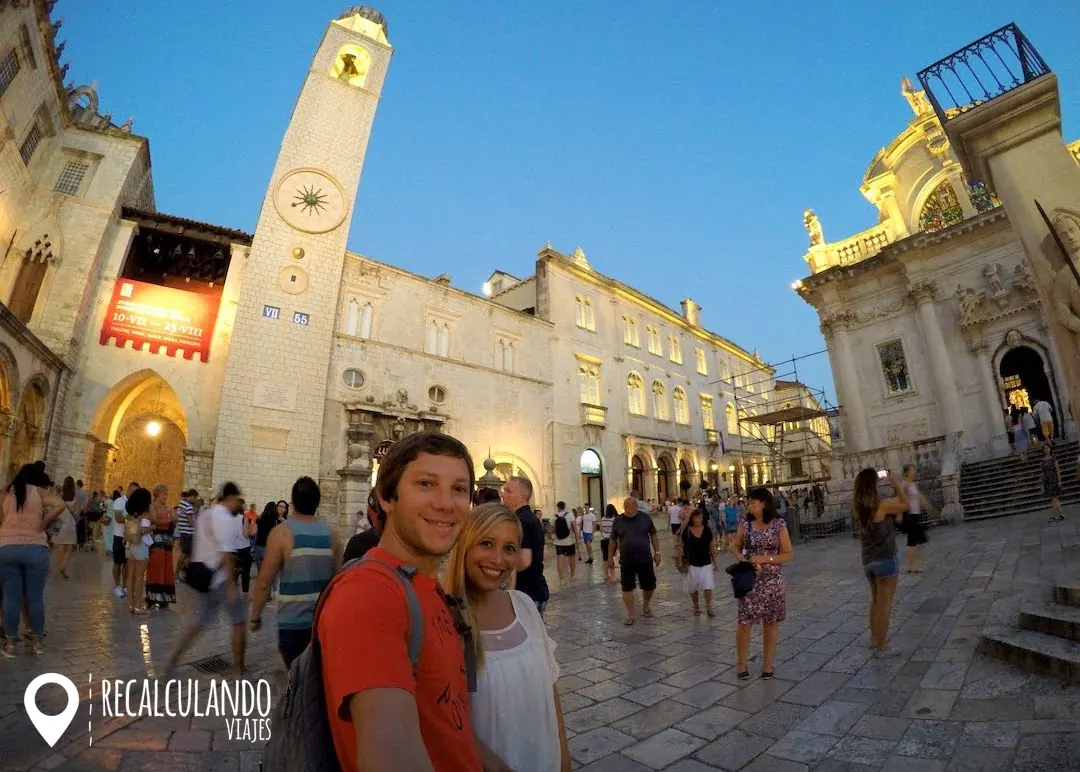
At the end of the Stradun is Luža Square, where half the city’s postcard image is concentrated. Here you have the Clock Tower with its two bronze figures that strike the bell, Orlando’s Column (the knight carved in 1418 whose forearm served as the official measurement of the Republic of Ragusa), and the elegant Sponza Palace, one of the few buildings that survived the 1667 earthquake intact.
Sponza was a customs house, mint, bank, and school, and today houses the city’s historical archives. Inside is also the Memorial of the Defenders of Dubrovnik, with photos of those who fell during the 1991 siege: entrance is free, and it is a brief but very powerful stop.
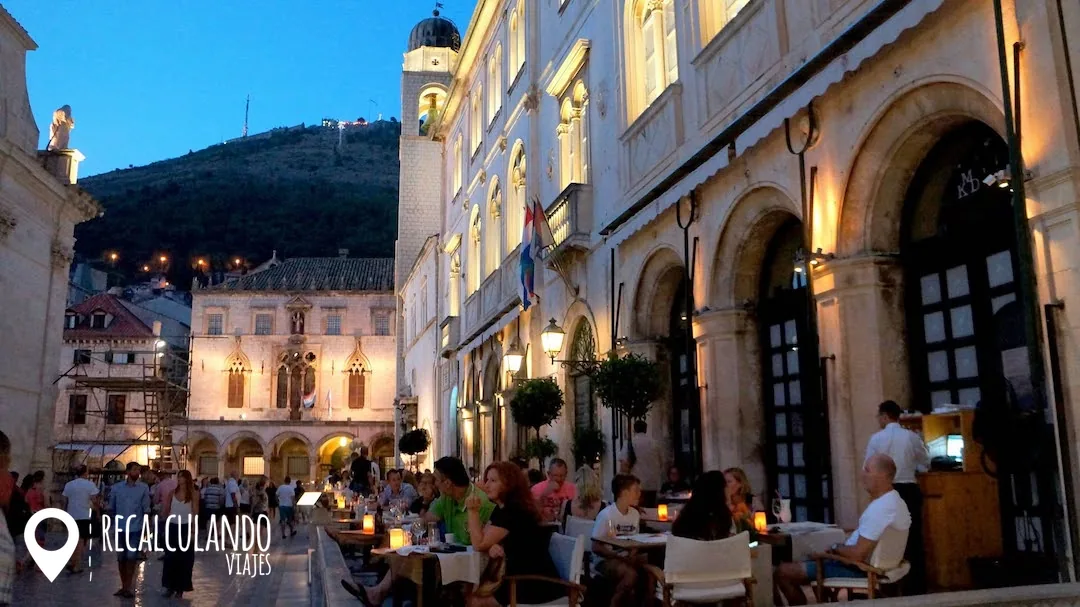
Next door, the Main Guard building, with its Baroque facade, completes the ensemble. It is the perfect place to sit for a while and watch the movement: in the afternoon, when the sun sets, the stone turns golden and the square is transformed.
7. The Rector’s Palace, history of the Republic of Ragusa
For centuries, Dubrovnik was an independent republic that rivaled Venice, and this Gothic-Renaissance palace was the seat of power. The rector lived inside during his term… which lasted only a month, so that no one could let the power go to their head. We thought that detail was brilliant.
We didn’t go in (we aren’t fans of museums unless they are essential), but many travelers recommend visiting the inner courtyard and the historical museum rooms, with original furniture and old prisons. The entrance is included in the Dubrovnik Pass, so if you have the pass, it is a logical stop.
👩⚕️👨⚕️ A must-have for stress-free travel! 🌎✈️ ➜ Get a Quote, Compare & Buy
8. St. Blaise Church and the Cathedral of the Assumption
St. Blaise is the patron saint of the city and you will see him everywhere: on facades, doors, and shields. His Baroque church, on Luža Square, has steps where people are always sitting and a statue of the saint holding a model of the medieval city as it was before the earthquake.
A few meters away is the Cathedral of the Assumption, built after the earthquake on top of a previous church that, according to legend, was funded by Richard the Lionheart after he shipwrecked near Lokrum. Entrance is free; the treasury with the relics has a separate ticket. We settled for the exterior and the square, which is already beautiful.
9. The Dominican Monastery, the other hidden cloister
At the opposite end, near Ploče Gate, is the Dominican Monastery. It is far less visited than the Franciscan one, and that is its charm: while the Stradun overflows with people, here you can hear the silence.
It has a Gothic-Renaissance cloister with orange trees and a museum with paintings from the Dubrovnik school. If you like these quiet places, this is one of the things to do in Dubrovnik that almost no one puts on their list.



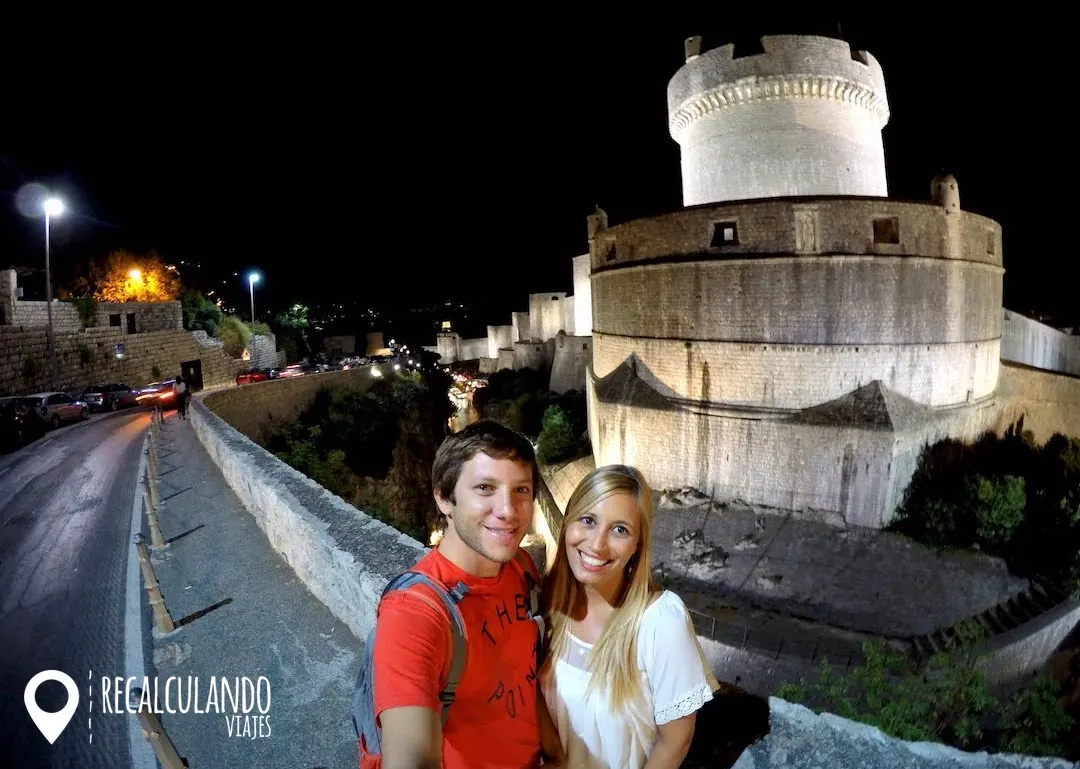
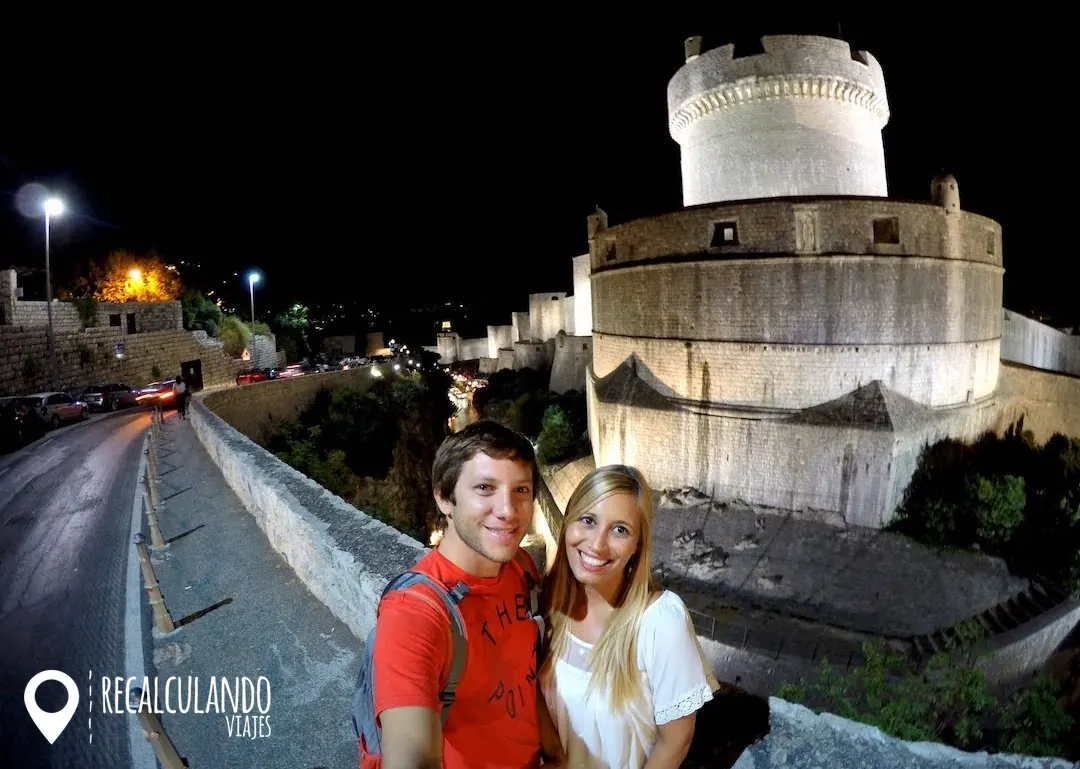
10. Minceta Tower, the highest point of the wall
Minceta is that round and solid tower that crowns the northwest corner of the walls, and it is the highest point of the entire route. Climbing the final steps is a bit tough, especially in the heat, but the 360-degree view is the best in the old town: the orange roofs at your feet, the sea on one side, and Mount Srđ on the other.
We reached the top out of breath and stayed for a good while. If you are doing the walls, don’t skip it: many people look at it from below and keep going.
11. The Jesuit Stairs and St. Ignatius Church
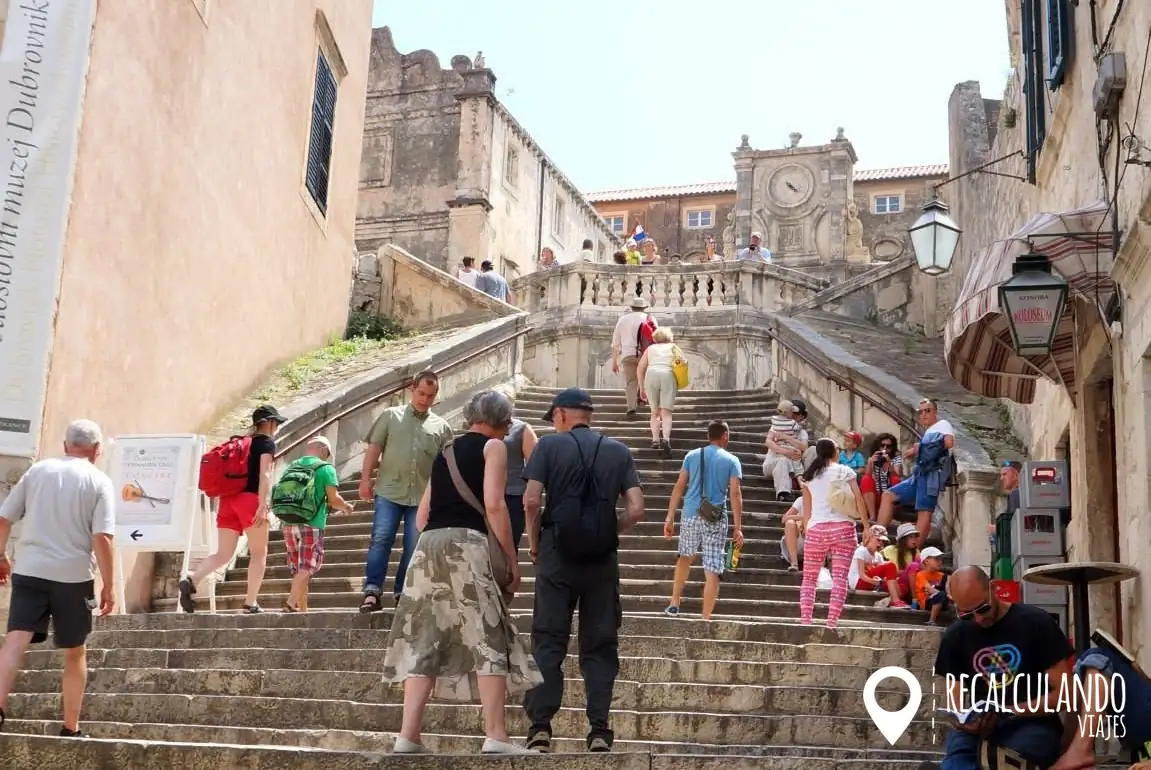
These Baroque stairs from 1738, inspired by the Spanish Steps in Rome, climb from Gundulić Square up to St. Ignatius Church. It’s one of those corners that stops you in your tracks: the perspective, the stone, the play of light at sunset.
It is also one of the most famous filming locations from Game of Thrones, although we’ll tell you more about that below. Inside the church is the chapel that mimics the grotto of Lourdes, and from the terrace above, you can see the upper neighborhood of the old town, with laundry hanging between balconies.
12. Gundulić Market, the tastiest and cheapest breakfast
Right at the foot of the Jesuit Stairs, the fruit and vegetable market is set up every morning in Gundulić Square. It runs until noon and is one of our favorite customs in any city: we went early and bought figs and cherries to take to the beach. A real score.
Besides fruit, you will find dried lavender, olive oil, honey, dried figs, and homemade liqueurs. Compared to the prices on the Stradun, buying here is almost an act of economic rebellion, hahaha.
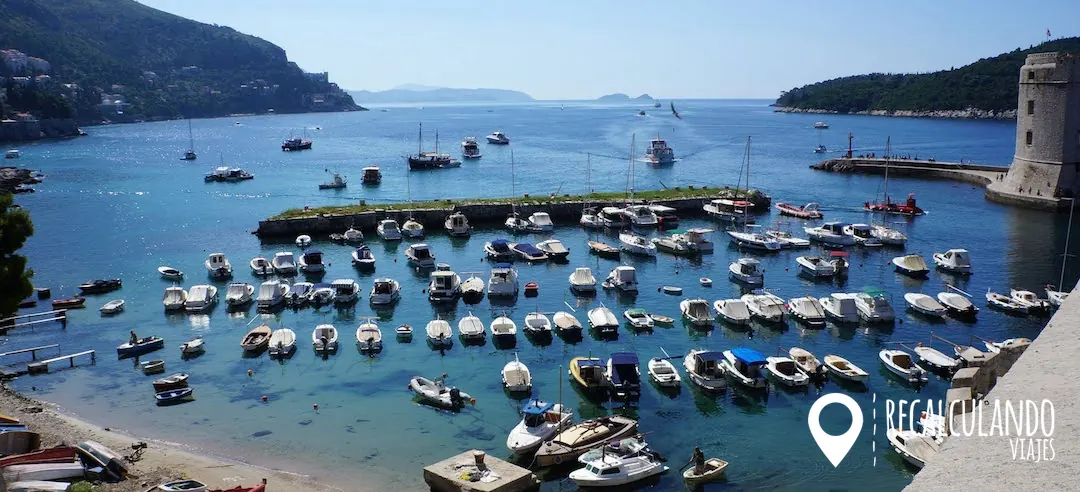
13. The Old Port and St. John’s Fortress
On the east side of the old town, crossing Ploče Gate, is the Old Port: the ancient arsenal where the Republic built its ships, now filled with wooden boats and people waiting for the ferry to Lokrum.
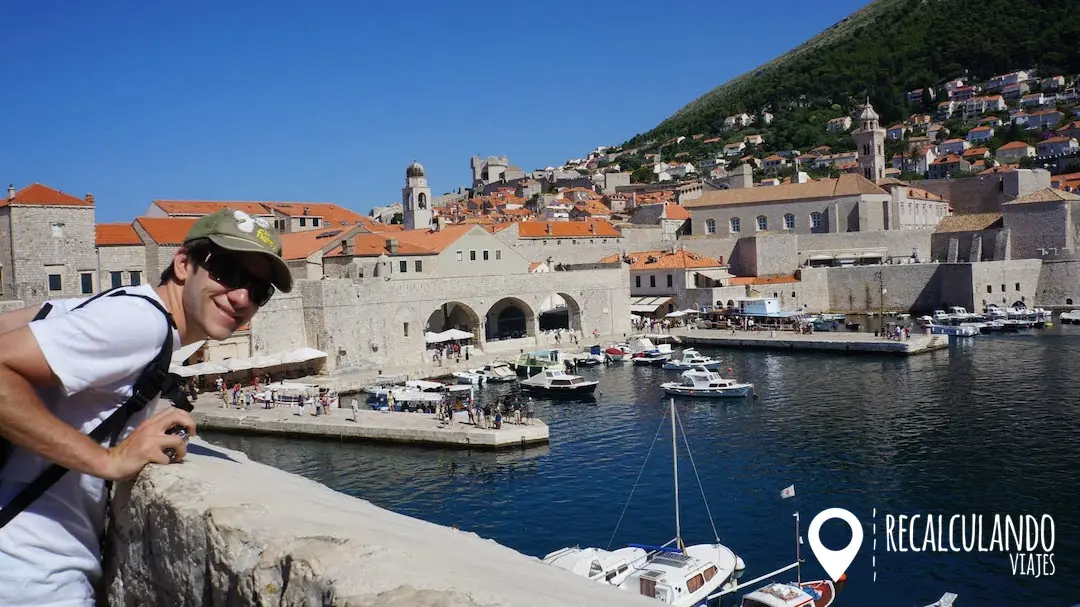
It is closed off by St. John’s Fortress, which now houses the Aquarium and the Maritime Museum (both included in the Dubrovnik Pass). We didn’t go in, but the walk along the pier at sunset, with the golden fortress and the boats returning, is one of those free things that is worth just as much as an entrance ticket.
14. The Lazarettos of Ploče, the 16th-century quarantine
A few meters from Ploče Gate are the Lazarettos: eight stone buildings with courtyards where, since the 16th century, merchants arriving by land had to spend time in quarantine before entering the city. Dubrovnik was one of the first cities in the world to organize such a system, and after what we all lived through in 2020, it reads differently.
Today they operate as a cultural space, with artisan workshops, exhibitions, and folklore shows in the summer. You can freely enter the courtyards and there is almost never anyone there.
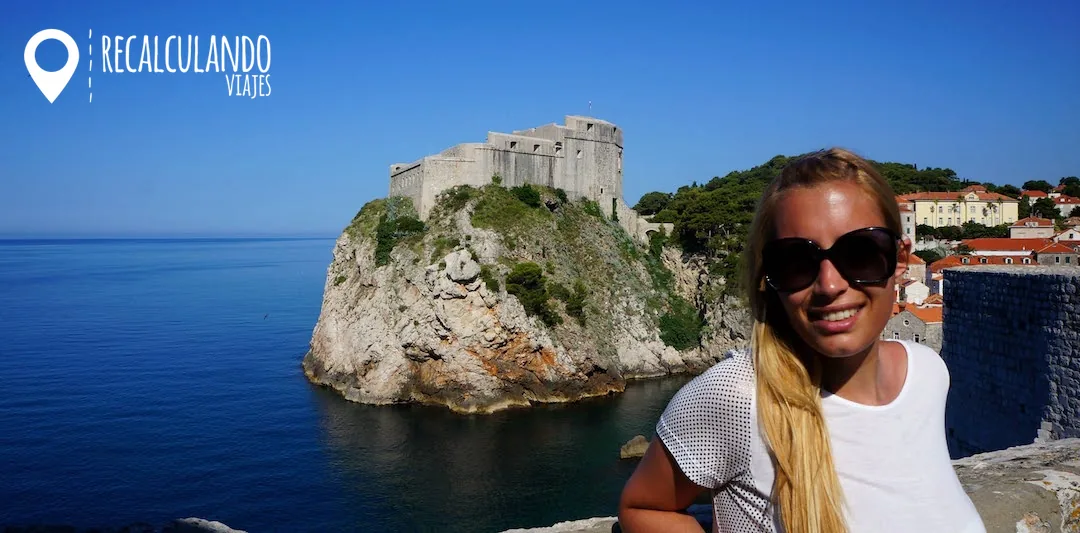
15. Lovrijenac Fortress, the “Gibraltar of Dubrovnik”
On a 37-meter rock west of the old town stands this fortress that defended the city by land and sea. Above its door is an inscription that translates to say that freedom is not sold for all the gold in the world, and honestly, it sums up the history of this city quite well.
The entrance is included in the city walls ticket (and you have three days to use it), so if you’ve already paid for the walk, don’t miss it. We saw it from the outside and from the walkway, and from there you can understand why they chose it for so many movie scenes. In July and August, it is used as a stage for the Dubrovnik Summer Festival, which fills the city with theater and classical music.
16. Gradac Park, the best free sunset
This park is just west of Lovrijenac Fortress, on a cliff, among pines and cypresses. It’s one of those spots where locals go more than tourists: benches in the shade, paths, and an open view of the sea and the coast.
Many travelers recommend it precisely for the sunset, with the sun setting over the Adriatic and the silhouette of the fortress in the background. And the best part: it costs nothing. If you are coming with children or want a moment of silence after the bustle of the Stradun, it is a perfect move.
17. Cable car to Mount Srđ, the best view of all
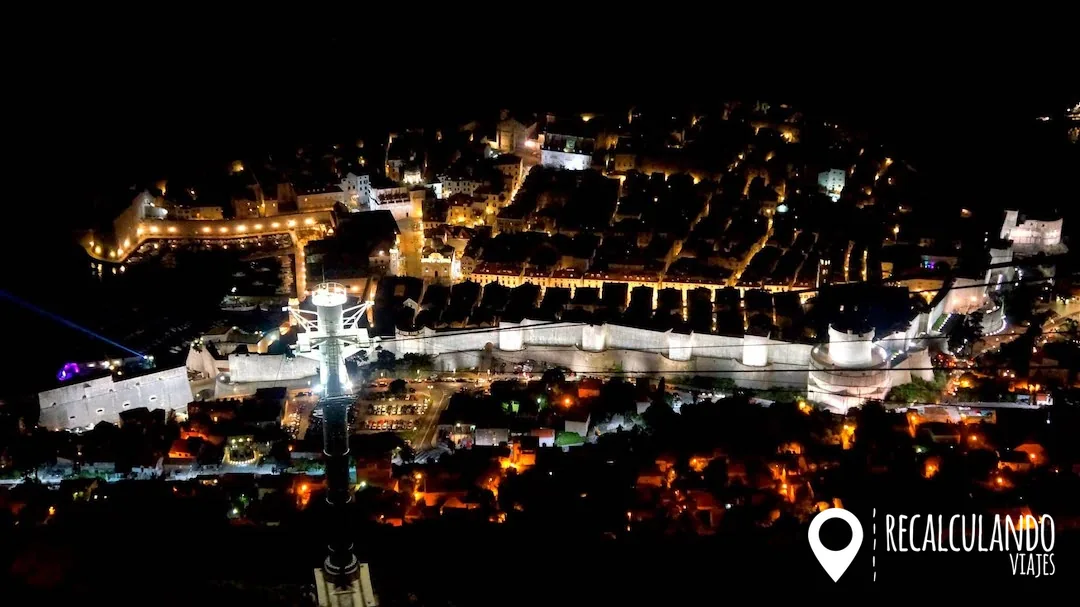
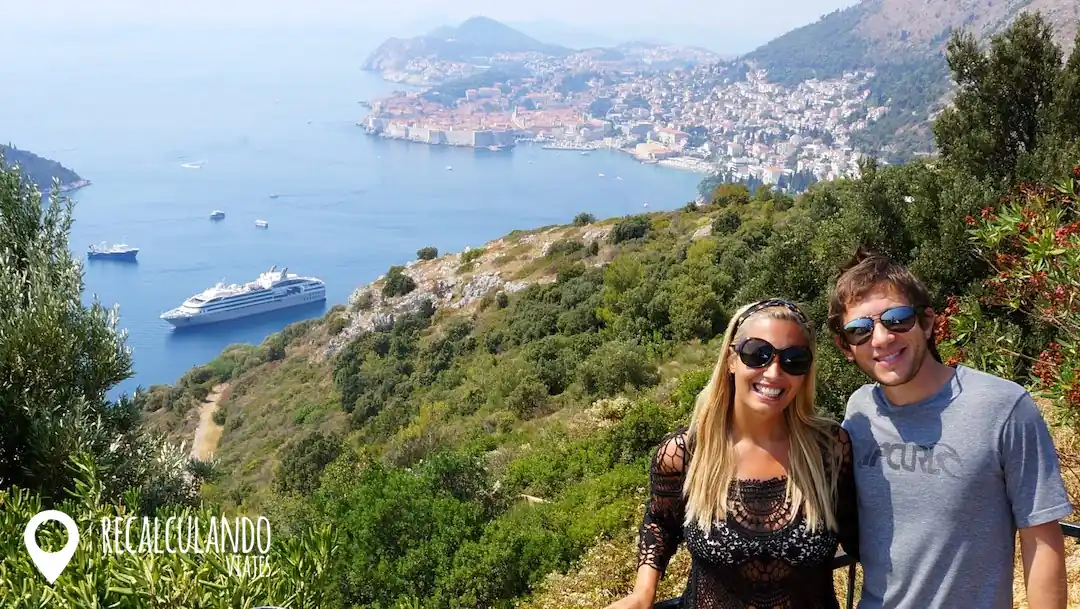
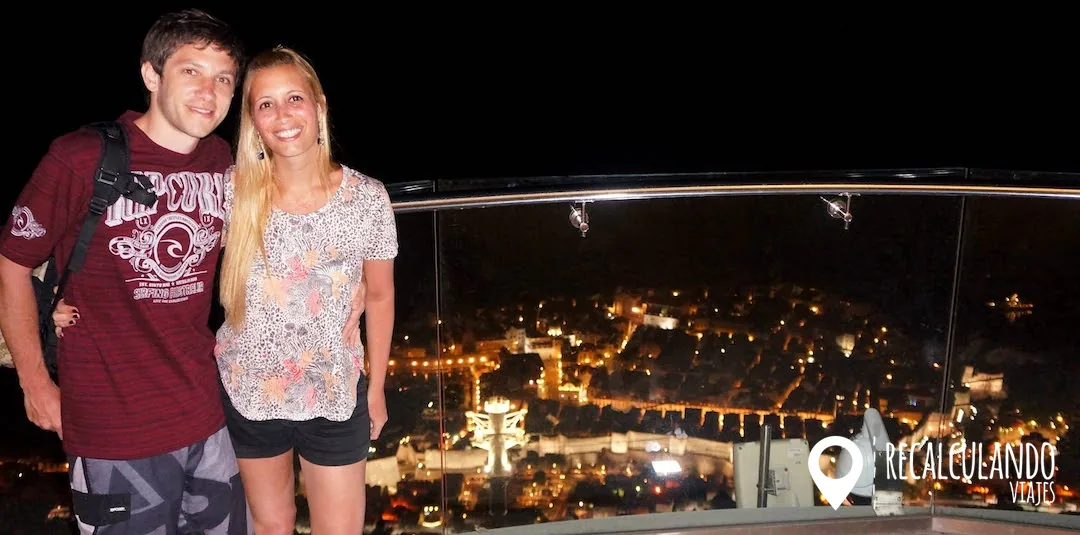
This was one of our favorite moments. The cable car climbs 412 meters in about four minutes and drops you at a viewpoint where you see the entire walled city, Lokrum in front, and the Elafiti islands etched on the horizon. On clear days, you can even see the coast of Montenegro.
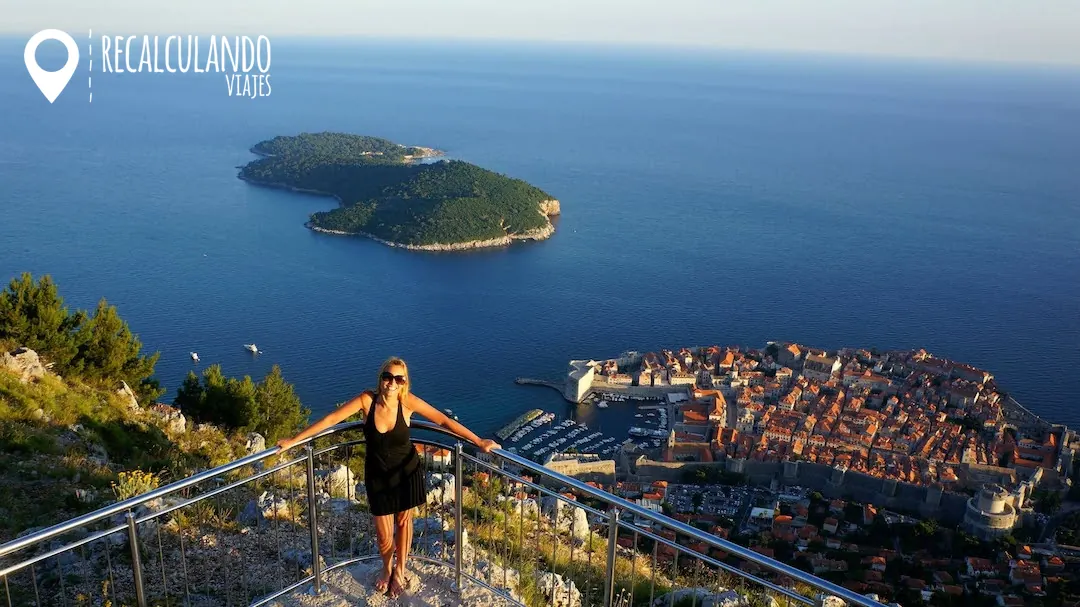
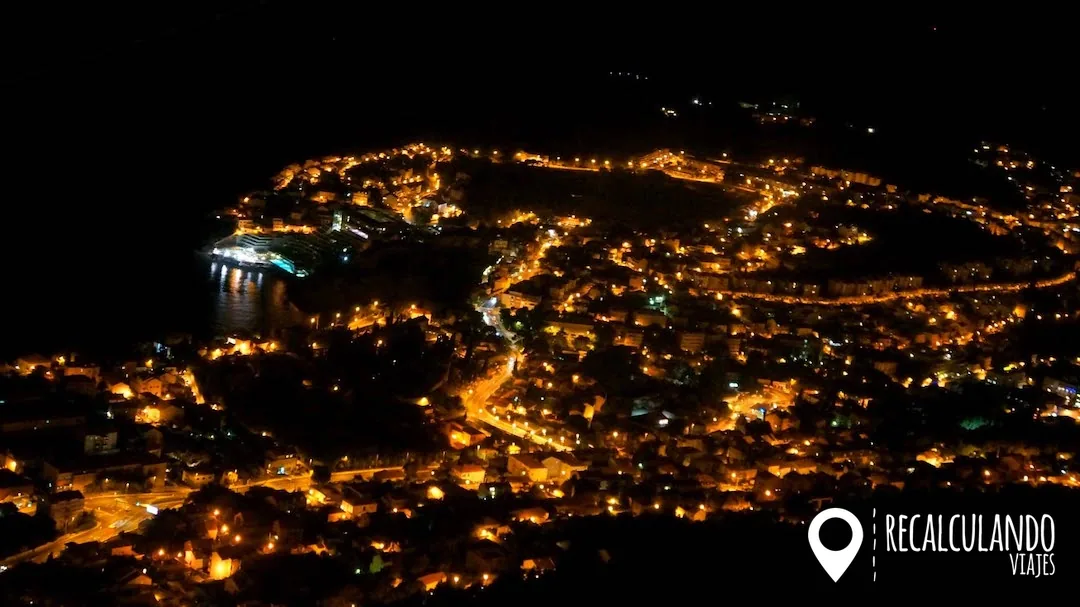
Keep in mind: the round-trip ticket is around 27 € per adult in 2026 and is not included in the Dubrovnik Pass, because the cable car is private. In summer, it operates until quite late, so going up for sunset is the best move: the city changes from golden to orange and then lights up completely.
Trick: let people go by and get on the cabin last, so you stay next to the window on the side opposite the direction of travel. You will have the city in front of you the whole trip, and photos come out without heads in the way.
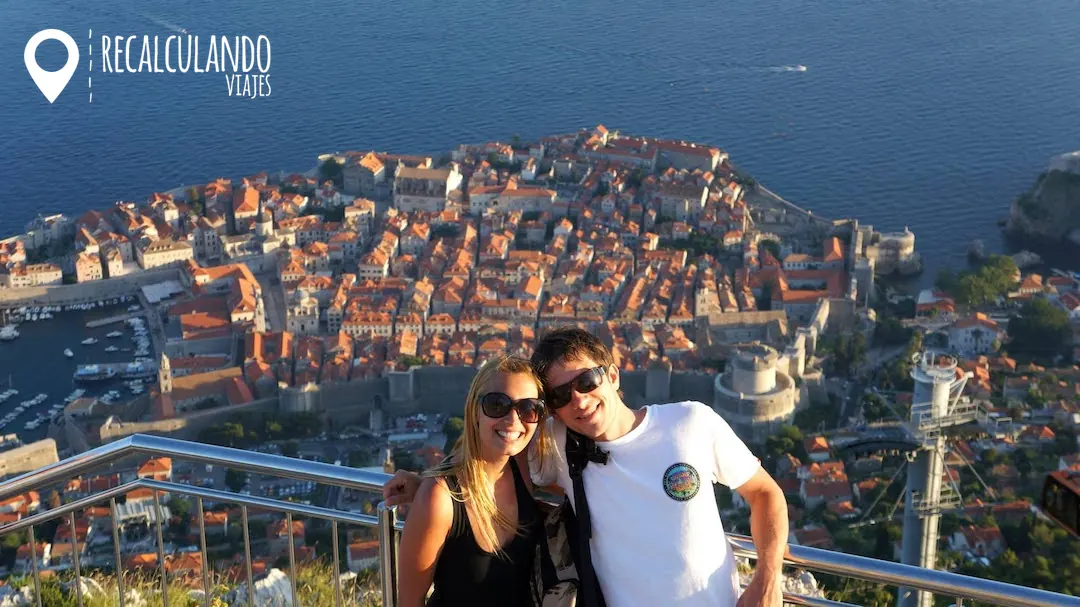
If you like hiking, you can walk up or down the path in about 45-60 minutes (buy just the one-way ticket) and you can also get there by car via the road (you can take an Uber). At the top is the Imperial Fort, with the museum of the Croatian War of Independence: small but very powerful for understanding what happened here in 1991. Watch out for days with strong winds, as the cable car does not operate.
18. Buža Bar, a drink hanging over the Adriatic
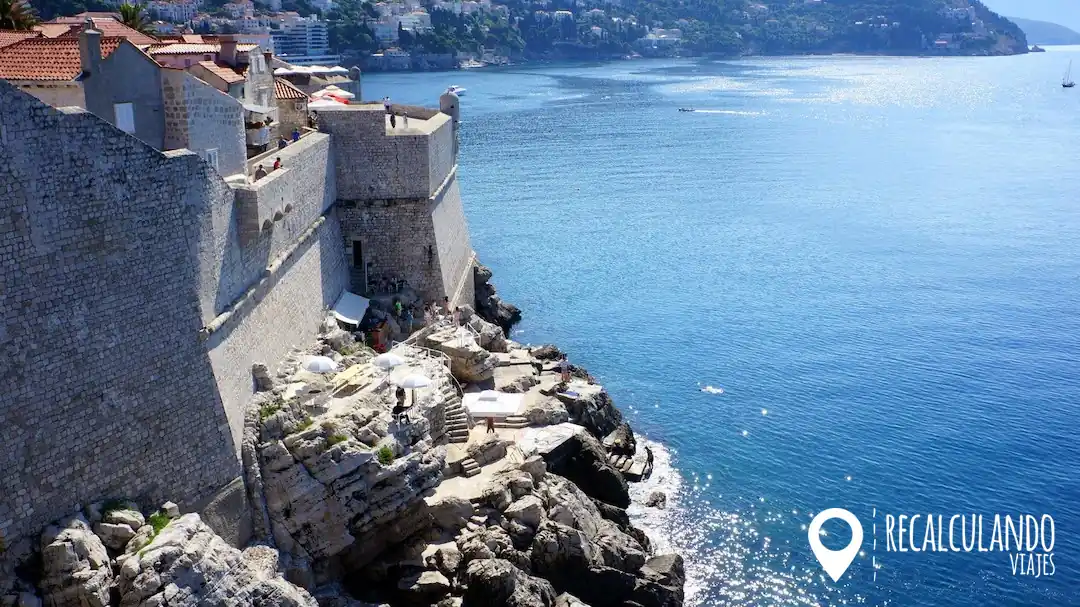
“Buža” means hole, and it is literal: you access it through a hole in the south wall and find terraces on the rocks, with the sea below and Lokrum in front. It is one of the most recommended spots in the city for sunset.
To get there, you have to go up toward St. Ignatius Church, take the narrow street that runs along the inside of the wall, and follow the sign advertising cold drinks. We saw it from above, while walking the walls, and from there you just want to go down: people having a drink on the rocks and some brave ones jumping into the water. They only serve drinks and the prices are tourist-zone, but the view makes up for it.
19. Banje Beach, the most famous in Dubrovnik
This is the classic city beach, five minutes walking from Ploče Gate, and its great attraction is the view: you have the walls on one side and Lokrum in front. It is pebbly, with all amenities (sunbeds, umbrellas, changing rooms, bars, kayak rentals, and water activities).
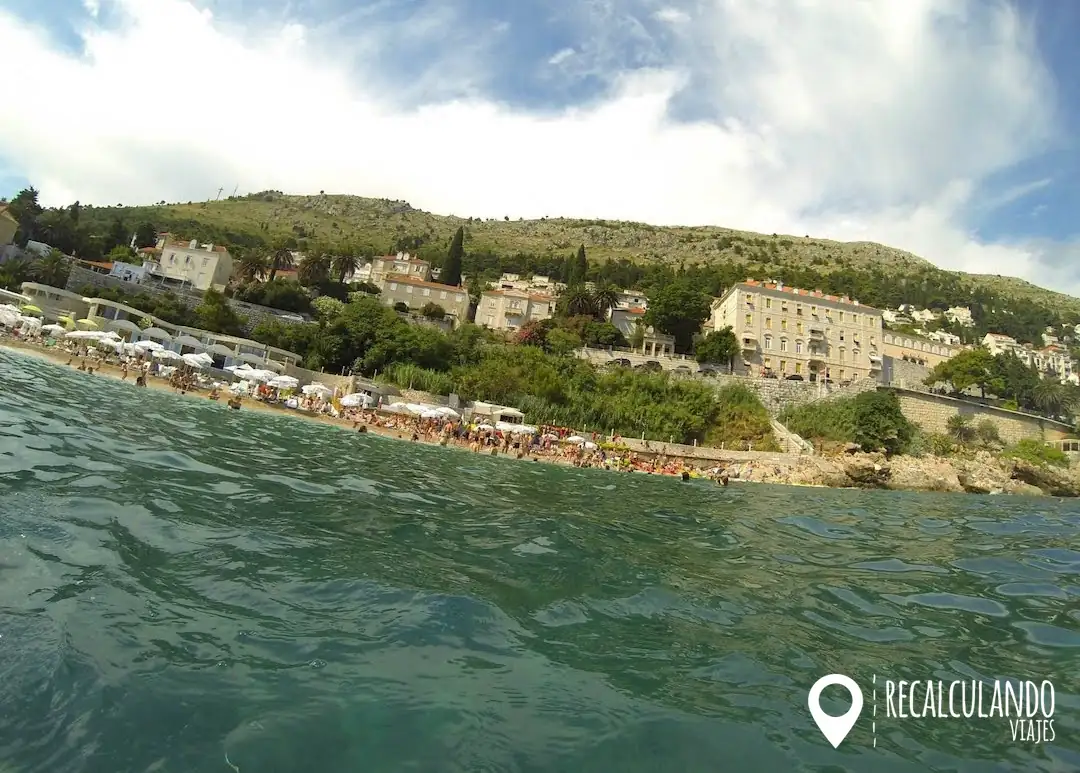
We went one day first thing in the morning and it was very calm. By noon it got quite crowded and we decided to move… and that decision led us to the best discovery of our trip, which is what follows.
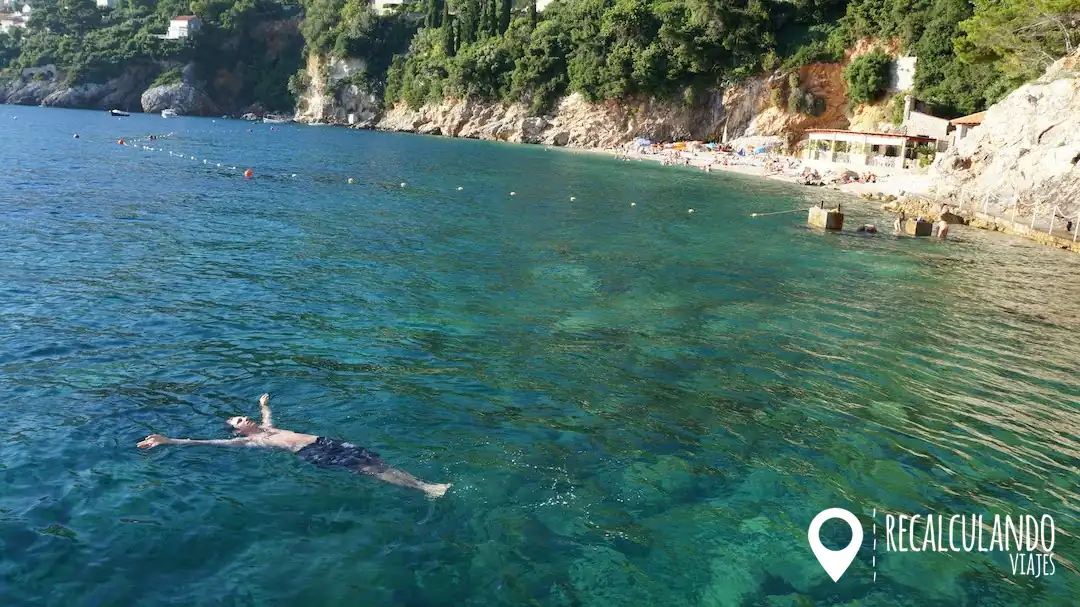
20. Sveti Jakov Beach, our favorite place
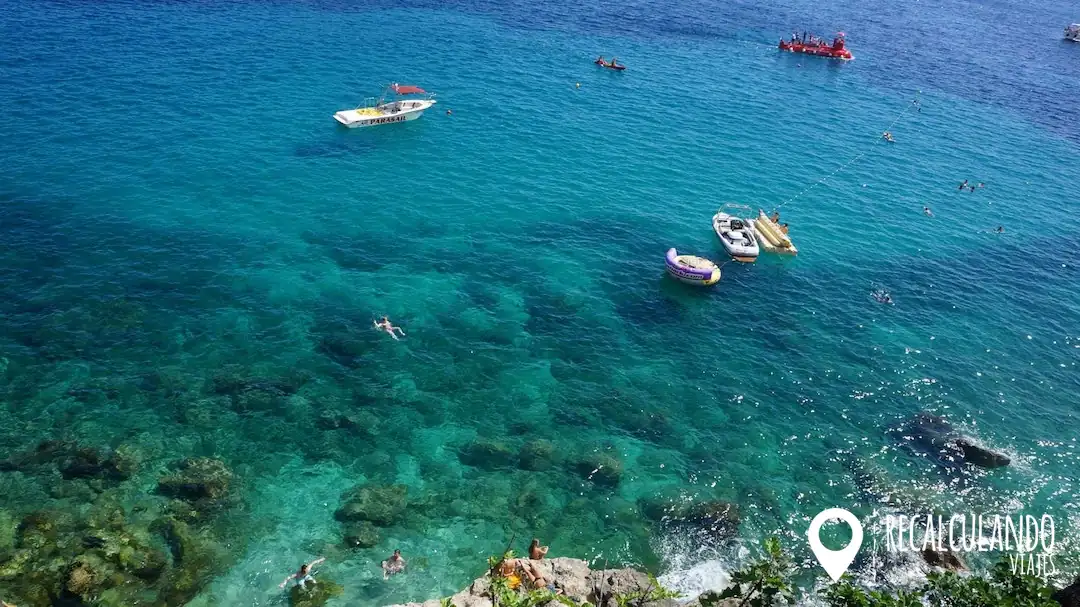
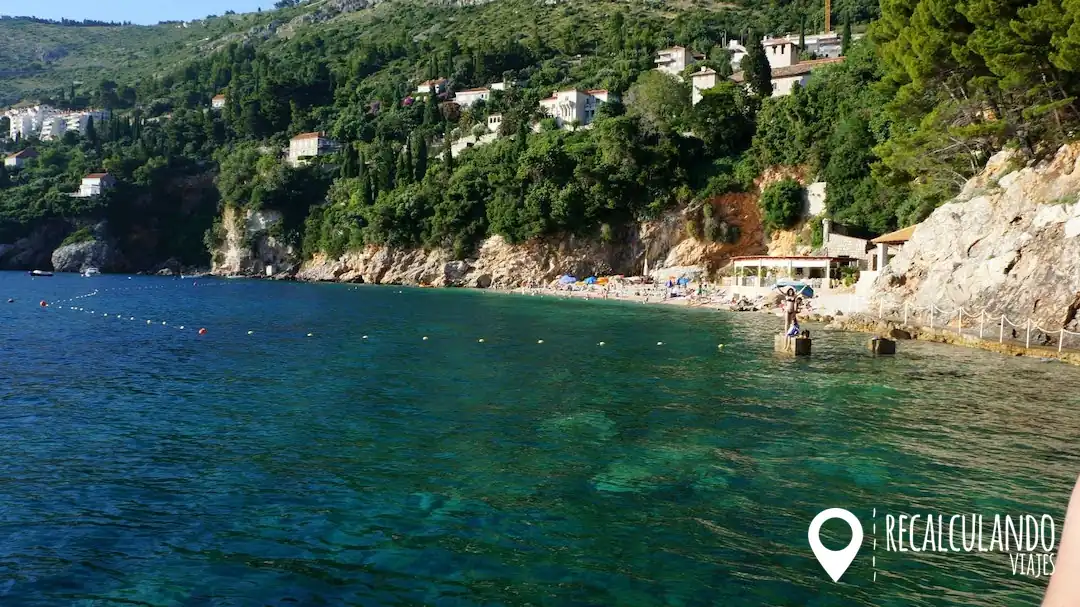
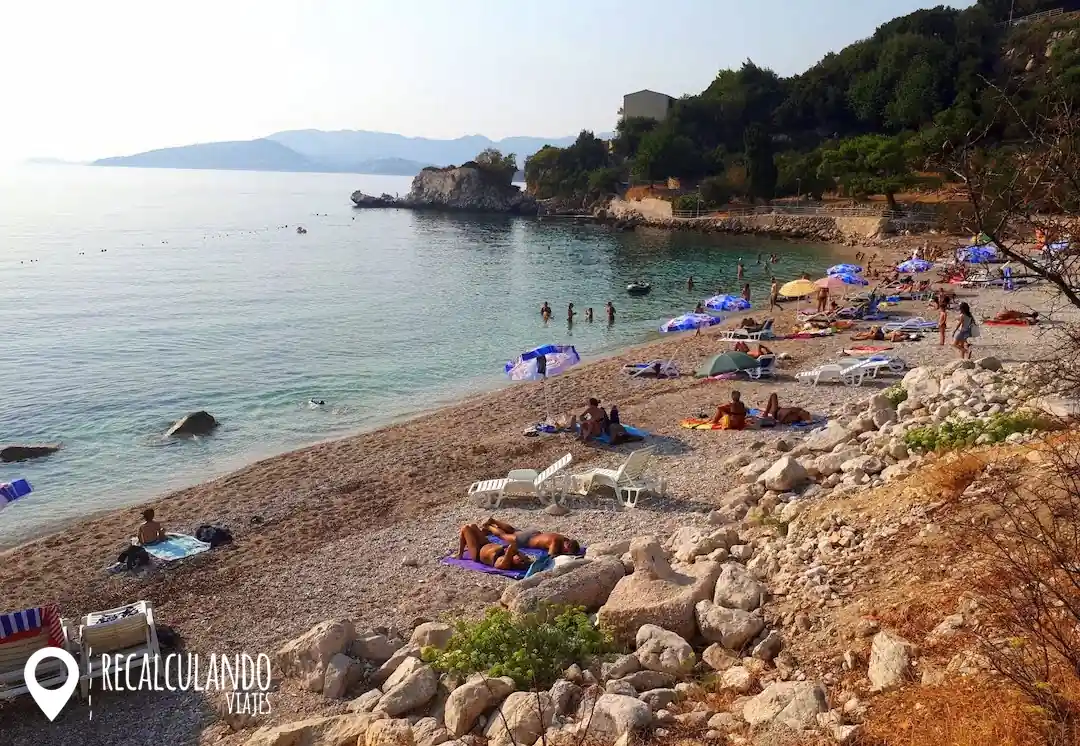
If there is one place in Dubrovnik that we loved, it is this. Sveti Jakov is further south, and to get there you have to follow the same street from Banje uphill, pass the Hotel Excelsior and, upon reaching the Hotel Argentina, go down and follow the path to the end. When you arrive next to a church, you have to go down about a hundred steps… and then it appears.
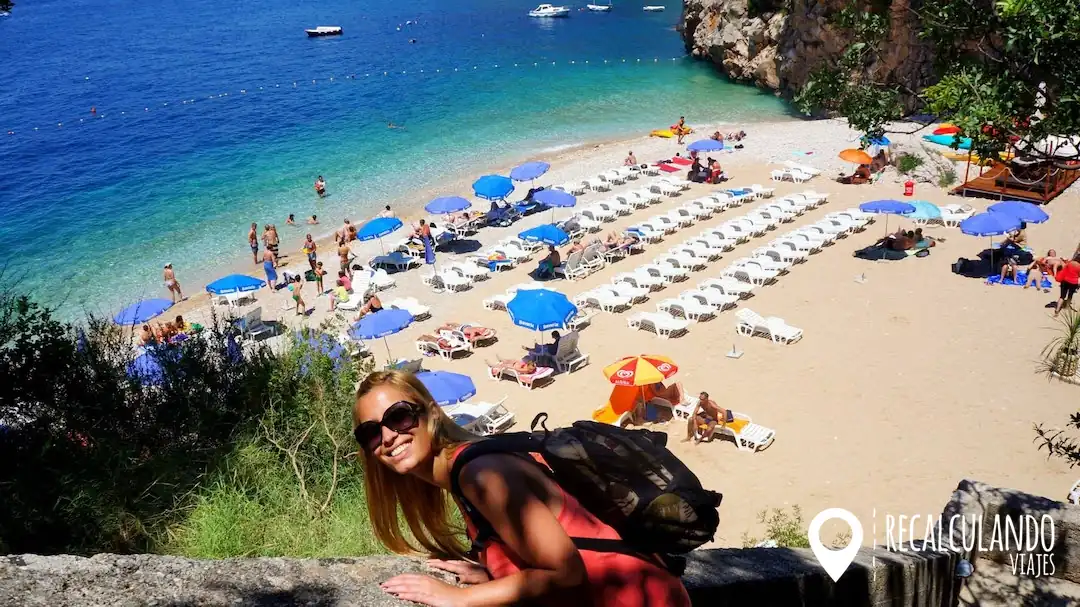
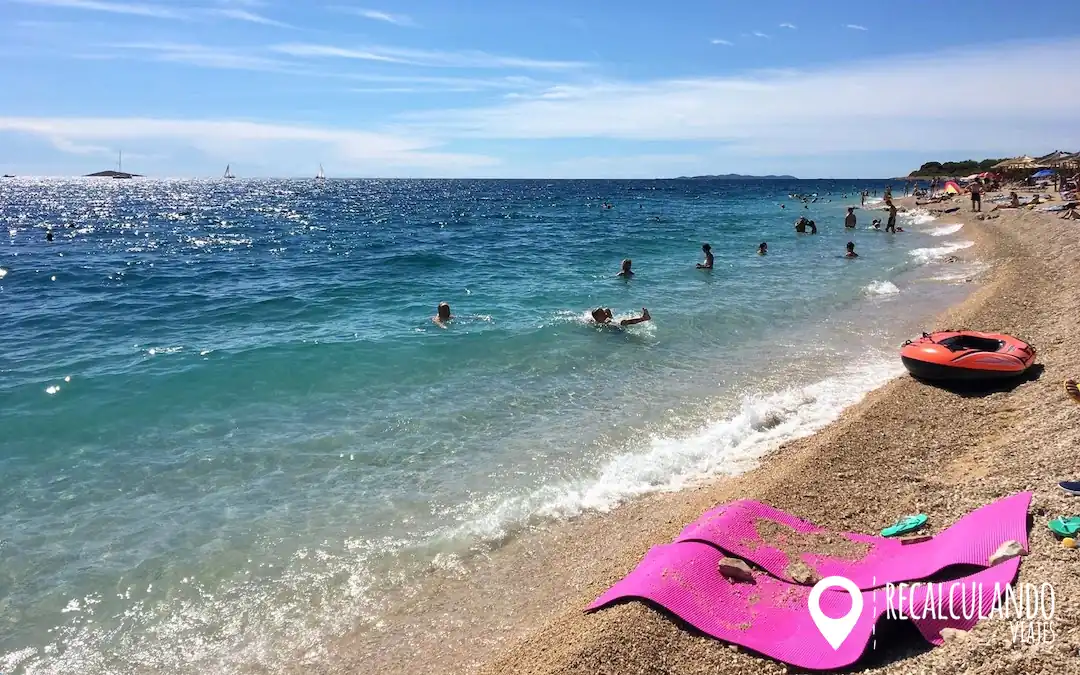
A beach of sand and pebbles, with crystal clear water, few people (and we went in August!), and with all of Dubrovnik etched in the background. Sunbeds, umbrellas, and even kayaks are for rent. We stayed all afternoon and didn’t want to leave.
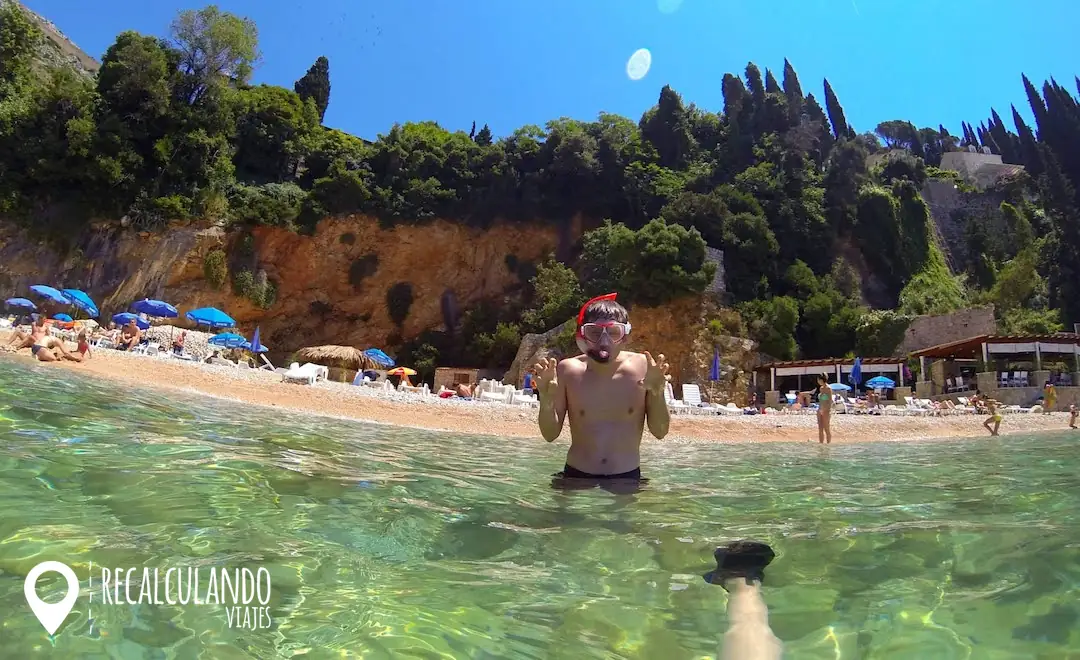
Note: it is about a hundred steps down and a hundred up, in the heat. Bring water and don’t leave the return for the peak sun hours. It is worth every step, we assure you.
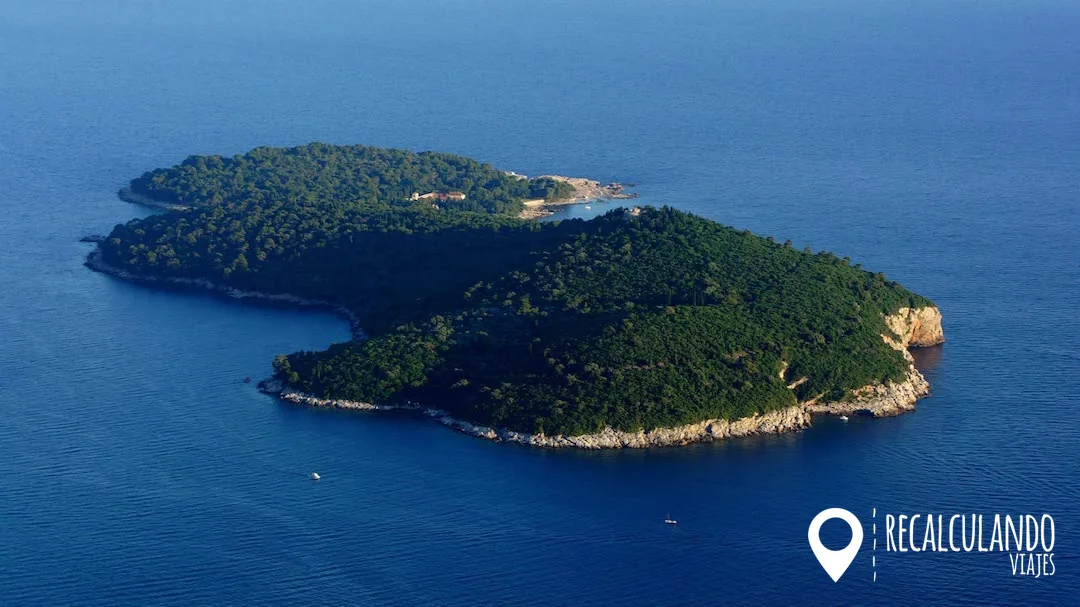
21. Lokrum Island, a green getaway fifteen minutes away
Lokrum is 600 meters from the old port and the boat takes about fifteen minutes. It is a nature reserve with pine and oak forests, rocky coves for swimming, a saltwater lake called the “Dead Sea,” the ruins of a 12th-century Benedictine monastery, Maximillian’s gardens, a botanical garden, the Fort Royal viewpoint, and peacocks running wild everywhere.
The adult ticket costs 30 € in 2026 and includes round trip plus entrance to the reserve; children from 7 to 18 pay 5 €, and those under 7 are free. Boats leave from the old port every half hour in high season, the last one returns around 8:00 PM and nobody stays overnight on the island (there is a legend of a Benedictine curse that explains it better than any regulation, hehehe).
We left it pending on both visits because we were won over by the beaches, so it’s the first thing we will do next time. If the wind is blowing from the south, check before: in bad weather, the boat simply doesn’t run.
22. Gruž Market, the everyday Dubrovnik
Gruž is the port neighborhood, 3 km from the old town, and this is where the locals shop. Fresh fish early in the morning, local fruits and vegetables, cheeses, oil, figs.
It is the least “postcard” and most real face of the city, and if you stay in that area (which is one of the most cost-effective), you have breakfast and lunch sorted for a fraction of what you would pay inside the walls. We are big fans of markets: you learn more about a place in half an hour there than in three museums.
The best beaches in Dubrovnik and surroundings
Within everything there is to do in Dubrovnik, beaches take up a huge part of the trip, even though many people arrive thinking this is just stone and walls.
These are the ones we recommend:
- Banje: the most central with the best views of the walls. Ideal early on.
- Sveti Jakov: ours. Quieter, hundred steps away, transparent water.
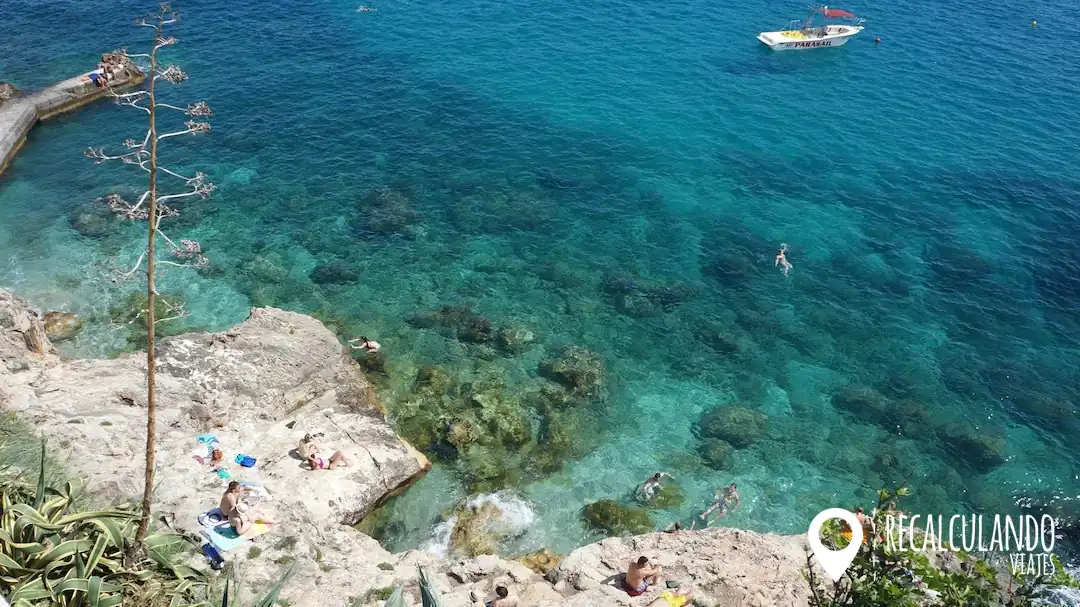
- Buža: not a sandy beach but rocks at the foot of the wall, with a ladder into the sea. Very romantic at sunset.
- Danče: tiny, next to Gradac Park, flat rocks and little tourism. Very popular with locals.
- Lapad Bay: on the Lapad peninsula, a succession of pebble beaches in front of large hotels, but open to everyone. Good option for children because the bottom is soft.
- Copacabana: in the Babin Kuk area, the largest in the city, with water sports and a much more relaxed family atmosphere.
- Mlini: about 12 km south, in a village with plenty of park shade. Easily reached by bus or car.
- Šunj (Lopud island): the only real sandy beach in the area, on the Elafiti islands. Requires a ferry, but is the best for swimming with children.
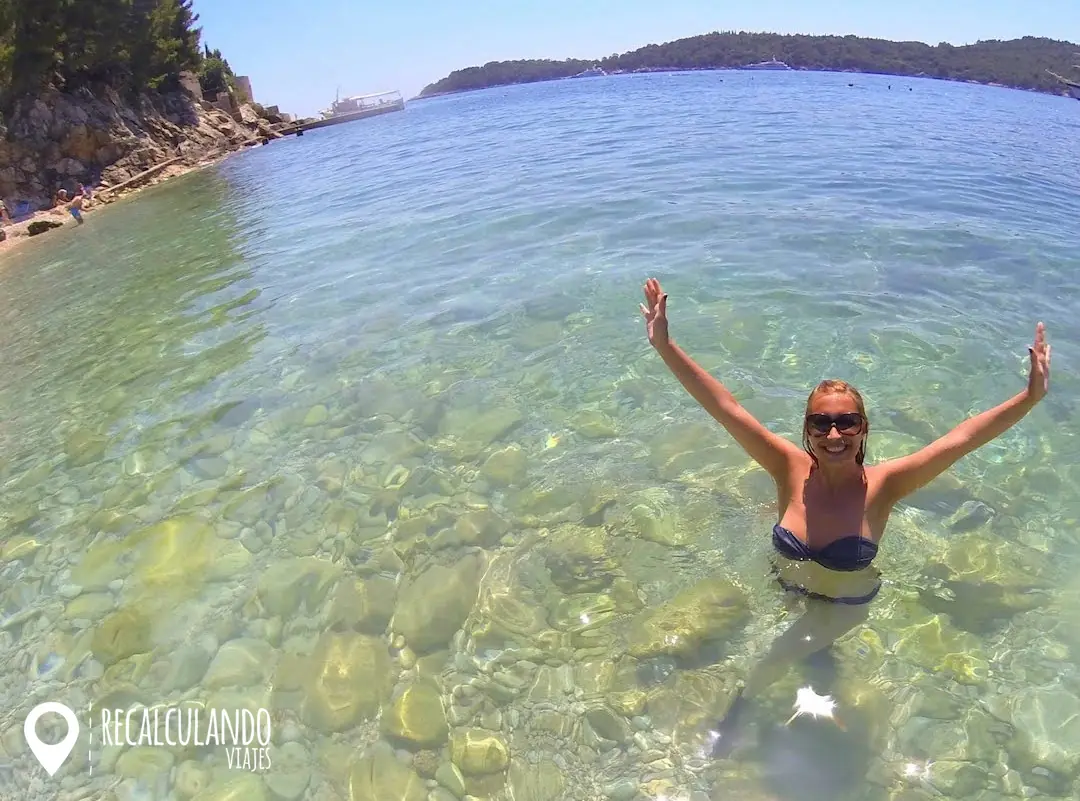
Practical TIP: wear water shoes or sandals. Almost all beaches are pebbly and entering barefoot is an exercise in balance and patience, hahaha. And don’t forget goggles, because the water is so transparent it’s a shame not to look below.
If you have energy left, another of the most popular activities is kayaking at sunset bordering the walls and Lokrum: they leave from Pile beach, last about three hours, and usually include a stop to snorkel in a cave. We have it noted for next time.
Dubrovnik and Game of Thrones: the real locations
Touring the series locations is one of the most popular things to do in Dubrovnik. The city was King’s Landing, and even if you haven’t seen it, recognizing the settings is fun regardless. These are the main ones:
- The walls and Bokar Fortress: the city’s defenses in the Battle of the Blackwater.
- Lovrijenac Fortress: the Red Keep in several exterior scenes.
- Jesuit Stairs: the famous Cersei walk of shame.
- Minceta Tower: the House of the Undying in Qarth, where Daenerys circles looking for her dragons.
- Rector’s Palace: the house of the Spice King, also in Qarth.
- Pile Gate and the bay: the entrance to King’s Landing and Myrcella’s departure.
- Sv. Dominika Street: the city market in various crowd scenes.
- Gradac Park: the Purple Wedding garden, Joffrey’s wedding.
- Lokrum Island: also Qarth, with a replica of the Iron Throne for photos.
- Trsteno Arboretum: 18 km north, the King’s Landing gardens. A beautiful, quite unvisited Renaissance garden.
There are two-hour themed tours that cover the locations with film frames in hand, available in English. We did it on our own with the map on our phone, which also works perfectly and is free.

Where and what to eat in Dubrovnik
After touring everything to see in Dubrovnik, you’ll get hungry, and let’s be honest: eating inside the walls is expensive and the quality doesn’t always match. In our nearly two months in Croatia, we learned some tricks that save you quite a bit:
- Stay away from the Stradun. By going two streets in, prices drop and the food is usually better.
- Look for pekara (bakeries). A burek (the pastry filled with cheese, meat, or spinach typical of the Balkans), a slice of pizza, or a sandwich will sort out lunch for about 6 or 7 € including a drink.
- Prefer konobas. These are the traditional family taverns with home cooking. Ask if they have a daily menu or daily dish, because sometimes they only give you the à la carte menu.
- Shop at the market or supermarket. Fruit, water, and something to snack on before entering the old town changes the daily budget.
- Book dinners in summer. After 8:30 PM, in July and August, there is a line almost everywhere.
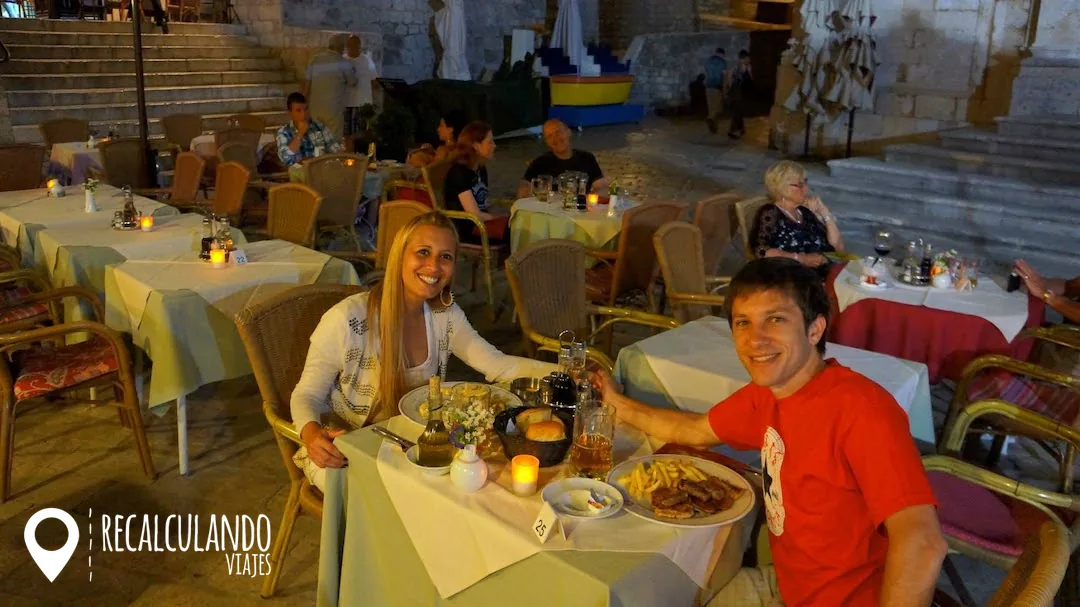
As for dishes, the ones you can’t miss are peka (meat or octopus cooked under an iron bell with embers, must be ordered hours in advance), pašticada (veal stew with gnocchi), crni rižot or black risotto with squid ink, ćevapi, and for dessert, rožata, which is a type of flan with caramel typical of Dubrovnik. And if you like oysters, those from the bay of Ston, an hour from here, have a well-deserved fame.
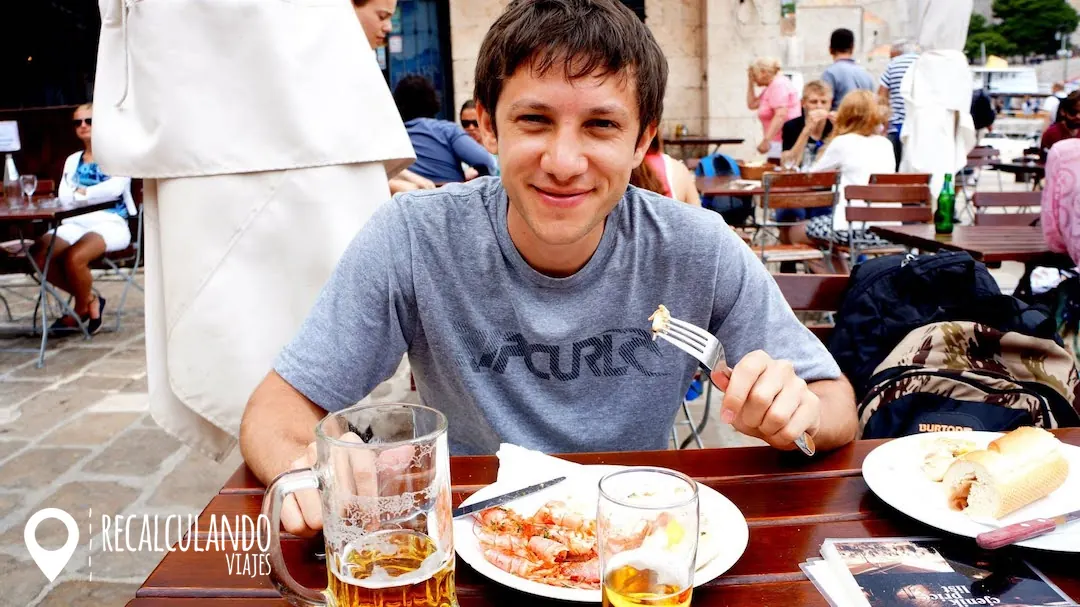
A main course in a decent old town restaurant is around 15-25 €, so if you are traveling for several days, alternating konoba, pekara, and supermarket is the formula that worked for us.
A bit of history: the Republic of Ragusa in two minutes
Understanding this changes the meaning of the walk. For more than 450 years, Dubrovnik was neither Croatian nor Venetian: it was the Republic of Ragusa, an independent trading state that maintained its freedom by paying tributes, negotiating with Turks and Christians alike, and building those enormous walls you walk today.
It was a republic ahead of its time: it abolished slavery in 1416, had one of the first quarantine systems in the world (the Lazarettos), a sewage system from the 14th century, and a rector who ruled for only a month. In 1667, an earthquake destroyed it almost completely and thousands of people died: that’s why the city you see today is so homogeneous; it was rebuilt almost entirely in Baroque style.
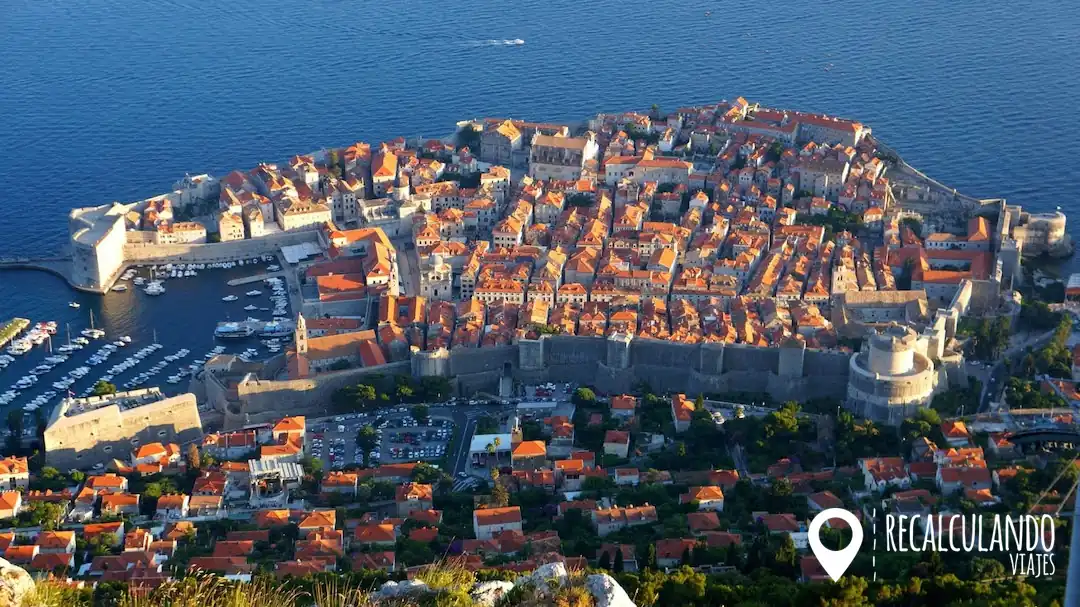
The last scar is recent. During the 1991-1992 siege, more than 50% of the old town buildings were hit by projectiles. If you look at the roofs from the walls, you will notice that the bright orange tiles are the new ones and the dull ones are those that survived. That detail left us thinking for a good while.
Things to do in Dubrovnik in one day, two days, and three days
If you arrive on a cruise or are passing through, you can take advantage of a lot. These are the itineraries we would put together today depending on the time you have:
Things to do in Dubrovnik in one day
- 8:00 — Walls, entering through Ploče Gate. Two hours, with a stop at Minceta Tower.
- 10:30 — Stradun, Onofrio Fountain, Luža Square, and the Franciscan Monastery cloister.
- 12:30 — Jesuit Stairs, Gundulić market, and side streets, which are shady at that time.
- 14:00 — Banje Beach or a while on the Buža rocks.
- 18:30 — Cable car to Mount Srđ for sunset.
- 21:00 — Return to the old town at night, which is when we liked it most.
FREE🚶♀️➡️Free walking tour of Dubrovnik with English-speaking Guide ➜ Click Here🚶 — at no cost, just tip what you feel it’s worth.
Things to do in Dubrovnik in two days
Day 1 same as above, without rushing, and adding the Old Port and the Lazarettos. Day 2 we dedicate to the outside: morning at Sveti Jakov, road lookouts, quiet noon and afternoon at Lokrum, closing with sunset at Gradac Park.
Things to do in Dubrovnik in three days or more
With a third day, you can do a full excursion: Cavtat, Plat, and the south coast, the Elafiti islands by boat, or cross to Mostar or the Bay of Kotor. If you have a car, the Trsteno Arboretum and Ston fit comfortably into the same day.
Things to do in Dubrovnik and surroundings: Excursions from Dubrovnik
We spent almost two months touring Croatia and its islands, so we can tell you with authority that the surroundings offer much more than a day:
- Cavtat: 23 km south, a village with a boardwalk and turquoise water. Reached by bus (line 10, about 30 minutes, between 3 and 5 €) or by boat from the old port. The easiest and cheapest excursion of all.
- Elafiti Islands: Koločep, Lopud, and Šipan. Day boats usually combine all three with lunch on board and a stop at the Blue Cave of Koločep.
- Ston: an hour away, with the longest defensive wall in Europe after the Great Wall of China, the oldest salt pans in the Mediterranean, and the best oysters in Croatia.
- Trsteno Arboretum: 18 km away, the oldest Renaissance garden in the area, with an aqueduct and sea views. Cheap and quiet.
- Mostar and Kravice (Bosnia): long but highly recommended excursion, with the Ottoman bridge and waterfalls. You cross a border (in high season, border control takes a while), bring your passport or ID.
- Kotor (Montenegro): another spectacular bay just over two hours away, also with a border crossing.
- Mljet National Park: the greenest island in the Adriatic, with two saltwater lakes and a monastery on an islet.
- Dalmatian Islands: from here we started our route to Korčula, Hvar, and Brač, which if you have the days, are unmissable.
If you prefer to have it sorted and with a guide in English or other languages, you can see excursions and tours in Dubrovnik, with free cancellation up to 24 hours before.
Where to stay in Dubrovnik
This is the decision that will change your trip (and budget) the most. Our summary by zone:
- Old Town: the most beautiful experience; you walk out and you are on the Stradun. But it is the most expensive, no cars allowed, and almost everything has stairs. If you arrive with large suitcases, think twice.
- Ploče: next to the east wall, near Banje Beach, and with incredible views. Our favorite zone for quality-price-location ratio.
- Lapad and Babin Kuk: quieter, better prices, beaches nearby, and direct bus to the old town in 15 minutes. Ideal if traveling with family or for several days.
- Gruž: the port zone, bus station, and market. Practical and economical if you arrive by ferry or leave early for the islands.
Key detail if arriving by car: the old town is pedestrianized and parking near the walls is very expensive (in the Pile area it can go up to 10-15 € per hour in high season). Look for accommodation with included parking or check the Lapad, Babin Kuk, and Gruž neighborhoods, where parking is much more reasonable.
In summer, it is best to book well in advance because well-located accommodations fly. On this map, you can compare real prices of hotels and apartments by area:
How to get to Dubrovnik and move around the city
By plane. The airport (DBV) is 22 km away, in Čilipi. The official shuttle leaves about 30 minutes after each landing and takes between 30 and 40 minutes: costs 10 € for a single ticket and 15 € for a round trip, valid for 15 days. For the opposite direction, it leaves from the Gruž terminal and the cable car stop. A taxi or Uber is around 30-45 €.
By ferry or catamaran. From Split, Hvar, Brač, and Korčula, there are fast catamarans in season, in addition to slower ferries. Everything arrives at the Gruž terminal, 3 km from the old town. There is also a maritime connection with Bari, Italy.
By bus. There are buses from Split (4-5 hours), Zagreb, Kotor, and Mostar. Watch out for the Neum corridor: until the opening of the Pelješac bridge, you had to cross Bosnia, and some routes still do, so keep your ID handy.
By car. We rented a car both times and would do it again, because the southern beaches, Cavtat, Ston, and Trsteno are much more enjoyable with your own mobility. We compared prices on DiscoverCars, which gathers local and international agencies in one search. For parking, the Ilijina Glavica garage (10-15 minutes walk from Pile) is the most reasonable option, with rates near 1.50-3 € per hour and a daily maximum of about 20-25 €; in Gruž it is even cheaper.
Move around. Libertas city buses connect everything (Lapad, Babin Kuk, Gruž, Pile) and the daily ticket costs about 5.31 €. You can also use Uber. Inside the walls, everything is done on foot: no cars or bicycles allowed.
Internet. Not to depend on bar wifi, we use eSIMs: with Holafly you get a 5% discount with the code RECALCULANDOVIAJES and you activate it before leaving home.
Travel insurance for Dubrovnik
Croatia is in the European Union, so with the European Health Insurance Card, you have basic public healthcare covered if you are a European resident. But that doesn’t cover what usually goes wrong on a summer trip: a sprain while walking down stone stairs, a foot cut on beach rocks, an ear infection from too much sea, flight cancellation, or lost luggage. And in Dubrovnik, private healthcare is not cheap.
We always travel insured with IATI Insurance, which covers medical expenses, repatriation, luggage, and water activities, something to look at if you plan to kayak or snorkel. With the exclusive link for our readers, you have a permanent 5% discount on any IATI (CLICK HERE) policy.

How much does it cost to visit Dubrovnik: 2026 reference prices
| Concept | Adult price (2026) |
|---|---|
| Walls (includes Lovrijenac Fortress) | 40 € from March to October / 15 € from November to February |
| Dubrovnik Pass 1 day | 40 € (walls + museums and galleries + 24h bus) |
| Dubrovnik Pass 3 days / 7 days | 50 € / 60 € |
| Cable car to Mount Srđ (round trip) | approx. 27 €, not included in the pass |
| Lokrum Island (boat + reserve) | 30 € |
| Airport shuttle (one way / round trip) | 10 € / 15 € |
| City bus (daily ticket) | approx. 5.31 € |
| Bus to Cavtat (one way) | Between 3 and 5 € |
| Parking near the walls | 10-15 €/hour in Pile zone; 1.50-3 €/hour in remote garages |
| Pekara food (sandwich or burek + drink) | 6-7 € |
| Main course in old town restaurant | 15-25 € |
Quick math: if you are going to walk the walls and enter even one museum, the one-day Dubrovnik Pass pays for itself, because it costs the same as the single ticket for the walls. Prices are reviewed each season, so confirm them before buying.
Tips to enjoy Dubrovnik (and not hate it in August)
These are the tips we wish we had read before our first visit, especially if you travel in peak season:
- Check the cruise ship calendar. On days with three ships in port, the old town becomes saturated between 10:30 and 15:00. Use that time for the beach.
- Early birds or night owls. The two best versions of the city are at 7:00 AM and after 9:00 PM.
- Footwear with good grip. The limestone is so polished it’s slippery, especially if it rained or if you come from the beach with wet feet.
- Fill your bottle at the fountains. Dubrovnik’s water is drinkable and delicious, and buying bottles all day is a waste of money.
- Careful with luggage. If you sleep inside the walls, you will drag your suitcase over steps. Backpack or small suitcase, better.
- Carry small cash. Almost everything is paid by card, but some parking lots and market stalls are still cash-only.
- Add days. Dubrovnik on its own is short: with three or four more days you can put together an incredible route through the islands and national parks, such as the Krka Waterfalls or the Plitvice Lakes.
Map of things to do in Dubrovnik
We share with you the 22 things to do in Dubrovnik from this guide located on a map, so you can see at a glance what is inside the walls and what is outside. You can open it on your phone while walking and set the route in the order that suits you best.
Frequently asked questions about things to do in Dubrovnik
How many days are needed to see Dubrovnik?
With two full days, you see everything essential without rushing: one day for the walls and the old town, and another for beaches, cable car, or Lokrum. We stayed three nights on both visits and it seemed just enough time to add some nearby excursions like Cavtat or the Elafiti islands.
How much does it cost to go up the Dubrovnik walls?
In 2026, the adult ticket costs 40 € between March and October and about 15 € between November and February. The ticket includes Lovrijenac Fortress and is valid for a single circuit of the wall, so if you leave, you can’t re-enter. It is best to buy it on the official website or arrive as soon as they open, at 8 in the morning.
Is the Dubrovnik Pass worth it?
Yes, if you plan to walk the walls. The one-day pass costs the same as the single entry to the wall and also includes Lovrijenac Fortress, several museums and galleries, and urban transport for 24 hours. Keep in mind that the cable car to Mount Srđ is not included, because it is operated by a private company.
Things to do in Dubrovnik in one day?
Start with the walls at 8 AM, continue with the Stradun, Onofrio Fountain, Luža Square, and the Franciscan Monastery cloister. At noon, escape to Banje Beach and save the sunset for the cable car to Mount Srđ. If you have energy left, return to the old town at night, which is when we liked it most.
Things to do in Dubrovnik if you arrive on a cruise?
Cruise ships dock at Gruž port, 3 km from the old town, and you get there by city bus in about 15 minutes. Half a day is enough for the walls, Stradun, Luža Square, and the Jesuit stairs. If your ship leaves late, add the cable car to Mount Srđ, which is the most impressive in the shortest time.
What are the best beaches in Dubrovnik?
Banje is the most famous and closest to the old town, with views of the walls and Lokrum. Our favorite is Sveti Jakov, further south, which you reach by going down about a hundred steps and was almost empty in mid-August. There are also Danče, Lapad Bay, and Copacabana, in Babin Kuk, quieter and more family-friendly.
Is it necessary to rent a car in Dubrovnik?
Not for the city, because the old town is pedestrian and city buses work very well. But if you want to tour the surroundings, the southern beaches, Cavtat, Ston, or the Trsteno arboretum, a car changes the trip. We rented on both visits and looked for accommodation with parking included, because near the walls it can cost between 10 and 15 € per hour in summer.
Where to eat cheap in Dubrovnik?
Stay away from the Stradun and get two streets inside. Local bakeries sell burek, slices of pizza, and sandwiches for about 6-7 € with a drink, and family konobas usually have a daily dish at reasonable prices. Buying fruit at the Gundulić or Gruž market also saves you several meals.
What is the best time to visit Dubrovnik?
May, June, September, and early October are the best months: there is good weather for the beach, fewer people, and lower prices than in mid-summer. July and August are spectacular but combine intense heat, cruise ships, and the highest prices of the year.
Where are the Game of Thrones locations in Dubrovnik?
Lovrijenac Fortress is the Red Keep, the walls are those of King’s Landing, and the Jesuit stairs are the Cersei walk of shame. Minceta Tower and the Rector’s Palace appear as Qarth, Gradac Park was the purple wedding garden, and on Lokrum there is a replica of the Iron Throne.
So, is it worth visiting Dubrovnik?
Yes, and very much so. We know it is said to be saturated and expensive, and both things are true in July and August at noon. But it is also true that at 8 in the morning, walking alone at the top of the wall with the Adriatic below, there is no city like it.
Our summary after two visits: wake up early for the walls, escape to Sveti Jakov when the crowds arrive, go up to Mount Srđ at sunset, and return to the old town at night. With those four moments, you have the best of the things to do in Dubrovnik, and you will probably return with the same feeling we had: that time was missing.
If you are putting together the complete route, follow our guides for Trogir, Dugi Otok, and Rab, or see how we plan our trips step by step. Have a great trip, and tell us how it went!
ℹ️ **Total Transparency**
This article contains affiliate links. If you book through these links, we may receive a small commission at no additional cost to you. We only recommend services we use on our trips and trust. This helps us keep this blog free and continue creating useful content for you. Thank you for your support!
🔗 Resources & Useful Links for your trip to Dubrovnik
Do you have questions or want to add your own recommendations on things to do in Dubrovnik?
💬 Leave your comment or write to us, we love reading the experiences of other travelers.
Thank you very much for being part of this adventure!— Nanu & Facu 🌎 | Recalculando Viajes 💜