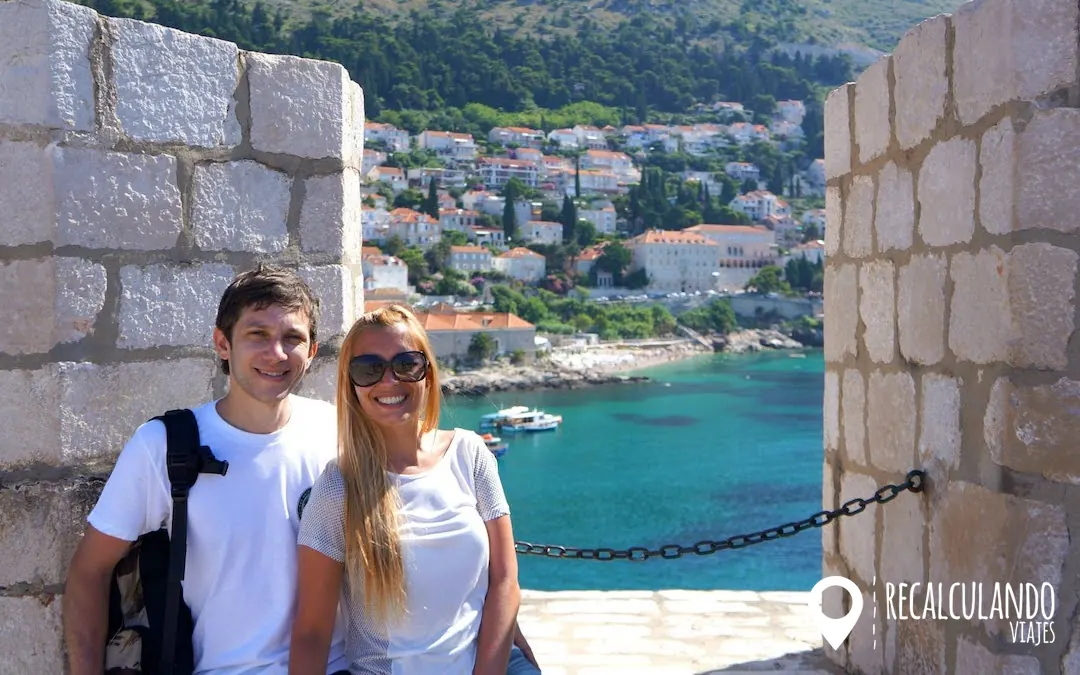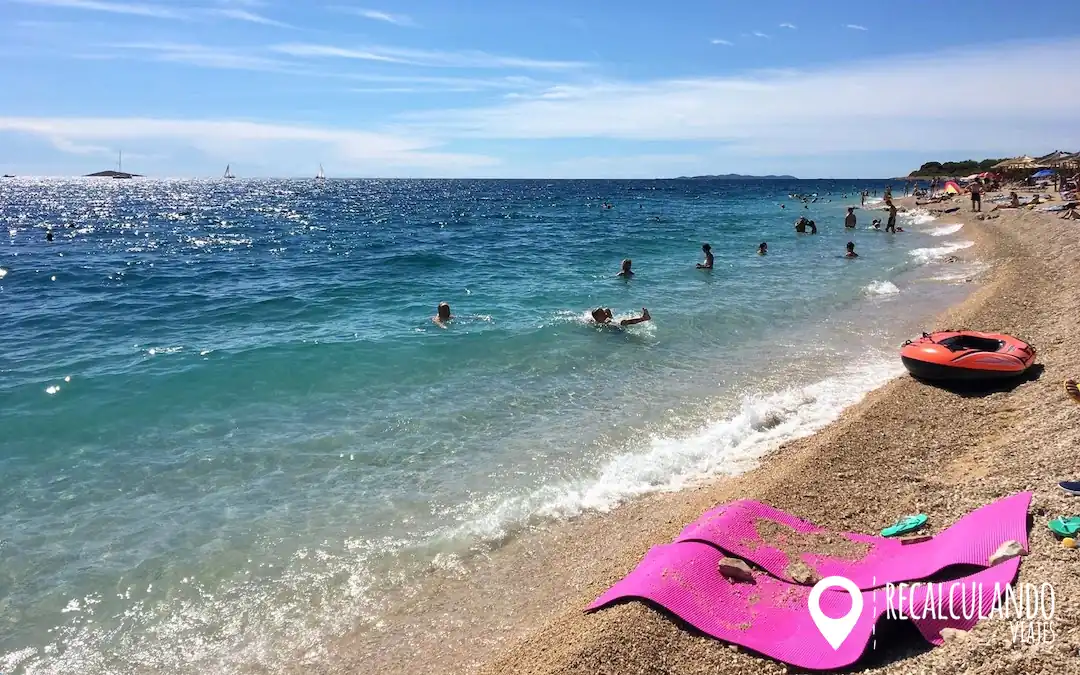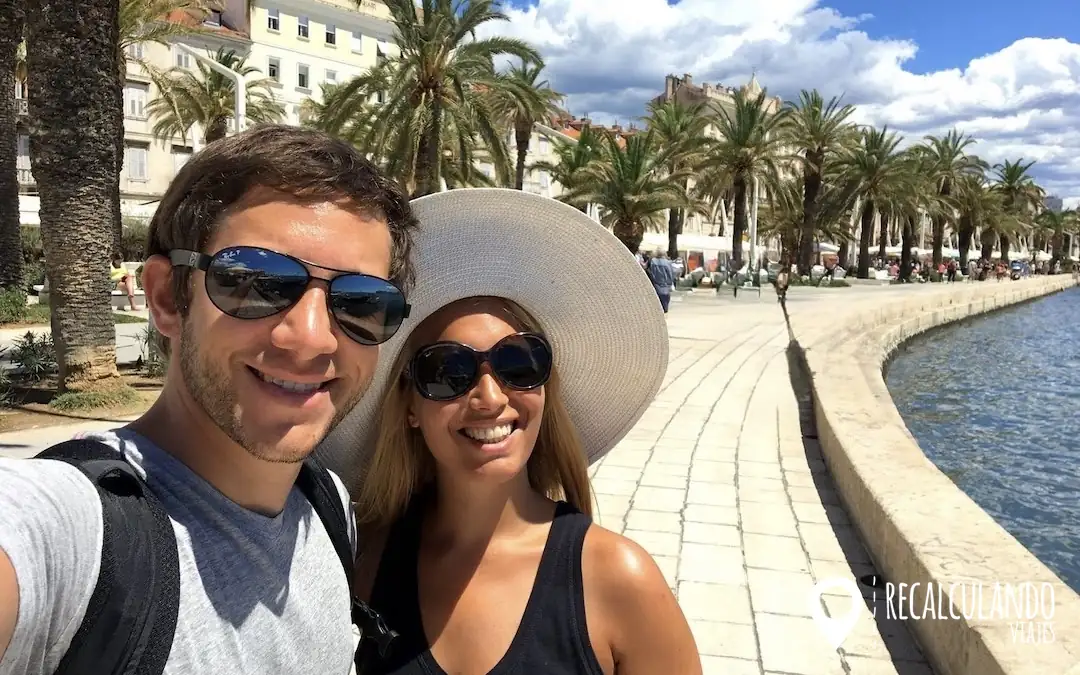
If you are looking for things to do in Brač, you have come to the right place: we stayed on the island for 10 nights, rented a car, and traveled from end to end. In this guide, we share the 16 must-see places, complete with a map, where to stay, how to get there by ferry, and all the tips we wish we had before we went.
Brač was one of the stops during our nearly two months traveling through Croatia and its islands (Zagreb, Rab, Dugi Otok, Trogir, Hvar, Korčula, Dubrovnik…) and we honestly loved it. It is the largest island in Dalmatia, home to the most famous beach in the country, and at the same time, it has stone villages where time seems to have stood still.
🌍 Travel Insurance: 5% Off with IATI Seguros! 🌟
Take advantage of this offer and travel safe.
Things to do in Brač: Summary
| Category | Details |
|---|---|
| Destination | Brač Island, Dalmatia (Croatia). |
| Recommended days | 3 to 5 days (ideal for exploring calmly). |
| Best time | May, June, and September. |
| Must-sees | Zlatni Rat, Vidova Gora, Blaca Hermitage, Bol, Supetar, Pučišća, and Dragon’s Cave. |
| Transport | Jadrolinija ferry from Split (to Supetar). Renting a car is the best option to explore the island. |
| Budget | €60-100 per day for two people (excluding accommodation). |
| Key tip | Bring water shoes for the pebble beaches and book accommodation months in advance if traveling in summer. |
1. Zlatni Rat, the most famous beach among things to do in Brač
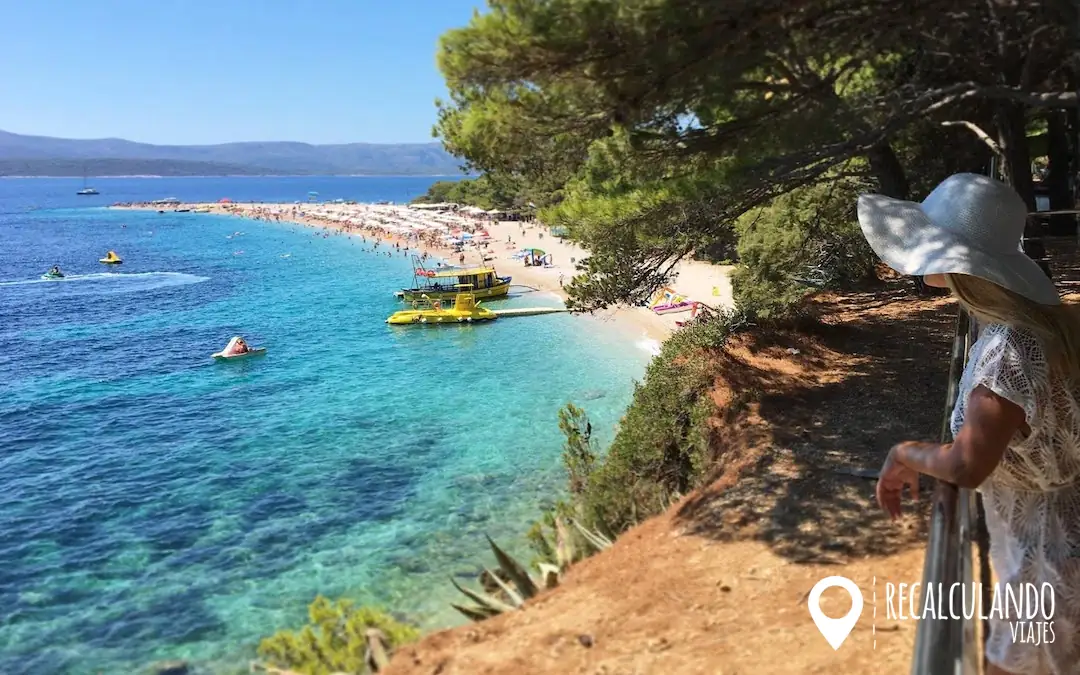
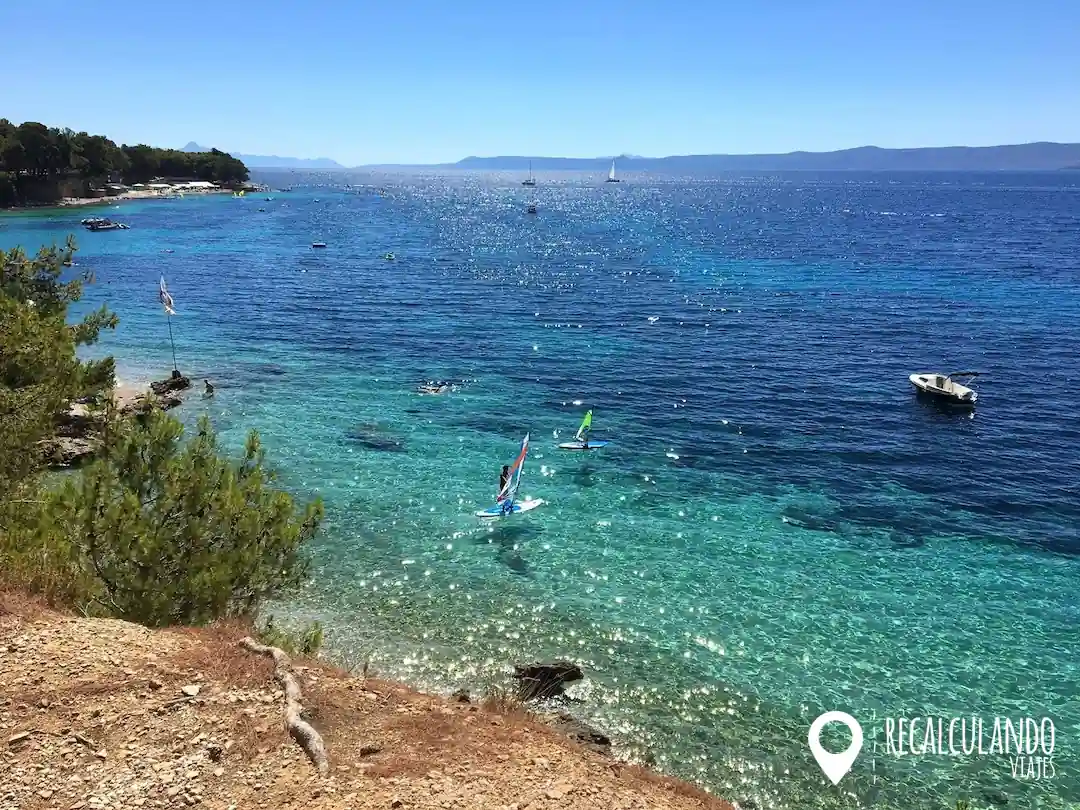
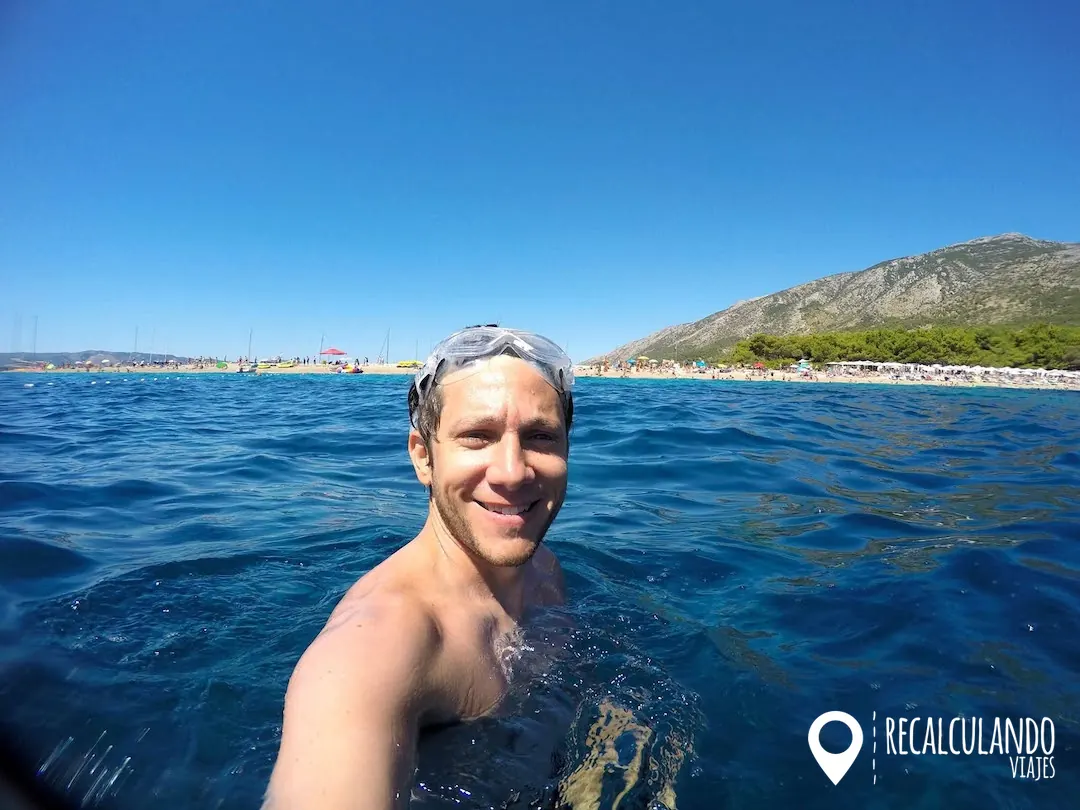
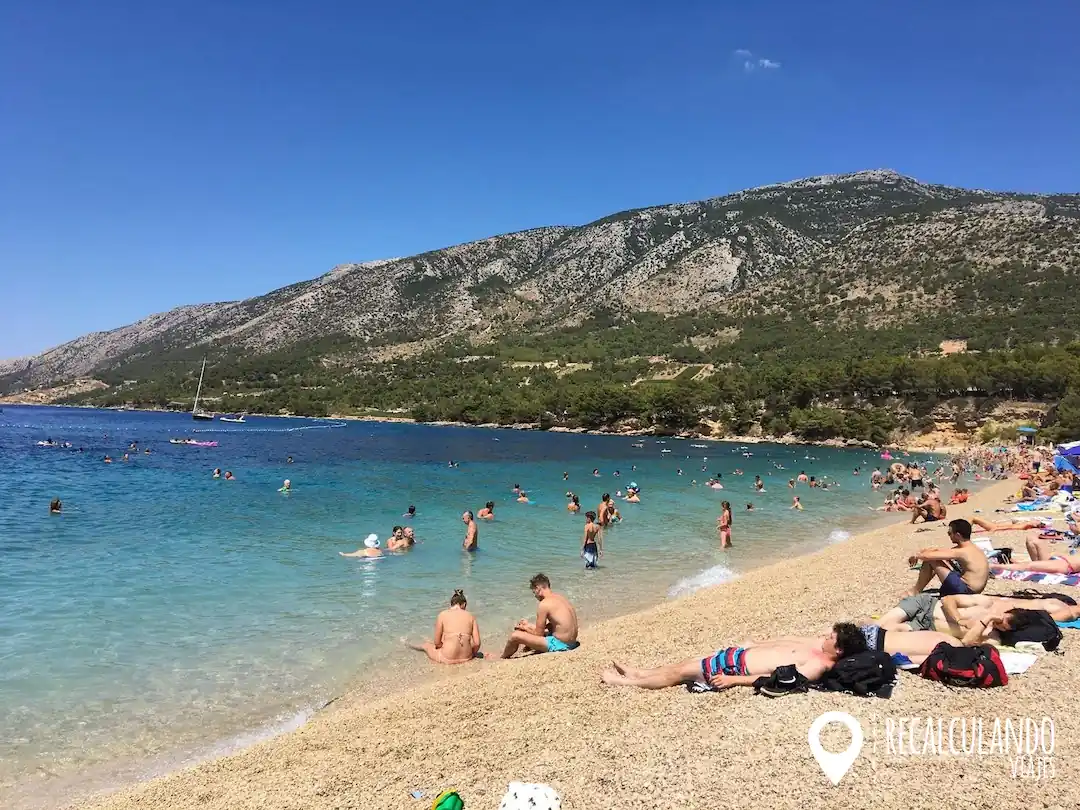
We have to start here, no matter what. Zlatni Rat (the “Golden Horn”) is the most photographed beach in Croatia and one of the most beautiful in the entire Adriatic. It is a spit of white pebbles that stretches about 500 meters into the sea and changes shape according to the wind and currents. Yes, you read that right: the tip of the beach moves and can look a little different every day.
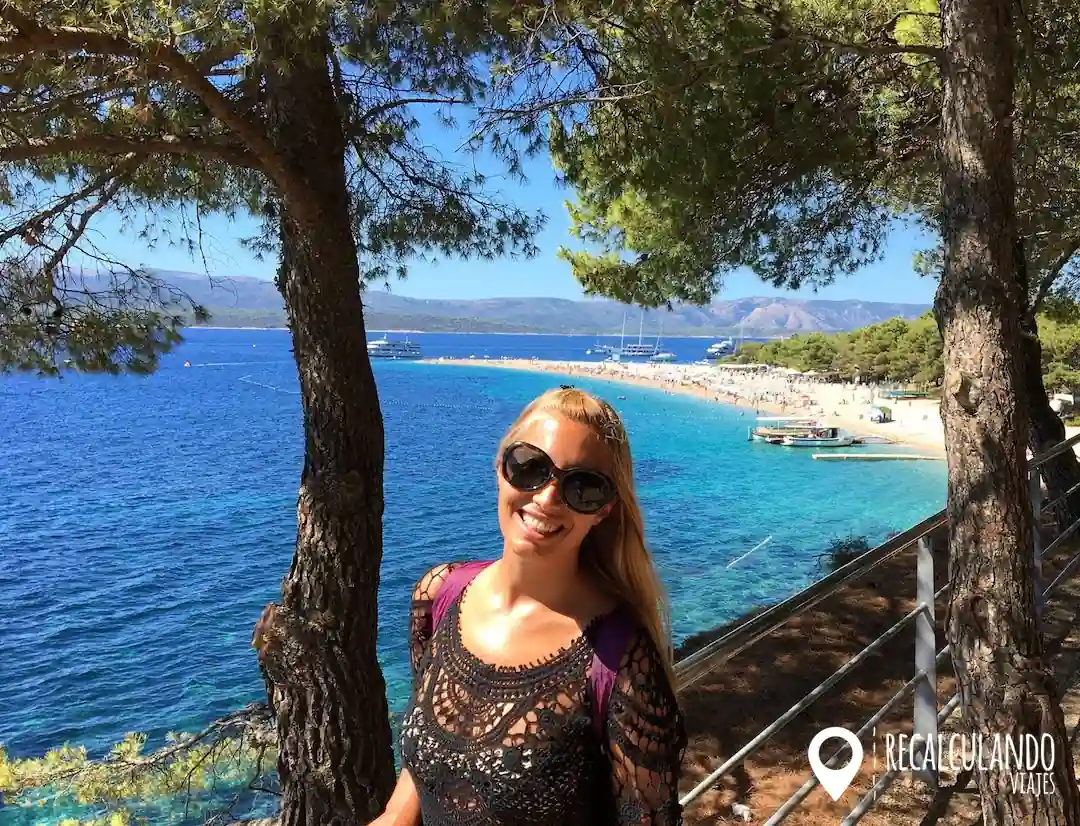
It is about 2 km from the center of Bol and you can reach it by walking along a beautiful coastal path, between pine trees with the sea right beside you, in about 20 minutes. We went several times at different times of the day, and our favorite moment was sunset: the light over the turquoise water is something we won’t forget. However, at the end of July, the beach gets very crowded, so if you can, go early in the morning or late in the afternoon.
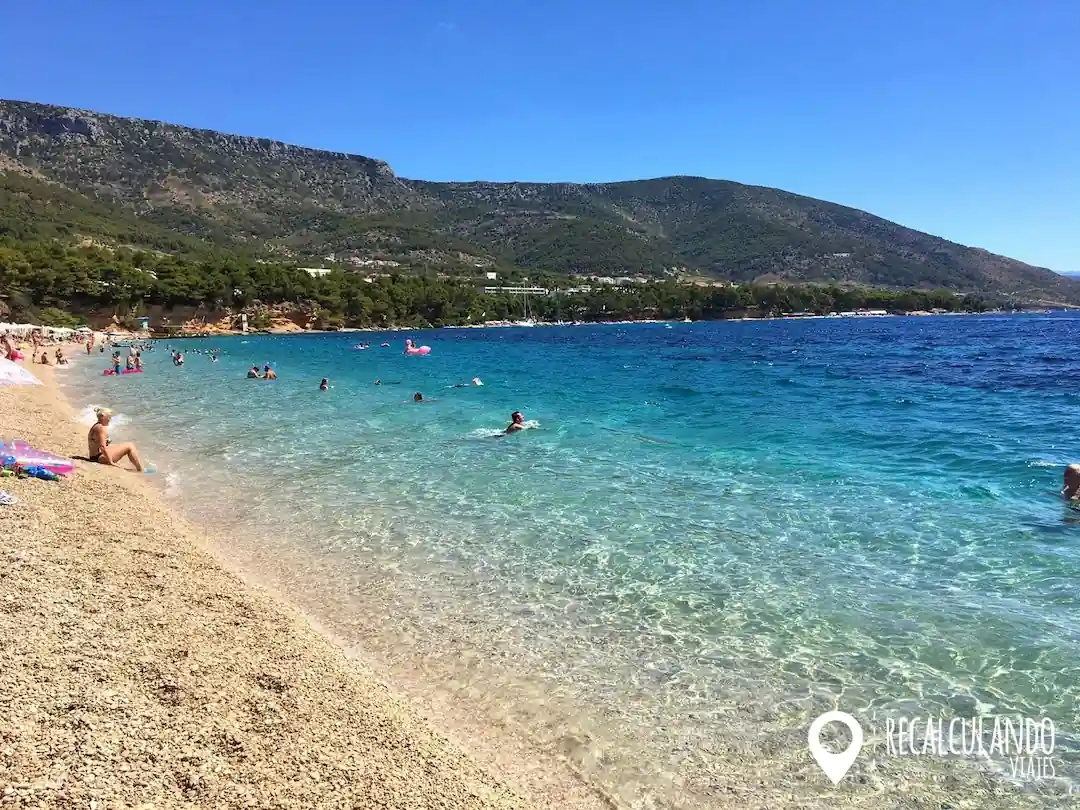
Keep in mind: it is a pebble beach, not sand. Water shoes here are worth their weight in gold! There are umbrella and sunbed rentals, showers, bars, and even windsurfing and kitesurfing schools, as one part of the beach has the perfect wind for these sports.
2. Bol, the most beautiful village on the island
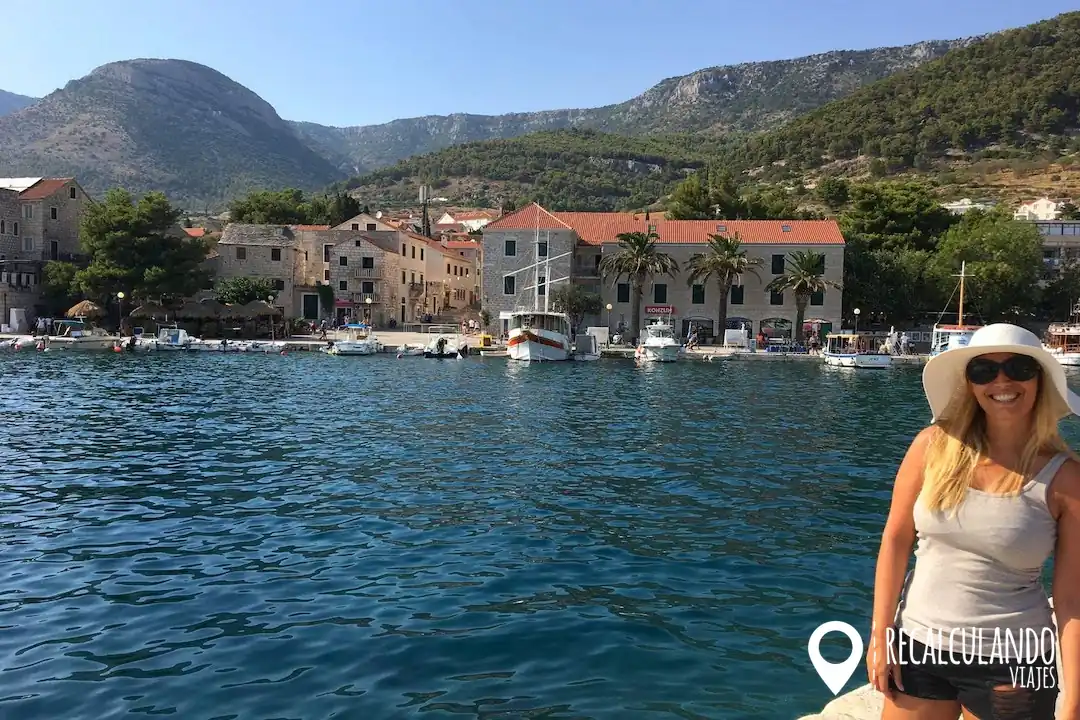
Bol is the most touristy village in Brač and you can understand why. It has an old town made of white stone with small streets that are a pleasure to walk, a port full of small boats, and a promenade with cafes and restaurants facing the sea. We returned several times during our stay and always found something new to see.
What we liked most was the atmosphere at sunset: people strolling through the port, fishermen returning with their boats, and that relaxed pace characteristic of Croatian villages that aren’t yet fully overcrowded. From the port of Bol, there are also boat excursions to the neighboring island of Hvar; if that tempts you, we have left you our complete guide on things to do in Hvar.
3. The Dominican Monastery of Bol
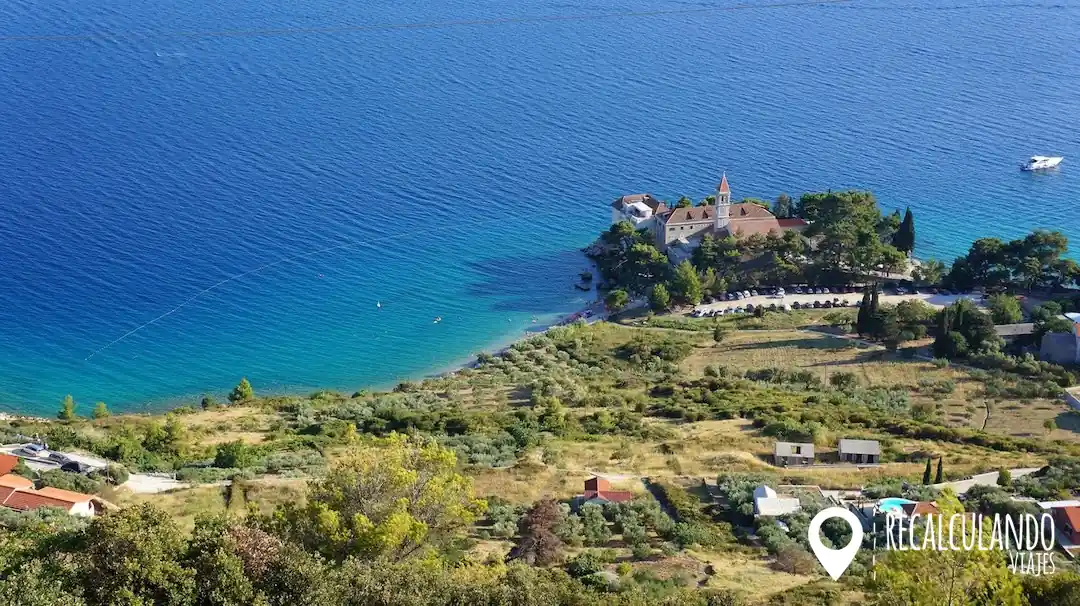
At the eastern tip of Bol, on a small peninsula surrounded by the sea, is the Dominican Monastery, built in the 15th century. We walked there from the port along the coast and the setting felt like a postcard: the pale stone building, the cypresses, and the Adriatic in the background.
The monastery has a museum with archaeological pieces and a painting attributed to the studio of Tintoretto that many travelers recommend; we didn’t enter, but just for the walk there and the views, it is worth approaching.
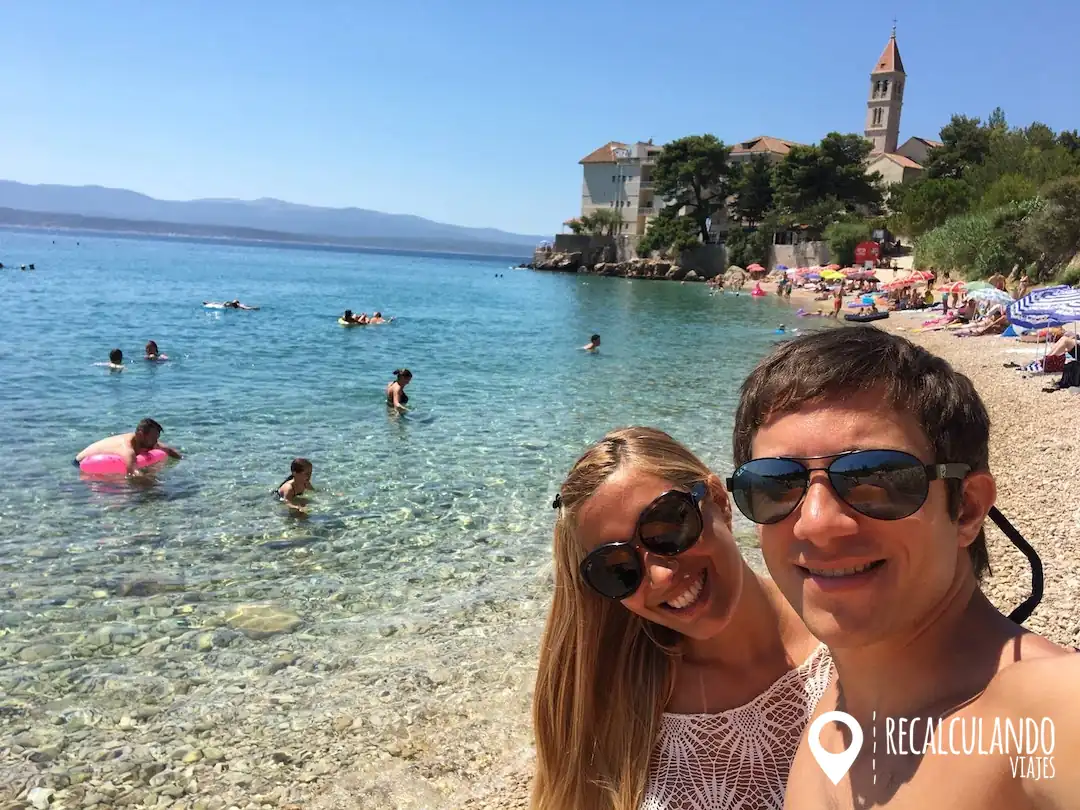
TIP: Right next door is Martinica beach, a small pebble beach that is one of the quietest in town: perfect for a swim away from the crowds of Zlatni Rat.
4. Vidova Gora, the rooftop of the Adriatic islands
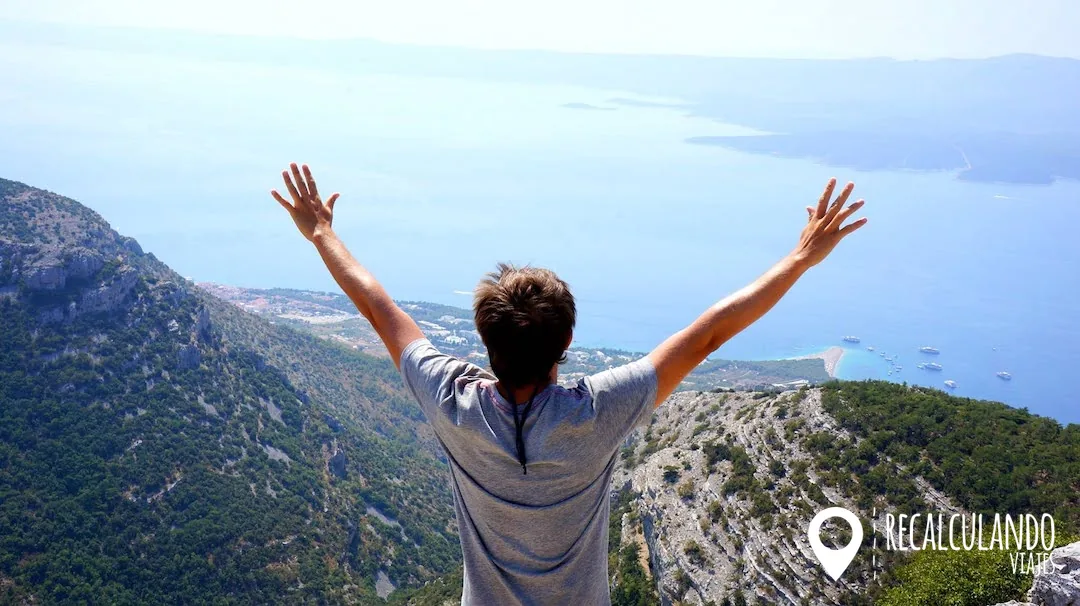
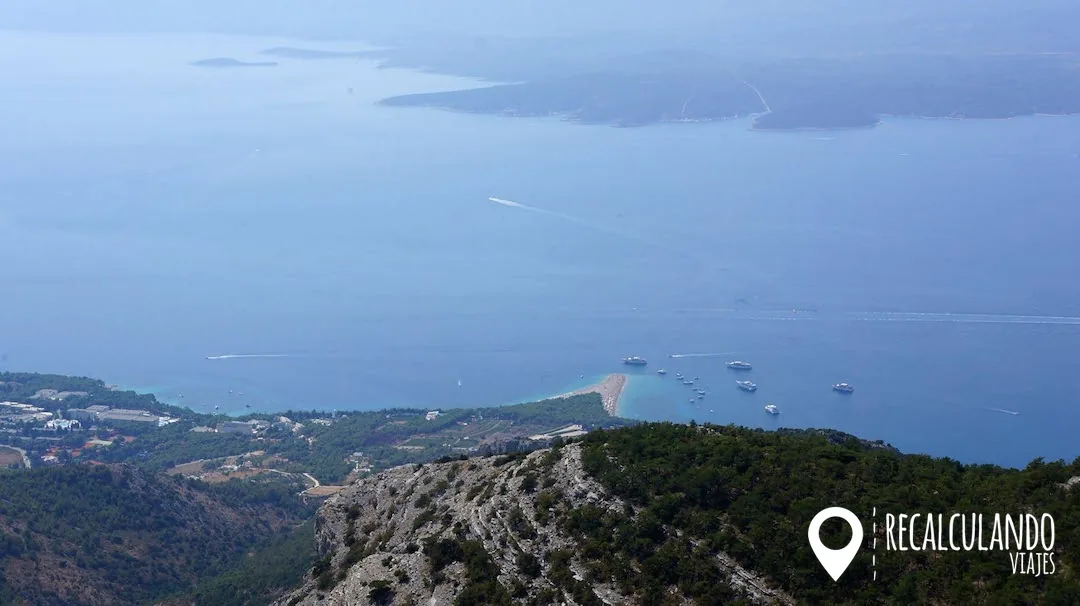
At nearly 780 meters, Vidova Gora is the highest peak in all the Adriatic islands and one of the must-sees of Brač. From the top, you can see the famous Zlatni Rat in its full horn shape, the island of Hvar across the way, and on clear days, they say you can even make out the Italian coast.
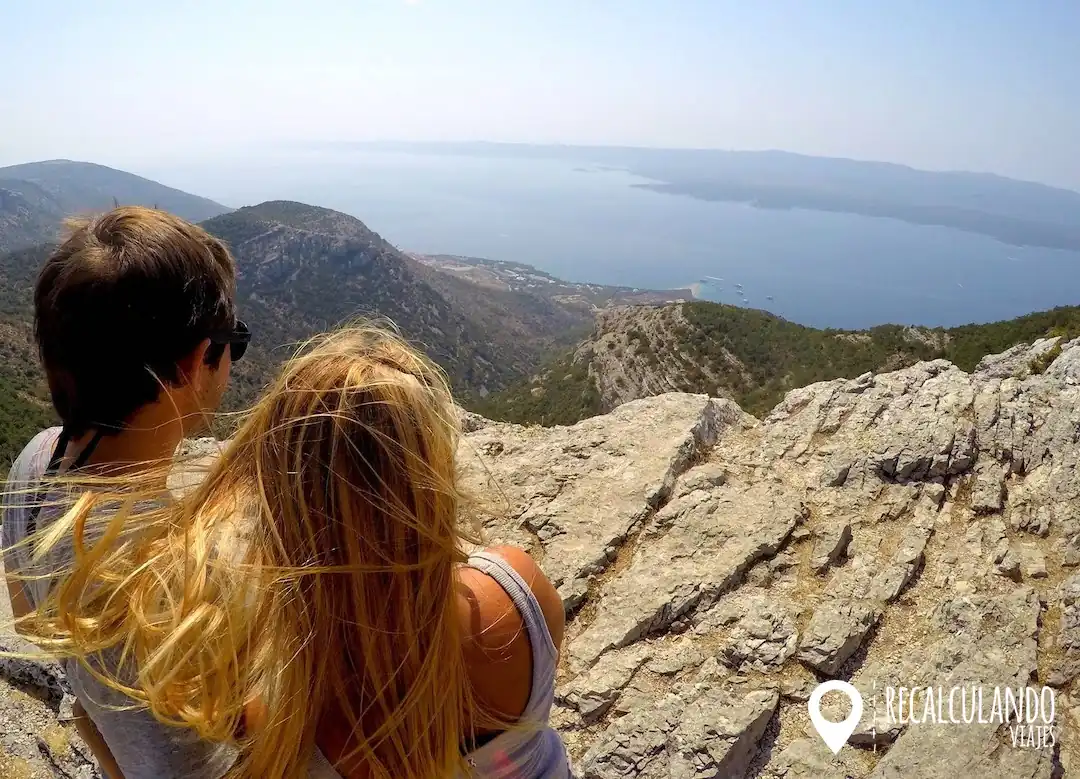
You can drive up via a paved road from the interior of the island (it is signposted from Nerežišća) or walk from Bol, a demanding two-hour hike that many travelers do early to avoid the heat. If you go in summer, definitely bring water: the sun beats down hard up there.
A fun fact for a technical stop: in Nerežišća, the village in the interior where the road passes, there is a bonsai pine that grows out of the roof of a chapel and is protected as a natural monument. It is one of the most photographed corners of the island and is right on your way.
5. Murvica Beach, tranquility minutes from Bol
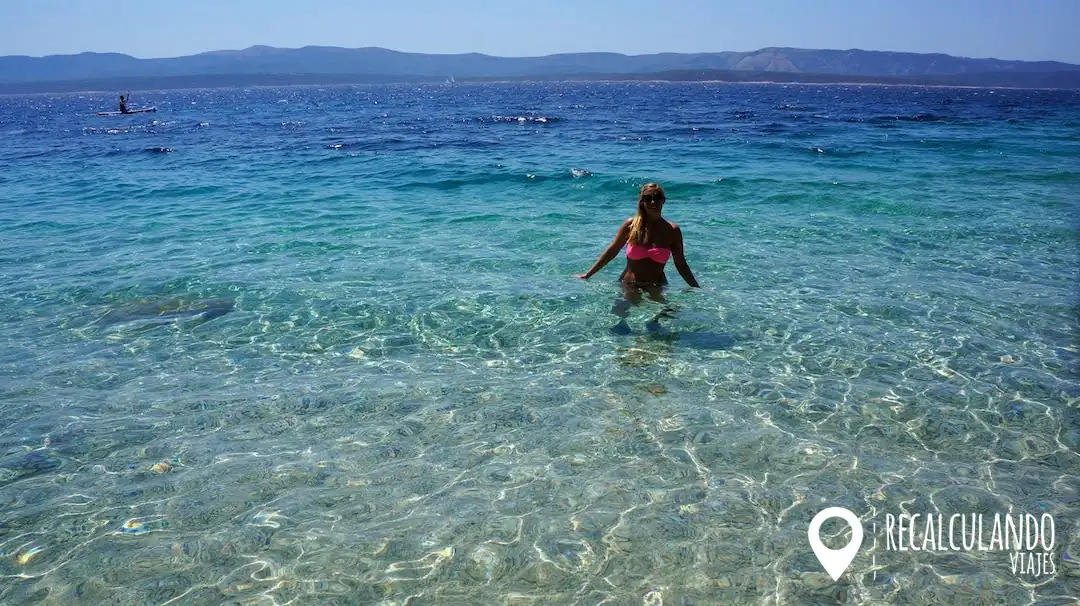
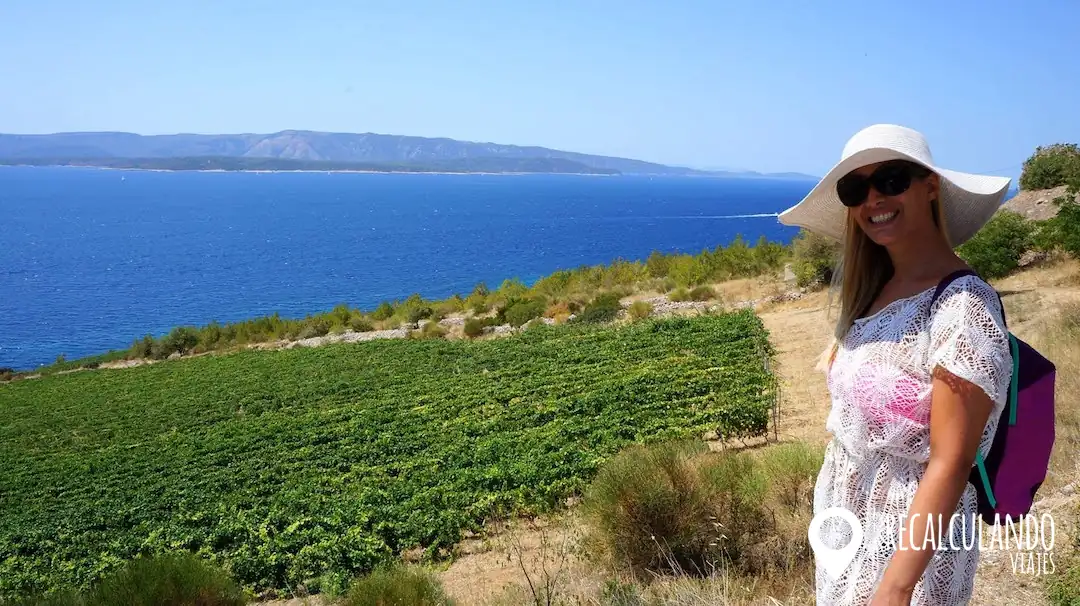
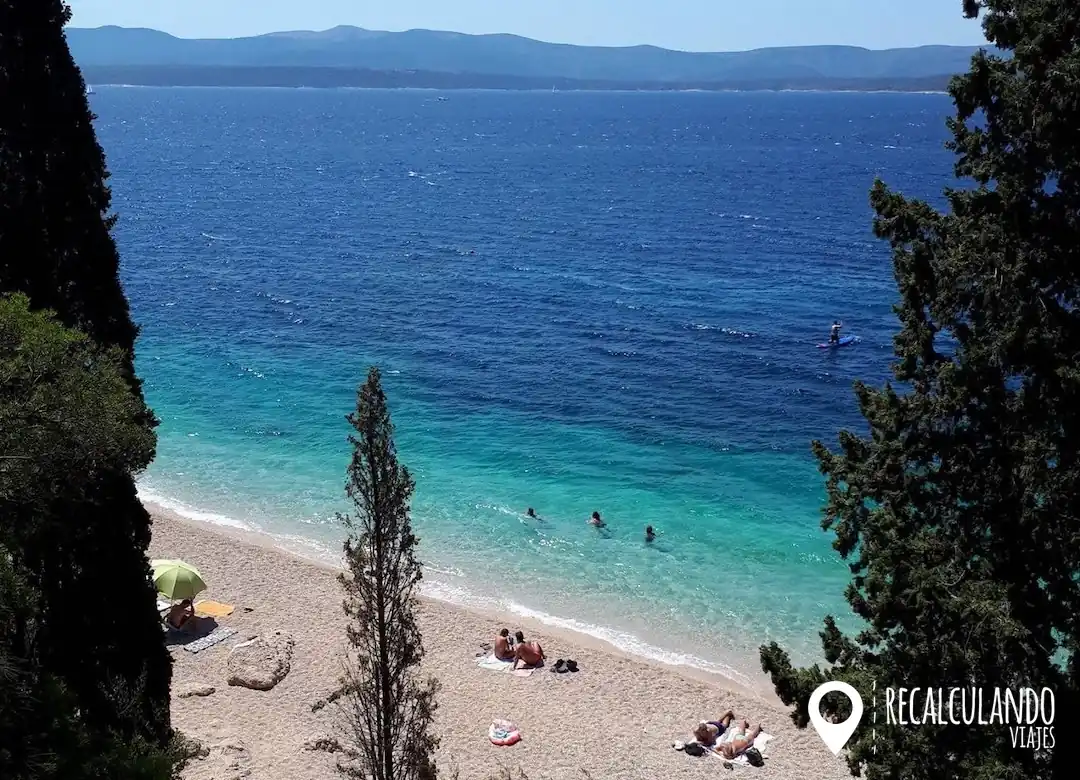
About 5 km west of Bol is Murvica, a tiny village of stone houses with a pebble beach that we loved. We spent a whole afternoon there and there were only a couple of people, with the island of Hvar in front and transparent water that looked like a pool. After how busy Zlatni Rat is, this place is another world.
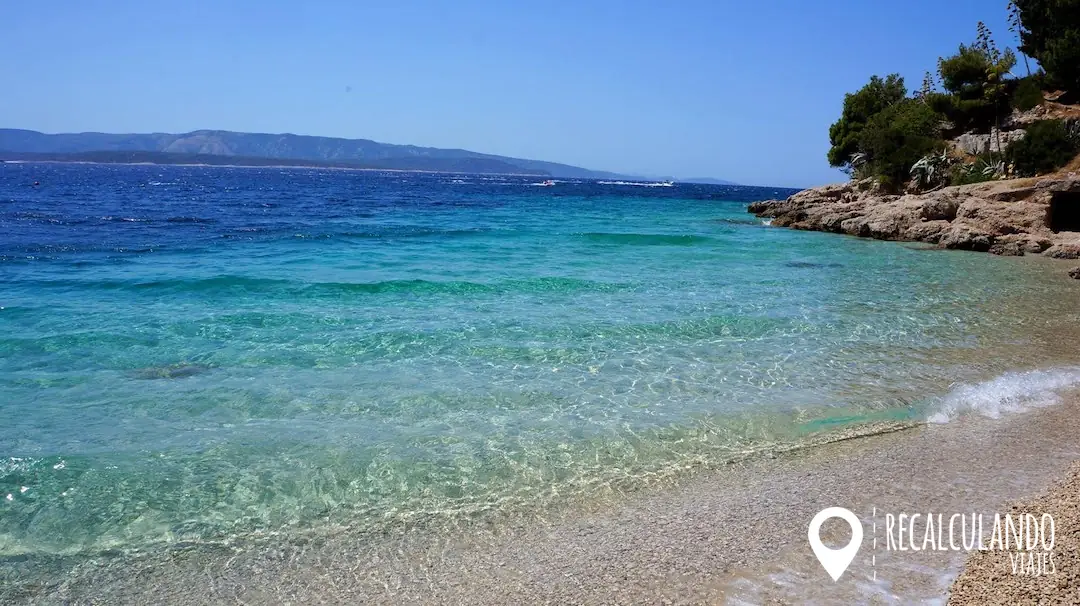
You reach it by car on a narrow road with curves (drive slowly and you’ll be fine) and then you have to walk down a small path to the beach. There are almost no services, so bring water and something to snack on. For us, one of the best things to do in Brač if you are looking to disconnect.
6. The Dragon’s Cave (Zmajeva špilja)
Just above Murvica hides one of the most mysterious places on the island: the Zmajeva špilja or Dragon’s Cave, a cave that Glagolitic monks used as a temple in the 15th century. It features reliefs carved into the rock where Christian symbols mix with Slavic mythology, including the dragon that gives it its name.
Important: you can only enter with a guided tour, because the cave is locked, and you must book in advance. The climb from Murvica is steep, about 50 minutes, so you need comfortable shoes and water. We didn’t do it, but travelers who visited describe it as one of the most original experiences in Croatia.
👩⚕️👨⚕️ A must-have for stress-free travel! 🌎✈️ ➜ Get a Quote, Compare & Buy
7. Blaca Hermitage, history in the middle of nowhere
The Blaca Hermitage (Pustinja Blaca) is another one of those places that seem impossible: a 16th-century monastery built against a cliff in a remote area in the south of the island, where the monks had a library, school, printing press, and even an astronomical observatory with one of the most powerful telescopes in Croatia.
Today it functions as a museum and many travelers point to it as the great secret of Brač. You reach it by car to the Dragovode parking lot, and from there, it is a 40-minute walk. It is open every day except Mondays: in summer (June 16 to September 15) from 9 am to 5 pm with last entry at 4:30 pm, and the rest of the year from 9 am to 3 pm. Admission is €8 per adult. There is no bar or kiosk at the site, so bring extra water.
8. Supetar, the gateway to the island
Supetar is the largest town in Brač and the main port: this is where we arrived with the ferry from Split, car included. Beyond being a transit point, it deserves some time: it has a small but charming old town around the port, a church with a bell tower that stands out among the tile roofs, and several pebble and sandy beaches west of the pier, such as Vlačica and Banj cove, ideal if you are traveling with children.
We took advantage of the ferry waiting times to walk around the port and have a drink facing the sea. Oh, and from Supetar, the road to Bol traverses the interior of the island: it’s about a 35-40 minute drive through landscapes of olive trees, stone walls, and goats crossing the road!
9. Lovrečina Beach, the sandy beach of Brač
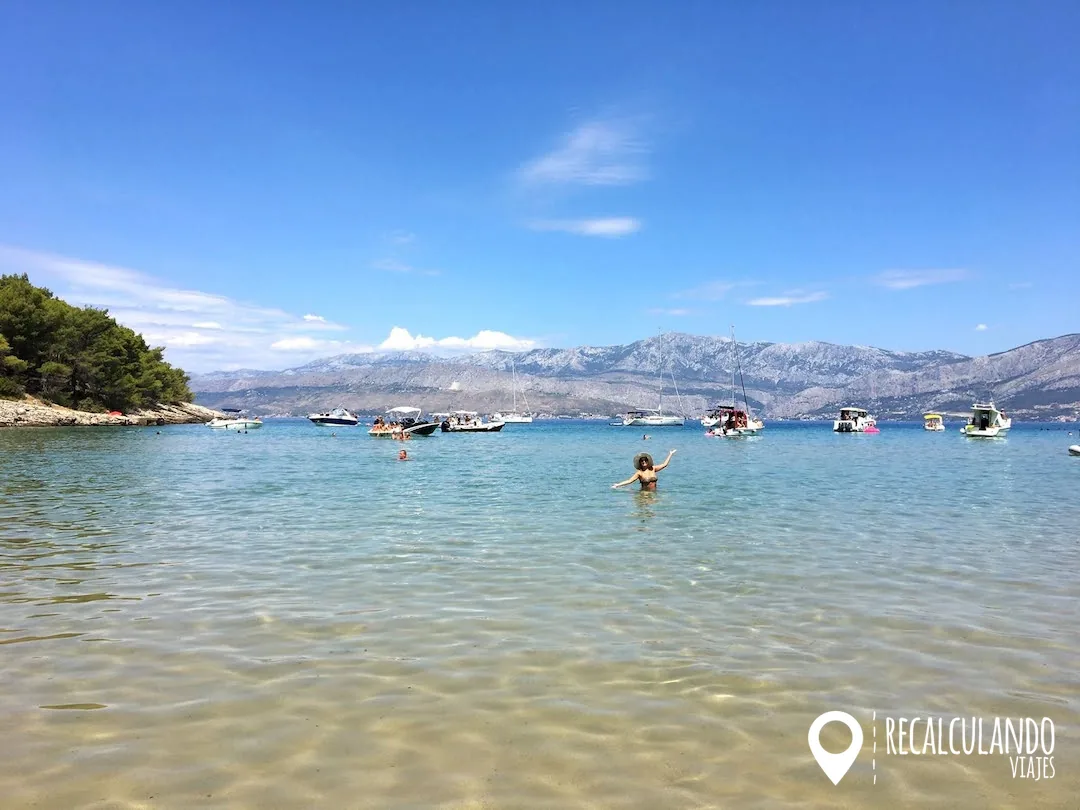
On an island dominated by pebbles, Lovrečina (Plaža Lovrečina) is a rarity: a real sandy bay, about 4 km from Postira, on the north coast. We went by car and were surprised by how beautiful it is: clear sand, shallow water that warms up quickly, and pine trees providing natural shade. It is perfect for families.
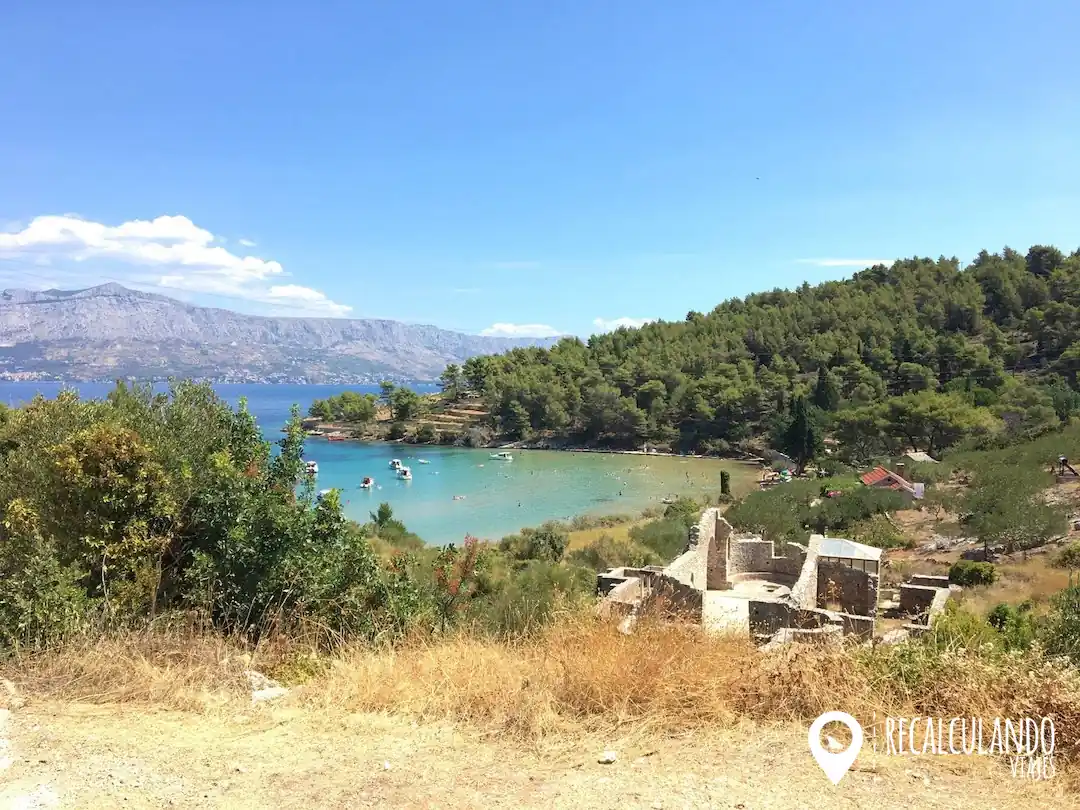
A detail that adds magic: in the same bay are the remains of an early Christian basilica and a Roman villa, so you are literally bathing next to ruins with centuries of history.
Tip: In season, there is a restaurant on the beach. However, being one of the few sandy beaches on the island, it gets crowded in August; go early.
10. Pučišća and the white stone of Brač
Pučišća, on the north coast, frequently appears on lists of the most beautiful villages in Europe and has a unique feature: here is the famous white stone of Brač, which was used to build Diocletian’s Palace in Split and which, as they say on the island, may have even reached the White House in Washington. The whole village shines with that light tone of the local stone.
In addition, one of the last stonemason schools in Europe operates here, where students still work the stone with traditional tools; many travelers recommend visiting in the summer months. The fjord-shaped natural port, surrounded by stone houses, is one of those corners that justify the detour.
11. Sumartin, the quietest corner of the island
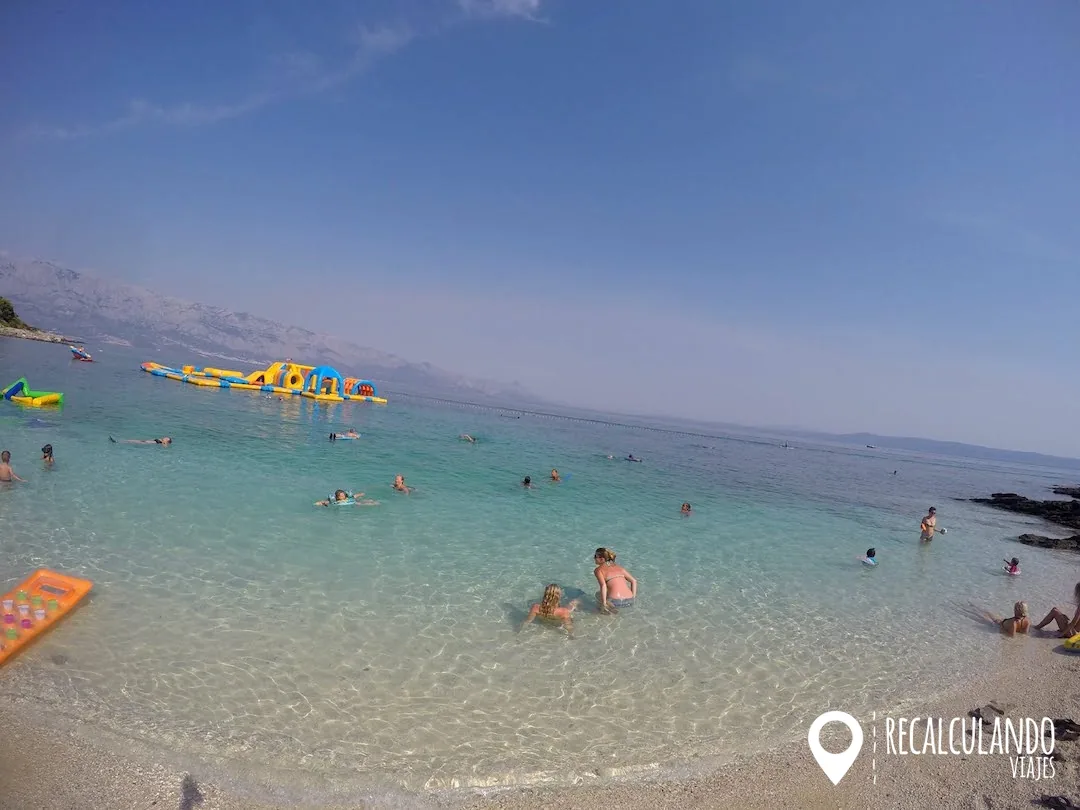
At the eastern tip of Brač is Sumartin, a fishing village founded by Franciscans that sees almost no mass tourism. We arrived by car while exploring the island and found a small port, fishing boats, and a pebble beach with incredibly clear water where we spent a beautiful time, practically alone.
From Sumartin, there is also the ferry to Makarska, on the mainland coast, so it is an ideal exit point if you continue your trip towards southern Croatia. In fact, very close to Makarska is one of the beaches that we liked most in the country: we tell you about it in our guide to Brela beach.
12. Milna, the port of sailors
On the west coast of the island, Milna is a seafaring town with a protected bay that was a refuge for ships for centuries and today is a must-stop for sailboats cruising Dalmatia. It has a promenade facing the sea with restaurants, a Baroque church, and that relaxed nautical atmosphere that many travelers describe as the most authentic in Brač.
In addition, Milna is connected to Split by fast catamaran in just 25-30 minutes, so it is an alternative for entering or leaving the island if you are traveling without a car.
13. Ložišća, a hidden postcard of the interior
About 8 km from Milna, on the road toward the interior of the island, appears Ložišća, a tiny village nestled in a hollow that many travelers describe as one of the most authentic postcards of Brač. Its iconic image is the bell tower of the Church of St. John and St. Paul, a carved stone tower that stands out among the roofs and seems too monumental for such a small town.
Don’t expect tourist services: here you find cobblestone alleys, traditional Dalmatian architecture, and a silence that is almost no longer found on the coast. It is a short stop (half an hour is enough), ideal to combine with Milna while exploring the west of the island.
14. Grabov Rat Beach, the secret neighbor of Zlatni Rat
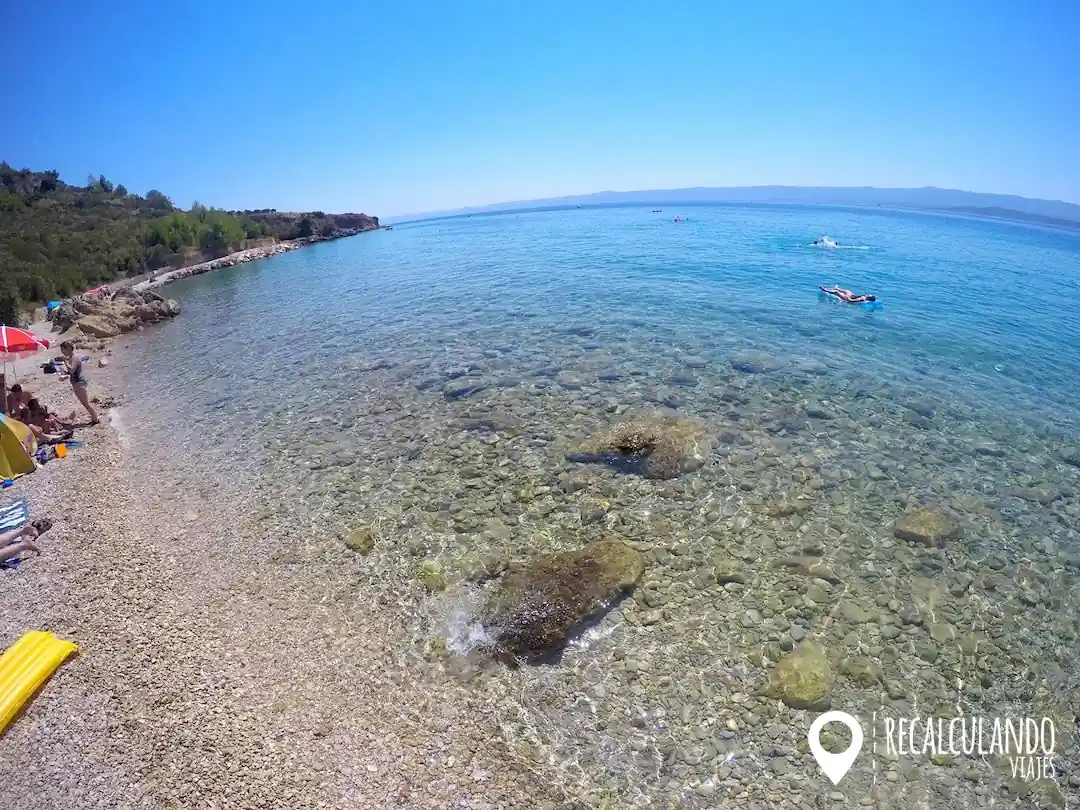
Very close to the most famous beach in Croatia, there is another one that almost no one names: Grabov Rat, another pebbly point surrounded by pine trees, west of Zlatni Rat. We discovered it while walking along the coastal path and we stayed: same turquoise sea, same pine shade, and a fraction of the people.
It is our top tip for the days in July and August: if you get to Zlatni Rat and it is packed, keep walking for a few more minutes and you will find your little spot here. In our case, it was the perfect plan for reading and having mate while facing the sea.
15. The wines of Brač and the Stina winery
Brač is also enjoyed with a glass in hand. The island produces wines with the local varieties Plavac Mali (red) and Pošip (white), and the most famous winery is Stina, which operates in the building of the old wine cooperative from 1903, right in front of the port of Bol. Many travelers recommend their tastings at sunset, with the sea in the background.
Our advice: even if you don’t visit the winery, try a glass of Plavac Mali at any restaurant on the island accompanying grilled octopus or a peka (the Dalmatian stew cooked under an iron bell). A winning combination, we guarantee it.
16. Škrip, the oldest village to visit in Brač
To close the list, a trip back in time: Škrip is the oldest settlement on the island, with origins dating back to the Illyrians, long before the Romans. It is a tiny village in the interior, of pure stone, where many travelers highlight the Museum of the Island of Brač (including Roman remains) and the olive oil museum, which operates in an old family mill.
It is about 10 minutes by car from Supetar and can be visited in a short time, so it is a perfect stop to combine with Pučišća or Lovrečina beach in the same day while exploring the north coast.



Map of things to do in Brač
To make it easy for you to get around, here is the map with the 16 things to do in Brač from this guide, plus the ferry ports and the main routes on the island. You can save it in your Google Maps and carry it on your mobile during the trip.
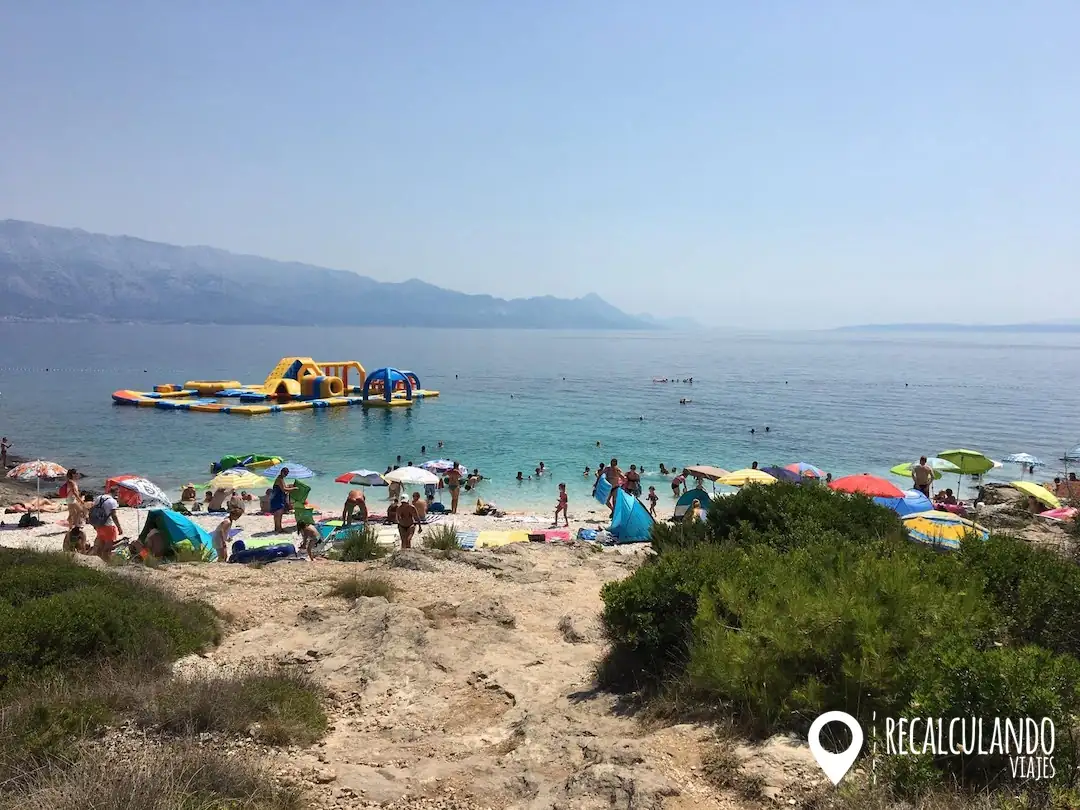
Sumartin Beach – things to do in Brac
Things to do in Brač in one day: our itinerary
Are you short on time? We always recommend spending at least one night to get to know the place better, but you can see the best of the island on a full-day excursion from Split. This is the itinerary we would create after having explored it thoroughly:
- 8:00 – Jadrolinija ferry from Split to Supetar (buy the ticket in advance in high season and arrive early if you are crossing your car).
- 9:00 – Short walk through the port and the old town of Supetar.
- 10:00 – Stop in Škrip, the oldest village on the island (30-40 minutes is enough).
- 11:00 – Crossing the interior with an express stop in Nerežišća to see the chapel’s bonsai pine.
- 11:30 – Climb to Vidova Gora: the view of Zlatni Rat from above is THE moment of the day.
- 13:00 – Descent to Bol, lunch facing the port, and walk through the old town.
- 15:00 – Afternoon at the beach in Zlatni Rat (or in Grabov Rat if it is too crowded).
- 18:30 – Return to Supetar and ferry back to Split (check the time of the last departure; in summer, it is usually after 9 pm).
If you are traveling without a car, the simple version is the direct Split-Bol fast catamaran: village, beach, and return. Fewer places, zero stress. And if you prefer someone else to handle the logistics, below we leave you the organized excursions that leave from Split.
May, June, and September (July and August: peak summer and more people)
3 to 5 days (we stayed 10 nights and could have used more)
€60-100 per day for two people excluding accommodation
Croatian (with English in tourist areas) and Euro (€)
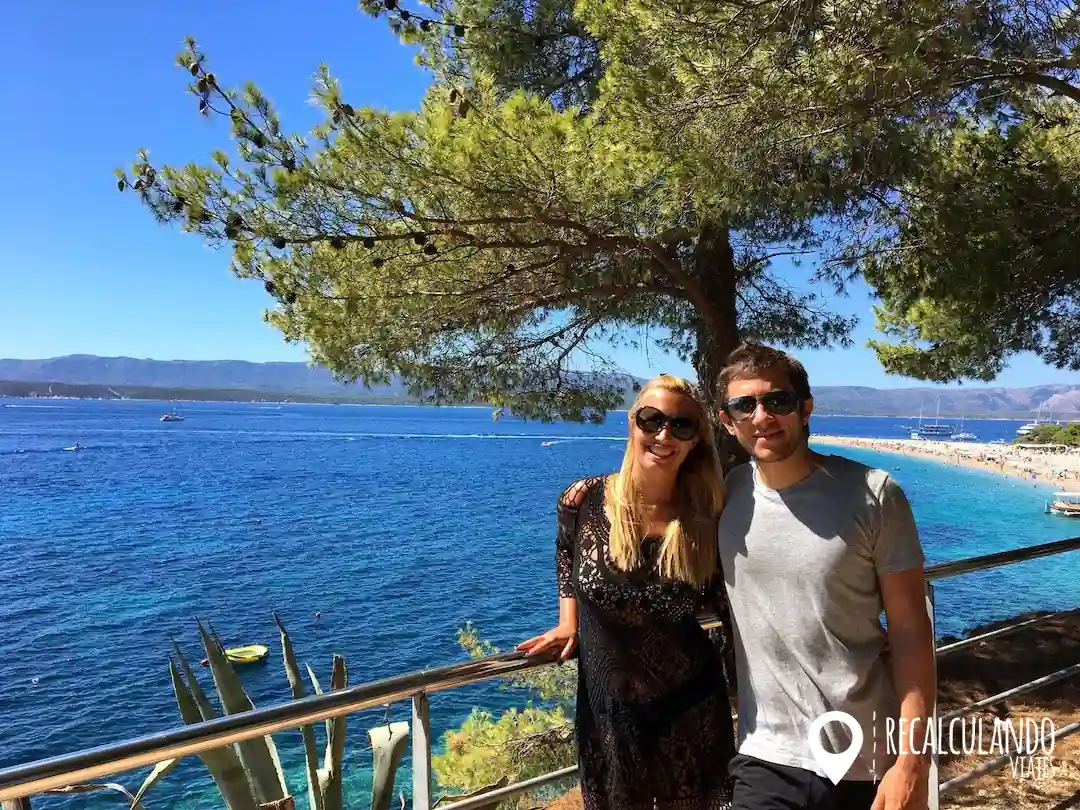
Where to stay in Brač
The best area to stay is Bol, because it concentrates restaurants, the promenade, and proximity to Zlatni Rat; it is ideal if you are going for a few days without a car. Supetar is the most practical option if you arrive by ferry from Split and want to move around the entire island, and Milna or Sumartin are perfect if you are looking for total tranquility. In our case, with a rented car, we were able to travel everywhere without depending on the area.
On this map, you can compare hotels and apartments in Brač with updated prices from Booking and other platforms:
➡️ Search for your accommodation in Brač at the best price here
TIP: in July and August, accommodation in Bol sells out; we booked more than two months in advance and still there was little availability. If you are traveling in high season, book as soon as possible.
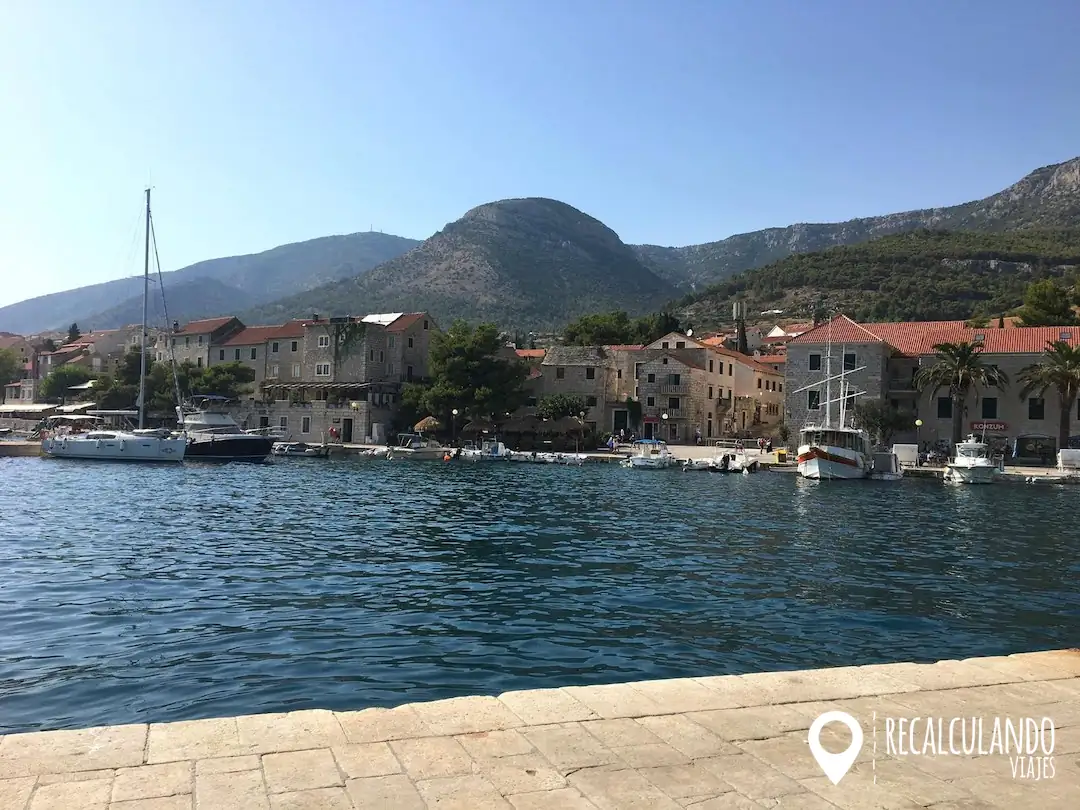
Bol village (the best place to stay in Brac)
Where to eat in Brač: typical dishes
The gastronomy of the island is pure Dalmatian: fresh fish, seafood, local olive oil, and lamb. The star dish is peka, a stew of meat or octopus with potatoes cooked for hours under an iron bell covered with embers; in many konobas (traditional taverns), you have to order it a few hours in advance, so ask at lunchtime if you want it for dinner.
Two specialties that you will only find here: vitalac, a spit-roasted lamb dish that is a centuries-old tradition of Brač, and hrapoćuša cake, a nut dessert from the village of Dol declared cultural heritage of Croatia. Many travelers recommend trying them in the konobas of the interior, where the food is more authentic (and cheaper) than on the waterfront. All, obviously, accompanied by a typical Plavac Mali wine or a Pošip from the island.
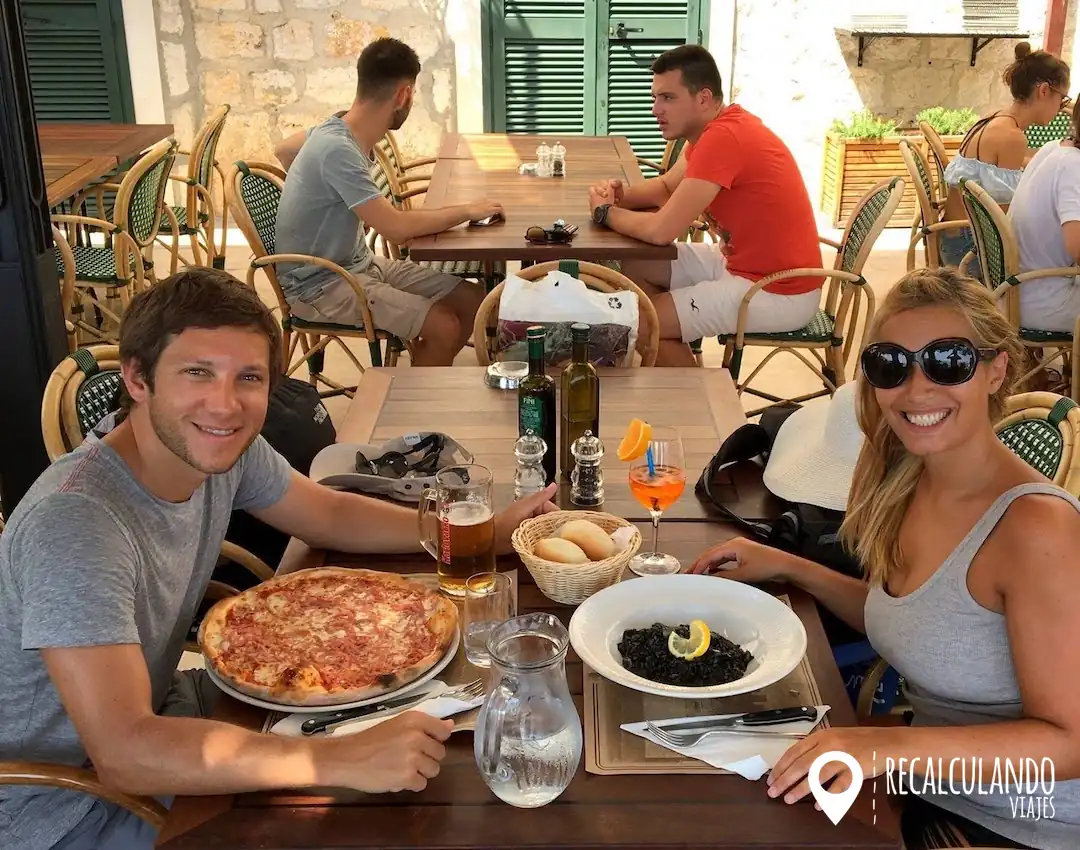
How to get to Brac
The most common way—and the one we used—is the Jadrolinija ferry from Split to Supetar (line 631): it takes about 50 minutes, allows vehicles, and in high season has departures practically every hour throughout the day. An adult ticket costs between €4.40 and €6.50 depending on the season, and a standard car between €18 and €26. A great detail: the ticket is valid for any departure of the day printed on the ticket, so if you miss one ferry, you take the next one.
If you are traveling without a car, there are also fast passenger catamarans: Split-Bol in approximately 1 hour (from about €20) and Split-Milna in just 25-30 minutes, one of the fastest connections to any Croatian island. And from the Makarska coast, the ferry to Sumartin departs, very useful if you are coming from the south. You can check updated schedules and prices on the official Jadrolinija website.
Once on the island, we rented a car and it was the best decision: distances are short, roads are in good condition, and the freedom to stop wherever you want is priceless. Places like Blaca, Murvica, Ložišća, or Škrip are almost impossible to reach without a vehicle. If not, there are buses between Supetar and Bol (around €5) several times a day.
TIP: in high season, rental cars on the island sell out, and taking yours on the ferry adds €18-26 each way. Do the math according to the days you stay: for long stays like ours, taking the rented car on the ferry in Split turned out to be the most convenient. And if you are putting together the whole Croatian route, our guide on how to plan your trip step by step might be useful.
Travel insurance for Brač and Croatia
Although Croatia is a very safe destination, healthcare for tourists is not free and any medical consultation or unforeseen event (a fall on the rocks of Zlatni Rat, a sea urchin sting, a cancelled flight) can be very expensive. We always travel insured with IATI, which we have used for years on all our trips around Europe and the world.
As blog readers, you have a 5% discount by booking through our link:
➡️ Get your IATI insurance with a 5% discount here
If you want to compare coverages and see which one suits your type of trip best, we tell you in detail in our guide to the best travel insurance for Europe.

Internet in Brač: eSIM for your trip
In the villages, there is a good signal, but once you enter the interior of the island or the coves of the south, your carrier’s roaming can cause you problems (and cost a fortune). We travel with a Holafly eSIM with unlimited data: you activate it with a QR before you leave and you arrive in Croatia with working internet, key for using the maps in this guide.
➡️ Buy your eSIM for Croatia with a 5% discount using the code RECALCULANDOVIAJES
Excursions in Brac and from Split
If you are staying for a few days or prefer to have the logistics organized for you, these are the most popular excursions:
- Excursion to Brač from Split: full day with Zlatni Rat and the main villages, ideal if you don’t want to deal with ferries or cars.
- Blue Cave, Hvar and Pakleni Islands by speed boat: the star boat excursion in the area, combining several islands in one day.
- 4×4 Tour in Brač: traverses the interior of the island, with Vidova Gora and the Blaca Hermitage, along roads that you cannot reach with a normal car.
- Catamaran cruise with food and drinks: the relax option to see the south coast and its coves from the sea.
➡️ See prices and availability for all excursions here
And if after Brač you continue island-hopping like we did, don’t miss our guides on things to do in Korčula and things to do in Trogir, two stops that fascinated us.
Frequently asked questions about things to do in Brač
How many days are needed to visit Brač?
With 3 days you see the essentials: Zlatni Rat, Bol, Vidova Gora, and a village on the north coast. With 4 or 5 days you can travel around calmly, adding Blaca, Murvica, and the lesser-known beaches. We stayed 10 nights with a car and enjoyed it without rush, combining beach time and tours.
Things to do in Brač in one day?
If you go on an excursion from Split, the ideal is to take the direct catamaran to Bol: walk through the village, spend the morning in Zlatni Rat, and, if you have transport, go up to Vidova Gora for the best view of the island. It is an intense day but you get to see the most beautiful parts of Brač.
Which is better, Brač or Hvar?
They are different islands: Hvar is more glamorous, with more nightlife and higher prices; Brač is quieter, more familiar and authentic, with the most famous beach in Croatia. We were on both and we summarize it like this: for parties and atmosphere, Hvar; for nature, beaches, and charming villages, Brač. If you can, visit both: they are connected by boat in summer.
How do I get to Zlatni Rat beach?
From the center of Bol, you arrive by walking along the coastal path in about 20 minutes (2 km between pine trees, next to the sea). There are also boat taxis from the port in season and a tourist train. If you go by car, there are paid parking lots near the beach, although in mid-summer they fill up early.
Can you get around Brač without a car?
You can, but with limitations: there are buses between Supetar and Bol and catamarans to Bol and Milna, although places like Blaca, Murvica, or Škrip are complicated without a vehicle. Our recommendation is to rent a car at least for a couple of days (you can rent on the island or cross yours on the ferry) to discover the corners that make Brač special.
What is the best time to travel to Brač island?
From May to September. June and September are ideal: warm sea, everything open, and fewer crowds. July and August is peak season, with more atmosphere but full beaches and prices at their peak; we went at the end of July and, although there were people, we always found quiet coves by moving a little away from Zlatni Rat.
Is it better to visit Brač on your own or with an excursion from Split?
It depends on your time: on your own with the ferry to Supetar and a car, you have total freedom and it is cheaper for stays of several days. If you only have one day and don’t want to drive, an organized excursion from Split handles transfers and takes you straight to Zlatni Rat and the main villages without thinking about ferry schedules.
Conclusion: Is it worth visiting Brač island?
Absolutely. After 10 nights traveling through it in our rented car, Brač remained among our favorite islands in Croatia. It doesn’t have the glamour of Hvar or the medieval walls of Dubrovnik, but it has something harder to find: authenticity. White stone villages, a sea of those that don’t seem real, beaches for all tastes, and a history that appears in every corner, from a hermitage hanging from a cliff to Roman ruins next to your towel.
We hope this guide with the 16 things to do in Brač helps you organize your trip. If you have been to the island and have a corner to recommend, let us know in the comments: we love reading your experiences. Have a great trip!
Other articles for your trip to Croatia
- 22 must-see things to do in Dubrovnik (with map)
- 18 Must-See Things to Do in Primosten (with Map)
- 21 must-see things to do in Split (with map)
- 18 essential things to do in Rab (with map)
- Plitvice Lakes, Croatia: Complete guide to visiting the National Park [2026]
- Krka Waterfalls: Guide to visiting the park (2026) + Map
- 15 Best things to do in Croatia (with map)
- 15 essential things to do in Dugi Otok, Croatia (with map)
ℹ️ **Total Transparency**
This article contains affiliate links. If you book through these links, we may receive a small commission at no additional cost to you. We only recommend services that we use on our travels and that we trust. This helps us keep this blog free and continue creating useful content for you. Thanks for your support!
🔗 Resources & Useful Links for your trip to Brac Island
Do you have questions or want to add your own recommendations on things to do in Brac?
💬 Leave your comment or write to us, we love reading other travelers’ experiences.
Thank you very much for being part of this adventure!— Nanu & Facu 🌎 | Recalculando Viajes 💜