| 29 min read | by Nanu y Facu | Asia, Blog, China
If you are looking for things to see at the Great Wall of China, the first thing you need to understand is that there is no single “wall”: there are dozens of open sections, and choosing the wrong one can ruin your day. We spent five nights in Beijing at the end of June and went up at Mutianyu, so we tell you from our own experience which one is worth it, how much everything costs in 2026 and how to get there on your own. At the end you will find the map with the 20 places, updated prices, where to stay and the frequently asked questions.
Summary of the Great Wall of China
| Category | Key details |
|---|---|
| Best time to go | April-May and September-October (avoid July and August) |
| Recommended days | 1 full day per section; 4-5 days based in Beijing |
| Approximate budget | From €15 per person going independently (transport + ticket) |
| Language and currency | Mandarin · Renminbi yuan (CNY) |
| Visa | Visa-free for up to 30 days for Spain and Argentina, among other countries (valid until 31/12/2026); check your nationality |
🌍 Travel Insurance: 5% Off with IATI Seguros! 🌟
Take advantage of this offer and travel safe.
📑 In this guide · 33 sections
- Which section to choose before deciding what to see at the Great Wall of China
- A little history before climbing the Great Wall of China
- 1. Mutianyu, the section we chose
- 2. Tower 20 and Mutianyu’s most impressive views
- 3. The Mutianyu toboggan, one of the things to do at the Great Wall of China
- 4. Going up by cable car or chairlift
- 5. Badaling, the most famous and crowded section
- 6. Juyongguan, the fortified pass closest to Beijing
- 7. Jinshanling, the photographers’ favourite
- 8. Simatai and Gubei Water Town
- 9. Jiankou, the wild wall almost nobody walks
- 10. Huanghuacheng, the only wall over water
- 11. Gubeikou, unrestored military history
- 12. Shanhaiguan and the Old Dragon’s Head
- 13. Jiayuguan, the western end in the middle of the desert
- 14. The Yumen Pass and the Han dynasty wall
- 15. Shuiguan, the quiet section next to Badaling
- 16. Xiangshuihu, wall, forest and waterfalls
- 17. Jiumenkou, the wall that crosses a river
- 18. The Datong wall and Deshengbao fort
- 19. Panjiakou and Xifengkou, the submerged Great Wall
- 20. The Great Wall of China Museum, at Badaling
- Where to stay to visit the Great Wall of China
- Where to stay in Beijing
- How to get to the Great Wall of China from Beijing
- How much does it cost to visit the Great Wall of China
- Great Wall of China opening hours
- Practical tips for visiting the Great Wall of China
- Travel insurance for China
- Day trips and visits near the Great Wall
- Things to see at the Great Wall of China, Mutianyu
- Map of the places to see at the Great Wall of China
- Frequently asked questions about the Great Wall of China
Which section to choose before deciding what to see at the Great Wall of China
Before the list of places to see at the Great Wall comes the decision that defines your day, so we put it first. None of the sections is “the best” in the abstract: it depends on how much time you have, who you are travelling with and how much you are willing to walk.
| Section | Distance from Beijing | Crowds | Difficulty | Ideal for |
|---|---|---|---|---|
| Mutianyu | 73 km | Medium | Medium-high | First visit, families, the toboggan. The one we visited |
| Badaling | 70 km | Very high | Medium | Little time, reduced mobility, winter |
| Juyongguan | 55 km | Medium-low | High | Half a day, a closed loop |
| Jinshanling | 130 km | Low | High | A long hike and photography |
| Simatai | 140 km | Low (limited numbers) | Medium | Seeing the wall lit up at night |
| Jiankou | 100 km | Very low | Extreme | Only with a guide and experience |
| Huanghuacheng | 65 km | Low | Medium | The wall over the lake, half a day |
If you only have one day and it is your first time, the short answer is Mutianyu (we went to this one). If you have two, add Simatai at night. Anything more than 150 kilometres away is a separate trip.
A little history before climbing the Great Wall of China
The Great Wall was not built by a single dynasty, nor was it ever a continuous line. The first rammed-earth walls date from the Warring States, more than 2,200 years ago; Emperor Qin Shi Huang had several of those sections joined, and the Han dynasty extended it westwards to protect the Silk Road.
What we visit today around Beijing is almost entirely the work of the Ming dynasty (14th to 17th centuries): brick, carved stone and watchtowers every few hundred metres. That is why Badaling and Mutianyu look so solid and the Yumen Pass, in the desert, looks like something else: it is, and it is about fifteen hundred years older.
Understanding this changes the visit. You are not looking at “a wall”, you are looking at the Ming section of a defence system more than two millennia old that never really worked as an impenetrable border, but rather as an early-warning network and a way to control passage.
1. Mutianyu, the section we chose
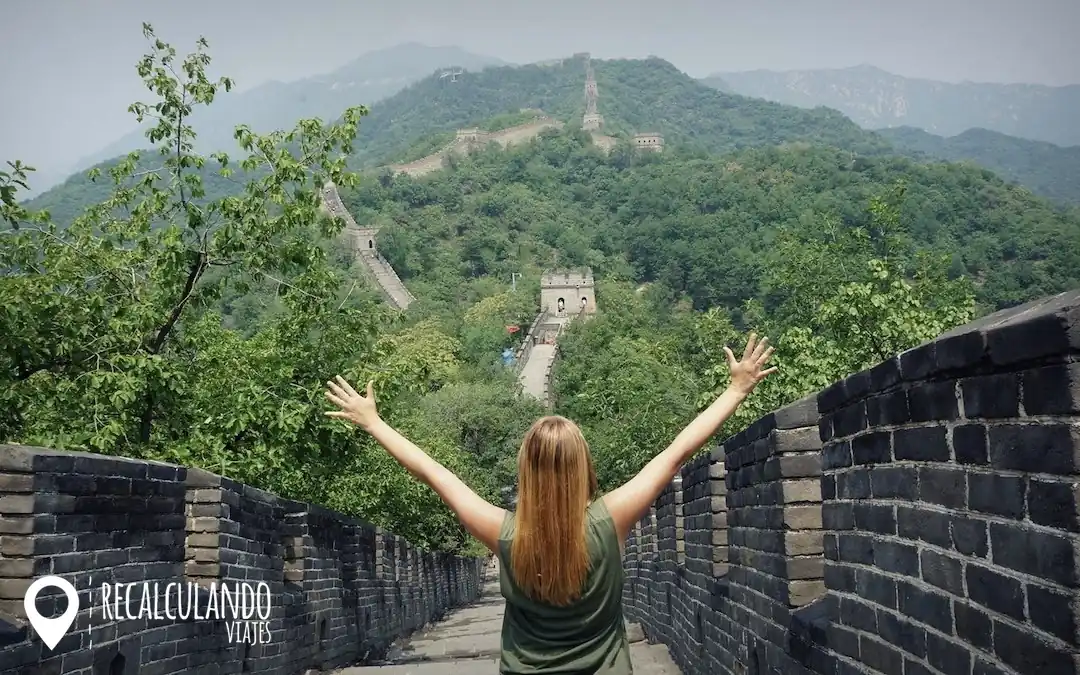
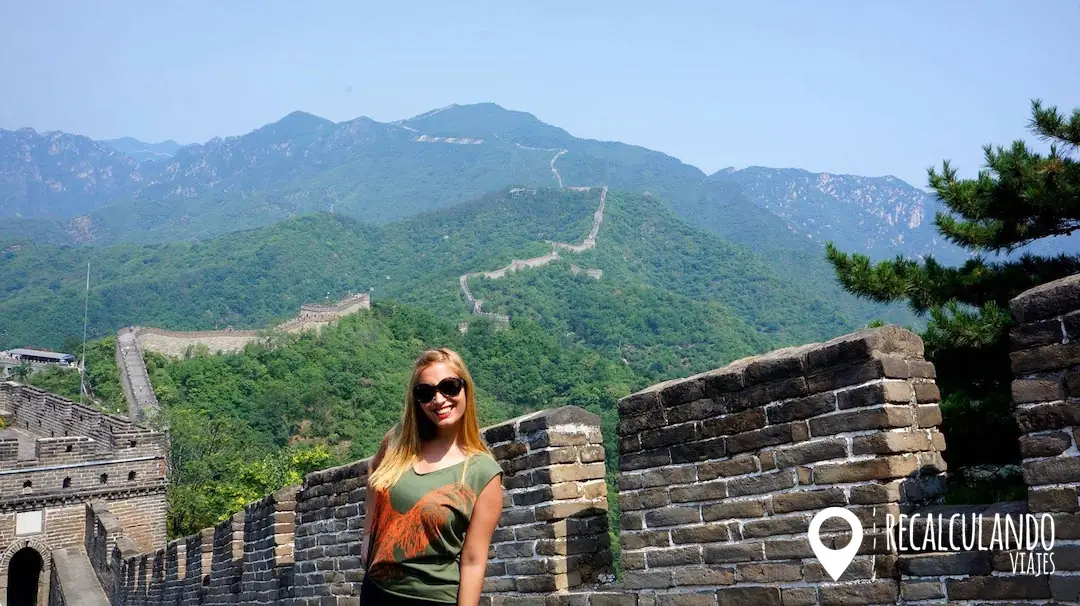
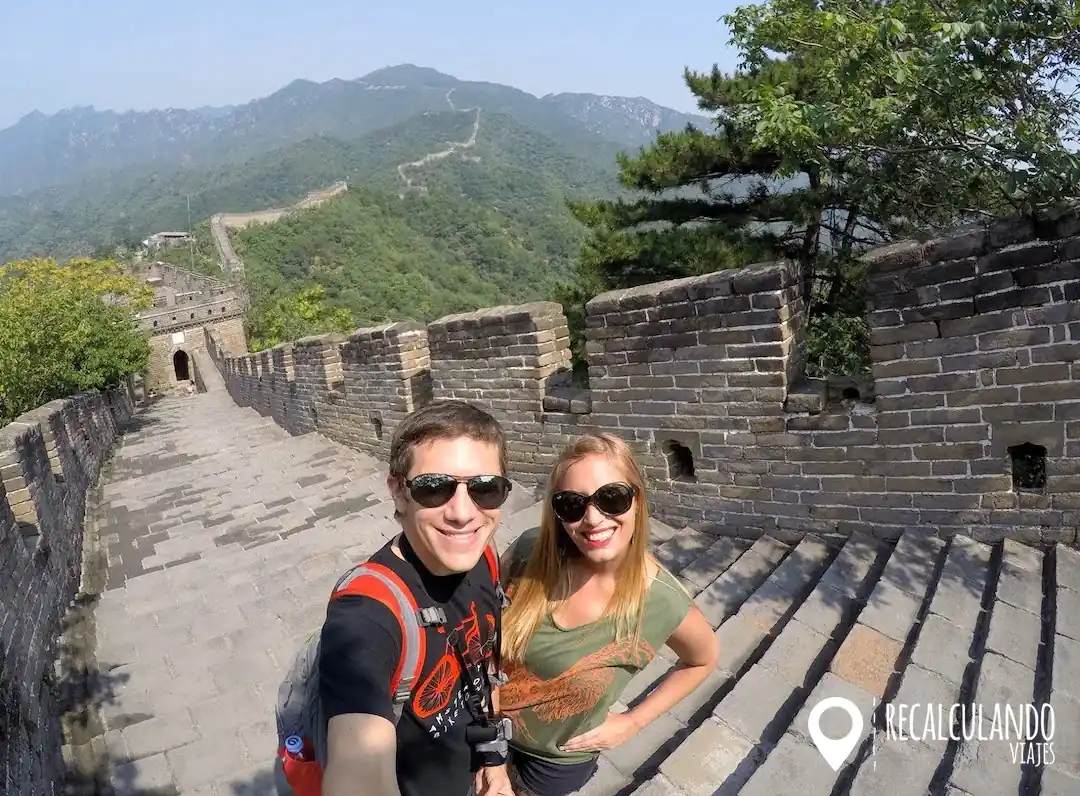
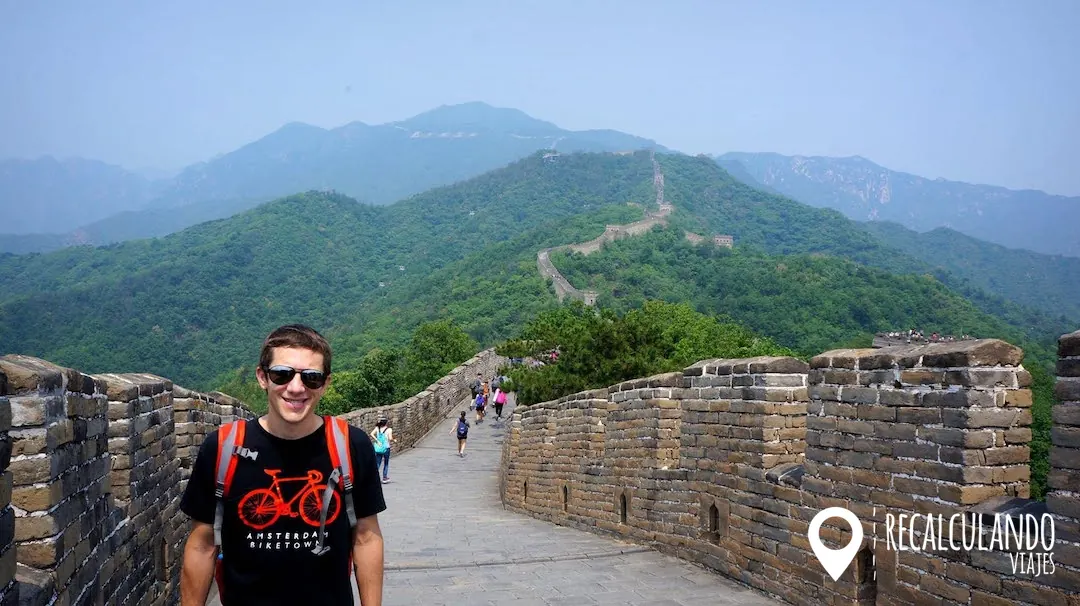
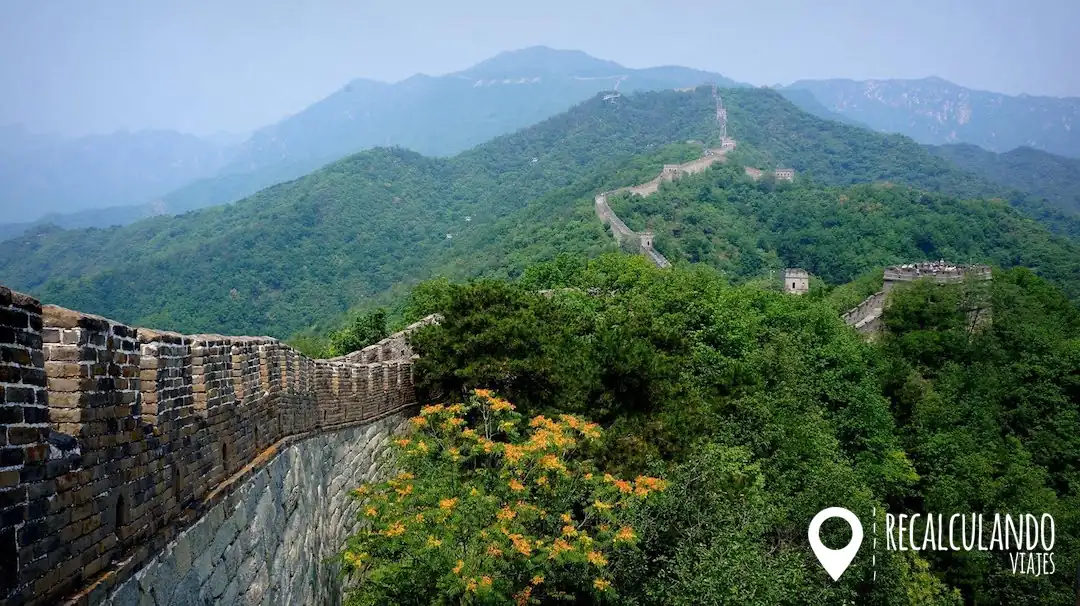
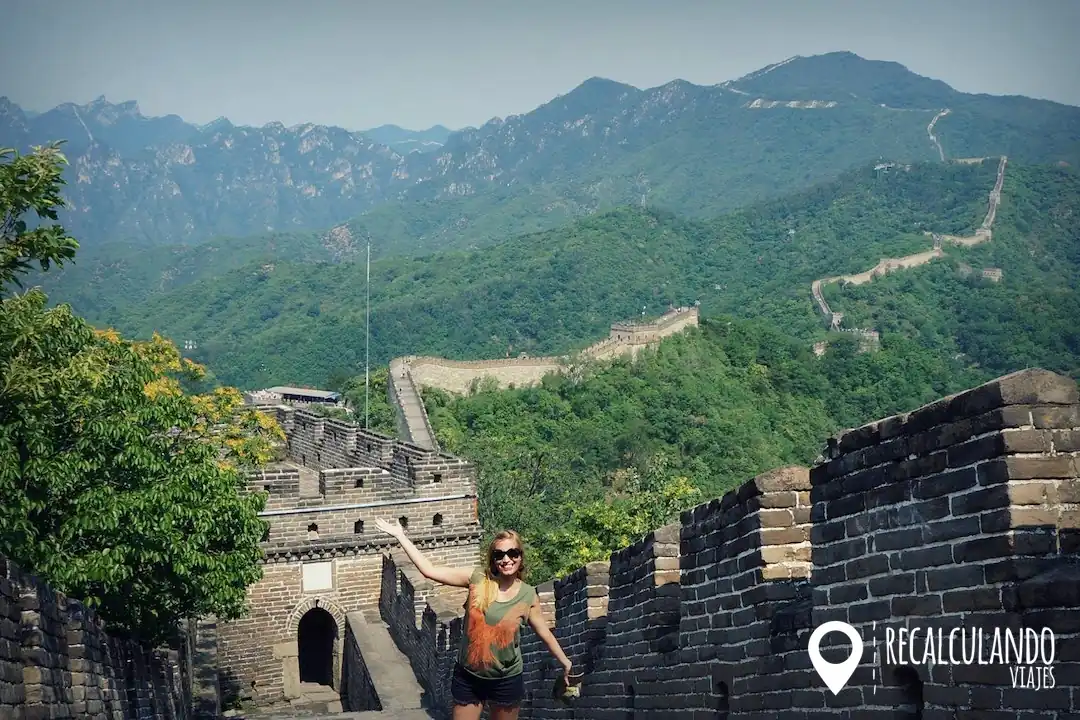
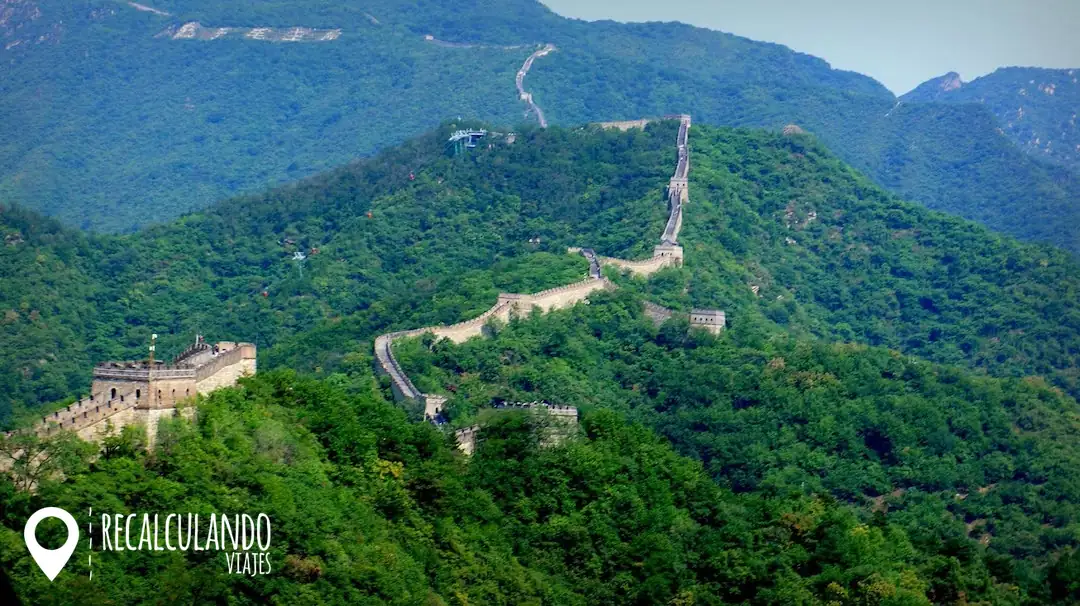
Mutianyu was our choice and we would do it again without hesitation. It is about 73 kilometres north-east of Beijing, in Huairou district, and has 2.25 restored kilometres with 23 watchtowers climbing a mountain covered in dense forest. That is the big difference from other sections: here the wall does not appear on a bare slope, it weaves in and out of the green like a seam.
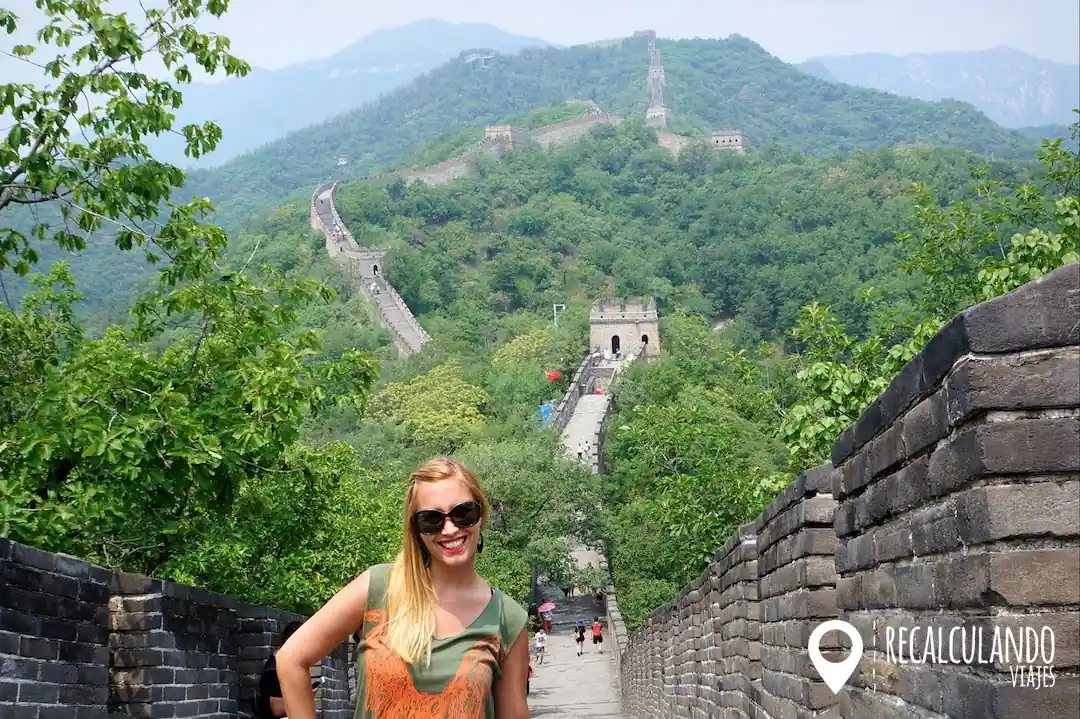
We went on a Tuesday at the end of June, left Beijing before seven in the morning and arrived with the wall almost empty. Two hours later the difference was already noticeable, so the most useful advice we can give you is this: get up early. The slopes are much harder than at Badaling, with stretches of very high, uneven steps, so wear shoes with good grip and bring plenty of water.
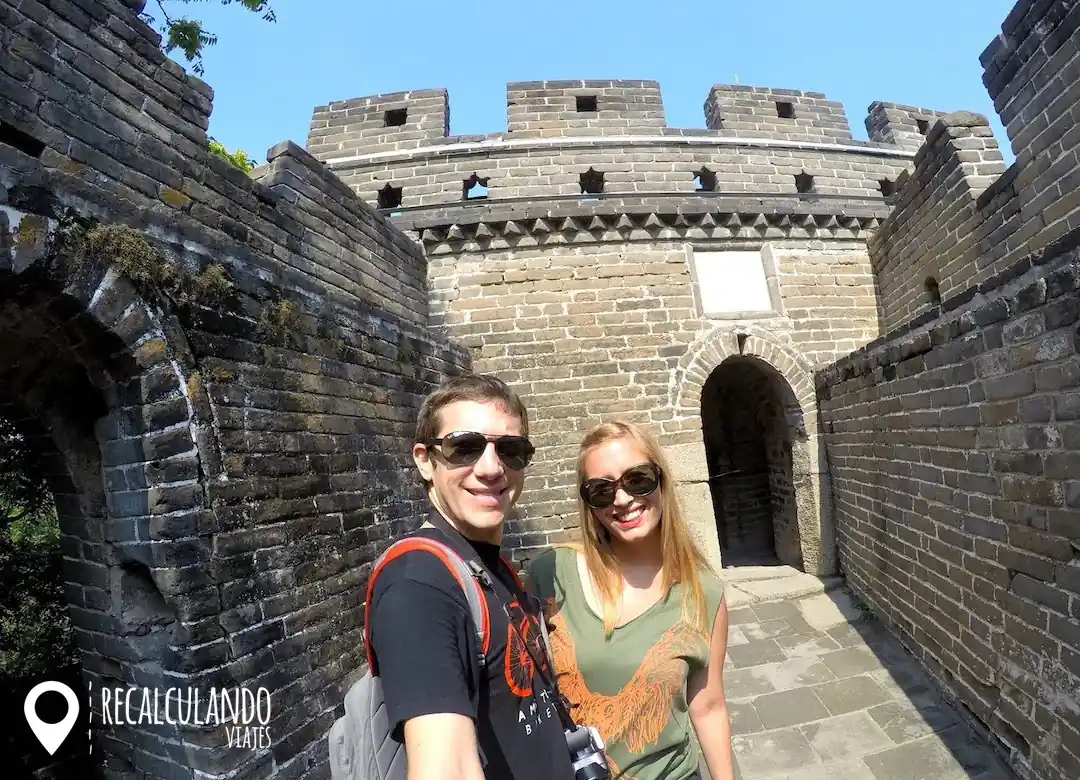
The ticket costs 45 CNY (about €5.50) and the usual opening hours are 7:30 am to 6 pm in high season (16 March to 15 November) and 8 am to 5:30 pm in low season. A useful detail: for a few weeks in August the site stays open until 9 pm for night visits.
2. Tower 20 and Mutianyu’s most impressive views
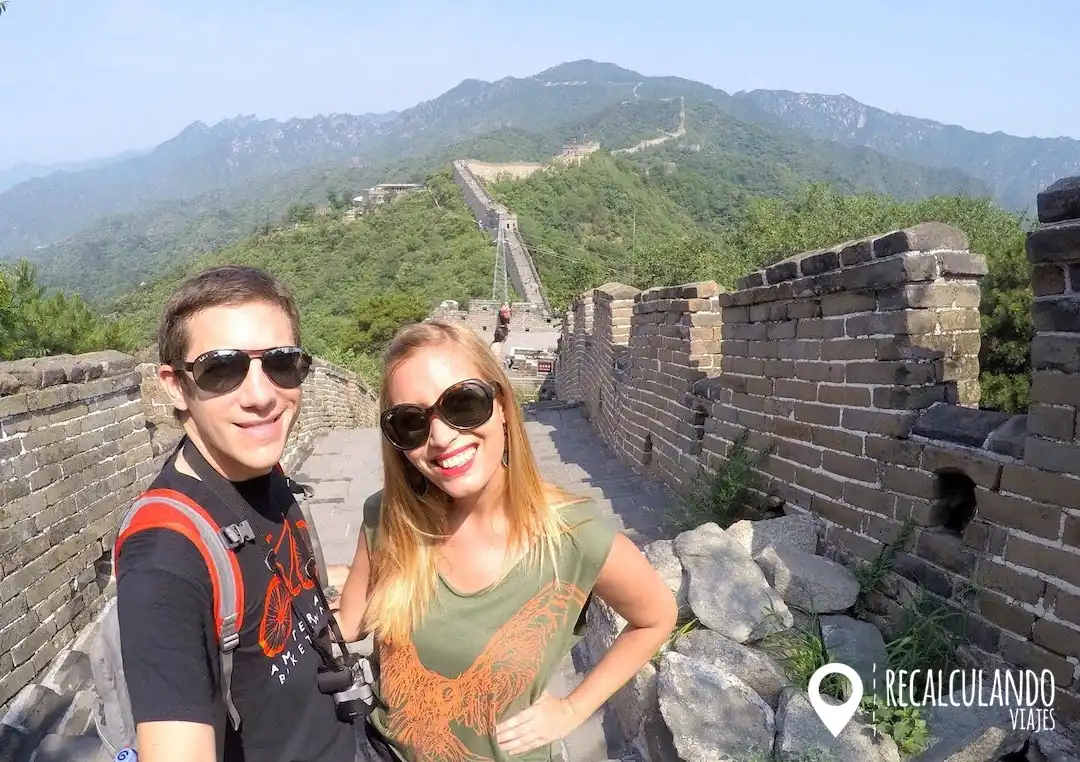
If you go to Mutianyu and only have energy for one thing, make it reaching Tower 20. From there the wall opens into a curve that drops and rises again, and you can see the famous stretch known as “the eagle flies facing upwards”, an almost vertical climb to the highest part.
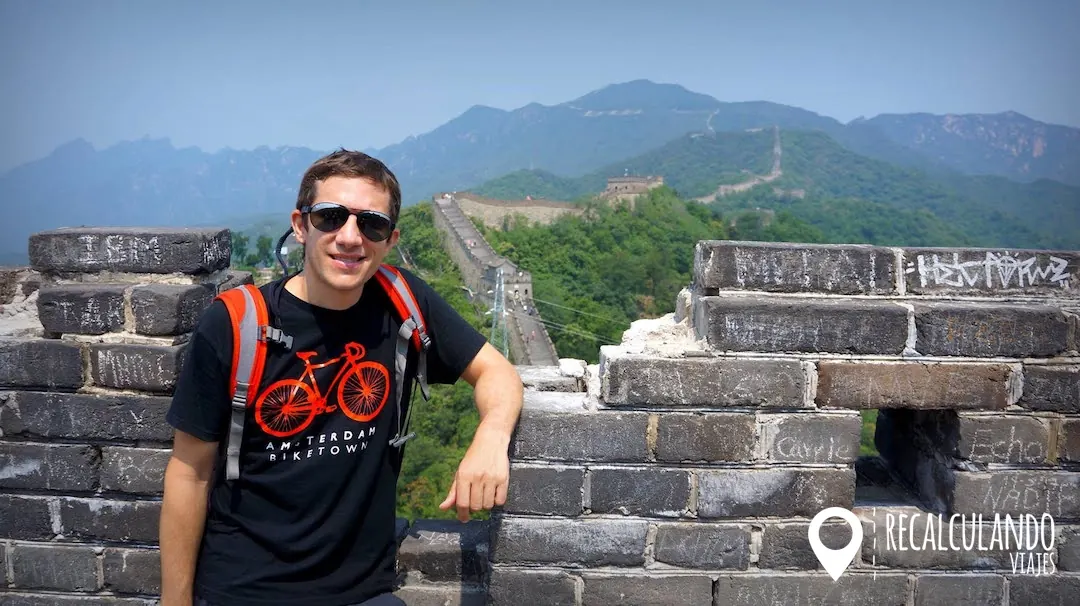
We walked up from Tower 14 and it took us a little under an hour, stopping all the time because you simply cannot help taking a thousand photos. It is the point where you understand the real scale of it: in both directions the construction goes on and on until it disappears among the mountains. Beyond Tower 20 the path towards Jiankou is closed with a gate, and it is not worth trying to get past.
A practical tip: there are very few toilets up top. Use the ones at the base before you go up, because otherwise you will have to come back down.
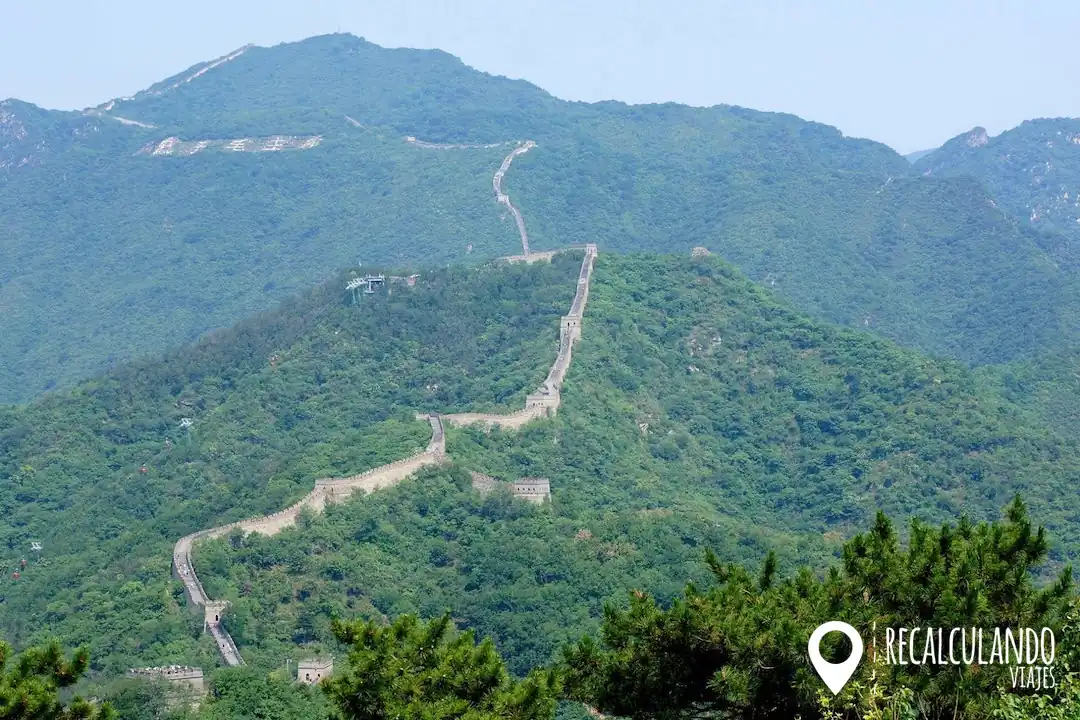
3. The Mutianyu toboggan, one of the things to do at the Great Wall of China
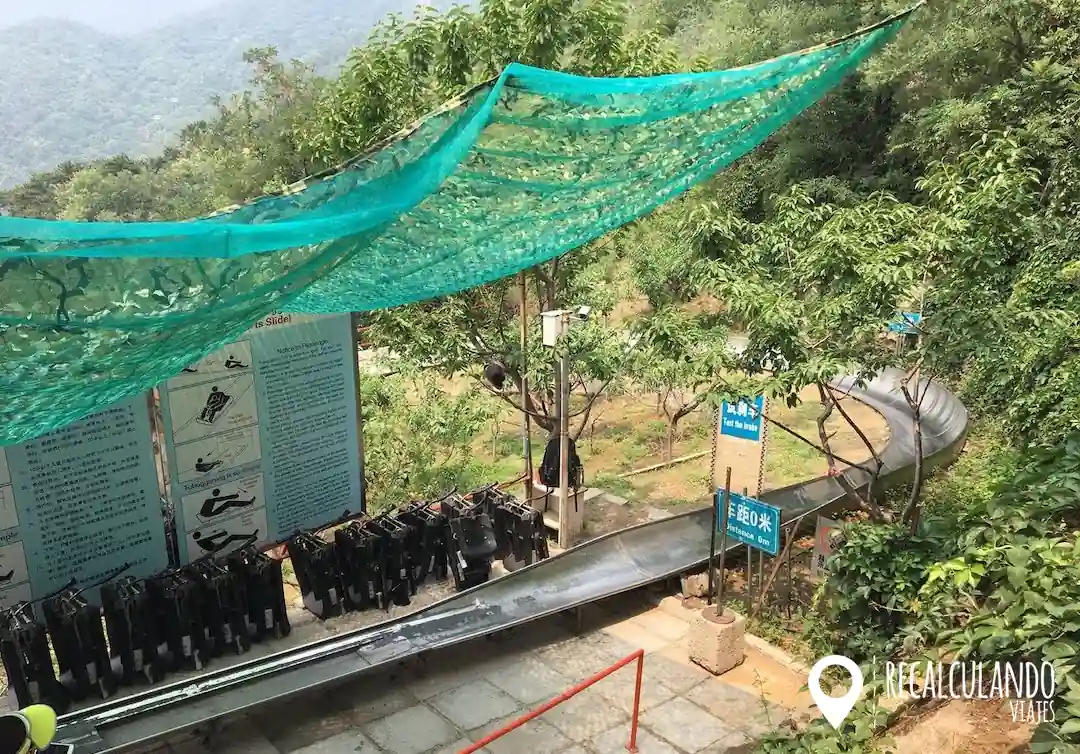
Yes, there is a metal toboggan to come down from the wall, and yes, we did it. It is a steel chute more than a kilometre long that winds through the forest, with an individual cart and a lever to brake. It sounds like an amusement park, and in part it is, but coming down that way after three hours of steps was one of the best decisions of the day.
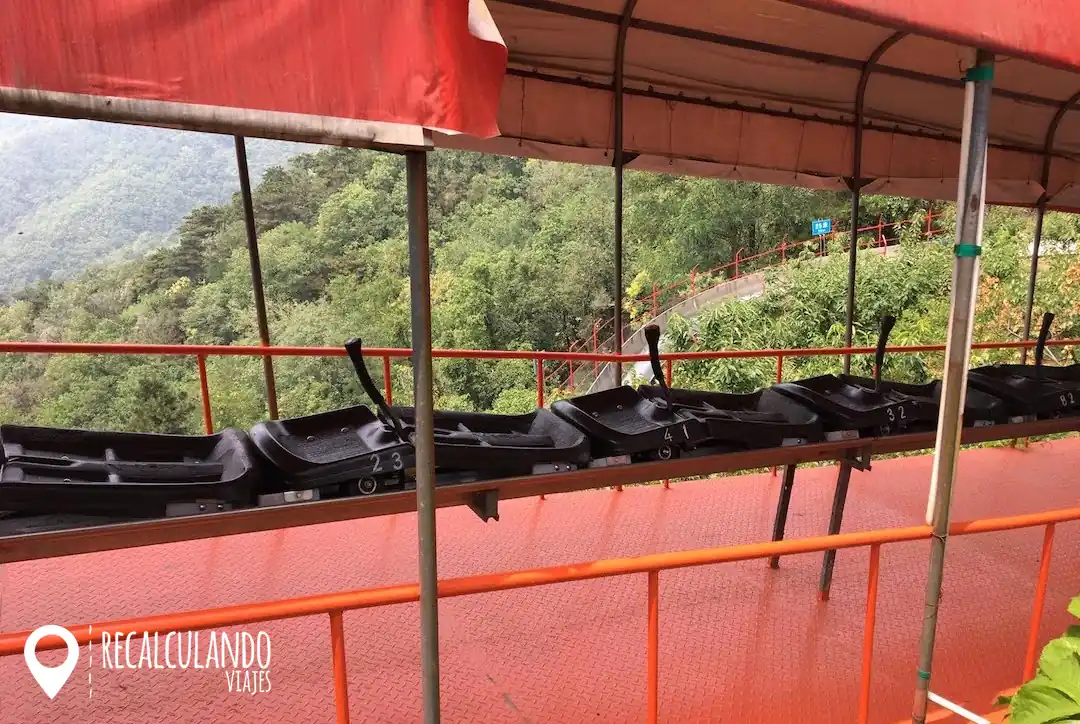
The toboggan ride down costs about 100 CNY and usually runs from 8 am to around 5 pm, with shorter hours if it rains or is windy. It is not allowed for very young children or with loose large backpacks, so be ready to strap everything in tight. If it rains, they simply close it.
4. Going up by cable car or chairlift: how to save your legs
There are two mechanical ways to go up at Mutianyu and it is worth understanding the difference before buying, because they are run by different companies. The enclosed cable car leaves from the north entrance, reaches near Tower 14 and costs 100 CNY one way or 140 CNY return; it suits everyone, including older people and children.
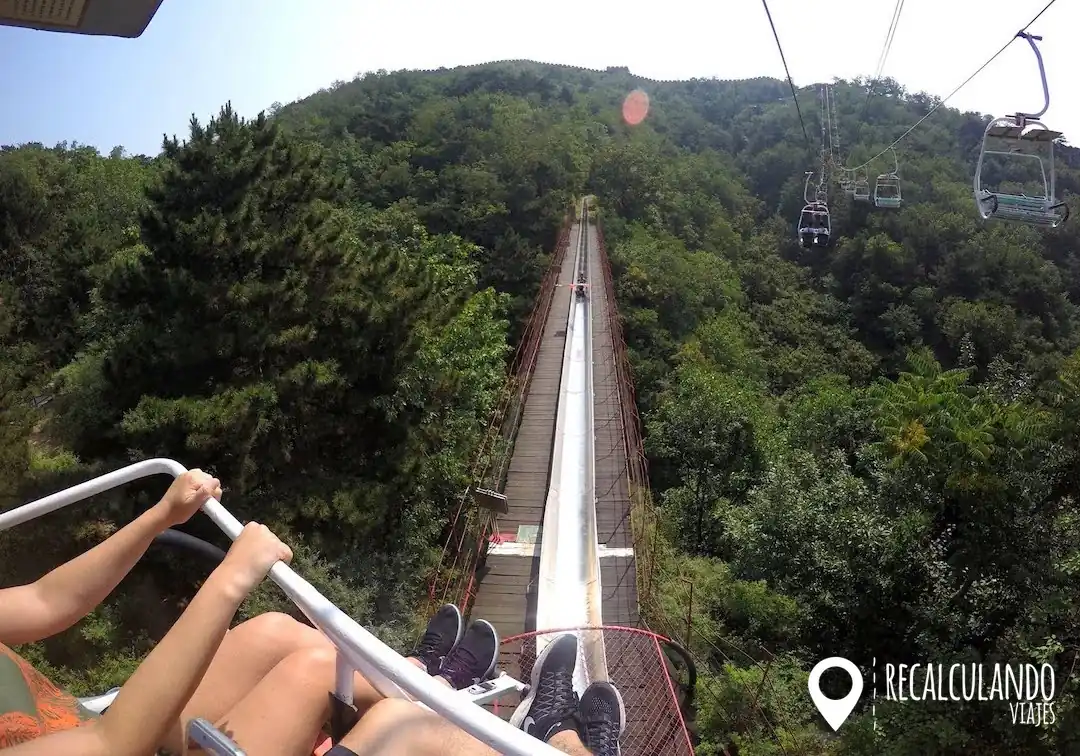
The open chairlift leaves from the south entrance, drops you at Tower 6 and is combined with the toboggan in a single 140 CNY ticket. It is the most fun option, but it has no closed safety bar, so it is not for everyone. And here is the catch: if you want to go up by cable car and come down by chairlift, you have to buy two separate one-way tickets and you pay 200 CNY.
We went up by chairlift and came down on the toboggan, which seemed the most complete combination to us. If you are short on time or travelling with family, going up by cable car or chairlift saves you almost an hour of effort and you arrive with more energy to walk along the top, which is what really matters.
5. Badaling, the most famous and crowded section
When someone asks what to see at the Great Wall of China, the automatic answer is usually Badaling: the section that appears in every photo, the best restored, the most accessible and the one visited by everyone from heads of state to queens. It is about 70 kilometres north-west of Beijing, with walls up to seven metres high and in places almost six wide.
The downside is brutal. It receives more than eleven million visitors a year and in summer it can reach 50,000 or 60,000 people a day, with a daily limit of 65,000 controlled through advance online sales. We did not go precisely because of that, but many travellers who prioritise comfort choose it anyway, especially in winter, when visitor numbers drop a lot.
The ticket is around 40 CNY in high season and 35 CNY in low season, with the cable car extra at about 140 CNY return. If you go, the key is the same as always: first thing in the morning, on a weekday, and the north section if you want fewer people.
6. Juyongguan, the fortified pass closest to Beijing
Juyongguan is only 55 kilometres from the capital and has a feature you will not find anywhere else: the wall forms a closed ring around a valley, so you can do the full loop and return to where you started. It is the pass that historically defended direct access to Beijing.
Inside the site is the Cloud Platform, a 14th-century white marble base covered in Buddhist carvings in six different languages. Many travellers point to it as the most valuable part of the place historically. We did not get to visit it, but it is the most logical option if you have half a day and do not want to go too far.
The climb is demanding: the steps on the west side are among the steepest on the whole wall open to tourists.
7. Jinshanling, the photographers’ favourite
Jinshanling is about 130 kilometres from Beijing and is probably the best balance between state of preservation and solitude. It has about ten kilometres open, with more than sixty watchtowers and a detail that makes it unique: part of the section is restored and part remains just as it was left, with worn bricks and plants growing between the stones.
It is the section recommended by almost every landscape photographer working in China, especially at sunrise, when the mist settles between the valleys. It requires a full day and a good level of fitness, because the accumulated climb is considerable.
The classic hike from Jinshanling to Simatai also starts here, although the final stretch is usually closed and it is worth checking before leaving Beijing.


8. Simatai and Gubei Water Town: the Great Wall of China at night
Simatai has a privilege few sections share: it offers night visits with the wall lit up. You go up by cable car in the late afternoon and walk along the wall with the towers lit and the valley in complete darkness. Access is by time slot with limited numbers, so you have to book ahead.
At its foot is Gubei Water Town, a rebuilt canal town that serves as a base to spend the night. It is touristy and does not hide it, but it allows something very hard to achieve: seeing the wall at sunset, having dinner calmly and going back up at night without rushing to catch the last bus to Beijing.
It is about 140 kilometres from the capital, so in practice it is a two-day getaway.
9. Jiankou, the wild wall almost nobody walks
Jiankou is the most photographed section among those looking for the unrestored wall: a sharp ridge, crumbled bricks and a silhouette cut against the sky like a spine. It is about 100 kilometres from Beijing and has no official entrance or infrastructure.
Here is our honest warning: walking on Jiankou is genuinely dangerous. There are stretches with sheer drops on both sides, loose stone and no railings at all, and there have been serious accidents. In addition, in recent years the authorities have restricted access to several unauthorised sections and issue fines.
If you are tempted, the sensible version is to hire an experienced local guide and only do the stretch between Jiankou and Mutianyu, which is busier. We did not do it and we do not recommend it if it is your first time on the wall.
10. Huanghuacheng, the only wall over water
Huanghuacheng is different from everything above because part of the section literally sinks into a lake. The construction of a reservoir in the 1950s left sections of wall underwater, and today you can see the wall come down the slope, disappear under the surface and reappear on the other side.
It is about 65 kilometres from Beijing, it is the closest of the little-visited sections and it has an extra advantage: in spring it fills with yellow flowers, which is where its name comes from. Many travellers choose it as a half-day plan combined with Mutianyu, as they are relatively close.
11. Gubeikou, unrestored military history
Gubeikou is one of the sections with the most historical weight and the least tourism. It was the scene of real battles, including the resistance against the Japanese advance in the 1930s, and still bears marks of that fighting on its walls. It is about 120 kilometres from the capital.
The classic hike goes from Gubeikou to Jinshanling and takes four to five hours. It is a route of medium difficulty, without Mutianyu’s neat restorations but also without Jiankou’s extreme risk. It is one of the things to do at the Great Wall of China if you already know a touristy section and want something rawer.
One thing to bear in mind: there are active military zones nearby and leaving the marked path is prohibited.
12. Shanhaiguan and the Old Dragon’s Head
This is where it all begins. Shanhaiguan, in Hebei province, is the eastern end of the Ming Great Wall, and its most spectacular point is Laolongtou, the “Old Dragon’s Head”: the exact spot where the wall enters the Bohai Sea.
It is about 300 kilometres from Beijing, but getting there is easy by high-speed train, in just over two hours. The pass fortress keeps the monumental gate known as the “First Pass Under Heaven”, and the whole complex gives an idea of the wall as a defence system, not just a wall.
It is a good plan if you combine the visit with Beidaihe and want to see the sea on the same trip.
13. Jiayuguan, the western end in the middle of the desert
At the other end, more than 1,700 kilometres from Beijing, is Jiayuguan, the fortress that closed the wall in the west, in Gansu province. It is a total contrast: here there is no forest or sea, but sand, snow-capped mountains in the background and an adobe and timber fortress of a different kind of beauty.
Nearby are the Overhanging Wall, which climbs a steep slope, and the so-called First Beacon Tower, above a ravine of the Taolai River. It is a natural stop if you are travelling the Silk Road towards Dunhuang, and high-speed trains arrive from Lanzhou and Xi’an.
14. The Yumen Pass and the Han dynasty wall
One of the must-sees of the Great Wall of China for those travelling in the west is the Yumen Pass, near Dunhuang. What you see here is not the Ming brick wall we all know, but sections from the Han dynasty, built more than two thousand years ago with layers of rammed earth, reeds and gravel.
They are much more deteriorated, of course, but they are between a thousand and fifteen hundred years older than Mutianyu or Badaling. Seeing those mud walls in the middle of the Gobi Desert changes quite a bit the idea you bring about what to visit at the Great Wall of China.
👩⚕️👨⚕️ A must-have for stress-free travel! 🌎✈️ ➜ Get a Quote, Compare & Buy
15. Shuiguan, the quiet section next to Badaling
A few kilometres from Badaling is Shuiguan, a restored section that almost nobody visits because it is overshadowed by its famous neighbour. You reach it from the same motorway exit and it is usually practically empty even when Badaling is overflowing.
It is neither as spectacular nor as long, but it allows something priceless: walking along the Ming wall in real silence. Many travellers use it as a plan B when they see the queues at Badaling and do not want to lose the day.
16. Xiangshuihu, wall, forest and waterfalls
Xiangshuihu is one of the places to see at the Great Wall of China that fewest visitors know. It is in Huairou district, near Mutianyu, and combines an unrestored section of wall with a valley of waterfalls and paths among trees. It works well if you are travelling with children, because the walk through the park is easy and the climb to the wall is optional.
It is also a good alternative in the middle of summer: the route is almost all in the shade, something you can only dream of at Badaling.
17. Jiumenkou, the wall that crosses a river
Jiumenkou, on the border between Hebei and Liaoning, is the only section literally built over a watercourse. A stone wall-bridge crosses the Jiujiang River with nine sluice gates, hence the name, and that is why it is known as “the water wall”. It has been a UNESCO World Heritage Site since 2002.
It combines naturally with Shanhaiguan, which is nearby, on a two-day getaway from Beijing by high-speed train.
18. The Datong wall and Deshengbao fort
In Shanxi province, near Datong, there are kilometres of rammed-earth wall that almost no tourist sets foot on. Deshengbao fort keeps its monumental gates and part of the walled enclosure, and the whole complex has an air of abandonment you will no longer find around Beijing.
It is a logical stop if you are going to the Yungang Grottoes or the Hanging Monastery, two of the great must-sees of northern China.
19. Panjiakou and Xifengkou, the submerged Great Wall
This is probably the strangest and least-known section of all. When the Panjiakou reservoir was built on the Luan River in the 1970s, the water covered part of the Ming wall. Today the wall comes down the slope, sinks into the reservoir and reappears on the other side.
It is about 200 kilometres east of Beijing, in the Qianxi area, and is explored by boat. There are divers who dive among the submerged towers, although it is not a standard tourist activity: the water is very cold and visibility is poor. For most people, the sensible version is the boat trip or the walk along the surrounding ridges.
20. The Great Wall of China Museum, at Badaling
The last of the 20 places is not on the wall but at the foot of Badaling. It rounds off the list of things to see at the Great Wall well because it reviews its construction across the different dynasties, with models, weapons and maps that explain why the wall was never a continuous line but a system of overlapping sections built over almost two thousand years.
We are not museum people unless they are essential, but many travellers recommend it as the first stop of the day to understand what you are looking at afterwards. Entry is free and it usually opens from 9 am to 4 pm, closing on Mondays.
Where to stay to visit the Great Wall of China
Almost all sections are visited as day trips from the capital, so most travellers use Beijing as a base, and that is what we did: five nights in the city, with a full day dedicated to Mutianyu. The most practical neighbourhoods are the Qianmen and Wangfujing areas, well connected by metro and close to the Forbidden City.
The other option, if you want to see the wall lit up, is to sleep one night in Gubei Water Town, next to Simatai. It is more expensive, but it saves you the two-and-a-half-hour journey back in the middle of the night.

Where to stay in Beijing: map and prices
On the map below you can move around, zoom in and filter by your dates to see accommodation prices in Beijing:
How to get to the Great Wall of China from Beijing
To Mutianyu by public transport
You need to take bus 916 快 (916 Express) at the Dongzhimen terminal, which you reach on metro lines 2 and 13. A detail that confuses many people: there is also a plain 916, which stops everywhere and takes almost twice as long. The ticket costs around 12 CNY and the express takes about an hour to Huairou Beidajie. From there, a local minibus or taxi takes you to the site entrance.
Watch out for a very common scam that we experienced first-hand: during the journey, people in blue uniforms get on and tell you that you have arrived and must get off. It is not true. They are minibus drivers who want you to get off earlier so they can charge you more. Count the stops and only get off at Huairou Beidajie. For the final transfer, a four-seat car should not cost you more than 60 CNY in total; negotiate from 10 CNY per person.
In high season (from April to mid-November) bus 867 also runs, leaving from Dongzhimen Wai and going straight to Mutianyu without changing, for about 16 CNY. It is more comfortable, but it has very few departures: it leaves from 7 am and the last one back usually leaves at 5 pm, so if you miss it you are stuck. The other option without changes is the tourist bus from Qianmen, more expensive but designed precisely to avoid the informal minibuses.
Mutianyu’s internal shuttle (a practical tip)
Here is the practical tip we would most have liked to know in advance: between the ticket office and the foot of the wall there are about 3 kilometres uphill. In practice it is not optional. There is an internal shuttle bus that costs around 15 CNY return and drops you at the north and south entrances, where the cable car and chairlift start.
You can walk it, yes, but you arrive with tired legs before the good part even begins. If you buy your ticket online, check whether the shuttle is included or has to be paid separately at the counter.
To Badaling by train
For Badaling the best option is the train. The high-speed train leaves from Beijing North or Qinghe and takes 20 to 30 minutes to Badaling Great Wall station, dug under the mountain. There is also the S2 train from Huangtudian, much slower but at an almost symbolic price, around 6 CNY. From the station it is about a ten-minute walk to the entrance.
To Jinshanling by public transport
An important change: the old bus 8 from Dongzhimen no longer exists. It was replaced by bus 33, which leaves from the Wangjing West interchange (metro lines 13 and 15) and runs mainly at weekends and on public holidays. It reaches the Jinshanling car park at around 10:30 am, and from there a short shuttle takes you to the entrance.
If you travel on a weekday, the alternative is the link bus from the tourist dispatch centre or simply a tour. And something worth knowing before you build up expectations: the classic trek linking Jinshanling with Simatai can no longer be completed; today the usual route goes as far as the Kylin Tower and exits through Jinshanling’s east gate.
Independently or on a tour: which is better
Going to Mutianyu independently, adding up the bus, internal shuttle, ticket and toboggan, the visit costs around €20-25 per person and takes the whole day with quite a bit of organising. An organised tour with transport and a guide starts at roughly €40-55, and goes up quite a bit if it is private.
Our TIP: if you have more than three days in Beijing, some patience and want to get around, go independently, which is what we did and it works perfectly. If you are short on time, travelling with children or the language barrier stresses you, a tour takes all the problems off your hands. You can see options and updated prices on Civitatis.
Internet and payments
China blocks Google, WhatsApp and Instagram, so without a VPN or an international eSIM you will be quite isolated. We always travel with a Holafly eSIM, and with the code RECALCULANDOVIAJES you get a 5% discount.
On payments, an update: you no longer need to carry cash. Alipay and WeChat Pay accept foreign cards and work practically everywhere, including the stalls and restaurants at the base of the wall. Install and verify the app before leaving your country, because identity verification can take a day. Still carry about 200 CNY in small notes for the local minibus, which is where they may still ask for cash.
How much does it cost to visit the Great Wall of China
Almost everything to see at the Great Wall of China is paid separately. Prices are updated for 2026 and are per person. Bear in mind that in several sections the ticket and the mechanical transport are bought separately, so the real total is always higher than the headline price.
| Item | Price | Approx. equivalent |
|---|---|---|
| Mutianyu ticket | 45 CNY | ≈ €5.50 |
| Mutianyu internal shuttle (return) | 15 CNY | ≈ €1.80 |
| Mutianyu cable car (one way / return) | 100 / 140 CNY | ≈ €12 / €17 |
| Mutianyu chairlift + toboggan | 140 CNY | ≈ €17 |
| Toboggan only (down) | 100 CNY | ≈ €12 |
| Badaling ticket (high / low season) | 40 / 35 CNY | ≈ €5 / €4.30 |
| Badaling cable car (return) | ≈ 140 CNY | ≈ €17 |
| S2 train to Badaling (per journey) | 6 CNY | ≈ €0.70 |
| Great Wall Museum | Free | — |
There are usual discounts for under-12s, students with ID and over-60s, although they tend to ask for documents. In several sections tickets are bought online with your passport, so do not forget to bring it.
Great Wall of China opening hours
Opening hours change by season and section, and may be adjusted for weather or maintenance. At Mutianyu, high season runs from 16 March to 15 November, opening from 7:30 am to 6 pm on weekdays and until 6:30 pm at weekends; the rest of the year, from 8 am to 5:30 pm.
The toboggan opens later and closes earlier than the site, normally from 8 am until around 5 pm, and is suspended in rain or strong wind. A recent change worth noting: since mid-2026, people over 60 may not be allowed on the toboggan, and staff sometimes ask for ID.
For night visits, Mutianyu usually opens a summer season (in 2026 it was from 25 June to 31 August) with the wall lit up roughly between 7:30 pm and 9 pm. It is a separate quota, with its own entry times, so you have to book it specifically and the daytime ticket is not valid.
Practical tips for visiting the Great Wall of China
When to go to the Great Wall of China to avoid the crowds
If you are wondering what to see at the Great Wall of China without the crowds, the answer is not a section but a time: first thing on a weekday, always. We got in shortly after opening and had the wall almost to ourselves for a good hour; by mid-morning it was a different place. Avoid weekends, the first week of October (national holiday) and the Chinese school holidays in July and August.
What to bring
Shoes with good grip, not canvas trainers: the steps are high, uneven and many are polished by use. Plenty of water, a hat and sunscreen, because there is no shade on the restored sections. And some food, although there are stalls and restaurants at the base.
Toilets, signage and language
There are very few toilets on top of the wall, so use the ones at the base before going up. Signage in English exists but is scarce and almost nobody speaks English outside the ticket offices: take screenshots with the Chinese names of the stops and the section you are going to.
Watch out for tours with shopping stops
Many cheap tours include compulsory stops at jade, silk or tea factories, where you lose one or two hours of the day. If you book a tour, check explicitly that it has “no shopping stops”. It is the most repeated complaint from travellers who come back disappointed from the wall.
Travel insurance for China
China does not require insurance to enter, but medical care for foreigners at Beijing’s international hospitals is expensive and paid up front. Add to that the fact that the wall is twisted-ankle territory: high steps, uneven stone and kilometres of descent. It is exactly the kind of silly injury that ruins a trip.
We have travelled with IATI Seguros for years, and with our code RECALCULANDO you get a permanent 5% discount, which can reach 15% during specific campaigns.

Day trips and visits near the Great Wall
If you have days left in Beijing, the Forbidden City and the Temple of Heaven are the two stops nobody should skip. The Summer Palace, on the outskirts, is perfect for a quiet afternoon after the effort of the wall.
We combined China with Japan on the same trip and it was a good decision: if you are planning the route, here are our guides to things to do in Tokyo and Japanese food, plus everything we have published about Asia. And if you are still at the planning stage, take a look at our packing checklist.
Things to see at the Great Wall of China, Mutianyu (Video)
Map of the places to see at the Great Wall of China
We made this map with the 20 places in the article so you can see at a glance which section is close to Beijing and which requires a separate trip. It will be especially useful to rule things out: if you only have one day, anything more than 150 kilometres away is out.
Frequently asked questions about the Great Wall of China
What is the best section of the Great Wall of China to visit?
For a first visit, Mutianyu is the best option: it is well restored, gets far fewer people than Badaling and the forest setting is beautiful. If you are short on time or travelling with older people, Badaling is more accessible. For long hikes and photos, Jinshanling.
How much does it cost to visit the Great Wall of China?
The Mutianyu ticket costs 45 CNY, about €5.50, and Badaling is around 40 CNY in high season. The cable car is extra, between 100 and 140 CNY depending on one way or return, and the Mutianyu toboggan costs about 100 CNY.
How long is the Great Wall of China?
According to the official survey by China’s State Administration of Cultural Heritage, all the walls built by the different dynasties add up to about 21,196 kilometres. The Ming dynasty part, which is what you visit around Beijing, measures just over 8,850 kilometres.
When is the best time to go to the Great Wall of China?
April and May, and September and October, with pleasant temperatures and good visibility. We went at the end of June and it was quite hot and humid. It is best to avoid weekends and Chinese national holidays, especially the first week of October.
Can you visit the Great Wall of China at night?
Yes. Simatai is the best-known section to see it lit up at night, and there are also seasonal night visits at Mutianyu, Badaling and Juyongguan. Dates and times change every year, so confirm them before you go. Mutianyu also extends its hours until 9 pm for a few weeks in August.
Do you need a visa to travel to China?
Holders of ordinary passports from Spain and Argentina, among other countries, can enter visa-free for tourism, business or transit for up to 30 days. The measure is valid until 31 December 2026, so check it for your nationality before buying your flights.
How much time should you spend on the visit?
A full day. Allow an hour and a half to two hours of travel from Beijing each way, plus three or four hours on the wall. We left at 6:30 in the morning and got back after five in the afternoon, without feeling rushed.
Can you go to the Great Wall of China independently or do you need a tour?
You can go independently without any problem, and that is what we did, in a private taxi. You can also reach Mutianyu on the 916 Express bus from Dongzhimen and Badaling by train from Beijing North. A tour is mainly worth it if you are short on time, travelling with children or do not want to deal with the language.
Do you have to walk a lot from the entrance to the wall?
At Mutianyu there are about 3 kilometres uphill between the ticket office and the foot of the wall. There is an internal shuttle of about 15 CNY return that saves you that stretch, and it is worth taking to save your legs for the real walk.
Can you pay by card at the Great Wall of China?
Today the most practical option is Alipay or WeChat Pay, which accept foreign cards and work at ticket offices, stalls and restaurants. Install and verify the app before travelling. Still carry about 200 CNY in cash for local minibuses and taxis.
Which section is best if I am travelling with children or older people?
Badaling for accessibility, or Mutianyu going up by the enclosed cable car, which suits all ages. Bear in mind that since mid-2026 people over 60 may not be allowed on the toboggan.
Conclusion: what to see at the Great Wall of China for your trip
After walking it, our conclusion is simple: do not try to see everything. Choose one section, give it the whole day and walk more than you thought you would. If it is your first time, Mutianyu; if you want solitude and photos, Jinshanling; if you are looking for the wall lit up, Simatai; and if you already know the classics, the Panjiakou reservoir will blow your mind.
It was one of those experiences that stay in our memories forever, not because of the photo, but because of the silence at seven in the morning with the wall empty. With these 20 places to see at the Great Wall of China and the map above, you have everything you need to plan your day without surprises. Do not miss it!
ℹ️ **Total Transparency**
This article contains affiliate links. If you book through these links, we may receive a small commission at no additional cost to you. We only recommend services that we use on our trips and that we trust. This helps us keep this blog free and continue creating useful content for you. Thanks for your support!
🔗 Resources & Useful Links for your trip to the Great Wall of China
Do you have questions or want to add your own recommendations on what to see at the Great Wall of China?
💬 Leave your comment or write to us, we love reading other travelers’ experiences.
Thank you very much for being part of this adventure!— Nanu & Facu 🌎 | Recalculando Viajes 💜