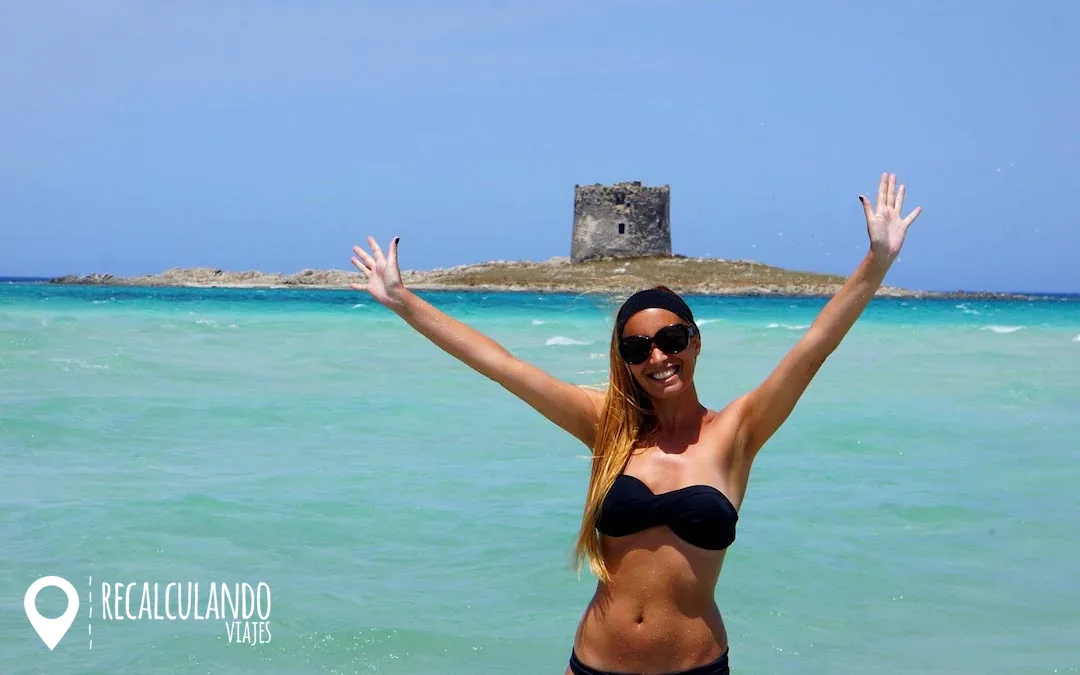
If you are looking for things to do in Sardinia, we’ll be honest: the island surprised us much more than we expected. We drove through the northeast and Gallura in early June, hopping between turquoise coves that looked straight out of the Caribbean, and we still wanted more. In this guide, we share the 22 things to do in Sardinia you cannot miss, complete with a map, 3 to 7-day itineraries, where to stay, what to eat, and all the beaches that require reservations in 2026.
We combined Sardinia with Corsica, crossing by ferry, and the comparison is inevitable: if Corsica is mountains and forests, Sardinia is pink granite, dunes, and a sea that changes color every half hour. But watch out for the classic mistake: Sardinia is not just beaches. It has Nuragic civilization, canyons with walls over 500 meters high, medieval villages, and a gastronomy that is unlike anywhere else in Italy. Here is everything we learned.
🌍 Travel Insurance: 5% Off with IATI Seguros! 🌟
Take advantage of this offer and travel safe.
Things to do in Sardinia: quick facts to organize your trip
Before diving into the list, here is a practical summary so you can plan your trip without getting lost in a thousand browser tabs. These are the numbers we would have loved to have at hand before leaving.
| Category | Key details for your trip |
|---|---|
| Best time to visit | June and September (pleasant water, fewer people, and lower prices). |
| Recommended duration | 3-4 days for one area, 7 days for the north and south, 10-15 days for the full loop. |
| Budget (June) | €90-€130/day for two people (doubles in August). |
| Airports | Olbia (OLB) for the northeast, Cagliari (CAG) for the south, Alghero (AHO) for the northwest. |
| Ferry from Spain | Barcelona – Porto Torres with Grimaldi Lines, about 13 hours, from €36. |
| Real size | 24,100 km², the second-largest island in the Mediterranean. From Olbia to Cagliari is about 3 hours. |
| Language and currency | Italian and Sardinian · Euro (€). Algherese, a variant of Catalan, is also spoken in Alghero. |
| How to get around | Rental car, hands down. Public transport does not reach the coves. |
| Key warning | It is forbidden to take sand, shells, or stones. Fines range from €500 to €3,000, and there are X-ray controls at airports. |
The following list starts in the northeast, where we landed, and goes around the island counter-clockwise to the south and the interior. If you follow it in order, you get a logical route without unnecessary backtracking.
1. Cala Brandinchi, the “little Tahiti” of Sardinia
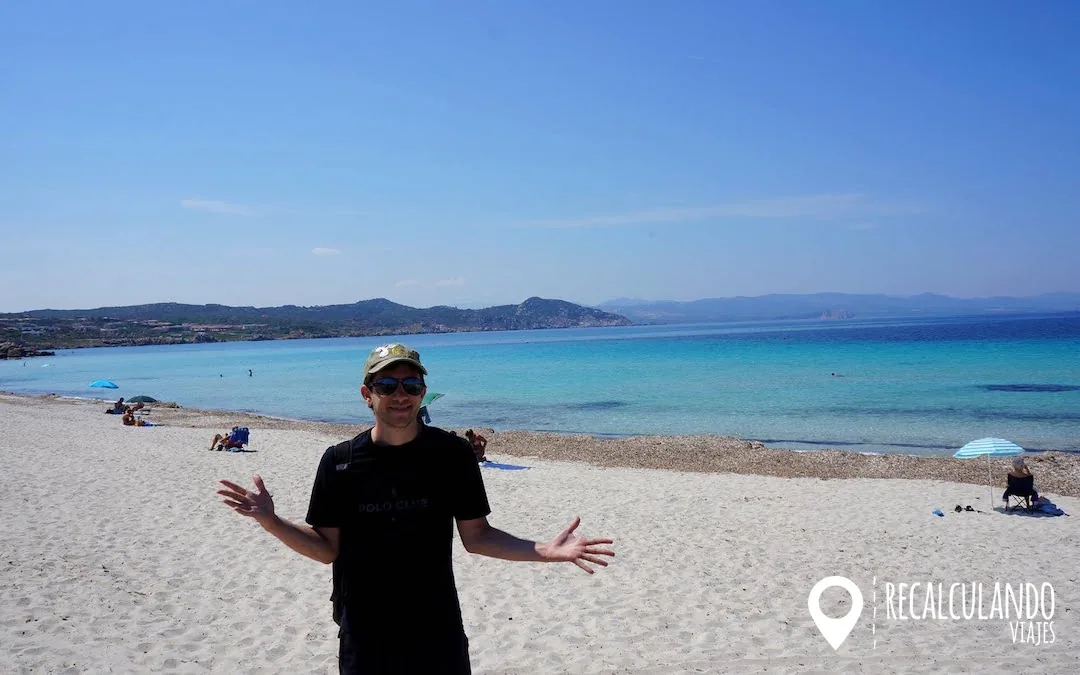
It was our first stop after getting off the plane in Olbia and, to be honest, starting the trip there set the bar very high. Cala Brandinchi is in San Teodoro, about 30 kilometers from Olbia, and is called “little Tahiti” because of its white sand and clear turquoise water.
What impressed us the most is how shallow it stays: you can walk thirty meters out into the sea and the water still only reaches your waist. Behind the beach, there is a pine forest with picnic tables where you can take shelter from the sun at noon, which is when it truly hits hard. Right next to it, separated by a promontory, is Lu Impostu, much larger and with the same access system.
Keep in mind: from June 1st to September 30th, you need a mandatory reservation. There is a limit of 1,447 people per day and the ticket costs €2 per person (€1 if you are staying in San Teodoro). You can book at santeodorospiagge.it or via the San Teodoro Spiagge app, and slots are released at 6:00 PM for two days later. We arrived just on the first day of the cap and managed to get a spot that same afternoon… pure luck! Parking is private and costs about €2 per hour in June.
2. Spiaggia di Berchida, the wild beach few people know about
Berchida is one of those beaches that makes you slam on the brakes. It is near Siniscola, about 80 kilometers south of Olbia, and getting there has its charm: the last few kilometers are on a path through juniper bushes that seems to never end.
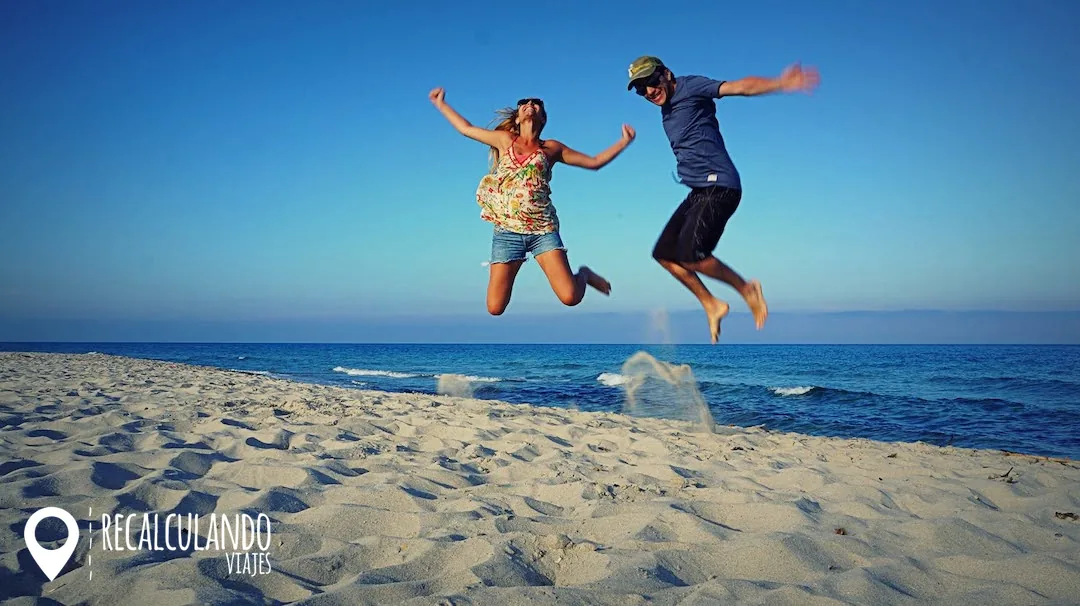
And suddenly, a very long beach with light sand opens up, with dunes, water of an incredible turquoise, and a reddish rock at one end that is the classic postcard view. We went on a weekday and there were far fewer people than on the beaches of the Costa Smeralda. For us, it’s one of the things to do in Sardinia if you are looking for nature without the crowds.
TIP: you don’t need to reserve, but bring water and something to eat because services are minimal. And if you go in June, watch out for the afternoon wind: it picks up and the sand flies.
3. Cala Gonone and the Gulf of Orosei, one of Sardinia’s must-sees
Driving down to Cala Gonone is a spectacle in itself. The road descends from Dorgali between curves and tunnels carved into the rock, and in every turn, a piece of sea appears further down. We will never forget that drive.
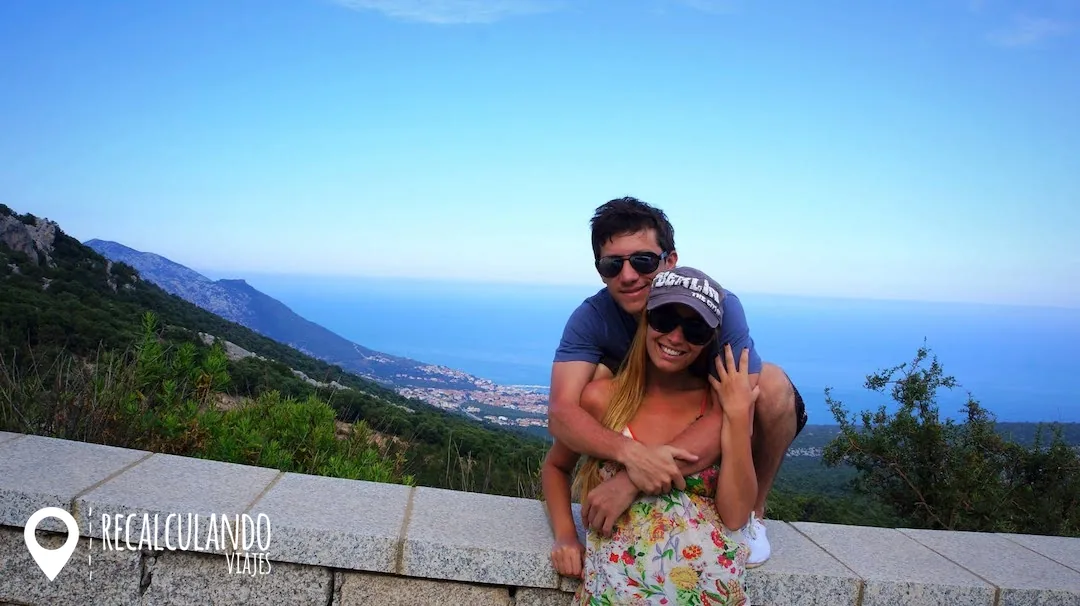
The town is tucked between cliffs and the sea, and its port is the gateway to the Gulf of Orosei, a thirty-kilometer stretch of coastline with some of the highest cliffs in the Mediterranean. From here, boats depart for coves that cannot be reached by land: Cala Luna, Cala Mariolu, Cala Sisine, Cala Biriola, the Piscine di Venere, and the Grotta del Bue Marino, where monk seals used to take refuge until a few decades ago.
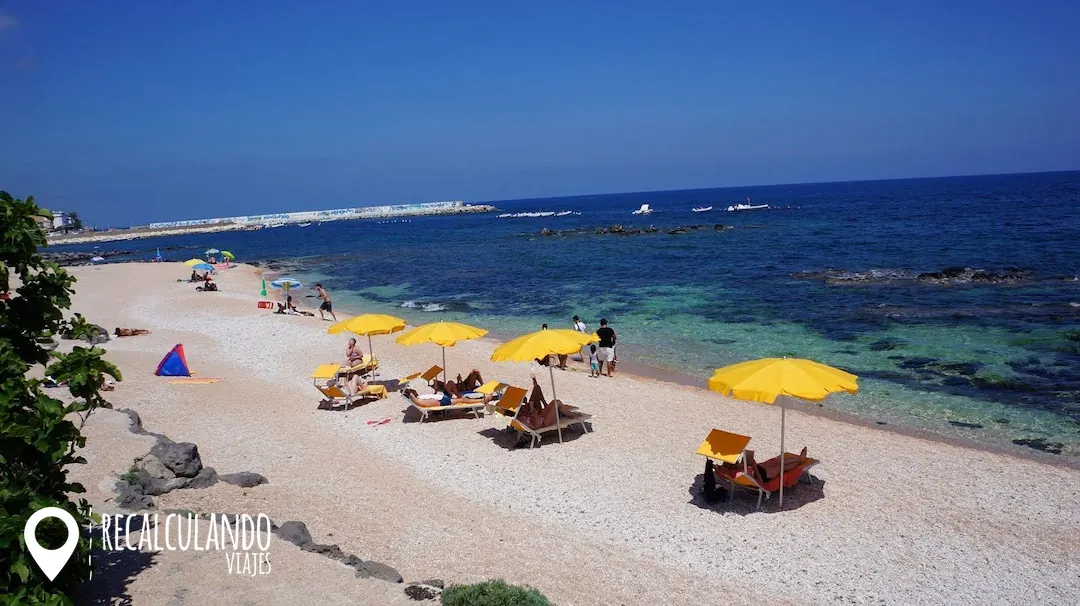
Keep in mind: boat excursions start at about €30-€40 per person on a shared motorboat and can go up to €150 on a private dinghy. Many travelers recommend leaving early, at 9:00 AM, to catch the calmest sea. Add the ‘contributo ambientale’ of the Gulf of Orosei, about €5.50 to be paid in cash before setting sail, and about €12.50 extra if you want to enter the Grotta del Bue Marino.
A key fact: Cala Luna is the only large cove in the gulf that can also be reached by walking, via a two-hour trail from Cala Fuili. The rest are accessible only by sea.
4. Cala Goloritzé, the most famous cove on the island
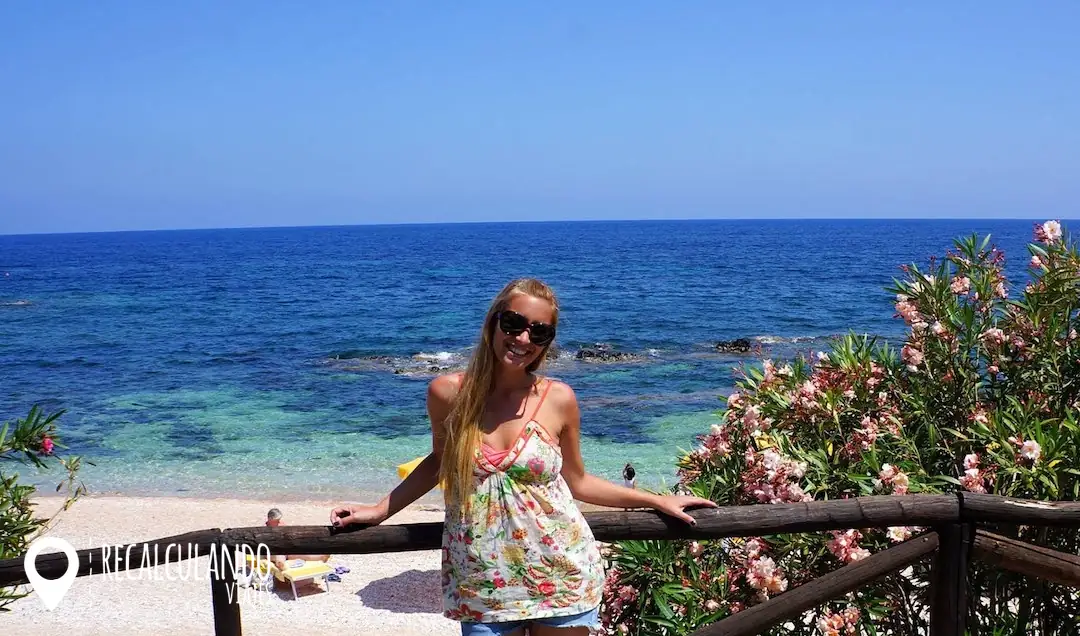
We have to be honest: we didn’t manage to get there and it’s on our list for next time. But it’s impossible to talk about what to visit in Sardinia without naming it, because in 2025 it was chosen as the most beautiful beach in the world by The World’s 50 Best Beaches portal.
Cala Goloritzé is in the municipality of Baunei and can only be reached on foot: a trail of about 3.6 kilometers with a 500-meter elevation gain that takes an hour and a half from the Golgo plateau. Below awaits a beach of white pebbles, a natural rock arch, and a 143-meter limestone needle that guards it. It has been a natural monument since 1993. It can be seen from afar by sea, but disembarking is forbidden.
How to book: access is limited to 250 people per day and costs €7 per person in 2026. You book via the ‘Heart of Sardinia’ app or website Heart of Sardinia up to 3 days in advance, and same-day bookings close at 7:30 AM. No dogs allowed, even on a leash. In high season, spots vanish in minutes.
5. The Su Gorropu gorge, the deepest canyon in Europe
This is the best argument that Sardinia is not just beaches. Su Gorropu is a gorge carved into the Supramonte limestone rock by the Flumineddu river over millions of years: one and a half kilometers long, walls exceeding 500 meters in height, and sections where the canyon narrows to just a few meters wide.
It is between Dorgali, Orgosolo, and Urzulei, so it perfectly combines with Cala Gonone on the same trip. We didn’t manage to do the trek, but it’s one of the first things on our list for when we return. The classic route departs from the S’Abba Arva bridge and is about 12-13 kilometers round trip through ancient holm oak and juniper forests.
Keep in mind: you have to pay an access fee to the canyon, around €6 for adults and €4 for children aged 6 to 17, even if you go on your own without a guide. It is bought in cash at the entrance ticket office and cannot be booked online. The usual hours are from 10:00 AM to 4:30 PM, with mandatory exit before 5:00 PM, and the best time to go is from mid-April to early November. There are routes of varying difficulty: the deepest sections require a guide.
👩⚕️👨⚕️ A must-have for stress-free travel! 🌎✈️ ➜ Get a Quote, Compare & Buy
6. Porto Cervo and the Costa Smeralda
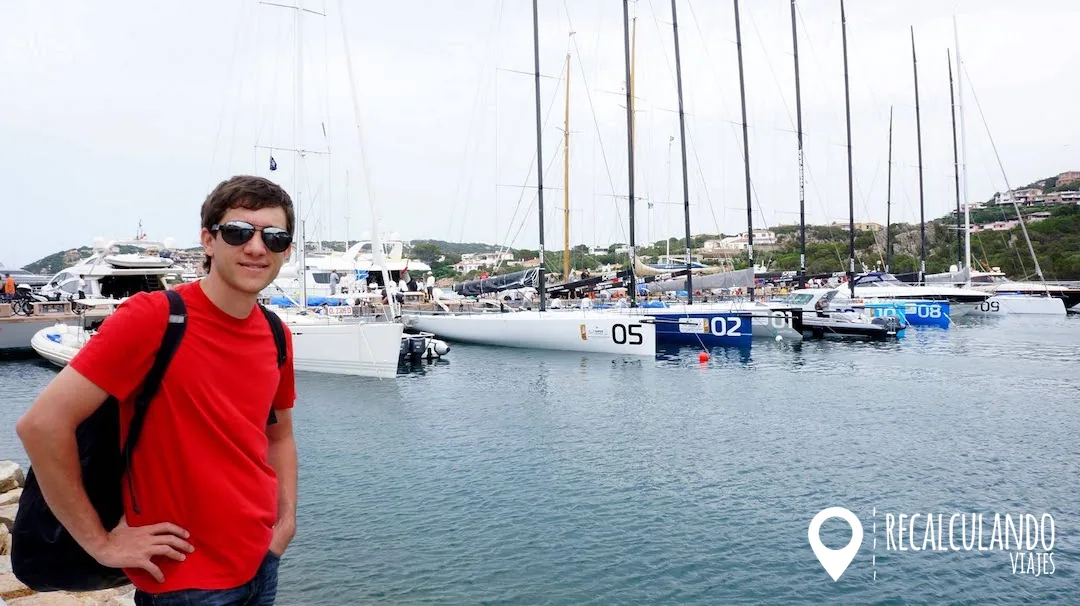
Porto Cervo is the heart of the Costa Smeralda, that stretch of coastline that Prince Karim Aga Khan turned into the summer refuge for half of the European jet set in the sixties. And it shows, hehehe.
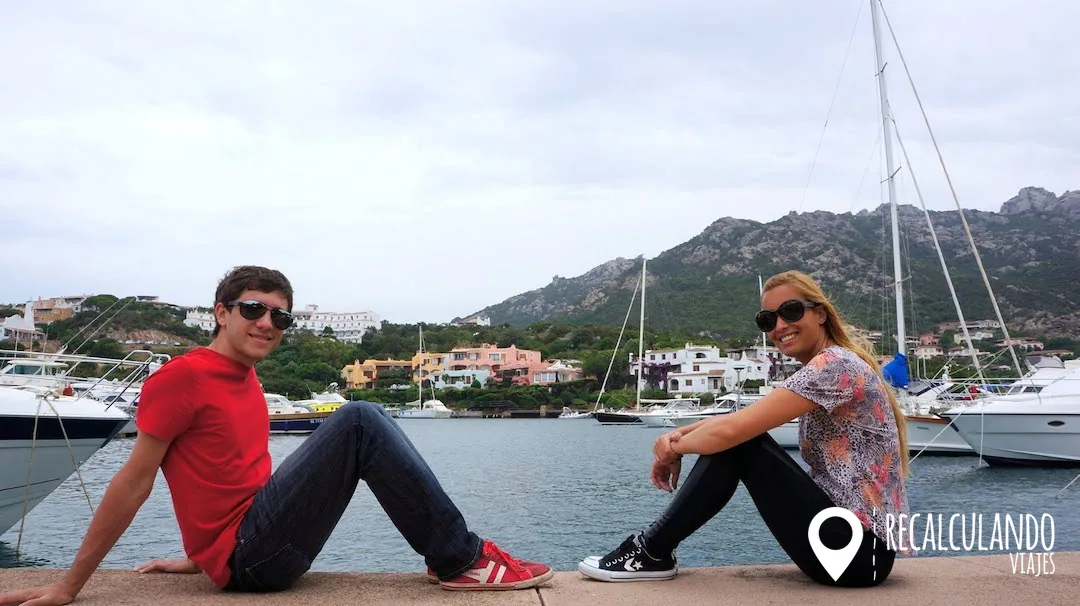
We walked through the Piazzetta and the Promenade du Port past windows of brands we couldn’t afford even if we pooled our savings for the whole trip. But beyond the luxury, what we truly liked is the architecture: low stone houses, arches, curved roof tiles, and bougainvillea, all designed to look like a timeless Mediterranean village. It works very well.
In our case… we went at sunset, took a long walk around the port looking at yachts, and didn’t spend a single cent. It’s totally worth it anyway, even just to see the contrast with the wild coves of the rest of the island. Parking during the season is paid almost everywhere.
7. Spiaggia di Capriccioli, our favorite in the Costa Smeralda
If there is one beach on the Costa Smeralda that we loved, it is Capriccioli. They are actually two small coves separated by pink granite rocks, with pines reaching almost to the shore and transparent water of an impossible color.
From the sand, you can see the islands of the Mortorio and Soffi archipelago floating on the horizon. We stayed for several hours, and the best part was walking around the rocks to the next cove, which is almost always quieter. It is one of the things to do in Sardinia that combines the beauty of the Costa Smeralda without the circus of Porto Cervo.
TIPS: there is a paid parking lot next to the entrance that fills up early in summer. Bring water shoes, because in some areas you enter the sea over rocks. Nearby are also Liscia Ruja and Spiaggia del Principe, two of the most celebrated in the area.
8. Porto Rotondo, the most photogenic village in the northeast
Porto Rotondo is smaller and quieter than Porto Cervo, and we found it much more enjoyable. The center revolves around the Piazzetta San Marco, an open-air amphitheater surrounded by stairs, plants, and shops, where concerts are held in the summer.
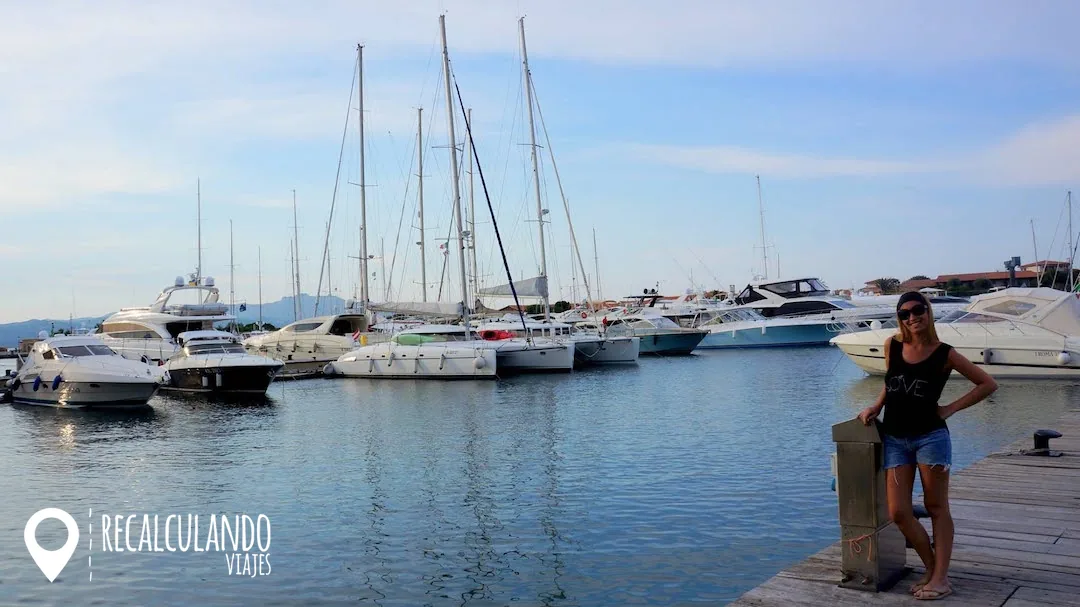
Many travelers recommend entering the church of San Lorenzo to see the wooden carvings by sculptor Mario Ceroli, which cover the entire walls. We preferred the walk around the port and the little stone streets, which become beautiful at sunset.
In our case… we stopped here on our way between Olbia and the Costa Smeralda and ended up staying much longer than planned. It is a short, ideal stop if you are planning things to do in Sardinia in just a few days.
9. Olbia, the gateway to the island
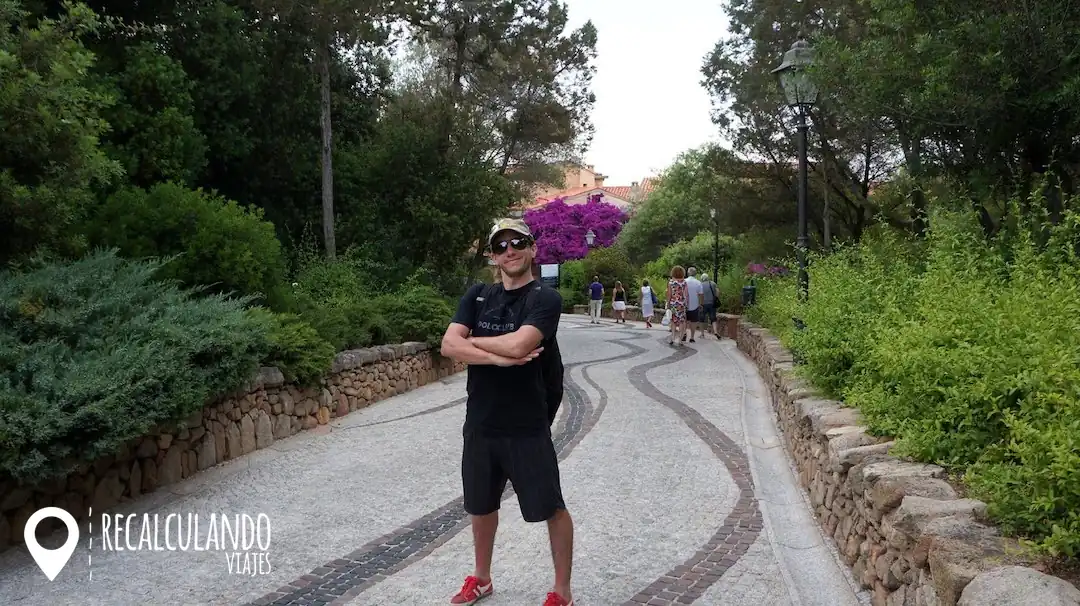
Olbia is usually used only as an airport and port, and that is a mistake. We arrived and departed through here, and we spent some time that was well worth it.
Corso Umberto is the main street, pedestrianized, full of bars and ice cream shops, perfect for walking at sunset. What we liked most was the Basilica of San Simplicio: an 11th-century Romanesque church built of granite blocks, sober, almost austere, very different from the ornate Italian churches one has in mind. In these years of traveling, we have seen many basilicas, but this one has something special because of how simple it is.
Keep in mind: the airport is only 5 minutes from the center, so if you have a late flight or arrive early, it is the perfect excuse to take a walk. The ferry port that connects to Civitavecchia, Livorno, and Genoa is here too. And opposite is the island of Tavolara, a limestone rock mass of almost 600 meters that can be seen from the entire coast.
10. The Giants’ Tombs of Coddu Vecchiu and the Nuragic Sardinia
If there is something that makes Sardinia different from any other island in the Mediterranean, it is the Nuragic civilization. Between 1800 and 500 B.C., these settlers built about 7,000 dry-stone towers, the ‘nuraghi’, which are still scattered all over the island. It is one of the things that surprised us most: you drive along any road and suddenly there is a Bronze Age tower in the middle of a sheep pasture.
The Giants’ Tomb of Coddu Vecchiu, near Arzachena, is one of the best-preserved examples. It is a collective grave with a central granite stele over four meters high, crossed by a tiny little door, and a semicircular exedra where ceremonies were performed. It was built in two phases, between the 21st and 17th centuries B.C.
Keep in mind: the entrance fee is around €4 and it is about 6 kilometers from Arzachena, in the Capichera wine region. One kilometer away is the La Prisgiona nuraghe, which can be visited with a combined ticket, so it is best to do both together. It is the easiest cultural stop to fit in if you are touring the Costa Smeralda.



11. The La Maddalena archipelago, a paradise of transparent water
We didn’t manage to cross over and it hurt to leave it out, but the La Maddalena archipelago is one of the places of interest in Sardinia that appears on every list, and for good reason. There are more than sixty islands and islets protected as a national park, off the coast of Palau.
The main island, La Maddalena, is connected by a bridge to Caprera, where Giuseppe Garibaldi lived his last years and today a museum operates in his house. In Caprera are Cala Coticcio (which they call “Tahiti”) and Cala Brigantina, two coves so delicate that you can only enter with an authorized guide: 60 people per day in each, €3 environmental contribution plus the cost of the guide.
Keep in mind: the ferry from Palau takes about 15-20 minutes and runs very frequently. You can cross with your car, although in summer it is better to leave it and get around by bus or bike. And watch out for the famous Spiaggia Rosa of Budelli: disembarking has been forbidden since 1994, it can only be seen from the boat. Many travelers recommend taking a full-day boat excursion to see several islands at once.
12. Capo Testa and Spiaggia Zia Culumba, granite sculpted by the wind
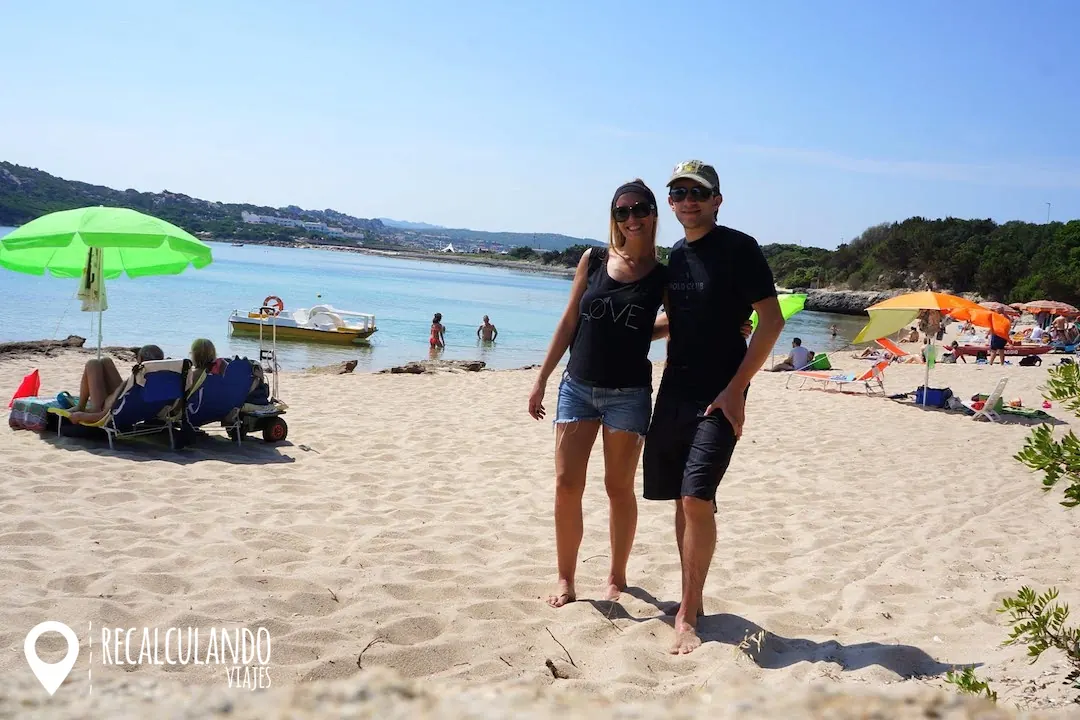
Capo Testa was one of the places that fascinated us most on the whole trip. It is a granite peninsula at the northern tip of the island where the wind and the sea have carved the rocks for millions of years until leaving them with impossible shapes: heads, animals, giant mushrooms. It looks like a natural sculpture park.
Spiaggia Zia Culumba is right next to the lighthouse, facing Corsica. It is small, with coarse, light sand, tucked between blocks of granite, and from there you can see the white cliffs of Bonifacio just 17 kilometers away. We arrived as the sun was setting and the light on the pink granite was… something else.
TIP: don’t leave without walking to the Valle della Luna, a valley of rounded rocks reached by a short trail from the parking lot. It is free and is one of those places where you take a thousand photos without realizing it.
13. Cala Spinosa, the cove hidden among the rocks
Cala Spinosa is also in Capo Testa and is tiny, almost a secret. You go down some steps carved into the rock and a tongue of transparent water appears tucked between granite walls, with very little sand.
It is not a beach to spend the whole day lying in the sun, but for getting into the water and snorkeling, it is unbeatable: the bottom looks as if it were a pool. We combined it with Zia Culumba on the same day and it was one of the best days of the trip.
Keep in mind: the descent is short but irregular, so go with sneakers or sandals with grip. And bring everything you need, because there are no services up top.
14. Spiaggia Rena di Ponente, the beach that saves you from the wind
Rena di Ponente is on the narrow isthmus that connects Capo Testa with the rest of the island, and it has a great trick: a few meters away, on the other side of the isthmus, is Rena di Levante. Since they face opposite sides, if it’s windy on one, you walk across to the other in two minutes. We used it and it works perfectly.
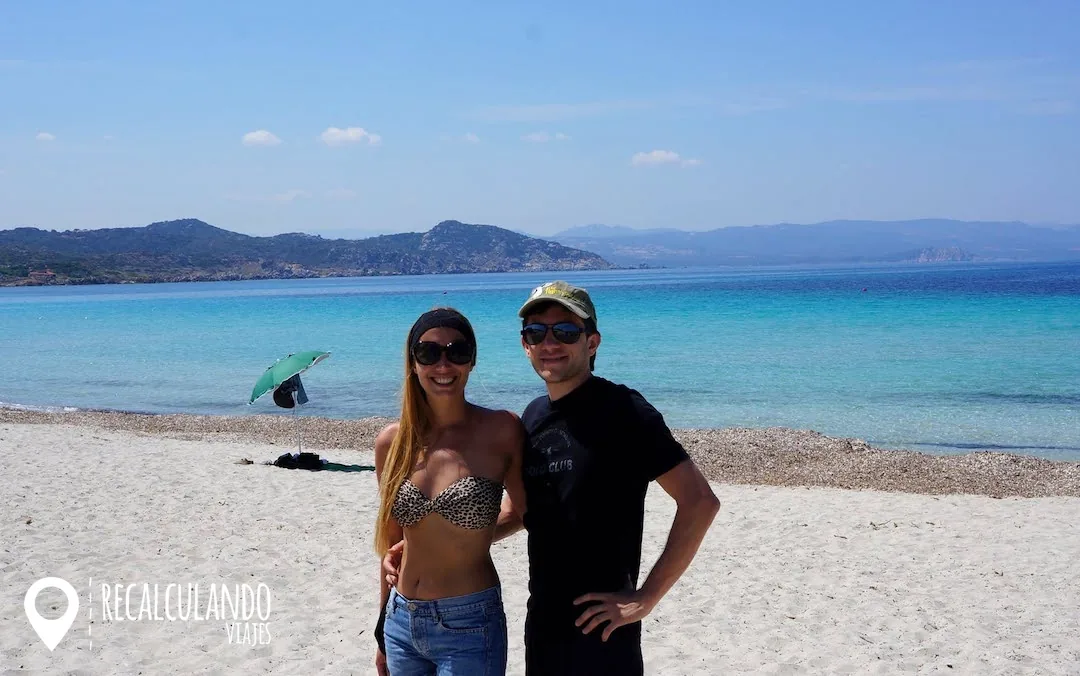
The sand is light and coarse, the water enters gently, and the granite rocks frame the entire cove. It is one of the things to do in Sardinia that almost no guide mentions and that resolved a windy afternoon for us.
TIP: the parking lot on the isthmus is free but small, so arrive early. From there, trails also depart towards the Valle della Luna.
15. Santa Teresa Gallura and the Spiaggia Rena Bianca
Santa Teresa Gallura is the northernmost village in Sardinia and we liked it much more than we expected. It has a lively main square, streets with low houses, and in the background, always, the sea.
Spiaggia Rena Bianca is reached by walking from the center in ten minutes, a very rare thing on this island where almost everything requires a car. It is an urban beach but with very clear water, protected by two rock arms. And on the cliff is the Torre di Longosardo, a 16th-century Aragonese tower from which you can see all of Corsica. The climb is free and the views are among the best in the north.
In our case… we returned here after the long day in La Pelosa and it was the perfect end. The ferry to Bonifacio departs from this port, so if you are combining both islands, Santa Teresa is your natural base.
16. Costa Paradiso and the beach of Li Cossi
Between Santa Teresa Gallura and Castelsardo, the north coast changes completely: the granite turns reddish and forms cliffs that drop vertically into the sea. That is Costa Paradiso, and in the middle, one of the most sought-after beaches in the north of the island is hidden.
Li Cossi beach is a small cove of light sand where a stream flows, tucked between walls of colored rock. We didn’t reach this far, but many travelers rank it among the best in Sardinia precisely because of that contrast of colors. You get there via a trail of about 20-25 minutes from the residential complex parking lot, and it is not suitable for strollers or anyone with mobility problems.
Keep in mind: there are no services on the beach, so bring water and food. And since access is on foot, it still gets full in August, but much less so than beaches with parking right next to them.
17. Castelsardo, the medieval village above the sea
Castelsardo is one of those villages that appear on the route and force you to stop: a promontory above the Gulf of Asinara with white houses climbing up to a 12th-century castle, founded by the Doria family from Genoa.
Inside the castle is the Museo dell’Intrecciato Mediterraneo, dedicated to wicker and dwarf palm basketry, which is the traditional craft of the village. Many travelers recommend going up at sunset, when the walls turn golden and you can see the entire coast towards the west. We didn’t make it, so we tell you with the facts, not from our experience.
TIPS: a few kilometers away, on the road, is the Roccia dell’Elefante (Elephant Rock), a block of eroded trachyte shaped like an elephant that also has prehistoric tombs carved inside. It is free, signposted, and stopping takes five minutes.
18. La Pelosa in Stintino, the most famous beach to see in Sardinia
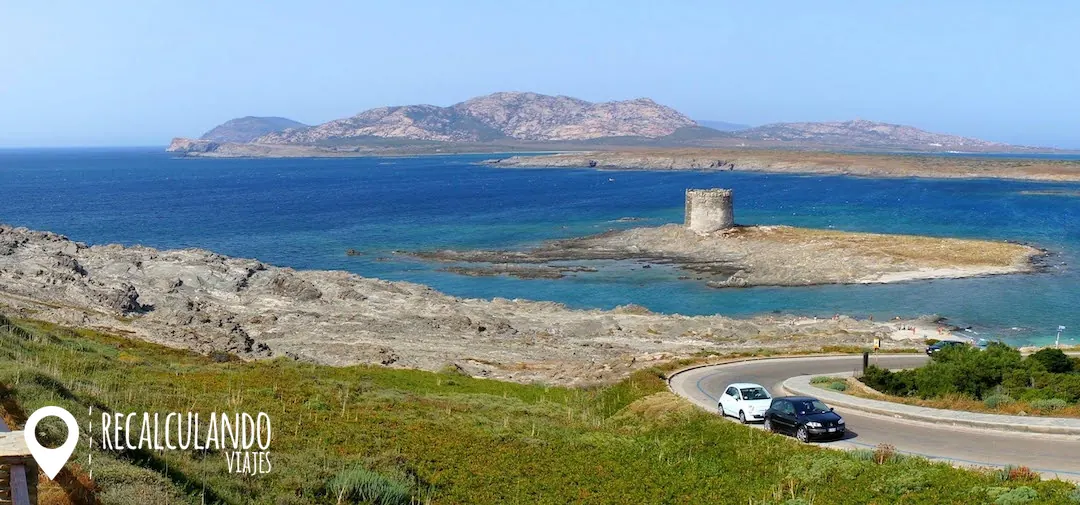
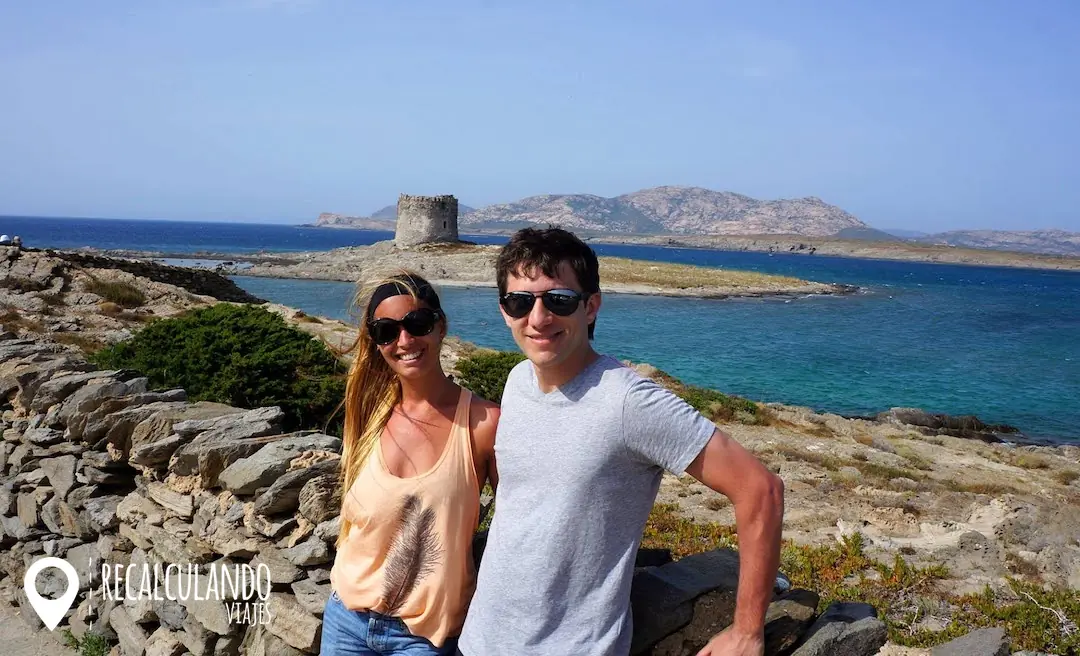
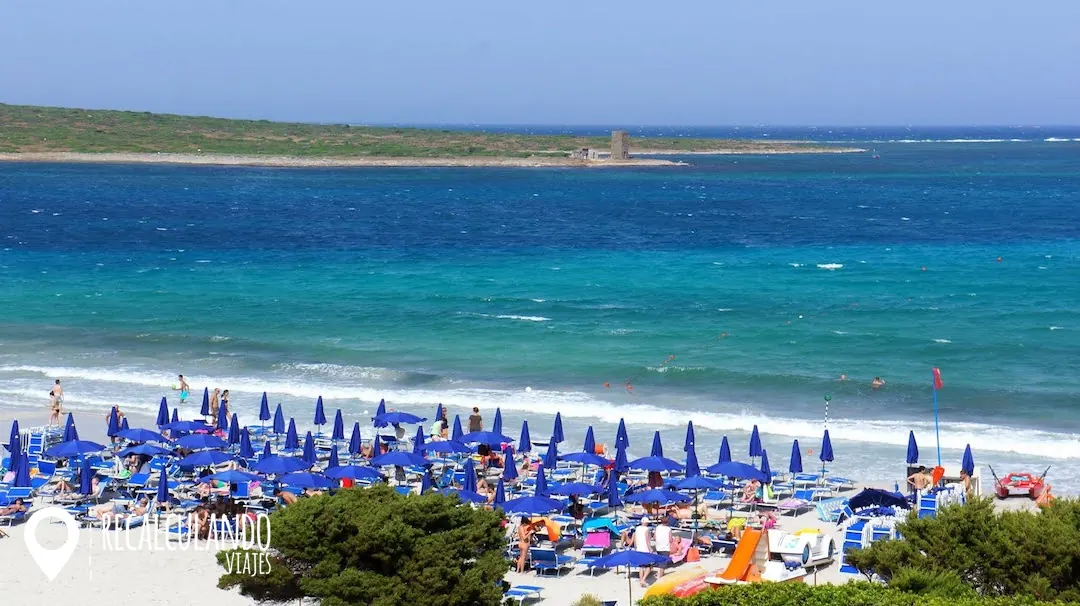
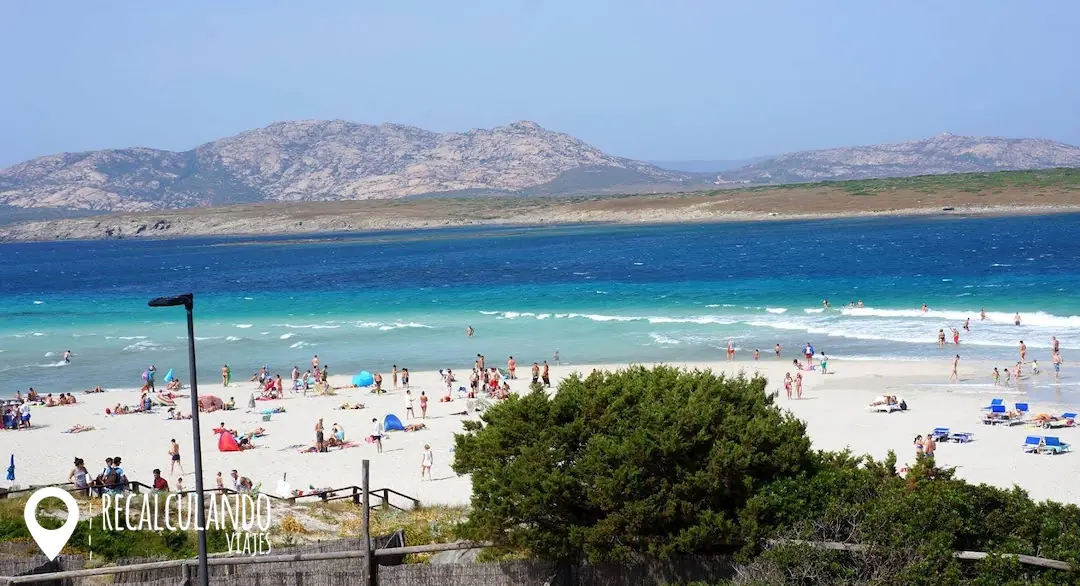
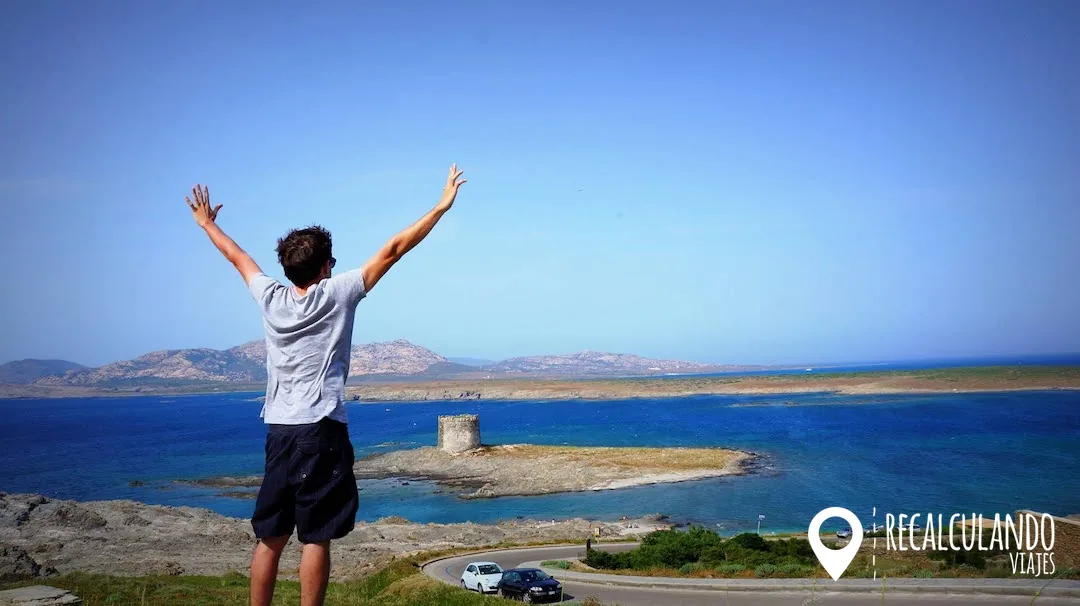
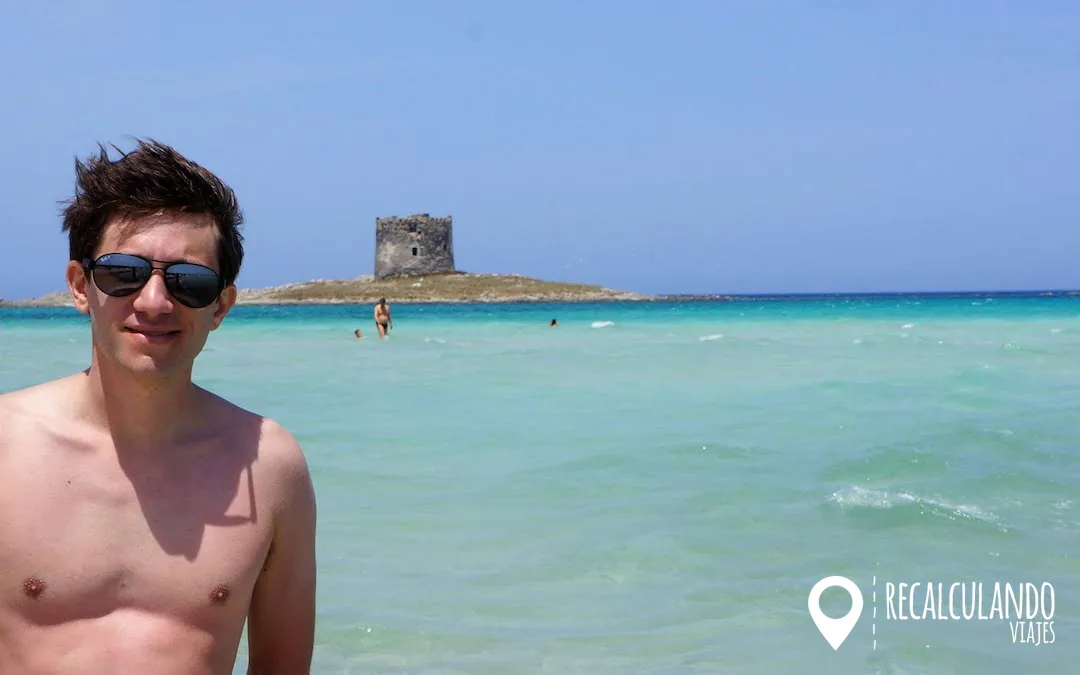
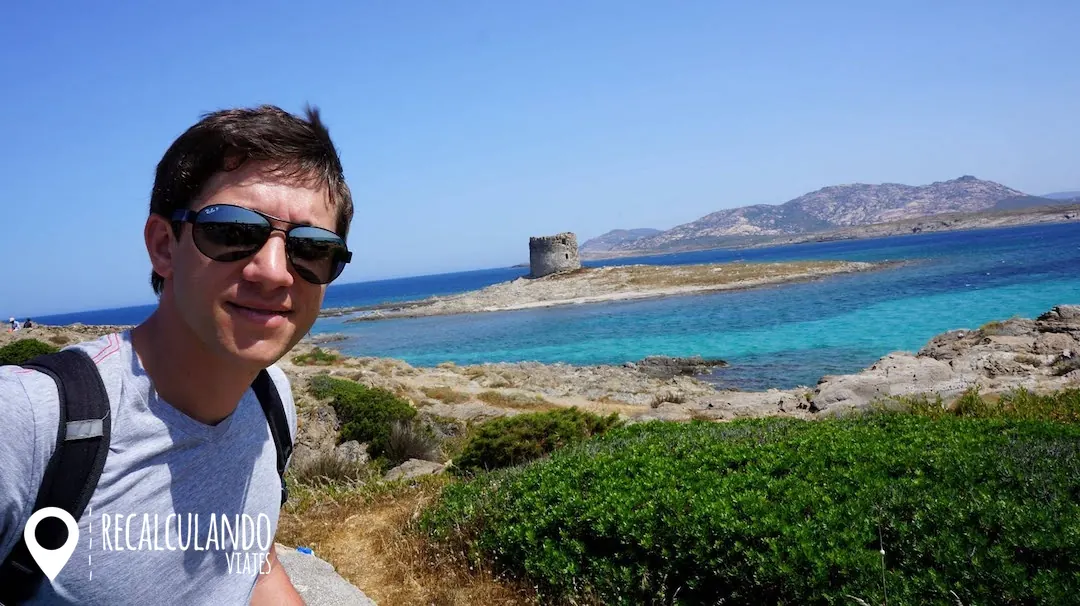
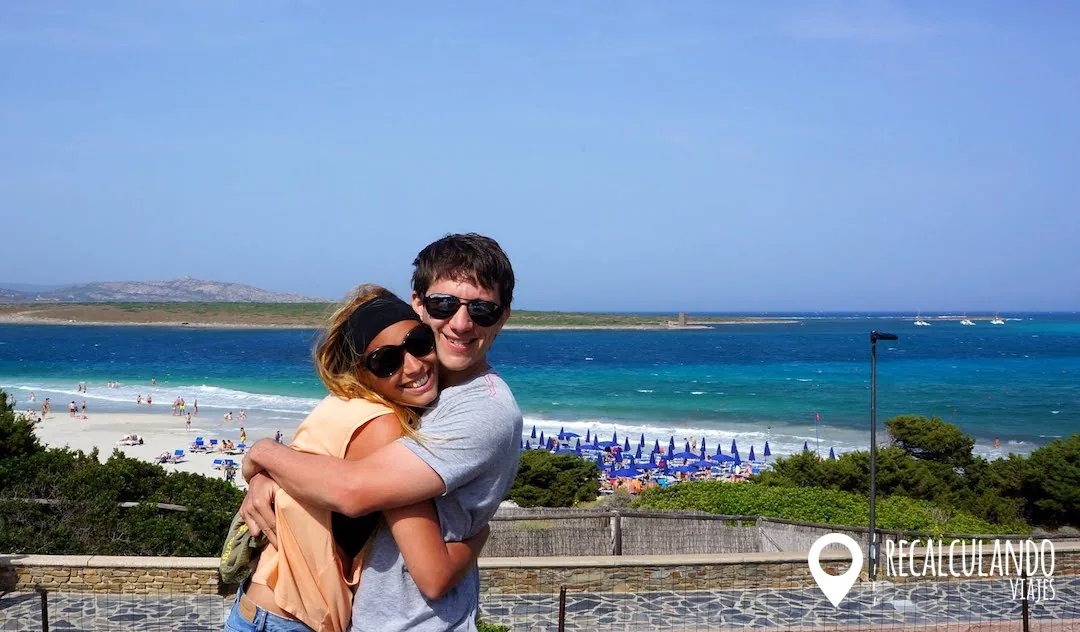
La Pelosa is probably the image you have in your head when you think of Sardinia: extremely fine sand, turquoise water that doesn’t reach your knees for meters and meters, and a 16th-century Aragonese tower on a small islet in the background.
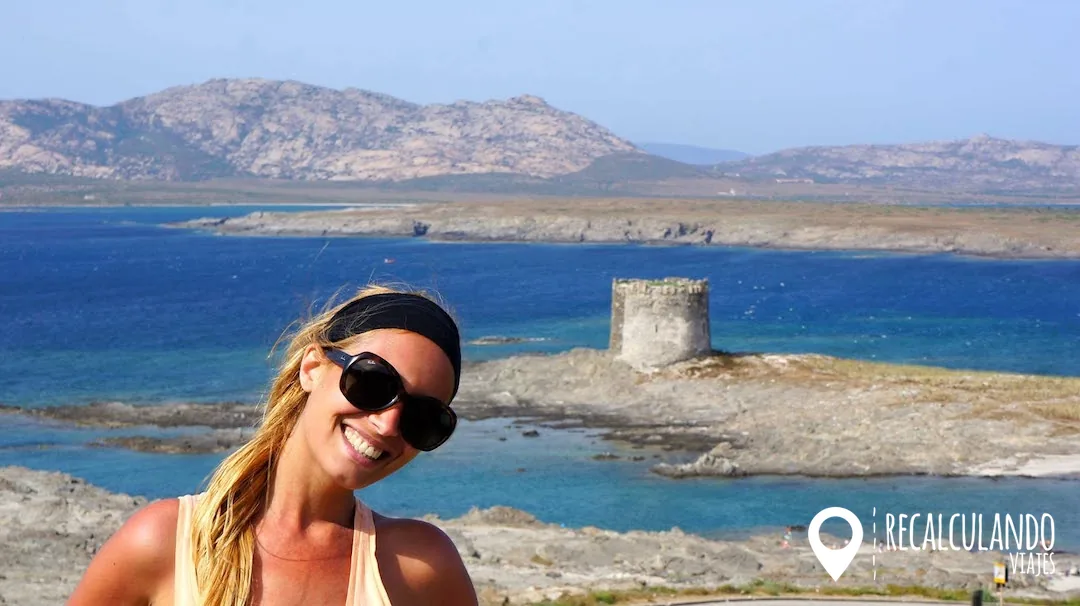
We drove more than two hours from Santa Teresa Gallura to get there and it was worth every kilometer. Opposite are the Isola Piana and, further on, Asinara, now a national park and for decades a maximum-security prison. The whole ensemble is one of those landscapes that leaves you staring without saying anything.
How to book: from May 15th to October 15th, you need a mandatory reservation at spiaggialapelosa.it. There are 1,500 slots per day at €3.50 per person, free for children under 12. A portion of the capacity can be reserved without a time limit and another is released 48 hours before, at 9:00 AM. The QR code control operates from 8:00 AM to 6:00 PM.
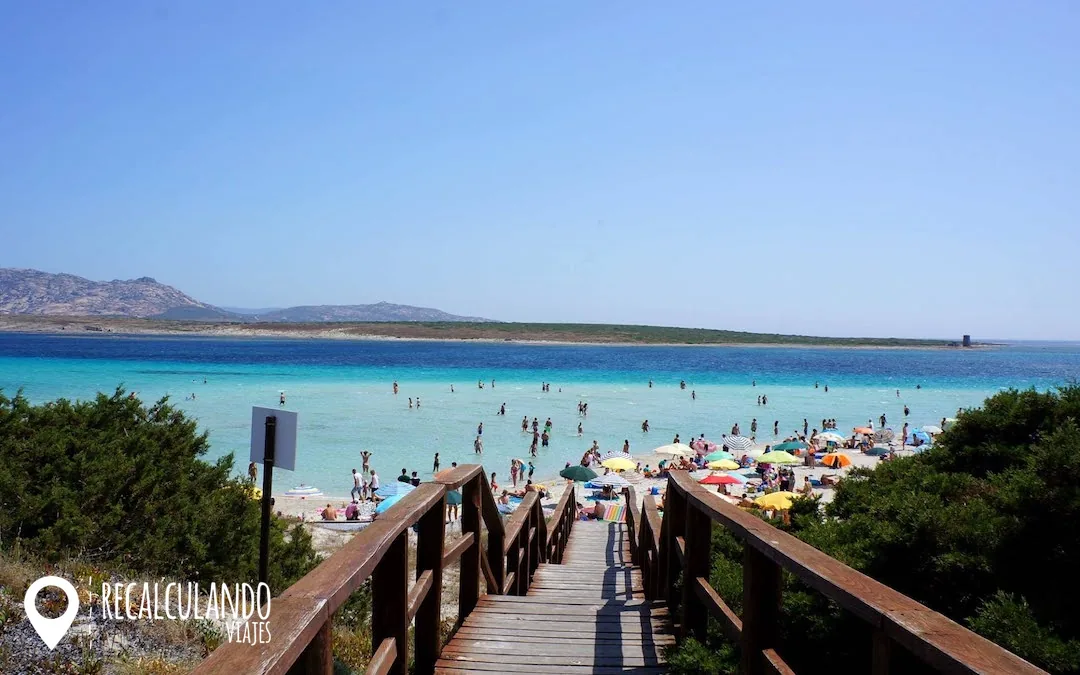
Super important: it is forbidden to put your towel directly on the sand. You have to use a rigid mat underneath, which is sold on-site for about €6 if you don’t bring one. The fine for not using it can reach €100. Add the parking fee, which is around €2 per hour.
19. Alghero and the Grotta di Nettuno, the Catalan corner of the island
Alghero was on our list but we didn’t manage to visit, yet it is one of the stops we would like to make when we return, because it has a very strange history: it was repopulated by Catalans in the 14th century and even today Algherese, a variant of Catalan, is spoken. The streets of the old town have signs in two languages and the walls go straight to the sea. That’s why they call it “little Barceloneta”.
Half an hour away by car is the Capo Caccia cape and the Grotta di Nettuno, a huge sea cave with an internal saltwater lake, columns, and stalactites. It is reached by going down the Escala del Cabirol, a staircase of 654 steps carved into the cliff in 1954, or by boat from the port of Alghero.
Keep in mind: the entrance fee costs €14 (€10 reduced) and, if you go by land, a turn reservation is mandatory at Alghero Experience, even if you buy the ticket at the box office. From June to October, you have to leave your car in the Casa Gioiosa parking lot and take a shuttle, which is paid separately. The visit depends on the state of the sea: if there are waves, they close. We didn’t go in, so we tell you with the official facts, not from our experience.
20. Bosa, the colorful village on the river
Bosa is one of the most repeated postcards of the island and it is no coincidence: the pastel-colored houses are stacked on the banks of the Temo River, the only navigable river in Sardinia, and above everything appears the Serravalle castle, also from the Doria family, from the 12th century.
The old quarter, Sa Costa, is a labyrinth of steep little streets where you climb to the castle. Below, on the banks of Sa Piatta, are the old tanneries that are now industrial heritage. It is one of those villages that many travelers include among the most beautiful in Italy, and the coastal road that joins it with Alghero, the SP49, is famous for being one of the most beautiful scenic routes in the Mediterranean.
Keep in mind: the climb to the castle is steep and without shade, so avoid noon in summer. Bosa Marina, the town’s beach, is a couple of kilometers from the center.
21. Su Nuraxi in Barumini, a World Heritage Site
If in Coddu Vecchiu you saw how the Nuragics buried their dead, in Barumini you will see how they lived. Su Nuraxi is the best-preserved Nuragic complex on the island and the only site in Sardinia declared a World Heritage Site by UNESCO, in 1997.
The central tower is about 18 meters high and dates back to the 15th century B.C. Around it rise four more towers joined by walls and, around all that, a village of circular huts that was excavated between 1949 and 1955 under the direction of archaeologist Giovanni Lilliu. It is believed that a good part of the village is still buried.
Keep in mind: the visit is only with a guide, they leave every half hour and last about an hour. The combined ticket, which also includes the Casa Zapata museum and the Giovanni Lilliu Center, is around €15. It is open every day of the year, although with extreme heat they may suspend afternoon visits. Check updated rates and hours on the website of the Fondazione Barumini. Without a car, it is complicated to get there: the alternative is an excursion from Cagliari.
22. Cagliari, the capital that almost no one spends enough time on
Cagliari closes this list of things to do in Sardinia and is the stop we would like to add most when we return, because it is the complete opposite of the coast: a living city, with a university, a market, and a life of its own beyond tourism.
The Castello district is the walled historic center, perched above the city, with the Cathedral of Santa Maria, the Pisan towers of San Pancrazio and the Elephant, and viewpoints from which you can see the entire Gulf of Angels. Below is the covered San Benedetto market, one of the largest in Italy, with an entire floor dedicated only to fish.
Keep in mind: the urban beach of Poetto is eight kilometers long and you can get there by bus from the center. Right behind is the Molentargius pond, where you can see pink flamingos all year round: it is a reserve and admission is free. If you come from the north, allow about 3 hours of driving from Olbia.
Other things to do in Sardinia if you have more than a week
These are not on the list of the 22 things to do in Sardinia because they are more specific stops or are far from the main circuit, but if you are planning a full loop of the island, they are worth it.
Tharros Archaeological Area
On the Sinis peninsula, near Oristano, are the ruins of a city founded by the Phoenicians in the 8th century B.C. and later occupied by Punics and Romans, with columns and thermal baths facing the open sea. Nearby is the beach of Is Arutas, famous because instead of sand it has rounded quartz grains that look like grains of rice.
Costa Verde and the Piscinas dunes
In the southwest, a desert of dunes up to 60 meters high that descends directly to the sea, with remains of 19th-century mining around it. It is one of the wildest and least visited areas of Sardinia.
Villasimius, Costa Rei, and the beaches of the south
The southeast concentrates huge beaches with very clear water: Punta Molentis, Porto Giunco, Costa Rei, Tuerredda, and Chia. Be aware that Punta Molentis has limited access to 600 people per day from June 1st to September 30th, with parking of €15 per car and €3 for those arriving on foot or by bike.
Orgosolo and the Barbagia
Orgosolo is known for its political and social murals painted on facades since the seventies. It is in the heart of Barbagia, the Sardinia of mountains, shepherds, and traditions that has nothing to do with the coast. Many travelers recommend combining it with Su Gorropu on the same day.
The island of Asinara
Opposite Stintino, a national park since 1997 and formerly a maximum-security prison. It can only be visited on an organized excursion, by boat from Stintino or Porto Torres, and toured by minibus, bike, or 4×4. It is famous for its white donkeys.
Sardinia beaches with mandatory reservation in 2026
This is what we found hardest to understand before traveling, so we have organized it for you in a table. There are more and more beaches on the island with a daily capacity and access ticket, and each uses its own website or app. If you don’t book, you simply don’t get in.
| Beach | 2026 Price | Daily Capacity | Period | Where to book |
|---|---|---|---|---|
| La Pelosa (Stintino) | €3.50 per person | 1,500 | May 15 – Oct 15 | spiaggialapelosa.it |
| Cala Brandinchi (San Teodoro) | €2 per person | 1,447 | June 1 – Sept 30 | santeodorospiagge.it or app |
| Lu Impostu (San Teodoro) | €2 per person | 3,352 | June 1 – Sept 30 | santeodorospiagge.it or app |
| Cala Goloritzé (Baunei) | €7 per person | 250 | All year | Heart of Sardinia app or web |
| Cala Coticcio (Caprera) | €3 + mandatory guide | 60 | Summer season | La Maddalena National Park |
| Cala Brigantina (Caprera) | €3 + mandatory guide | 60 | Summer season | La Maddalena National Park |
| Punta Molentis (Villasimius) | On foot: €3 · Car: €15 | 600 | June 1 – Sept 30 | Municipality website |
| Piscine di Cannigione (Arzachena) | €6 full day · €3.50 half day | Limited | Summer season | Arzachena Spiagge (72h before) |
| Tuerredda (Teulada) | Contingent access | Limited | Summer season | Municipality platform |
| Spiaggia Rosa (Budelli) | Access forbidden | 0 | All year since 1994 | Only seen from the boat |
Our advice: dates and capacities are confirmed each spring and can change, so check the official website of each beach a few days before. And book as soon as the window opens: in July and August, spots for Cala Goloritzé and Cala Brandinchi vanish in minutes.
What to eat in Sardinia: the gastronomy we didn’t expect
When one thinks of things to do in Sardinia, they imagine coves, but the table is also part of the trip. We came from Corsica thinking we would find more of the same, and we were wrong: Sardinian cuisine has its own identity and looks more to the countryside and pastoralism than to the sea, something very rare for an island.
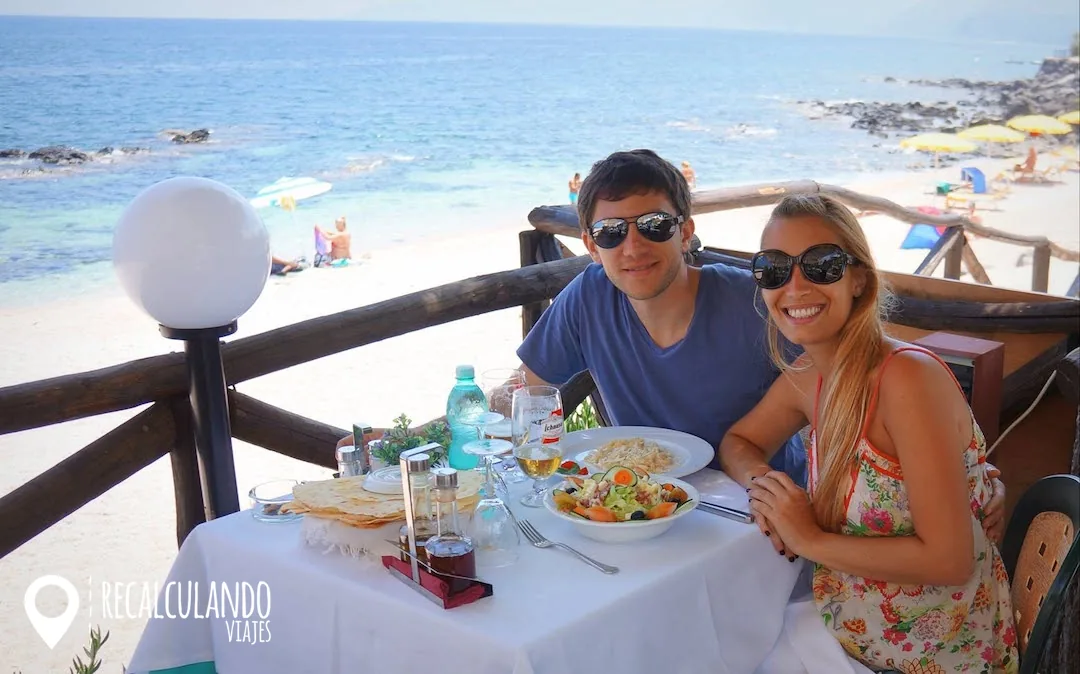
These are the dishes you will see everywhere and that it is good to know before sitting down to order.
- Pane carasau: a very thin and crispy sheet of bread that shepherds carried to the mountains because it lasts for weeks. It is almost always put on the table. If they moisten it with oil, salt, and pass it through the oven, it is called pane guttiau and it is addictive.
- Culurgiones: a pasta stuffed with potato, mint, and cheese, closed by hand with a seam that looks like an ear of wheat. They are typical of the Ogliastra and many travelers rate them as the best dish on the island.
- Porceddu: suckling pig roasted slowly on a spit, the party dish par excellence. It is usually ordered for two people or more.
- Fregola: little balls of toasted semolina similar to couscous, served with clams or with tomato sauce and saffron.
- Bottarga: dried and pressed mullet roe, grated over pasta. It is intense and salty, a very distinct flavor.
- Pecorino sardo: sheep’s cheese in all its versions, from fresh to aged. Sardinia produces a good part of Italy’s pecorino.
- Seadas: the dessert. A fried dumpling filled with fresh cheese and lemon zest, drizzled with bitter honey. It sounds weird, it works incredibly well.
- Mirto and Cannonau: the myrtle berry liqueur served frozen at the end of the meal, and the most representative red wine of the island, powerful and full-bodied.
TIPS: in the interior villages, you eat much better and cheaper than on the touristy coast. And if you go to a supermarket, pane carasau, pecorino, and a bottle of mirto are the three edible souvenirs that travel best.
Itineraries: things to do in Sardinia in 3, 4, 5, 7, and 15 days
This is the part we are asked about most and the one we found hardest to resolve before traveling. Sardinia has 24,100 km² and the distances are deceptive: from Olbia to Cagliari it is about 3 hours by road, and from Olbia to Stintino more than 2. Our advice is simple: choose an area and squeeze the most out of it.
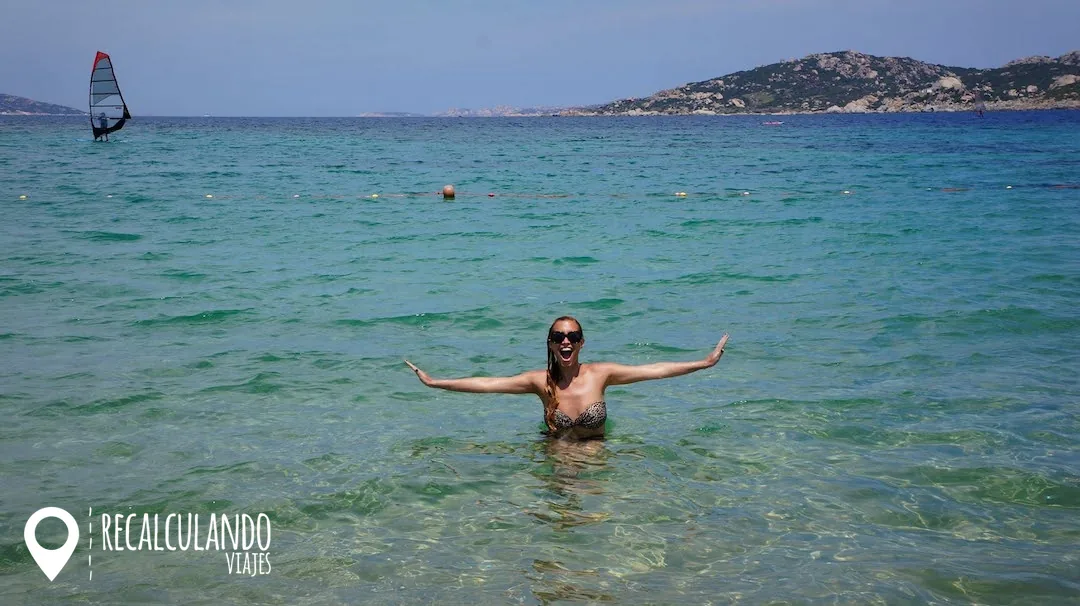
Things to do in Sardinia in 3 days
It is the itinerary we did and it works very well if you fly into Olbia. Day 1: arrival and Cala Brandinchi. Day 2: Porto Rotondo, Porto Cervo, and Spiaggia di Capriccioli, with a short stop in Coddu Vecchiu if you are interested in the Nuragic sites. Day 3: full Capo Testa, with Zia Culumba, Cala Spinosa, and Rena di Ponente, and overnight in Santa Teresa Gallura. It is intense but very enjoyable, with short distances.
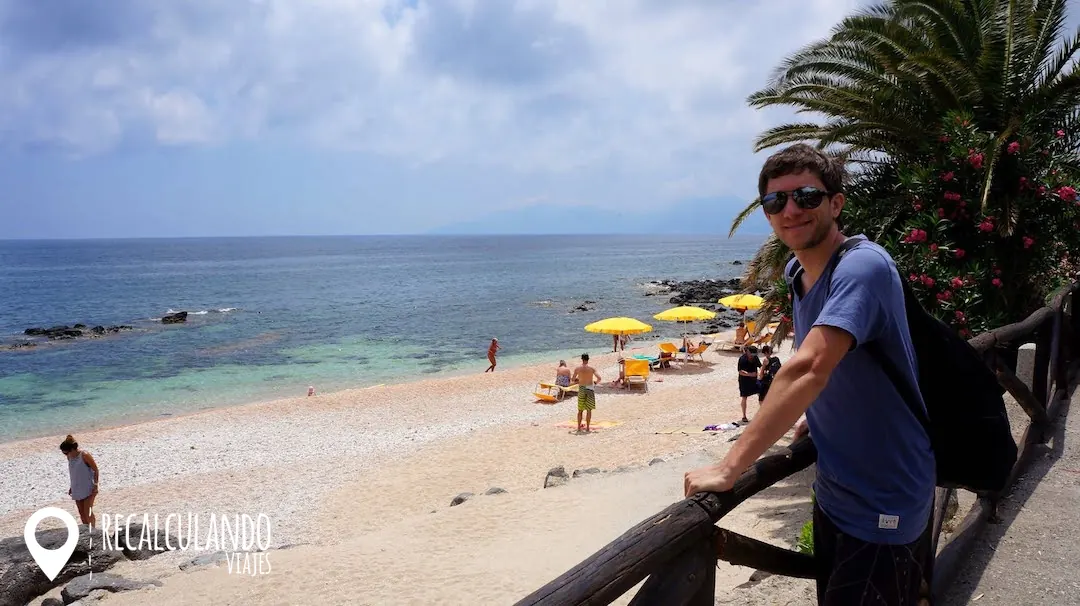
Things to do in Sardinia in 4 days
Add to the previous itinerary a fourth day heading south along the east coast: Spiaggia di Berchida and, if you dare to drive, Cala Gonone. Another option is to dedicate that full day to the La Maddalena archipelago from Palau, which is what we would do if we went back.
Things to do in Sardinia in 5 days
With 5 days you can already cross towards the northwest. Add a night in Alghero to see the Catalan old town and the Grotta di Nettuno, and do the day of La Pelosa and Stintino from there, which is much closer than from Gallura. On the way, stop in Castelsardo and at the Roccia dell’Elefante. We drove more than two hours to get to La Pelosa and, looking back, sleeping in Alghero would have been smarter.
Things to do in Sardinia in 7 days or one week
A week is the ideal time to combine north and south without rushing. Three or four days in Gallura and the Costa Smeralda, one in Alghero and Stintino, and then head towards the interior to see Su Nuraxi of Barumini and finish in Cagliari, with the beaches of Villasimius or Chia. If you prefer sea and mountains over cities, swap Cagliari for Ogliastra and do Cala Goloritzé, the Gulf of Orosei, and the Su Gorropu gorge.
Things to do in Sardinia in 10 or 15 days: the full loop
With two weeks you can do the entire loop without rushing and it is the ideal way to get to know the island. A route that works: Cagliari and the southern beaches (3 days) → Tharros and the Sinis peninsula (1) → Bosa and Alghero (2) → Grotta di Nettuno and La Pelosa (2) → Castelsardo and Costa Paradiso (1) → Santa Teresa Gallura and Capo Testa (2) → La Maddalena (1) → Costa Smeralda and Olbia (2) → Gulf of Orosei, Su Gorropu, and Orgosolo (2). You can do it in reverse depending on where you start.
North or South Sardinia: which area to choose
It is the most common doubt when one starts to decide things to do in Sardinia and there is no single answer, so we tell you how we see it after traveling through the north.
The north concentrates the Costa Smeralda, Gallura, Capo Testa, the La Maddalena archipelago, and La Pelosa. The distances between places are short, there is a huge variety of coves in little territory, and Olbia airport receives flights from half of Europe. It is more expensive, especially in the Porto Cervo area, but if it is your first time, it pays off a lot.
The south has Cagliari, huge and less crowded beaches like Tuerredda or Chia, the Nuragic heritage of Barumini, and much more friendly prices. It is a good option if you travel in high season and want to escape the crowds, or if it is your second time on the island.
The east (Ogliastra and Gulf of Orosei) is the most spectacular area in terms of pure landscape, with the most famous coves and the deepest canyon in Europe, but also the most demanding: trails, boats, and advance reservations.
Our recommendation: with less than 5 days, stay in the north. With 7 or more, do both and fly into Olbia and out of Cagliari (or vice versa) to not repeat the route.
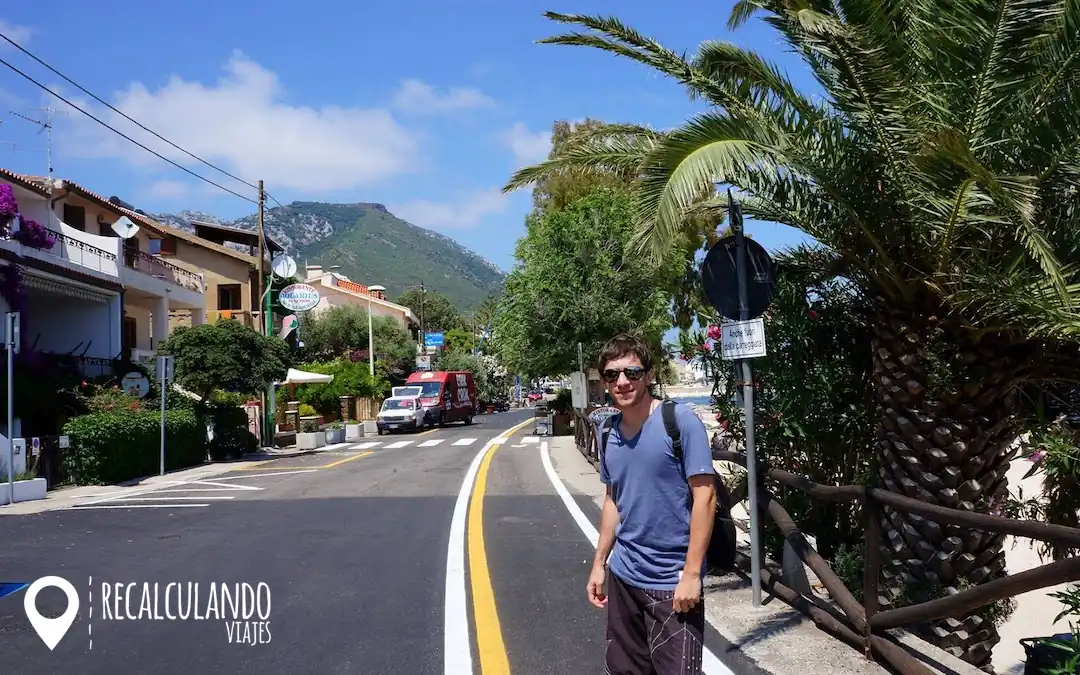
Where to stay in Sardinia: the best area according to your trip
Choosing accommodation changes a lot depending on how many days you have and which airport you enter through. This table summarizes what we would choose in each case.
| Area | Ideal for | Price | Handy for | Accommodations |
|---|---|---|---|---|
| San Teodoro and Porto San Paolo | First base if flying to Olbia | Medium | Cala Brandinchi, Costa Smeralda, Tavolara | View accommodations |
| Olbia | Late arrivals or early departures | Medium-low | Airport, port, Costa Smeralda | View accommodations |
| Porto Cervo and Baja Sardinia | Luxury trip or honeymoon | High | Costa Smeralda beaches | View accommodations |
| Santa Teresa Gallura | Far north and crossing to Corsica | Medium | Capo Testa, Rena Bianca, ferry to Bonifacio | View accommodations |
| Palau | Full day in the archipelago | Medium | La Maddalena and Caprera | View accommodations |
| Alghero | Northwest and low-cost flights | Medium-low | Grotta di Nettuno, La Pelosa, Bosa | View accommodations |
| Cala Gonone or Dorgali | Gulf of Orosei and trekking | Medium-low | Cala Luna, Cala Mariolu, Su Gorropu | View accommodations |
| Cagliari | South, city, and local life | Low | Poetto, Barumini, Villasimius, Chia | View accommodations |
TIPS: in July and August, northeast accommodation sells out months in advance and many require a minimum stay of 7 nights. If you travel then, book as soon as you have your flights. In June, we got everything with little margin and at a good price. Another option quite commonly used on the island are the agriturismi in the interior: you eat very well and they cost half as much as a coastal hotel.
Where to stay in Sardinia: Map and Prices
We use this map to compare hotels, apartments, and prices from different platforms at the same time. It shows everything on the map, so you see at a glance if the accommodation is near the beach or twenty minutes away by car:
How to get to Sardinia
By plane
Sardinia has three airports and choosing yours well saves you hours of driving. Olbia (OLB) is the one in the northeast, the most convenient if you are going to the Costa Smeralda and Gallura, and the one we used. Cagliari (CAG) is the largest and serves the entire south. Alghero (AHO) covers the northwest and usually has the cheapest flights with low-cost airlines.
From Spain, there are direct flights to all three during the season, especially from Barcelona, Madrid, and Palma. Outside of summer, the supply is greatly reduced and often you have to layover in Rome or Milan.
By ferry from Barcelona
If you want to take your own car from Spain, there is only one direct connection: Barcelona – Porto Torres, operated by Grimaldi Lines all year round. The crossing takes about 13 hours, almost always with a night departure, and tickets start around €36 in a seat. With a car and cabin, allow between €100 and €200 per trip for two people depending on the season. Porto Torres is in the northwest, half an hour from Stintino and 40 minutes from Alghero.
By ferry from Italy
Ferries depart from Civitavecchia (Rome), Livorno, Genoa, Naples, and Piombino towards Olbia, Porto Torres, Golfo Aranci, Arbatax, and Cagliari. Trips range from 5 to 12 hours depending on the port and company, and in high season it is advisable to book in advance because space for vehicles sells out.
From Corsica, the crossing we made
Sardinia and Corsica are separated by just 17 kilometers and combining them on the same trip is a great idea. The ferry between Santa Teresa Gallura and Bonifacio crosses the strait in about 50 minutes to 1 hour, runs all year round with several daily departures, and is operated by Moby Lines and Ichnusa Lines. Foot passenger tickets are around €30-€40; with a vehicle, it goes up significantly.
The crossing itself is beautiful: you see the white cliffs Bonifacio is perched on getting closer. Watch out for one detail: if you have a rental car, tell the company before booking. Not all allow you to cross to another country and some charge a supplement to do so. We rented a car on each island.
Renting a car in Sardinia: why it is essential
There is no way around it: without a car, you miss 80% of the best things to do in Sardinia. Public transport connects the main cities, but most coves are at the end of secondary or dirt roads where no bus goes.
The roads are in good condition and driving is calm outside the Costa Smeralda in August. That said, always allow 20% more time than the GPS says, because coastal roads have curves and progress is slow. We rented at Olbia airport and returned there, which is the most practical thing.
Keep in mind: in summer, beach parking lots are almost all paid, between €1.50 and €2.50 per hour, and fill up before 9:30 AM. Bring coins or cash, because not all accept cards. And choose a small car: many access roads to the coves are narrow and parking lots are tight.
Best time to travel to Sardinia and what the weather is like
We went in early June and we wouldn’t change it. The water was already pleasant, there was sun every day, and the beaches had people but not that high-season stress. Also, accommodation and car prices were well below July’s.
- May: ideal for villages, hiking, and photos without people. The sea is still fresh for swimming for a long time.
- June: for us, the best month. Good weather, water already warm, and everything open without being overcrowded.
- July and August: strong heat, crowded beaches, and sky-high prices. The capacities of beaches with reservations sell out in minutes.
- September: the other great month. The sea is at its warmest temperature of the year and the island empties out after the 20th.
- October to April: many coastal accommodations and restaurants close, but it is perfect for getting to know Cagliari, Alghero, and the interior.
A detail we didn’t expect: the wind. The mistral can pick up suddenly and change your beach plan. That is why the Rena di Ponente and Rena di Levante trick, which face opposite sides, was so useful. And if you go trekking to Su Gorropu or Cala Goloritzé, avoid July and August: the heat in Supramonte is brutal.
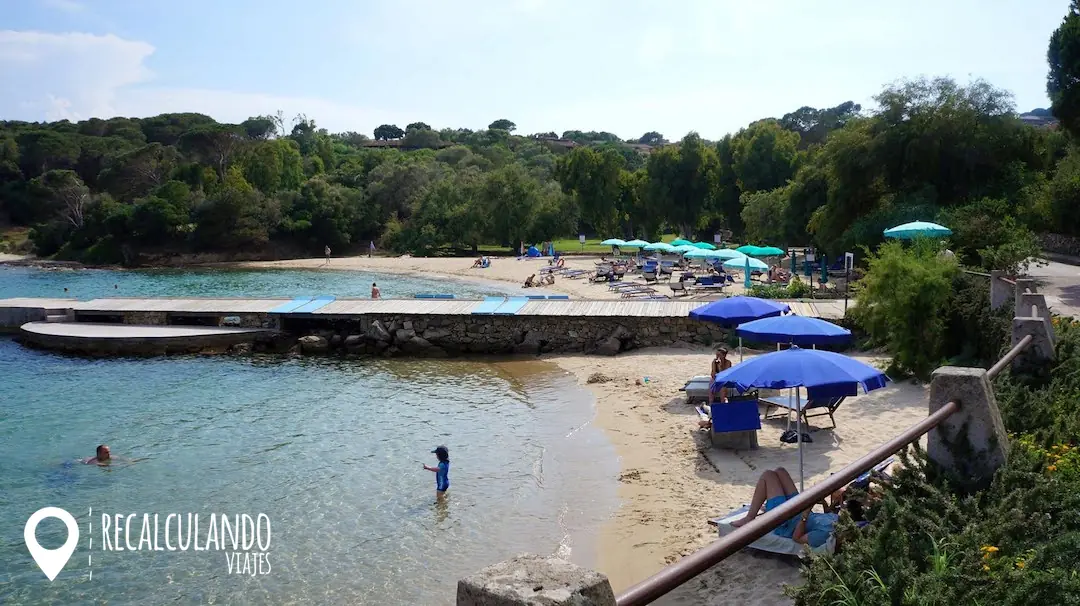
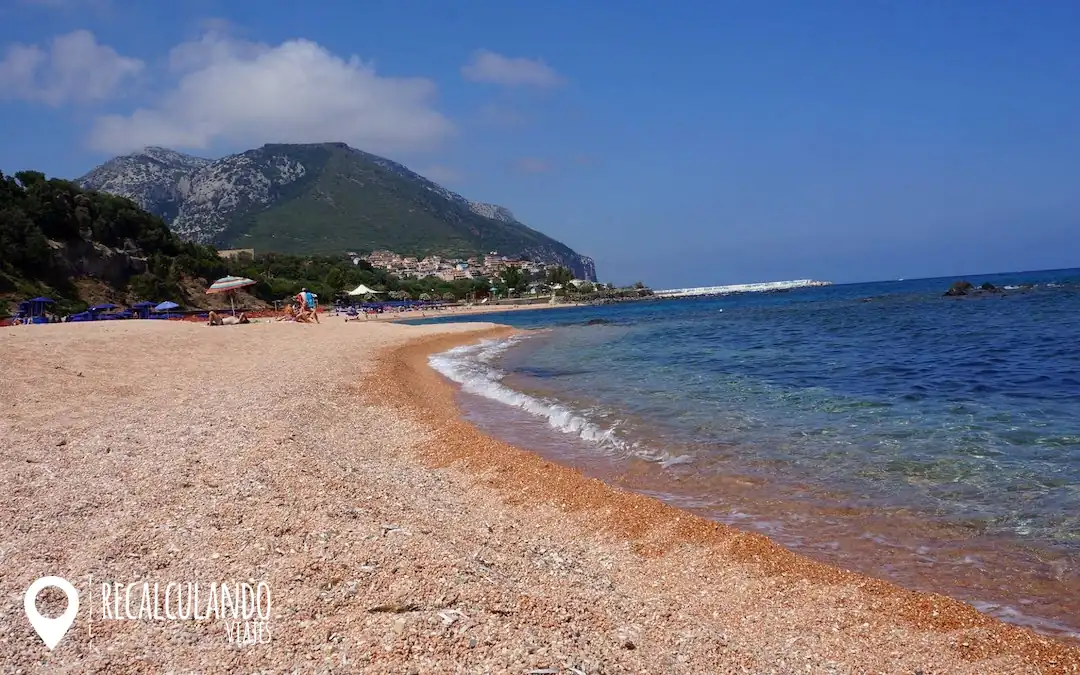
Spiaggia di Cala Capra
Travel insurance for Sardinia
Sardinia is Italy, so with the European Health Insurance Card you have basic public healthcare covered if you live in the European Union. But in practice, that covers almost nothing of what can really happen to you on such a trip: a sprain going down the 654 steps of the Escala del Cabirol, heatstroke on the Goloritzé trail, lost luggage, or flight cancellation.
We always travel insured and in these nine years as nomads we have used it more times than we would like to admit. We always travel with IATI Insurance because it covers the medical part well, water sports, and flight unforeseen events, and because booking it takes two minutes. With our link, you get a permanent 5% discount.

Excursions and activities in Sardinia
There are four or five things that you directly cannot do on your own and that it is better to book before arriving, because in season they sell out: boat trips through the Gulf of Orosei, speedboats through the La Maddalena archipelago, excursions to Asinara island, guided trekking to Su Gorropu, and visits to Su Nuraxi of Barumini from Cagliari.
We always compare on Civitatis, which has most activities with a guide in Spanish and free cancellation, something that on an island where the sea decides if the boat leaves or not is more important than it seems.
To have internet as soon as you land and not depend on bar Wi-Fi, we use an eSIM. With Holafly you have unlimited data in Italy and with the code RECALCULANDOVIAJES you get a 5% discount. In the mountain areas of Barbagia and Supramonte, coverage is weak, so download offline maps before heading inland.
If you are planning the trip from scratch, we also leave you our guide on how to plan your trip step by step and the luggage checklist we use before each departure.
Map of things to do in Sardinia
We created this map with the 22 things to do in Sardinia from this guide plus extra stops, so you can see at a glance how they are distributed across the island and organize the route without unnecessary backtracking. You can open it on your cell phone and use it while driving.
You will notice that the northeast concentrates many points in little territory, while the south and west are more dispersed. That conditions everything: if you have less than a week, sticking only to the north saves you hours of driving and leaves you much more beach time.
Frequently asked questions about things to do in Sardinia
How many days do you need to see Sardinia?
3 or 4 days is enough to explore one area well, as we did with the northeast and Gallura. To combine north and south without driving all day, 7 days is ideal, and if you want to add the Nuragic interior and Ogliastra, allow 10. For a full loop of the island, 15. Sardinia is the second-largest island in the Mediterranean: crossing it from Olbia to Cagliari takes about 3 hours of driving, so it is better to choose fewer places and enjoy them.
What is the best time to visit Sardinia?
June and September are the best months: the water is already pleasant, there are fewer people than in July and August, and accommodation and car prices drop significantly. We went in early June and had a lovely time. May and October are perfect for visiting villages and hiking, although the sea is still fresh. In July and August you will find everything open, but also strong heat and full beaches.
Do you need to rent a car in Sardinia?
Yes, it is practically essential. Public transport connects the main cities but does not reach most of the coves, and many accesses are via secondary or dirt roads. We rented a car at Olbia airport and it was the best decision of the trip. Book in advance in high season, because in July and August prices skyrocket and availability is low.
Which Sardinia beaches do you have to reserve in 2026?
The main ones are La Pelosa in Stintino (€3.50 per person, May 15 to Oct 15), Cala Brandinchi and Lu Impostu in San Teodoro (€2 per person, June 1 to Sept 30), and Cala Goloritzé in Baunei (€7 per person, all year). Cala Coticcio and Cala Brigantina in Caprera, Tuerredda, Punta Molentis, and Piscine di Cannigione also have regulated access. Each uses its own website or app, so check before heading out.
Is North or South Sardinia better?
It depends on what you are looking for. The north concentrates the Costa Smeralda, Gallura, the La Maddalena archipelago, and the most famous postcard beaches, and it is the area we covered. The south has Cagliari, huge beaches like Tuerredda or Chia, and much friendlier prices. If it is your first time and you have a few days, the north pays off more because the distances between places are short.
Can you combine Sardinia with Corsica on the same trip?
Yes, and it is a great combination. We did both islands together. The ferry between Santa Teresa Gallura and Bonifacio crosses the strait in about 50 minutes, operates all year round with several daily departures, and is operated by Moby Lines and Ichnusa Lines. You can take a rental car, but notify the company before: not all allow you to cross to another country and some charge a supplement.
What do you eat in Sardinia?
Sardinian cuisine looks more to the countryside than to the sea, rare for an island. The staples are pane carasau, a crispy bread sheet that lasts for weeks; culurgiones, a pasta stuffed with potato, mint, and cheese closed by hand; porceddu or suckling pig; fregola with clams; bottarga grated over pasta and pecorino sardo. For dessert, seadas with honey. And to close, a frozen mirto or a glass of Cannonau.
Can you go to Sardinia by ferry from Spain?
Yes. The only direct connection is Barcelona – Porto Torres, operated by Grimaldi Lines all year round. The journey takes about 13 hours, almost always with a night departure, and tickets start around €36 in a seat. With a car and cabin, allow between €100 and €200 per trip for two people. Porto Torres is in the northwest, half an hour from Stintino and 40 minutes from Alghero.
How much does a trip to Sardinia cost?
In June, outside the peak season, we calculate between €90 and €130 per day for two people including accommodation, car, gas, food, and tickets. In July and August that number can easily double, especially on the Costa Smeralda. Beach tickets are cheap (between €2 and €7), but add the parking lots, which range from €1.50 to €2.50 per hour in summer.
Conclusion: our experience with the 22 things to do in Sardinia
Sardinia left us fascinated and eager to return. We went thinking we would find just another Italian island and we ran into a place that has its own identity: the pink granite of Capo Testa, the dunes of Berchida, the impossible water of Cala Brandinchi, and that rare mix of extreme luxury in Porto Cervo and wild coves twenty minutes away.
If we had to stick with three of these 22 things to do in Sardinia, we would choose Capo Testa for the landscape, Cala Brandinchi for the water, and Berchida for the feeling of having a huge beach almost to yourself. And if you ask us what we would do differently, we would sleep a night in Alghero to not drive two hours to La Pelosa, we would dedicate a full day to the La Maddalena archipelago, and we would go down to do the Su Gorropu trek.
The most important thing you take away from this guide: book the beaches with capacity limits in time, rent a car no matter what, don’t try to see the whole island in four days, and leave at least one day for the interior. Sardinia is enjoyed slowly. We are already looking at when we are returning!
If you were left wanting more of Italy, we also tell you things to do in Tropea in Calabria, the Scala dei Turchi and the island of Favignana in Sicily, Amalfi on the Amalfi Coast, and Florence in Tuscany.
Other articles for your trip to Italy
- 15 essential things to do in Lido di Venezia (with map)
- Marinella di Zambrone: the secret beach of Calabria | 2026 Guide
- Things to do in Ravello: 10 unmissable places in one day (2026 Guide)
- Things to do in Amalfi: 12 Must-Sees That Will Make You Fall in Love (2026…
- Things to do in Alberobello: Essential Guide with the 10 Best Places
- Things to do in Vietri sul Mare: the definitive guide to visiting the gateway…
- Things to do in Tropea in one day: Essential guide with the best places 2026 |…
- Things to do in Capo Vaticano | Complete 2026 Guide The Coast of the Gods |…
ℹ️ **Total Transparency**
This article contains affiliate links. If you book through these links, we may receive a small commission at no extra cost to you. We only recommend services we use on our travels and trust. This helps us keep this blog free and continue creating useful content for you. Thanks for your support!
🔗 Resources & Useful Links for your trip to Sardinia
Do you have doubts or want to add your own recommendations on things to do in Sardinia?
💬 Leave your comment or write to us, we love reading other travelers’ experiences.
Thank you so much for being part of this adventure!— Nanu & Facu 🌎 | Recalculando Viajes 💜