If you are looking for things to do in Japan, you have come to the right place: we spent almost a month traveling the country from end to end, and in this guide, we share the 15 places that made the biggest impression on us, all visited by us. In addition, you will find itineraries for 10, 15, and 20 days, a map with all the must-sees, where to sleep, and our best TIPS for organizing your trip.
Japan was one of those destinations that completely blew us away. Everything amazed us: the order, the temples, the food, the trains that arrive exactly on time… It left us fascinated and eager to return.
🌍 Travel Insurance: 5% Off with IATI Seguros! 🌟
Take advantage of this offer and travel safe.
Things to do in Japan Summary
| Category | Key details |
|---|---|
| Best time | Spring (March to May) and autumn (October to November). |
| Recommended duration | Between 14 and 21 days for a complete experience. |
| Daily budget | Approximately 90-120 € per person. |
| Main transport | Train (Shinkansen) and use of Suica/Pasmo cards. |
| Must-sees | Tokyo, Kyoto, Osaka, Shirakawa-go, Hiroshima, and Miyajima. |
| Formalities | No visa for short stays (valid passport). |
| Connectivity | eSIM recommended (e.g., Holafly) for constant data. |
| Golden tip | Book accommodation in advance and stay at least one night in a ryokan. |
1. Tokyo, the starting point of things to do in Japan
Tokyo is a beautiful madness. It is the largest city in the world and yet, everything works with a calm and order we didn’t see anywhere else. We spent several days there and still wanted more.
Shibuya Crossing is the busiest in the world. The number of people gathering to cross is incredible. We arrived in the afternoon and stayed until nightfall to see it with the stunning lights. We even ran through the middle of the crossing so our family could see us on the live camera, hahaha. It is definitely worth seeing at both times of the day.
Also, don’t miss Senso-ji Temple in Asakusa, Shinjuku district at night, Akihabara if you like the gamer world, and Meiji Shrine surrounded by forest in the city center.
Important TIP: if you want to visit the Ghibli Museum, book well in advance. We didn’t do it, we went to the door and were left outside… don’t let the same happen to you.
We leave you our complete guide with everything there is to do in Tokyo so you don’t miss anything in the capital.

2. Kamakura and its Great Buddha
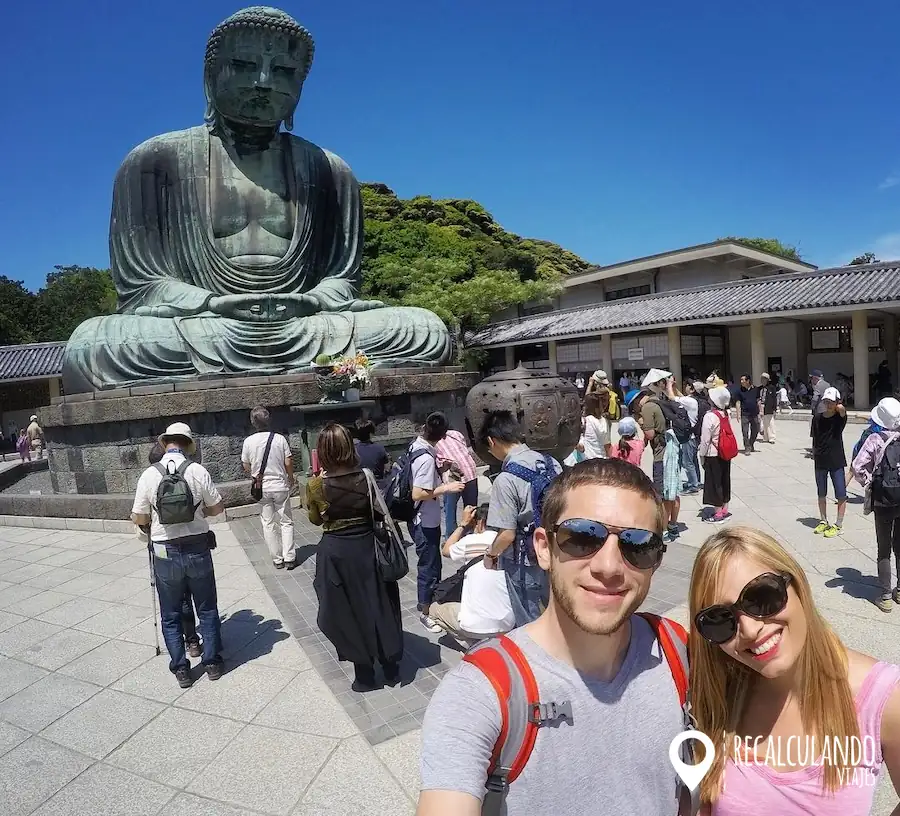
Kamakura is one of the best day trips from Tokyo: in an hour by train, you go from skyscrapers to a coastal town full of temples. We went straight to see the Great Buddha of Kotoku-in, a bronze statue over 13 meters tall that has been there since the 13th century. Seeing it in person is very impressive.
Afterward, we walked to Hase-dera Temple, with beautiful views of the bay, and finished the day wandering Komachi-dori street, ideal for trying street food and buying some souvenirs. It is a relaxed plan, perfect for breaking up the frenetic pace of Tokyo.
If you want to plan your getaway well, we tell you everything in our article on things to do in Kamakura.
3. Yokohama, one of the cities to visit in Japan near Tokyo
Yokohama is only 30 minutes by train from Tokyo and many travelers overlook it. We went almost by accident and loved it. The Minato Mirai area, with its giant Ferris wheel and skyscrapers facing the port, is spectacular at sunset.
What we enjoyed most was its Chinatown, the largest in Japan: a labyrinth of food stalls, red lanterns, and colorful temples. We ate some baos there that we still remember. If you are traveling with time, it is one of those things to do in Japan that almost no one has on their radar, and it’s just a step away from the capital.
4. Nikko, temples among giant cedars
Nikko seemed like a magical place to us. It is about two hours from Tokyo and houses one of the most impressive temple complexes in the country, a World Heritage site. Toshogu Shrine, where the shogun Tokugawa Ieyasu rests, is pure detail: gold, wood carvings everywhere, and the famous relief of the three wise monkeys.
The setting is what makes it unique: everything is surrounded by enormous cedars and the mountain air feels different. We also walked to the red Shinkyo Bridge, one of the classic postcards of Japan. If you can dedicate a full day to it, you won’t regret it.
5. Mount Nokogiri and Nihon-ji Temple
This is one of the great secrets of our guide, because almost no traveler includes it. Mount Nokogiri is on the Chiba peninsula, south of Tokyo, and you go up on a cable car with incredible views of the bay.
At the top, the Nihon-ji Temple awaits you with its huge Buddha carved into the rock, one of the largest in Japan, and the Jigoku Nozoki lookout, the famous “view to hell”: a stone platform that looks out over the void. We went on a weekday and practically had the place to ourselves. An unforgettable experience without the crowds of the more famous sites.
6. Kanazawa, one of the must-sees in Japan
We loved Kanazawa and believe it deserves much more fame than it has. It is on the coast of the Sea of Japan and preserves that traditional city air that was lost in others.
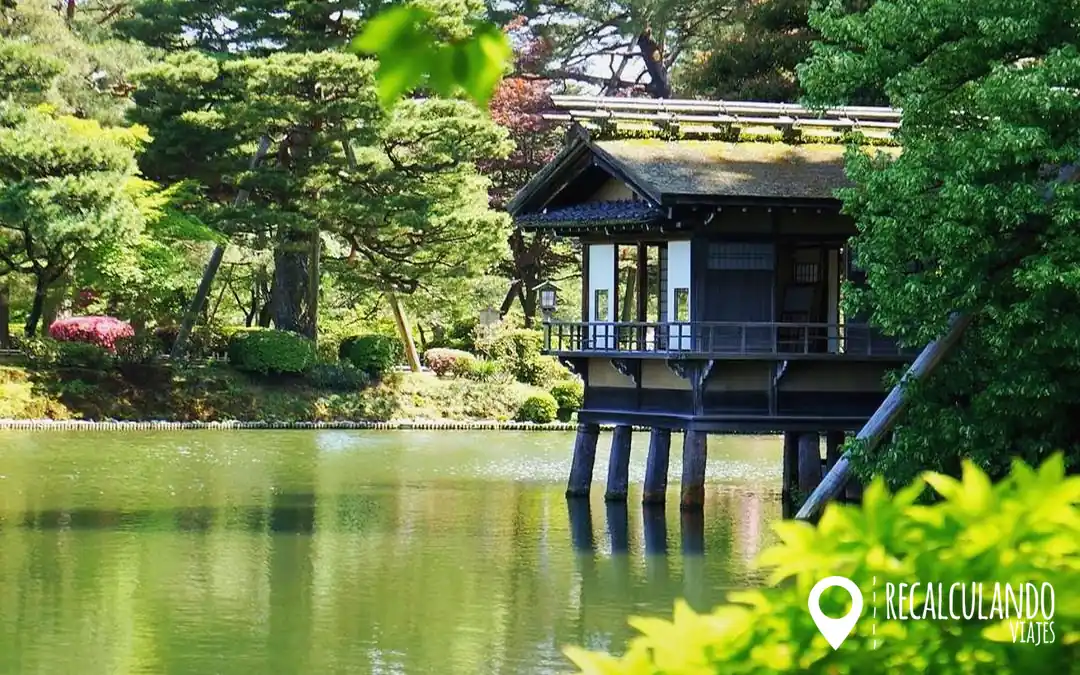
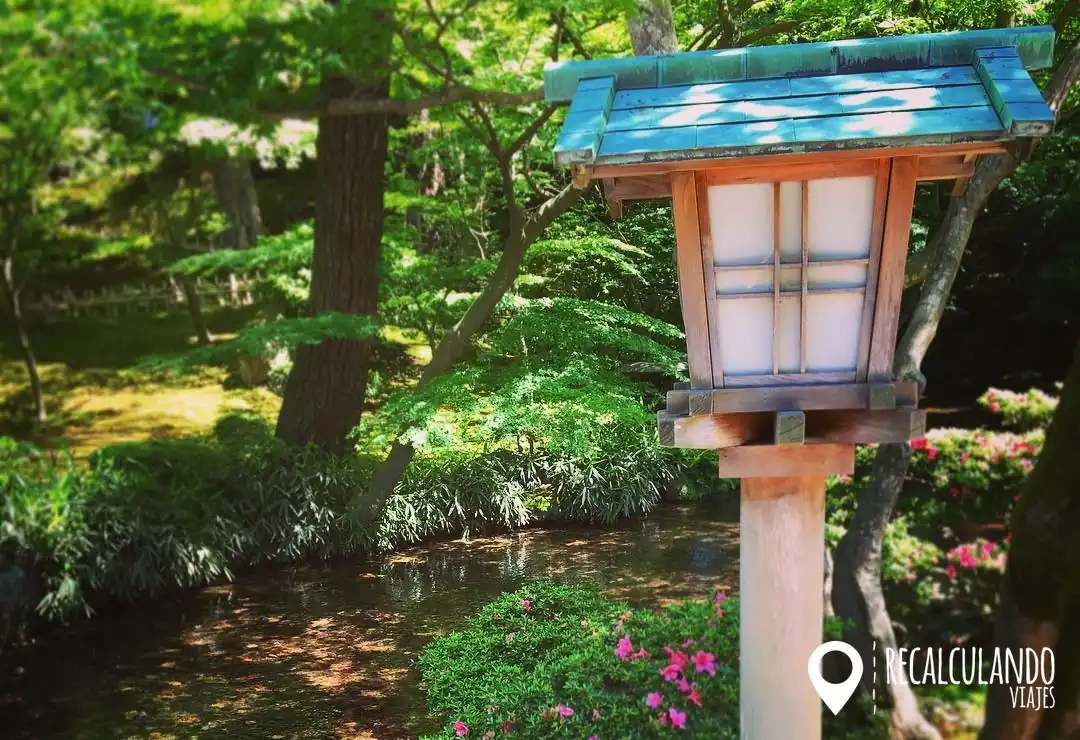
Kenroku-en Garden, considered one of the three most beautiful gardens in the country, is one of those places where you can stay for hours. We explored it slowly, without rushing, and it was one of the loveliest parts of the trip. After that, don’t miss the Higashi Chaya geisha district, the Nagamachi samurai district, and Omicho Market, ideal for having very fresh fish for lunch.
We tell you all the details in our guide on things to do in Kanazawa.
7. Shirakawa-go, the fairy-tale village of the Japanese Alps
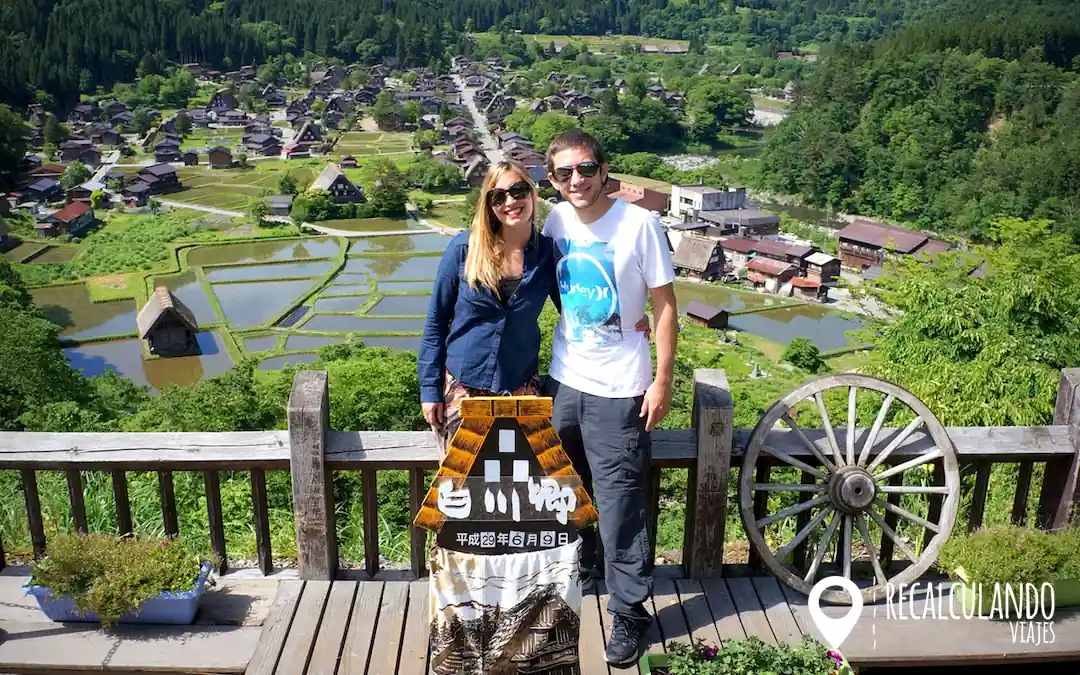
Shirakawa-go looks like it came out of a Ghibli movie. It is a mountain village declared a World Heritage site, famous for its gassho-zukuri houses with super steep thatched roofs, designed to withstand winter snowfalls.
We arrived by excursion bus from Kanazawa and the first thing we did was go up to the Shiroyama lookout: the view of the valley with all the little houses is one of the best postcards we took away from Japan. Afterward, we went down to walk through the village calmly, crossing the suspension bridge over the river. It’s small and can be seen in half a day, but it’s an absolute MUST if you pass through the Japanese Alps.
Here you have our complete guide on things to do in Shirakawa-go with all the info to get there.
8. Takayama, the most traditional Japan
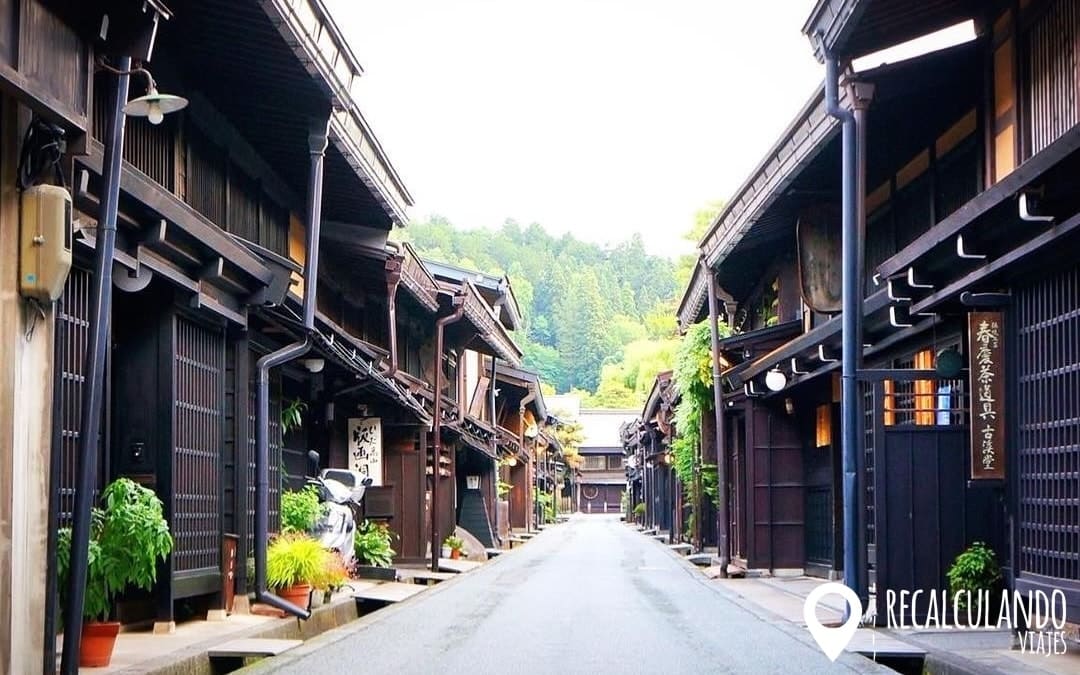
Takayama was one of the surprises of the trip. It is a small city in the middle of the mountains, with a historic center of dark wood, the Sanmachi Suji district, which transports you straight to the Edo period.
We started early at the morning markets by the river, where local producers sell fruit, pickles, and handicrafts. We later walked through the sake breweries, which are recognized by the cedar balls hanging at the entrance, and tried Hida beef, one of the most famous in Japan. We had a lovely time and left wanting to stay more days.
Everything you need to know is in our article on things to do in Takayama.
9. Tojinbo Cliffs, the wild coast of the Sea of Japan
Tojinbo Cliffs, in Fukui prefecture, are another one of those corners of Japan outside the classic circuit. They are basalt column formations that drop sheer into the sea, a rare sight in the world.
We went from Kanazawa and were struck by the contrast: after so many temples and cities, encountering this wild coast, the wind, and the sound of the waves was a total change of air. You can walk along the edge of the cliffs (carefully, there are no railings in several areas) or see them from below on a boat trip. At sunset, with the sun falling over the Sea of Japan, it’s a spectacle.
👩⚕️👨⚕️ A must-have for stress-free travel! 🌎✈️ ➜ Get a Quote, Compare & Buy
10. Kyoto, the great must-see to visit in Japan
If there is one city that sums up what to visit in Japan, it is Kyoto. It was the imperial capital for over a thousand years and has a density of temples, shrines, and gardens that we didn’t see anywhere else in the world.
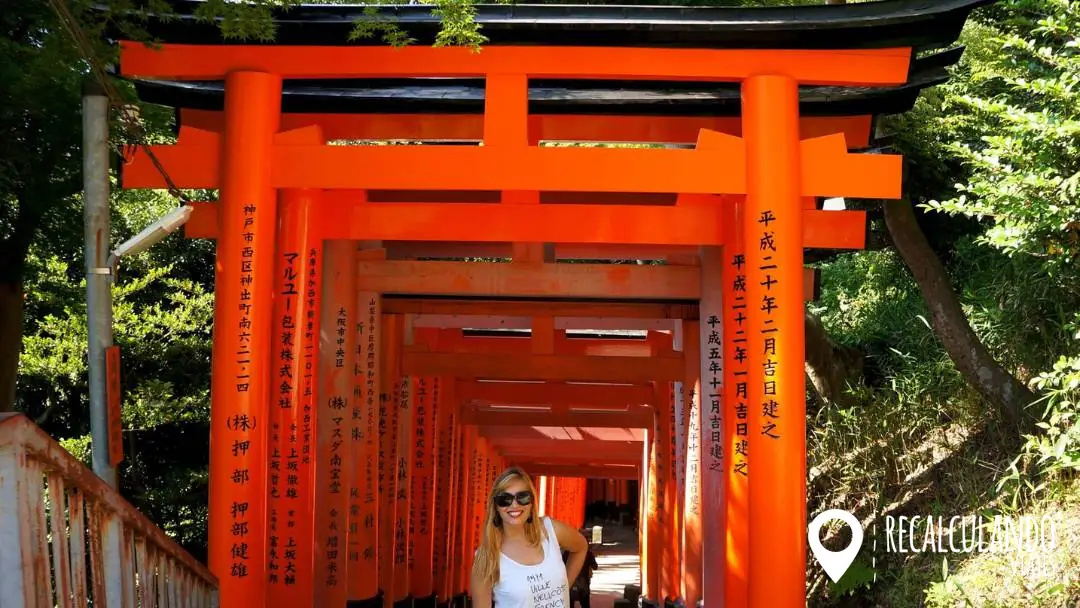
Our must-sees: Fushimi Inari Shrine with its thousands of red torii gates (go very early; we got up early and it was worth every minute of lost sleep), the Golden Pavilion Kinkaku-ji reflected in the pond, Arashiyama Bamboo Grove, and Kiyomizu-dera Temple with its views over the city. And in the evening, get lost in the little streets of Gion: we were lucky enough to cross paths with a geisha on her way to an appointment. We will never forget it.
Kyoto deserves at least three full days. It is, without a doubt, one of the points of interest in Japan that you cannot cut from your itinerary. Here we share a guide with all the complete info on things to do in Kyoto
11. Osaka, the capital of street food
Osaka is pure energy. After the elegance of Kyoto, arriving in Dotonbori at night, with its giant neon signs and the famous Glico runner sign, is entering another world.
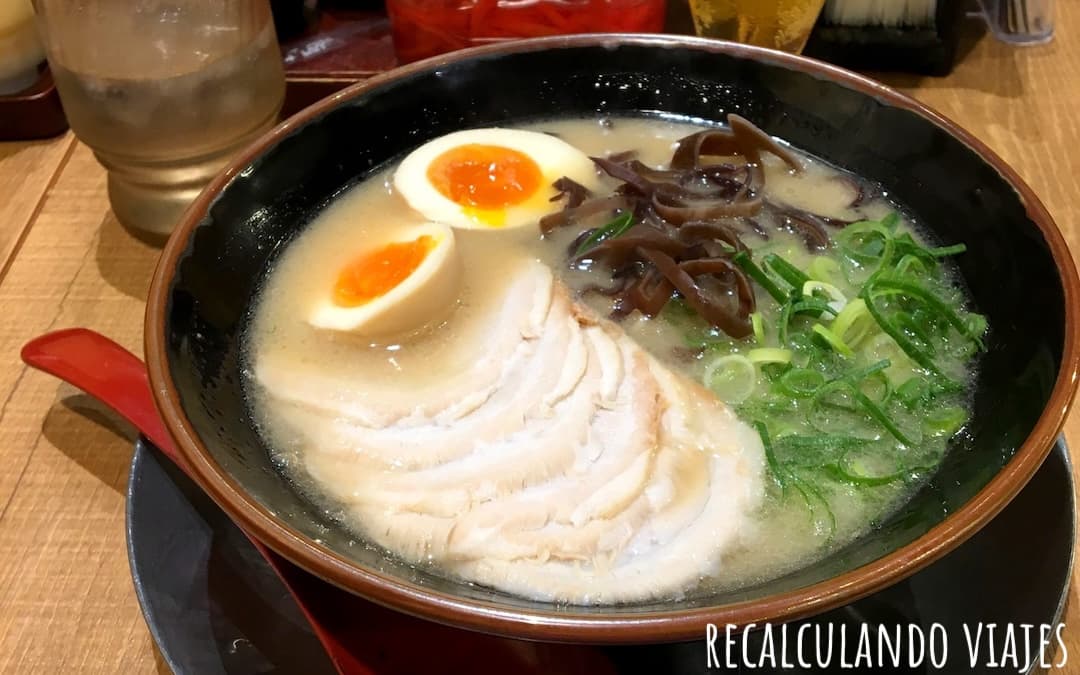
People come here to eat: freshly made takoyaki on the street, okonomiyaki, kushikatsu in the retro district of Shinsekai… We indulged in everything and tell you about our experiences in the article on Japanese food, because the topic is enough for an entire guide, hehehe.
Also, Osaka Castle surrounded by its park is beautiful, and the city is the best base for making excursions through the Kansai region, such as Nara, Himeji, or Kobe.
Here is the Complete guide on things to do in Osaka
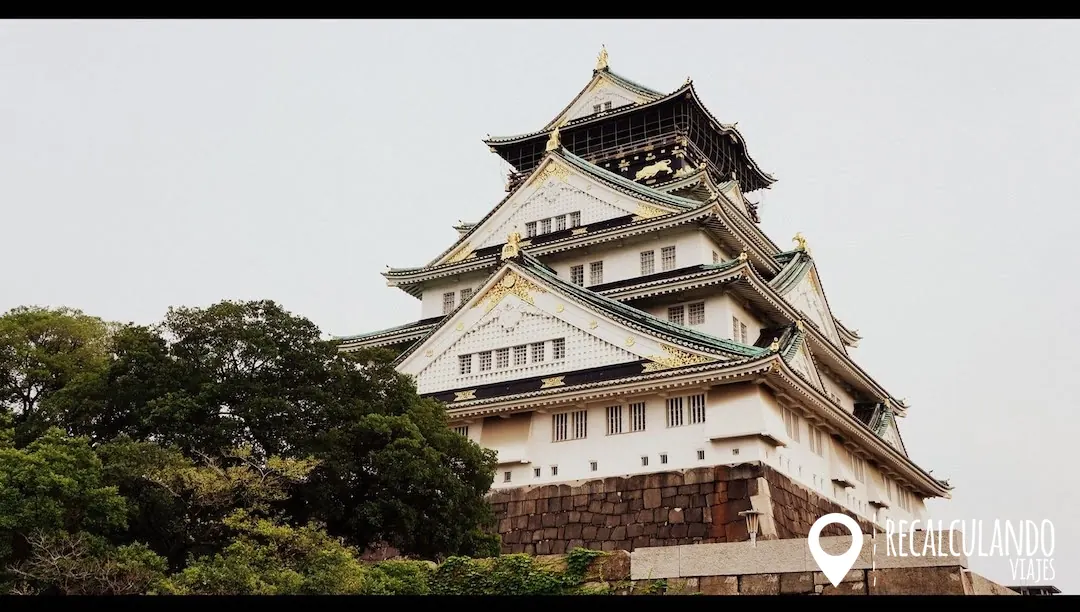
12. Himeji Castle, the most beautiful in Japan
Himeji Castle, known as the White Heron Castle, is the most spectacular in the country and one of the few originals left standing. We went on a day trip from Osaka: you get there by train in less than an hour and from the station itself, you can already see the white silhouette of the castle at the end of the avenue.
It is a World Heritage site and walking through it, climbing its steep wooden stairs barefoot, is a journey to feudal Japan. Keep in mind: from March 2026 the adult entrance fee is 2,500 yen, and for 100 yen more you can buy the combined ticket with Koko-en Garden, which we tell you about next. It opens from 9:00 to 17:00 (until 18:00 in summer).
13. Koko-en Garden, the zen getaway next to the castle
Right next to Himeji Castle is Koko-en Garden, and for us, it is a must-have combo. They are actually nine Edo-style gardens connected to each other, with ponds full of koi carp, waterfalls, wooden bridges, and a tea house.
After the crowds at the castle, entering here was a breath of fresh air: we walked without rushing, took a thousand photos, and sat for a while looking at the water. If you travel in autumn, the maples turn red and the place is directly from another planet. With the combined castle ticket, it’s almost free, so there’s no excuse to skip it.
14. Hiroshima, history and memory
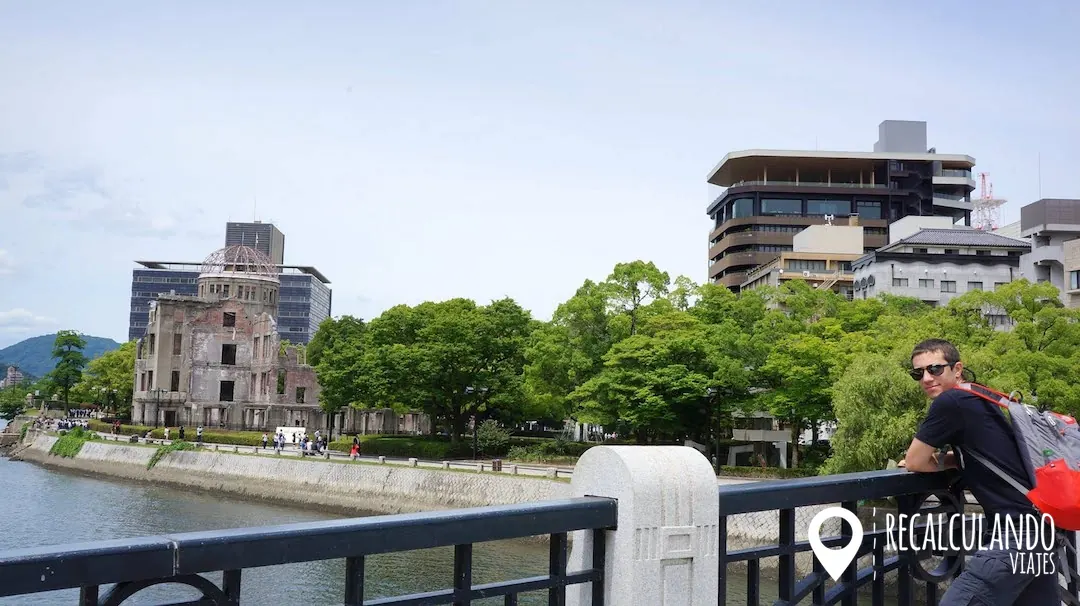
Visiting Hiroshima is one of the most moving experiences of the entire trip. We toured the Peace Memorial Park and stayed for a long while in silence in front of the Genbaku Dome, the only building left standing near the blast point of 1945 and which today is a World Heritage site.
The monument to the children, with its thousands of colored paper cranes, touched our hearts. Many travelers consider the Peace Museum essential for understanding the dimension of what happened; keep in mind that it is an emotionally difficult visit.
But Hiroshima is not just memory: it is a modern and vibrant city, famous for its own version of okonomiyaki, which is prepared in layers.
Don’t miss the Guide on things to do in Hiroshima
15. Miyajima and its floating torii, the icing on the cake
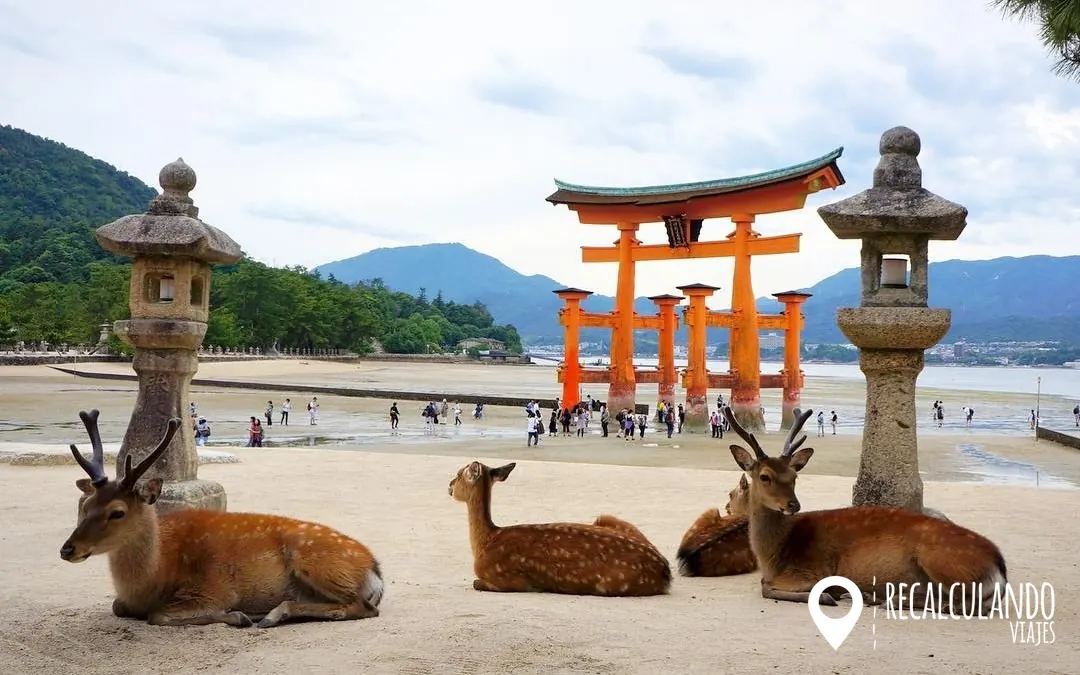
We left for last one of the things to do in Japan that moved us the most: the island of Miyajima. You arrive by a short ferry from Hiroshima (included in the JR Pass) and from the boat itself you can see the great red torii of Itsukushima Shrine, which at high tide seems to float on the sea.
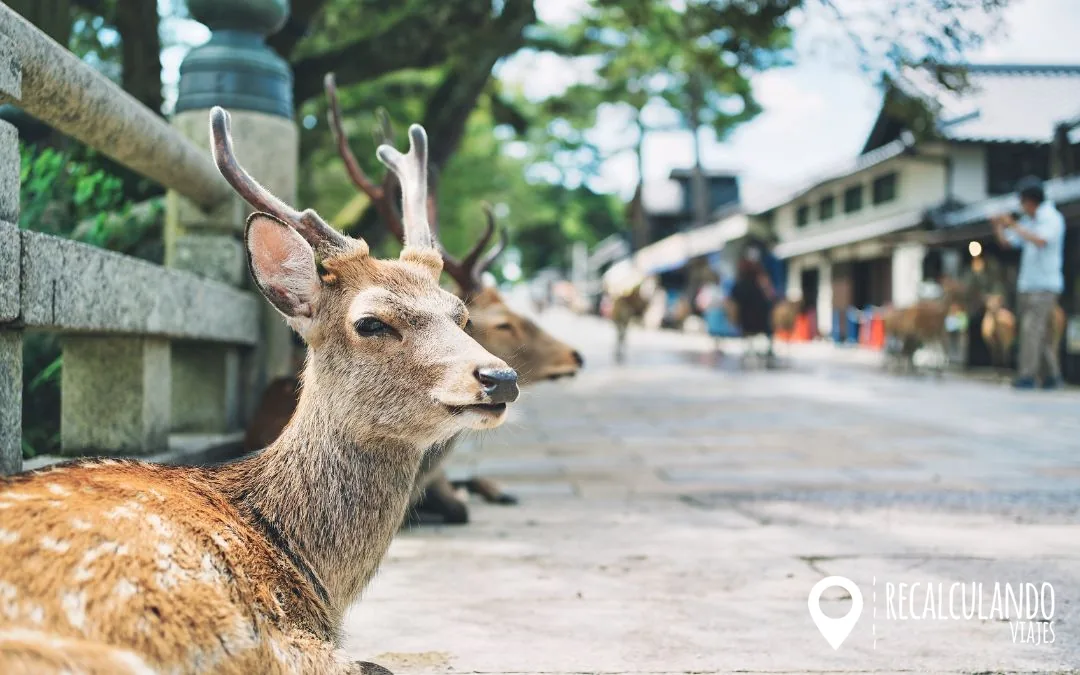
On the island, deer walk freely among people, there are little streets with stalls for momiji manju (the typical maple-leaf-shaped sweets, delicious), and hidden temples like Daisho-in, which fascinated us. If you have time and energy, you can go up Mount Misen by cable car to have a panoramic view of the Seto Inland Sea.
Our heartfelt advice: stay until sunset, when the day-trippers leave and the torii lights up. We tell you everything in our guide on things to do in Miyajima.
Things to do in Japan in 10, 15 or 20 days: suggested itineraries
We know that putting together the route is what causes the most dizziness, so we leave you three itineraries according to the days you have. We thought of all three based on our own journey.
March to May and October to November
Between 14 and 21 days
From 90–120 €/day/person
Japanese / Japanese Yen (JPY)
Things to do in Japan in 10 days
With 10 days we recommend you focus on the classic route: 4 days in Tokyo (with a day trip to Kamakura or Nikko), 3 days in Kyoto, 1 day in Osaka, and 2 days for Hiroshima and Miyajima. It is an intense but very enjoyable pace, and it covers the most iconic parts of the country.
Things to do in Japan in 15 days
With 15 days you can add the route of the Japanese Alps, which for us was the best part of the trip: add to the above 2 days in Kanazawa, 1 day in Shirakawa-go, and 1-2 days in Takayama, plus an excursion to Himeji Castle and Koko-en Garden from Osaka. This was, in essence, our journey, and we recommend it with our eyes closed.
Japan itinerary day by day (15 days)
To see it at a glance, this is the Japan itinerary we recommend, based on our own journey:
| Days | Destination | Things to do |
|---|---|---|
| 1 to 3 | Tokyo | Shibuya, Asakusa, Shinjuku, Akihabara, and Meiji Shrine |
| 4 | Kamakura or Nikko | Day trip from Tokyo |
| 5 and 6 | Kanazawa | Kenroku-en Garden, Higashi Chaya, and Omicho Market |
| 7 | Shirakawa-go | Gassho-zukuri village and Shiroyama lookout |
| 8 | Takayama | Historic center, morning markets, and Hida beef |
| 9 to 11 | Kyoto | Fushimi Inari, Kinkaku-ji, Arashiyama, and Gion |
| 12 | Himeji | Himeji Castle and Koko-en Garden |
| 13 | Osaka | Dotonbori, Osaka Castle, and street food |
| 14 | Hiroshima and Miyajima | Peace Park, ferry to Miyajima, and floating torii |
| 15 | Tokyo | Return by shinkansen, last-minute shopping, and flight |
Things to do in Japan in 20 days
With 20 days you travel without rushing: add Yokohama and Mount Nokogiri from Tokyo, the Tojinbo Cliffs from Kanazawa, a trip to Nara from Osaka or Kyoto to see the park deer, and treat yourself to a night in a traditional ryokan with an onsen. With this time, Japan is enjoyed twice as much.



Map of things to do in Japan
To help you locate everything at a glance, we created this map with the 15 things to do in Japan from this guide, marked in the order of the article. You can save it to your Google Maps and carry it on your phone during your trip.
Where to sleep in Japan
Accommodation in Japan is a whole world: from capsule hotels to traditional ryokans with tatami and futons. Our number one advice is to always sleep near a train or subway station, because you will be moving around a lot. These are the areas we would choose in each city:
TIP: book at least one night in a traditional ryokan, if possible with an onsen. It is an experience you cannot get in any other country in the world. Of course, in cherry blossom and autumn season prices soar, so book months in advance.
On this map you can compare prices of hotels and apartments in the best areas of the country:
- Tokyo: Shinjuku or Asakusa, the best connected and with life at all hours.
- Kyoto: near the central station (ideal for excursions) or in Gion if you want a traditional atmosphere.
- Osaka: the Namba area, steps from Dotonbori.
- Kanazawa and Hiroshima: always around the station, everything is within reach.
You can also search for accommodation in Japan with the best deals and filter by area, dates, and budget.
How to get to Japan and how to get around
From Spain there are direct flights between Madrid and Tokyo, as well as many options with one stopover. The two main airports in Tokyo are Narita and Haneda. From Argentina there are no direct flights: the most common routes stop in the United States, Europe, or the Middle East, with a total travel time of more than 24 hours.
Once in the country, the train is the best. These are the keys to getting around:
- Japan Rail Pass: the unlimited JR train pass costs 50,000 yen for 7 days, 80,000 for 14 days, and 100,000 for 21 days. Since the price hike, it is not always worth it: do the math according to your route. In our case, with an itinerary that adds Tokyo, Kanazawa, Kyoto, Hiroshima, and back, it does pay off. Keep in mind that the Nozomi and Mizuho shinkansen are not included. You can see prices and conditions on the official Japan Rail Pass website.
- Regional passes: if you concentrate on one area (for example Kansai: Osaka, Kyoto, Nara, Himeji), JR regional passes are much cheaper than the national one.
- Suica or Pasmo cards: essential for urban transport. You can top them up directly on your phone with Apple Wallet or Google Pay before traveling.
- Luggage on the shinkansen: if you travel with large suitcases (more than 160 cm adding sides), you have to book a seat with space for luggage.
Travel insurance for Japan
Japan is a very safe country, but private healthcare is very expensive: a simple consultation can cost hundreds of euros and a hospitalization, thousands. That’s why we never travel without insurance, and even less so to a destination like this.
We use and recommend IATI Seguros, which has been accompanying us on our trips for years: it has broad medical expense coverage, 24-hour service in Spanish, and does not ask you to advance money in case of care. As readers of the blog, you get a 5% discount booking through our link:
Book your IATI insurance with a 5% discount
If you travel from Argentina and prefer to pay in pesos and in installments, in our travel assistance guide we tell you about the alternative that many Argentine travelers choose.
And if you want to compare coverage and choose the ideal policy for your travel style, we leave you our guide on the best travel insurance with everything we learned in more than nine years of traveling.

Internet in Japan: the eSIM we use
Having internet from the moment you land is key in Japan: you will use it all the time for Google Maps on trains, for the translator in restaurants, and to show your bookings. We always travel with a Holafly eSIM: it is installed in two minutes from the phone, without changing the physical chip, and it works as soon as you touch Japanese soil.
➜ Buy your eSIM for Japan with a 5% discount using the code RECALCULANDOVIAJES.
Excursions and tours in Japan in Spanish
Although Japan is very easy to tour on your own, there are visits where a guide in Spanish adds a lot, especially to understand the history and culture. These are the ones most recommended by travelers:
- Free tours and excursions in Tokyo, ideal for the first day in the city.
- Guided visits in Kyoto, including Fushimi Inari and Arashiyama.
- All activities in Japan in Spanish: excursions to Nara, Himeji, Hiroshima and Miyajima, Mount Fuji, and much more.
If you are tempted by the excursion to Nara to meet its famous deer, we tell you everything there is to do in Nara in our guide.
Stories, photos, guides, places, tips, and advice for traveling to Japan
Things to do in Strasbourg: The Ultimate 2026 Guide with Must-sees, Hidden Gems, and Travel Tips
Introduction: Strasbourg, a fairytale city in the heart of Alsace Thinking of traveling to France and wondering 🤔 where to go? Let us introduce you to Strasbourg, a city that looks like it came straight out of a fairytale. Located in the Alsace region, this jewel in...

18 must-see things to do in Lefkada (with map)
If you are looking for things to do in Lefkada, you have come to the right place. We spent 12 nights on the island at the end of September with a rental car, during a trip of over 2 months exploring the Ionian islands (Corfu, Paxos, Lefkada, Kefalonia, and Zakynthos)....

18 essential things to do in Rab (with map)
If you're looking for things to do in Rab, you've come to the right place: we stayed 4 nights on the island at the beginning of July, drove around the whole thing, and we're sharing our own experience on what you can't miss. In this guide, you'll find the 18 best...
18 must things to do in Zante (with map)
If you are looking for things to do in Zante, you've come to the right place: we spent 14 nights touring the island with a rental car at the end of October, as part of a more than two-month trip through the Ionian Islands. In this guide, we tell you about the 18...
![Plitvice Lakes, Croatia: Complete guide to visiting the National Park [2026]](https://www.recalculandoviajes.com/wp-content/uploads/2026/07/lagos-plitvice-croacia-400x250.webp)
Plitvice Lakes, Croatia: Complete guide to visiting the National Park [2026]
Plitvice Lakes, Croatia, hides one of the most stunning natural landscapes we saw in Croatia. We spent almost two months traveling through Croatia and its islands, and yet this National Park left us speechless: 16 turquoise lakes connected by over 90 waterfalls... a...
Things to do in Albi: the essential guide with the best places to visit in 2026
When we arrived in Albi, we did so without high expectations. We were driving from Cordes-sur-Ciel, planning to spend the afternoon there before heading back to Carcassonne, where we were staying. What we found left us surprised: a perfectly preserved medieval city...
Videos in Japan
Senso-ji Temple – Tokyo
Takeshita Street – Tokyo
Fukui
Kyoto
Frequently asked questions about things to do in Japan
What is the best time to travel to Japan?
Spring (March to May), for the cherry blossoms, and autumn (October to November), for the reddish colors of the maples. They are also the most expensive and crowded seasons. Try to avoid Golden Week (late April and early May), the rainy season or tsuyu (June), and the humid heat of mid-summer. Winter is cold but ideal for seeing a snowy Shirakawa-go.
How many days are needed to see Japan?
The ideal is between 14 and 21 days to cover the classic route plus the Japanese Alps without rushing. With 10 days you can do the essentials (Tokyo, Kyoto, Osaka, Hiroshima, and Miyajima) at a good pace. Less than a week is too short for such a long trip.
Do Argentine and Spanish citizens need a visa to travel to Japan?
No. Both Argentine and Spanish citizens can enter Japan as tourists without a visa for up to 90 days. You only need a valid passport and to complete the Visit Japan Web registration before arriving to expedite immigration.
Is it expensive to travel to Japan?
Less than people think. With the yen devaluation of recent years, eating well costs from about 7-10 euros and there are decent accommodations from 50-60 euros for a double room. The big expense is the flight and long-distance trains. An average budget is around 90-120 euros per day and person.
Can you pay by card in Japan or is cash needed?
More and more businesses accept cards, but Japan is still a cash-based country: many temples, markets, and small restaurants only accept yen in cash. Our advice is to always carry some cash and load the Suica card on your phone for transport and vending machines.
Is it worth buying the Japan Rail Pass?
It depends on your route. Since the 2023 price hike (50,000 yen for the 7-day pass), it only pays off if you take several long shinkansen trips, for example Tokyo, Kanazawa, Kyoto, and Hiroshima with a return. For short routes, individual tickets or regional passes are cheaper.
Can you travel around Japan without knowing Japanese?
Yes, no problem. Train and station signage is in English, Google Maps works perfectly for transport, and with your phone’s translator you can solve menus and signs. The Japanese, moreover, are extremely kind and always try to help you even if they don’t speak your language.
How to visit Mount Fuji from Tokyo?
The most common way is a day trip to the Five Lakes area (Kawaguchiko) or to Hakone, by train or with a tour in Spanish. We didn’t get to go on our trip, but it is one of the most chosen excursions by travelers. Keep in mind that the mountain usually looks clearer in the cold months and first thing in the morning.
Our conclusion: is it worth traveling to Japan?
A thousand times yes. Of all the things to do in Japan that we told you about in this guide, there is not a single one we would take off the list: each city, temple, and village left us with something different. It is a long trip and requires organization, but the reward is huge. We returned changed and with the certainty that we are going to return.
If you are putting together the route, our guide on how to plan your trip step by step will be useful. And if you have any doubts about things to do in Japan, leave us a comment and we will answer you from our experience. Have a great trip!
ℹ️ **Total Transparency**
This article contains affiliate links. If you book through these links, we may receive a small commission at no additional cost to you. We only recommend services we use on our trips and trust. This helps us keep this blog free and continue creating useful content for you. Thank you for your support!
🔗 Resources & Useful Links for your trip to Japan
Do you have questions or want to add your own recommendations on things to do in Japan?
💬 Leave your comment or write to us, we love reading the experiences of other travelers.
Thank you very much for being part of this adventure!— Nanu & Facu 🌎 | Recalculando Viajes 💜