When we arrived in Kyoto for the first time, we felt like we had traveled back in time. We spent ten days exploring this city that captured us from the very first moment with its golden temples, cobblestone streets where geishas walk, and those zen gardens that look like living paintings.
Kyoto manages to do something magical: combine 1,200 years of history with modern life without losing its essence. Here you won’t find a typical impersonal list of tourist attractions.
We’re going to tell you things to do in Kyoto based on our real experience of ten days living the city’s rhythm, with all the practical tips we learned while walking its streets, getting lost in its neighborhoods, and local experiences. Get ready to fall in love with the city that was the capital of Japan for over a thousand years.
🌍 Travel Insurance: 5% Off with IATI Seguros! 🌟
Take advantage of this offer and travel safe.
Summary: The Essentials for Planning Your Visit to Kyoto
| Question | Answer |
|---|---|
| How many days do I need to see Kyoto? | We recommend at least 4-5 days to see the main attractions without rushing. With 7 days, you can explore calmly and take nearby excursions. |
| When is the best time to visit Kyoto? | Spring (March-April) for cherry blossoms and autumn (November) for the momiji. Avoid Golden Week due to crowds. |
| How do I get around Kyoto? | The bus system covers the entire city. Buy the one-day pass for ¥700. The subway has only two lines but connects key points. |
| Do I need to book temples in advance? | Most don’t require booking, but some, like Katsura Imperial Villa, do. We recommend arriving early to avoid queues. |
| What is the daily budget needed? | With ¥8,000-12,000 per day, you cover food, transport, and entrance fees. Accommodation is separate: from ¥3,500 in hostels to ¥15,000+ in ryokans. |
| Is Kyoto friendly for non-Japanese? | Yes, though less than Tokyo. Many places have info in English. Download Google Translate offline and learn basic phrases. |
| Can I see geishas in Kyoto? | Yes, in the Gion district at sunset. Respect their privacy: don’t chase or touch them; observe discreetly. |
| Are the temples open all year? | Most are, but some close for ceremonies. Check specific hours if traveling during the rainy season (June-July). |
Must-visit things to do in Kyoto:
1. Fushimi Inari Taisha: The Famous Thousands of Red Torii Gates
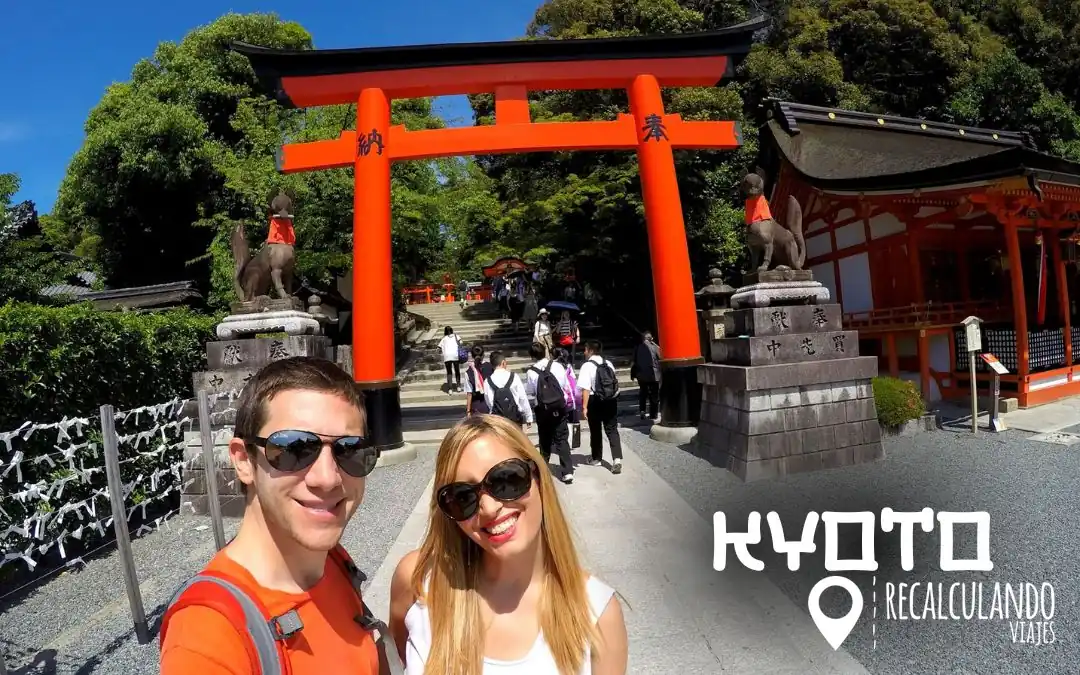
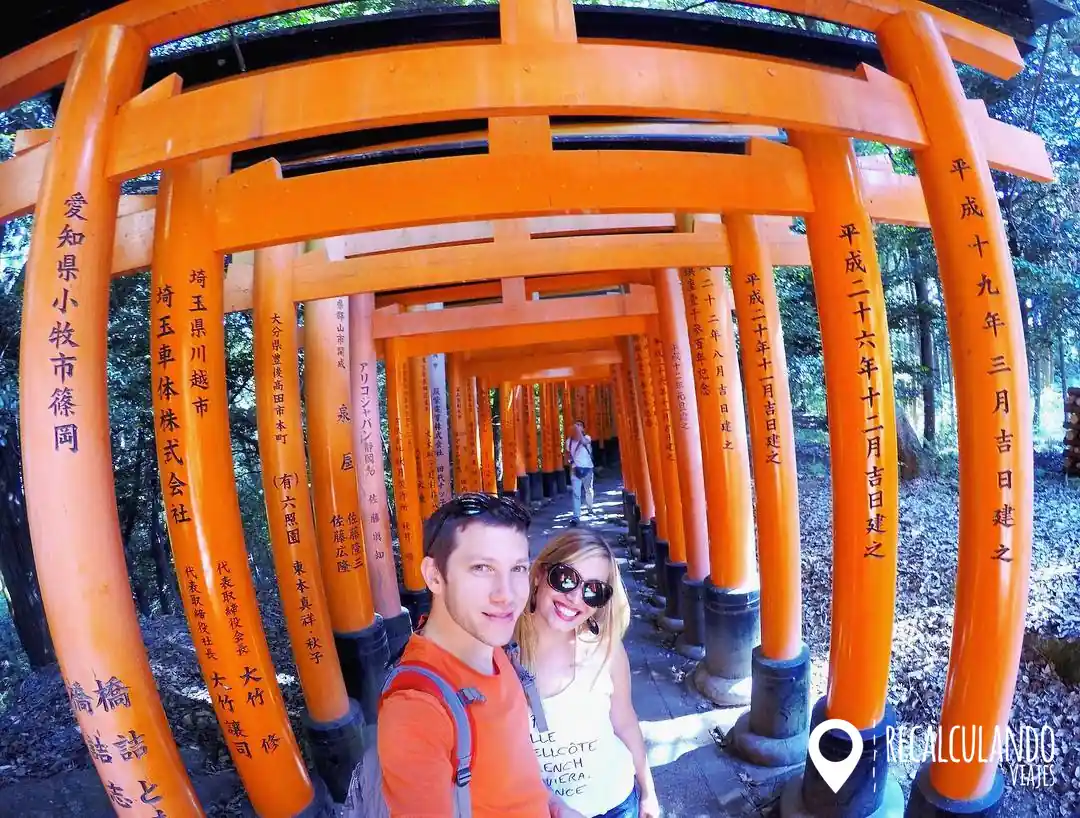
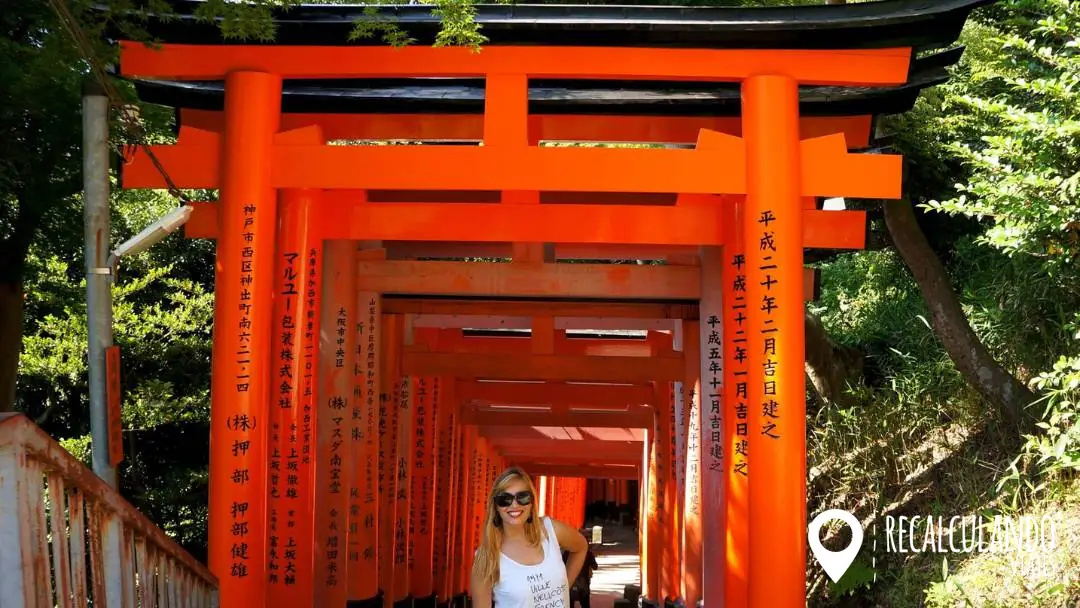
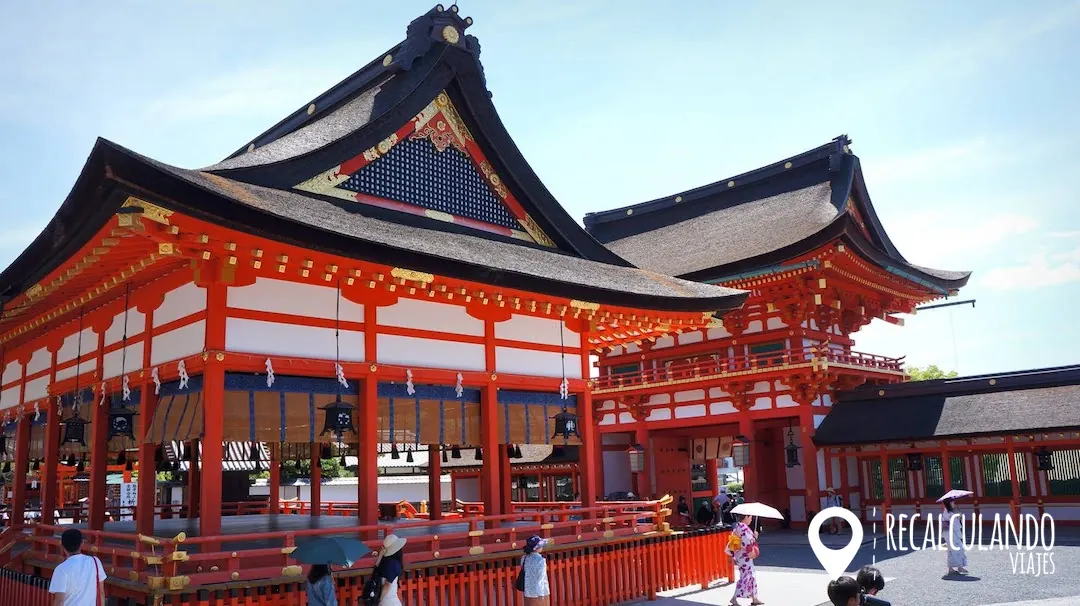
This is probably the most photographed place in Kyoto, and for good reason. Fushimi Inari left us speechless the first time we walked under those endless tunnels of orange/red torii gates. The shrine is dedicated to Inari, the Shinto deity of rice and prosperity, and is one of the most important in all of Japan.
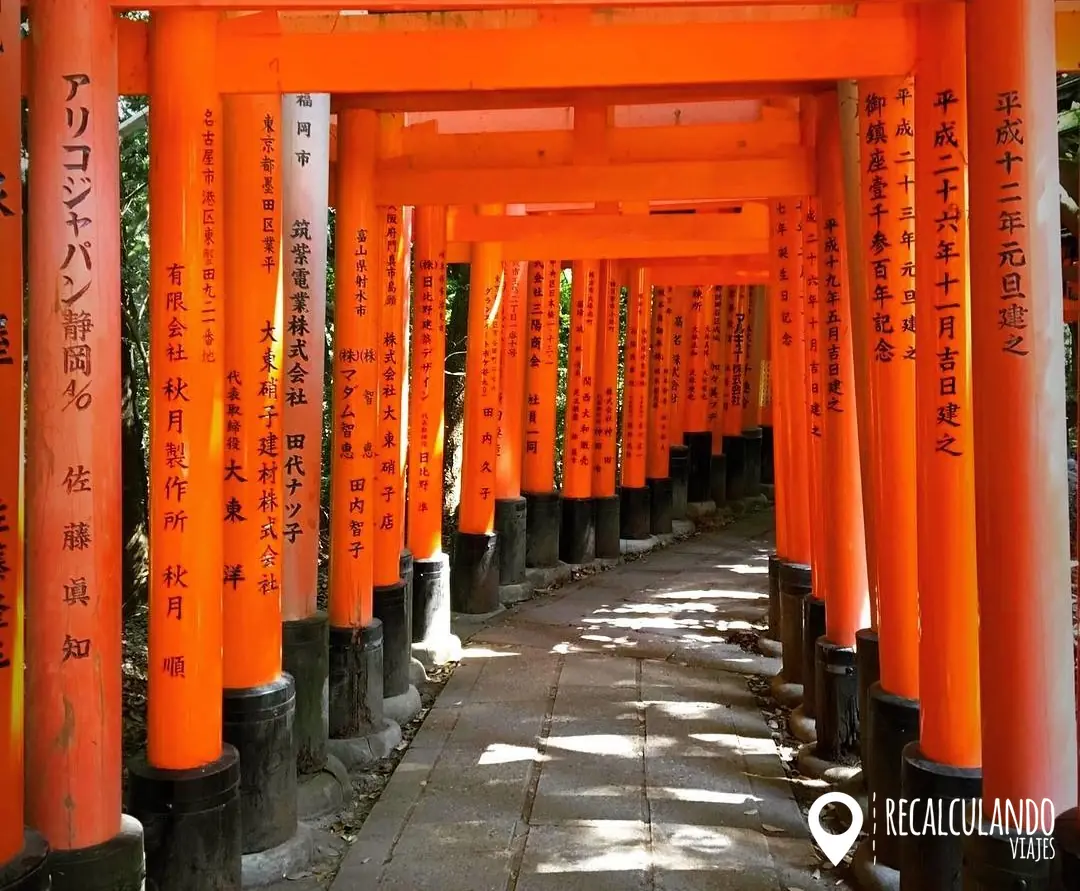
What we liked most is that, unlike other tourist spots, the experience here becomes more authentic the higher up the mountain you go.
- Time needed: 2-3 hours to reach the summit, 45 minutes if you just want to see the lower part
- Best time: Very early (6-7 AM) or at sunset. We arrived around 10 and it was already crowded.
- Cost: Free entry, open 24 hours
- How to get there: JR Nara line train to Inari station (5 min from Kyoto Station) or bus 南5 from the Kyoto bus terminal
- Practical tips: Bring water and comfortable sneakers. There are 10,000+ torii gates and the full route climbs 233 meters. You don’t need to go all the way to the top to enjoy it
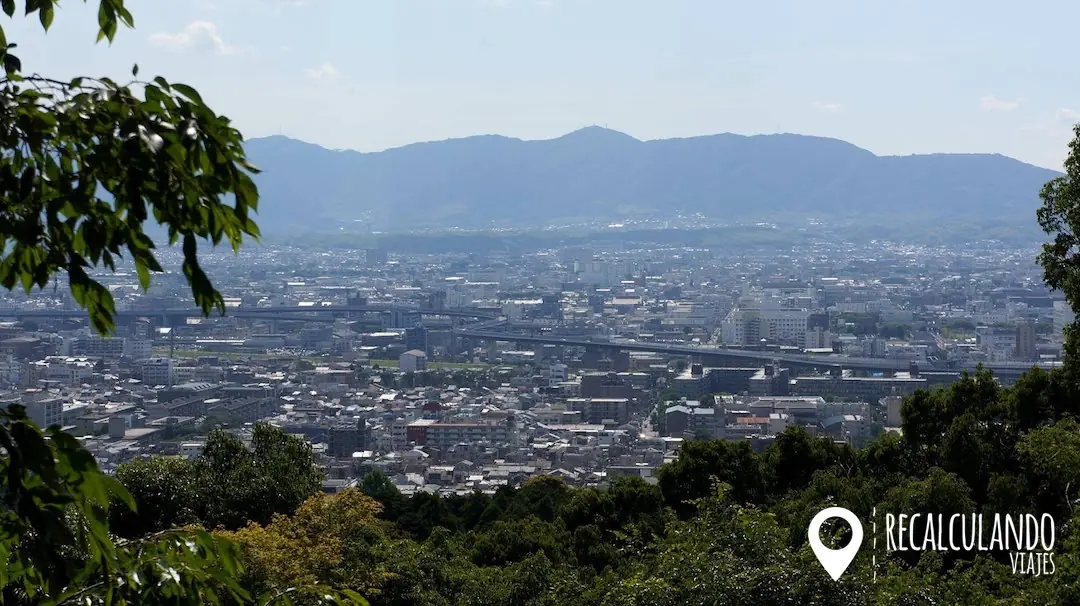
Travel tip: Most tourists stay within the first 200 meters. If you climb for 20-30 minutes more, you’ll find incredible viewpoints and secondary temples that are almost empty. We stopped at the Yotsutsuji viewpoint to have a snack we brought with us, overlooking the whole city.
2. Kinkaku-ji: The Golden Pavilion Shining Under the Sun
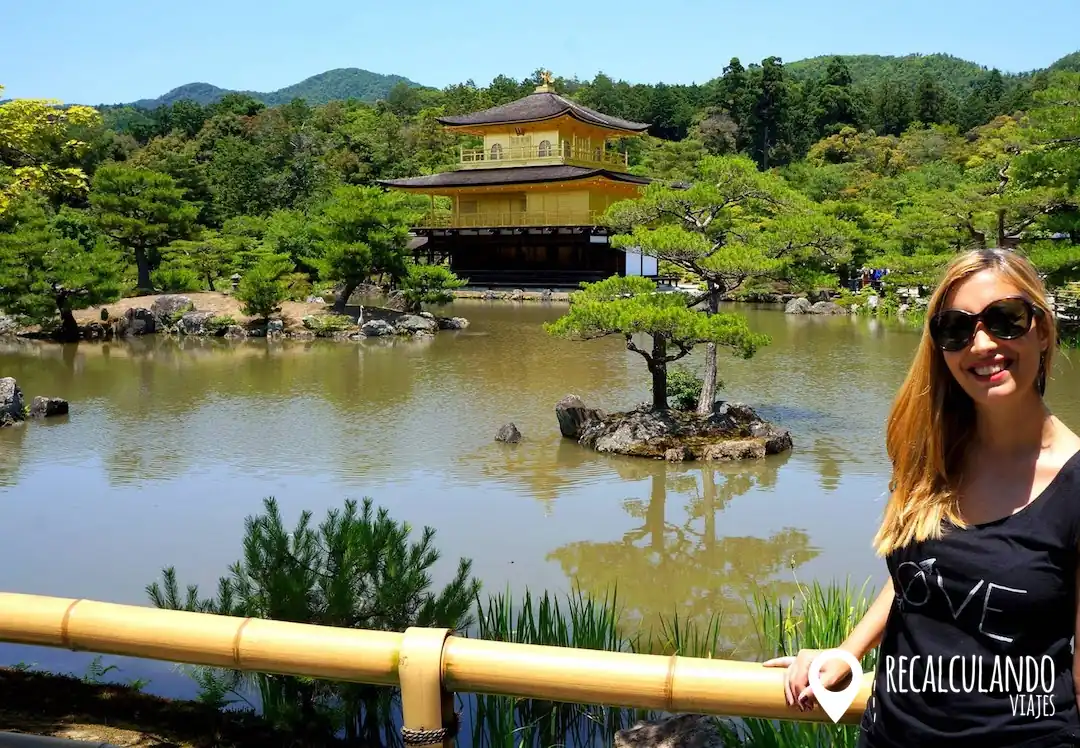
Seeing the Golden Pavilion reflected in the Kyōko-chi pond is one of those images that stays with you forever. Kinkaku-ji literally means “Golden Pavilion Temple”, and it’s no exaggeration: the top two floors are completely covered in genuine gold leaf. It was built in 1397 as a retirement villa for shogun Ashikaga Yoshimitsu, and after his death, it was converted into a zen temple. The current building is a 1955 reconstruction because a monk set fire to it in 1950 (this true story inspired Yukio Mishima’s novel “The Golden Pavilion”).
- Time needed: 1-1.5 hours to walk through the garden calmly
- Best time: Right when it opens at 9 AM or after 3 PM.
- Cost: ¥500 for adults. They give you a beautiful ticket shaped like an amulet that many keep as a souvenir
- How to get there: Bus 101 or 205 from Kyoto Station to Kinkakuji-michi stop (40 min), or bus 12 or 59 from the center
- Practical tips: You can’t enter the pavilion, only view it from the garden. The route is one-way, you can’t go back
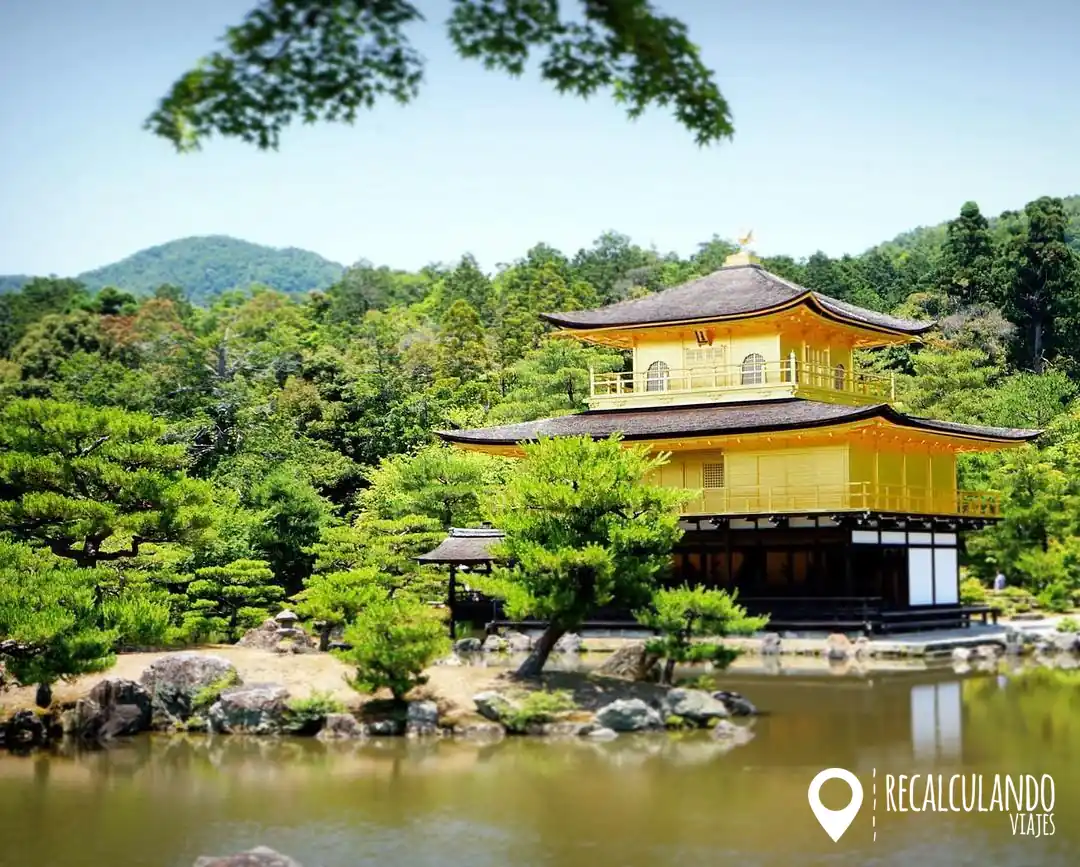
Travel tip: Walk the entire garden circuit, not just the front part. Behind it, there are less crowded viewpoints with different perspectives of the pavilion. And don’t miss the small Sekka-tei tea house near the exit; it’s a beautiful corner that many skip.
3. Arashiyama and the Bamboo Forest: Nature in its Purest Form
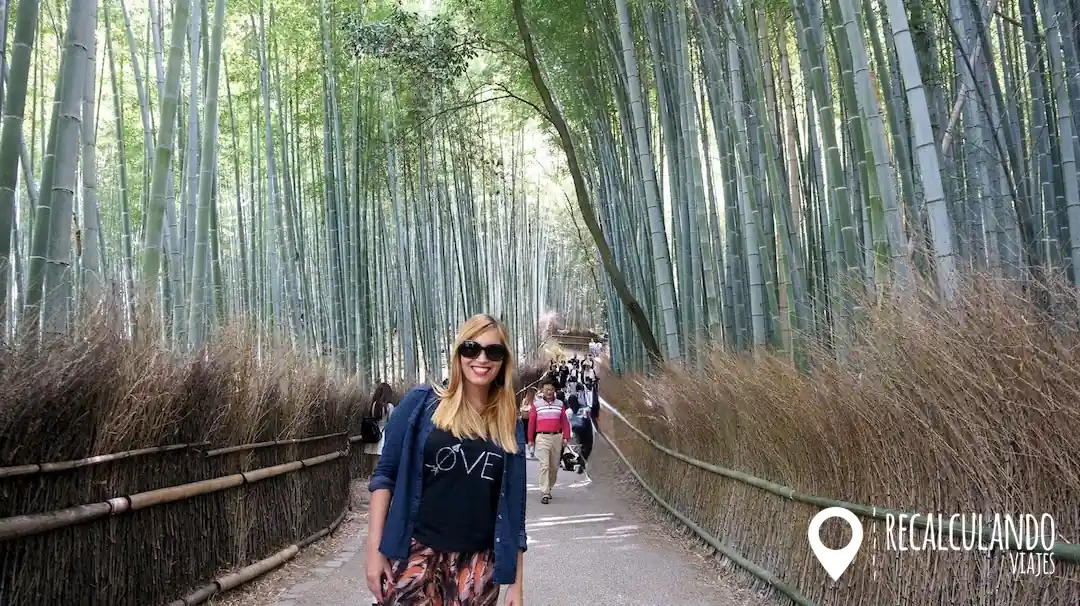
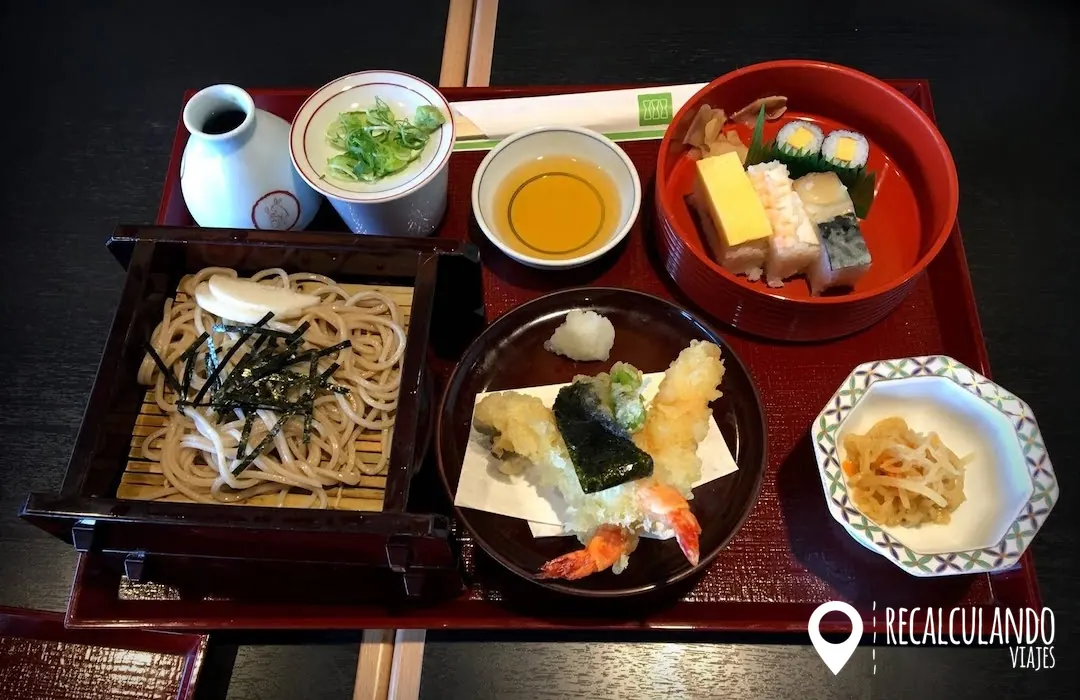
Arashiyama is an entire district in the western outskirts of Kyoto that deserves half a day or a whole day. The most famous part is the Bamboo Forest, where you walk surrounded by giant stalks that sway with the wind, creating a hypnotic sound. But Arashiyama is much more than that: it has hidden temples, wild monkeys, the Hozu River with its iconic Togetsukyo Bridge, and some of the best traditional restaurants we tried in Kyoto (we had lunch at a delicious Soba Noodle restaurant!). We went with the idea of spending two hours and ended up staying half a day.
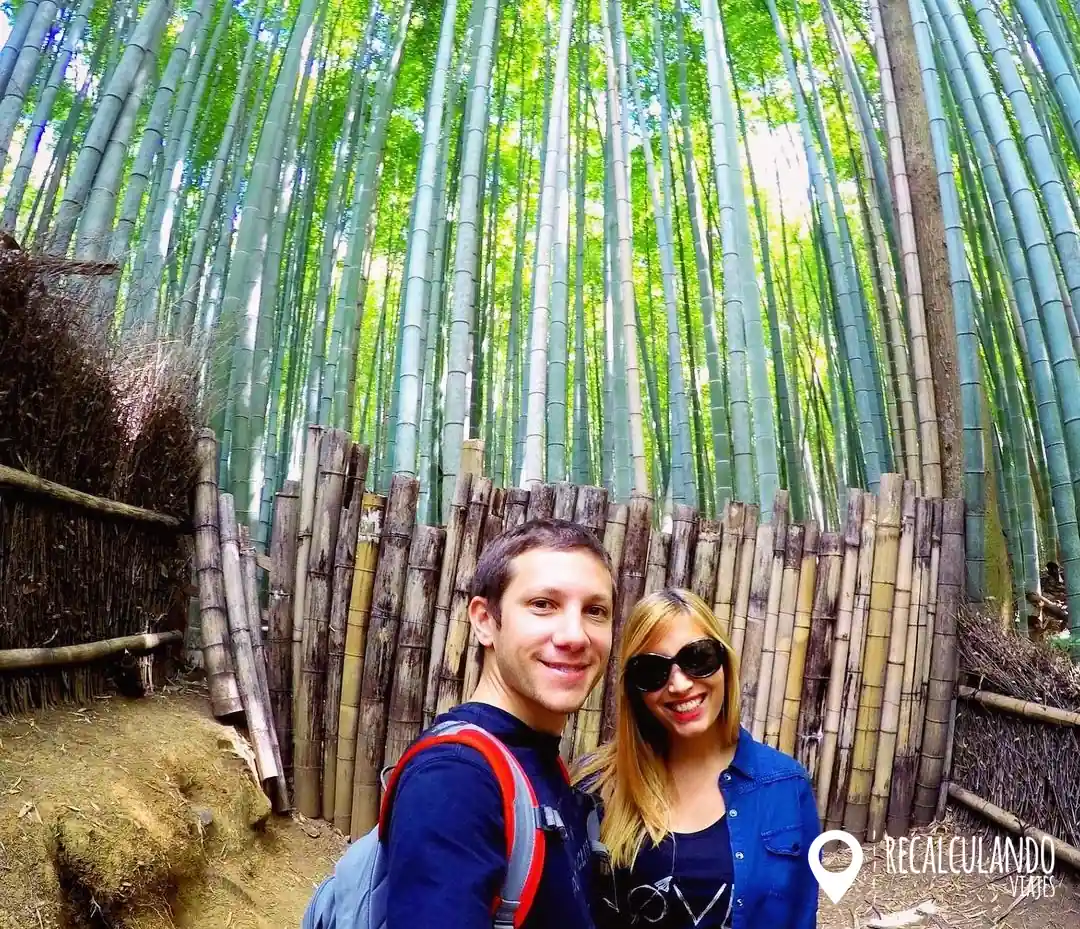
Info: About the Bamboo Forest
- Time needed: Minimum half a day (3-4 hours), ideally a full day to see everything calmly
- Best time: Early in the morning for the bamboo forest. The district is beautiful all day, but the forest gets crowded after 10 AM
- Cost: Bamboo forest is free. Tenryu-ji Temple ¥500, Iwatayama Monkey Park ¥600
- How to get there: JR Sagano Line train to Saga-Arashiyama (15 min from Kyoto Station), or the picturesque Randen tram line to Arashiyama
- Practical tips: You can rent a bike at the station (approx. ¥1,000/day). The area is large and biking can be nice if it’s not too crowded. Always respect the tranquility of the place
Travel tip: After walking the bamboo forest, continue to the Okochi Sanso Villa temple. Hardly anyone reaches it because it’s 10 minutes further up, but it has the most beautiful gardens in all of Arashiyama and spectacular viewpoints. Entry includes matcha tea and a traditional sweet. It’s worth every yen of the approx. ¥1,000 it costs.
Things to do in Arashiyama Beyond the Bamboo Forest
Don’t limit yourself to just the bamboo. Cross the Togetsukyo bridge at sunrise or sunset when the light is magical. Visit Tenryu-ji temple, a World Heritage site with gardens designed in the 14th century.
If you like monkeys, climb to Iwatayama Park: it’s a 20-minute steep walk, but at the top, you interact with more than 120 wild Japanese monkeys in freedom (and they say the view of Kyoto is incredible!).
In spring and autumn, consider taking a boat ride along the Hozu River, a 2-hour experience downstream from Kameoka that shows you Arashiyama from a totally different perspective.
4. Gion: The District of Geishas and Living Tradition
Gion is the cultural heart of Kyoto and the most famous geisha district in Japan. Walking through its narrow streets at sunset, with the machiya (traditional wooden houses) softly illuminated, is like stepping into another era. This is where we truly felt the magic of old Kyoto. We were lucky enough to see several geikos (geishas) and maikos (apprentices) walking quickly to their appointments in the tea houses. It is important to know that they are working, not part of a tourist show, so you must be respectful.
- Time needed: 2-3 hours walking calmly, more if you dine in the district
- Best time: Sunset (17:00-19:00) is when there’s the highest chance of seeing geishas. Hanami-koji and Shirakawa streets are the best
- Cost: Walking is free. If you want to see a show: Gion Corner has cultural performances for ¥3,150
- How to get there: Bus 100 or 206 to Gion, or a 15-minute walk from Kyoto Station along the Kamo River. Also Keihan line subway to Gion-Shijo
- Practical tips: Don’t touch or chase geishas for photos. You can take photos discreetly from a distance. Many tea houses are private, by invitation only
Travel tip: Walk along Shirakawa street at sunset, especially the section by the canal between Shirakawa-minami-dori and Shinbashi-dori. It’s less crowded than Hanami-koji and ridiculously photogenic with cherry blossoms (in spring) or red leaves (in autumn) reflecting in the water. We sat on a bench by the canal with a coffee and it was one of our favorite moments in Kyoto.
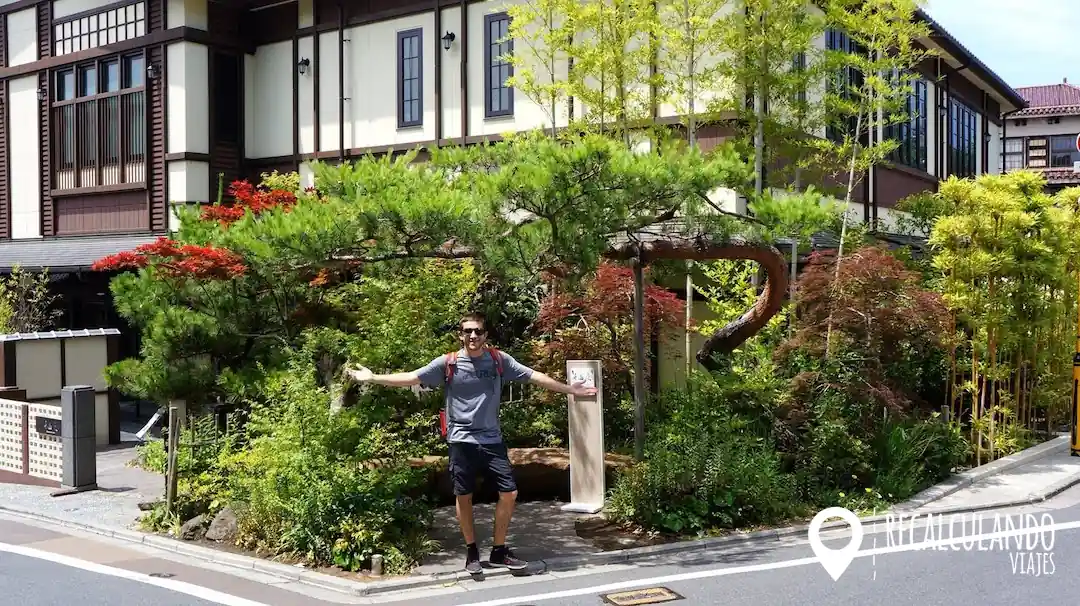
5. Kiyomizu-dera: The Temple on the Mountain with the Best Views
Perched on the hillside of the Higashiyama district, Kiyomizu-dera is one of Japan’s most beloved temples. Its grand wooden terrace, built without a single nail, looks out over the hillside and offers a spectacular view of Kyoto, especially recommended at sunset when everything is bathed in gold.
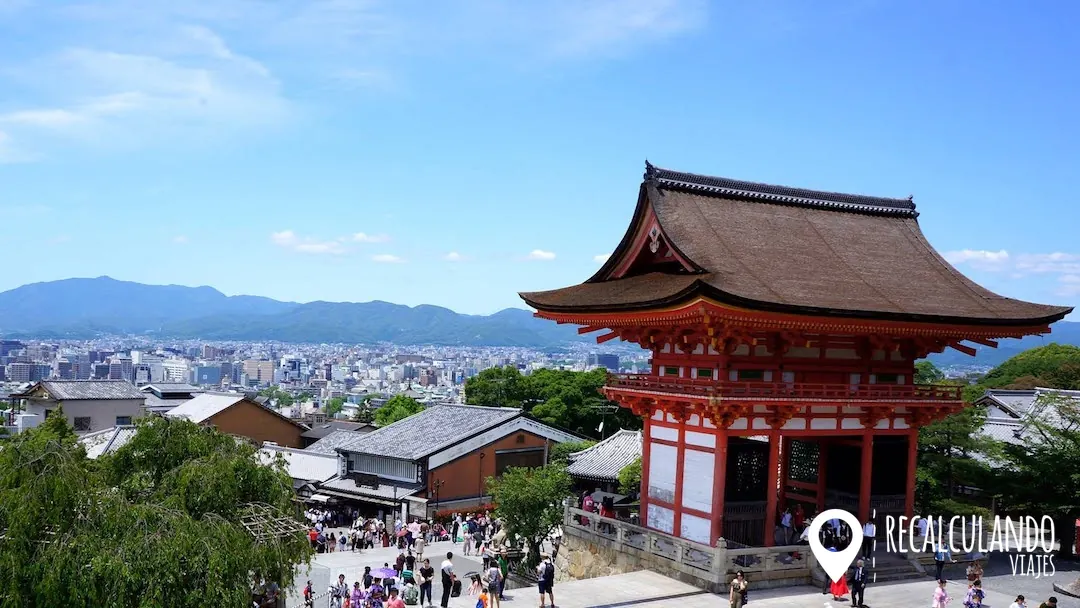
One detail we loved: at the foot of the temple is the Otowa waterfall, from which three streams of water fall. Tradition says each one grants a different wish (health, love, or success in studies), but it’s greedy to drink from all three. Get in line, grab the long-handled ladle, and make your wish; it’s one of those customs that makes the place even more special.
The temple dates back to 778 and is a very important Buddhist pilgrimage site. The name means “Pure Water Temple” because of the Otowa-no-taki waterfall that flows within the complex.
- Time needed: 1.5-2 hours for the temple and the surrounding Higashiyama district
- Best time: Early (8:30-9:30 AM) or late (16:00-17:00). There are special night illuminations in spring and autumn that are magical
- Cost: ¥400 for adults. Worth every yen
- How to get there: Bus 100 or 206 to Gojo-zaka or Kiyomizu-michi, then 10 min walk uphill. Or Keihan line subway to Kiyomizu-Gojo + 20 min walk
- Practical tips: The walk from the bus stop is steep but beautiful, with traditional shops. The water from the Otowa-no-taki waterfall (supposedly grants longevity, love, and success)
Keep in mind: admission is around ¥500. The temple is surrounded by the city’s most photogenic streets, so it’s a good idea to combine it with the next stop on this list.
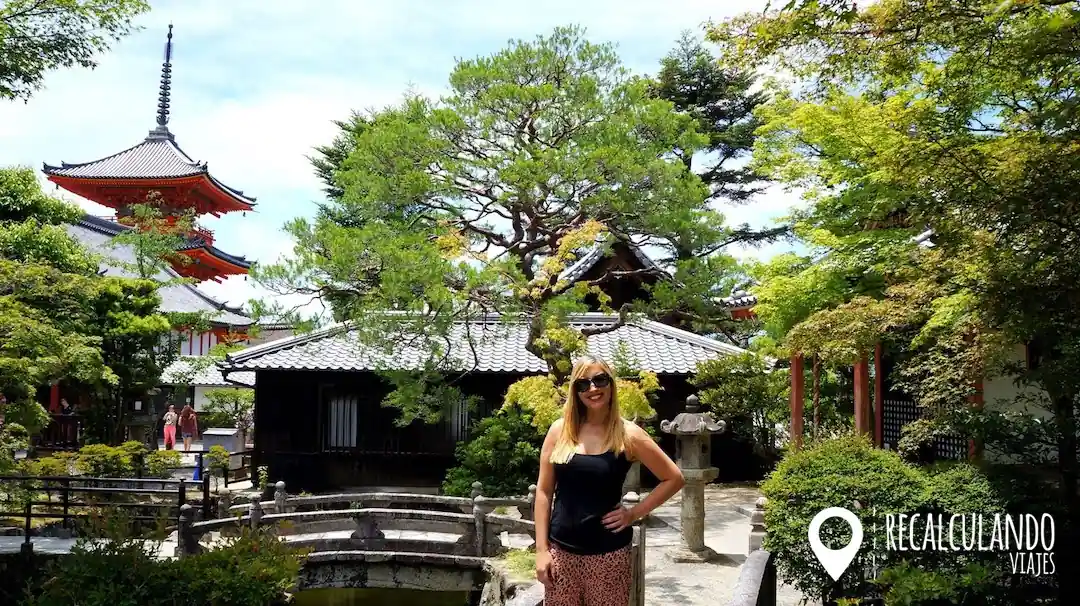
Walking route:
-Kiyomizu-dera Temple
-Sannen-zaka and Ninenzaka district
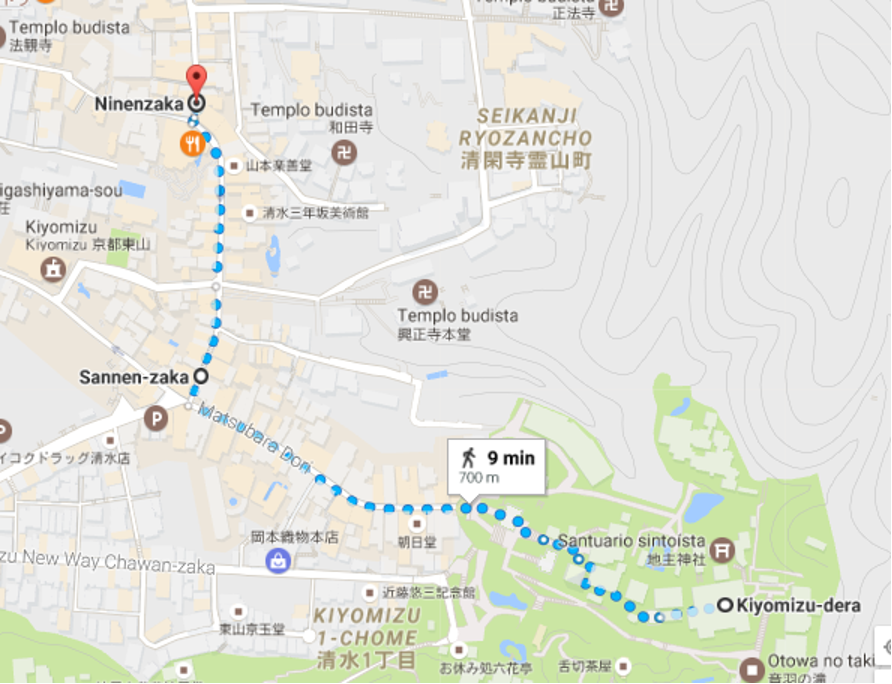
5. Ninenzaka and Sannenzaka, the prettiest streets in Higashiyama
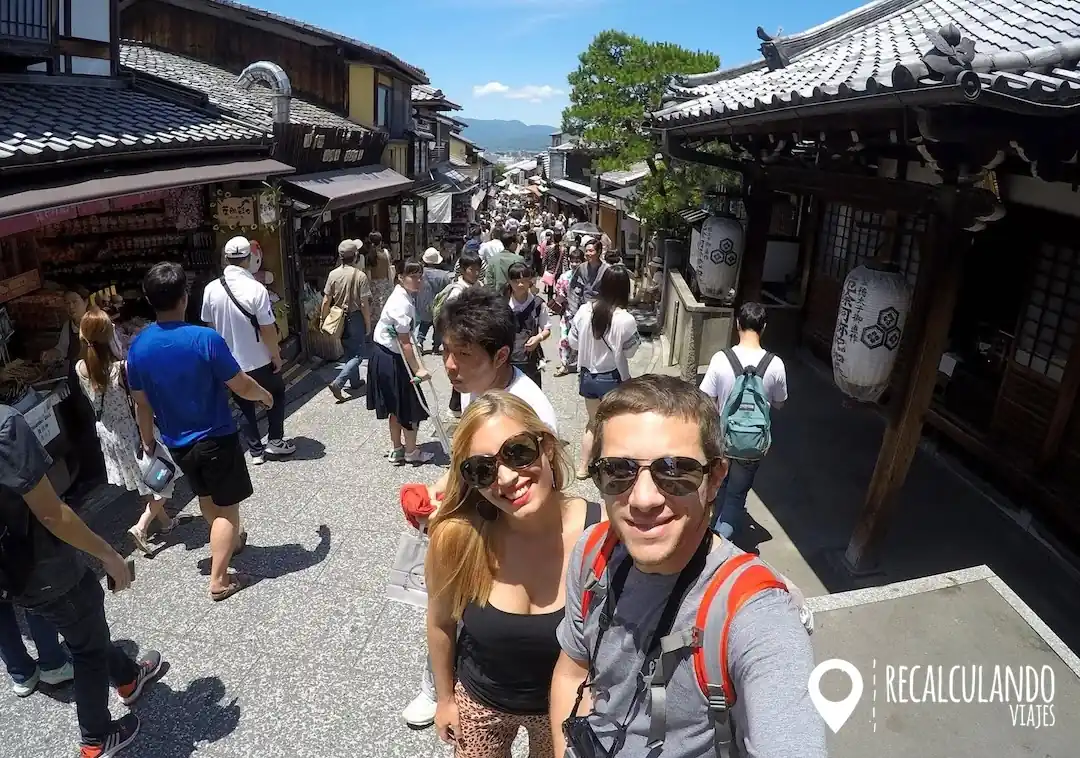
These two cobblestone streets that descend from Kiyomizu-dera are, without exaggeration, some of the most beautiful in Kyoto. Traditional wooden houses, lanterns, ceramic shops, sweets and souvenirs, and many people walking in rented kimonos. It seems like time stood still.
We walked slowly, stopping to try dango and matcha at the little stalls, and had a wonderful time. It’s one of those places where it’s best not to have a plan: simply get lost, look at windows, and let yourself be carried away. In the background appears the Yasaka Pagoda (Hokan-ji), one of the city’s most repeated images for a reason.
Photographer’s tip: if you want these streets with few people, the answer is the same again. Early in the morning or late at night is when they clear out and everything takes on a new dimension.
👩⚕️👨⚕️ A must-have for stress-free travel! 🌎✈️ ➜ Get a Quote, Compare & Buy
6. Ginkaku-ji Temple and the Philosopher’s Path
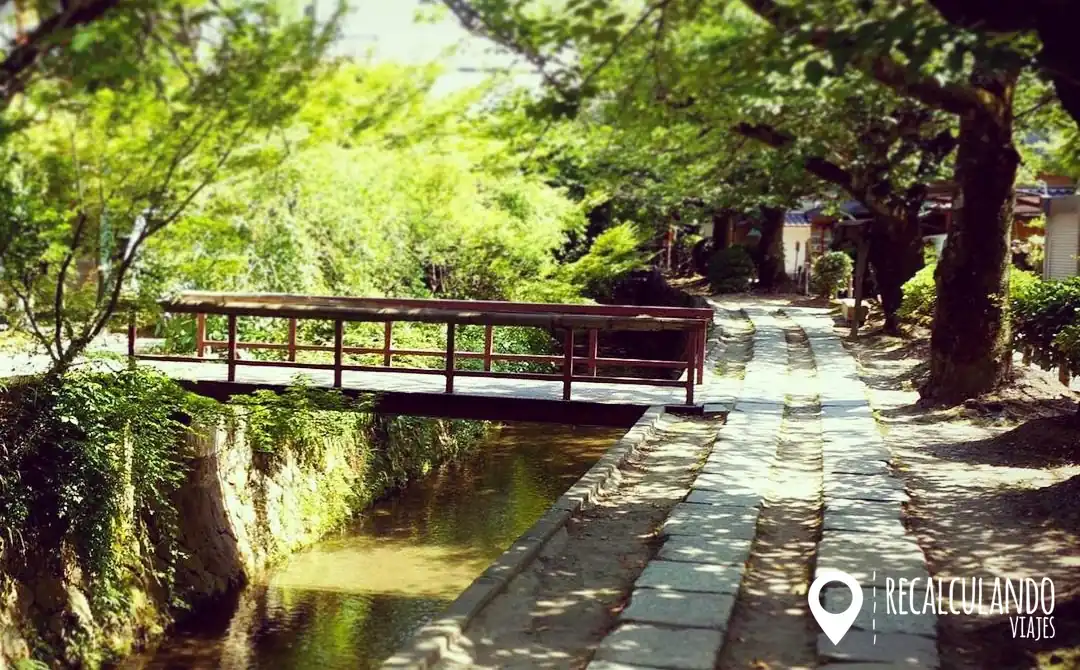
Ginkaku-ji, the “Silver Pavilion”, is the lesser-known but equally beautiful counterpart to the Golden Pavilion. Ironically, it was never silver: shogun Ashikaga Yoshimasa planned to cover it in silver but died before it was completed. What we liked most about Ginkaku-ji are its absolutely perfect zen gardens, especially the sand garden with Mount Fuji in miniature. It is much quieter and more contemplative than Kinkaku-ji. And the best part is that it is at the beginning of the Philosopher’s Path (Tetsugaku no Michi), one of the most beautiful walks in Kyoto.
Summary info for experiencing the Philosopher’s Path:
- Time needed: 1 hour for the temple, 45 min for the Philosopher’s Path, 2-3 hours if visiting temples along the way
- Best time: Early morning for the temple. The Philosopher’s Path is beautiful all day, especially in spring with cherry blossoms
- Cost: Ginkaku-ji ¥500. Walking the path is free
- How to get there: Bus 5 or 17 to Ginkakuji-michi (30 min from Kyoto Station), then 10 min walk
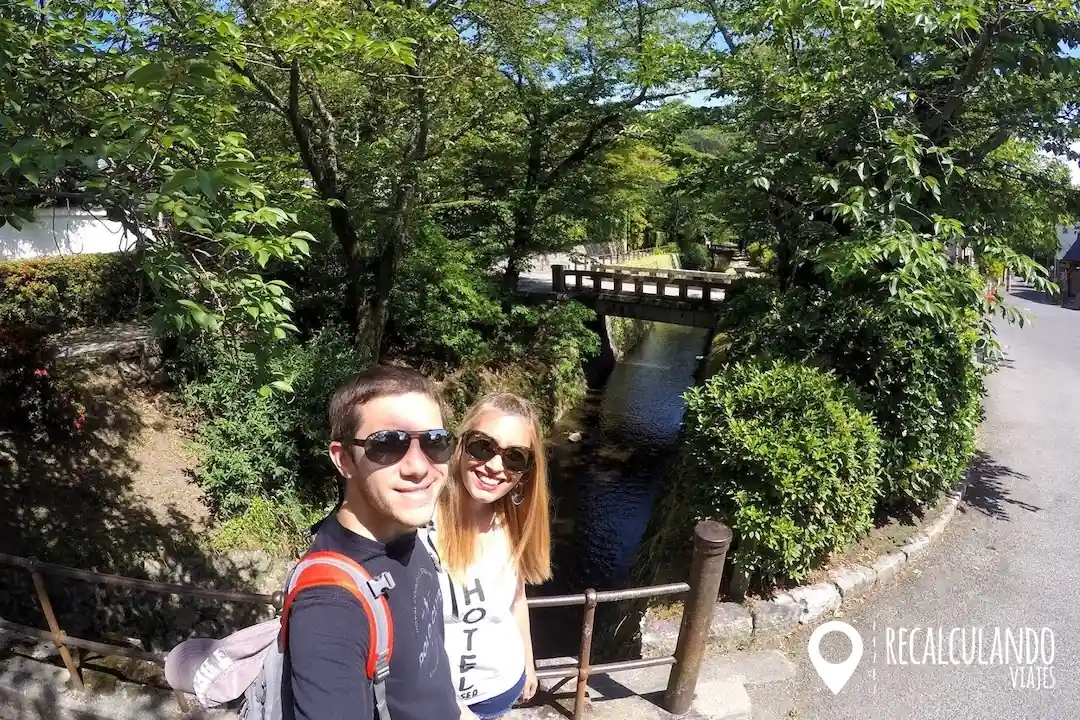
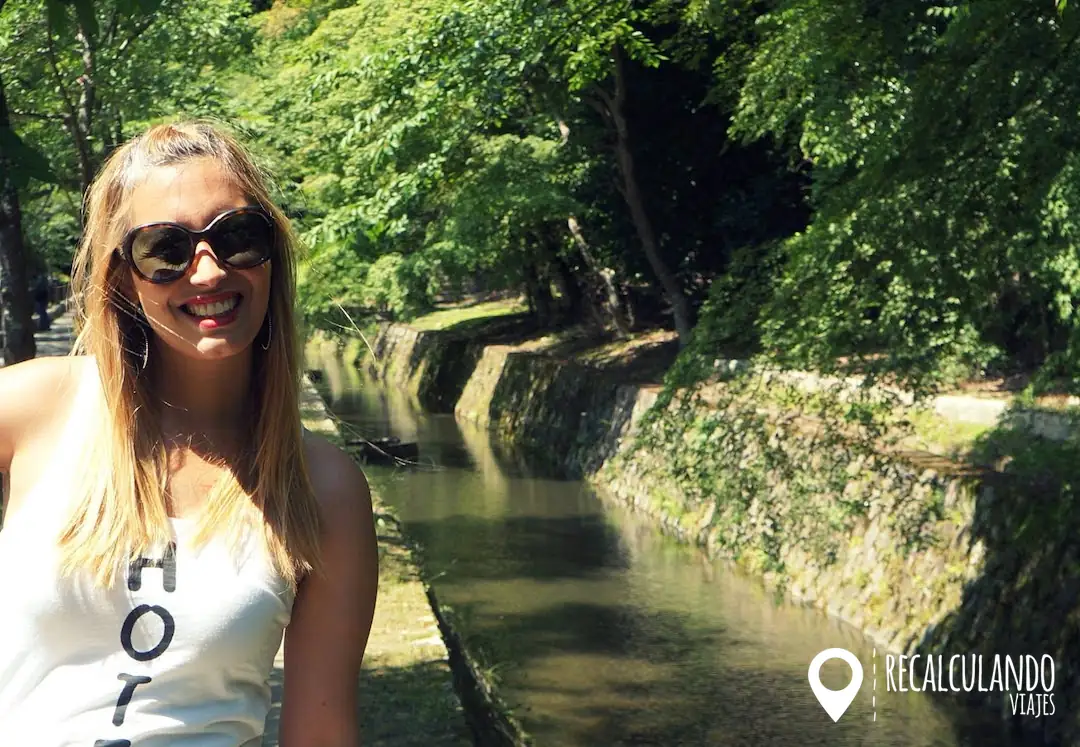
- Practical tips: Walk the Philosopher’s Path after visiting Ginkaku-ji, heading south. It’s 2 km along a canal with hundreds of cherry trees
Travel tip: On the Philosopher’s Path, stop at one of the small cafes and craft shops hidden among the trees. We had a matcha latte in a tiny cafe overlooking the canal and it was one of those perfect moments. Also visit the Honen-in temple, a little hidden from the main path but absolutely precious and almost tourist-free.
Secondary Temples on the Philosopher’s Path
If you have time, enter some of the lesser-known temples along the path. Eikan-do Zenrin-ji is famous for its autumn colors and has a beautiful pond garden. Nanzen-ji at the end of the path (or the beginning, depending on where you start) is huge and its Sanmon gate has spectacular views from above.
The brick aqueduct inside the Nanzen-ji complex looks like it was taken out of ancient Rome and is super photogenic. Also enter Honen-in temple: its thatched-roof entrance and sand garden will leave you speechless, and it’s almost always empty.
7. Nijo Castle: Where the Floors Sing to Protect the Shogun
Nijo Castle is fascinating for one unique reason: its “nightingale floors” (uguisubari). 17th-century engineers designed the floors to creak when someone walks on them, alerting the guards to intruders. It works perfectly even today: as you walk through the palace hallways, the floors really sound like birds singing. The castle was the residence of the Tokugawa shogunate in Kyoto and is an impressive example of Edo-period architecture. The gardens are also beautiful, although many skip them, focusing only on the palace.
- Time needed: 1.5-2 hours for the palace and gardens
- Best time: Early or late. Midday is usually more crowded with group tours
- Cost: ¥1,300 for adults (includes Ninomaru Palace and gardens)
- How to get there: Tozai subway line to Nijojo-mae (5 min), bus 9, 12, 50 or 101 to Nijojo-mae
- Practical tips: No photos allowed inside the palace. Spanish audio guides are available. The gardens close 30 min before the castle
Travel tip: After visiting the castle, walk 10 minutes east along Oike-dori street until you reach the Kyoto International Manga Museum. It’s an incredible place where you can read thousands of manga for free (many in English), sitting in the garden or any corner of the building. Perfect for resting after walking so much, especially if traveling with children or teenagers.
8. Pontocho and Kawaramachi: Where to Eat, Drink, and Experience Kyoto at Night
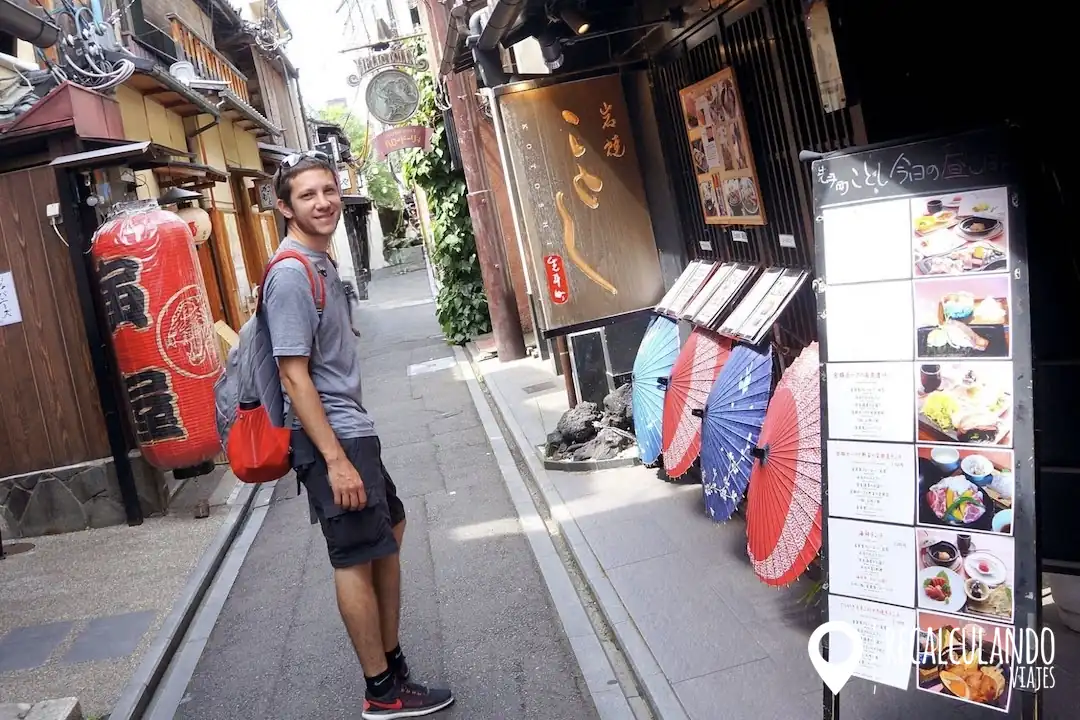
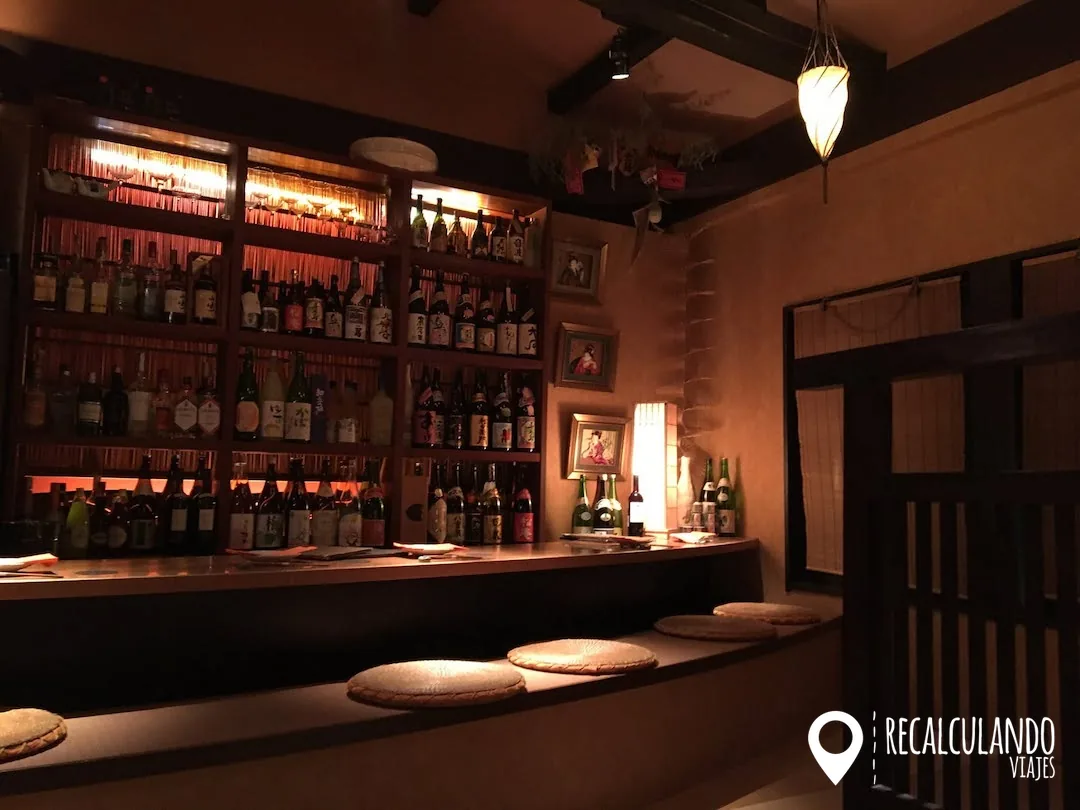
Pontocho is a narrow street parallel to the Kamo River, filled with restaurants, bars, and traditional tea houses. By day it seems almost closed, but at dusk, it transforms into one of the most atmospheric places in Kyoto. The red lanterns light up, the restaurants display their noren curtains, and the alley comes alive. In summer, many restaurants open their yuka terraces over the river, a traditional experience called “noryoyuka” that we loved. The neighboring Kawaramachi district is more modern and commercial, perfect for shopping and nightlife.
- Time needed: All evening. It’s the place for dinner and then continued drinks
- Best time: From sunset onwards. In summer, the river terraces operate from May to September
- Cost: Variable. Casual izakayas from ¥2,500-4,000 per person. Yuka restaurants from ¥5,000+
- How to get there: Hankyu Kyoto subway line to Kawaramachi, or Keihan main line to Gion-Shijo. Pontocho is between both stations
- Practical tips: Many restaurants have no English menu and don’t accept walk-ins. Arrive early or book. Yuka terraces are booked weeks in advance in high season
Travel tip: Explore the alleys perpendicular to Pontocho, especially towards the river side. That’s where we found some of our favorite bars: tiny places with 6-8 seats where the owner cooks and chats with you. Try okonomiyaki at Kiji or ramen at Gogyo (famous for its kogashi miso burnt ramen). For after dinner, go up to Bar K6 in Kawaramachi: a bar on the 6th floor with a view of the city and excellent cocktails.
9. Kyoto Imperial Palace: The Secret Gardens of Royalty
The Imperial Palace was the residence of the Japanese imperial family until 1868, when the capital moved to Tokyo. Although the main palace can only be visited by guided tour at limited times, the surrounding Kyoto Gyoen imperial gardens are public and absolutely beautiful. It’s a 63-hectare oasis in the center of the city where locals go for picnics, jogging, and disconnecting. We went several times, especially in spring when the plum and cherry trees are in bloom. It’s Kyoto without the crowds.
- Time needed: 1-2 hours for the gardens, 1 hour more if you take the palace tour
- Best time: Morning for the palace tour (requires advance online booking), anytime for the gardens. Beautiful in spring and autumn
- Cost: Free for both gardens and palace (requires online booking on the Imperial Agency website)
- How to get there: Karasuma subway line to Imadegawa (north entrance) or Marutamachi (south entrance). Bus 4, 17, 205 to Karasuma-Imadegawa
- Practical tips: Palace tours in English: 10 AM and 2 PM (closed Mondays). Book online at least 1 day in advance at sankan.kunaicho.go.jp
Travel tip: Visit Sento Imperial Palace within the same park. It requires separate booking but is much less crowded than the main palace, and its gardens are possibly the most beautiful in the entire complex. We had a picnic in the Gyoen gardens with food from the Takashimaya depachika (gourmet basement): it was a cheap and delicious lunch with a view of nature in the heart of the city.
10. Nishiki Market: Kyoto’s Food and Gastronomic Paradise
If you like food (and who doesn’t?), Nishiki Market is a mandatory stop. This 400-year-old covered market has over 100 stalls and shops selling everything: fresh fish, Kyoto region vegetables, tsukemono (Japanese pickles), traditional sweets, soy products, handcrafted knives, and much more. It’s narrow and gets quite crowded, but walking through the market tasting things is one of the most authentic experiences you can have in Kyoto. We returned several times because we always discovered something new to try.
- Time needed: 1-2 hours to walk through well and try things
- Best time: Morning (9-11 AM) when everything is fresh and before the lunchtime rush. Many stalls close early (16:00-17:00)
- Cost: Variable. You can try many free samples, street food from ¥200-500, larger purchases obviously more expensive
- How to get there: Hankyu Kyoto subway line to Kawaramachi, or Tozai metro to Karasuma-Oike. It’s between Shijo and Oike, parallel to Teramachi-dori
- Practical tips: Many shops close on Wednesdays or Sundays. Do not eat while walking (it’s considered rude), stop to one side. Bring cash, few places accept cards
Travel tip: Our favorite stops: Daiyasu for tofu croquettes and fresh yuba, Aritsugu to see impressive (and expensive!) handcrafted knives, Konnamonja for the tastiest grilled baby octopus of our lives, and the pickle stalls where you can try dozens of varieties before buying. At the end of the market (west entrance) is a tiny shrine, Nishiki Tenmangu, tucked between buildings. It’s worth a look.
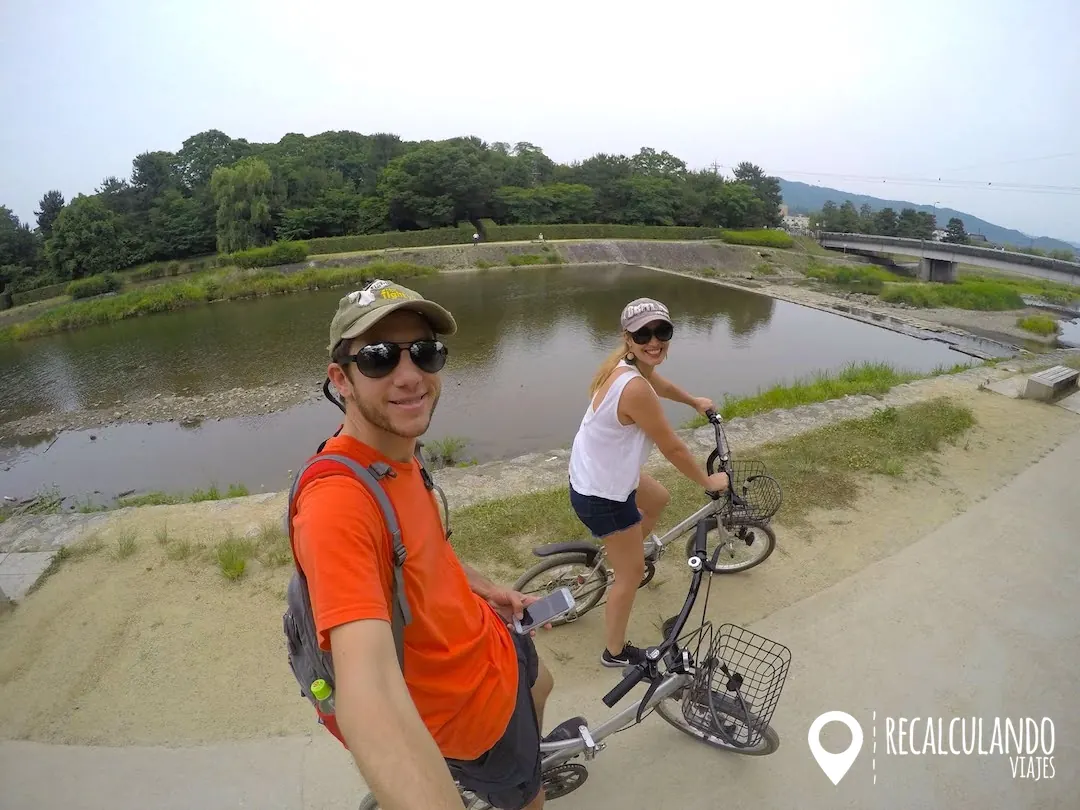
We loved cycling in Kyoto by the river
12. Tofuku-ji: The Secret Temple with the Best Autumn Maples
Tofuku-ji isn’t as famous as other Kyoto temples, but for us, it’s one of the most impressive. Founded in 1236, it’s the main zen temple of the Rinzai school in Kyoto. It has spectacular zen gardens of different styles, and in autumn, the valley full of Japanese maples turns into a sea of red, orange, and yellow. The Tsutenkyo bridge crossing the valley gives you an incredible perspective (though in peak autumn season it can be a bit tricky due to the crowds). The gardens, designed by the famous landscape architect Mirei Shigemori, are pure zen perfection.
- Time needed: 1.5-2 hours to explore the entire complex calmly
- Best time: Mid-November for autumn colors (but expect crowds). The rest of the year it’s much quieter
- Cost: Main temple gardens free. Hojo Gardens ¥500, Tsutenkyo Bridge ¥600 in autumn
- How to get there: JR Nara line train to Tofukuji station (17 min from Kyoto Station), then 10 min walk. Keihan subway line also stops there
- Practical tips: If visiting in autumn, arrive right when they open (9 AM) or after 3 PM. Tripods are not allowed on the bridge. The Hojo Gardens to the north of the temple are a hidden gem
Travel tip: Combine the visit with Fushimi Inari (they are on the same train line, 2 stops away) for a perfect day of temples without going to the center. Near Tofukuji station, there are great small local restaurants for lunch for ¥800-1,200.
13. Heian Shrine: Grand Architecture and Dreamy Gardens
Heian Shrine is relatively modern (built in 1895) but no less impressive. It was built to commemorate the 1100th anniversary of Kyoto as the capital of Japan, and it’s a 5/8 scale replica of the original Imperial Palace from the Heian period. Its gigantic 24-meter tall vermilion torii gate is a Kyoto icon. But the best part is the Shin-en gardens behind the main shrine: 3 hectares of Meiji-style gardens designed to recreate famous landscapes from all over Japan, with lily-filled ponds, covered bridges, and weeping cherry trees that in spring are out of this world.
- Time needed: 1-1.5 hours (30 min for the shrine, 1 hour for the gardens if you like gardens)
- Best time: Spring for weeping cherry trees (early April) or during the Jidai Matsuri festival (October 22nd)
- Cost: Shrine free, Shin-en gardens ¥600
- How to get there: Bus 5 or 100 to Kyoto Kaikan Bijutsukan-mae or Okazaki Koen. Tozai subway line to Higashiyama (15 min walk)
- Practical tips: Gardens close 30 min before the shrine. In spring and autumn, they have special night illuminations (require separate ticket)
14. Ryoan-ji: The World’s Most Famous Zen Garden
Ryoan-ji has the most famous and photographed zen rock garden in the world. It’s super minimalist: 15 rocks distributed over a sea of raked white gravel, surrounded by a low wall and trees that change with the seasons. What’s fascinating is that from any point you stand, there’s always at least one rock you can’t see. There are thousands of theories about the garden’s meaning, but we prefer to just sit on the wooden gallery and contemplate it. It’s pure visual meditation. The temple also has lesser-known but equally beautiful pond gardens.
- Time needed: 1-1.5 hours for the whole complex
- Best time: Right when they open at 8 AM. The rock garden fills up fast and loses its zen magic with 100 people taking photos
- Cost: ¥500 for adults
- How to get there: Bus 50 or 59 to Ritsumeikan Daigaku-mae (40 min from Kyoto Station). It’s close to Kinkaku-ji, you can visit both on the same day
- Practical tips: Don’t limit yourself to the rock garden. The Kyoyochi pond gardens are beautiful and almost empty. Walk the entire perimeter of the pond
Travel tip: If you’re interested in zen philosophy and want to delve deeper beyond the tourist visit, some zen temples in Kyoto offer zazen (seated meditation) sessions open to the public.



15. Cultural Experiences: Tea Ceremonies, Cooking Classes, and More
Kyoto is the best place in Japan to experience traditional culture firsthand. There are hundreds of cultural experiences to be had: tea ceremonies, kaiseki cooking classes, dressing as a geisha/geiko, calligraphy classes, ikebana flower arranging, zen meditation, and much more. Yes, they are touristy, but many are led by real masters of these disciplines and give you a deep appreciation for Japanese arts. It’s not just for the Instagram photo.
- Time needed: Varies by experience: 1 hour tea ceremony, 3-4 hours cooking classes, 2 hours geisha dressing with walk
- Best time: Book in advance, especially in high seasons (spring and autumn). Some experiences fill up weeks in advance
- Cost: From ¥3,000 for a tea ceremony to ¥15,000+ for half-day experiences with food included
- How to get there: Depends on the location. Most are in central areas accessible by bus or subway
- Practical tips: Book through reliable sites like Viator, Klook, or directly with the organizers. Check reviews on TripAdvisor first
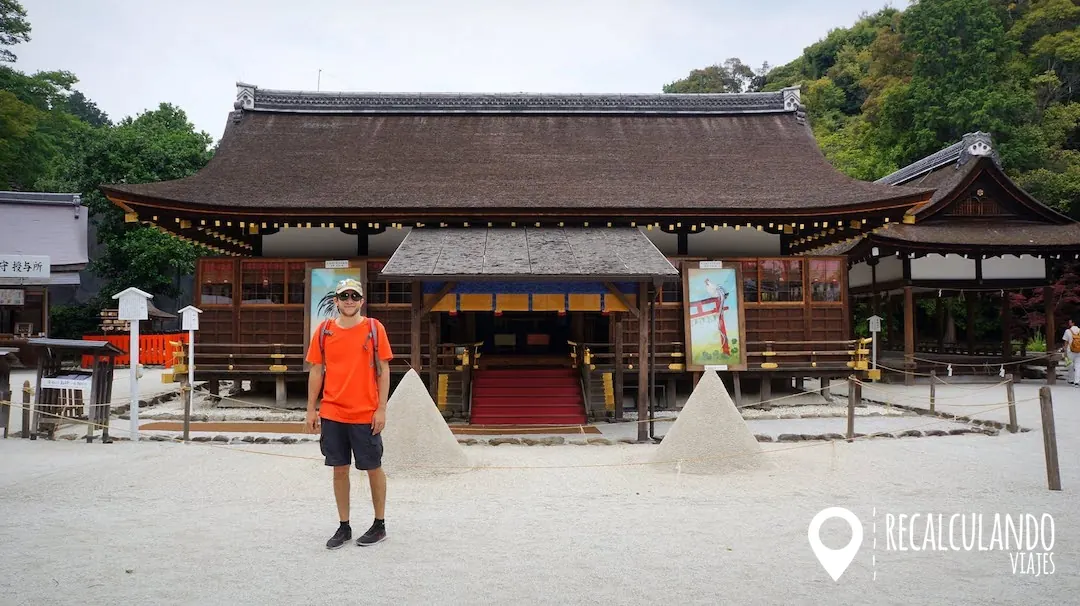
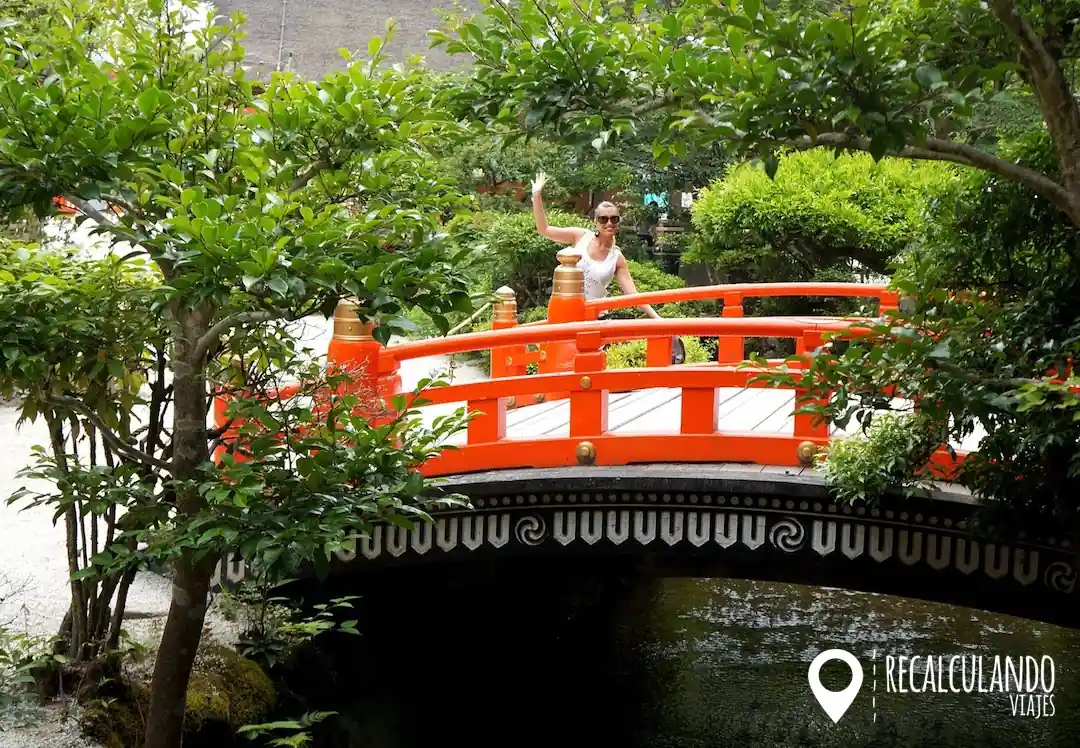
16. Kamigamo-jinja Shrine, the must-see off the beaten path
If you want to escape the crowds and see a more authentic Kyoto, Kamigamo-jinja is the answer. It’s one of the city’s oldest Shinto shrines, declared a Unesco World Heritage site, and it’s located to the north, quite far from the classic circuit, which is why you almost always visit it with very few people.
Its most characteristic features are its two perfect sand cones in front of the main pavilion (the tatesuna), which represent sacred mountains, and the crystal-clear stream that crosses it. The entire grounds breathe calm. Many travelers recommend it precisely for that reason: to feel the place without the hustle and bustle of the more famous temples.
Keep in mind: admission to the grounds is free. If your trip falls in mid-May, check the dates of the Aoi Matsuri, one of Kyoto’s oldest festivals, with a parade of period costumes starting from here. A different plan to add to the route.
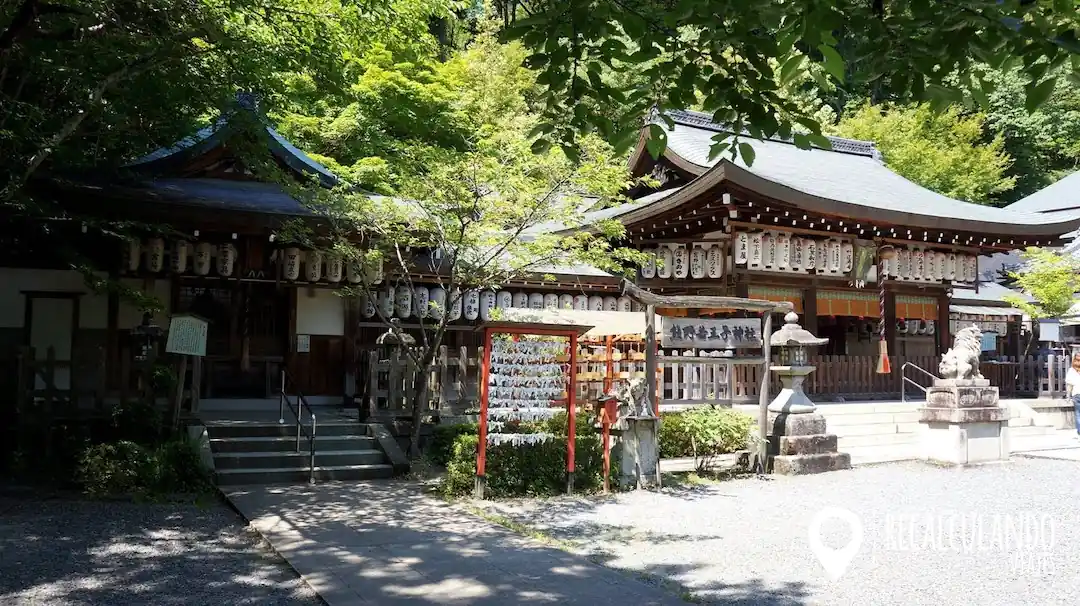
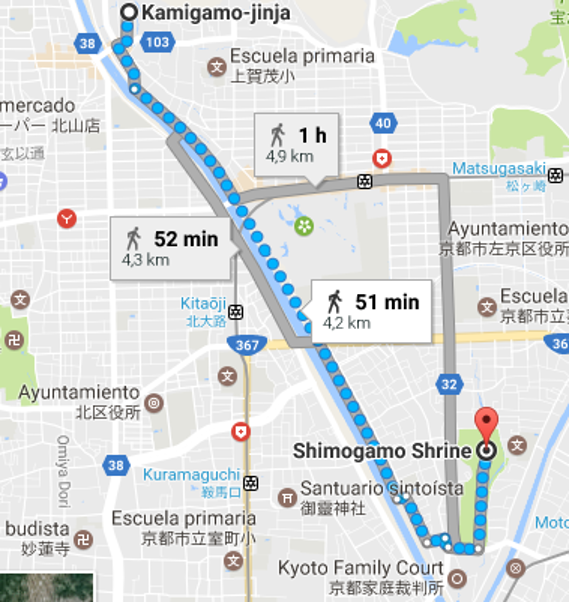
-Shimogamo-jinja Temple
What to Eat in Kyoto: Traditional Delights You Can’t Miss
Food in Kyoto is different from the rest of Japan. Kyo-ryori (Kyoto cuisine) emphasizes local and seasonal ingredients, especially traditional Kyoto vegetables called Kyo-yasai. Since Kyoto is far from the sea, they developed incredible techniques for preparing vegetables, tofu, and yuba (tofu skin). There is also much influence from shojin-ryori (Buddhist vegetarian) cuisine due to the thousands of temples. Here are the dishes you have to try.
Kaiseki Ryori: Kyoto’s Haute Cuisine
Kaiseki is the pinnacle of Japanese gastronomy: a multi-course tasting menu where each element is a work of art. In Kyoto, kaiseki is even more refined. The courses change according to the season, using ingredients at their peak. We tried kaiseki in several places, and price ranges go from ¥5,000 in casual restaurants to ¥40,000+ in Michelin-starred places. For an accessible first experience, we recommend Gion Karyo (¥8,000-12,000) or Ippodo Tea during lunch (¥6,000). If you want to splurge, Kikunoi or Hyotei are legendary but book months in advance.
Yudofu: Simple and Delicious Boiling Tofu
Yudofu (tofu boiled in kombu broth) is one of our favorite Kyoto dishes. It sounds super simple, but when the tofu is top-quality artisanal, the difference is abysmal. The temple district around Nanzen-ji has several restaurants specializing in yudofu, all in traditional houses with zen gardens. We tried several and Junsei was the best: incredible silky tofu for ¥3,000-4,000, eating with a view of a beautiful garden. Okutan near Kiyomizu-dera is also excellent and has 400 years of history.
Obanzai: Kyoto Home Cooking
Obanzai is traditional Kyoto home cooking: small dishes of local vegetables, fish, tofu, prepared with simple techniques that highlight the natural flavor of the ingredients. It’s the cuisine Kyoto families have eaten for generations. Many izakayas and small restaurants serve obanzai. We went to Obanzai Kappo Sakaeya in Pontocho and it was a revelation: 8-10 different small dishes for ¥3,500, all fresh and delicious. It’s comfort food at its best.
Nishin Soba: Noodles with Herring
This is a specific Kyoto dish: soba (buckwheat noodles) in hot broth with marinated herring on top. It arose because there was no fresh fish available in Kyoto before, so they used preserved herring that arrived from the north. It sounds weird but it’s delicious, especially in winter. The best we tried was at Honke Owariya, a soba restaurant that has existed since 1465. Yes, you read that right: over 550 years! It’s near the Imperial Palace and the nishin soba costs ¥1,500.
Matcha and Traditional Sweets
Kyoto is the capital of matcha in Japan. Uji, just south of Kyoto, produces the best green tea in the country. Have matcha at a traditional tea house: try the thick matcha ‘usucha’ and the lighter ‘koicha’. Accompany it with ‘wagashi’, traditional Japanese sweets made from sweet bean paste. Our favorite tea houses: Ippodo Tea (you can make your own matcha), Gion Tsujiri for matcha desserts, and any of the small cafes on the Philosopher’s Path. Yatsuhashi sweets (rice dough with cinnamon and sweet paste) are the typical edible souvenir from Kyoto.
More Info: Japanese Food Guide
Where to Eat: Our Recommendations by Zone and Budget
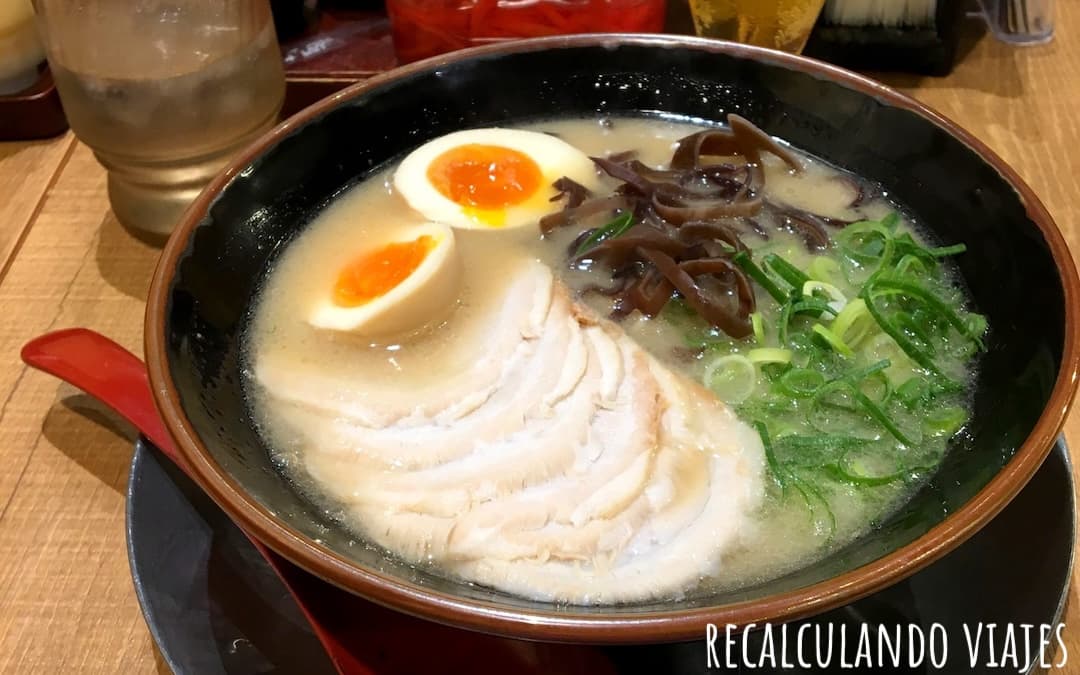
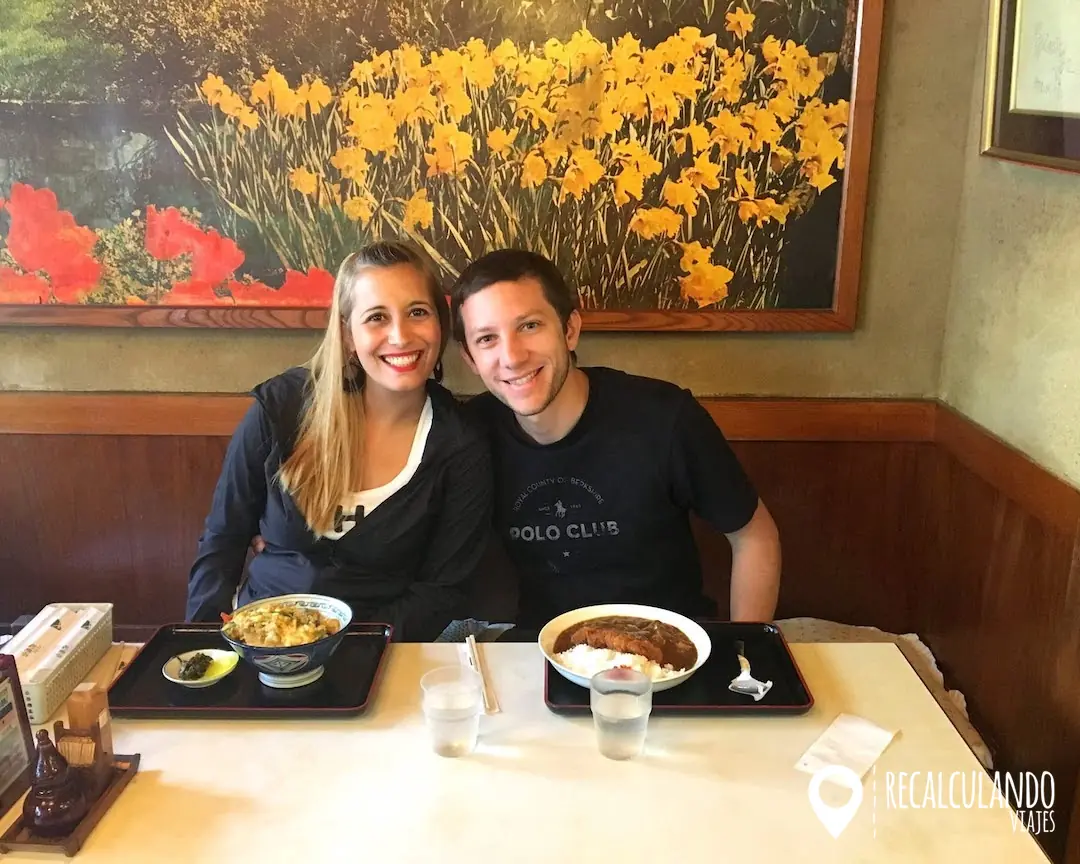
Budget (¥800-2,000): Soba and udon restaurants near main temples, Nishiki Market for street food, chains like Ippudo or Ichiran for ramen, teishoku (set meals) in restaurants with photos in the window
Mid-range (¥2,500-6,000): Izakayas in Pontocho like Kiji or Torikizoku, obanzai in Gion, yudofu in Nanzen-ji, okonomiyaki anywhere except the tourist traps in central Gion
Special experience (¥8,000+): Kaiseki at Gion Karyo or Kikunoi, sukiyaki at Mishimatei, dinner on a yuka terrace over the river in summer, any restaurant recommended in the Michelin Guide (Kyoto has over 100 stars)
👩⚕️👨⚕️ A must-have for stress-free travel! 🌎✈️ ➜ Get a Quote, Compare & Buy
Where to Stay in Kyoto: The Best Areas to Stay
Choosing where to stay in Kyoto can completely change your experience. The city is large but well-connected, so almost any central area works. Here are the best options according to your style and budget.
Center/Kawaramachi-Shijo: The Most Convenient Option
This area is super practical because it’s in the middle of everything. You have Nishiki Market, Pontocho, tons of restaurants and shops, and you’re 10-15 minutes by bus from most main attractions. The subway and buses run constantly. We stayed here the first time and it was perfect for getting our bearings. The downside is that it’s the most expensive area and can feel a bit impersonal. Recommended hotels: Hotel Granvia Kyoto (direct connection to Kyoto Station), Mitsui Garden Hotel, or APA Hotel if you’re looking for something budget-friendly.
Gion/Higashiyama: Traditional Atmosphere
If you want to wake up in historic Kyoto, stay in Gion or the Higashiyama area. You can walk to Kiyomizu-dera, the Philosopher’s Path, Yasaka Shrine, everything is close. Seeing geishas on their way to appointments at sunset from your hotel is magical. There are many beautiful ryokans (traditional inns) in this area. The downside is that it can be more expensive, and some ryokans have strict rules (check-in/out times, shared bathrooms). Recommendations: Gion Hatanaka (traditional ryokan with onsen), Piece Hostel Sanjo (modern and cute hostel), or Airbnb apartments in renovated machiyas.
Near Kyoto Station: Practical and Economical
The area around Kyoto Station is super convenient if you arrive by Shinkansen, if you’re going to take day trips, or if you’re on a tight budget. There are many budget-friendly chain hotels. The district isn’t the prettiest but it’s functional. All buses and trains leave from here. Recommendations: Dormy Inn Premium (they have a rooftop onsen), Piece Hostel Kyoto, or any business hotel type like Toyoko Inn or Super Hotel for ¥5,000-7,000 a night.
Arashiyama: Nature and Tranquility
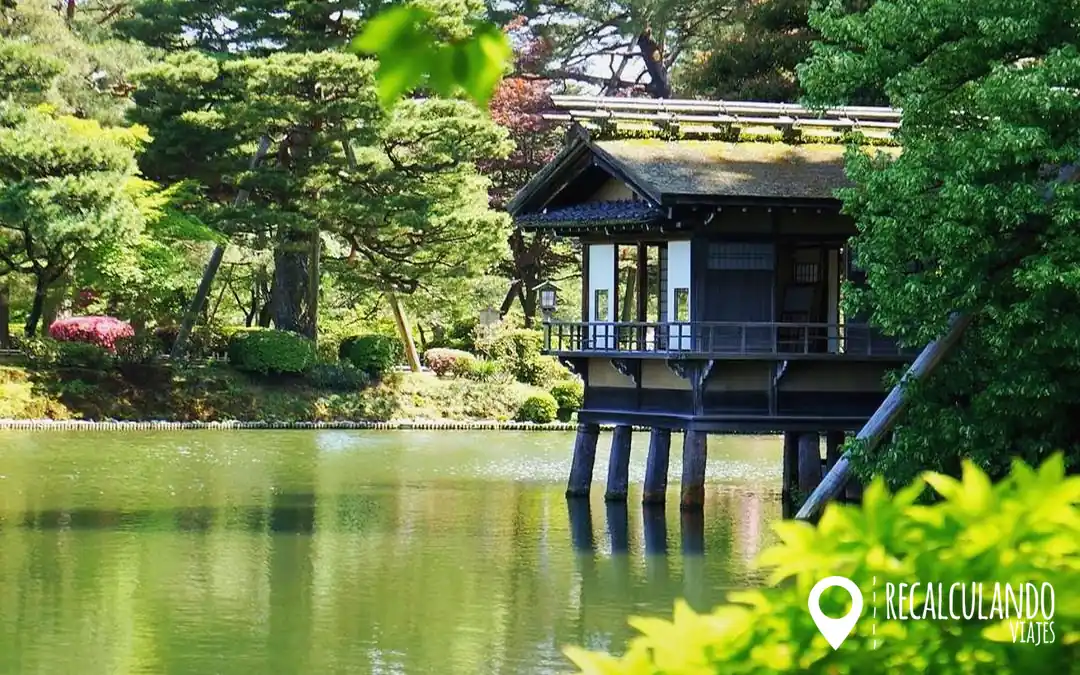
If you want to be far from the hustle and bustle, Arashiyama is beautiful. Waking up with the Hozu River and mountains is a luxury. You can go to the bamboo forest before the tourists arrive. The downside is that you are 30-40 minutes from the center. We only recommend staying here if you’ll be in Kyoto for several days and don’t mind the travel. There are beautiful traditional ryokans with onsen and river views. Suginoi Hotel or Hoshinoya Kyoto if you want to splurge on a total luxury experience.
Ryokan vs Hotel vs Hostel vs Airbnb: What to Choose
We tried them all. Ryokans are the authentic Japanese experience (tatami, futon, yukata, sometimes with meals included) but expensive (from ¥12,000 per person) and sometimes uncomfortable if you’re not used to sleeping on the floor. Hotels are the most practical and predictable, with prices ¥6,000-15,000 per double night. New hostels in Kyoto are great: modern, clean, with good common areas for meeting people, from ¥2,500 for a dormitory bed. Airbnb in a machiya (traditional house) is incredible if you’re in a group, but make sure it’s legal (many operate in a gray zone). Expect to pay between ¥8,000-20,000 for the whole house.
Where to Sleep in Kyoto? Map & Prices
On the map below, you can zoom in, move around, and filter by your travel dates to see real-time accommodation prices in Kyoto.
Map of things to do in Kyoto
To help you organize more easily, we’ve put together a map with all the things to do in Kyoto in this guide. You’ll notice that most are concentrated in two large areas: the east of the city (Higashiyama, Gion, Ginkaku-ji, and the Philosopher’s Path) and the Arashiyama surroundings to the west. If you group your visits by area, you’ll save a lot of time on transfers and will be able to see more in fewer days.

Day Excursions from Kyoto: Must-See Destinations Nearby
One of the advantages of Kyoto is that it is perfectly located for day trips to incredible places. We did several and they were all worth it. Here are the best options according to how much time you have.
Nara: Deer, Giant Buddha and Ancient Temples (1 Hour Travel)
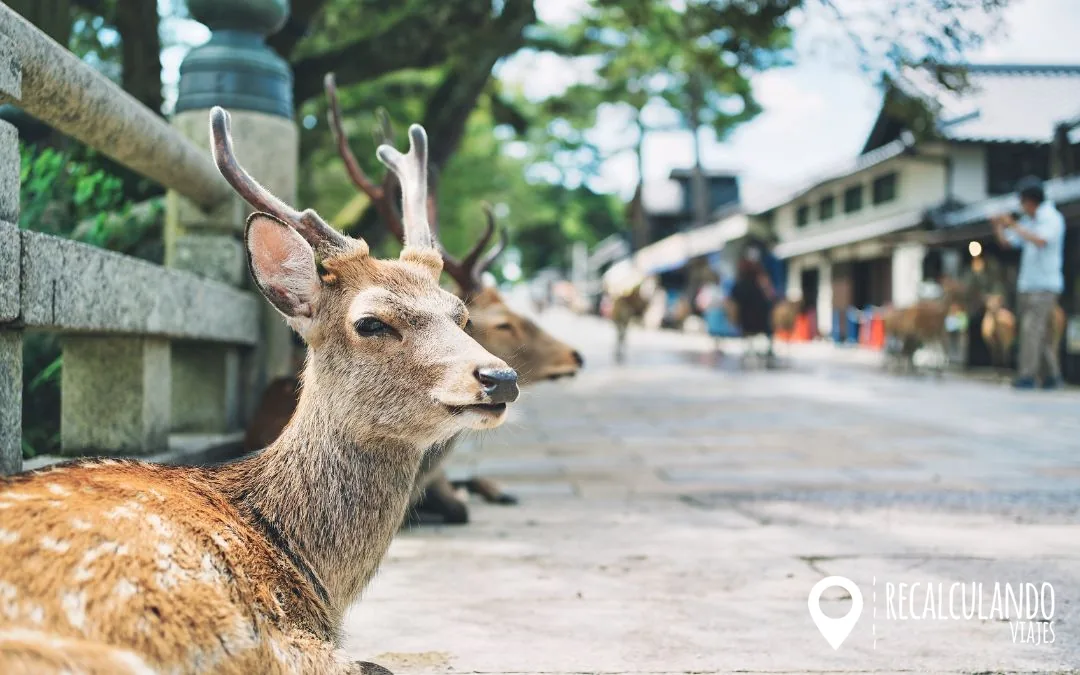
Nara was the capital of Japan before Kyoto and has some of the oldest and most impressive temples in the country. Most famous are the more than 1,000 deer that roam free in Nara Park: they come close, ask for cookies (sold everywhere for ¥200), and even bow to you. The Todai-ji temple has the largest bronze Buddha in Japan (15 meters high) in a wooden building that is the largest ancient structure in the world. Kasuga Taisha has 3,000 stone and bronze lanterns. You can see Nara in half a day, but we recommend a full day to go slowly. Train: JR or Kintetsu line from Kyoto Station, 45-60 min, ¥720-1,200 depending on the train.
We tell you everything in our guide on things to do in Nara.
Osaka: Street Food and Urban Life (30 Minutes Travel)
Osaka is the opposite of Kyoto: noisy, modern, unfiltered. But the food is incredible. Dotonbori is the heart of the entertainment district with giant neon signs, restaurants everywhere, and the most intense nightlife in Kansai. Try okonomiyaki at Chibo or Orizuru, takoyaki at any street stall, and ramen at any of the hundreds of places. There’s also Osaka Castle and the Shinsekai district with the Tsutenkaku tower. Osaka is perfect for a contrasting day after so many temples. Train: JR or Hankyu from Kyoto Station, 30-50 min, ¥570-820.
Uji: The Capital of Green Tea (30 Minutes Travel)
Uji produces the best matcha in Japan. It’s a quiet town on the banks of the Uji River with the Byodo-in temple (featured on the ¥10 coin) as the main attraction. The temple is precious, especially the Phoenix Hall reflected in the pond. But the best part of Uji is browsing tea shops, trying matcha at its source, and walking the traditional streets.
We bought tea to take away at Itohkyuemon and had incredible iced matcha at Nakamura Tokichi. It’s a perfect and super relaxed half day. Train: JR Nara line to Uji Station, 30 min, ¥240. Or Keihan Uji line also works.
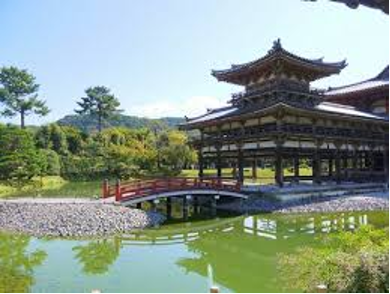
Mount Koya (Koyasan): Spiritual Retreat in the Mountains (2 Hours Travel)
Mount Koya is the center of Shingon Buddhism in Japan, founded in 816 by the monk Kobo Daishi. It’s on top of a mountain surrounded by forests, with over 100 temples, many of which function as shukubo (temple lodging) where you can stay, eat Buddhist vegetarian food, participate in morning ceremonies, and experience monastic life. The Okunoin cemetery with 200,000 graves among ancient trees is mystical and beautiful. It’s further away but worth it, especially if you stay overnight. From Kyoto: train to Osaka, then Nankai train to Gokurakubashi, then funicular to the top. About 2.5 hours total, approx ¥2,500-3,000.
Other places from Kyoto
Kyoto is a perfect base for day trips. These are the ones we recommend most:
- Nagoya and the imposing Nagoya Castle (From Kyoto, approx. 35 min)
- Himeji: to see the most spectacular castle in all of Japan.
- Nukumori no mori (Hamamatsu) (From Kyoto, approx. 1 hour and 15 min)
- Visit the Ohara Village and the Sanzenin Temple. From Kyoto, approx. 1 hour and 10 min.
And if you continue towards the Japanese Alps, don’t miss our guides on Kanazawa and Takayama, two stops that we fell in love with.
Comparison Table: 1 vs 2 vs 3 Days in Kyoto
| Duration | What You Manage to See | Pace | Recommendation |
|---|---|---|---|
| 1 Day | Fushimi Inari + Gion/Kiyomizu-dera + One more zone (Kinkaku-ji or Arashiyama). | Rush, only the essentials. | Only if you’re passing through. Not enough for Kyoto. |
| 2 Days | Main temples in the east and west, Gion, Arashiyama and Fushimi Inari. | Rushed but feasible. | Minimum acceptable if you have little time. You’ll want more. |
| 3 Days | Everything above + Philosopher’s Path, cultural experiences and time to discover. | Balanced. | Ideal for a first visit. You see the main things with time to enjoy. |
| 4-5 Days | Everything calmly + secondary temples + day trip to Nara or Osaka + free time. | Relaxed. | Perfect. This is how we visited and we didn’t feel rushed. |
| 7+ Days | Deep Kyoto: local neighborhoods, hidden temples and multiple excursions. | Slow travel. | If you really want to know Kyoto. It gives you time to discover your own places. |
Suggested Itinerary: 2 and 3 Days in Kyoto
Organizing things to do in Kyoto can be overwhelming because there is too much. Here we’ve put together two itineraries according to how much time you have. These are the routes we would take if we were returning with friends for the first time.
2-Day Kyoto Itinerary
Day 1: East and Center
Morning: Start early at Fushimi Inari (7:00 AM) to see it without crowds. Climb at least to the first viewpoint (45 min). Then go down to the Fushimi sake district for a quick tasting or take the train to Gion. Walk through the traditional streets of Gion, especially Hanami-koji and Shirakawa.
Noon: Have lunch at an obanzai or soba restaurant in the area.
Afternoon: Visit Kiyomizu-dera, then walk downhill through Ninenzaka and Sannenzaka stopping at shops and cafes. If there’s time, Yasaka Shrine and Maruyama Park are right there.
Night: Dinner in Pontocho, ideally on a yuka terrace if it’s summer.
Day 2: North and West
Morning: Kinkaku-ji right when they open (9:00 AM). Then Ryoan-ji to see the zen rock garden (they are close, 15 min by bus). Noon: Lunch en route to Arashiyama. Afternoon: Arashiyama: bamboo forest, Tenryu-ji temple, cross the Togetsukyo bridge, if you want, climb to the monkey park. Walk through the town’s little streets. Night: Return to the center for dinner at Nishiki Market or Kawaramachi. If you have energy, walk along the Kamo River at night.
Kyoto in 3 Days: Itinerary
Day 1 and 2: Same as the 2-day itinerary above.
Day 3: Northeast and Cultural Experiences
Morning: Ginkaku-ji when they open, then the Philosopher’s Path to Nanzen-ji. Stop at a hidden cafe for matcha. Noon: Lunch yudofu at a restaurant near Nanzen-ji.
Afternoon: Heian Shrine and its gardens. If you like, walk through the Okazaki museum area.
Alternatively, do a cultural experience: tea ceremony, cooking class, or calligraphy (book in advance).
Night: If it’s your last night, a special kaiseki or sukiyaki dinner. Otherwise, explore an area you haven’t seen: Kitayama to the north is modern and has good restaurants.
How to get to Kyoto and get around the city
Getting to Kyoto is very easy because it is perfectly connected. From Tokyo, the bullet train (Shinkansen) takes around 2 hours and 15 minutes on the Nozomi service (the fastest, not included in the Japan Rail Pass) or about 2 hours and 40 minutes on the Hikari, which is included in the JR Pass. From Osaka you are one step away: by Shinkansen from Shin-Osaka it’s just 15 minutes, and you can also go comfortably by Hankyu or JR trains.
To get around within Kyoto, the city is toured with a combination of subway (two lines) and bus. Keep in mind two important changes that many don’t know:
- The old ¥700 bus pass no longer exists. The current option is the Subway & Bus 1-Day Pass for ¥1,100, which covers the two subway lines and urban buses.
- Large suitcases are not allowed on urban buses. If you arrive with luggage, use the subway, a taxi, or leave your bags in storage at Kyoto station.
Our advice: for odd days, it’s just worth loading an IC card (Suica, Pasmo, ICOCA) and paying per trip. It’s the most practical and you use it throughout Japan. If you want more ideas about the rest of the country, look at our guide on things to do in Tokyo or everything we have about traveling to Japan.
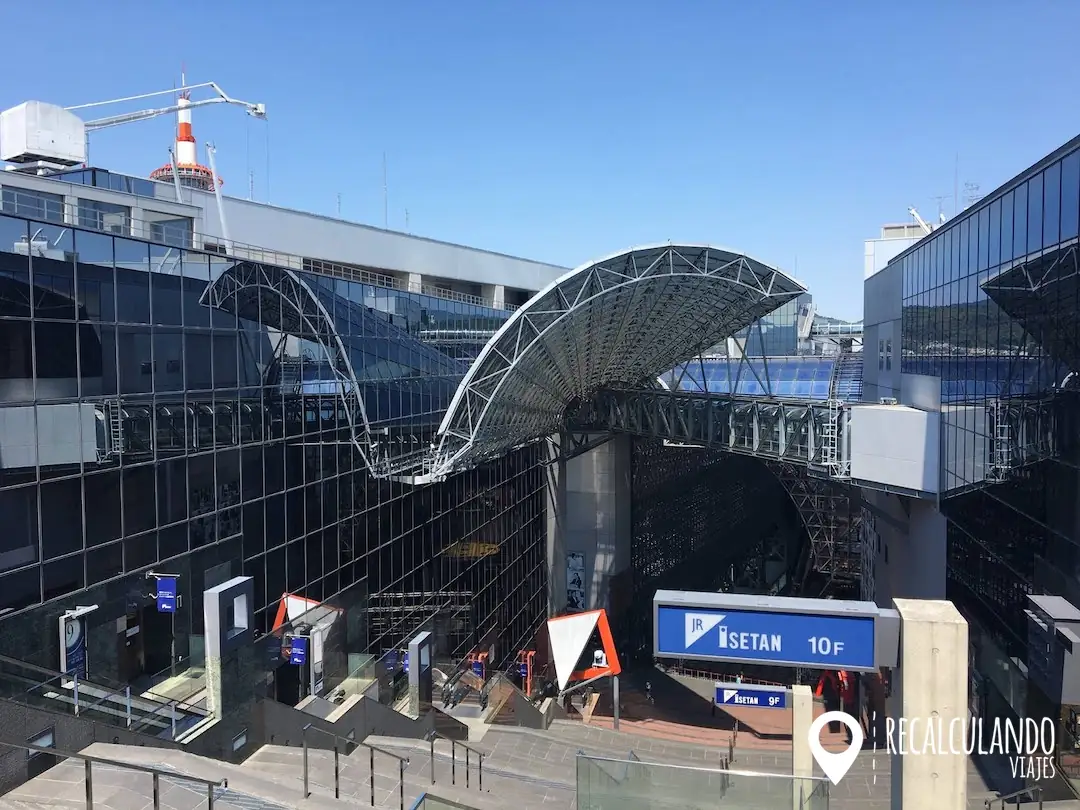
How to get around in Kyoto and its transport
Kyoto Transport
Trains: Kyoto has several train lines, including the main JR Kyoto line and the Hankyu line. These lines connect Kyoto with other cities in the Kansai region, such as Osaka, Kobe and Nara.
JR Sagano Line
https://www.jr-odekake.net/eki/pdf/teisya_07.pdf
JR Nara Line
The JR Nara Line is served by Local, Regional Rapid, Rapid and Miyakoji Rapid services.

Kyoto local train stations – Subway Kyoto Map and stations

JR West Timetables, Route Maps, and Station Maps: http://www.westjr.co.jp/global/en/timetable/
Bus in Kyoto
Kyoto Bus Map Very good: http://es.youinjapan.net/mapas/kyoto/kyoto_bus_map.pdf
Travel insurance for Kyoto
Japan is a safe destination, but medical care for tourists is very expensive, so traveling with insurance isn’t optional, it’s essential. After more than nine years traveling the world, we don’t go anywhere without one.
For our trips, we use IATI Insurance, which has comprehensive coverage and support in Spanish, something greatly appreciated in Japan. Plus, by booking through our discount link, you get a price reduction. Better to be safe and travel with peace of mind.

Temples and Shrines Route in Kyoto
-Higashiyama Jisho-ji / Ginkaku-ji Temple
-Eikando Temple – Eikan-dō (Zenrin-ji) (永観堂 (禅林寺))
-Heian Shrine – Heian-jingu Shrine (平安神宮)
-Nanzen-ji Temple
-Shoren-in Temple (青蓮院門跡)
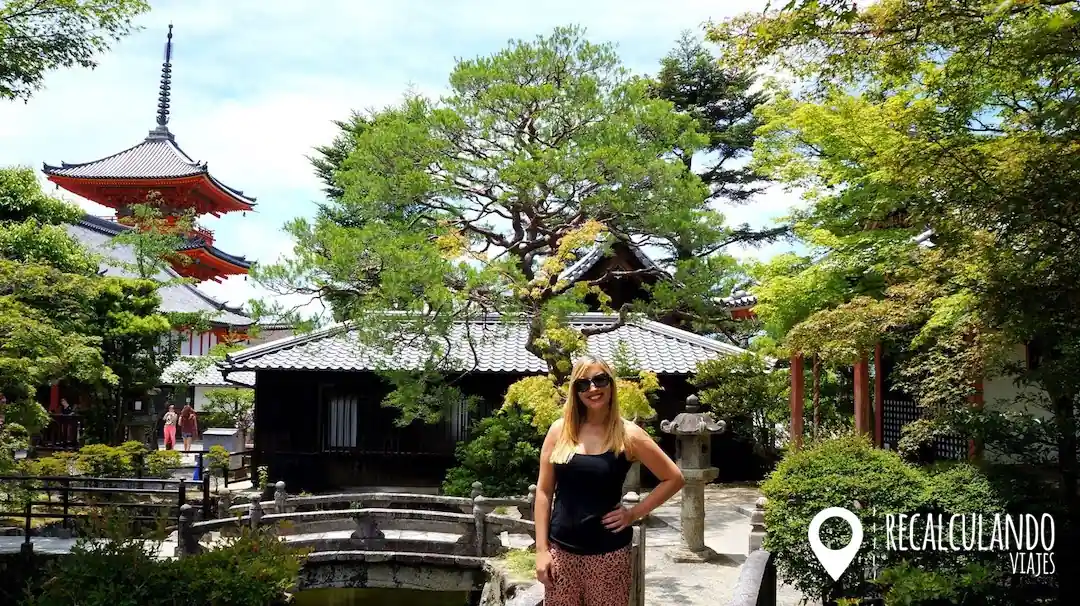
Visual Snapshot: Kyoto at a Glance
To give you a quick idea of what to expect in Kyoto, here is a visual summary with concrete data based on our experience.
DAILY BUDGET (Per Person)
━━━━━━━━━━━━━━━━━━━━━━━━━━━━━━━━━━━
Backpacker     ████░░░░░░  ¥4,000-6,000
Mid-range      ████████░░  ¥8,000-12,000
Comfort        ██████████  ¥15,000-25,000+

CITY DIFFICULTY
━━━━━━━━━━━━━━━━━━━━━━━━━━━━━━━━━━━
Language      ████████░░  8/10 challenge
Transport     ███░░░░░░░  3/10 easy
Navigation    ████░░░░░░  4/10 moderate

BEST TIME TO VISIT
━━━━━━━━━━━━━━━━━━━━━━━━━━━━━━━━━━━
Spring        ██████████  Cherry blossoms (crowds)
Summer        ████░░░░░░  Extreme heat+humidity
Autumn        ██████████  Maples (crowds)
Winter        ███████░░░  Cold, few tourists

MINIMUM RECOMMENDED TIME
━━━━━━━━━━━━━━━━━━━━━━━━━━━━━━━━━━━
See the basics    2-3 days
Know well         4-5 days
Explore deeply    7+ days
Key Facts at a Glance:
- 17 UNESCO World Heritage Sites in Kyoto and surroundings
- Over 2,000 temples and shrines in the city
- 1,200+ years as capital of Japan (794-1868)
- 1.5 million inhabitants, 50+ million annual tourists
- 400+ companies over 100 years old
- Over 100 Michelin stars (one of the most awarded cities in the world)
- Temperature: -2°C to 10°C in winter, 25°C to 35°C in summer
- Best transport: buses (¥230 per trip, ¥700 unlimited daily pass)
Street Food Market – Fushimi-ku, Kyoto Japan (Video)
Frequently Asked Questions about Kyoto
Is Kyoto expensive compared to other Japanese cities?
Kyoto is moderately expensive, similar to Tokyo but slightly cheaper in accommodation. Temple entrance fees (¥400-600) add up if you visit many. Food has a wide range: from ¥800 in a humble restaurant to ¥20,000+ in luxury kaiseki. Transport is cheap: the ¥700 daily bus pass is a steal. Budget ¥8,000-12,000 per day for a mid-range trip excluding accommodation.
Do I need a Japan Rail Pass to visit Kyoto?
It depends on your full itinerary in Japan. If you’re only visiting Kyoto and surroundings (Nara, Osaka, Uji), it’s not worth it: a 7-day JR Pass costs ¥50,000 and you won’t get your money’s worth. But if you’re doing Tokyo-Kyoto-Hiroshima, it pays for itself with the Shinkansen. For getting around Kyoto, the JR Pass isn’t very useful: most attractions are best reached by bus or private subway.
How much English is spoken in Kyoto?
In main tourist areas (Gion, Arashiyama, famous temples) there is plenty of English: signs, menus, hotel staff. But in local neighborhoods, small restaurants, and traditional shops, hardly any. Download Google Translate with the Japanese offline pack: the camera function for translating menus is a lifesaver. Learn basic phrases: “sumimasen” (excuse me), “arigatou gozaimasu” (thank you very much), “oishii” (delicious).
Is it safe to walk around Kyoto at night?
Super safe. Kyoto, like all of Japan, has very low crime rates. We walked everywhere at all hours without problems. The only precautions are the normal ones: watch your things in crowded places, especially during festivals. Nightlife areas like Pontocho and Gion are full of people until late and are completely safe. Always use common sense.
Can I visit Kyoto with children?
Yes, although it might not be the most fun destination for very young children. Temples and gardens can bore them quickly. But there are options: the Monkey Park in Arashiyama they love, Nara’s deer (easy day trip), the Manga Museum, the Toei Studio Park (ninja and samurai theme park). Many restaurants are family-friendly. Public transport is accessible with strollers. If your children can tolerate walking and have cultural curiosity, it works perfectly.
What happens if it rains during my visit?
The rainy season (tsuyu) is June-July with almost daily rain. Bring an umbrella (or buy a cheap one at any konbini for ¥500). Most temples are enjoyed just as much in the rain, they even have their special charm. On rainy days, take advantage of museums (Manga Museum, museums in Okazaki), Nishiki Market (covered), and indoor cultural experiences. Many temples have covered galleries to view gardens from inside. Rain doesn’t ruin Kyoto at all.
Conclusion: Kyoto Will Steal Your Heart (As It Did Ours)
After ten intense days exploring things to do in Kyoto, we realized that this city is much more than a list of temples and attractions. It’s getting lost in narrow alleys and finding a hidden garden, it’s sitting in a tiny cafe where the owner prepares matcha with silent ceremony, it’s seeing a maiko (apprentice geisha) cross the street in a hurry while the sun sets over the mountains. We arrived expecting pretty temples and good food, and we left completely in love with a city that breathes history but is still alive.
Our final recommendation: leave yourself time to improvise, to follow that street that catches your attention, to enter the unnamed temple that isn’t in any guide. Some of our best moments happened when we weren’t following any plan.
Other articles for your trip to Japan
- Japanese Food: The 2026 Guide with 10 Incredible Secrets to Enjoy its Cuisine
- Things to do in Kanazawa Japan: The Essential Guide for Not Missing a Thing in…
- Things to do in Nara Japan: 10 Must-Visit Places You Can’t Miss + Map
- Things to do in Miyajima: the ultimate guide to Japan’s most magical…
- 15 essential things to do in Japan (with map)
- Things to do in Hiroshima: 12 Must-See Places + Miyajima (2026 Guide)
- Things to do in Shirakawa-Go: The Incredible UNESCO Heritage Village You…
- 15 must-see things to do in Osaka (with map and itinerary)
ℹ️ **Total Transparency**
This article contains affiliate links. If you book through these links, we may receive a small commission at no extra cost to you. We only recommend services we use on our travels and trust. This helps us keep this blog free and continue creating useful content for you. Thanks for your support!
🔗 Resources & Useful Links for your trip to Kyoto
Do you have questions or want to add your own recommendations on things to do in Kyoto?
💬 Leave your comment or write to us, we love reading other travelers’ experiences.
Thank you very much for being part of this adventure!— Nanu & Facu 🌎 | Recalculando Viajes 💜