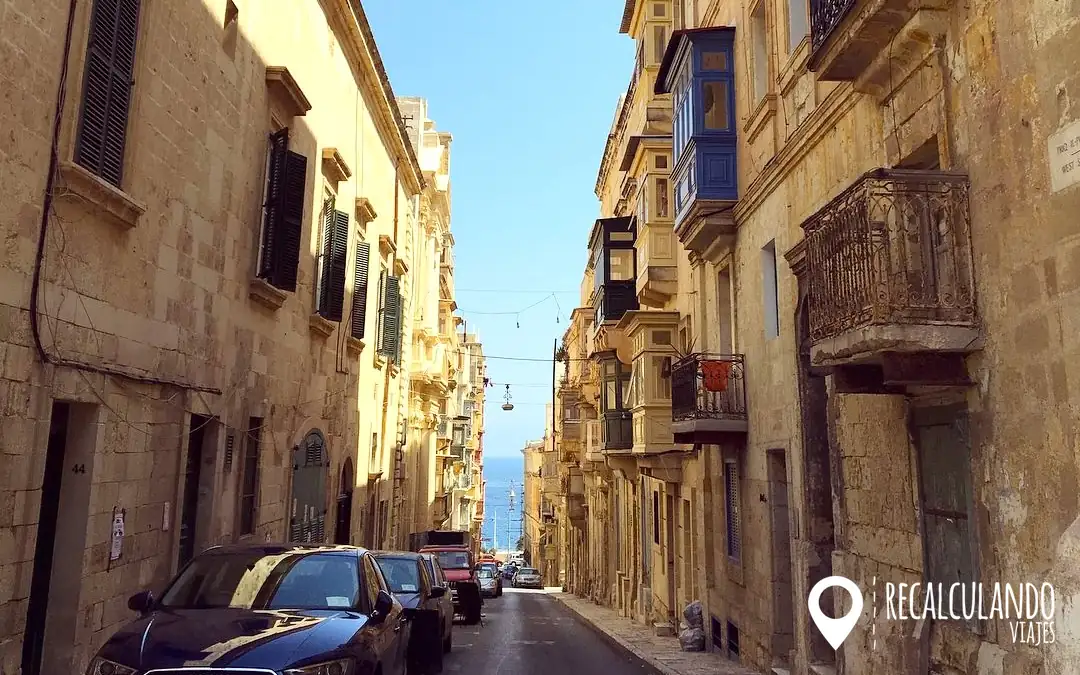
If you are planning your trip to Malta and wondering about things to do in Valletta, you’ve come to the right place. We lived in Malta for almost two months —first a couple of weeks in Marsaskala, in the south, and then almost a month in St. Paul’s Bay, in the north— and we visited the capital several times. Valletta is small, but it has a wealth of history, architecture, and culture that few capitals in the world can match. At just half a square kilometer, it is the smallest capital in the European Union, yet it lacks nothing.
What surprised us most is that Valletta is not a city of boring museums and empty facades. It is a living city, with charming cafés on every corner, streets that drop steeply toward the sea, baroque churches that leave you speechless, and a view of the Three Cities that is, quite simply, one of the best we’ve seen in all of Europe. In this guide, we share everything we saw, experienced, and recommend.
🌍 Travel Insurance: 5% Off with IATI Seguros! 🌟
Take advantage of this offer and travel safe.
Summary: Things to do in Valletta
| Place / Activity | Highlight | Recommendation |
|---|---|---|
| St. John’s Co-Cathedral | Baroque jewels and Caravaggio’s painting. | Book online to avoid queues. |
| Upper Barrakka Gardens | The best panoramic views of the Grand Harbour. | See the daily cannon firing at 12:00 or 16:00. |
| Grandmaster’s Palace | Historic headquarters with an impressive armory. | Must-see for history buffs. |
| Lower Barrakka Gardens | Quiet gardens facing the sea. | Ideal for a break from sightseeing. |
| Fort St. Elmo | Key stage of the Great Siege of 1565. | Visit the National War Museum. |
| Republic Street | The commercial and social hub of the city. | Wander aimlessly through the historic center. |
| National Museum of Archaeology | Prehistoric history, featuring the “Sleeping Lady”. | Affordable and very educational. |
| Casa Rocca Piccola | Aristocratic mansion still inhabited. | Book a guided tour in advance. |
| Crossing to the Three Cities | Traditional ferry trip (Dgħajsa). | Unique perspective from the water. |
| Triton Fountain and City Gate | Main entrance and modern architecture. | Meeting point and landmark. |
| Teatru Manoel | One of the oldest theaters in Europe. | Attend a performance if possible. |
| Hastings Gardens | Views of Marsamxett Harbour. | Perfect for enjoying the sunset. |
| Strait Street | Former bohemian quarter with history. | Explore its nightlife cultural revival. |
| Sunday Market | Local atmosphere and antiques. | Visit outside the walls on Sundays. |
| Local Gastronomy | Taste *pastizzi* and *ftira*. | Try the historic Café Cordina. |
Why is it worth visiting Valletta?
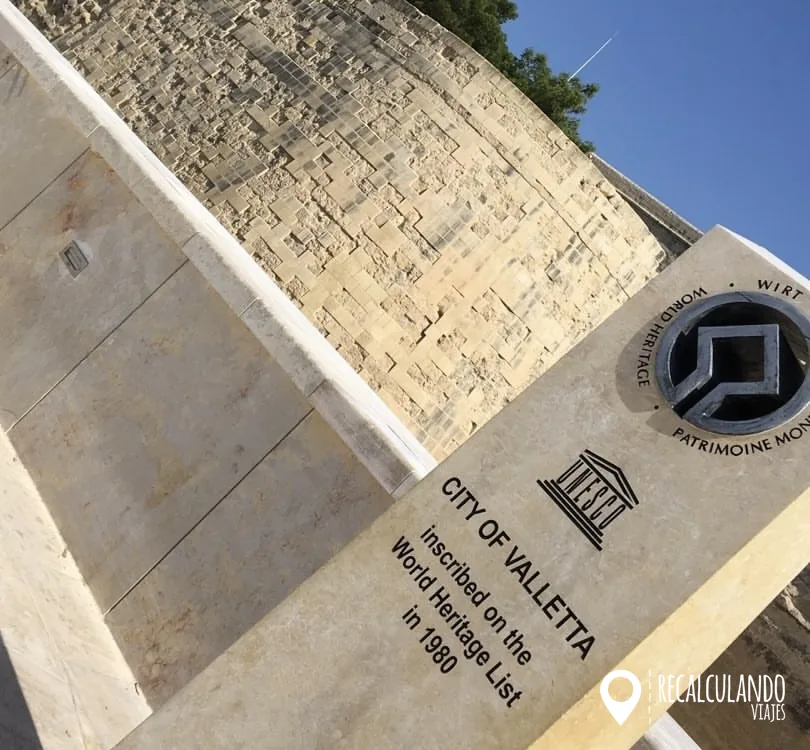
Valletta was declared a UNESCO World Heritage Site in 1980, and in 2018 it was the European Capital of Culture. But beyond the titles, what will capture you is the authenticity of the place. It’s not a medieval theme park: it’s a city where people live, work, and go out for coffee on Sundays.
Its history is linked to the Knights of the Order of St. John, who built the city from scratch in the 16th century after the Ottoman Great Siege of 1565. That explains why everything has such striking architectural consistency: almost everything you see was built in a relatively short period, with a rational urban plan for the time. The streets are an almost perfect grid, which is unusual for a Mediterranean city from that era.
It must also be said that Malta in general is a destination that surprises travelers a lot. It is not one of the most famous in our circles, but it has enormous cultural, gastronomic, and scenic richness. If you travel to Europe and want something different from the usual circuits, Malta —and Valletta in particular— is a winning bet.
Things to do in Valletta: 15 must-sees
1. Upper Barrakka Gardens and the midday cannon firing
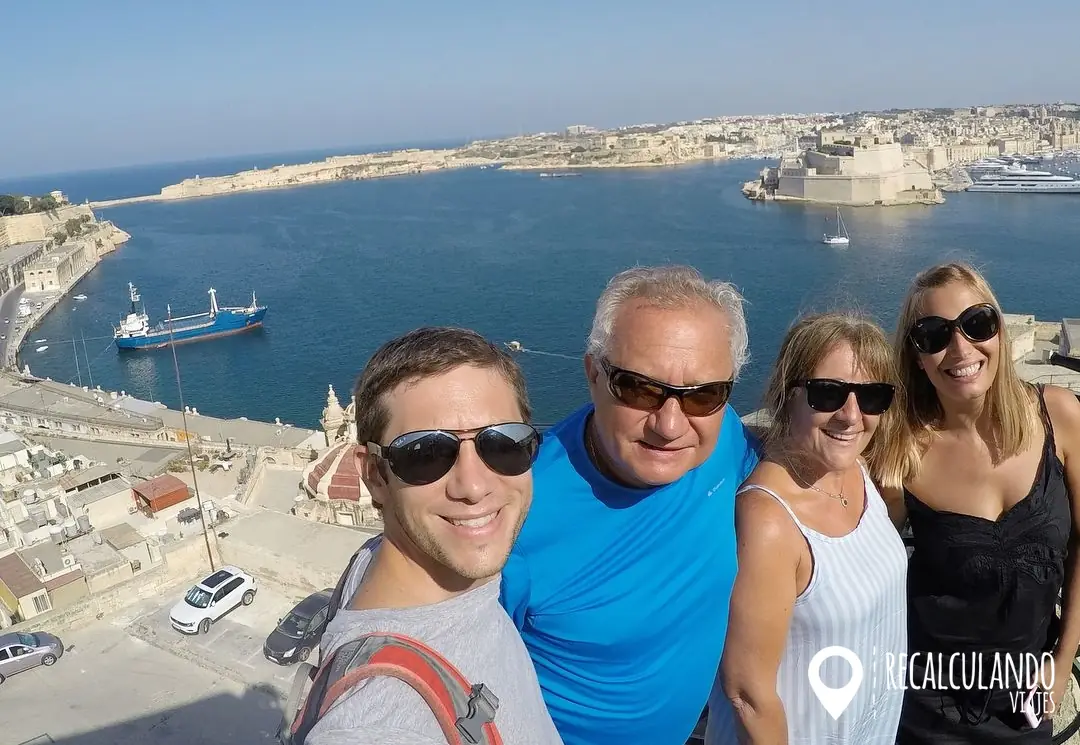
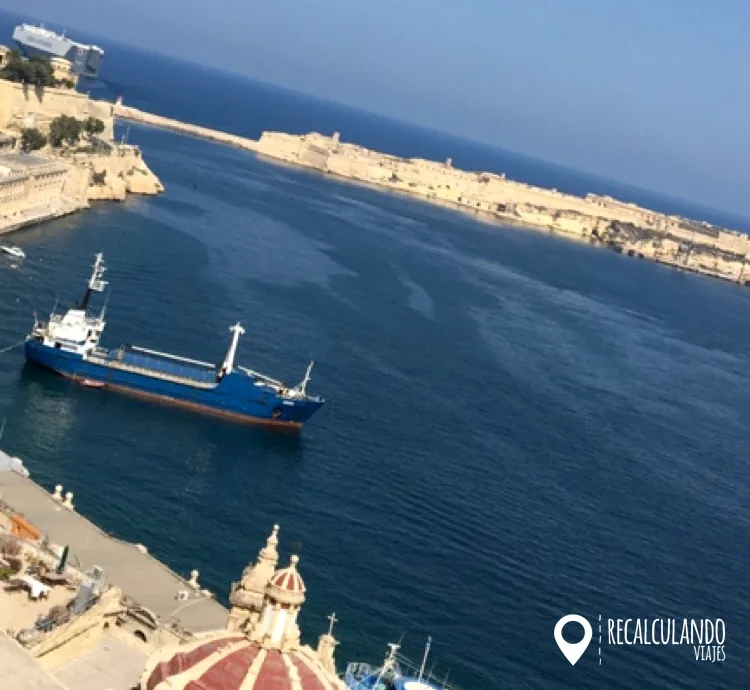
The Upper Barrakka Gardens are located at the highest point of Valletta’s walls and offer what we consider the best view in all of Malta: the Grand Harbour, the Three Cities in the background (Vittoriosa, Senglea, and Cospicua), and the bastions reflected in the water on clear days. It’s a place to stay for a while, without rushing.
If you can be there at 12 noon (or 4 PM), you will witness the cannon fire from the saluting battery just below the gardens. It’s not spectacular in itself, but it has its historical charm and people always gather to watch it. The gardens are free to enter.
2. Grandmaster’s Palace
The Grandmaster’s Palace is the most important building in Valletta’s historic center. For centuries, it was the seat of power for the Knights of St. John and today houses the Office of the President of Malta and two museums: the State Rooms and the Palace Armoury.
It has a collection of armor and weapons from the 16th to the 19th centuries that is surprisingly complete and very well presented. Those who enjoy military or medieval history will like it a lot. The collection of personalized armor for different Knights, with their engravings and unique details, gives a very concrete idea of the wealth and power of the Order.
Admission is charged, around 10 euros.
3. St. John’s Co-Cathedral
This is, without a doubt, the most important visit in Valletta. From the outside, the Co-Cathedral looks sober and almost austere, with its baroque facade of golden stone. But when you go inside, the contrast is brutal: the interior is one of the most ornate we’ve seen. The floor is covered by 400 multicolored marble tombstones of the Knights of Malta, the walls are completely carved and gilded, and the side chapels compete with each other in opulence.
What you cannot miss inside is The Beheading of Saint John the Baptist, the only painting signed by Caravaggio in the world. It is in the Oratory, at the back of the cathedral, and is genuinely impressive. The scale, the drama, the color palette… it is one of those works that you can stare at for much longer than you had planned.
Admission is charged, costs about 15 euros per person and includes an audio guide; we recommend booking it online to avoid queues, especially in high season.
4. Lower Barrakka Gardens and the Siegfried Alexander Ball Monument
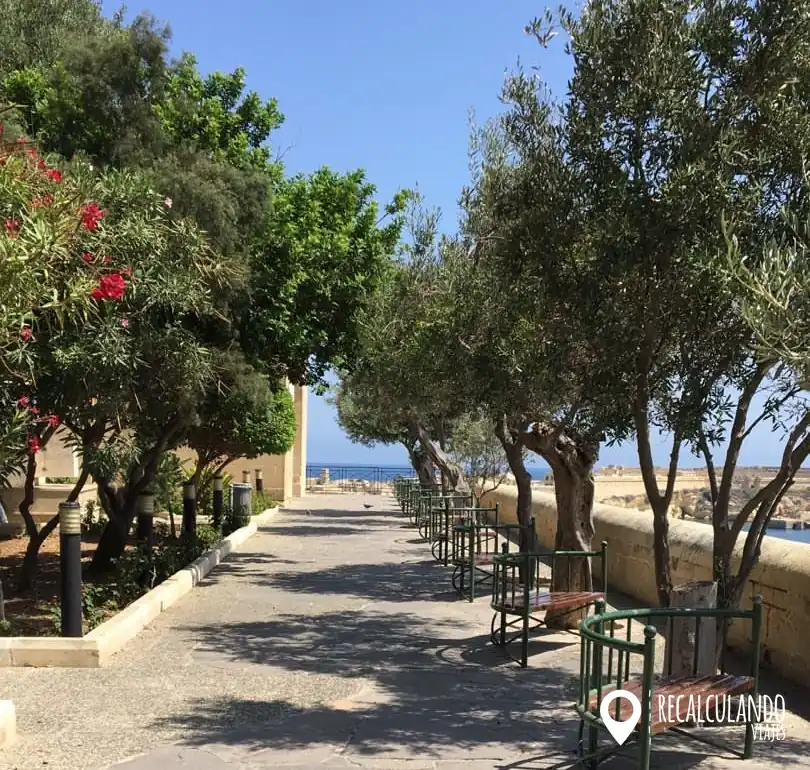
Unlike the Upper Barrakka, the Lower Barrakka gardens are quieter and less frequented by tourists. They have an equally remarkable view of the Grand Harbour, but from a different perspective. In the center of the gardens is a neoclassical temple dedicated to Sir Alexander Ball, the first British governor of Malta.
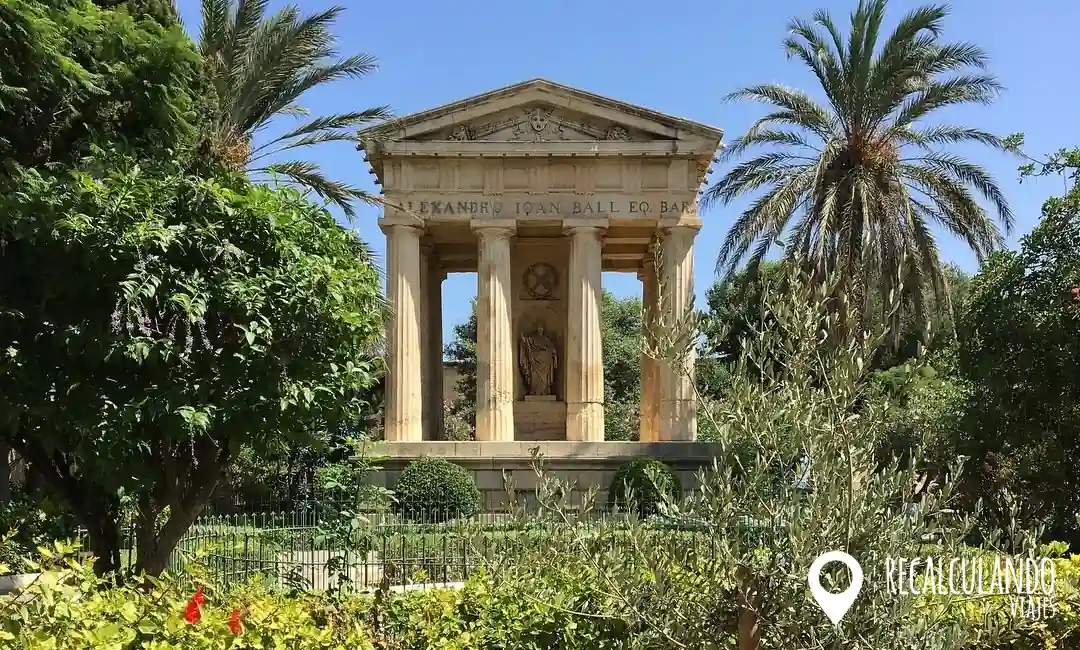
It’s a good place to sit for a while, especially if you’ve been touring the more touristy part of the city. The atmosphere is more peaceful and locals often come here to read or rest. From here you can also perfectly see the ferries and boats entering and leaving the port.
5. Fort St. Elmo and the National War Museum
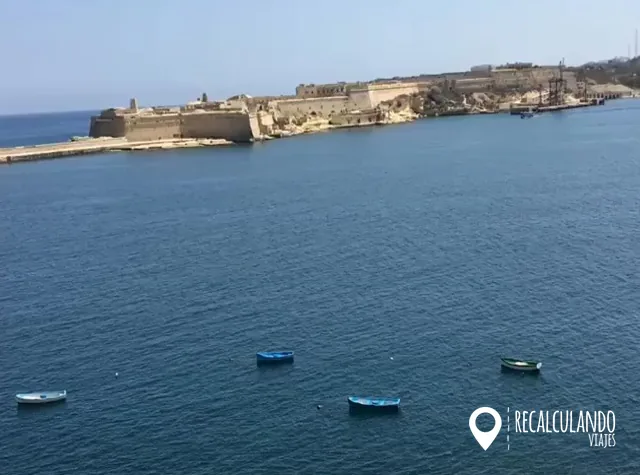
Fort St. Elmo is at the tip of the peninsula where Valletta sits and was the scene of one of the most dramatic battles of the Great Siege of 1565. The Knights and Maltese soldiers who defended it resisted for months against an Ottoman army far superior in numbers, and almost all of them died in the process. Their sacrifice was fundamental for the siege to end up being a failure for the Ottomans.
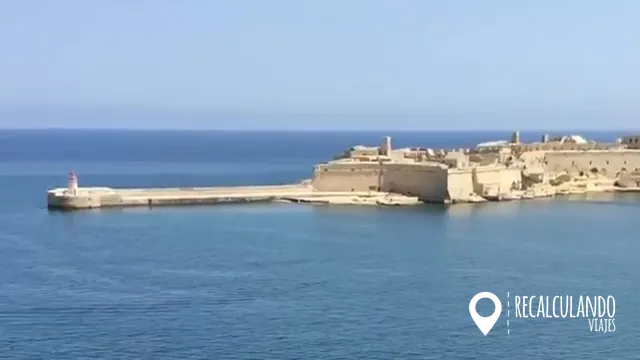
Today the fort houses Malta’s National War Museum, which chronicles both the Great Siege and Malta’s role during World War II (when the island received the George Cross, the highest British civilian decoration, for its resistance during the Nazi bombings). It is a museum dense in information but well organized.
Admission is charged, around 10 euros. On weekends there are historical reenactments with volunteers in period costumes that bring the place to life.
6. Strada Rjali (Republic Street) and Merchants Street
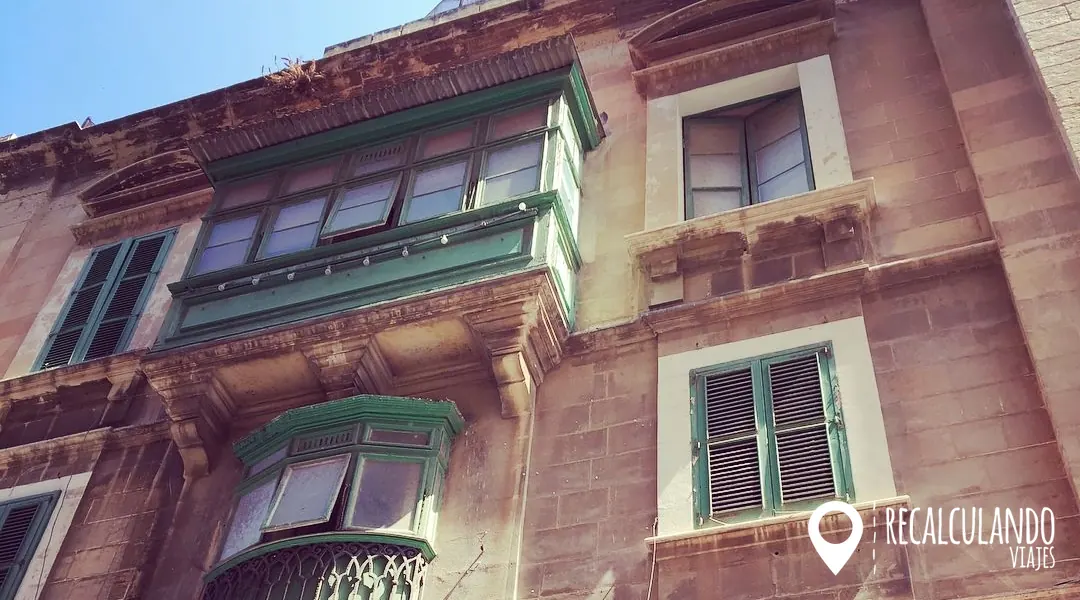
The main street of Valletta is called Republic Street —or Triq ir-Repubblika in Maltese— and is the central axis of the city. It is pedestrian-only for the most part and is surrounded by historic buildings, cafés, shops, and the omnipresent golden stone of Maltese limestone. It is ideal for walking without a fixed destination and letting yourself be surprised.
Merchants Street, parallel to Republic Street, has a perhaps more local and authentic atmosphere. The Maltese call it “Strada Mercanti” and it has a mix of traditional businesses, covered markets, and the occasional restaurant off the main tourist circuit. If you want to take home a local souvenir, this street has more interesting and affordable options than the stores aimed at mass tourism.
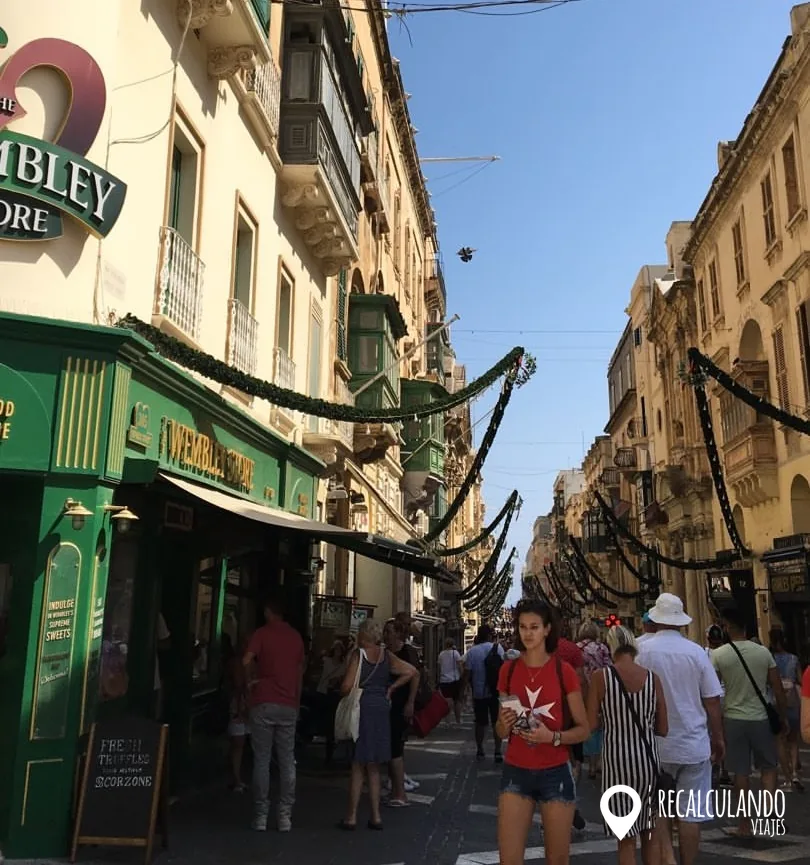
Republic Street - Valletta
👩⚕️👨⚕️ A must-have for stress-free travel! 🌎✈️ ➜ Get a Quote, Compare & Buy
7. National Museum of Archaeology of Malta
Malta has one of the richest prehistoric histories in the world: the island’s megalithic temples are older than Stonehenge and the pyramids of Egypt. The National Museum of Archaeology, located in the old Exchange building in Valletta, gathers most of the findings from these sites.
The star piece is the Sleeping Lady, a small terracotta figure about 5,000 years old that is one of the most photographed objects in Malta. There are also trepanned skulls, ritual objects, and models of the temples that help to understand the civilization that inhabited these islands before any of the great Mediterranean cultures.
Admission is charged: it is affordable, around 5 euros.
8. Casa Rocca Piccola
This is a little-known gem that we especially recommend. Casa Rocca Piccola is a 16th-century palatial mansion that is still inhabited by the family of the Marquis de Piro, direct descendants of a Knight of Malta. They offer guided tours of the rooms —many of which are decorated with furniture and objects that are centuries old— and the atmosphere is genuinely unique: you feel like you’re inside history, not looking at it from the outside.
They also have a World War II air-raid shelter in the basement that can be visited. The family lives in the palace part of the time, which gives it a warmth and authenticity that is hard to replicate.
Guided tours cost about 10 euros per person and run several times a day. We recommend booking in advance because the groups are small.
9. The Grand Harbour from the ferry
If you have time, you can cross the Grand Harbour on the traditional ferry (Dgħajsa) from Valletta to the Three Cities. The journey takes just a few minutes, costs very little (around 1.50 euros), and gives you a perspective of Valletta’s walls and bastions that is impossible to obtain from land.
If you are traveling with some time, you can explore Vittoriosa (Birgu) on the other side, which has its own fort, medieval narrow streets, and a marina full of luxury sailboats. It is one of those contrasts that make Malta so interesting: in five minutes you go from the historic capital to a town that seems to have stopped in time.
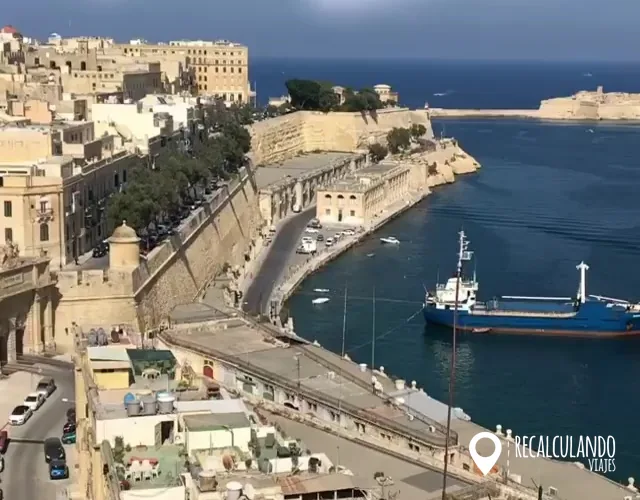
10. Triton Fountain and the City Gate
The main entrance to Valletta is the City Gate, redesigned by Italian architect Renzo Piano in 2014. The project was somewhat controversial because it replaced a 20th-century gate with a contemporary stone and steel structure, but the final result is elegant and works well as a transition between the modern city and the historic center.
Right in front is the Triton Fountain, with its three bronze figures holding the central globe. It is the arrival point for buses from the rest of the island and the most recognizable meeting place in Valletta. Next to it is the new Parliament of Malta, also designed by Renzo Piano, with its facade of perforated limestone blocks that filter the light in a remarkable way.
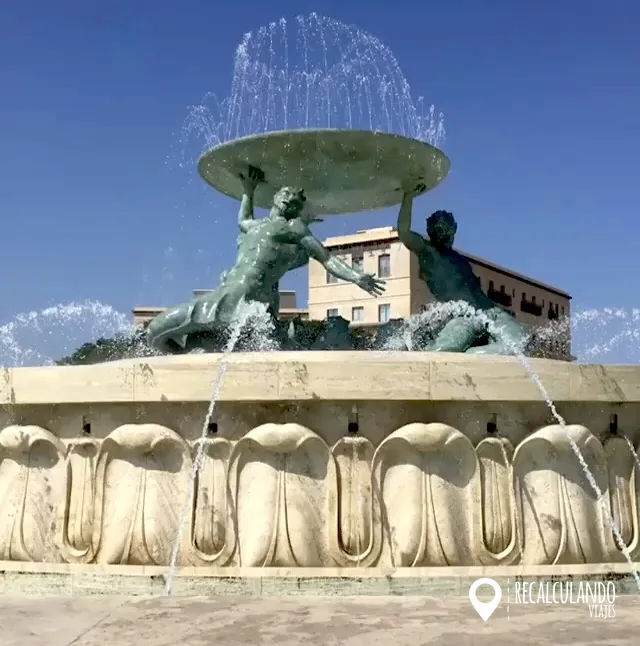
Triton Fountain (Valletta)
11. Teatru Manoel
The Manoel Theatre, opened in 1731, is one of the oldest working theaters in Europe. Its interior room, in the baroque style, has excellent acoustics and a capacity of just 623 people, which gives it an intimate atmosphere uncommon in theaters of this age and historical importance.
If you are interested, and your trip coincides with a performance —be it opera, theater, concert, or ballet. The prices are reasonable for the level of the productions. If there is no performance when you are there, you can still visit the theater during the day, when they have guided tours of the space.
12. Hastings Gardens
The Hastings Gardens are at the northwest end of Valletta and are the largest in the city. They have a different view than the Upper Barrakka: from here you can see Marsamxett Harbour, Valletta’s smaller port, and in the background Manoel Island and the town of Sliema. It’s a perfect spot for sunset.
The gardens are named in honor of British governor Francis Rawdon-Hastings, who died in Malta in 1826. The atmosphere is quiet, with benches under the trees and little tourist footfall compared to the Barrakka. We discovered it almost by chance on one of our walks and it ended up being one of the corners we liked most in the whole city.
13. The Strait Street neighborhood
Strait Street (Triq id-Dejqa in Maltese) was for decades the nightlife entertainment district for British sailors and soldiers stationed in Malta. It had bars, cabarets, and a rather picturesque reputation that the Maltese remember with a mix of nostalgia and humor.
Today it is experiencing an interesting cultural revival: some of its buildings have been restored and the street has bars, restaurants, and cultural spaces with a lot of character. It is more authentic and less touristy than other parts of the city, and has a genuine nightlife energy. If you are looking for somewhere to have a drink at night without being surrounded only by tourists, Strait Street is a good option.
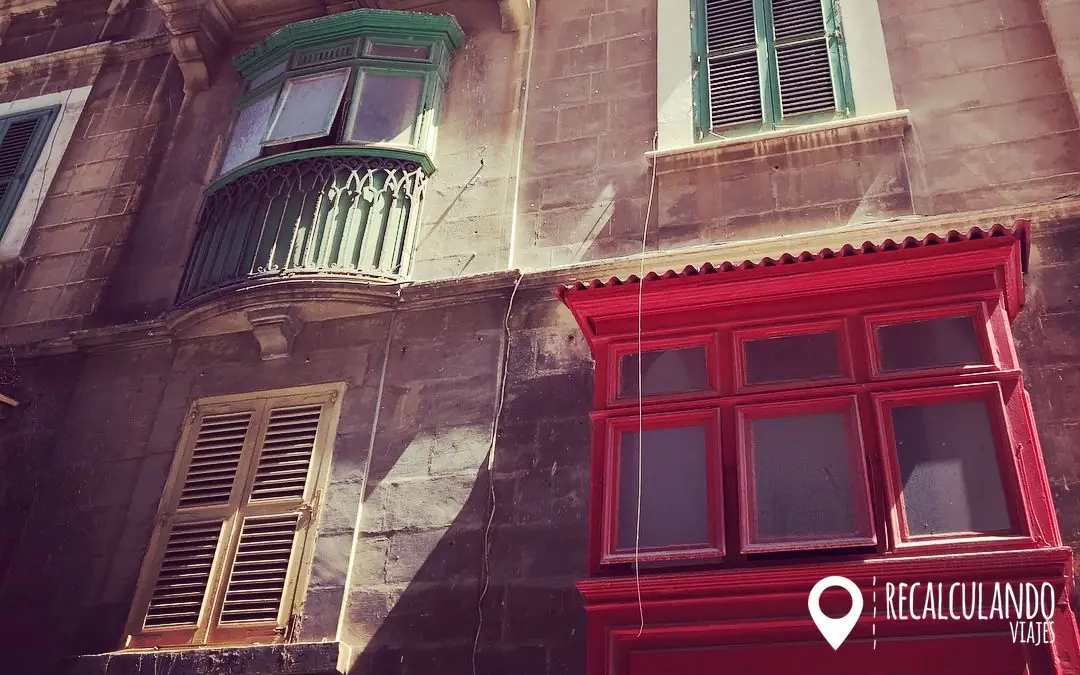
14. Visiting Valletta at the Sunday market
On Sunday mornings, in the area outside the walls near the City Gate, a second-hand and antique market is set up that is very popular with the Maltese. It’s not a particularly large market, but it has its charm: you can find stamps, coins, old books, Maltese ceramics, vintage clothing, and all kinds of curiosities.
It’s not so much about what is sold, but the atmosphere: the Maltese chat, meet up, and have coffee from the stalls. It is a window into the island’s daily life that is worth much more than any conventional tourist attraction.
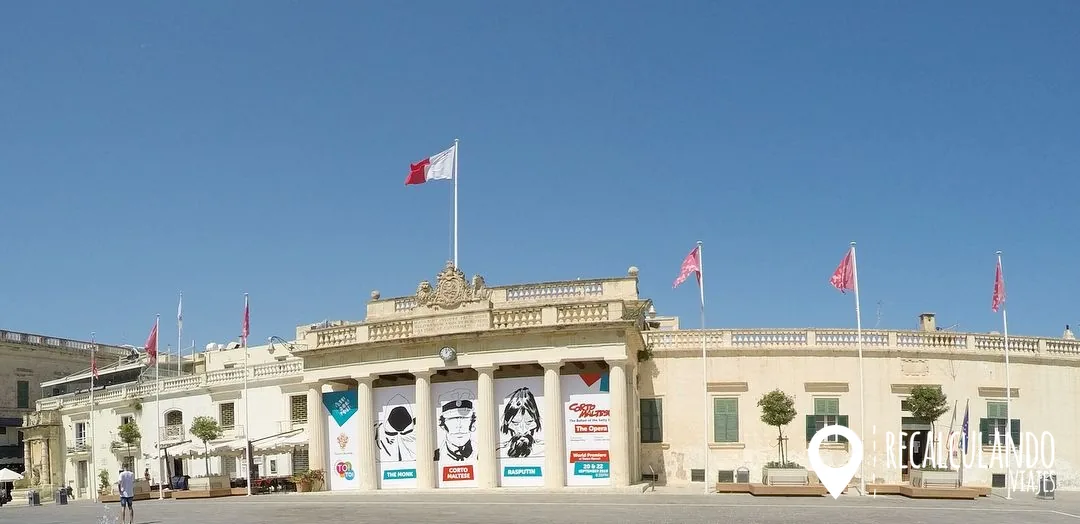
St George's Square (Misraħ San Ġorġ) - Main Guard Building
15. Where to eat in Valletta
Maltese gastronomy has Arab, Sicilian, British, and Provençal influences that make it genuinely unique. In Valletta, there is something for all tastes and budgets. Some concrete recommendations:
- Pastizzi: They are the quintessential Maltese street food. They are small puff pastry doughs filled with ricotta or peas. They are available in bakeries and small shops for about 50 cents each. They are addictive.
- Ftira: The Maltese bread, with a thick crust and open crumb, generally filled with tomato, capers, tuna, and olives. Perfect for lunch.
- Restaurants in Merchants Street or secondary streets: Those that have a set lunch menu are usually more affordable and authentic than those on Republic Street.
- Café Cordina: The most famous and historic café in Valletta, founded in 1837 on Republic Street. The interior is decorated with frescoes and crystal chandeliers. The prices are a little higher than average, but the atmosphere justifies it for a coffee or a dessert.



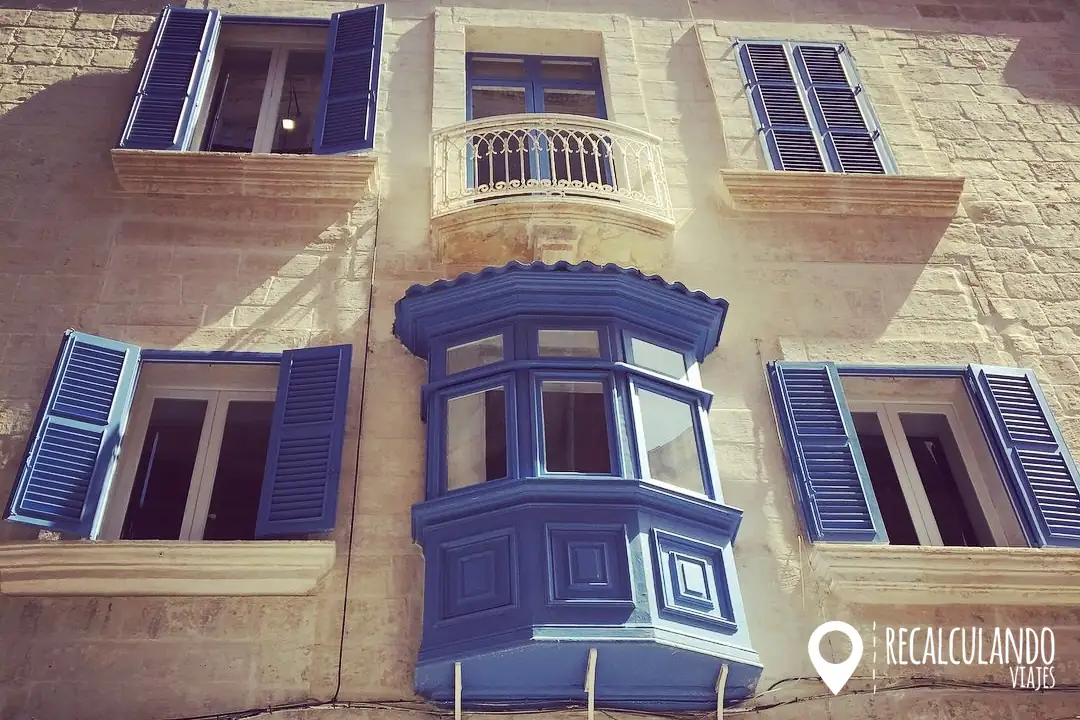
Where to Stay in Valletta? Map & Prices
On the map below, you can zoom in, move around, and filter by your travel dates to see real-time accommodation prices in Valletta.
Practical tips for visiting Valletta
How to get to Valletta
Valletta is connected to the rest of Malta through a network of buses managed by Malta Public Transport. From the airport, the X4 line arrives directly at the Valletta bus terminal in approximately 30-40 minutes. The ticket costs about 2 euros. From Sliema or St. Julian’s, there are direct ferries that cross the port in about 10 minutes and are a very pleasant alternative to the bus.
How much time to dedicate
Valletta is small but there is a lot to it. With a full day, you can see the main attractions, but if you want to delve into the museums and enjoy yourself without rushing, two days are ideal. We visited it multiple times during our stay in Malta and always found something new.
The best time to visit
Spring (March-May) and autumn (September-November) are the best times to visit Malta in general. Summer is very hot and crowded. Winter is mild but can be rainy. We were there at different times and the difference in the number of tourists is notable: in high season, the Co-Cathedral and the Barrakka can be quite saturated.
Travel insurance for Malta
Malta is part of the European Union, so if you are traveling from a European country with a European Health Insurance Card, in theory, you are covered for basic medical emergencies. However, for any unforeseen event beyond medical issues (cancellations, lost luggage, etc.), we recommend taking out travel insurance.
We always travel with IATI Seguros, which has excellent coverage and an exclusive 5% discount for Recalculando Viajes readers. You can also see our comparison of the best travel insurance for Europe if you want to compare options.

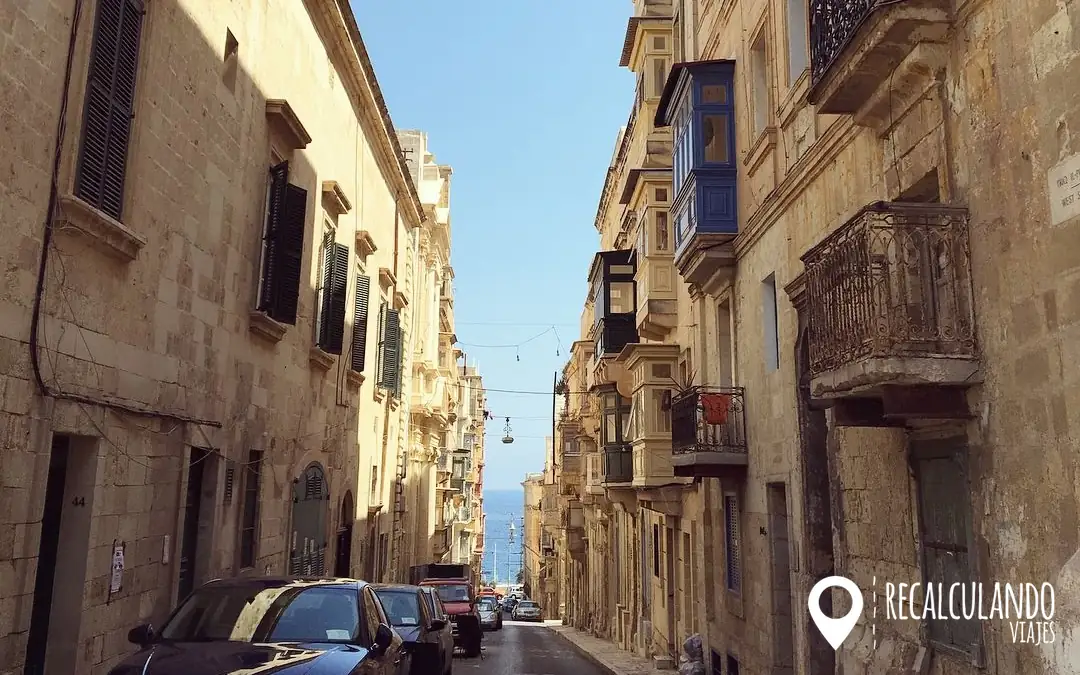
Frequently asked questions about things to do in Valletta
How much time is needed to explore Valletta?
With a full and well-organized day you can see the main attractions. If you want to visit the museums calmly and get lost in the secondary streets, two days is ideal. The city is so compact that everything is just a few minutes’ walk away.
Is it expensive to visit Valletta?
Malta in general is not the most affordable destination in Europe, but Valletta has options for different budgets. The gardens and views are free. Admission to the Co-Cathedral is around 15 euros, the National War Museum about 10 euros. Eating in local set-menu restaurants or buying pastizzi in bakeries, you can eat well and cheaply.
How to get around Valletta?
Valletta is completely pedestrian-only in its historic center and everything is just a few minutes’ walk away. The only thing to keep in mind is that it has many steep hills (the streets descend toward the sea from the central point). There are free public elevators (lifts) that connect some high areas with the lower ones, very useful with luggage or if you have mobility difficulties.
Is the admission to St. John’s Co-Cathedral worth it?
Absolutely yes. It is one of the most impressive churches we saw in all of Europe and the Caravaggio alone justifies the visit. We recommend booking the ticket online to avoid queues, especially between May and October.
Can you visit Valletta in one day from another part of Malta?
Yes, perfectly. Malta is a small island and from anywhere you can reach Valletta in less than an hour by bus. From Sliema or St. Julian’s you can even take the ferry, which is faster and much more picturesque than the bus.
What languages are spoken in Valletta?
Maltese and English are the two official languages of Malta, and practically the entire population speaks English fluently. Italian is also understood quite well. Spanish is understood less, but in the tourism sector, there will be no problem communicating in English.
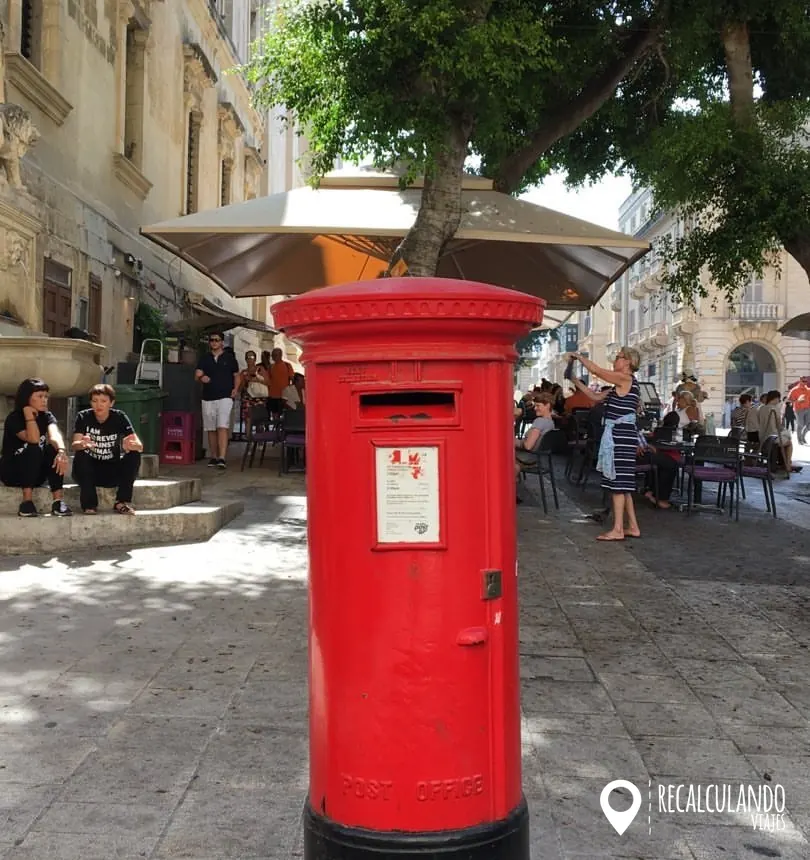
More articles about Malta on the blog
If you are planning your trip to Malta, we have more content on the blog that might be useful to you:
- Things to do in Comino: the small island of the Blue Lagoon
- Ramla Bay, Gozo: one of the best beaches on the island
- Things to do in St. Julian’s: the tourist and gastronomic pole of Malta
Conclusion: Valletta, a capital that will surprise you
After living in Malta for almost two months and touring Valletta several times, we can say with total conviction that it is one of the European capitals that impressed us the most. Not because of its size —which is minimal— but because of the density of what it has: history, architecture, views, gastronomy, and an authenticity that is becoming increasingly hard to find in the Mediterranean.
If you travel to Europe and have the chance to include it in your itinerary, don’t hesitate. Malta in general and Valletta in particular are those destinations that make you want to return. We have it very much in mind…
Articles for your trip to Malta
- Things to do in St. Julian’s Malta: Essential Guide 2026
- Things to do in Comino: 7 unmissable places on the island 2026
- Things to do in Xlendi, Gozo: The Ultimate Guide with 12 Incredible Spots for…
- Things to do in Victoria Gozo: Essential 2026 Guide with 10 Must-Sees
- Things to do in Sliema Malta: 10 unmissable places in 2026 | map & travel…
- What to see in Ramla Bay Gozo: Complete Guide 2026 | Unique Beach
ℹ️ **Full Transparency**
This article contains affiliate links. If you book through these links, we may receive a small commission at no additional cost to you. We only recommend services we use on our trips and trust. This helps us keep this blog free and continue creating useful content for you. Thank you for your support!
🔗 Resources and Useful Links for your trip to Valletta
Do you have questions or want to add your own recommendations on things to do in Valletta or about Malta?
💬 Leave your comment or write to us, we love reading about the experiences of other travelers.
Thank you very much for being part of this adventure!— Nanu & Facu 🌎 | Recalculando Viajes 💜