St. Julian’s is, without a doubt, the vibrant heart of Malta. If you are planning your visit and want to know things to do in St. Julian’s Malta, you’ve come to the right place. We lived in Malta for almost two months, based in the quiet town of Marsaskala, and St. Julian’s was one of our favorite destinations for day trips. We walked it from end to end, arrived along the coast from Sliema, and spent long afternoons exploring every corner.
This guide was born from that real experience: not from a single night of tourism, but from weeks of understanding how the island works. Everything we tell you here, we experienced firsthand.
🌍 Travel Insurance: 5% Off with IATI Seguros! 🌟
Take advantage of this offer and travel safe.
Summary: Things to do in St. Julian’s | Malta
| Point of Interest | Highlight Description |
|---|---|
| Spinola Bay | The heart of St. Julian’s; ideal for enjoying traditional luzzu boats and local gastronomy. |
| Paceville | The epicenter of Malta’s nightlife, with a wide range of clubs, bars, and a youthful atmosphere. |
| Coastal Promenade (Sliema) | A must-do walk that connects Sliema with St. Julian’s along the Mediterranean Sea. |
| St. George’s Bay | The most popular sandy beach in the area, perfect for a quick dip and accessible from the center. |
| Balluta Bay | A quieter and more picturesque spot, highlighting its Art Deco church and relaxed atmosphere. |
| Portomaso | Modern complex with a private marina and casino, ideal for an elegant stroll or exclusive dinner. |
| Best time | May, June, September, and October offer the best balance between pleasant weather and fewer crowds. |
| Transport | Very good urban bus network; though they can get quite crowded. The Tallinja card is the cheapest option for getting around. |
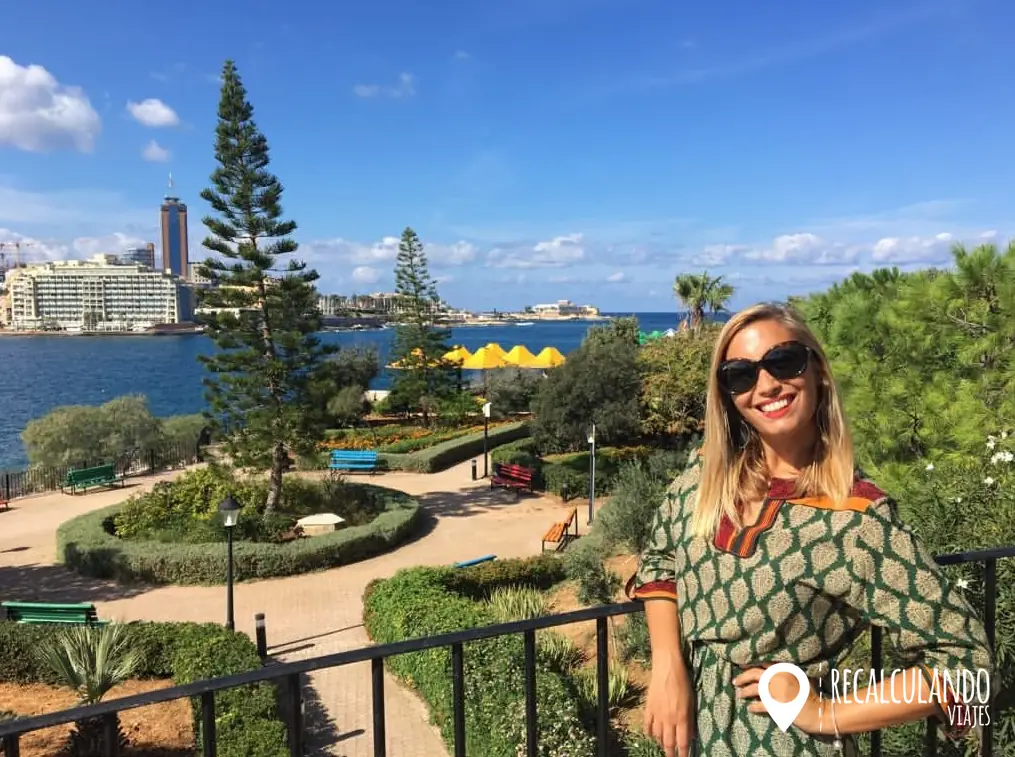
Why Visit St. Julian’s in Malta
Malta is a small island but dense in history, culture, and daily life. Within that compact map, St. Julian’s occupies a special place: it is where international tourism, local Maltese life, language students arriving from all over Europe, and digital nomads looking for a comfortable base with a good connection all coexist.
Unlike Valletta, which is more solemn and heritage-focused, St. Julian’s has a more relaxed and contemporary energy. There are restaurants with sea views, lively bars until late, shops, pharmacies, supermarkets, and everything you need to get around comfortably. It is, in many ways, the most “functional” city in Malta for the traveler.
But what surprised us most was its coastline. The path between Sliema and St. Julian’s is one of the most beautiful walks we did in all of Malta, and it’s not even the only one.
Things to do in St. Julian’s Malta: The Must-sees
Spinola Bay: The Heart of the Town
If we had to choose just one place to start, it would be Spinola Bay. This small bay is the nerve center of St. Julian’s: traditional luzzus (colorful Maltese boats) float on the water, while an arc of restaurants and cafes with outdoor tables unfolds around it.
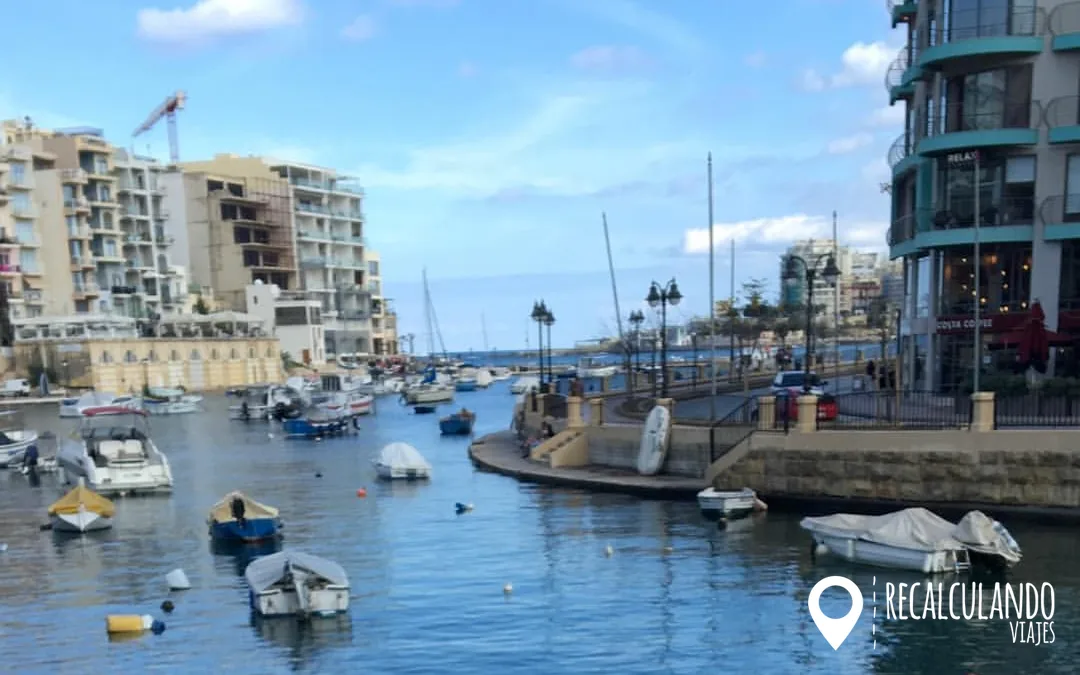
We arrived in the afternoon and sat for a while watching the movement of the place. The bay has that particular magic of small Mediterranean ports: the still water, the reflections, the smell of salt. At night, it transforms completely, with music, people walking around, and lights reflected in the water.
It is also the ideal place to eat. There are options for all tastes and budgets, from Italian pasta to fresh Maltese fish. If you want to try something typical, look for the lampuki (mahi-mahi) when in season, or the ftira, the stuffed Maltese bread that is worth trying at least once.
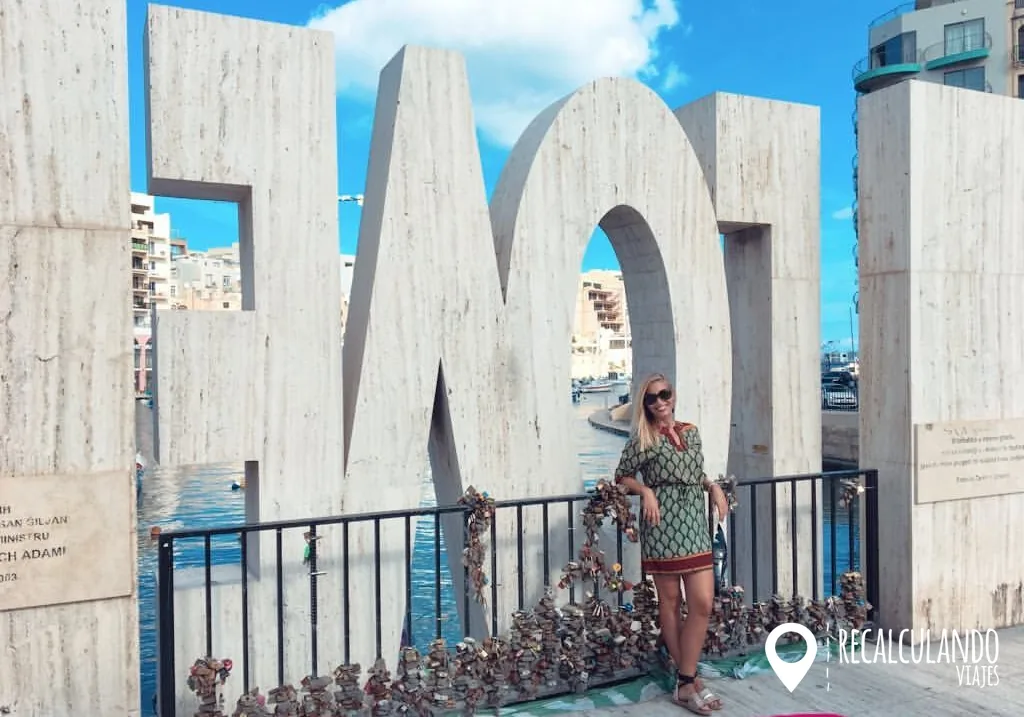
Paceville: The Nightlife Area
Paceville is the neighborhood for nights in Malta. It concentrates the majority of the island’s bars, clubs, and nightlife venues, and has a very particular energy that mixes young tourists, English students, and locals on the weekend.
We aren’t much for going out at night, but by day, Paceville is an interesting neighborhood to walk through. It has narrow streets with murals, fast-food joints, ice cream parlors, and that particular feeling of a neighborhood still asleep while the day goes on.
If you travel in summer and want to experience the Maltese nightlife, this is the place. Just be prepared for crowds and higher prices than the rest of the island.

The Coastal Promenade from Sliema
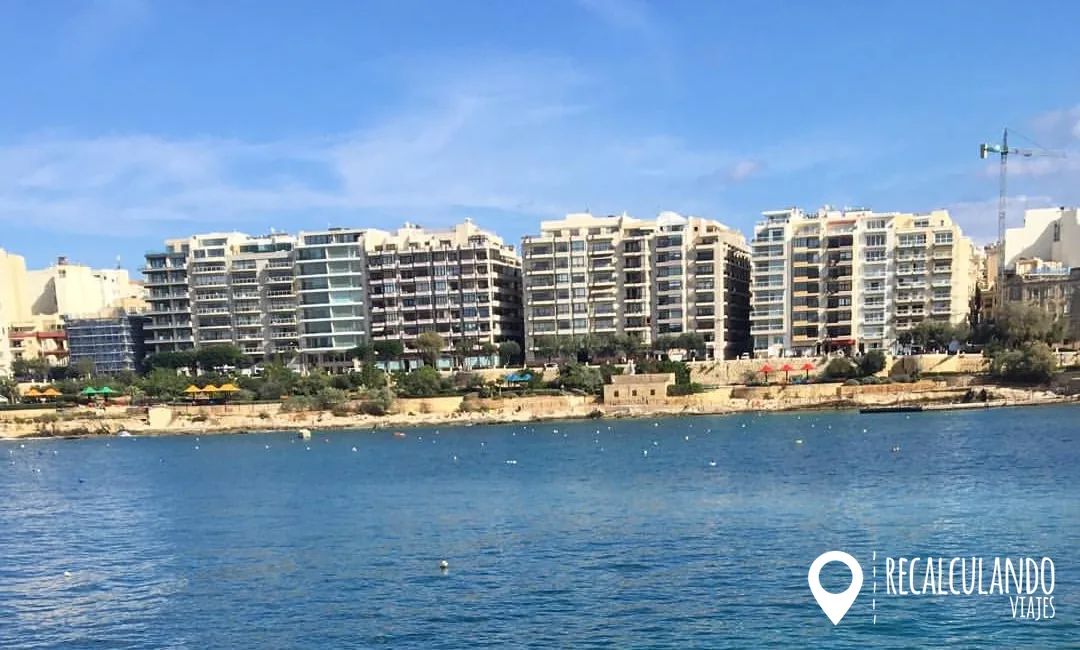
One of the experiences we most recommend is walking the coast from Sliema to St. Julian’s. The Sliema Promenade (known as il-Fliegu) is a paved promenade that borders the sea for several kilometers and then continues, ending in St. Julian’s almost imperceptibly (you go along the entire coast). Google Maps: Paceville Viewpoint.
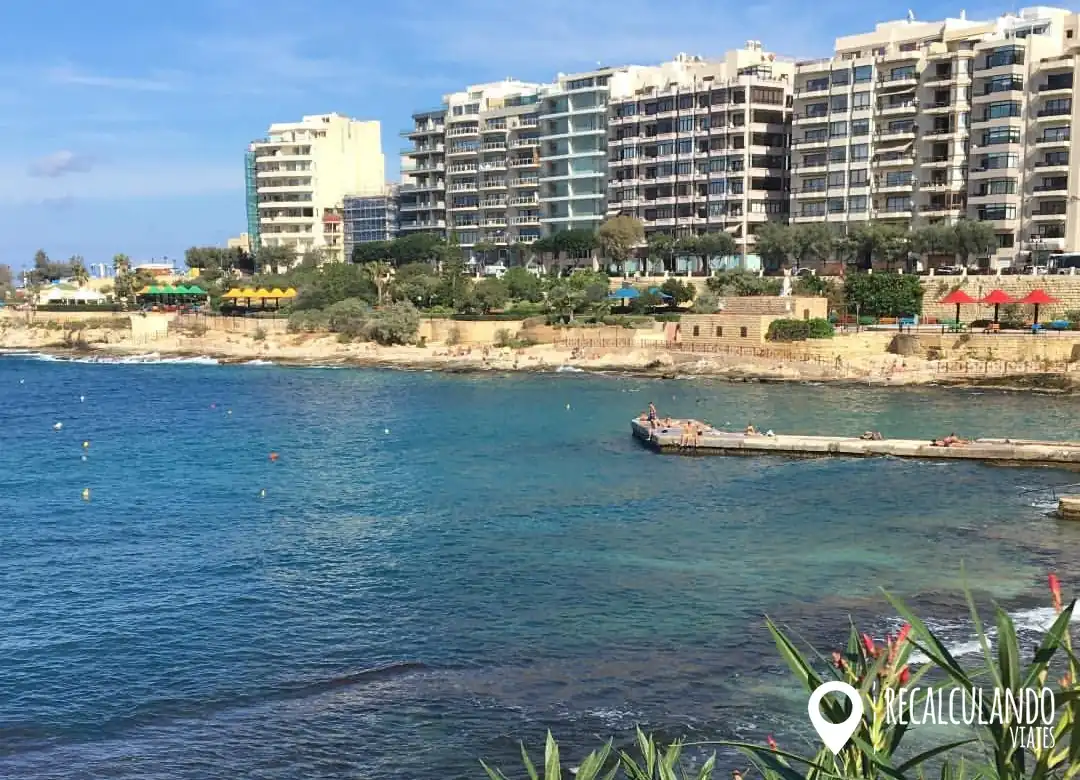
We did that route walking and it was excellent, pleasant by the sea. The Mediterranean Sea on one side, the buildings and hotels on the other, the cool breeze, and a light that in the afternoon becomes golden and perfect for photos. It is a family-friendly walk, well-used by locals exercising, and completely free.
The full walk takes between 30 and 45 minutes at a leisurely pace. Upon arriving in St. Julian’s, Spinola Bay appears almost by surprise, and that moment is worth the entire journey.

Balluta Bay: A Quiet Jewel
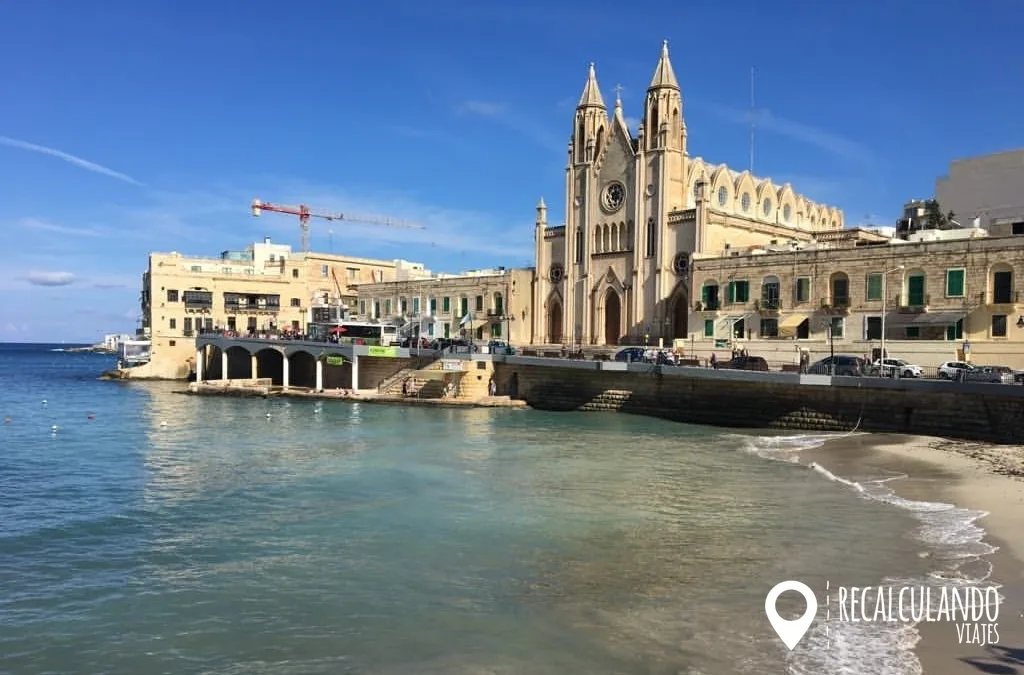
Just north of Spinola Bay is Balluta Bay, a small bay much quieter and less visited than its neighbors. It has a pebble beach, clear waters, and an Art Deco church that dominates the landscape from above: the Balluta Parish Church, dedicated to Our Lady of Balluta, with a facade that doesn’t go unnoticed.
We preferred Balluta to St. George’s Bay precisely because of that contrast: fewer people, more calm, and that Mediterranean corner that seems suspended in another time. If you get up a bit early, you can have the bay almost to yourself.
St. George’s Bay: The Most Popular Beach
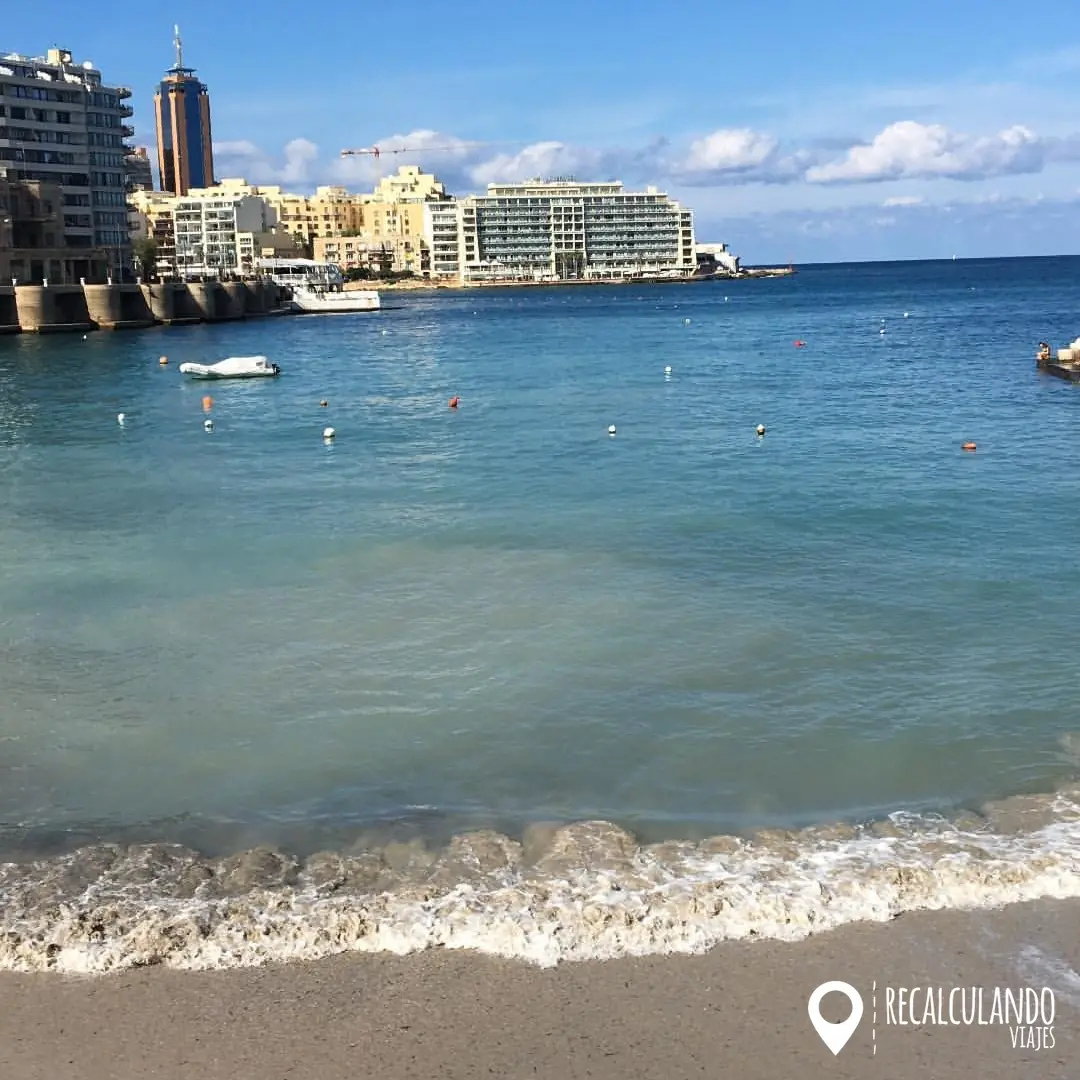
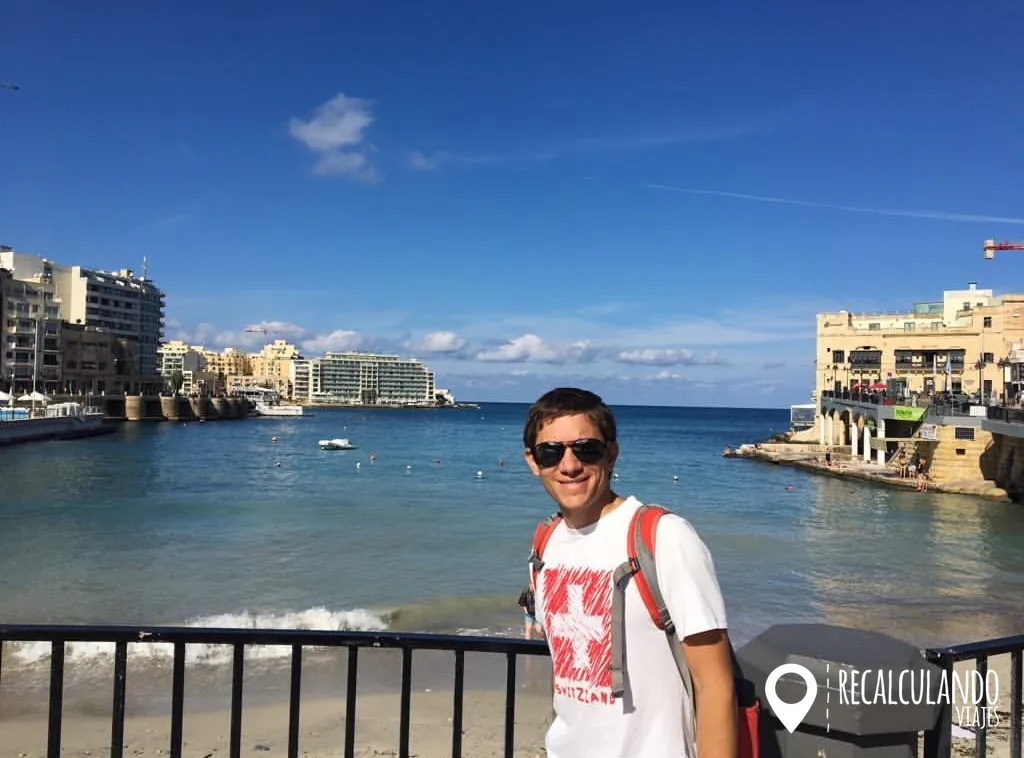
If you are looking for a beach in St. Julian’s, the main reference is St. George’s Bay. It is the most accessible and crowded beach in the area, with sand (a rarity in Malta, which abounds in rocks and coves) and clear water.
Being the most popular beach, in high season it can be quite full. There are paid sun loungers, a couple of beach bars, and direct access from the center. For us, it wasn’t the prettiest beach in Malta (we leave that to Comino or the coves of Gozo), but it is comfortable, practical, and has good views.
If you like beaches: Don’t miss Ramla Bay Beach in Gozo
If you travel off-season, you will enjoy it much more. In the spring or autumn months, the bay is almost empty and the water is still perfect for a dip.



More Things to Do in St. Julian’s Malta
Visit Café Portomaso or the Casino
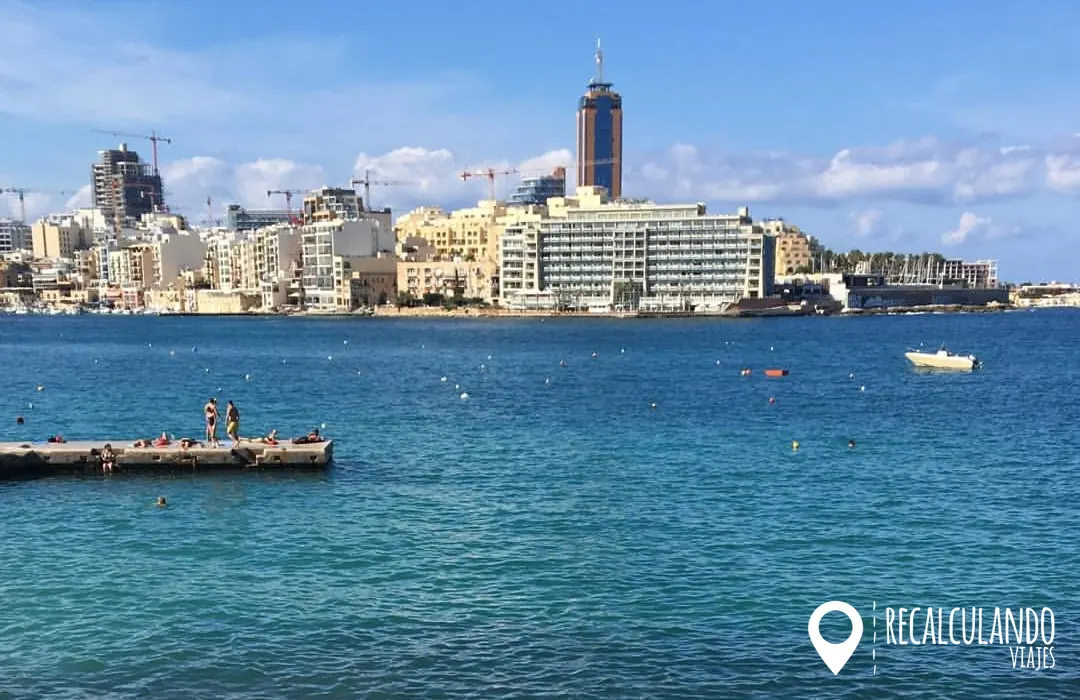
The Portomaso complex is the most modern real estate development in Malta. It has a private marina, several high-end restaurants, and a casino. You don’t have to spend money to go in and take a look: the marina itself is a spectacle, with sailboats and yachts lined up in front of glass buildings that contrast with the traditional Maltese limestone architecture.
The Portomaso Casino welcomes tourists and locals alike. It is quite famous in the area.
Eat at the Waterfront
The gastronomy of St. Julian’s is one of its strong points. Around Spinola Bay and in the adjacent streets, you will find a huge variety: traditional Maltese, Italian, Greek, Lebanese, Asian cuisine. The competition makes prices reasonable and the quality, in general, very good.
If you are traveling on a budget, the supermarkets in the area have a good selection of local products to put together something delicious on your own.
Explore the City Center Streets
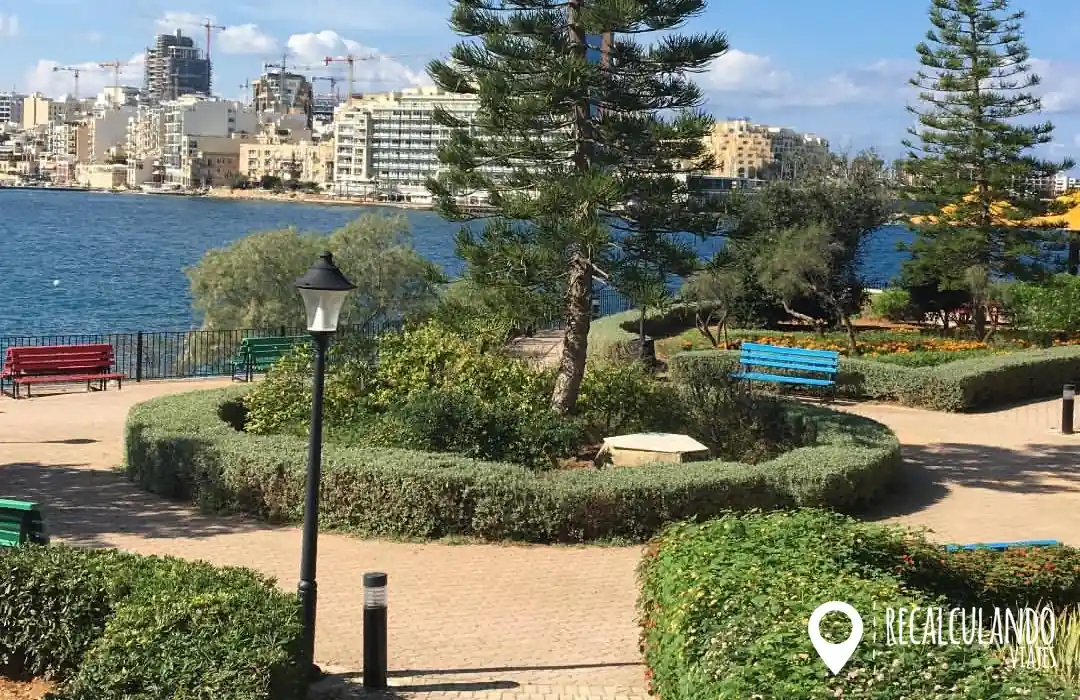
St. Julian’s is not just coast. Its inner streets hide shops, bakeries, small neighborhood bars, and that Maltese daily life that is so easily lost when one only follows the tourist circuits. We really liked simply walking without a fixed destination, letting ourselves be surprised by some limestone portal, a small plaza, or the smell of freshly baked bread.
If you have time, combine the coastal walk with an incursion toward the interior. The contrast between the waterfront and the residential neighborhood is one of the things that make St. Julian’s interesting beyond the obvious.
👩⚕️👨⚕️ A must-have for stress-free travel! 🌎✈️ ➜ Get a Quote, Compare & Buy
How to get to St. Julian’s from Marsaskala (or from anywhere in Malta)
Malta has a quite complete and economical bus network for its size. That said, they can get quite crowded. From Marsaskala, where we stayed for more than a week, the bus trip to St. Julian’s took between 40 and 60 minutes depending on the route. The cost is very accessible: a single ticket is around 1.50 euros, and with the Tallinja card (the system’s rechargeable card), prices drop even further.
From Valletta, St. Julian’s is about 15-20 minutes by bus. From the airport, with a connection in Valletta, allow an hour in total. You can also take a taxi or use ride-sharing apps that work on the island.
If you are arriving from Sliema and want to do the coastal walk we recommend, simply look for the Promenade along the sea and start walking north. You can’t miss it.
Where to Stay in St. Julian’s Malta
St. Julian’s has options for all budgets, from cheap hostels in Paceville to luxury hotels in the Portomaso area. If it’s your first time in Malta and you want to be in the center of the action, staying in St. Julian’s makes a lot of sense: it’s easy to get to Valletta, Sliema, or even the south of the island.
To compare prices and availability, you can check the options on Booking (HERE).
That said, if you prefer a quieter and more authentic experience, we recommend considering Marsaskala or some town in the south. We chose that option and didn’t regret it: we experienced Malta in a much more daily way and without the noise of the tourist area.
Where to stay in St Julian's? - Malta: Map & Prices
When is the Best Time to Visit St. Julian’s
Malta has a Mediterranean climate that makes it visitable almost all year round. The busiest months are July and August, when the heat is intense and the beaches fill up. If you can choose, May, June, September, and October are ideal: pleasant temperatures, guaranteed sun, and many fewer people.
In winter, Malta slows down, some restaurants reduce hours, and the beaches are deserted, but the price drops considerably and the experience is more intimate. We lived part of our stay in winter and it was very good: the island in “real” mode, without the tourist filter.
For Easter, Malta becomes a spectacle of processions and religious traditions that is worth seeing at least once. St. Julian’s participates in some of these events, although the epicenter is usually Valletta and the more traditional towns in the interior.
Practical Tips for Visiting St. Julian’s Malta
- The heat in summer is real: bring sunscreen, water, and lightweight clothing. The sun in Malta hits hard even in spring.
- Buses are the best option: economical, frequent, and they connect the whole island well if you have time. That said, they often get quite full during peak hours. Get the Tallinja card if you plan to stay for several days.
- Walk the Promenade from Sliema: it’s free, beautiful, and one of the best ways to arrive in St. Julian’s with context.
- Book a table at popular restaurants in Spinola Bay: in high season they fill up, especially on weekend nights.
- English works everywhere: Malta was a British colony and English is an official language. You won’t have communication problems.
- Bring cash for small purchases: although most places accept cards, some small businesses still prefer cash.

Travel Insurance for Malta
Malta is a safe destination, but traveling without medical coverage is never a good idea. We always travel with IATI Insurance, which, in addition to covering us well in medical emergencies, has a traveler service that really works. With our exclusive discount link, you get 5% off on any plan.
For a trip to Malta, travel insurance for Europe is the most common option if you are coming from another European country. If you are coming from Argentina or another country outside the continent, double-check the coverage for international flights.

St. Julian’s Malta: Frequently Asked Questions
How much time should I spend in St. Julian’s Malta?
One full day is enough to see the main points: Spinola Bay, Balluta Bay, St. George’s Bay, and the coastal promenade from Sliema. If you want to include Paceville nights or explore more calmly, two days are ideal.
Is St. Julian’s a good place to stay in Malta?
Yes, especially if it’s your first time in Malta or if you want to be close to everything. It is central, well-connected, and has a wide range of dining and entertainment options. If you are looking for more tranquility, consider Sliema or southern towns like Marsaskala.
What is the most typical thing in St. Julian’s Malta?
The walk through Spinola Bay with traditional luzzus, the neighborhood life around Balluta Bay, and the walkable connection with Sliema are the most characteristic. For food, try local fish and Maltese ftira.
Does St. Julian’s have a beach?
Yes. St. George’s Bay is the main one, with sand and clear water. Balluta Bay also has a small pebble beach. For more spectacular beaches, you have to move to other parts of Malta or to Gozo.
Can you go to St. Julian’s from Valletta in a day?
Perfectly. Valletta and St. Julian’s are 15-20 minutes by bus. You can combine the visit to the capital with an afternoon in St. Julian’s without a problem.
What is the difference between St. Julian’s and Sliema?
Sliema is more residential and quiet, with an impeccable promenade and lots of shops. St. Julian’s is more lively, touristy, and has a greater nightlife offer. They are connected by the coastal Promenade and function almost as one extended area.
Do I need to rent a car in Malta to get to St. Julian’s?
No. The bus system works well and connects St. Julian’s with the rest of the island. To visit only St. Julian’s and its surroundings, the bus or even the walk from Sliema are more than enough.
Conclusion: St. Julian’s, a Must on Any Malta Route
Knowing things to do in St. Julian’s Malta is the first step to understanding that this small Mediterranean destination has much more to give than it seems at first glance. It is not just the area of bars and hotels that some guides describe: it has corners with charm, a walkable coast, and an energy that mixes the best of Maltese life with the openness of a cosmopolitan destination.
We grew to like Malta little by little, over weeks. And St. Julian’s, with its bays, its Promenade, has a special charm, and all the sunsets in Malta over the Mediterranean are magical. We hope this guide helps you plan your visit and experience it with your eyes wide open.
If you are still organizing your trip to Malta, you might also be interested in our essential guide to Comino and the Blue Lagoon and our articles on Europe to keep getting inspired. And if you already have the flight, don’t forget to take out your travel insurance before you leave.
Have a great trip!
Articles for your trip to Malta
- Things to do in Comino: 7 unmissable places on the island 2026
- Things to do in Valletta: The ultimate guide with 15 must-sees (2026)
- Things to do in Xlendi, Gozo: The Ultimate Guide with 12 Incredible Spots for…
- Things to do in Victoria Gozo: Essential 2026 Guide with 10 Must-Sees
- Things to do in Sliema Malta: 10 unmissable places in 2026 | map & travel…
- What to see in Ramla Bay Gozo: Complete Guide 2026 | Unique Beach
ℹ️ **Total Transparency**
This article contains affiliate links. If you book through these links, we may receive a small commission at no additional cost to you. We only recommend services we use on our trips and trust. This helps us keep this blog free and continue creating useful content for you. Thank you for your support!
🔗 Resources and Useful Links for your trip to St. Julian's
Do you have questions or want to add your own recommendations on things to do in St. Julian’s?
💬 Leave your comment or write to us, we love reading about other travelers’ experiences.
Thank you very much for being part of this adventure!— Nanu & Facu 🌎 | Recalculando Viajes 💜