If you are looking for things to do in Ohrid, we’ll tell you right away: this jewel on the shores of the oldest lake in Europe stole our hearts. Here are the 15 must-see places, where to stay, how to get there, and a map with everything marked so you can organize your visit without missing a thing.
Ohrid was our star destination in North Macedonia, the 55th country on our round-the-world trip. We stayed 11 nights near the lake at the end of April and toured the whole area by car. And we still struggle to understand why so few people talk about this place. We’ll tell you just as we experienced it.
Known as the “Jerusalem of the Balkans” because it is said to have once had 365 churches and chapels (one for every day of the year), Ohrid has been a UNESCO World Heritage site since 1979. Its natural and cultural value is officially recognized, and once you step foot there, you understand perfectly why. Let’s start with the list.
🌍 Travel Insurance: 5% Off with IATI Seguros! 🌟
Take advantage of this offer and travel safe.
Summary: things to do in Ohrid
| Category | Key details |
|---|---|
| Best time | June to September to enjoy the lake; spring/autumn for more tranquility. |
| Recommended duration | 2 to 3 days (one day for the old town and another for excursions to the south). |
| Must-sees | Church of St. John at Kaneo, Samuil’s Fortress, Ancient Theatre, and St. Naum Monastery. |
| Budget | Budget-friendly: tickets between €1 and €3; meals from €8 to €15. |
| Currency | Macedonian Denar (€1 ≈ 61 MKD). It is recommended to carry cash. |
| Transportation | Rental car is recommended to explore the lake and surroundings with freedom. |
| Location | On the shores of Lake Ohrid, a UNESCO World Heritage site. |
| Safety | Very safe destination; it is recommended to get travel insurance (e.g., IATI) as it is outside the EU. |
15 must-see things to do in Ohrid (with map)
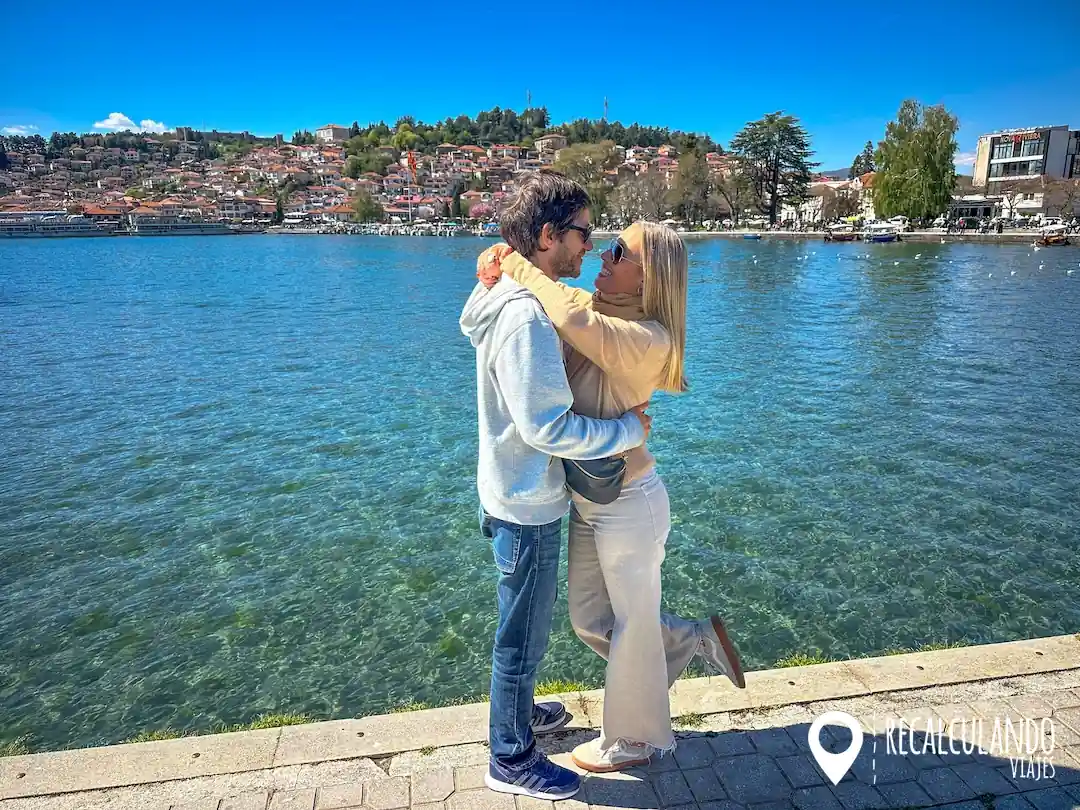
1. Lake Ohrid, the soul of it all
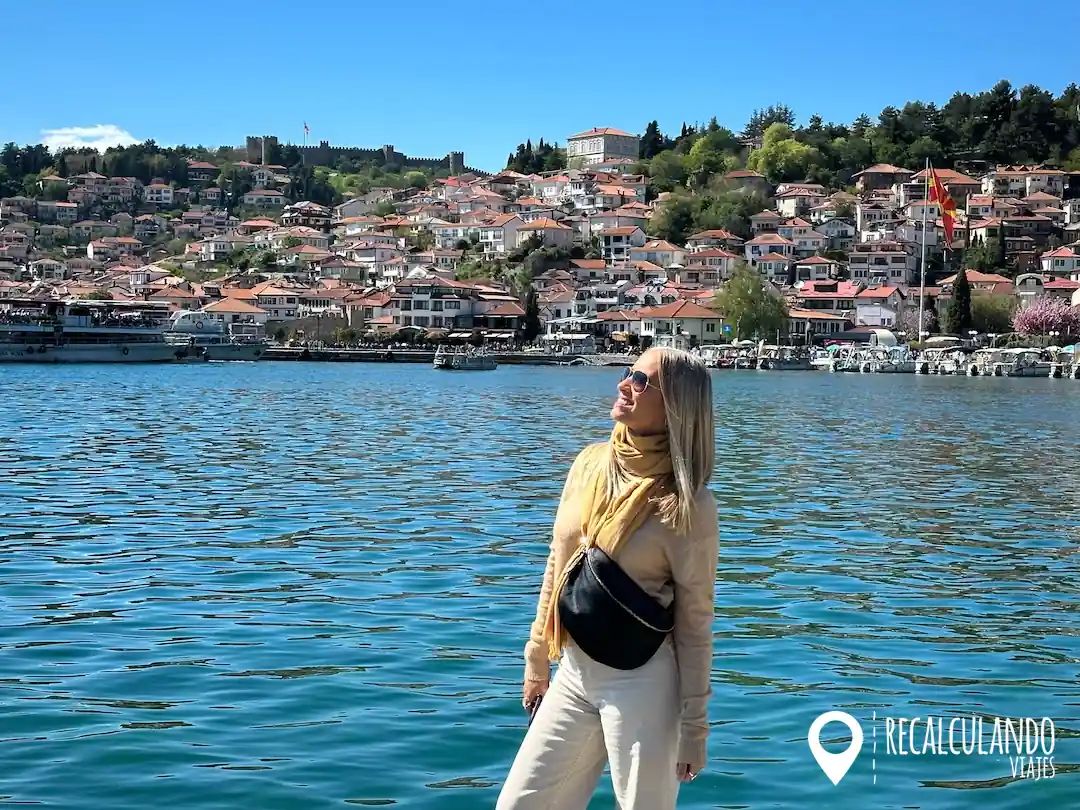
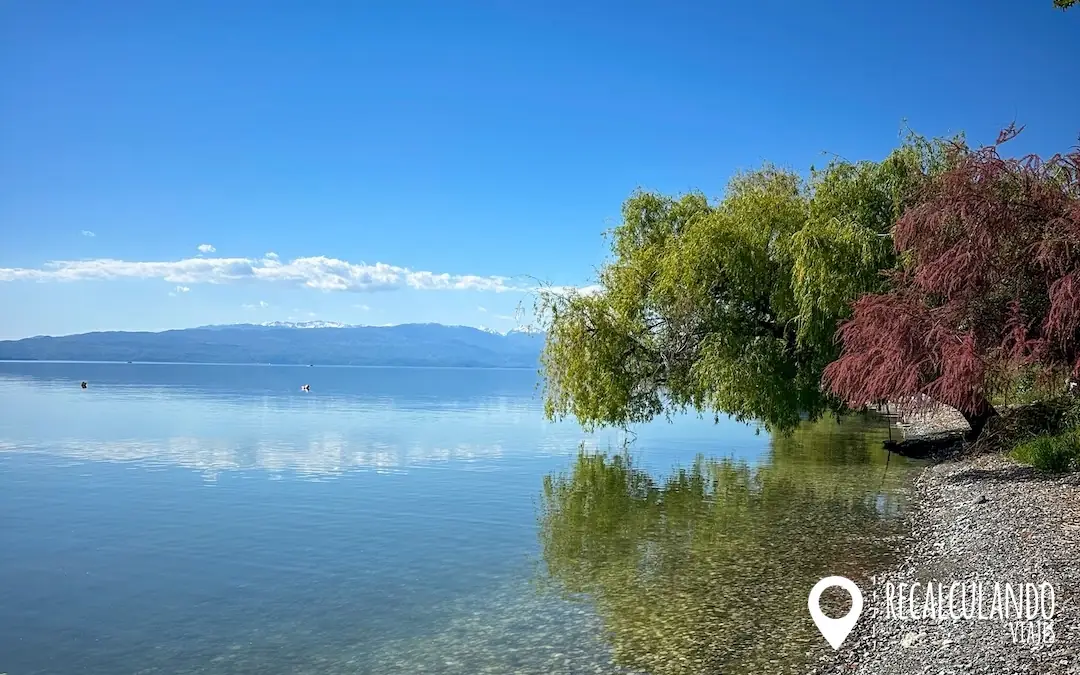
We start with the obvious, because without the lake there is no Ohrid. It is one of the oldest and deepest lakes in Europe: it is about 358 km² and reaches nearly 290 meters deep. It is shared by North Macedonia and Albania, and since the country is landlocked, this lake is the closest thing to a coastline you will find.
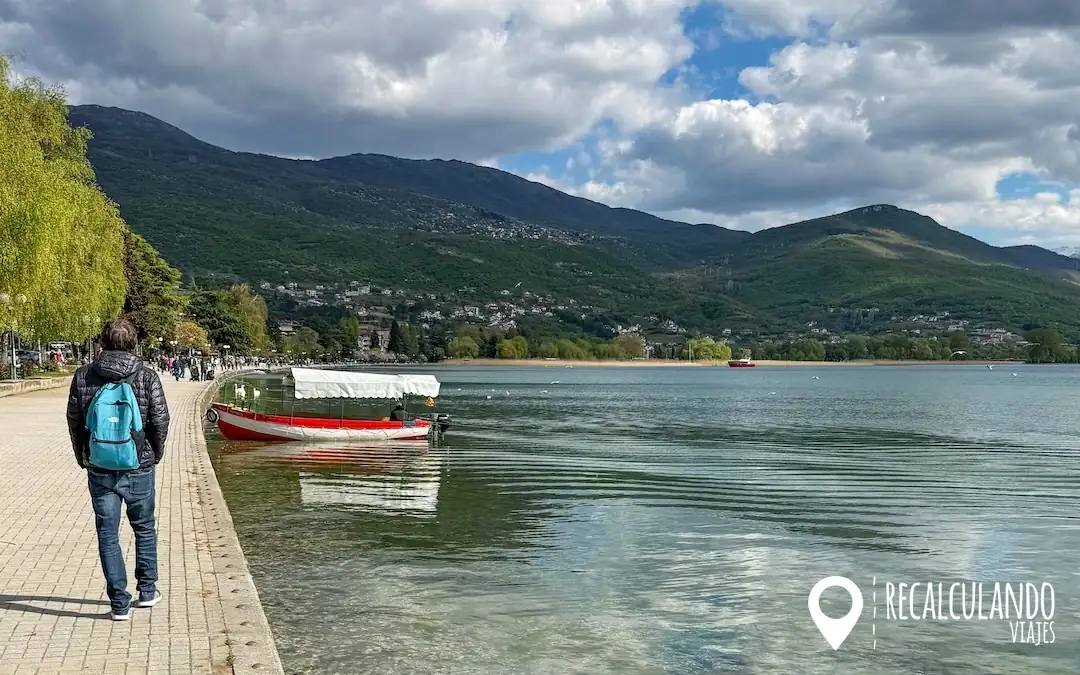
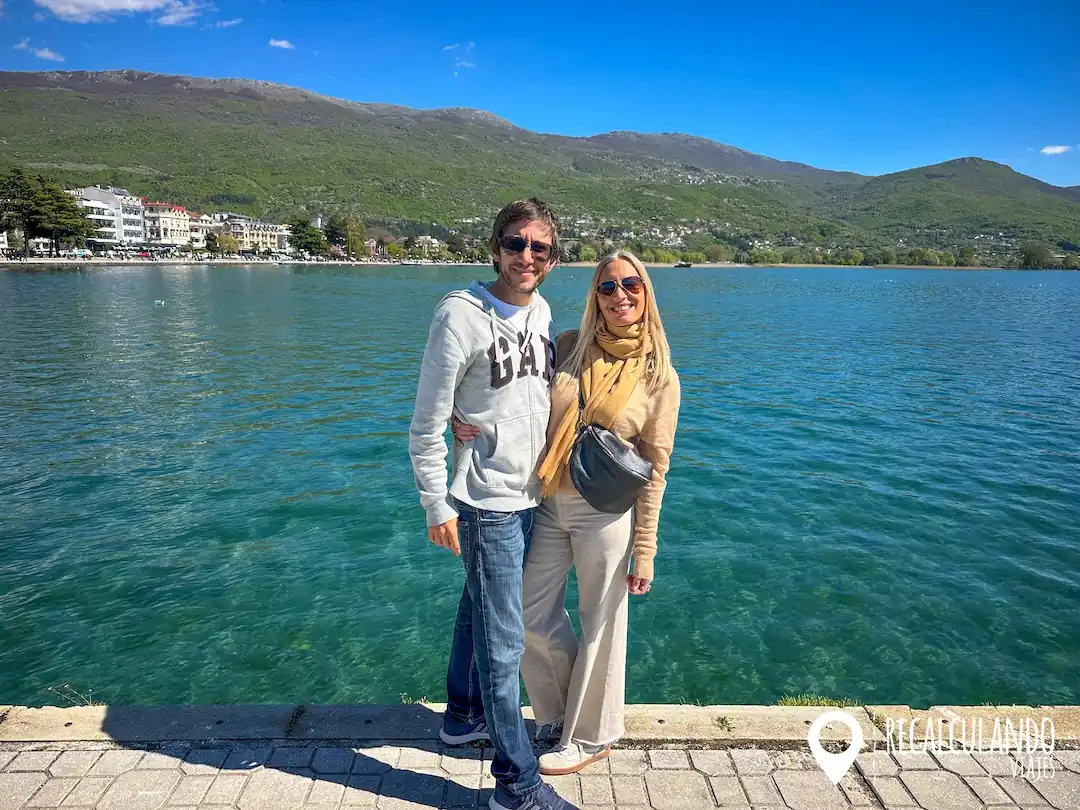
The water is truly transparent, a turquoise that looks photoshopped but isn’t. We walked along the wooden boardwalk that skirts the old town almost every afternoon, and we never got tired of it. There are areas with lounge chairs, cafes over the water, and restaurants where you can try Ohrid trout. The beaches are pebbly, not sandy, so bring water shoes if you plan on swimming.
Things to keep in mind: we went at the end of April and many beach clubs were still closed because it was chilly. If you are coming for the beaches, summer (June to September) is your time, although that is also when it gets most crowded.
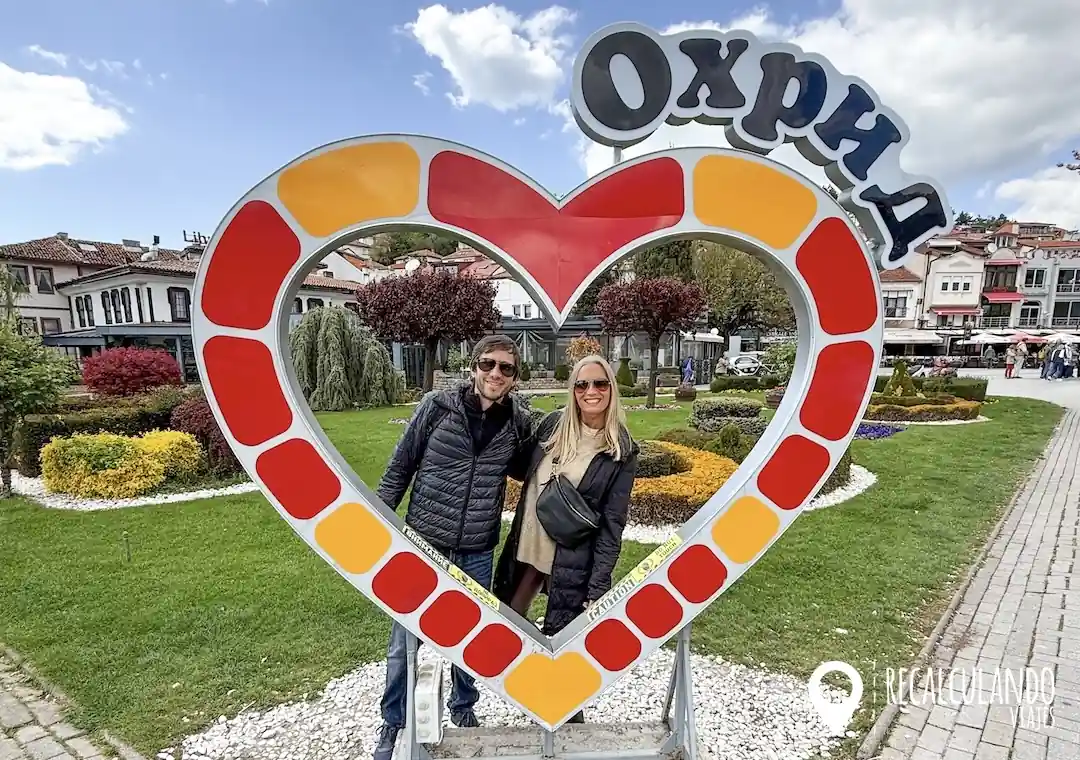
2. The old town and the Old Bazaar
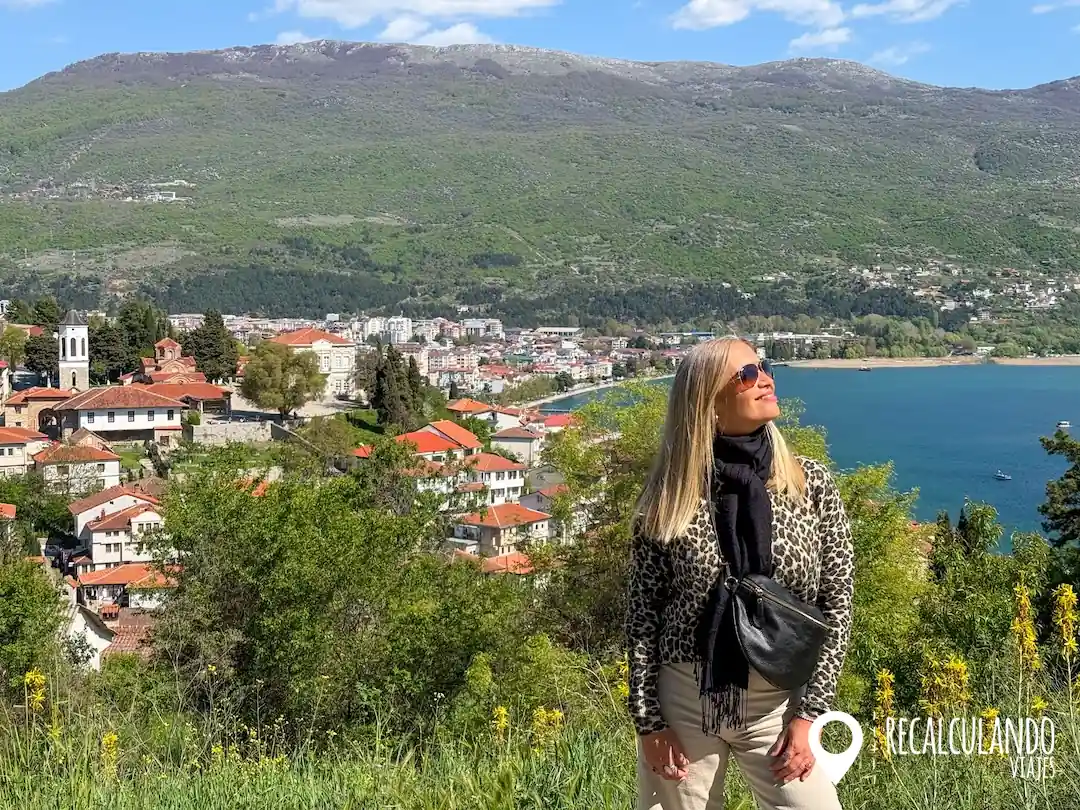
Ohrid’s old town is meant to be explored without a watch. Cobblestone streets that climb up and down, traditional houses with orange roofs, cats everywhere, and lake views that appear suddenly at every corner. One of the things to do in Ohrid that we enjoyed most was simply walking without a destination.
The commercial heart is the Old Bazaar (Чаршија), a pedestrian street that connects the central square with the Ali Pasha Mosque. It is not the typical street-market bazaar, but rather an avenue with family-run shops: jewelry stores with the famous Ohrid pearls, handicrafts, wool, and souvenirs. In the afternoon, when the heat subsides, it fills with people strolling and eating ice cream.
In our case, the best time was at sunset: the lights come on, the pace is calm, and you can breathe that big-town feeling that we liked so much.
3. The Church of St. Sophia
Walking down towards the lake, you come across St. Sophia, one of the most important churches in all of North Macedonia due to its architecture and medieval frescoes. It was a cathedral, then used as a mosque during the Ottoman occupation, and later returned to being a church. That mix of historical layers is noticeable as soon as you enter.
The interior frescoes are a marvel, though they are protected and the light is dim to preserve them. It is so important that it is depicted on the 1000 Denar banknote, so check it out when you have one in your hand. The entrance fee is around 100 Denars (less than €2), and if you like Byzantine art, it is well worth it.
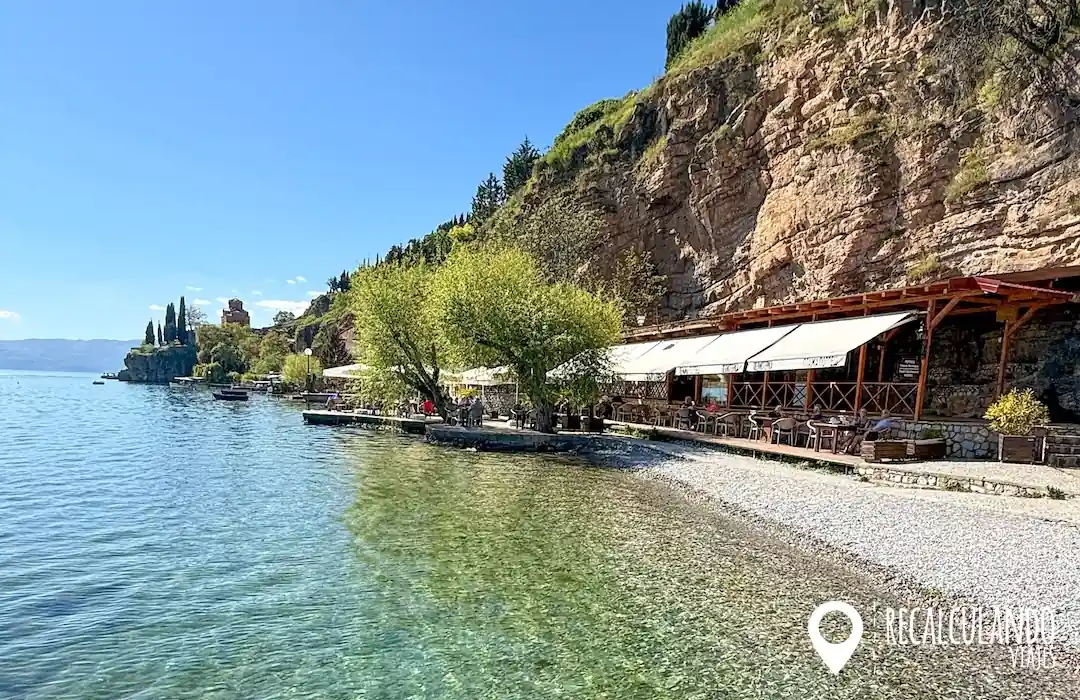
4. The Church of St. John at Kaneo, the postcard of Ohrid
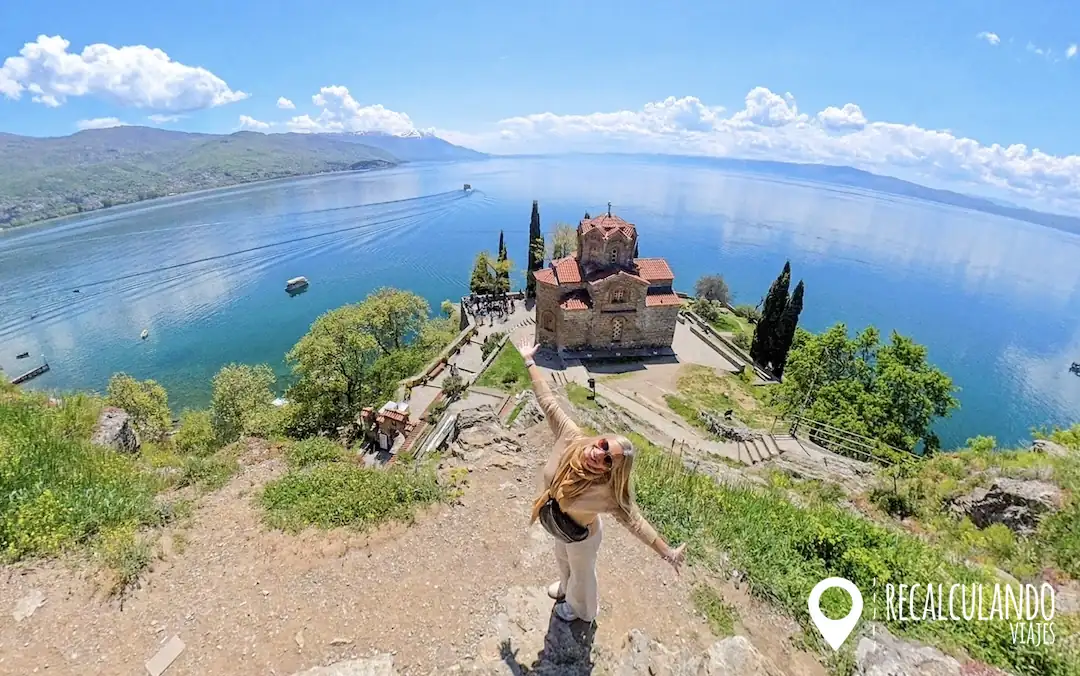
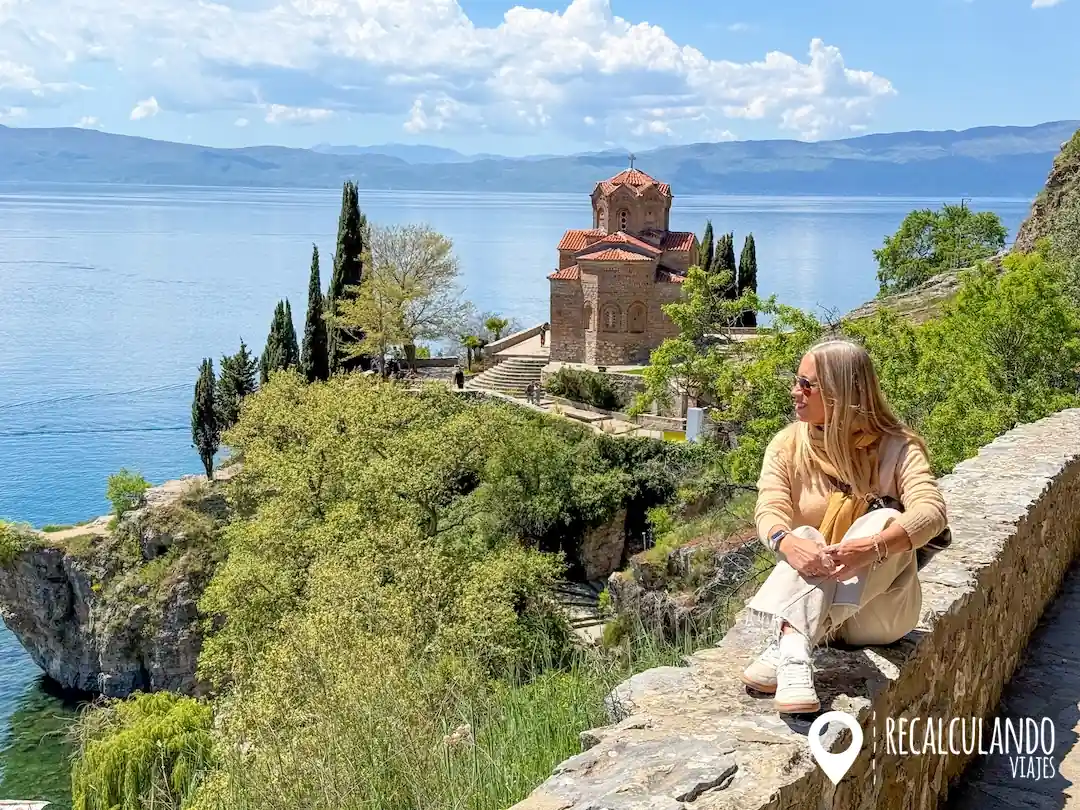
If there is one image that summarizes things to do in Ohrid, this is it. The Church of St. John at Kaneo is perched on a cliff, with the lake in the background, and it is the favorite photo for all travelers. And for good reason: it is one of those places that leave you speechless.
It is a small 13th-century Orthodox church dedicated to St. John the Theologian. Inside, it is small and dark, with heavily deteriorated frescoes, but the magic is outside. You get there by walking along the wooden boardwalk from St. Sophia, crossing a small pebble beach, or descending from the fortress. Entry inside costs about 150 Denars (€3), but seeing it from the outside and enjoying the views is free.
We returned several times, but the sunset was something else. The sun falling over the lake, the church framed against the cliff… we cannot describe it well, you have to experience it. Unmissable.
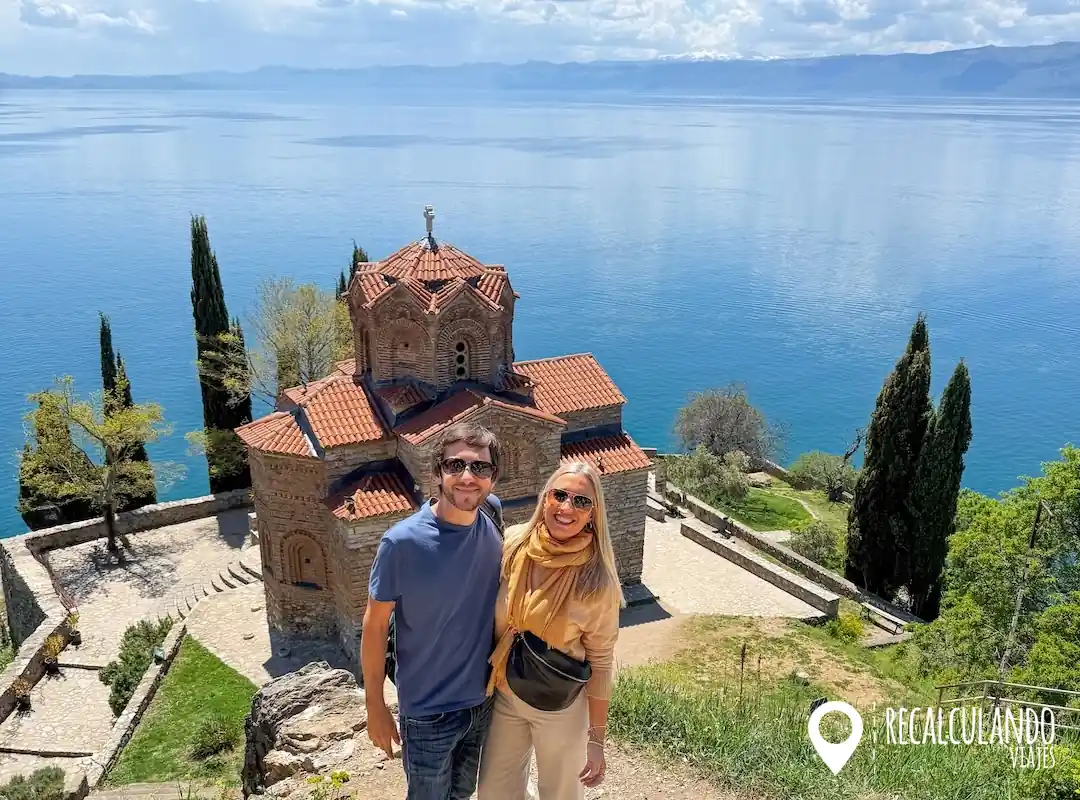
TIP: the best photo is not taken from the church, but from the viewpoint right above it. If you climb the path that scales the cliff, you reach a point from which you can see the entire church, with the lake opening up behind and the rooftops of Ohrid to one side. It is the Kaneo viewpoint, the one from the postcards, and we returned in the mid-afternoon to catch the best light. Bring a charged camera, because you won’t stop taking pictures.
5. The Ancient Theatre of Ohrid
In the middle of the climb to the upper part, the Ancient Theatre appears, one of the few Hellenistic theaters preserved in the Balkans. It was built around 200 B.C., and during the Roman era, it was even used for gladiatorial combat. Today, it still functions as a venue for concerts and festivals in the summer.
The best part: entry is free and the views from the stands towards the rooftops and the lake are beautiful. We sat for a while to rest while imagining what that same place must have been like more than two thousand years ago. One of the stops that surprised us most on the tour. Although it has a lot of history, it wasn’t something that blew our minds; you come across it as you walk, and the place could use a bit of maintenance.
6. Plaošnik and the Church of St. Clement / Monastery of St. Panteleimon
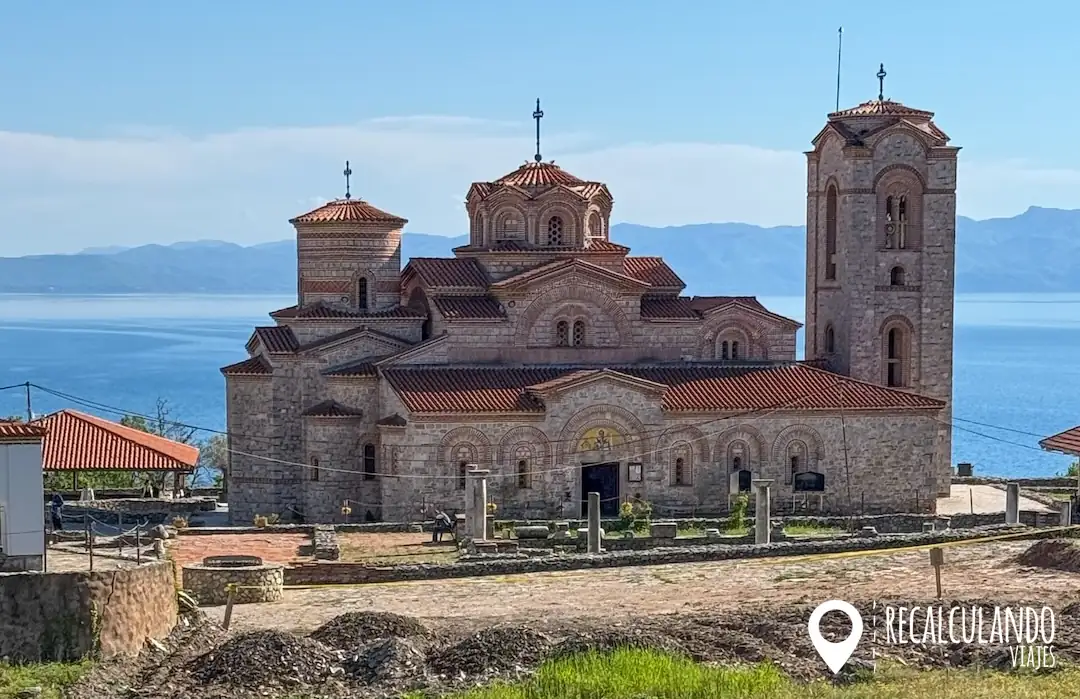
We continue climbing up to Plaošnik, one of the most sacred places in the country and, for us, one of the must-sees in Ohrid. Here is the Church of St. Clement and St. Panteleimon, rebuilt on the foundations of a 9th-century monastery.
St. Clement was key in spreading the Cyrillic alphabet, and his remains rest inside the church. Next to it is the Plaošnik archaeological site, where you can still see beautiful mosaics of the ancient basilica. The complex, with the greenery around it and the lake below, is one of the things to do in Ohrid that combines history and landscape in equal measure.
7. Samuil’s Fortress
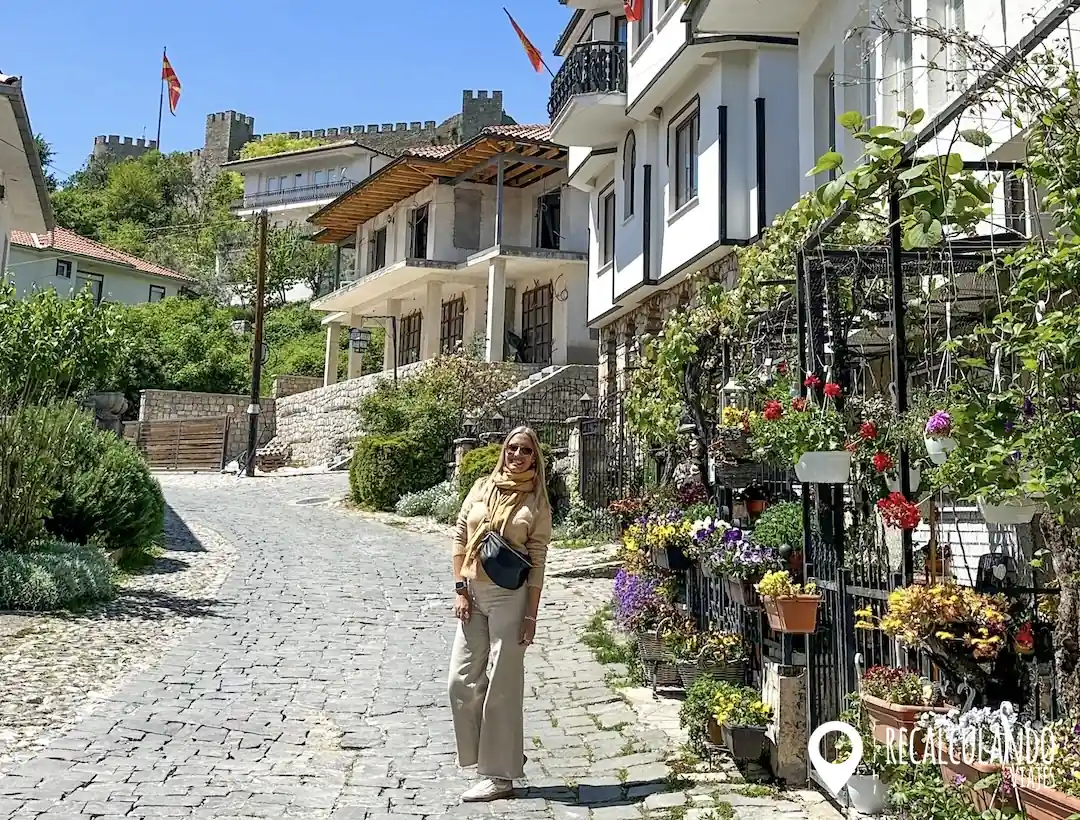
Crowning the hill is Samuil’s Fortress, the castle that gives the city its identity. In the 10th century, Ohrid was the capital of the First Bulgarian Empire under Tsar Samuel, and although much of the original fortress was lost, what was restored in 2003 remains impressive.
We climbed to the top more for the views than for the walls themselves, and we didn’t regret it: from the heights, you can see the entire old town, the orange rooftops, and the immense lake opening towards Albania. The entrance fee is around 60 Denars (€1). Bring water and comfortable shoes, because the climb is tiring, but the panorama is well worth it.
8. The Church of St. Mary Peribleptos
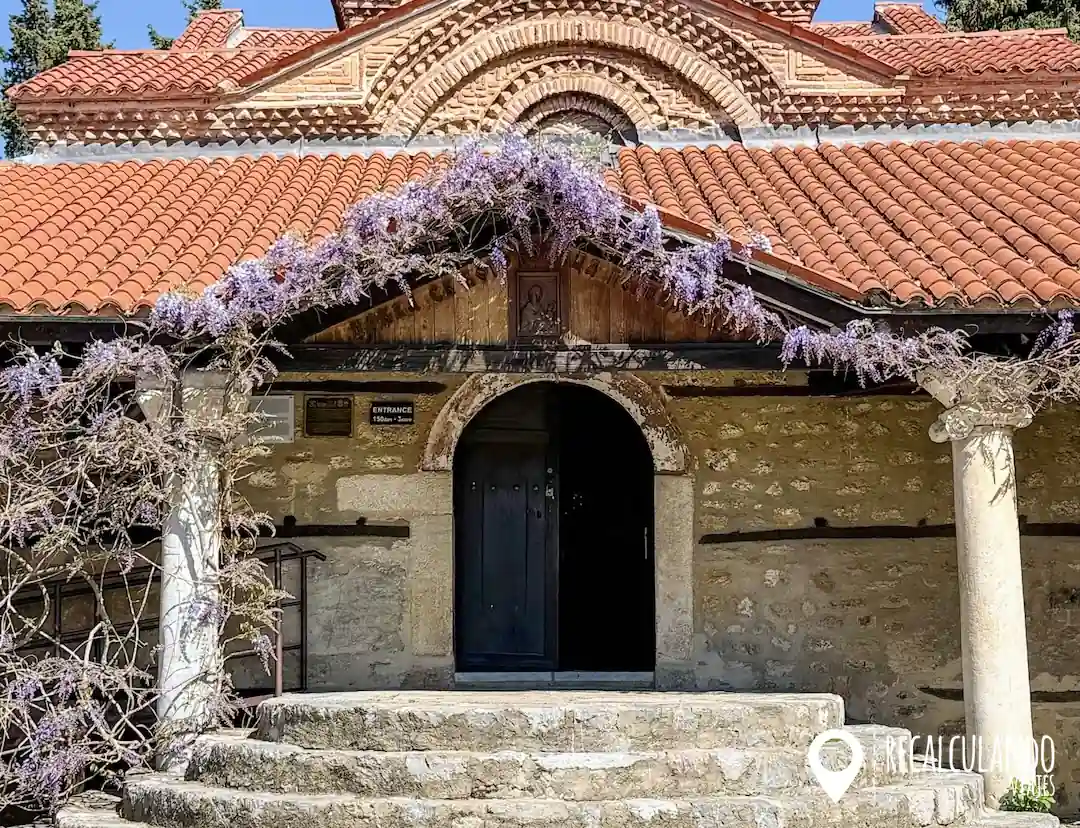
Less known than Kaneo, but equally valuable, the Church of the Mother of God Peribleptos (Sveta Bogorodica Perivlepta) is one of the oldest in the city. It was built at the end of the 13th century and its name means something like “view from everywhere,” because it is located on top of one of the hills that dominate Ohrid.
📍Google Maps: Church of the Virgin Mary Peribleptos
What makes it special are its frescoes, considered among the best of the Byzantine art of that period. If you like Orthodox churches, don’t miss it; if you are short on time, at least peek at it from the outside. Entry costs about 100 Denars.
9. The Upper Gate (Gorna Porta) and the walls
The Gorna Porta, or Upper Gate, is the monumental entrance that preserves the ancient wall of Ohrid. Crossing it is like entering another era: on one side, the modern city; on the other, the medieval labyrinth of narrow streets, churches, and houses with wooden balconies.
It is an almost mandatory transit point for climbing towards Plaošnik and the fortress, so you will surely cross it several times without realizing it. We grew fond of it: every time we passed through it, we felt that the good stuff was starting. Keep this in mind to orient yourself in the historic center.
10. The Icon Gallery
Right next to St. Sophia is the Ohrid Icon Gallery, which holds one of the most important collections of Byzantine icons in the world: about 800 pieces dating from the 11th to the 14th century. Many travelers recommend it as an essential visit to understand the religious and artistic weight of the city.
We are not really into museums unless they are a must-see, but if you are interested in sacred art, this gallery is one of the best you will find in the Balkans. Entry is around 100 Denars and it is very well maintained.
👩⚕️👨⚕️ A must-have for stress-free travel! 🌎✈️ ➜ Get a Quote, Compare & Buy
11. The Robev House (National Museum)
Among all the traditional houses of Ohrid, the Robev House is the most famous. It is a beautiful example of the typical architecture of the area, with those upper floors that overhang the street and the carved wooden windows. Today it functions as a National Museum.
Many travelers recommend going inside to see what an affluent Ohrid home was like and the art collection it holds. For us, what we liked most was the façade and the neighborhood that surrounds it, perfect for taking photos. If it takes you off the typical church route, even better.
12. The millennium-old tree (Chinar)
In the main square of Ohrid, there is an unexpected protagonist: a huge plane tree known as the Chinar, which locals say is hundreds of years old. It is so big that for a time it functioned as a cafe and even a kiosk inside the hollow trunk. Incredible!
It seemed like one of those details that don’t appear in any official guide and yet, it brings a smile to your face. Stop to have a drink at one of the surrounding terraces and watch the comings and goings of the people. Pure local life.
When we went at the end of April 2026, they were renovating the pedestrian floor, and the entire area around the tree was under construction.
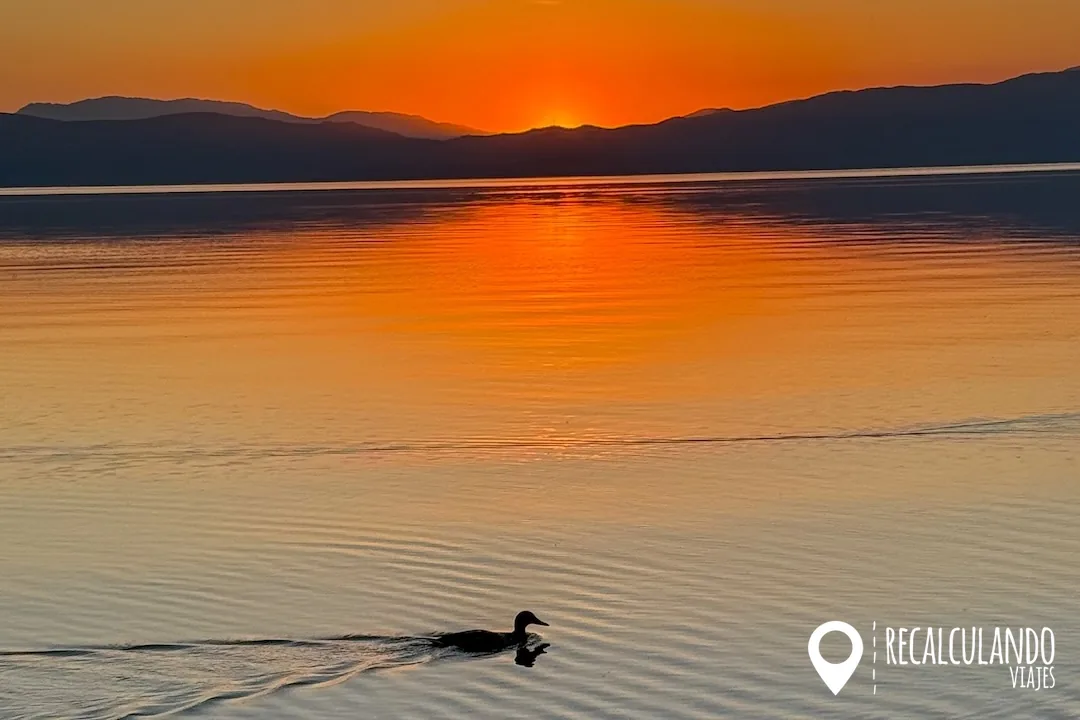
13. A boat trip on Lake Ohrid
One of the things to do in Ohrid that we enjoyed most was getting on a boat. Seeing the city from the water, with the fortress above and the church of Kaneo peeking out, is a totally different perspective. At the port, a few meters from the square, there are several boatmen who offer short trips of 30 minutes to an hour.
Things to keep in mind: prices are negotiable. We were asked for €25 and ended up paying significantly less, so don’t be afraid to haggle, especially in the off-season. There are also longer excursions that reach the Monastery of St. Naum across the lake, a great option if you have the whole day.
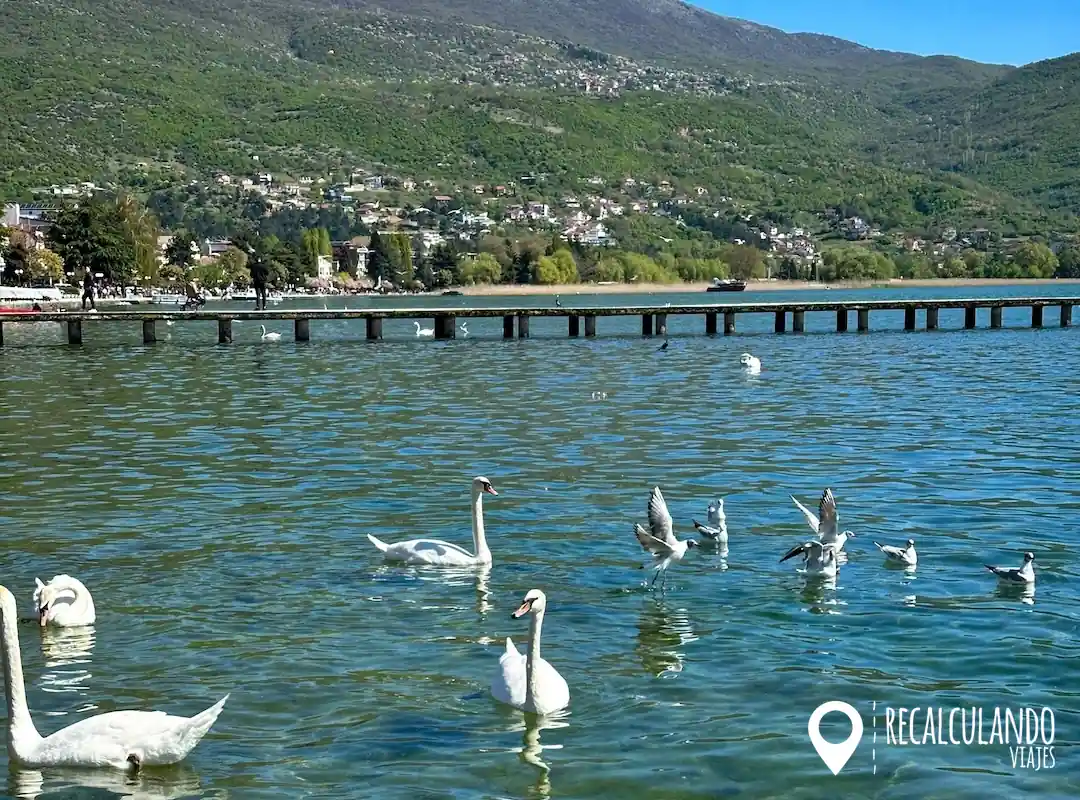
14. The Bay of Bones, a museum on the water
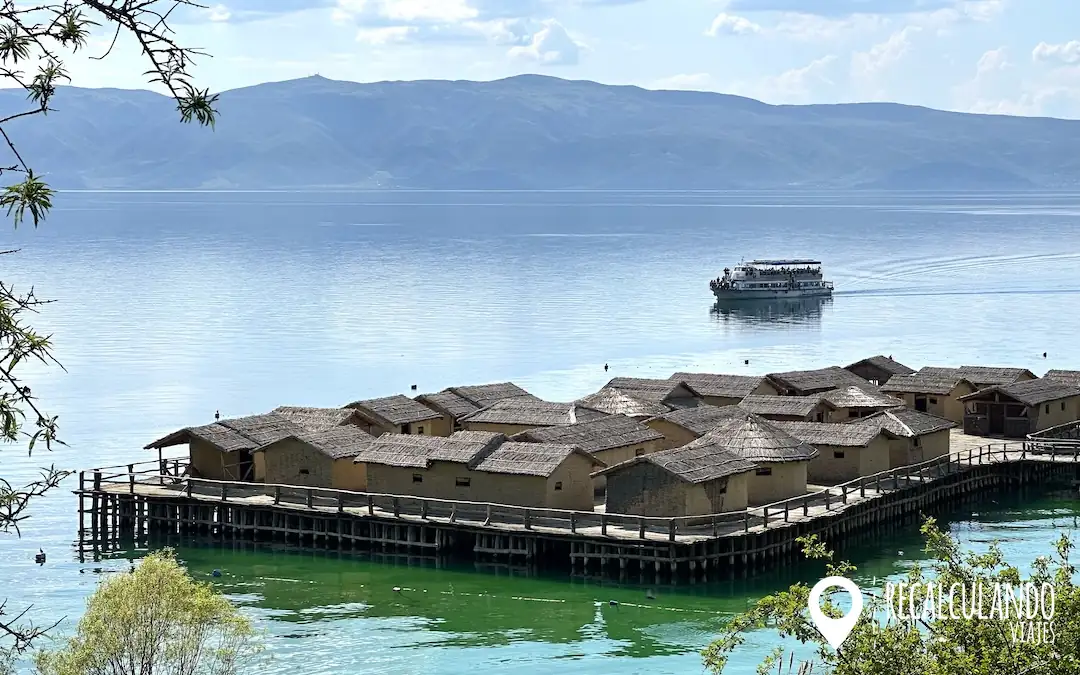
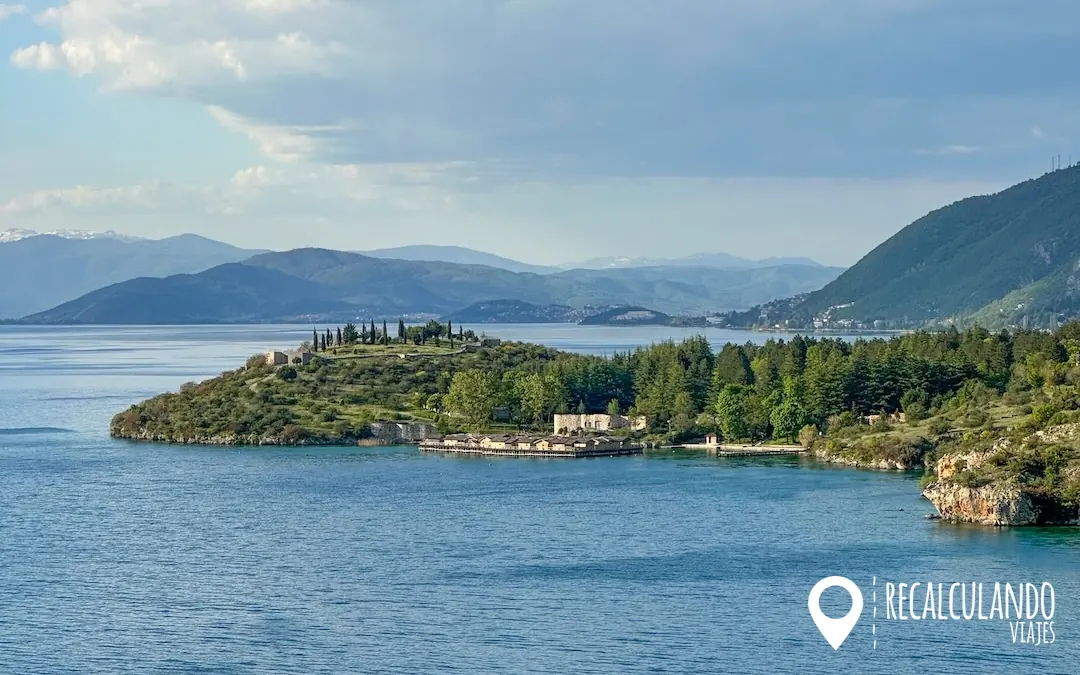
About 16 km south of the city, on the road to St. Naum, is one of the most original things to do in Ohrid: the Bay of Bones. It is a reconstruction of a prehistoric settlement of pile dwellings, built on a wooden platform over the lake.
It recreates about 24 houses just as the populations that inhabited the area between 1200 and 600 B.C. lived. On the hill next to it, they also rebuilt a Roman fortification (Gradist). The entrance fee is about 150 Denars (less than €3).
When we went at the end of April 2026, the entrance was closed; it could be seen from afar from the viewpoint.
15. The Monastery of St. Naum (Sveti Naum)
And we save for the end one of the essential excursions: the Monastery of St. Naum, about 30 km south, almost next to the border with Albania. They say no trip to Macedonia is complete without coming here, and they are absolutely right. It is a large place, you park at the entrance. There is a nice path with greenery, lake, some small markets, and at the end of the route, going up a bit, is the monastery.
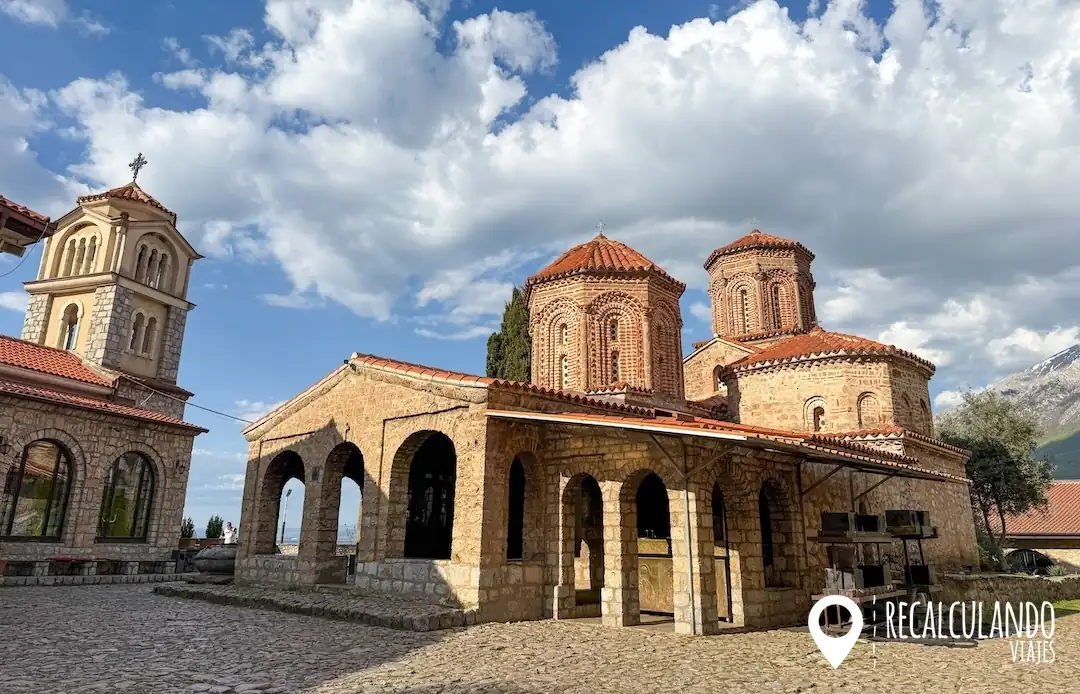
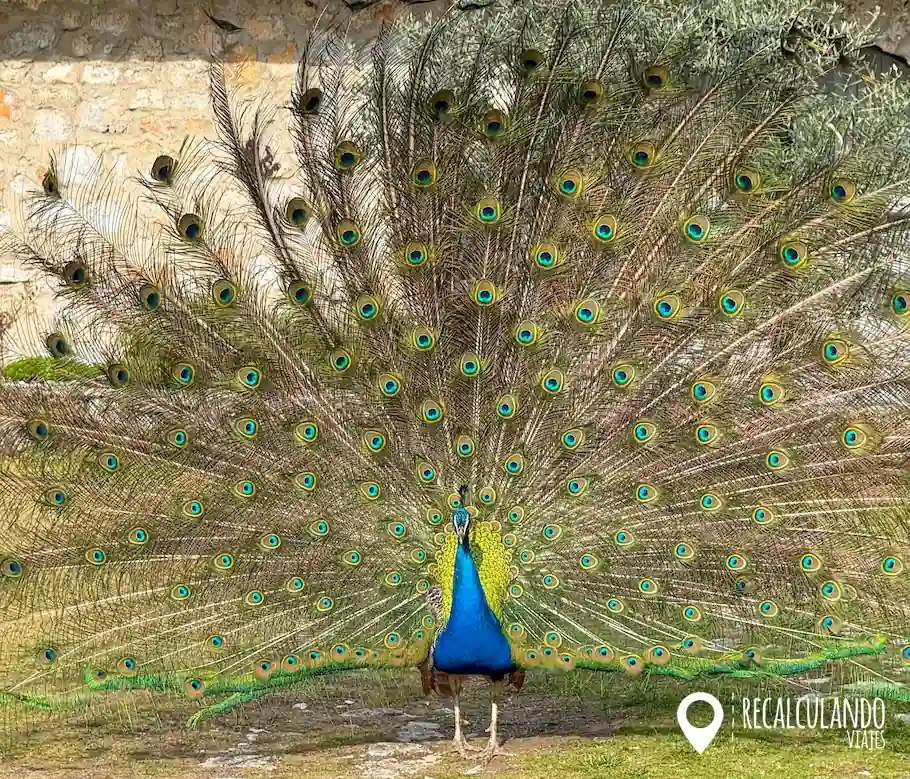
The Monastery of St. Naum rises on a rocky outcrop over the lake, founded in the 10th century by St. Naum himself, who is buried inside. But the complex is much more than the church: there are beautiful gardens, crystal-clear springs of the Crn Drim River, a small beach, and, what made us laugh the most, peacocks wandering around as if nothing happened! Parking costs just 50 Denars and has no time limit. Also, halfway there, there are small boats that take you to the spring: the water is so clear that you can see the fish at the bottom (Boat Tour St. Naum’s Springs). One of the things to do in Ohrid.
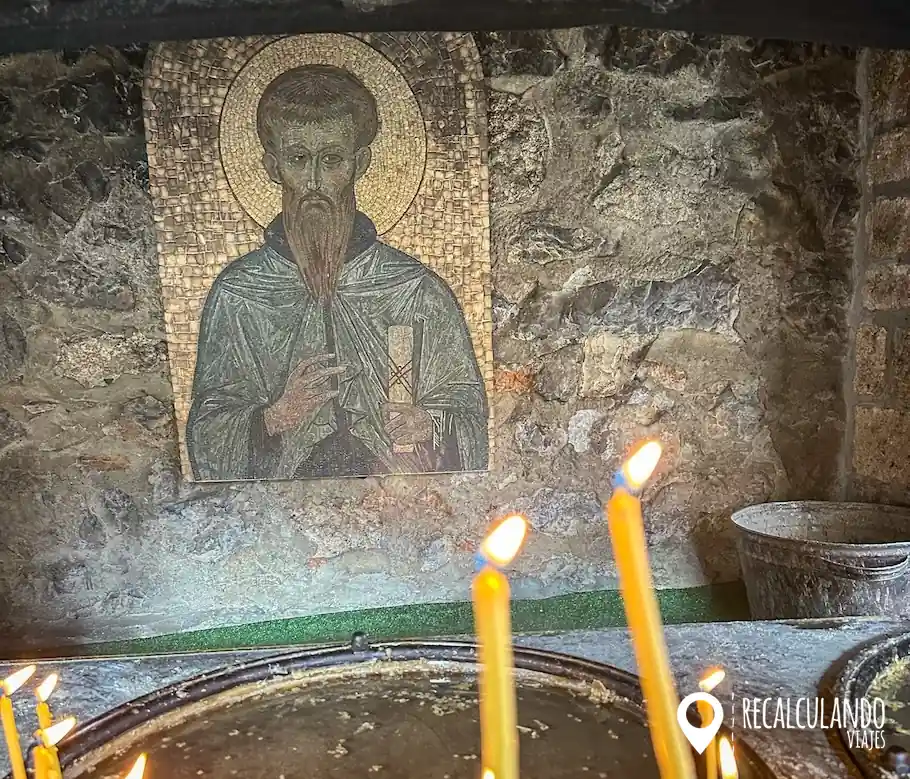
We stayed until mid-afternoon strolling between the lake, the springs, and the greenery. In addition, the person at the monastery entrance explained the legend of St. Naum’s tomb, whose heart is still beating (very impactful). We really liked the area.



Map of things to do in Ohrid
To organize your route without going crazy, we leave you a map with all the things to do in Ohrid from this guide. The city points are all close together and reachable on foot; the ones on the south of the lake (Bay of Bones and St. Naum) we covered by car in a single day.

What to eat in Ohrid: Trout, tea houses, and cafes with a view
Eating in Ohrid is cheap and delicious. The absolute star is the Ohrid trout, an endemic fish of the lake that is prepared on the grill with lemon and herbs. It is a protected species, so always order it in restaurants that offer it legally (most get it from hatcheries). For land dishes, don’t miss the tavče gravče (baked white beans in a clay pot), the ajvar (a bell pepper sauce that will get you hooked), morning burek, and ćevapi for a quick and filling meal.
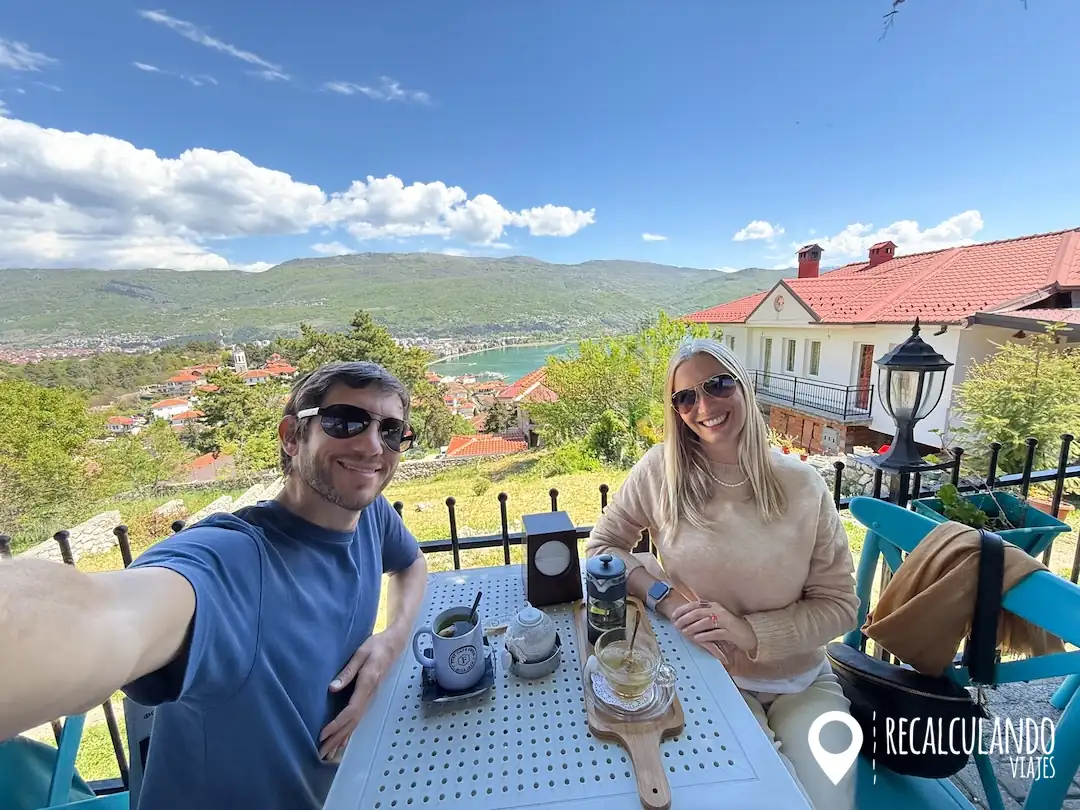
The restaurants with the best vibe are on the Kaneo boardwalk, right by the water: you eat while watching the lake and the sunset, although they are a bit more expensive (worth it anyway). And for the afternoon, Ohrid is all about having coffee or tea calmly: the old town is full of cafes and tea houses with terraces overlooking the lake. We got into the habit of cutting the day with a strong Macedonian coffee while watching the water. Pure Balkan disconnection.
Something that caught our attention is that on the lake shore promenade, there are automatic coffee machines as if they were soda vending machines.
Where to stay in Ohrid
The best area to stay in Ohrid is the lower part of the old town, as close as possible to the Boulevard Makedonski Prosvetiteli (of the Macedonian Educators) and the lake. From there, you can walk to almost all the must-sees and you have the boardwalk just a step away. There are many apartments and family-run aparthotels with very good value for money.
If you are looking for something quieter and with the lake as the protagonist, the southern villages like Pestani (we stayed in this area and loved the tranquility) or Trpejca are a beautiful option to disconnect, although you will need a car to get around.
Things to keep in mind: in summer (July and August) the best accommodation flies, so book well in advance. We went at the end of April and found a place without any problem and at a better price. If you come in the off-season, you will move with much more comfort.
Where to Stay in Ohrid: Map and Prices
On the map below you can move, zoom, and filter by your dates to see real accommodation prices in Ohrid:
How to get to Ohrid
Ohrid has its own airport (St. Paul the Apostle Airport), with seasonal flights from several European cities, especially in summer. If you don’t find a direct flight, the most common is to fly to Skopje (the capital) and continue by road from there: it’s about a 2.5 to 3-hour drive.
Many travelers also arrive from Albania: Tirana is about 3 hours away, and the St. Naum border is right next to the monastery. We toured everything by car and recommend it with our heart, because having a car gives you total freedom to move around the lake at your own pace. If you want to organize your timing and route well, our guide on how to plan your trip step-by-step may be useful.
TIP: If you are traveling with your own car from Spain/Europe, at the northern border of the lake, when entering North Macedonia with the car, they ask for the International Motor Insurance Certificate (Green Card) or a temporary border insurance for the car, which you buy about 10 blocks before the border, right where you turn, where there are small stalls that sell it.
Travel insurance for Ohrid
North Macedonia is not part of the European Union, so the European Health Insurance Card does not cover you. Therefore, traveling with good insurance is basic. We never leave without one, and for this area, we always use IATI, which covers all of Europe, including Balkan countries that are outside the EU.
We leave you all the info in our comparison of the best travel insurance for Europe, and if you want to book it, you can take advantage of our discount on IATI Insurance. It’s better to be safe, especially when you are far from home.

Excursions from Ohrid
If you stay for several days like us, Ohrid is an ideal base to explore the surroundings. These are the trips we liked the most:
- St. Naum Monastery and the Bay of Bones: both in the same day, bordering the lake towards the south. Unmissable.
- Struga: a small cultural city on the shores of the lake, where the Crn Drim River is born. Quiet and very authentic.
- Galicica National Park: between Lake Ohrid and Lake Prespa, with spectacular high-altitude viewpoints.
- Bitola: one of the most elegant cities in the country, with the Roman ruins of Heraclea Lyncestis nearby.
And if you continue your trip towards the south, you are one step away from Greece, a natural continuation if you are building a route through the Balkans. Before you leave, don’t forget to review your packing checklist so you don’t leave anything important behind.
Frequently asked questions about Ohrid
How many days are needed to see Ohrid?
With 2 or 3 days you have more than enough time. One day for the old town, the churches, and the fortress, and another for the excursion to the south of the lake (St. Naum and the Bay of Bones). We stayed 11 nights and enjoyed it very calmly, but that is our digital nomad style.
Things to do in Ohrid in one day?
If you only have one day, don’t miss the Church of St. John at Kaneo, the Ancient Theatre, Samuil’s Fortress, St. Sophia, and a stroll through the old town to the lake at sunset. It is an intense day but very complete.
What is the best time to visit Ohrid?
From June to September the weather is ideal for enjoying the lake and the beaches, although there are more people. Spring and autumn are quieter and have better prices; we went at the end of April and loved it, with the caveat that some beach clubs were still closed.
How to get to Ohrid?
You can fly direct to Ohrid in summer or arrive in Skopje (2.5-3 hours by car) or Tirana, Albania (about 3 hours). Having a car is the best option to move around the lake with freedom.
Is it safe to travel to Ohrid and North Macedonia?
Yes, it is a very safe and quiet country. We toured the whole area without any problems. As always, basic precautions are enough. That said, carry cash in Denars because in many places they do not accept cards.
How much does it cost to enter the churches of Ohrid?
Most churches and museums cost between 100 and 150 Denars (1 to 3 €). The Ancient Theatre is free, and the Church of St. John at Kaneo can be seen and photographed from the outside without paying. It is a very budget-friendly destination.
Conclusion: why Ohrid made us fall in love
We arrived in Ohrid almost without expectations and left with the feeling of having discovered a secret that no one tells. Among all the things to do in Ohrid, what stuck with us most was that unique mix of Byzantine history, turquoise water, and a calm rhythm. A destination that combines ancient churches, cinematic sunsets, and a warmth we didn’t expect.
If you are building a route through the Balkans, take our advice: don’t leave North Macedonia out. Ohrid stole our hearts and we are sure it will happen to you too. Have a great trip!
ℹ️ **Total Transparency**
This article contains affiliate links. If you book through these links, we may receive a small commission at no additional cost to you. We only recommend services that we use on our trips and that we trust. This helps us keep this blog free and continue creating useful content for you. Thank you for your support!
🔗 Resources & Useful Links for your trip to Ohrid
Do you have questions or want to add your own recommendations on things to do in Ohrid?
💬 Leave your comment or write to us, we love reading about the experiences of other travelers.
Thank you very much for being part of this adventure!— Nanu & Facu 🌎 | Recalculando Viajes 💜