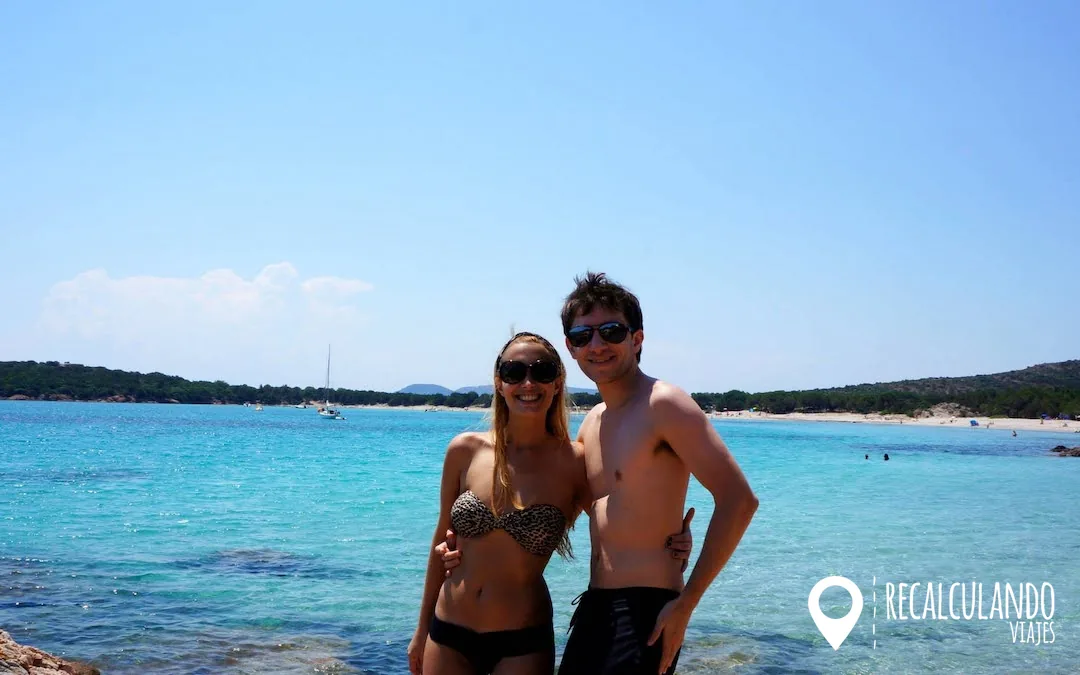
Searching for things to do in Corsica and ending up with twenty open tabs happened to us too. We spent three days driving through the south of the island at the beginning of June, and we returned with one certainty: Corsica combines postcard beaches and real mountains on the same day of driving. In this guide, we tell you about the 20 things to do in Corsica that we liked the most, with a map, 3-day, 1-week, and 10-day itineraries, where to stay, how to get there, and the practical details we wish we had known before we went.
An honest disclaimer before we start: we traveled to the first seven places ourselves, by car and with our hands full of sand. The other thirteen are in the north, west, and interior, which we haven’t visited yet, but we provide you with verified information, source by source. We will never sell you a place we haven’t set foot in as if we knew it.
🌍 Travel Insurance: 5% Off with IATI Seguros! 🌟
Take advantage of this offer and travel safe.
Things to do in Corsica Summary
| Category | Key details |
|---|---|
| Best time | May, June, and September (avoid July and August due to prices and crowds). |
| Ideal duration | 3 days for the south; 7-10 days to tour the entire island at a leisurely pace. |
| Transportation | Rented car is mandatory. Roads are narrow, slow, and winding. |
| South Must-sees | Bonifacio (citadel), Rondinara Beach, Palombaggia, and Santa Giulia. |
| North/West Must-sees | Calanques de Piana, Scandola Reserve, Agriates Desert, and Calvi. |
| Budget | Medium-high. Main expenses: vehicle rental, beach parking, and fuel. |
| Gastronomy tip | Try brocciu cheese, local charcuterie (prisuttu, coppa), and myrtle liqueur. |
| Logistics | Plan a loop (arrive at one airport and depart from another) to save on mileage. |
1. Bonifacio, the most impressive place to see in Corsica
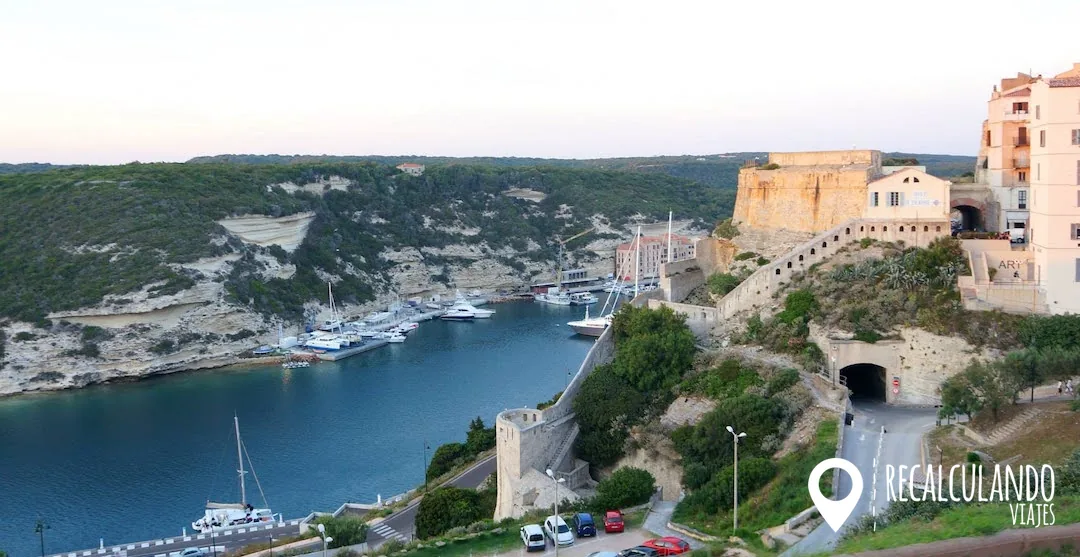
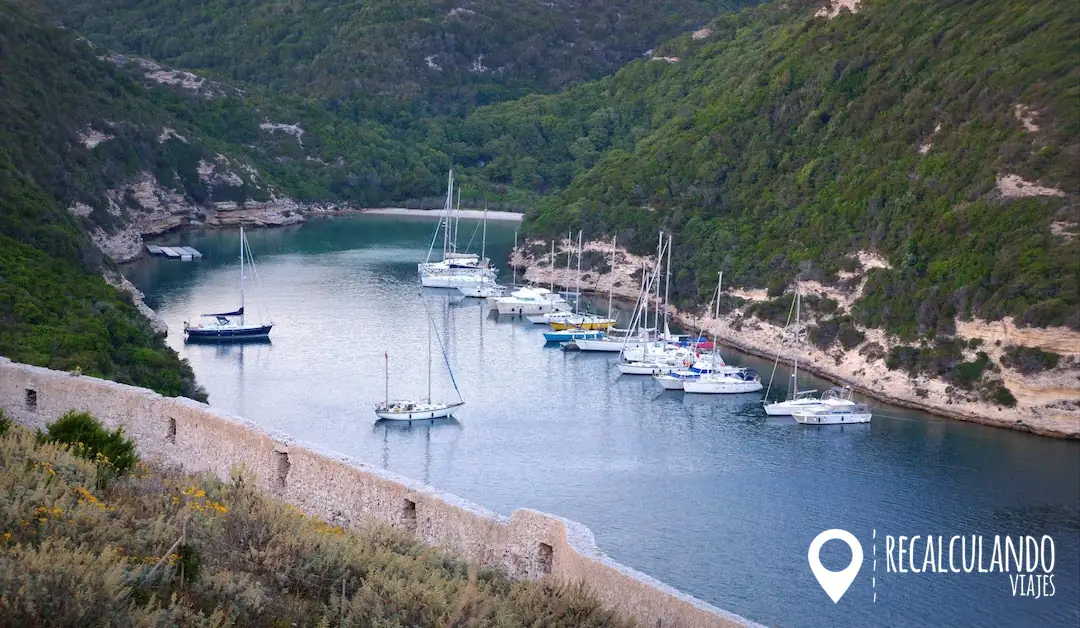
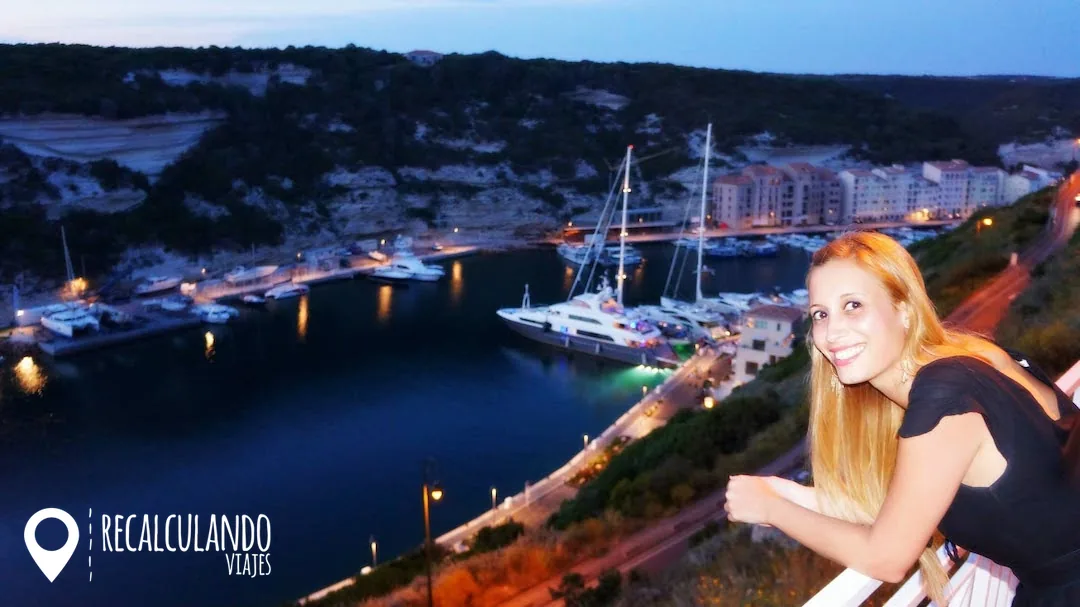
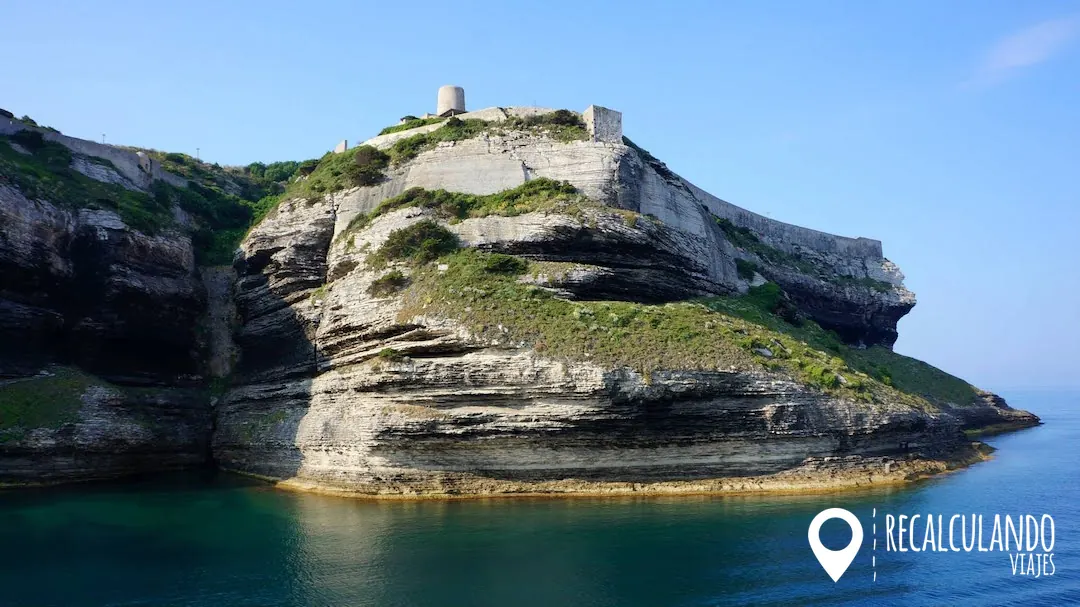
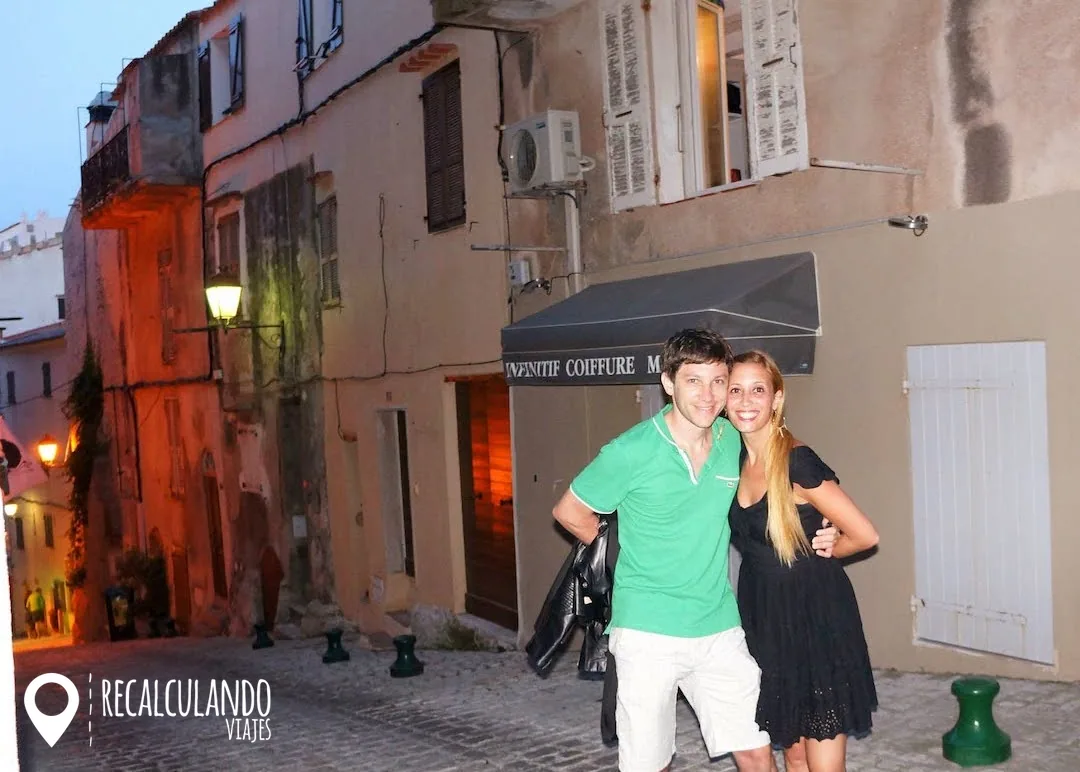
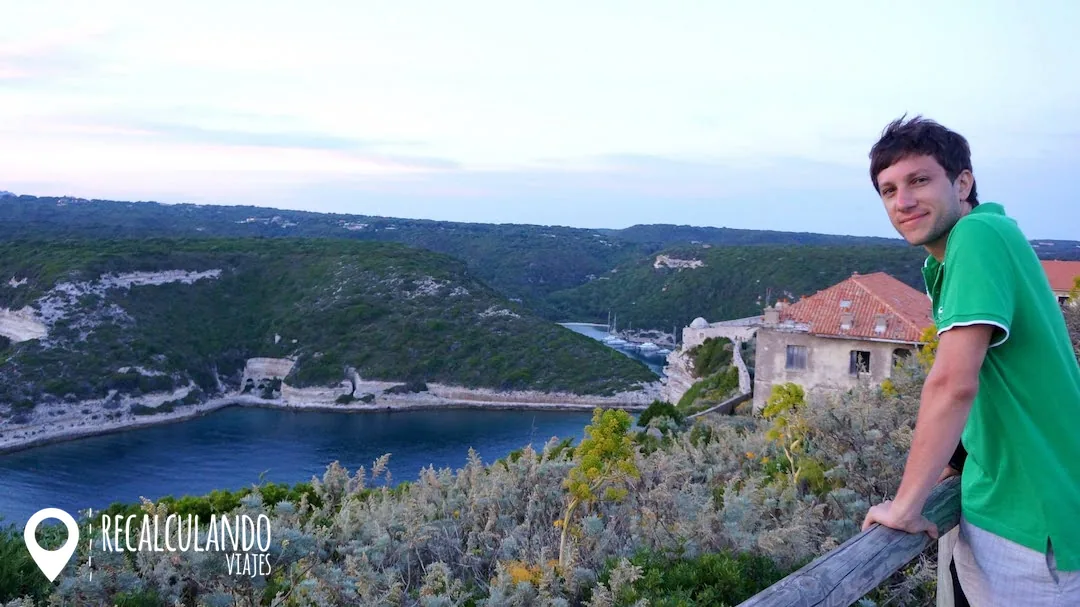
If there is one place on the island that we loved, it is Bonifacio. A Genoese citadel hanging over white limestone cliffs that drop sheer to the sea, with houses overlooking the void as if someone had pushed them a little too hard. We had dinner there two nights, and both times we stayed looking at the same cliff face, changing color with the light. Incredible.
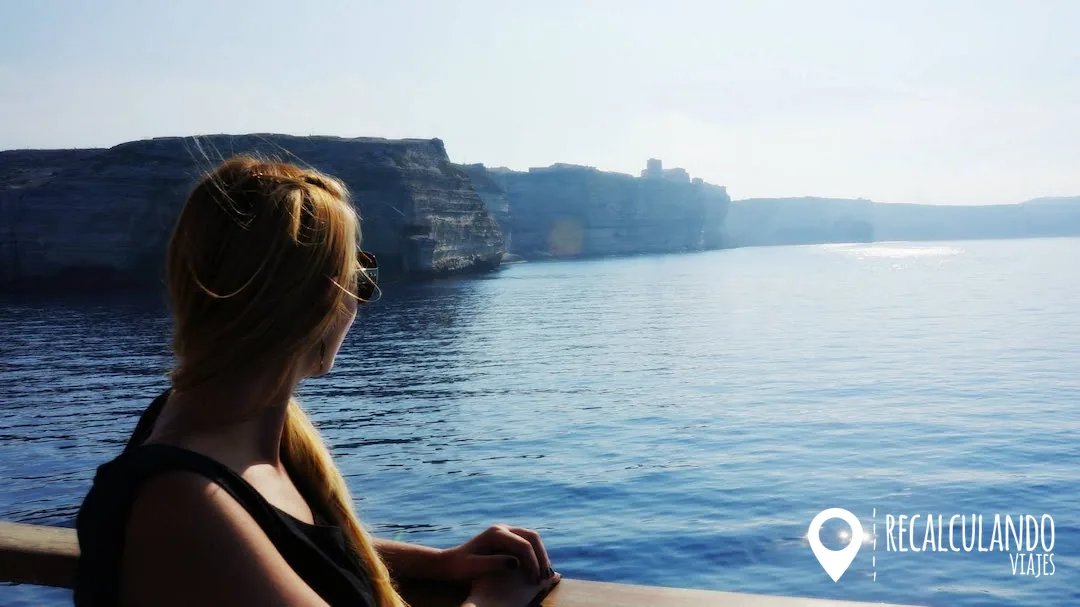
The city has two worlds: the marina, down below, with sailboats and restaurants, and the high city, which is reached by the ramp or stairs. The good stuff is up there: the narrow streets, the marine cemetery, the bastion viewpoints, and that view of Sardinia which, on clear days, feels like you can touch it with your hand.
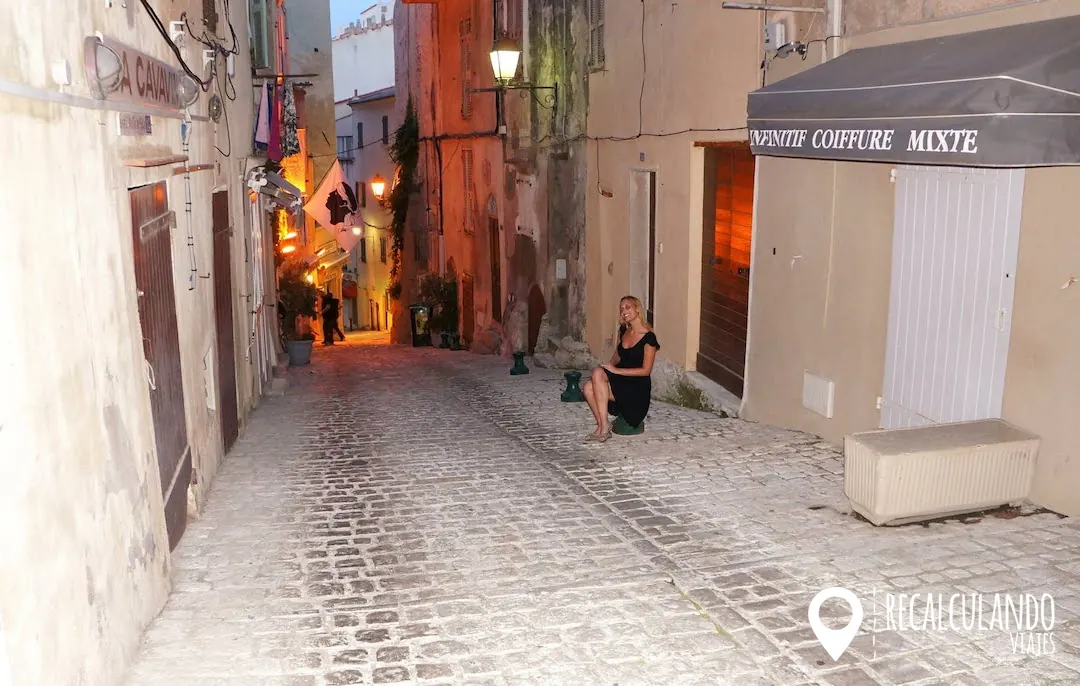
The star visit is the Escalier du Roy d’Aragon, nearly 190 steps carved into the cliff at a 45-degree angle that go down almost to the water. The entrance was around €5 per adult, and there is a Pass Monuments for about €6.50 that adds the Bastion de l’Étendard. It is mandatory to go down in good closed footwear: they don’t let you pass in flip-flops, and they provide the helmet. You can check updated hours and rates on the Bonifacio Tourist Office website. Bonifacio was our base for accommodation (outside the walls, and we loved it).
TIP: parking in the high city fills up very early in the summer. We left the car down below, near the port, and walked up. It’s a bit of a struggle, but you save yourself half an hour of driving around.
2. Palombaggia Beach, the most famous of Corsica’s beaches
Palombaggia is the photo you’ve seen a thousand times before buying your ticket: very clear sand, pine trees leaning with the wind, and red granite blocks set in transparent water. It is about 15 minutes from Porto-Vecchio and is, without argument, the most renowned on the island. Also the most touristy and the most crowded, keep that in mind.
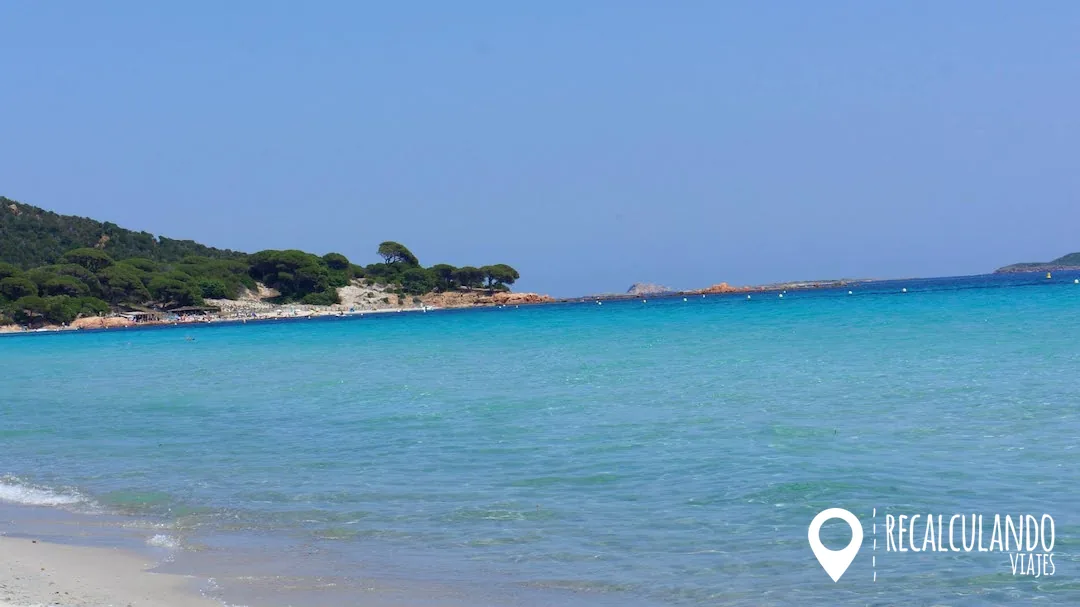
It is actually a succession of beaches. We went mid-morning and found a spot without any problems, but by noon there were many more people. Our recommendation: aim for the southern end, the area with more granite rocks, which is always much quieter than the center.
Right next door is Tamaricciu, the neighboring beach, smaller and with fewer parking spots, famous for the cove at the far left with gray granite blocks and a solitary pine tree. Many travelers prefer it to Palombaggia for that very reason: the same water, half the crowd.
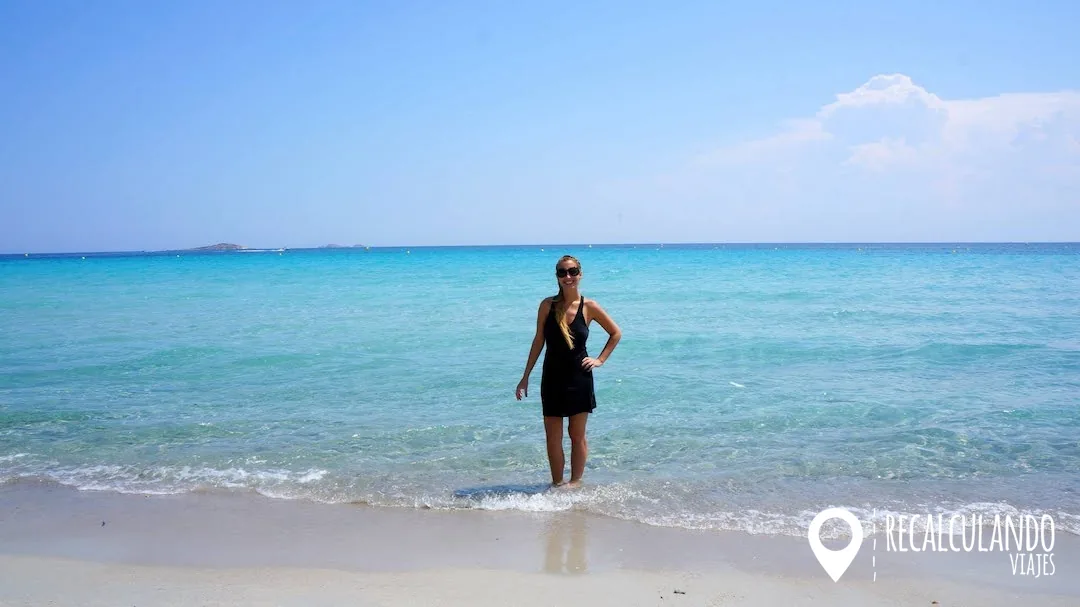
For parking, there is a golden tip: the first signs you see are for paid parking (around €4-5), but if you continue to the end of the road, there is a fairly large free parking area. It fills up quickly in the middle of August, so if you arrive early or late in the afternoon, it’s yours.
If you like Mediterranean islands with fine sand and turquoise water, you can check out its cousin Favignana, in Sicily.
3. Rondinara Beach, our favorite of the trip
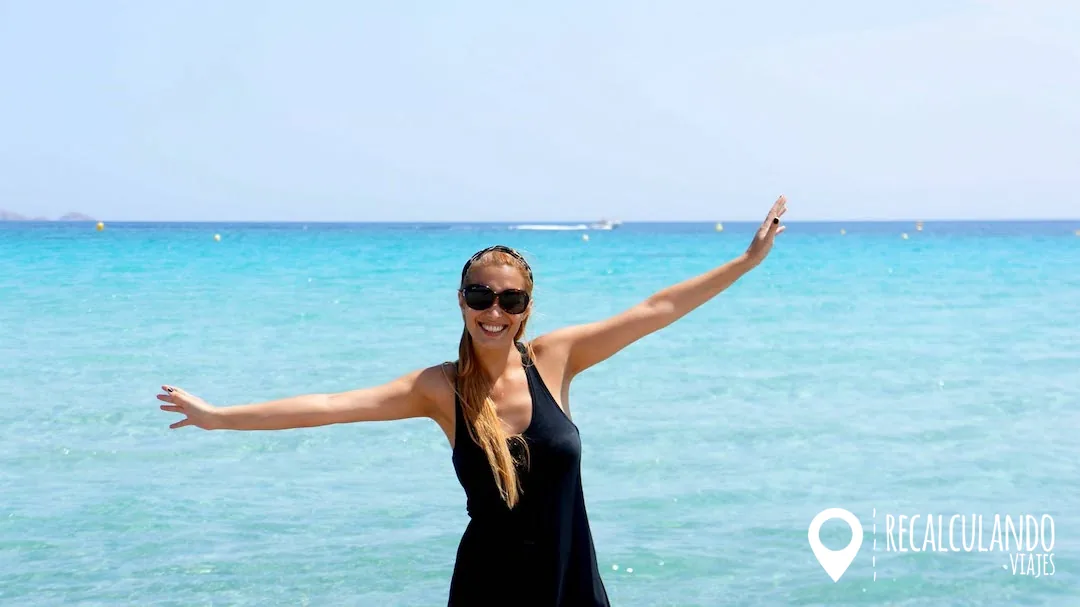
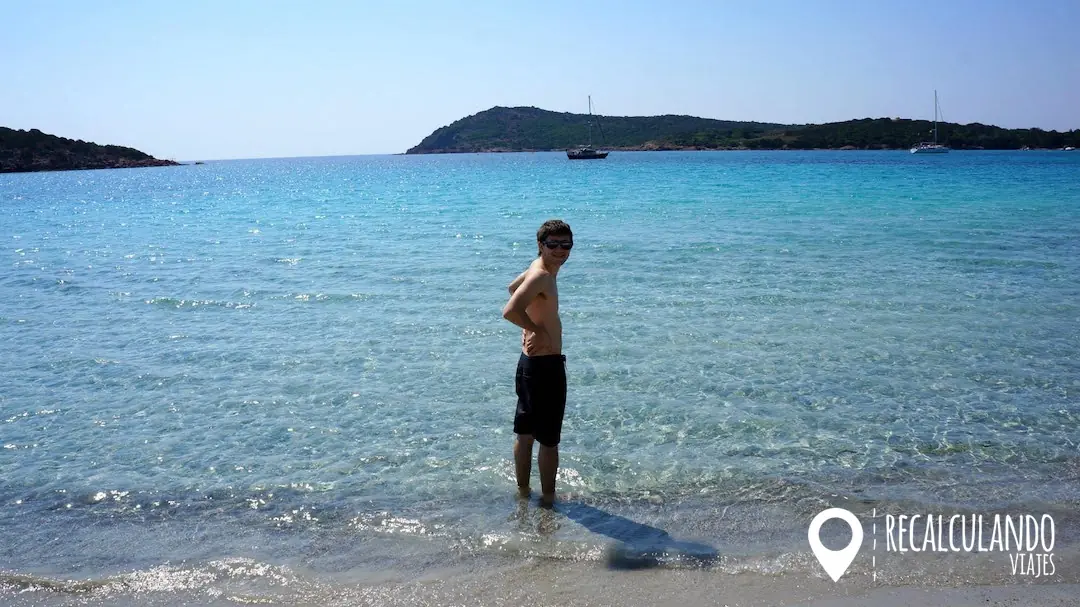
If you make us choose just one beach from the whole trip, we choose Rondinara. It is an almost enclosed bay, perfectly shell-shaped, protected from the wind, and with water so shallow you can walk for meters and meters with the water up to your waist. We went early, and that was the best decision of the day: when we were leaving, it was much more crowded.
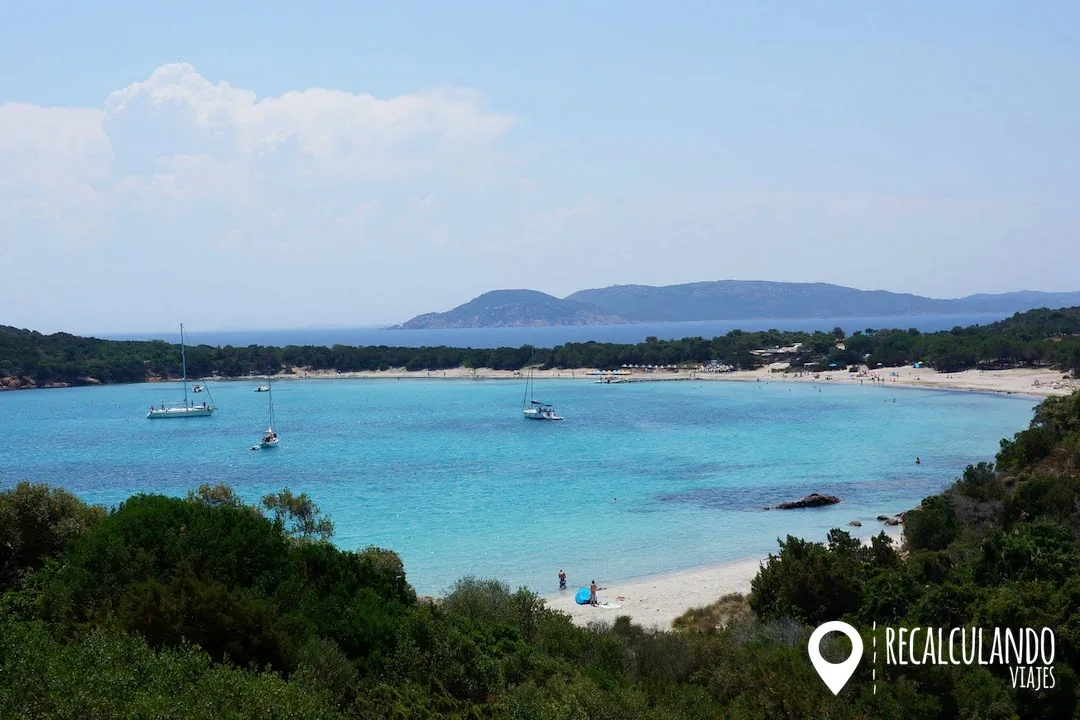
The final access is via a road that ends at the official parking lot, which is paid (it was about €5-6 for the day). There is talk of a small free parking area on the pond side, north of the bay, but we didn’t use it and can’t confirm. The parking lot is not guarded, so just in case, don’t leave anything in sight inside the car.
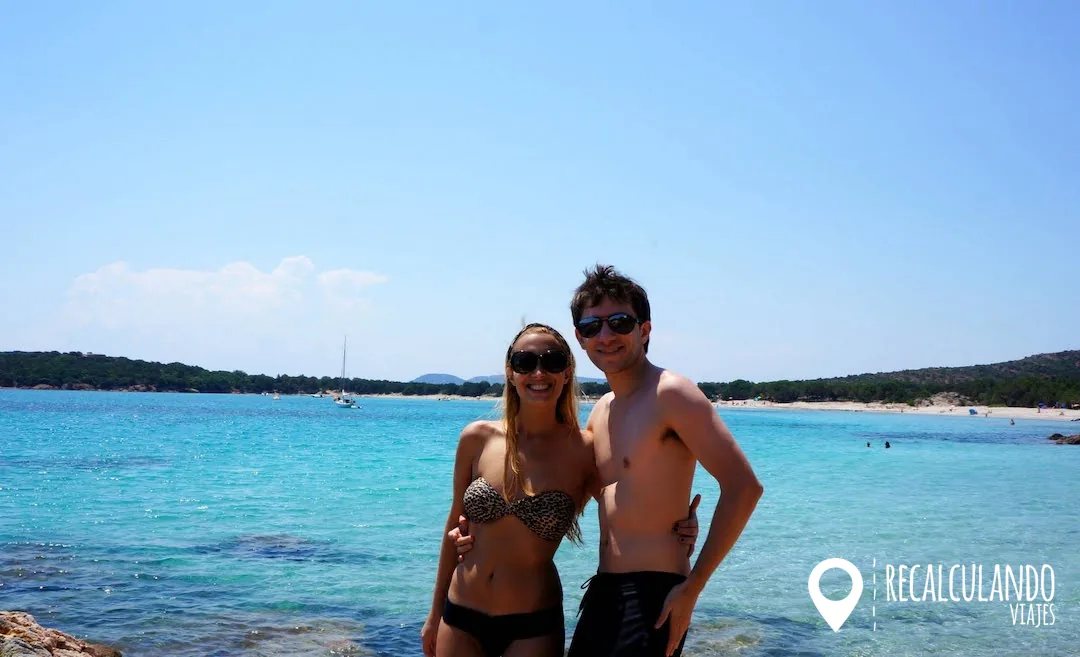
TIP: it is an ideal beach if you are traveling with children, precisely because of how shallow it is. But there is no natural shade in the central part: bring an umbrella or you will end up under an improvised towel, like us.
4. Santa Giulia Beach, the family postcard of the south
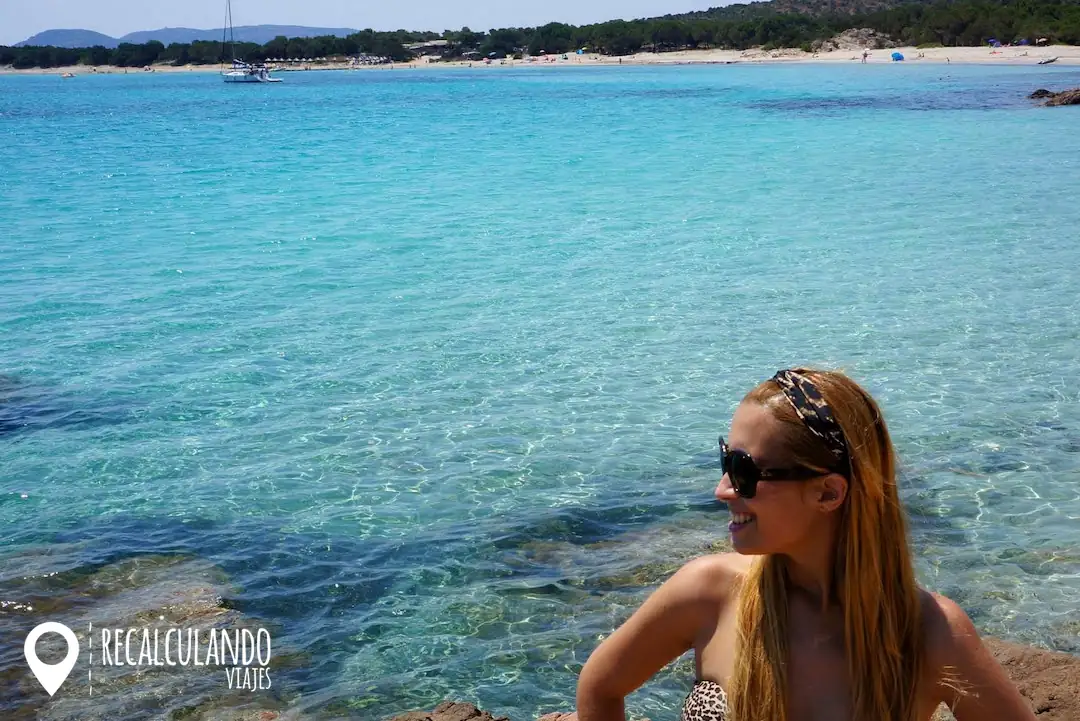
Santa Giulia is another of the great beaches to see in Corsica: a huge bay, with a lagoon behind it, white sand, and turquoise water that turns light blue at noon. It is the most “equipped” of the three, with bars on the sand, umbrella rentals, kayaks, and paddleboards. That makes it very comfortable and, at the same time, less wild than Rondinara.
Here, parking is the weak point. In 2026, the paid parking fee is around €10 per vehicle for the day, and the free parking available is small and fills up in a heartbeat (it usually clears out after sunset). It is one of the most expensive beaches on the island in that sense, so take that into account before you go.
We visited it in the morning and loved how warm and calm the water is in the inner part of the bay. If you are traveling with family and want everything at hand, it is the best option in the south; if you are looking for something more virgin, keep going to Rondinara.
👩⚕️👨⚕️ A must-have for stress-free travel! 🌎✈️ ➜ Get a Quote, Compare & Buy
5. Porto-Vecchio, the perfect base to explore the south
It has a walled high city, with Genoese gates, squares with outdoor tables, and stone streets that fill with people at night. Down below, the marina, with big ships and bars. It is the “liveliest” in the south, and from here you have all the beaches within less than half an hour.
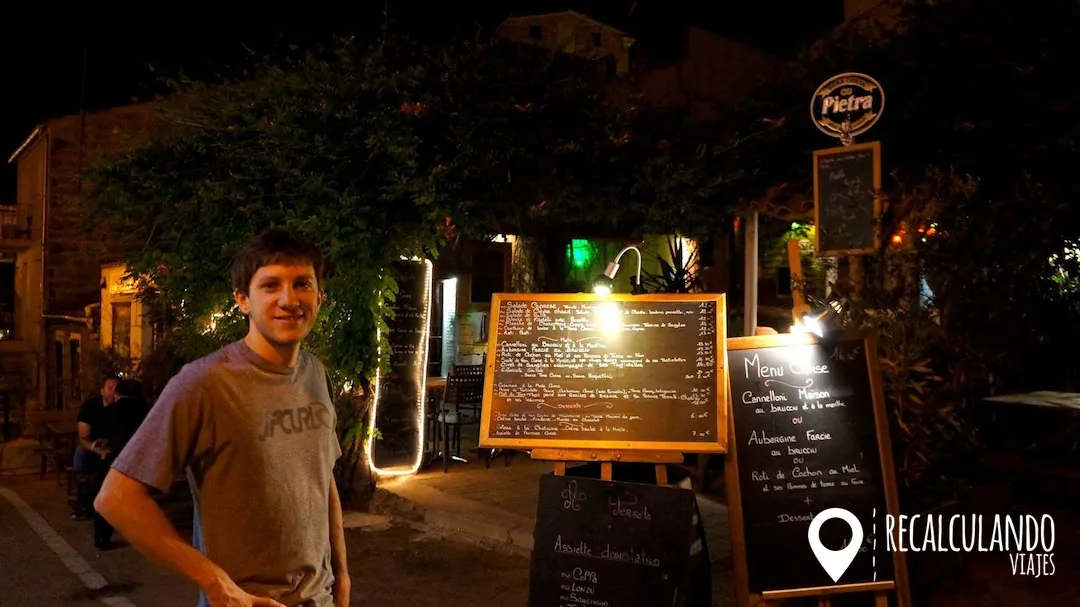
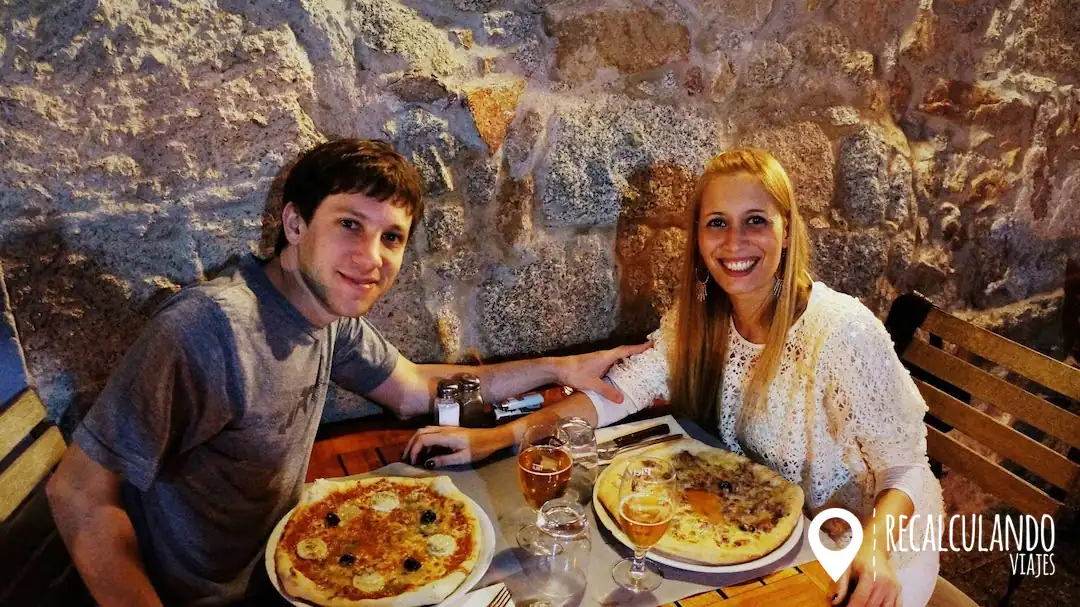
We had dinner there on the first night, after a long day of driving, and we were surprised by the atmosphere: lots of life, lots of terraces, lots of chatting in the streets. We won’t recommend specific restaurants because on the island they open and close season by season, but any table in the high city overlooking the square will do.
A practical detail: it is the best place in the south to do your trip shopping and get fuel, because in the small villages everything closes at noon.
6. Roccapina, one of the things to do in Corsica that we almost missed
Roccapina was our first stop upon arrival, and we almost skipped it because we were pressed for time. Good thing we didn’t. It is a beach with very fine sand and very shallow water, with two things above it that make it unmistakable: a Genoese tower and a rock that, with a little imagination (not much, actually), looks like a lion lying down looking at the sea.
It is on the road between Sartène and Bonifacio, so it fits perfectly as a stop on the way if you are coming from the north or from Ajaccio. The final access is via a dirt road: it can be done with a normal car going slowly, but if it has rained recently, be cautious.
We stopped outside the peak of noon and it was quiet. The viewpoint from the road, with the stone lion and the bay below, already justifies the stop even if you don’t go down to the sand.
7. Saint-Cyprien Beach, colors that don’t seem real
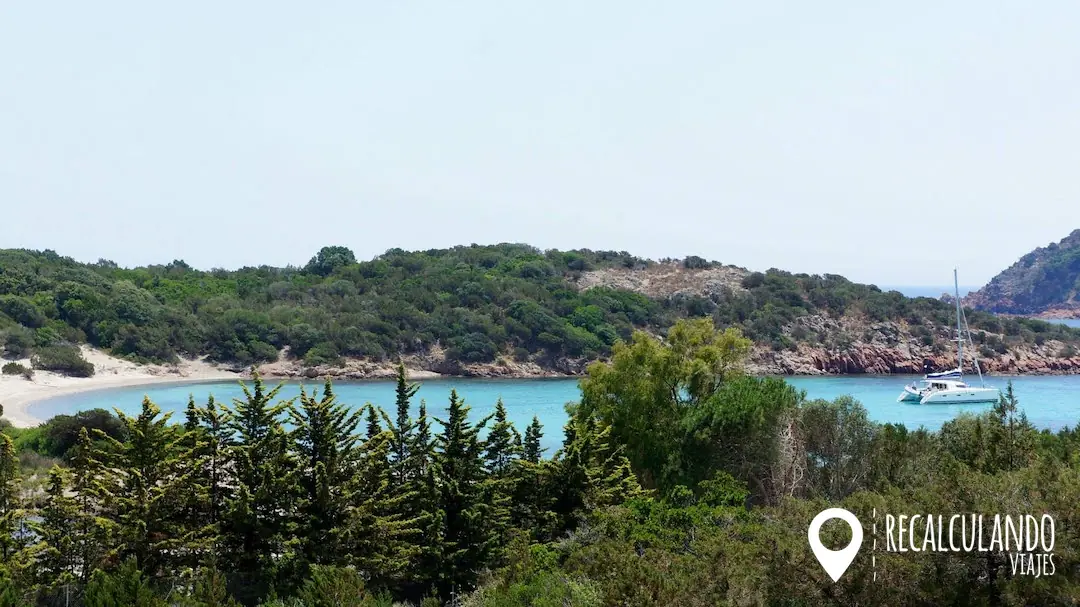
Saint-Cyprien closes the southern beach circuit and is the most “palette of colors” of them all: white sand, turquoise water, reddish rock, and, behind it, the Arasu pond with a Genoese tower dominating the scene. It is about 20-25 minutes from Palombaggia, still in the Porto-Vecchio area.
It’s long, so even if there are people, you always find your piece of sand. We arrived in the mid-afternoon and it was the best time: with the low light, the contrast between the red of the rocks and the turquoise of the water becomes almost unreal.
There is less infrastructure than in Santa Giulia, so bring water and something to eat. And watch out for the wind, which in this part of the coast picks up quite a bit at the end of the day.
8. Lavezzi Islands, one of the must-sees in Corsica by boat
Here start the places we didn’t get to do. The Lavezzi are an archipelago of about twenty granite islets about 8 kilometers southeast of Bonifacio, within a marine nature reserve. Many travelers point to them as the best trip on the island: transparent water, rounded rocks, and no buildings.
It can only be reached by sea. From the port of Bonifacio, shuttles leave that make the crossing in about 30 minutes and let you spend the day on the main island, and there are also combined half-day or full-day excursions, with stops for swimming. Prices start around €33 and go up quite a bit for departures with lunch or on a semi-rigid boat.
If time is short, there is a cheaper and highly recommended alternative: the one-hour tour at the foot of the cliffs of Bonifacio, with departures every 30 minutes between 9 a.m. and 6 p.m., which enters the sea caves (the Sdragonato, with its famous opening shaped like Corsica) and passes by the Grain de Sable, that lonely rock detached from the cliff.
9. Needles of Bavella, the mountain you don’t expect
The most common mistake when planning what to visit in Corsica is to stay only on the coast. The Aiguilles de Bavella are the proof: granite needles that rise like a crown over forests of laricio pine, in the heart of the Regional Natural Park. The Col de Bavella is at 1,218 meters and is reached by car along the road that climbs from Solenzara, one of the most spectacular routes on the island.
From the pass, several marked trails depart. The best known is the Trou de la Bombe, a natural hole about eight meters wide open in the rock, with about two and a half hours round trip in the shade of the pine forest. Further down are the Purcaraccia waterfalls, with natural pools, a little over an hour’s walk from the road.
Many travelers agree on something curious: the best views are not at the pass but on the ascent. That said, these are narrow mountain roads with tight curves: add real time, not what the GPS tells you.
10. Ajaccio, the capital and its Napoleonic side
Ajaccio is the capital, the largest city, and the entry point for many people by plane or ferry. It has a classic Mediterranean old town, with ocher buildings, palm trees, a very cute market in the morning, and a port that fills up with people in the evening.
Its strong card is Napoleon, who was born here in 1769. The Maison Bonaparte, his birthplace, is now a national museum: the general admission is around €7, it is free for under-26s and on the first Sunday of the month, and it closes on Mondays. We are not into museums unless they are essential, but many travelers put it among the best in the city, and the visit can be done in about 45 minutes.
What we did sign up for next time is the route of the Îles Sanguinaires: a coastal road west of the city that ends at the Pointe de la Parata, with a Genoese tower and islets that turn reddish at sunset. It’s free, it’s outdoors, and everyone names it as the best plan in Ajaccio.
11. Calanques de Piana, red rock over the sea
The Calanques (or calanches) de Piana have been a UNESCO World Heritage site since 1983 and probably the most photographed landscape on the west of the island: red granite cliffs sculpted by the wind that drop straight into the Gulf of Porto. The D81 road crosses them, with viewpoints every few meters.
There are two ways to see them. By land, driving slowly on the D81 (narrow, winding, and very busy in summer) and stopping at the viewpoints; the general recommendation is to do it late in the afternoon, when the low light turns the red of the rock on and traffic decreases. By sea, with the shuttles that leave from Porto and make the trip in approximately an hour and a half, which is the way to see the formations from below.
If you can, do both: the perspective changes completely. If you only have one afternoon, stick to the road at sunset.

12. Scandola Reserve and Girolata, the wildest Corsica
Scandola is the natural jewel of the island. Created in 1975, it was the first reserve in France to protect both land and sea territory, and is part of the UNESCO site along with the Gulf of Porto and the Calanques de Piana.
A key fact not to waste time: you cannot reach Scandola by land. Disembarking and anchoring within the reserve are prohibited, so the only way to know it is on a boat excursion, which also sails slowly. They leave from Porto, Ajaccio, Calvi, and Galéria, and many include a stop in Girolata.
Girolata is a fishing village with no road access: it can only be reached by sea or by walking the sentier du facteur, the old postman’s path. Excursions stop for between 20 minutes and two hours depending on the operator. Scandola + Girolata departures start around €45 per person, and it is advisable to book days in advance in July and August.
13. Corte and the Restonica Valley, the heart of the island
Corte is the former capital and the historical soul of Corsica: a citadel on a rock, a steep old town, and a Corsican identity that is breathed more strongly than on the coast. It is also the gateway to the Restonica valley, a granite canyon with crystalline water, natural pools, and the most famous high-altitude lakes on the island.
Pay attention here, because access has changed and many guides remain outdated. After the storms in late 2023, the high road was damaged, and today traffic of private vehicles is prohibited beyond Tuani. To go up to the valley, the C13 shuttle operates, leaving from the Corte station, with mandatory reservation and hours from 6:30 a.m. to 8:00 p.m. between May 1 and September 30, 2026. The valley parking lots are paid from May to September (about €6 per car and €3 per motorcycle).
IMPORTANT TIP: there is no cell signal in the valley, so book the shuttle from Corte before going up. And calculate carefully: the hike to Lake Melo takes between six and seven hours round trip from Frassetta, and Lake Capitello adds another hour and a half.
14. Saleccia Beach and the Agriates Desert
In the north of the island, between Saint-Florent and the mouth of the Ostriconi, is the Agriates desert: 15,000 hectares of maquis without towns or houses, and in the middle, two of the most impressive beaches in the Mediterranean, Saleccia and Lotu. Very white sand, dunes, twisted junipers, and no buildings in sight.
Getting there is part of the adventure and there are three options. The simplest is the boat from Saint-Florent: about 25 minutes by zodiac, with prices that were around €30 round trip last season and departures every hour in summer; since there is no dock in Saleccia, you get off with your feet in the water, and if the sea is rough, they simply don’t leave. The second is the dirt track of about 12-14 kilometers from the hamlet of Casta, suitable only for real 4x4s: don’t try it with a normal rental car. And the third, the most beautiful, is to walk the coastal path from Lotu, about an hour.
There are no services or lifeguard stations in Saleccia. Water, food, hat, and sunscreen are on you, or you won’t have a good time.
15. Calvi and the villages of the Balagne
We close the list of places of interest in Corsica with the Balagne, the region in the northwest they call “the garden of the island”: olive groves, vineyards, and small villages perched on the mountains overlooking the sea. Sant’Antonino, with its spiral stone alleys, and Pigna, with its artisan workshops, are the two names that repeat in all recommendations.
Down below, on the coast, is Calvi, with a Genoese citadel on the promontory, a very long sandy bay, and a very lively port. And half an hour away, L’Île-Rousse, quieter, with its reddish rock and urban beaches. It is the area with the best balance between beach, villages, and mountain in the whole north.
A plan we were left wanting to do: the Corsican train, the Trinichellu, which connects Bastia with Ajaccio crossing the mountainous interior and has a Balagne line between Calvi and Ponte Leccia. It’s slow, it’s old, and for that very reason everyone recommends it. The logic here is the same as how we plan our trips: fewer kilometers per day and more time at each stop.
16. Pertusato Cape, the viewpoint that crowns Bonifacio
It is one of the places to see in Corsica that almost no one puts on the list and, for many travelers, the best viewpoint on the island. It is the southernmost point of continental Corsica: from the Pertusato lighthouse, you can see the white cliffs of Bonifacio in profile, the Mouths of Bonifacio below, and Sardinia in front, so close it looks like another province.
It is reached from Bonifacio by walking the path that borders the cliff, about an hour one way, or by getting closer by car to where access is allowed and doing the final stretch on foot. There is no shade on the entire route and the terrain is loose stone, so closed footwear and water are a must.
The recommendation that repeats everywhere is to do it first thing in the morning or at sunset, when the grazing light ignites the limestone. On the way, there is the Saint-Antoine cove, a little stone beach that you reach via a steep path and that almost never appears in the guides.
17. Sartène and the megaliths of Filitosa
Sartène is called “the most Corsican of Corsican cities,” a label put on it by the writer Prosper Mérimée in the 19th century and which stuck. It is a gray granite town, with high houses, shaded squares, and an old town that can be toured on foot in an hour. During Holy Week, the Catenacciu takes place here, one of the most impressive processions in the Mediterranean.
But what will make you detour to this area is what is around it: Corsica has one of the most important megalithic complexes in Europe and almost no one puts it on the list. The Filitosa site, north of Sartène on the way to Propriano, preserves statue-menhirs with faces and weapons carved more than 3,000 years ago. And near Sartène is the Cauria complex, with the alignments of Palaggiu, Stantari, and Renaghju, dozens of menhirs planted in the middle of the countryside.
It is the best excuse to get off the coast for a day. If you are traveling with children, menhirs with faces usually work much better than any museum.
18. Canyons and natural pools, the freshwater Corsica
One of the things to do in Corsica that is least expected by those who come for the beaches: the island is full of mountain rivers with clear water pools and polished rock. When in August the coast is at 35 degrees and without a shade, this is what saves the day.
The names that repeat most are the Purcaraccia waterfalls, under the needles of Bavella, with their natural slides; the Cavu river, near Porto-Vecchio, the easiest of all because you get there almost by car; and the Solenzara gorges, with green pools right on the side of the road. Further north, the Richiusa canyon, between Ajaccio and Corte, is the classic one for starting canyoning.
Watch out for this: the wet rock is very slippery, the water is icy even in the middle of summer, and after a storm the flow rises quickly. Canyoning descents are done with an authorized guide, not on your own.
19. Cap Corse, the island within the island
The Cap Corse is the peninsula that juts out to the north from Bastia, that “finger” you see on any map of Corsica and which summarizes in a few kilometers almost everything there is to see in Corsica. Driving around it on the D80 road is about 120 kilometers and it is one of those routes that are done in a day but are remembered for a long time: the east face, green and with little ports; the west, rocky and open to the wind.
The villages are the reason to go slowly. Erbalunga, with its stone houses over the water and a ruined Genoese tower. Centuri, a tiny port with green tiles known for its lobster. Rogliano and Macinaggio, where the sentier des douaniers starts, the old customs officers’ path along the coast. And Nonza, perched over a black pebble beach that looks like nothing else on the island.
By the way, here is Patrimonio, the best-known vineyard area in Corsica. If you like wine, it is the must-stop in the north.
20. Bastia, the gateway to the north
Bastia is the second city of the island and, although it is the port through which many people enter, it rarely appears among the places to see in Corsica: almost everyone uses it as a formality and heads straight for the beaches. It’s a mistake: it has the most Italian old town in Corsica, with high, peeling facades, hanging clothes, and colored shutters.
The essential can be walked in half a morning: the place Saint-Nicolas, one of the largest squares in France, the morning market in the Hôtel de Ville square, the Vieux-Port with its fishing boats, the citadel with the Palace of the Governors and its hanging gardens, and the oratory of Saint-Roch and the church of Saint-Jean-Baptiste, with some baroque interiors that are quite surprising.
And a few kilometers south, towards the airport, is the Canonica, a 12th-century Pisan Romanesque church in the middle of the countryside. Many travelers point to it as the oldest and most beautiful monument in the north of the island.
North or South Corsica? How to choose if you have few days
This is the first decision of the trip and almost no one explains it: Corsica is big and slow, and wanting to see everything there is to see in Corsica in five days is the fastest way to spend it driving. We would solve it like this.
The south is the one with the white sand beaches and turquoise water: Palombaggia, Rondinara, Santa Giulia, plus Bonifacio, which is the most impressive postcard of the island. It is the Corsica of the photos and also the most crowded and expensive. Airport: Figari, 20 minutes from Porto-Vecchio and Bonifacio.
The north and the west are wilder and more varied: the Calanques of Piana, Scandola, the Balagne with its perched villages, the Agriates desert, and the Cap Corse. The beaches are more stony and less like a brochure, but the landscape wins. Airports: Bastia or Calvi.
The interior (Corte, the Restonica, Bavella) is the wildcard: it serves to escape the heat and the crowds, and it can be included in either of the two routes.
Simple rule: with less than 5 days, choose one half. With one week, do the south plus the west. With 10 days or more, the full circle of the island closes perfectly.
Itineraries through Corsica: 3 days, 1 week, and 10 days
These are the three itineraries that work best according to the time you have, armed with the things to do in Corsica from this guide and with real distances, not those from the navigator.
3 days in the south of Corsica (our itinerary)
It is the one we did, entering by ferry from Sardinia and based in Porto-Vecchio. It works very well if you are coming from Sardinia or if you fly into Figari.
- Day 1: arrival, stop at Roccapina to see the stone lion and the beach, and night in Porto-Vecchio (dinner in the high city).
- Day 2: beach day. Rondinara early, then Santa Giulia, Palombaggia at noon, and Saint-Cyprien for sunset. They are short distances, 15 to 25 minutes between one and the other.
- Day 3: Bonifacio complete: high city, Escalier du Roy d’Aragon, boat trip through the cliffs and caves, and sunset at the bastion.
If you have half a day left: add the Pertusato cape or the Lavezzi islands from the port of Bonifacio.
1 week in Corsica: south and west
With 7 days, you can fit in the complete south plus the west coast, which is where the most spectacular landscape of the island is.
- Days 1-2: Bonifacio and surroundings (Pertusato cape, Lavezzi islands).
- Days 3-4: Porto-Vecchio and its beaches, with an escape to Bavella and the natural pools of the Cavu.
- Day 5: climb to Sartène and the Filitosa megaliths on the way to Ajaccio.
- Day 6: Ajaccio, with the Îles Sanguinaires route at sunset.
- Day 7: Calanques de Piana along the D81 and boat excursion to Scandola and Girolata from Porto.
10 days in Corsica: the full loop
Ten days are what the island really asks for. Added to the previous route are the interior and the entire north:
- Day 8: Corte and the Restonica valley, with the shuttle to the start of the trails.
- Day 9: Balagne: Calvi, Sant’Antonino, Pigna, and L’Île-Rousse.
- Day 10: Saint-Florent, the Saleccia beach in the Agriates desert, and down to Bastia.
If you stretch to 12 days, Cap Corse deserves an entire one to do the lap along the D80 without hurry.
Logistics TIP: it is better to plan the trip in a loop, arriving at one airport and leaving from another (e.g., Figari – Bastia). Almost all rental companies charge a surcharge for returning the car to another office, but it saves you an entire day of repeated driving.
Quick facts for traveling to Corsica
May, June, and September. The sea is enjoyable from June and in September it is warmer. July and August: more people and higher prices.
3 days for the south. Between 7 and 10 days to tour the whole island without rush.
Medium-high. Car from €30/day off-season (≈€50 average) + fuel (~€1.80/l).
French and Corsican / Euro (€). Cards accepted almost everywhere; carry some cash for beach parking.
South: white sand beaches and Bonifacio. North and west: mountain, villages, and wild landscapes.
Renting a car is practically essential to reach beaches and viewpoints.
Another thing that solves the trip is an eSIM: we used Holafly with the code RECALCULANDOVIAJES, because inside the island the signal comes and goes and the offline map saves you.
Where to stay in Corsica
The island is big and the roads are slow, so the most expensive mistake is booking only one accommodation for the whole trip. It is better to divide it by areas according to the things to do in Corsica that you have on your list: Porto-Vecchio is the best base in the south, with all the beaches within less than half an hour and nightlife; Bonifacio is more expensive but gives you sunset on the cliffs just meters away; Ajaccio works as a base for the center-west and for the Calanques de Piana; Calvi or L’Île-Rousse are the ideal point for the north; and Corte, if you want to sleep in the mountains and get up early for the Restonica.
| Base | Nights | Ideal for | Hotel |
|---|---|---|---|
| Porto-Vecchio | 2-3 | All southern beaches within 30 minutes, nightlife, and services. Best comfort-price ratio in the south. | ➜ BOOK HERE |
| Bonifacio | 1-2 | Cliffs at sunrise and sunset, and direct access to the Lavezzi islands. It is the most expensive area of the island. | ➜ BOOK HERE |
| Ajaccio | 1-2 | Center-west base, large airport, and starting point for Calanques de Piana and Îles Sanguinaires. | ➜ BOOK HERE |
| Porto or Piana | 1 | Sleeping inside the UNESCO gulf and leaving early by boat for Scandola and Girolata. | ➜ BOOK HERE |
| Calvi or L’Île-Rousse | 2 | The north: citadel, urban beach, Balagne villages, and excursions to the Agriates desert. | ➜ BOOK HERE |
| Corte | 1 | The mountain. You sleep cooler and get up early for the Restonica without driving for two hours. | ➜ BOOK HERE |
If you have a week, three bases are more than enough (e.g., Porto-Vecchio, Ajaccio, and Calvi). Changing accommodation every day on an island with these roads costs you dearly in time and fatigue.
Seasonal TIP: Corsica hotels in July and August sell out months in advance and prices skyrocket. If you can move your dates, June and September give you the same sea with half the noise. And if you travel in high season, book accommodation with its own parking: in the coastal villages, parking is a sport.
Corsica Map – Accommodation with Prices
On the map below you can move, zoom, and filter by your dates to see accommodation prices in Corsica:
How to get to Corsica
By plane
The island has four airports: Ajaccio (AJA), Bastia (BIA), Figari (FSC, the most comfortable for the south, 20 minutes from Porto-Vecchio and Bonifacio), and Calvi (CLY). They are served by Air Corsica, Air France, easyJet, and various seasonal low-cost airlines. From Spain, it is common to fly with a layover in Marseille, Nice, or Paris, although in summer there are occasional direct routes from Barcelona. It is advisable to check all four airports before deciding: the difference in price and kilometers can be enormous.
By ferry
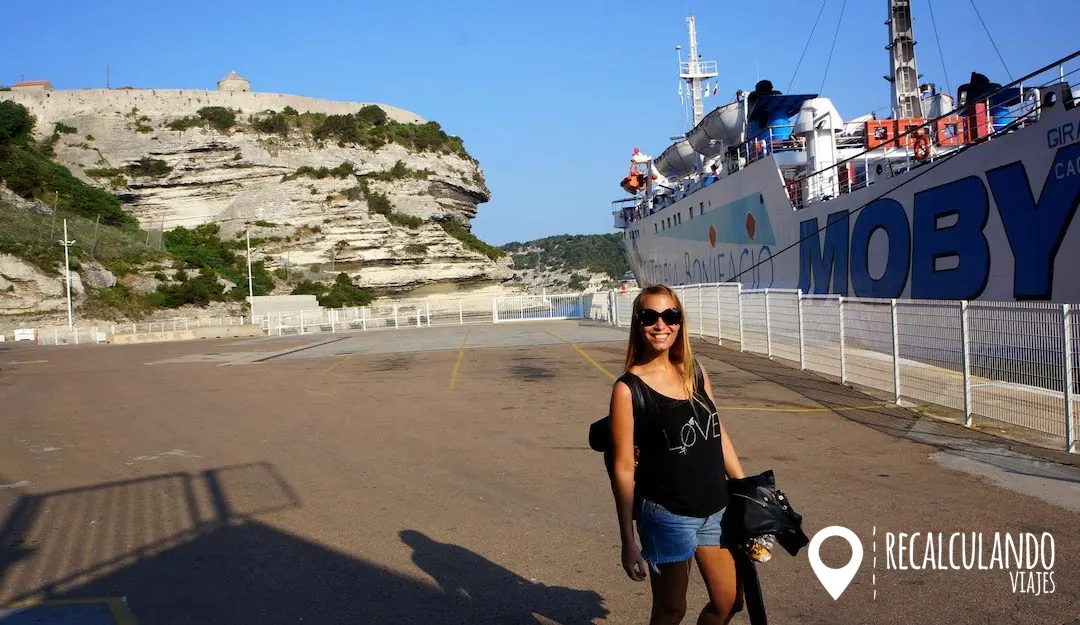
Ferries to Corsica are the star option if you are going with your own car. From France, they leave from Nice (Bastia in about 6-7 hours), Toulon (7 to 10 hours depending on destination), and Marseille (11 to 13 hours, often overnight). From Italy, crossings are shorter: Piombino-Bastia in about 3 hours and Livorno-Bastia between 4 and 5. The main companies are Corsica Ferries, Corsica Linea, La Méridionale, and Moby Lines.
And there is a shortcut that we think is the best fact of all: Santa Teresa Gallura (Sardinia) – Bonifacio, the shortest crossing, about 50 to 60 minutes. If you are thinking of combining the two islands, that is the natural gateway.
By car on the island
There are no highways in Corsica and roads are narrow and slow: always calculate more time than the navigator indicates. Even so, renting a car is not optional; it is the only way to get to the beaches and viewpoints. The supply of cars is limited and sells out in summer, so book in advance. Choose a compact (for the narrow streets of the villages and parking lots) but not the smallest engine, because mountain climbs are noticeable.
➜ Compare car rental prices in Corsica
A detail almost no one warns about: most rental companies do not allow the car to be taken off the island by ferry. If you combine Corsica with Sardinia, the usual thing is to rent two cars, one on each island, and cross as a passenger. Always check the terms before booking.
TIP: check the car when picking it up and take photos of everything, including the roof and under the bumper. And return it without sand inside: some companies charge cleaning surcharges of between €50 and €100.
Travel insurance for Corsica
Corsica is France, so with the European Health Insurance Card, you are covered for basic public care if you come from the European Union. But there is a detail many overlook: a good part of what is done on the island is mountain, trails with elevation gain, beaches without lifeguard stations, and dirt tracks. A sprain on the Lake Melo trail or a problem with the rental car is not covered by the European card, and a mountain rescue must be paid for.
We always travel with insurance, and in Europe, we use IATI, mainly because the assistance responds quickly. If you book from our link, you have a permanent 5% discount with the code RECALCULANDO.
Whatever company you choose, check beforehand that the policy includes hiking and outdoor activities: it is exactly the reason why we choose IATI for mountain trips.

Excursions in Corsica
Most things to do in Corsica are solved with a car and your legs, but there are three experiences that absolutely need a boat and are worth booking online, especially in July and August, when they sell out:
- Lavezzi Islands from Bonifacio: half-day or full-day, with stops for swimming in the reserve.
- Cliffs and caves of Bonifacio: one hour, the cheapest option and the one with the best time-spectacle ratio.
- Scandola, Girolata, and Calanques de Piana: the classic western outing, from Porto, Ajaccio, or Calvi.
- Kayaking through the Bonifacio caves: you leave from Piantarella and enter the caves at water level, something big boats cannot do.
- Canyoning in Bavella or the Richiusa canyon: with an authorized guide, there are levels for beginners.
- 4×4 through the Agriates desert: from Saint-Florent or Calvi, with a stop in Saleccia and Lotu.
- Diving and snorkeling: the Mouths of Bonifacio reserve and the Calvi area are the most recommended.
- Day trip to Sardinia: from Bonifacio or Porto-Vecchio, taking advantage of the short crossing.
You can see availability and prices in Civitatis excursions in Corsica, which also has tours in Spanish, something not abundant on this island.
What to eat in Corsica
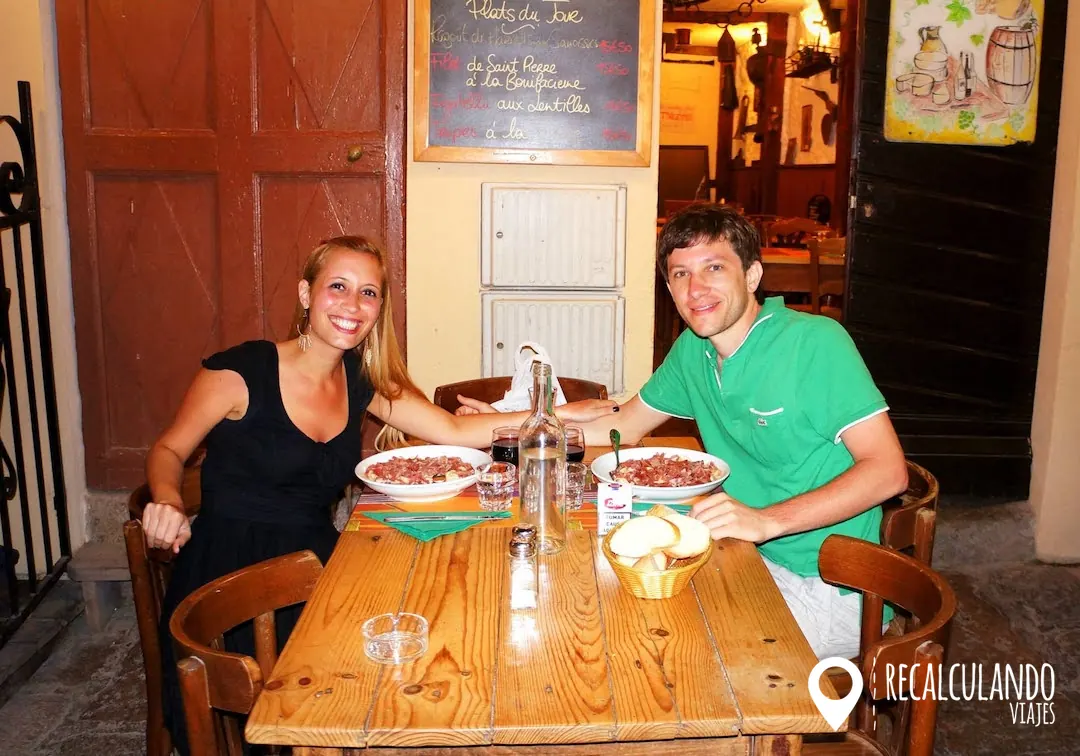
Eating well is part of what to see in Corsica, and here is the surprise: Corsican food is mountain food, not coastal. The star is the charcuterie of pork raised loose among chestnut trees: prisuttu (cured ham), coppa, lonzu, and figatellu, a liver sausage that is eaten grilled and is cold-season food, so in mid-summer you don’t always find it.
Eating in Corsica – Bonifacio
The other must-have is brocciu, a fresh sheep or goat milk cheese that appears everywhere: filling cannelloni, in omelets with mint, and, above all, in fiadone, the cheesecake with lemon that is the national dessert. To accompany coffee, canistrelli, dry cookies with anise or white wine.
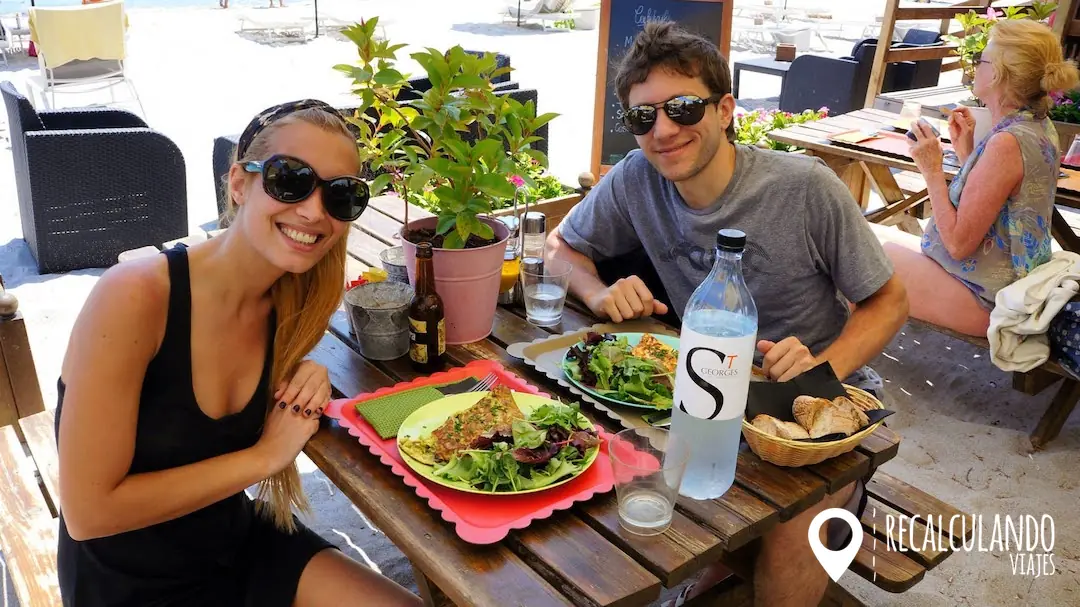
And to drink: Patrimonio and Ajaccio wines, myrtle liqueur (served chilled after a meal), and Pietra beer, made with chestnut flour. The chestnut, in fact, is the basis of half the interior cuisine, especially in the Castagniccia region.
We won’t recommend specific restaurants by name because on the island the season rules and many open only in summer. Our rule in Corsica was simple: move two streets away from the port and see if there are locals sitting.
Corsica Map: Things to do in Corsica
Here we leave you the map of Corsica with the 20 things to do in Corsica from this guide marked, so you can see how they are grouped: the southern block (Bonifacio, Porto-Vecchio, and beaches) is done perfectly in 3 days, while the west, interior, and north ask for a week more. You can open it on your phone and use it while driving.
Frequently asked questions about things to do in Corsica
How many days are needed to see Corsica?
With 3 days, you have enough to do the entire south: Bonifacio, Porto-Vecchio, and the beaches of Palombaggia, Rondinara, and Santa Giulia, which was our itinerary. To tour the entire island without rushing, including the west, interior, and north, calculate between 7 and 10 days.
What is the best time to travel to Corsica?
May, June, and September are the best months. You can enjoy the sea from June, and in September it is warmer than in spring, with fewer people and lower prices. July and August have the best weather, but also full beaches, jammed parking lots, and double the price for accommodation.
Is it necessary to rent a car in Corsica?
Yes. Public transport is very limited and does not reach the beaches, viewpoints, or interior villages. Renting a car is the only real way to tour the island. Book in advance because the available fleet is small and sells out in summer.
What is the most beautiful beach in Corsica?
Of those we visited, Rondinara: an almost enclosed bay, shell-shaped, with very shallow water and very fine sand. Palombaggia is the most famous and photographed, and Saleccia, in the north, is the wildest of all because it has no buildings around it.
How to get to Corsica from Spain?
By plane, the usual way is to fly with a layover in Marseille, Nice, or Paris to one of the four airports on the island: Ajaccio, Bastia, Figari, or Calvi. In summer, occasional direct routes from Barcelona appear. The other option is to arrive by car in Toulon, Nice, or Marseille and cross by ferry.
Is it convenient to combine Corsica and Sardinia on the same trip?
They combine very well and that’s what we did. The ferry between Santa Teresa Gallura, in Sardinia, and Bonifacio takes just 50 to 60 minutes and is the shortest and cheapest crossing of all. If you have two weeks, doing both islands in one trip makes perfect sense.
North or South Corsica if I’m going for a few days?
With less than 5 days, it is better to choose one half. The south has white sand beaches and Bonifacio, and you fly to Figari. The north and west have the Calanques of Piana, Scandola, Balagne, and Cap Corse, with wilder landscapes, and you fly to Bastia or Calvi.
Can you take a rental car from Sardinia to Corsica?
In general, no. Most rental companies prohibit taking the vehicle off the island by ferry, so the usual practice is to rent two cars, one on each island, and cross as a passenger. Always check the contract terms before booking.
Can you tour Corsica without a car?
Only in part. The Corsican train connects Bastia with Ajaccio and Calvi, and there are boats to the Lavezzi, Scandola, and Saleccia, but the beaches, viewpoints, and inland villages are out of reach. Without a car, you will see a fraction of the island.
Is Corsica expensive?
Yes, it is a medium-high price destination. Car rental averages about €50 per day in season, fuel is around €1.80/liter in 2026, several beach parking lots charge between €5 and €10 a day, and July and August accommodation prices skyrocket. Traveling in June or September lowers the bill quite a bit.
So, what to see in Corsica if it’s your first time?
If you ask us what to see in Corsica with little time, the answer is clear: the south. Bonifacio will leave you with your mouth open, and the beaches of Palombaggia, Rondinara, and Santa Giulia are of those that stay in your memory. Three days are enough, it’s done by car without rushing, and it works perfectly as a continuation of a trip through Sardinia, which was exactly our case.
If you have more days, the island gives you back double: the west with the Calanques of Piana and Scandola, the interior with Corte and the Restonica, and the north with Saleccia and the Balagne villages. It is a destination that requires a car, patience with the roads, and booking in advance, but it compensates for every curve.
We returned with the feeling of having seen just a little piece and with a great desire to return. Save this list of 20 things to do in Corsica, choose the itinerary that fits the days you have, and set your route calmly. If you like these Mediterranean destinations, our guides to what to see in Crete, Formentera, and France may also be useful, and don’t forget the luggage checklist before leaving. Safe travels!
ℹ️ **Total Transparency**
This article contains affiliate links. If you book through these links, we may receive a small commission at no additional cost to you. We only recommend services we use on our trips and trust. This helps us keep this blog free and continue creating useful content for you. Thank you for your support!
🔗 Resources & Useful Links for your trip to Corsica
Do you have questions or want to add your own recommendations on what to see in Corsica?
💬 Leave your comment or write to us, we love reading other travelers’ experiences.
Thank you very much for being part of this adventure!— Nanu & Facu 🌎 | Recalculando Viajes 💜