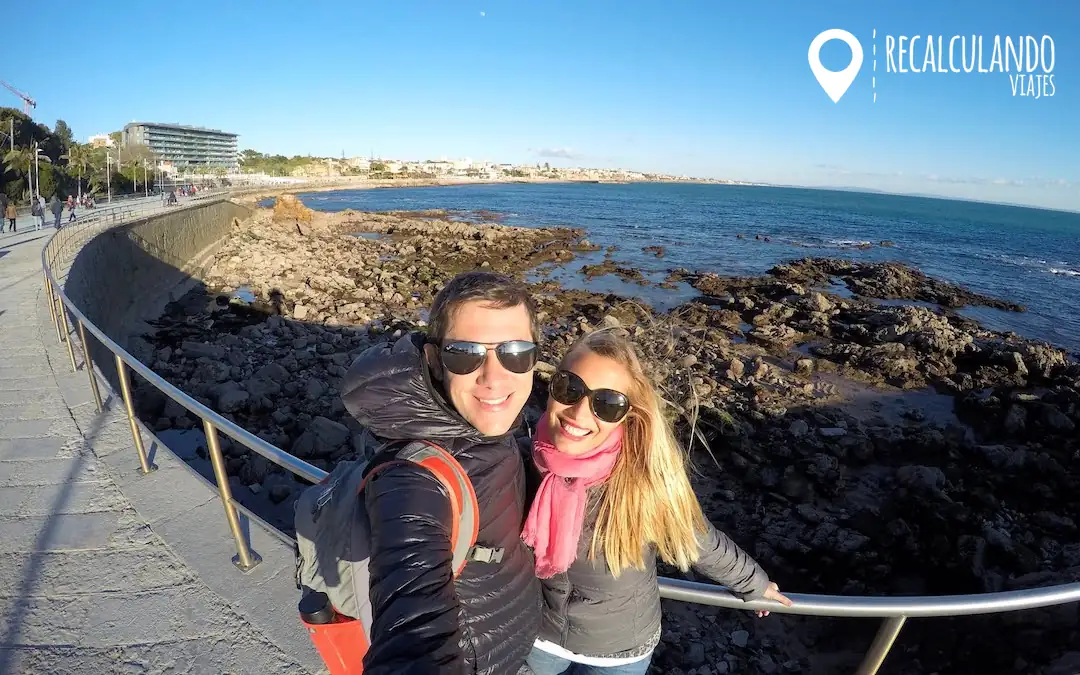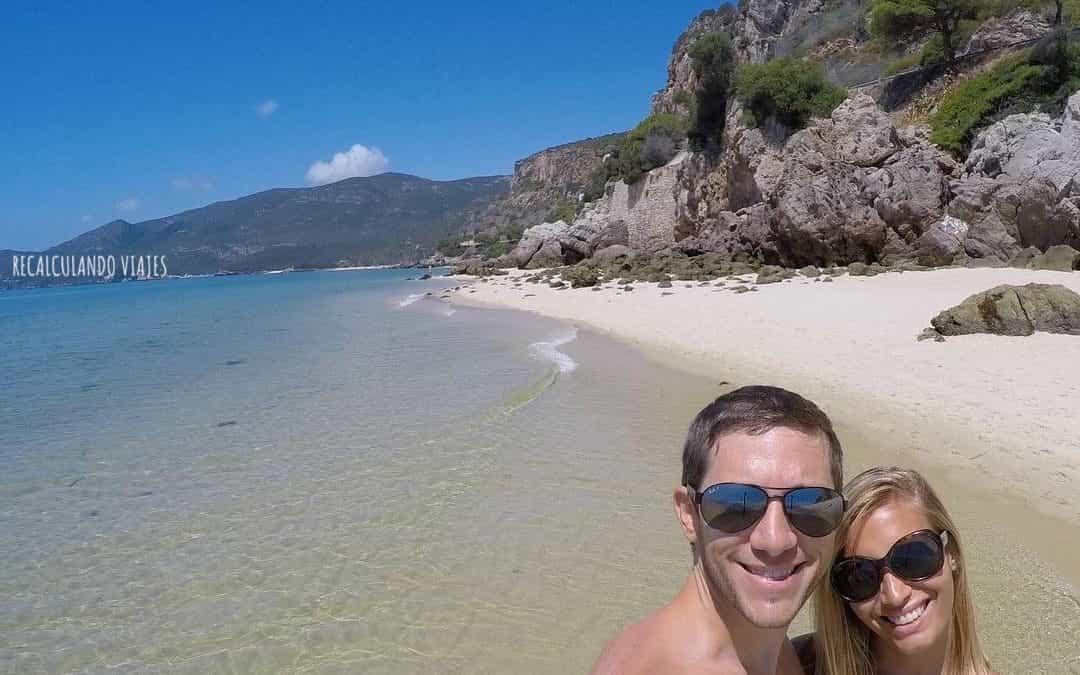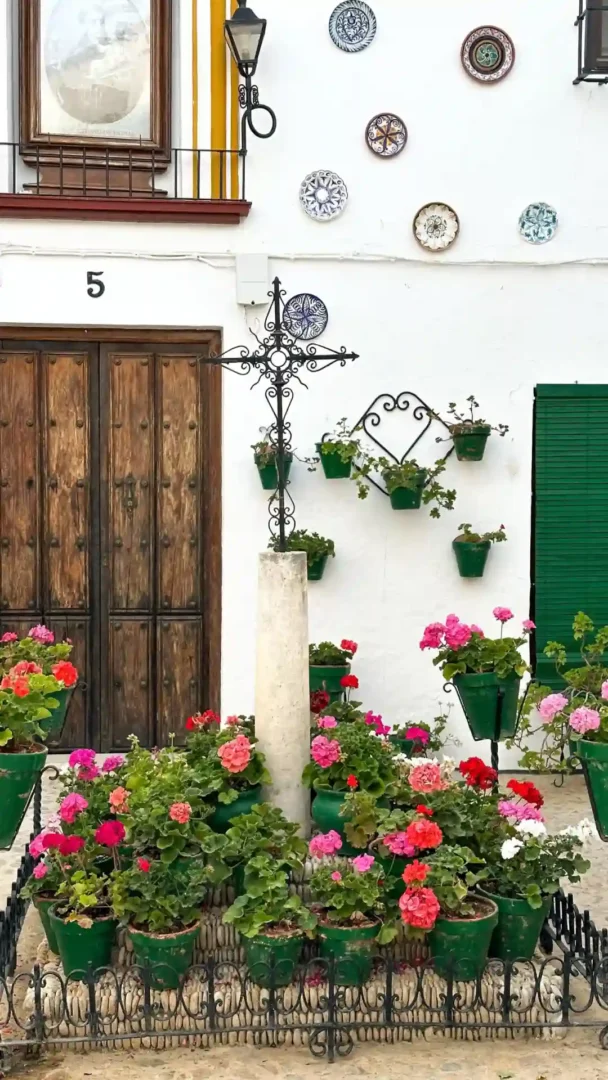
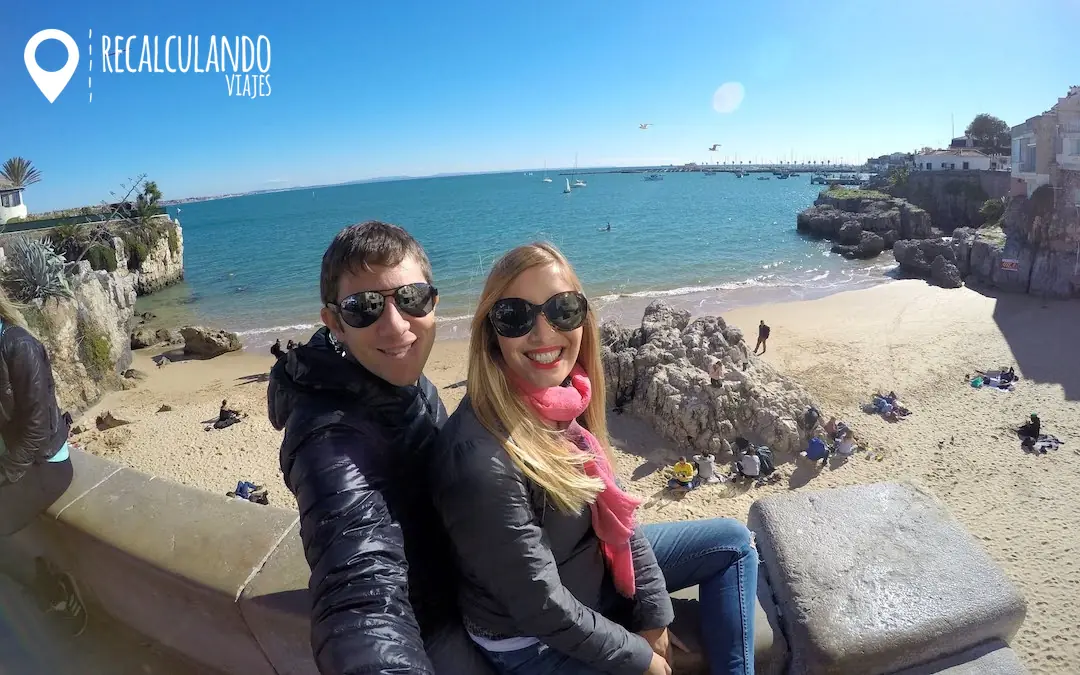
If you are looking for things to do in Cascais, let us tell you that this coastal town, just a 40-minute train ride from Lisbon, was one of the biggest surprises during our time in Portugal. In this guide, you will find the 22 things to do in Cascais that we liked the most, complete with a map, a one-day itinerary, updated prices, where to stay, where to park, and how to get there. We went at the end of January for the day, and we left wishing we had stayed the night.
For decades, Cascais was the seaside resort for the Portuguese royalty, and you can still tell: grand mansions, gardens, a citadel, museums that are almost all free, and a golden sand bay right in the center. Everything is walkable, which for us is the best plan there is.
🌍 Travel Insurance: 5% Off with IATI Seguros! 🌟
Take advantage of this offer and travel safe.
Things to do in Cascais Summary
| Category | Key Information |
|---|---|
| Destination | Cascais, the resort of the “Portuguese Riviera” (40 min from Lisbon). |
| Best time to visit | May to October (June and September are ideal). |
| Recommended duration | 1 day for the center; 2 or 3 days to include Guincho, Cabo da Roca, and Sintra. |
| Budget | €45-70 per person/day (food, transport, and entrance fees). |
| Transport | Train from Cais do Sodré (Lisbon) for €2.30-2.60. |
| Highlights | Citadel (Art District), Santa Marta lighthouse, seafront promenade (Paredão), and Boca do Inferno. |
| Gastronomy | Grilled fish, areias de Cascais, pastéis de nata, and bola de Berlim. |
| Top tip | Walk from Cascais to Estoril along the Paredão at sunset. |
Brief history of Cascais: from fishing village to royal resort
Before we dive into the things to do in Cascais, a little context helps because understanding where the town comes from really helps you enjoy it. The town was documented in 1364, although the area had been inhabited long before that, and for centuries it lived off two things: fishing and military defense of the entrance to the Tagus River, the water gateway to Lisbon. Hence the Citadel, the forts, and the towers you will find all along the coast.
The turning point came in 1870, when King Luis I chose the Cascais Citadel as the summer residence for the royal family. Behind the court came everything else: the aristocracy, the palaces, electric lighting (it was one of the first towns in the country to have it), and, in 1889, the train from Lisbon. In just a few decades, the fishing village became the fashionable seaside resort of Portugal, what today they call the Portuguese Riviera.
And there was a third chapter: during the Second World War, with Portugal neutral, Cascais and Estoril were filled with exiled royal families, diplomats, and spies. That strange mix of fishermen, deposed kings, and secret agents is still what you breathe walking around here.
1. Praia da Ribeira, the heart of Cascais
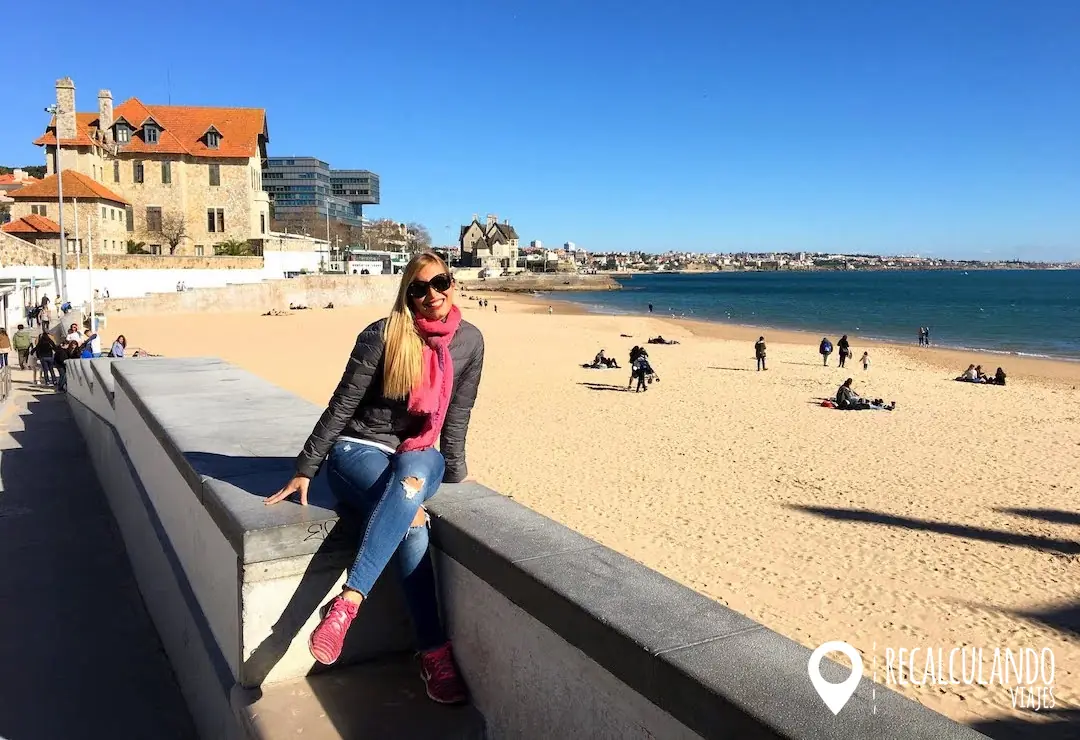
We start where everyone else does. Praia da Ribeira, also called Praia dos Pescadores (Fishermen’s Beach), is that crescent of sand that appears as soon as you leave the station and head down to the sea. It has fishing boats stranded on the sand, low-rise colored houses in the back, and the calm bay water in front.
It is an urban, small beach, and it gets crowded in summer. But in January, we had it almost to ourselves and it was perfect: we sat on the wall to watch them unload boxes of fish while the sun hit the facades from the side. That was the moment we said, “We’re staying here for a long time.”
TIPS: If you like photography, come first thing in the morning or near sunset. At noon, the light hits from above and flattens everything.
2. Rua Frederico Arouca and the historic center
One of the things to do in Cascais that costs the least and is most enjoyable is simply to get lost in the center. Rua Frederico Arouca is the main pedestrian street, with the black and white Portuguese pavement under your feet, and from there, small cobblestone alleys full of low-rise houses, tiles, and bougainvillea branch out.
It is a very commercial area, with clothing stores, ice cream parlors, and bakeries, so by mid-morning, it gets quite busy. We walked through it twice: once upon arriving, in a rush, and once on the way back, calmly. The second time was much better. Duck into the side streets, which is where patios with flowerpots and the prettiest houses appear.
If you want a specific route, these are the streets we liked the most: Rua Frederico Arouca, Rua da Misericórdia, Rua da Saudade, Rua dos Navegantes, and Rua Amarela, ending at Largo de Camões, a small square with terraces where time stands still. And something almost no one mentions: Cascais is full of murals and street art on side walls and even on the sidewalks. Keep looking up and down.
Keep in mind: on Sundays, many shops close or open later, but the bars and restaurants operate as usual.
3. Jardim Visconde da Luz and its antique fair
This is one of the things to do in Cascais that you run into without looking for it. Right across from the train station is this small park with a pond, ducks, huge trees, and benches in the shade. It is the meeting point for all of Cascais and a mandatory stop, even if just passing through.
What makes it special is the fair: on Wednesdays and Fridays, the Feira de Velharias, Antiguidades e Artesanato (Vintage, Antiques, and Craft Fair) is set up, with stalls selling old books, coins, loose tiles, vinyl records, and crafts. On Saturdays, there is another fair, the EcoMercadores. In winter, they operate from 9 AM to 6 PM, and in summer until 8 PM.
We stumbled upon a fair day without knowing it and spent a long time digging through drawers of old postcards. We ended up buying a loose tile that now hangs on our wall at home. One of those souvenirs that are worth much more than a magnet!
4. Praça 5 de Outubro and the Town Hall tiles
This is the main square of Cascais, open to the sea, with the Câmara Municipal building on one side. The facade has some beautiful blue and white tile panels, with saints and historical scenes, and it’s one of those things that if you’re looking at your phone, you’ll miss.
Inside the same building is the Museu da Vila, a small space that tells the history of the town from the Neolithic period to today, with archaeological pieces and some multimedia. Admission is free and it opens every day from 10 AM to 6 PM. We are not huge museum-goers unless they are essential or free, and this one falls into the second category, so if you get caught in a downpour, it is a perfect refuge.
5. Igreja de Nossa Senhora da Assunção
A few meters from the square is the parish church of Cascais, from the 16th century, rebuilt after the 1755 earthquake. From the outside, it is sober, white, almost austere. Inside, everything changes: 18th-century tile panels covering the walls and several paintings attributed to Josefa de Óbidos, one of the few recognized female painters of the Portuguese Baroque.
Admission is free. It is a ten-minute visit, but it is worth entering just to see the contrast between the white exterior and that blue interior. Over these years of traveling, we have seen many churches, and the surprise of opening the door and finding such an amount of tiles never gets old.
👩⚕️👨⚕️ A must-have for stress-free travel! 🌎✈️ ➜ Get a Quote, Compare & Buy
6. Mercado da Vila, one of the essential things to do in Cascais
The Cascais municipal market has been operating since 1952, and it was completely remodeled in 2014. Today it is two things at once: a real market, with fishmongers and butchers where locals shop, and a patio of restaurants, bars, and terraces that gets crowded at night.
The busy days are Wednesdays and Saturdays, when the Mercado Saloio is set up with local producers (from 6:30 AM to 2 PM), and on Wednesdays, there is also the Feira do Levante with clothes, pottery, and household items. On Saturday mornings, it adds the organic market of Agrobio. Sundays have rotating vintage and craft fairs.
Our advice: if you go to Cascais on a Wednesday or a Saturday, start your day here. It is where you will see the real town, not the one from the postcards.
7. Cascais Marina
The marina is west of the center, about a ten-minute walk from Praia da Ribeira, and it is a very pleasant stop even if you are not interested in boats. It is the largest marina on the Portuguese Riviera and one of the largest in the country: about 650 moorings, sailboats of all sizes, a small shopping center, and a row of restaurants and bars with terraces looking at the water. Top-level international regattas have been held here, including the America’s Cup.
Boat trips around the bay also depart from the piers, which are a different way to see the coast: you pass in front of the Santa Marta Lighthouse, the Boca do Inferno, and the Farol da Guia from the water. There are day trips, sunset trips, and dinghy excursions to try to spot dolphins. We didn’t do them, but it is one of the best-rated activities in Cascais.
We passed by here on our way to the Boca do Inferno and came back at sunset. With the sun going down and the masts silhouetted against the sky, the view is one of the best in town. Also, the bike path that reaches Guincho starts here, so if you rent a bike, this is your starting point.
Keep in mind: prices at the marina restaurants are significantly higher than those in the historic center. If you are looking to eat well and spend little, better head back to the center or the market.



8. Cascais Citadel and its artist neighborhood
The Citadel is a 16th-century fortress built to defend the entrance of the Tagus, and today it is one of the most interesting things to do in Cascais. You can enter the walled enclosure freely, and inside you find a town within a town: cobblestone streets, walls with a view of the sea, a luxury pousada installed in the old barracks, and the Cidadela Art District.
The Citadel is not just one construction but three sections joined together: the Tower of Santo António, from the 15th century and the oldest part; the Fortress of Nossa Senhora da Luz, from the 17th century; and the area of the old Royal Palace, where the royal family vacationed starting in 1870. All of that can be walked through freely inside the enclosure.
That artist neighborhood is what we liked the most: open workshops, galleries, murals, and design shops spread across the repurposed military buildings. You can go in to look without buying anything and without anyone rushing you.
We walked in almost by chance, thinking it was just a wall, and ended up spending over an hour there. It’s free and a lot of people pass by on the avenue without knowing it exists. Don’t make that mistake!
9. Citadel Palace and its galleries
Inside the same enclosure is the Citadel Palace, which was the summer residence of the Portuguese royal family and later of several Presidents of the Republic. Today it functions as a museum space and exhibition gallery.
Here you have to pay: the exhibition gallery costs €5, the visit to the palace another €5, and the combined ticket for both is €10. The visit to the palace is always guided and requires prior reservation, so if you are interested, it is better to organize it in advance through the official Bairro dos Museus website.
We didn’t go into the palace (we went for the day and preferred to use the time walking around), but many travelers recommend it for the rooms and the contemporary art collection.
10. Marechal Carmona Park
If there is one place in Cascais that we loved beyond the obvious, it was this park. They also call it Parque da Gandarinha, and it is a huge green lung right in the center, with trails, palm trees, a small lake, free-roaming peacocks, chickens, ducks, and a play area for children.
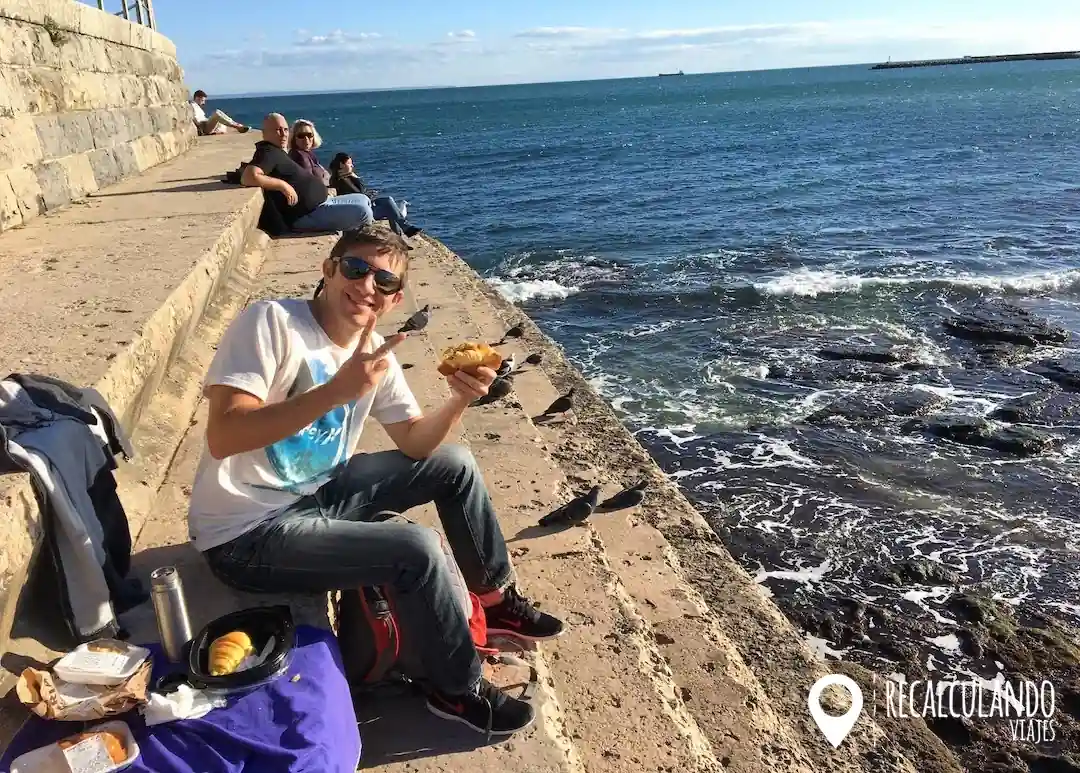
It is open every day and admission is free. We sat on a bench to eat something we had bought at the market and were there for like forty minutes listening to the peacocks screech. One came so close to us that it almost stole our food… we lost, haha.
It is the best stop on the route to rest your legs before continuing toward the coast.
11. Condes de Castro Guimarães Museum
Inside the park is the most photogenic building in Cascais: the former Tower of São Sebastião, built between 1897 and 1900 by the Irish-born aristocrat Jorge O’Neill. It is a mix of romantic castle, neo-Gothic tower, and Arab-inspired details, with a small bridge and a chapel next to it.
The Count of Castro Guimarães inherited it and in 1924 bequeathed it to the people of Cascais to be a museum and public library. It opened in 1931 and is the oldest museum in the municipality. Inside, there is Indo-Portuguese furniture, ceramics, paintings, and a library with more than 25,000 volumes, including the 1505 Chronicle of D. Afonso Henriques, with the first known representation of Lisbon.
Be careful with a fact that circulates incorrectly in several guides in Spanish: the jewel of the library is not a 15th-century book of hours, but the Chronicle of D. Afonso Henriques by Duarte Galvão, an illuminated manuscript from 1505 that contains the first known representation of Lisbon, by António de Ollanda. It predates the earthquake that destroyed half the city by 250 years, so it is practically the only portrait of what Lisbon was like before 1755.
Another curious fact we loved: in 1932 Fernando Pessoa applied for the position of curator of this museum and was rejected for lack of qualifications. It opens from Tuesday to Sunday, from 10 AM to 6 PM (it closes on Mondays), and today it does not appear in the price table of the Bairro dos Museus, so admission is free, although it is worth confirming before going.
12. Casa de Santa Maria
Following the coast toward the lighthouse appears this white house from 1902, also commissioned by Jorge O’Neill and decorated with 17th-century tiles and frescoes. It is one of those summer buildings that explain why this coast was called the Portuguese Riviera.
The best part is the terrace, with a direct view of the Atlantic and the lighthouse next door. We saw it from the outside, and the photo from the street is already worth the detour. Those who went inside highlight the painted wooden ceilings and the tile panels.
Keep in mind: it is part of the Bairro dos Museus circuit and shares management with the lighthouse, so check the schedules for both together so you don’t have to go twice.
13. Santa Marta Lighthouse Museum
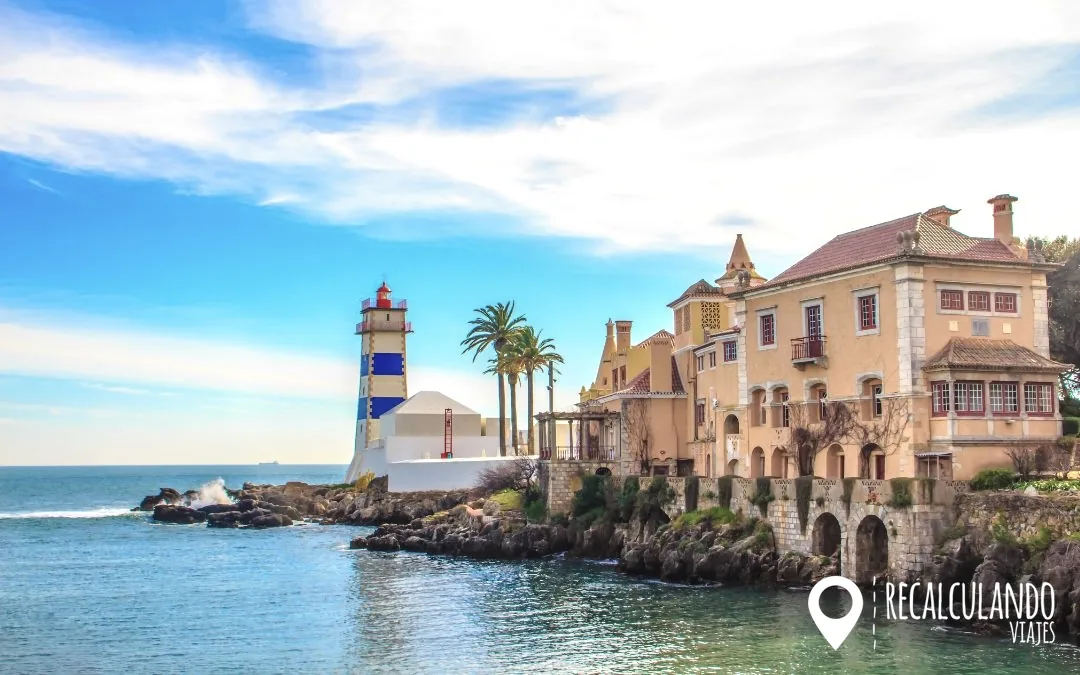
This is probably the most photographed corner of Cascais and for good reason: a blue and white striped lighthouse from 1868, planted on a 17th-century fort, with whitewashed walls, palm trees around, and the ocean in the background. It is hard to believe it is a working building and not a postcard.
Since 2007, it has also functioned as a lighthouse museum, with huge Fresnel lenses, history of Portuguese lighthouse keepers, and access to the batteries of the fort with an open view of the Atlantic. Admission to the museum is free and it opens Tuesday to Sunday (Tuesday to Friday from 10 AM to 5 PM; Saturday and Sunday from 10 AM to 1 PM and 2 PM to 5 PM).
The fact that almost no one tells you: you can climb the tower, but only from Wednesday to Sunday, from 10:30 AM to 12 PM and 2:30 PM to 5 PM, and climbs are suspended if there is strong wind or rain. Only permitted from age 6. We arrived on a Monday… and we stayed outside, looking at the lighthouse from the wall. Learn from our mistake and check the day before planning your route.
14. Praia da Rainha, the hidden beach in the center
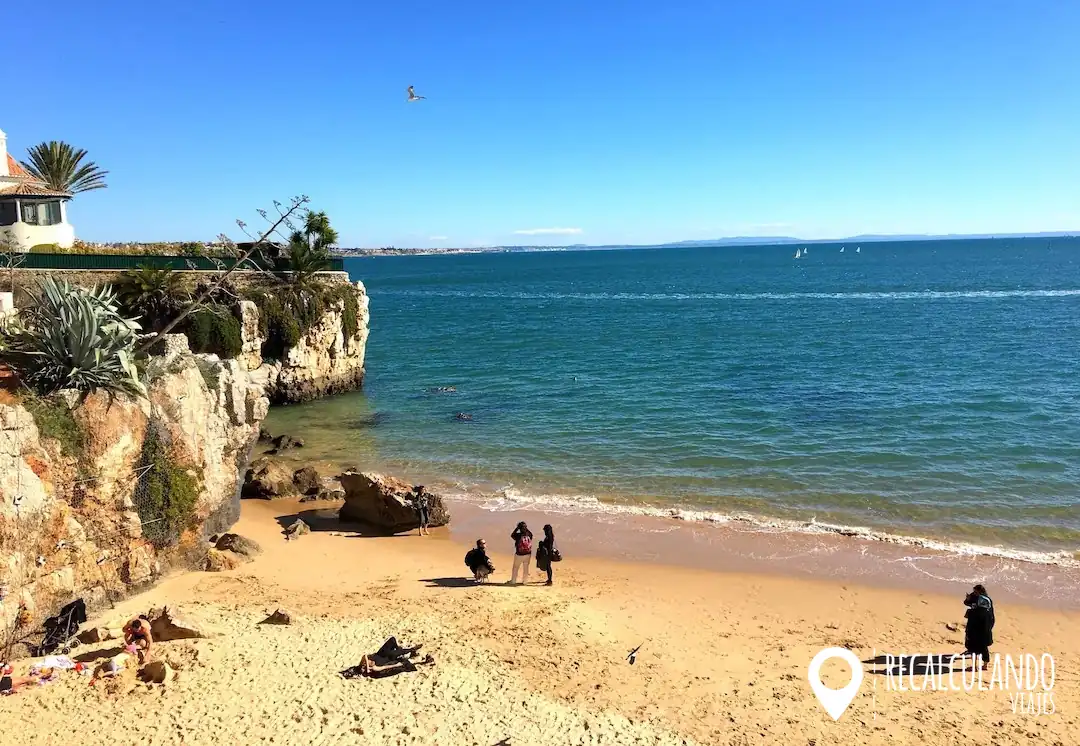
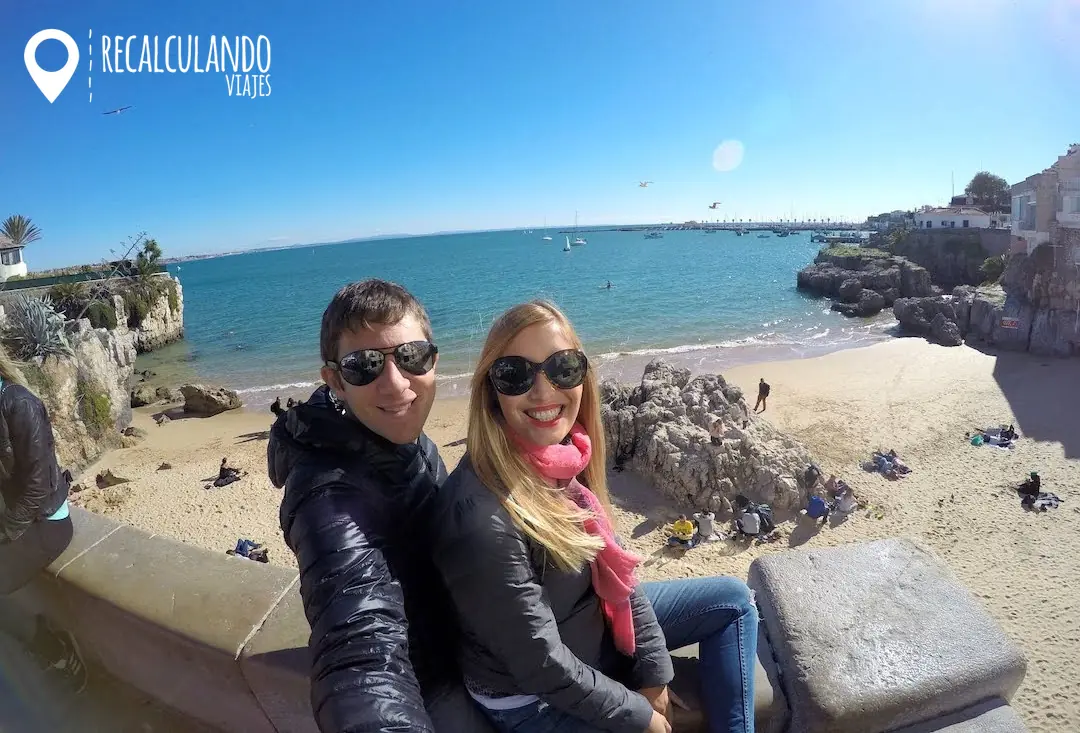
It is a tiny cove tucked between rocks, right in the center, which you get to by some stairs. It is called Praia da Rainha (Queen’s Beach) because, as they say, it was the favorite beach of Queen Amélia, who used to come to bathe here when the court vacationed in Cascais.
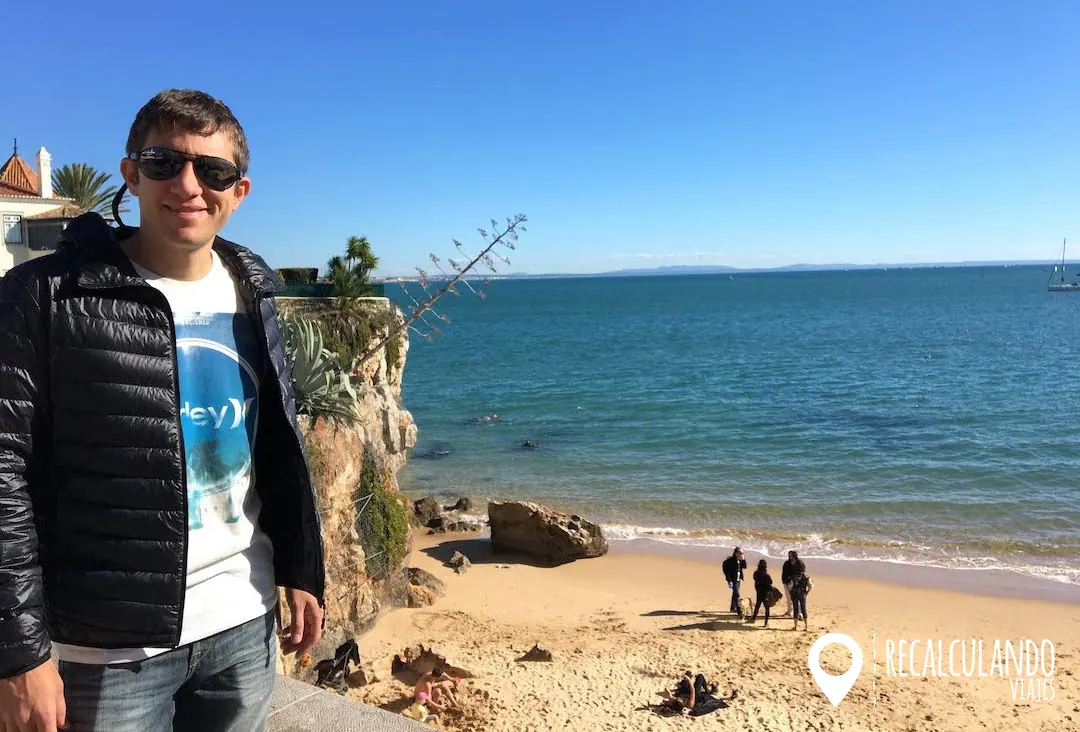
It is one of the prettiest postcards of the town: light sand, turquoise water, and rock walls on the sides. In summer, you can’t fit a pin in because it is really small, so if you want a spot, you have to get up early. In January, it was empty and we thought it was magical.
TIPS: even if you don’t swim, take a peek from the viewpoint above. The view from the edge is better than from the sand. And very close, below the lighthouse, is Praia de Santa Marta, a tiny natural cove of transparent water where locals bathe and which almost all tourists pass by.
15. Praia da Conceição and Praia da Duquesa
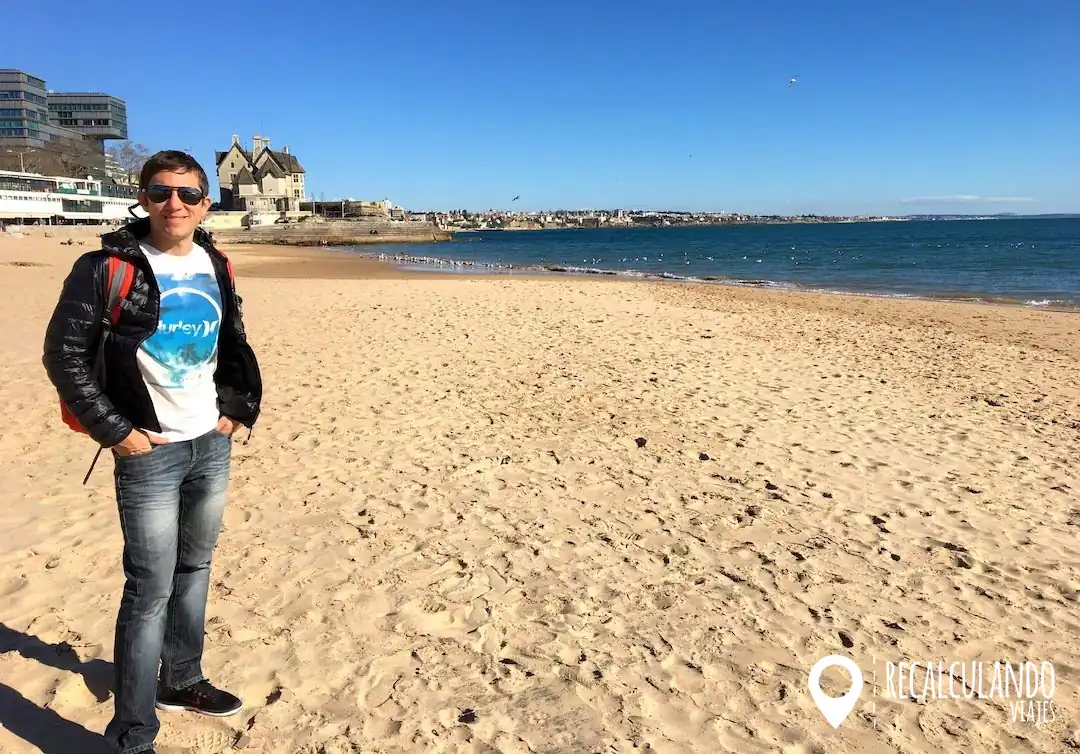
These two beaches are actually one single continuous sand stretch that changes its name in the middle, and they are the best in the center to spend the day. They are on the east side of Cascais, a ten-minute walk from the station, with wide sand, calm water, and all services: bathrooms, showers, rental umbrellas, and bars.
Conceição is the most protected and family-friendly; Duquesa opens up a bit more and usually has some waves. The seafront promenade to Estoril starts from here, so they combine perfectly with point 21 of this list.
If you keep walking toward Estoril along the Paredão, you will find three more corners that almost no one includes on the lists: Praia da Rata, small and tucked between rocks; the Alberto Romano oceanic pool, with saltwater and lifeguards, ideal if you are traveling with children and the Atlantic seems too rough; and already in Estoril, Praia do Tamariz with its own sea pool.
If you like urban beaches with good sand and all services nearby, these two are the safe bet. If you are looking for something wilder, wait for Guincho. And if you come from reading about the beaches of the Algarve, be careful: here the sea is quite a bit colder.
16. Casa das Histórias Paula Rego
A building impossible to confuse: two painted red concrete pyramids in the middle of the greenery, the work of architect Eduardo Souto de Moura, winner of the Pritzker Prize. He designed it at the request of Paula Rego herself, the most recognized Portuguese artist of her generation, who in 2006 chose Cascais for her museum.
Inside, there are about 750 m² of exhibition space with graphic work by Rego and some pieces by her husband, Victor Willing, plus two temporary exhibitions per year, a shop, a cafeteria with a garden terrace, and an auditorium.
We didn’t go in, but many travelers point to it as the best cultural visit in Cascais, and the architecture alone justifies going there. Admission costs €5 and the schedule changes according to the season: from 10 AM to 7 PM from April 1 to October 31, and from 10 AM to 6 PM from November 1 to March 31.
17. Boca do Inferno, one of the most famous things to do in Cascais
About two kilometers west of the center, walking along the coast, is the Boca do Inferno (Hell’s Mouth): an arch and a chasm opened in the cliff by millions of years of erosion, where the sea enters with force and hits the rock walls. The name is not an exaggeration when there is a storm.
The visit is free and there are walkways and viewpoints with railings. A craft market is set up around it, with hand-painted ceramics and those wool slippers that locals buy every winter.
We are honest: if you go in summer with the sea calm, it is a hole in the rock and that’s it. We were lucky and went in January, with heavy swells, and the water exploded upwards. It was impressive. The walk from the center, skirting the entire coast, is just as pretty as the destination, so it is worth it anyway.
TIPS: the best light is at sunset, and a tip for film buffs: this cave was filmed in 1896 in A Sea Cave Near Lisbon, one of the first films shot in Portugal.
18. Praia do Guincho and its dunes
About 9 kilometers from the center is the wildest beach in the area: 800 meters of sand open to the Atlantic, protected dunes, almost permanent wind, and a rough sea. It is within the Sintra-Cascais Natural Park and in 2012 was chosen as one of the Seven Wonders of Portugal in the sports beach category.
It is the mecca for surfing, windsurfing, and kitesurfing in the region, with international championships every year. It is not a beach for calm swimming: currents are strong and the water is cold.
Before reaching Guincho, the bike path passes by two much quieter beaches that deserve a stop: Praia da Arriba, small and famous for having the best sunsets on the coast, and Praia da Cresmina, famous for its protected dune system with wooden walkways and an interpretation center.
We didn’t get to Guincho because we went for the day and didn’t have enough time, but it is one of the things we left pending. You can get there by bike on the bike path that leaves from the Cascais Marina (about 9 km along the sea, the oldest in the municipality, inaugurated in 1996) or by Carris Metropolitana bus from the Cascais terminal, which is under the Cascais Villa shopping center, right next to the train station.
Here is an important warning: in 2023, the buses in the area changed from Scotturb to Carris Metropolitana and all lines were renumbered. Check the current number on the Carris Metropolitana website on the same day, which also has real-time times.
19. Duna da Cresmina, Farol da Guia and Forte de São Jorge de Oitavos
This is the stretch of coast that is traveled by the bike path between Cascais and Guincho, and it is one of the things to do in Cascais that directly doesn’t appear in most guides in Spanish. They are three short stops linked together.
The Duna da Cresmina is a living dune system, with wooden walkways, explanatory panels, and a free interpretation center. It is a protected ecosystem within the Sintra-Cascais Natural Park and is walked in half an hour.
The Farol da Guia is from the 18th century, stands on the cliff, and functions as a viewpoint. And the Forte de São Jorge de Oitavos, from the 17th century, was reopened to the public after a restoration and preserves the battery of cannons pointing at the Atlantic.
We didn’t do this stretch, but it is exactly the route we would do if we returned for more days. Keep in mind: the fort and interpretation center hours are limited and change by season, so it is better to look at them on the Cascais tourism website before going all the way there.
20. Sintra-Cascais Natural Park and Cabo da Roca
Cascais is the gateway to the Sintra-Cascais Natural Park, over 14,000 hectares of cliffs, dunes, mountains, and palaces between the sea and Sintra. If you like hiking, this alone justifies adding a full day.
The star point is Cabo da Roca, the westernmost point of continental Europe, with cliffs of about 140 meters and a lighthouse planted on the edge. There is the stone with verses by Camões about the place where the land ends and the sea begins. It is reached from the Cascais terminal on line 1624 in about 30 minutes, for about €2.60 per trip, and there is free public parking but with few spots, so in summer, it is better to go early or at sunset.
Other corners of the park that were highly recommended to us: Praia da Ursa, a wild beach that you reach by a demanding path and where a rock shaped like a bear stands out; and Santuário da Peninha, a hermitage on top of the mountain with one of the best views in the entire region, from Guincho to Sintra.
We didn’t get to any of these places because we went for the day from Lisbon, so we tell you based on what we found out and what we were told. If you go without a car, the most comfortable way to cover the park is with an organized tour.
21. The Paredão, the seafront promenade between Cascais and Estoril
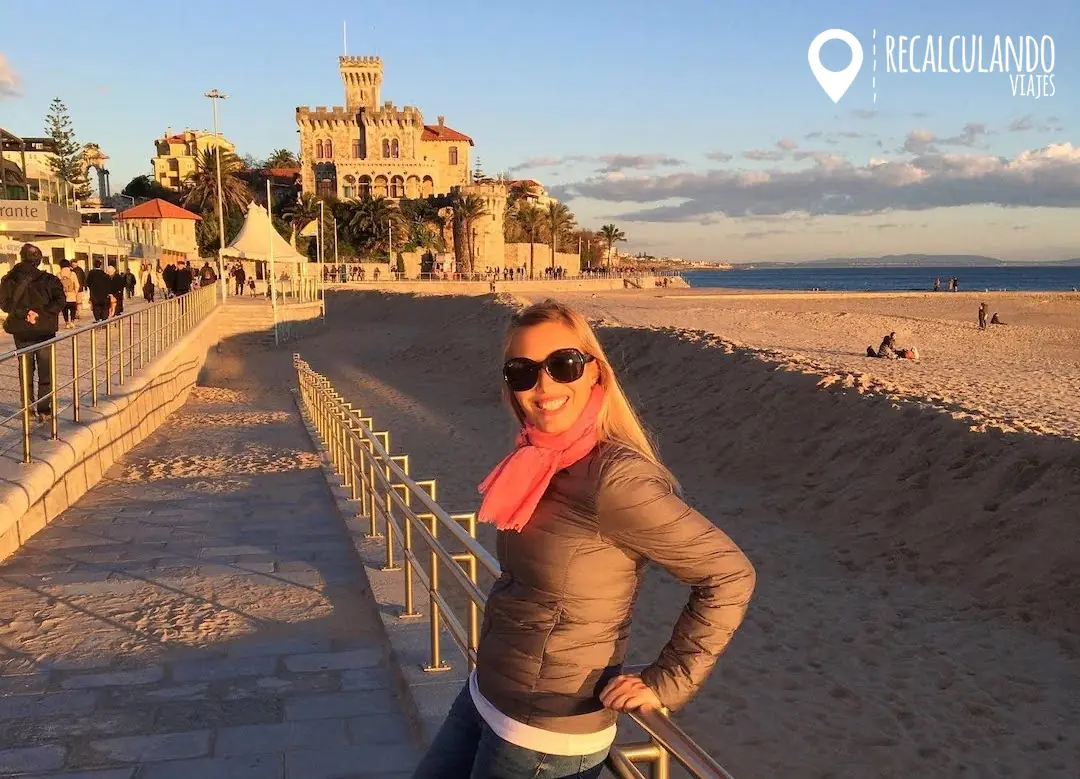
This was our favorite part of the day and it is one of the things to do in Cascais that doesn’t appear in most lists. The Paredão is a pedestrian promenade right next to the sea that connects Cascais with Estoril: about 2 kilometers from Praia do Tamariz to the center of Cascais, and around 3 if you start further away, in São João do Estoril.
It goes along the edge of the water the whole time, passing by small beaches, terraces, oceanic pools, and 19th-century mansions. It is done in about 30 or 40 minutes without rushing, it is flat, lit at night, and is full of local people jogging, walking the dog, or simply sitting and watching the sea. It is completely accessible with a wheelchair and a stroller.
We did it on the way back from Estoril, near sunset, and it was one of those moments that stay with you. The sun going down over the Atlantic, the waves breaking against the wall, zero rush… You can’t miss it!
22. Estoril: casino, Tamariz, and a spy vibe
Estoril is one train stop from Cascais (or that walk along the Paredão we just recommended to you) and deserves its own few hours. We toured it the same day and it seemed like a perfect complement.
Casino Estoril is one of the largest in Europe and has an incredible history: during the Second World War, with Portugal neutral, diplomats, exiles, and spies of all sides passed through here. That atmosphere inspired Ian Fleming for Casino Royale, the first James Bond novel. Admission is free, you must be 18 or older, and it opens every day from 3 PM to 3 AM.
In front of the casino are the gardens, with fountains and palm trees, and going down you reach Praia do Tamariz, the most elegant beach on the coast, with its saltwater ocean pool and the Forte da Cruz on the side. Opposite is the Hotel Palácio Estoril, where the real spies stayed and where part of On Her Majesty’s Secret Service was filmed.
We walked through the gardens, went down to Tamariz, and returned along the Paredão. A two-hour plan that rounds off any visit to Cascais.
More information in the Guide: Things to do in Estoril
Itinerary to see Cascais in one day
This is more or less the route we took to cover the main things to do in Cascais in one day, adjusted with what we learned on the fly. Everything is done on foot except the stretch to Estoril, which you can do by train if you are tired.
One-day route through Cascais and Estoril from Lisbon
| Approximate time | What to do |
|---|---|
| 9:30 – 10:30 | Arrival by train from Lisbon and walk through Jardim Visconde da Luz and Mercado da Vila |
| 10:30 – 12:00 | Tour the historic center, Rua Frederico Arouca, Praça 5 de Outubro, and the church |
| 12:00 – 13:00 | Enjoy Praia da Ribeira and Praia da Rainha |
| 13:00 – 15:00 | Visit Marechal Carmona Park and the Condes de Castro Guimarães Museum, with time for lunch |
| 15:00 – 16:30 | Tour the Citadel, the Art District, and the Cascais Marina |
| 16:30 – 18:00 | Visit the Casa de Santa Maria and Santa Marta Lighthouse, and continue to Boca do Inferno |
| 18:00 – 19:30 | Return toward the center along the seafront and walk the Paredão in the direction of Estoril |
| 19:30 – 20:30 | Estoril Casino Gardens, Praia do Tamariz, and sunset |
| From 8:30 PM | Train back to Lisbon from Estoril |
| Approximate time | What to do on day 2 |
|---|---|
| 9:00 – 10:30 | Rent a bike at the Marina and start the tour on the bike path toward the west |
| 10:30 – 12:30 | Stop at Farol da Guia, Forte de São Jorge de Oitavos, and Duna da Cresmina |
| 12:30 – 14:00 | Enjoy Praia do Guincho, walk the paths, and stroll among the dunes |
| 14:00 – 15:30 | Return to Cascais and take a break for lunch |
| 15:30 – 17:00 | Take the bus to Cabo da Roca from the Cascais terminal |
| 17:00 – 19:00 | Explore Cabo da Roca, enjoy the cliffs, and wait for sunset before returning |
If you have three days, the third is for Sintra in full. And if you are going to be in the area longer, we leave you our guide on how to plan your trip to organize everything without going crazy.
Accommodation in Cascais
Many people cover the things to do in Cascais in a day from Lisbon, as we did, but if you can stay the night, do it. The town changes completely when those who return on the seven o’clock train leave: the terraces fill with locals and the Paredão at sunset is something else.
➜ See available accommodation in Cascais
These are the areas you should look at:
- Historic center: the most practical if you come without a car. You walk to everything, you have restaurants and bars next door, and you are five minutes from the station. It is also the most expensive and the noisiest on weekends.
- Marina area and Citadel: quieter, with high-end hotels and views of the marina. Ideal if you are looking for calm without moving away.
- Monte Estoril and Estoril: one or two train stops, prices quite a bit friendlier, and with a beach at the door. Our recommendation if you are traveling on a tight budget.
- Santa Marta and the Citadel: the quietest area and with the best sea views, next to the lighthouse and the park. Perfect if you are looking for calm without moving away from the center.
- Guincho area: hotels with charm in the middle of the natural park, but you definitely need transport, a car, or a bike.
Where to Stay in Cascais: Map and Prices
Below, we share with you the map with availability and updated prices for your travel dates, comparing hotels, apartments, and hostels throughout the area:
TIPS: First: if you come by car, choose accommodation that includes a parking space, especially between June and September. You will save yourself driving in circles and paying for extra parking.
Second: book as far in advance as possible, because in summer Cascais is one of the places that runs out of availability first on the entire Lisbon coast.
How to get to Cascais from Lisbon
To get to the things to do in Cascais from the capital, the simplest, cheapest, and most comfortable way is the train, and it is the one we used. The Linha de Cascais has connected Lisbon with the coast since 1889 and goes almost the entire way next to the Tagus River and then the sea, so the trip is already part of the ride.
| Option | Duration | Approximate price | Booking |
|---|---|---|---|
| Train from Cais do Sodré | 33-40 minutes | €2.30-2.60 per trip | — |
| Carris Metropolitana Bus | 50-70 minutes | €2.60 cash / €1.55 with Navegante card | — |
| Rental car | 30-40 minutes | Tolls and parking separate | ➜ Book a car |
| Taxi or Uber | 30-40 minutes | €30-45 depending on the time | ➜ Book Transfer |
Train keys we wish we had known before:
- It leaves from the Cais do Sodré station, connected to the green line of the Lisbon metro. Cascais is the last stop, so there is no way to go past it.
- The frequency is one train every 12 to 20 minutes depending on the time, from 5:30 AM to approx midnight.
- Tickets are loaded onto the Navegante rechargeable card, which is bought at the station machines. In high season, the lines for the machines are long, so leave yourself some room.
- You must validate the card upon entering and exiting. They perform checks.
- Urban trains do not have bathrooms. Note this if you are traveling with children.
A great fact: at the CP ticket offices of the Linha de Cascais, they sell an integrated ticket for €9 that includes the round-trip train from Cais do Sodré plus admission to four cultural spaces (Cascais Cultural Center, Casa das Histórias Paula Rego, Casa Duarte Pinto Coelho, and the Citadel Palace). If you were planning on going into even two of them, you save a few euros. It is only bought at CP ticket offices, not online. Updated schedules are always on the Comboios de Portugal website.
How to get to Cascais from Lisbon Airport
If you land at Humberto Delgado airport and go straight to Cascais, there is no direct train connection. These are your options:
- Metro + train: red line of the metro to Alameda, change to the green line to Cais do Sodré and then the train to Cascais. It is the cheapest, but with suitcases and two transfers, it gets heavy. Calculate an hour and a half door to door.
- Private transfer or taxi: about 40 minutes and between €35 and €55 depending on the time and traffic. It is the most comfortable if you arrive at night, travel with children, or bring a lot of luggage. ➜ Transfers from Lisbon to Cascais (Here)
- Rental car: it is picked up at the airport itself and in a long half hour you are in Cascais via the A5.
Where to park in Cascais
If you come by car to tour the things to do in Cascais, this is the point that causes the most headaches and almost no one tells you about beforehand. Looking for a spot on the street near the beach or the historic center in high season is literally wasting half a morning.
- Use the covered public parking lots in the center and in the station area. They are paid but take the problem off your hands.
- There are free parking zones further away from the center, for example in the surroundings of Marechal Carmona Park. They fill up early.
- At Praia do Guincho, parking is free, so if you are going to spend the day at the beach, it is better to go straight there.
- Most of the historic center is pedestrian: don’t try to enter with the car, it is not allowed and fines exist.
Our honest advice: if you come from Lisbon just for the day, leave the car and come by train. It is cheaper, faster, and you save all this.
If you prefer to move freely around the area (Sintra, Cabo da Roca, Guincho, Ericeira), the car is a great option. We always compare prices here:
How to get around Cascais
The good news is that you almost don’t need transport. All the things to do in Cascais in the historic center, plus the Citadel, the lighthouse, and the Boca do Inferno, are within a two-kilometer radius and are done on foot along the coast.
For what remains further away:
- Bicycle: the bike path from the Marina to Guincho is about 9 flat kilometers next to the sea. It is the prettiest way to get to the big beach.
- Bus: Carris Metropolitana covers the entire municipality. With the Navegante card, the trip costs quite a bit less than paying in cash to the driver.
- Train: to move between Cascais, Monte Estoril, Estoril, and São João do Estoril, it is the fastest, although the Paredão is prettier.
A practical tip: to use maps, real-time schedules, and book on the fly, it is convenient to have mobile data from the moment you land. We use eSIM so we don’t have to fight with physical cards or roaming.
What to eat in Cascais
After walking so much between the things to do in Cascais, it’s time to sit down. Cascais is a fishing town and that is still noticeable at the table. These are the things you can’t miss:
- Grilled fish and seafood: sea bream, sea bass, sardines in season. It is ordered by weight, so ask the price per kilo before they bring it to you, which is where surprises happen.
- Areias de Cascais: the typical cookies of the town, covered in sugar. They are sold in the center’s bakeries and are the perfect edible souvenir.
- Pastéis de nata: obviously, but they are as good here as in Lisbon and with less of a line.
- Bola de Berlim: the cream-filled bomb sold on the beach. A classic of the Portuguese summer.
- Ginjinha: the cherry liqueur that is drunk in a little chocolate cup. Ideal for the cold winter.
Where to eat in Cascais without falling into the tourist trap
Here we are going to be honest with you: we are not going to throw a list of restaurants with names and surnames that we didn’t try. We prefer to give you the criteria, which works always and doesn’t get outdated when a local changes owners.
- Mercado da Vila: the best value for money in town. You eat standing or at common tables, with fresh product and market prices, not postcard prices.
- Side streets of the historic center: move two blocks away from Rua Frederico Arouca and the beach. There, prices go down and quality goes up. We ate in that area and did well.
- Marina and first line of the beach: the views are spectacular and the prices too. Perfect for a drink at sunset, not so much for lunch every day.
- Estoril and São João do Estoril: one train stop away, with neighborhood restaurants where neighbors eat and prices quite a bit friendlier.
The rule is the usual: the closer to the beach and to a menu translated into five languages with photos, the more expensive and in some cases less tasty. And if the fish is ordered by weight, ask for the price per kilo before they bring it to the table.
Travel insurance for Portugal
Portugal is a safe country with a good healthcare system, but if you are from outside the European Union, medical care is not free and an emergency visit can run you several hundred euros. Add that a good part of the plan in Cascais involves the sea, bikes, and cliff walks, where a sprained ankle is more common than it seems.
We have been traveling for over nine years and never leave without insurance. We use IATI because it covers medical assistance, cancellations, and adventure sports well, and because when we had to use it, they responded quickly. With our link, you have a permanent 5% discount, and during discount campaign periods, it reaches up to 15%.
If you want to compare coverage and prices between different companies before deciding, we leave you our complete comparison of the best travel insurance for Europe.

Excursions from Cascais
When you have covered the things to do in Cascais, the town becomes a great base to see the rest of the coast and the mountain. These are the getaways that are done the most:
- Sintra: the Pena Palace, the Moorish Castle, and the Quinta da Regaleira are 30-40 minutes by bus from the Cascais terminal. It is the classic complement and enough for a full day.
- Cabo da Roca: the westernmost point of Europe, with 150-meter cliffs. It is reached on line 1624 from the Cascais terminal in about 30 minutes, for about €2.60 per trip. We didn’t get there, but it is the excursion that was most recommended to us.
- Lisbon: 40 minutes by train. If you stay in Cascais, you can do the reverse path and visit the capital without paying capital prices.
- Óbidos: walled medieval town an hour away to the north, one of the prettiest in Portugal.
- Ericeira: surfing town declared a World Surfing Reserve, an hour by car to the north.
Free tours and guided visits in Cascais
Cascais has free walking tours in Spanish that leave from the center and last between two and three hours. They are free in the sense that you don’t pay a fixed fee: at the end, you leave a tip for the guide according to what you thought. For us, they are a great way to start a visit, because in two hours they organize the history of the place for you and then you walk the rest of the day understanding what you see.
There are also combined tours that leave from Cascais or Lisbon and include Cabo da Roca, the Boca do Inferno, and the Santuário da Peninha on the same day, which is the best solution if you don’t drive and want to cover the natural park.
Boat trips around Cascais Bay
Several options depart from the Marina: one or two-hour trips around the bay, specific sunset trips, and dinghy excursions to spot dolphins. From the water, you see the Santa Marta Lighthouse, the Boca do Inferno, and the Farol da Guia from a completely different perspective than from the coast. It is advisable to book in advance in summer, because spots fly.
If you prefer to go with a guide in Spanish and without fighting with bus schedules, excursions from the Lisbon and Cascais area with free cancellation can be booked here:
And if after Cascais you continue south, don’t miss our guide to Figueirinha Beach, in the Arrábida mountains, nor the rest of our articles about Portugal.
Map of the things to do in Cascais
We put together this map with the 22 things to do in Cascais from this guide, plus train stations, parking lots, and places to rent bikes. You can open it on your phone and use it while you walk.
Frequently asked questions about things to do in Cascais
How many days are needed to see Cascais?
One full day is enough to walk through the historic center, the central beaches, the Citadel, the Santa Marta lighthouse, and Boca do Inferno. If you want to add Guincho beach, a bike ride, and a beach afternoon without rushing, two or three days are ideal.
What to do in Cascais in one day?
The most efficient route is Mercado da Vila, historic center, Praça 5 de Outubro, Praia da Ribeira, Praia da Rainha, Marechal Carmona Park, Citadel, Marina, Santa Marta Lighthouse, and Boca do Inferno. Everything is done on foot and ends perfectly by walking the Paredão to Estoril to watch the sunset.
How to get to Cascais from Lisbon?
By train from the Cais do Sodré station, on the Linha de Cascais. The trip lasts between 33 and 40 minutes, there are departures every 12 to 20 minutes, and the ticket costs between €2.30 and €2.60 per trip. Cascais is the last stop on the line, so there is no way to get lost.
Can you visit Sintra and Cascais in one day?
You can, but it is a very demanding day and you will see both places in a rush. Sintra alone needs a full day for the palaces and lines. If you have little time, our recommendation is to dedicate a day to each and use the 1624 bus between them, which also passes through Cabo da Roca.
What is the best beach in Cascais?
Depends on what you are looking for. To spend the day with all services and calm water, Praia da Conceição and Praia da Duquesa are the best. To take the prettiest photo, Praia da Rainha. And for surfing, wind, and wild scenery, Praia do Guincho, nine kilometers from the center.
What to do in Cascais for free?
Quite a bit more than it seems. The Citadel grounds and Cidadela Art District, Marechal Carmona Park, Museu da Vila, Santa Marta Lighthouse Museum, Condes de Castro Guimarães Museum, Nossa Senhora da Assunção church, Boca do Inferno, all the beaches, and the Paredão promenade to Estoril are free.
Where to park in Cascais?
The most practical are the covered public parking lots in the center and the station area, which are paid. There are free zones further away, like the surroundings of Marechal Carmona Park, but they fill up early. At Praia do Guincho, parking is free. The historic center is pedestrian, so you cannot enter with a car.
How much does the train from Lisbon to Cascais cost?
Between €2.30 and €2.60 per trip according to current rates, loaded on the Navegante rechargeable card purchased at station machines. There is also an integrated €9 ticket that includes the round trip plus admission to four cultural spaces, and it is sold only at CP ticket offices on the Linha de Cascais.
What is better, Cascais or Estoril?
Cascais has much more to see: historic center, museums, Citadel, lighthouse, and Boca do Inferno. Estoril is more residential and elegant, with the casino, gardens, and Praia do Tamariz. Our recommendation is not to choose: they are joined by the Paredão and both are done in the same day walking for half an hour.
What is the best time to visit Cascais?
May to October to enjoy the sea, with June and September as the sweet spot between good weather and fewer people. In winter it has an advantage: Boca do Inferno with heavy swells is much more impressive.
Conclusion: why Cascais deserves your time
When we put together the list of things to do in Cascais, we thought it was a mid-morning stop from Lisbon. We were dead wrong. It is a town that has an urban beach, historic center with tiles, a fortress turned into an artist neighborhood, a park with free-roaming peacocks, free museums, and one of the prettiest seafront promenades we’ve walked in Europe.
If you have to stick with three things from the 22 things to do in Cascais in this guide, we’ll take these: the Cidadela Art District, which almost no one visits; the Santa Marta Lighthouse at sunset; and the walk along the Paredão to Estoril, with the Atlantic crashing on the side.
Our final advice: don’t do it in two hours. Get off the train early, walk without rushing, and stay until the sun goes down. And if you can spend the night, even better. Cascais after seven in the evening is another place, a much prettier one.
Have you already been? Tell us in the comments what your favorite corner was; we love reading you and it helps us update the guide. Have a great trip!
ℹ️ **Total Transparency**
This article contains affiliate links. If you book through these links, we may receive a small commission at no additional cost to you. We only recommend services we use on our trips and trust. This helps us keep this blog free and continue creating useful content for you. Thank you for your support!
🔗 Resources & Useful Links for your trip to Cascais
Do you have doubts or want to add your own recommendations about things to do in Cascais?
💬 Leave your comment or write to us, we love reading other travelers’ experiences.
Thank you very much for being part of this adventure!— Nanu & Facu 🌎 | Recalculando Viajes 💜