Things to do in Miyajima in one day: the famous floating torii, free-roaming deer, temples in the mountains, and the best viewpoints. We tell you everything we experienced.
There are places that leave you speechless. And then there are places that simply steal your heart. Miyajima was one of those. If you are looking for things to do in Miyajima, we’ll tell you right now: prepare your soul, because this island has something that can’t be fully explained in words.
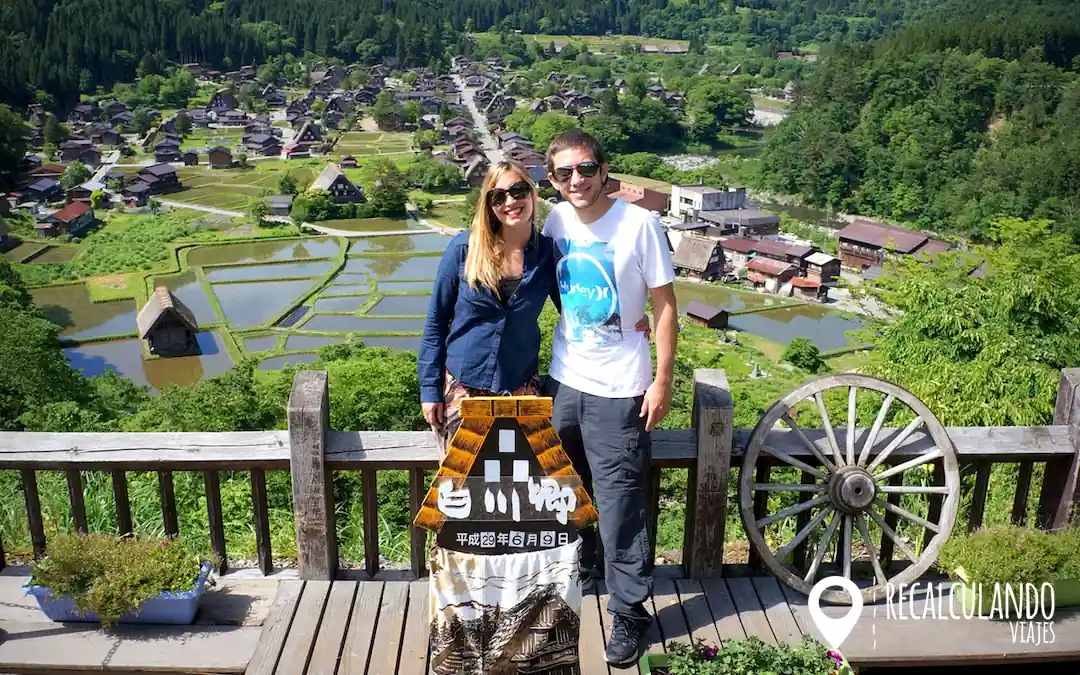
We are a couple of Argentine travelers, digital nomads for over 9 years, and Japan is one of our favorite countries in the world. We traveled through it for almost a month, basing ourselves in different cities, and one day we went from Osaka to see Hiroshima and this sacred island “Miyajima” that left us fascinated. Here we tell you why.
🌍 Travel Insurance: 5% Off with IATI Seguros! 🌟
Take advantage of this offer and travel safe.
Summary of things to do in Miyajima
| Point of interest | Key description | Recommendation |
|---|---|---|
| Great floating Torii | The most famous icon; it seems to float at high tide. | Check the tide table to see the floating effect or walk to its base. |
| Miyajima deer | Considered divine messengers; they roam freely around the island. | Watch out for papers and brochures, they love to eat them! |
| Daisho-in Temple | Historic Buddhist temple with ornate statues and a sacred cave. | A must-visit for its details and spiritual atmosphere. Free admission. |
| Mount Misen | Highest point with spectacular views of the Seto Inland Sea. | Go up by cable car or hike; keep the closing time in mind (4:00 PM). |
| Omotesando Street | Main shopping street for local souvenirs and street food. | Try the momiji manju (maple leaf-shaped cakes) and fresh oysters. |
| Itsukushima Shrine | UNESCO World Heritage site built over the water. | Pay the admission fee (300 yen) to walk the pier over the sea. |
Why did Miyajima steal our hearts?
To us, Japan is modernity, technology, beauty, nature, incredibly kind people, and delicious food. An extremely different culture from our own that remains etched in our hearts with the best memories. And within that entire trip, Miyajima was in a league of its own.
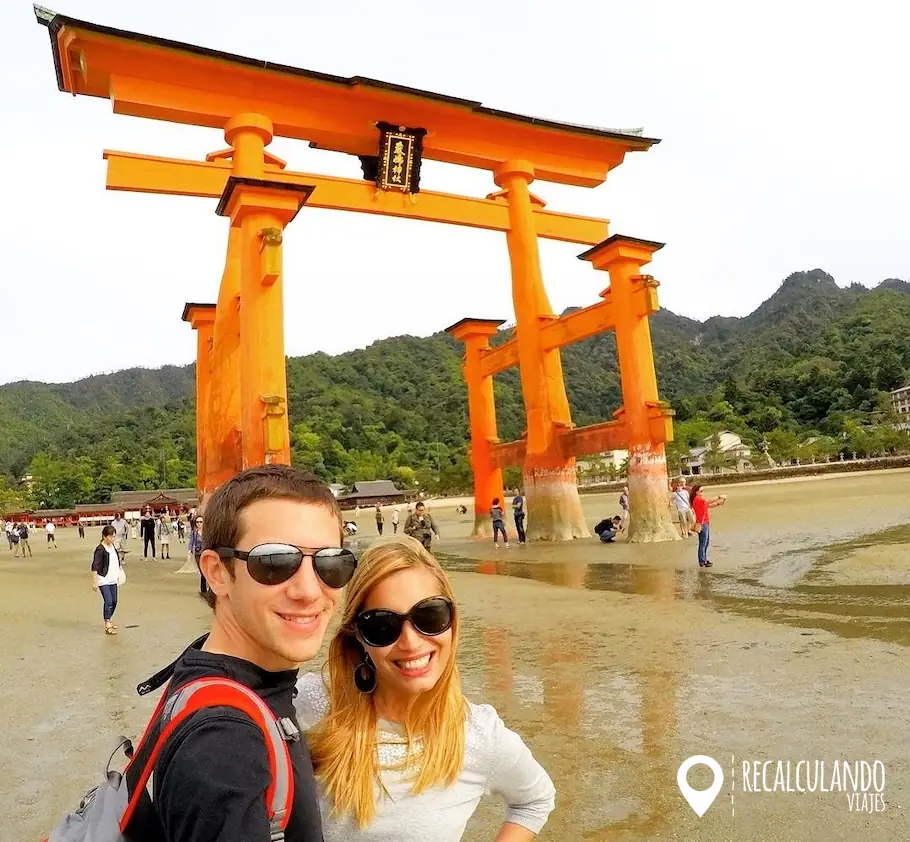
Deer, temples, torii gates, nature, and sea. All together on a small island across from Hiroshima. You can breathe magic the moment you get off the ferry. You walk a little and start finding, not one, but several deer roaming free, until suddenly the majestic and imposing Torii appears. It left us speechless.
The island is officially called Itsukushima, but everyone knows it as Miyajima, which in Japanese means something like “shrine island.” And the name fits perfectly. It is a UNESCO World Heritage site and is considered one of the three most beautiful landscapes in Japan. That’s no small feat.
How to get to Miyajima Island?
Getting there is easier than it seems, especially if you have the JR Pass. We went as a day trip from Osaka, stopping first in Hiroshima, and the logistics were seamless.
The journey has two parts:
- Train to Miyajimaguchi: from Hiroshima station, take the JR Sanyo line to Miyajimaguchi station. It’s about 20 to 25 minutes and is included in the JR Pass.
- Ferry to the island: from the port, which is a couple of minutes’ walk from the station, ferries depart approximately every 15 minutes. The crossing takes about 10 minutes.
Worth noting: there are two ferry companies. The JR one is covered by the JR Pass, so it’s free if you have the pass. And a tip in case it helps: between 9:10 AM and 4:10 PM, the JR ferry takes a special route that passes very close to the floating Torii at no extra cost. If you can, sit on the right side of the boat to get the best photo. Pure genius.
If you’re going to travel through Japan on a big trip like we did, the JR Pass ends up being totally worth it. We’ve left you all the info on things to do in Japan and how to organize your trip so you can plan the full route.
The Great Floating Torii of Itsukushima Shrine
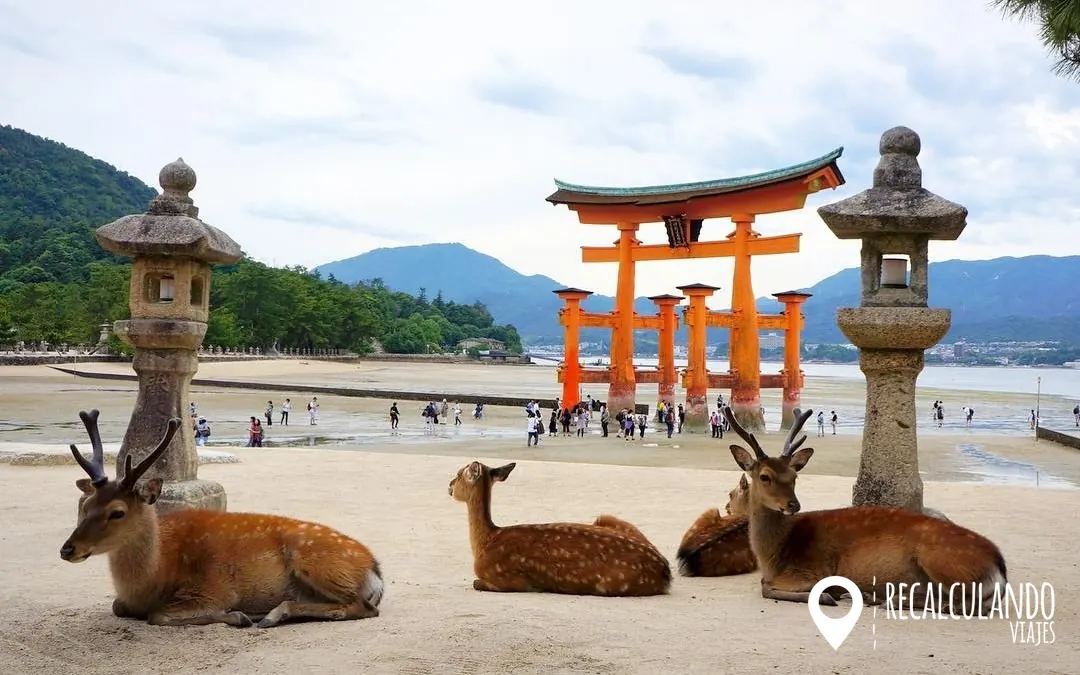
And here we arrive at the most famous postcard of all of Japan. The Great Torii of Itsukushima Shrine is, without exaggeration, one of the most iconic images in the country. You’ve seen that giant vermilion gate that seems to float on the sea a thousand times in photos. But seeing it in person is something else.
The Torii is nearly 17 meters tall and is planted in the water, separated from the shore. According to Shinto belief, the entire island is sacred, which is why the shrine and its gate were built over the sea, so as not to “tread” on holy ground. A beautiful idea.
The secret of the tides: high tide vs. low tide
Here comes the most important part of your visit, so pay attention. Depending on the tide, you can see two completely different aspects of the place:
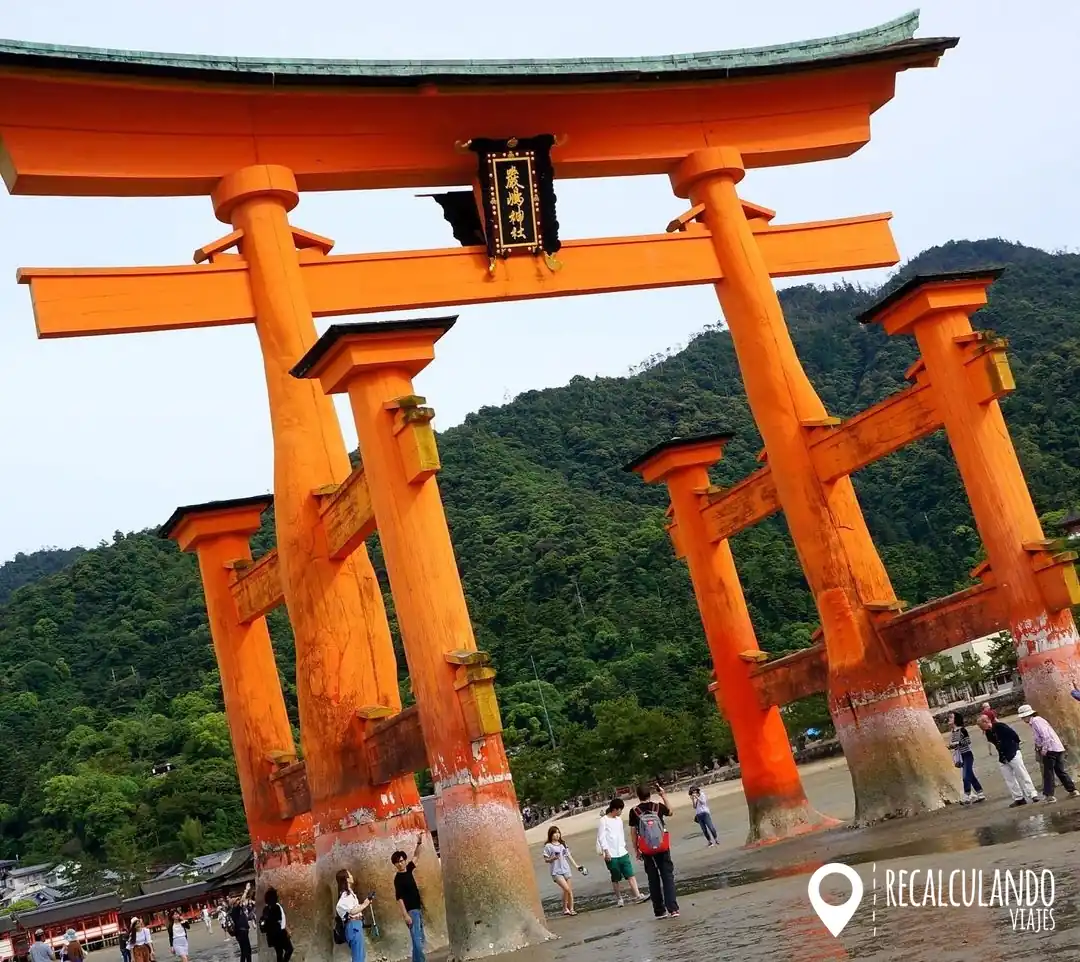
- At high tide: the Torii remains submerged in the sea and seems to float. It’s the classic postcard view, the mystical one, the one in the photos.
- At low tide: the water recedes and you can walk on the sand to the base of the Torii, touch it, and see it up close.
We arrived in the afternoon and saw it without water, at low tide. And it was excellent to be able to walk underneath it and see it from different angles. Although at high tide, right in the middle of the water, it must be spectacular as well. One more reason to return, hehehe.
Our advice: before planning your visit, check the tide table online. If you can, try to see both moments. And if you have to choose only one, the high tide gives you the unforgettable photo, but the low tide gives you a closer, different experience. Both are worth it.
To enter the shrine itself (the wooden walkway over the water), the admission fee is around 300 yen for adults.
Miyajima and its deer: the owners of the island
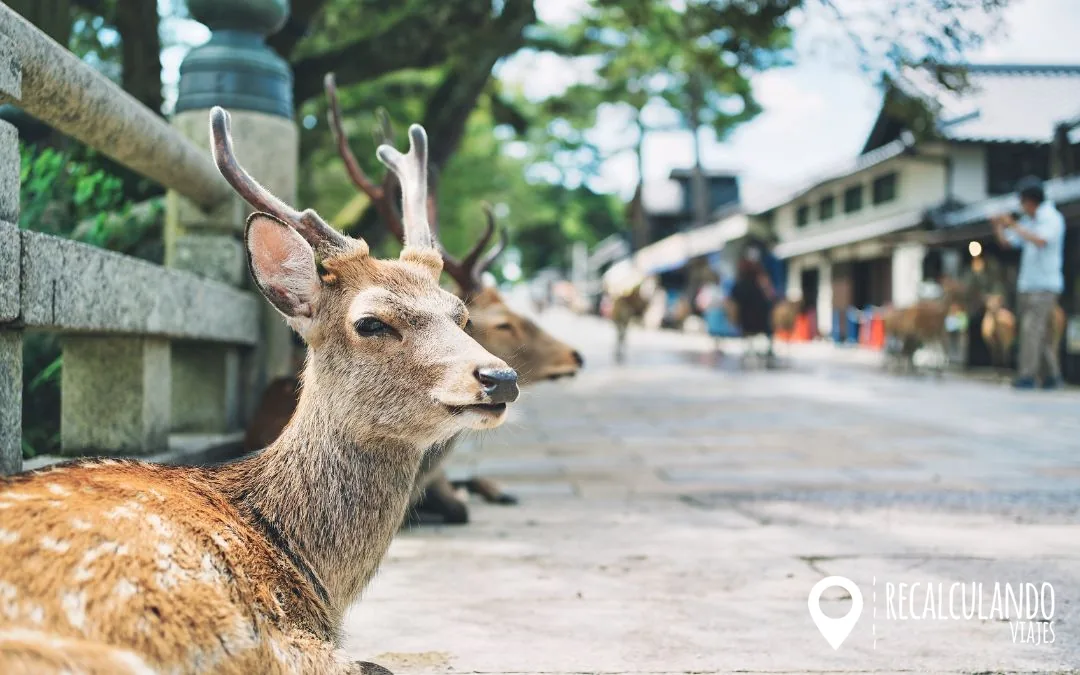
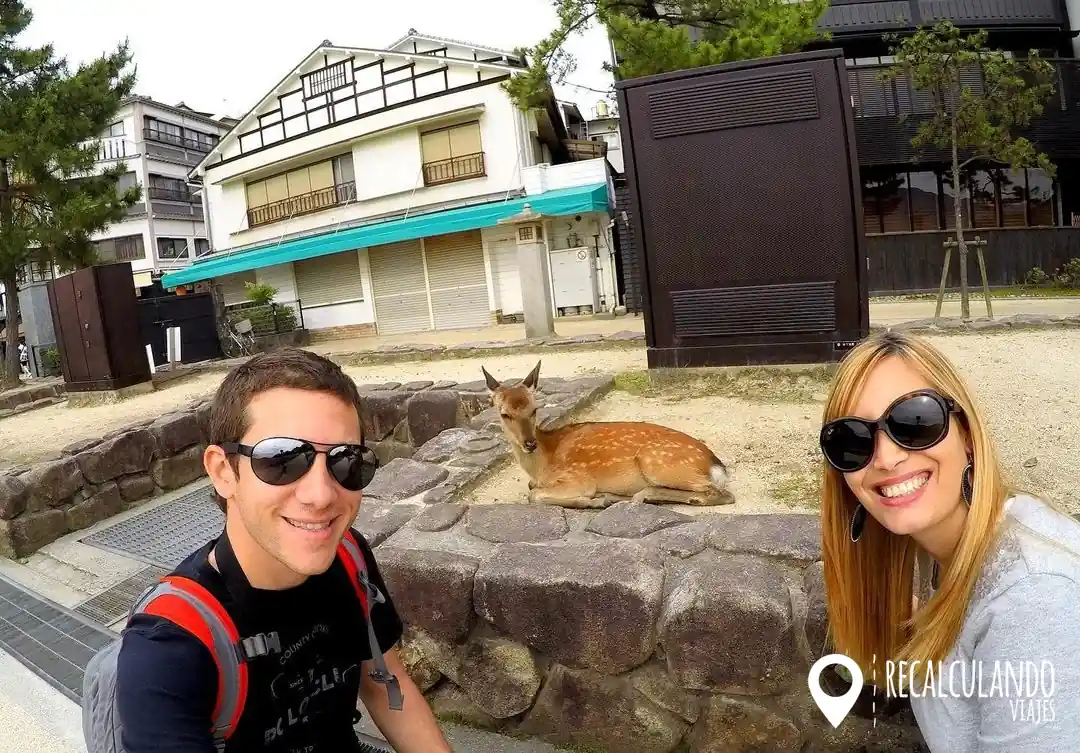
We cannot talk about things to do in Miyajima without dedicating a whole paragraph to the deer. They roam free all over the island, considered divine messengers according to tradition. You run into them everywhere: on the paths, near the shrine, among the people.
They are adorable, but watch out, they are quite bold hahaha. They have a reputation for eating maps, brochures, and even tickets if you’re not careful. We saw one eating stuff from the souvenir shops hahaha. So keep your papers safe and enjoy having them close by. We loved running into them all the time. They give the island a fairytale air that no other place has.
Temples, pagodas, and Omotesando Street
Beyond the Torii, Miyajima has plenty to see if you stay a while to explore. These are the places that caught our attention the most and that many travelers recommend.
The Five-Story Pagoda (Goju-no-to) and Senjokaku
Near the shrine, just by walking up a small hill, you’ll find the spectacular Five-Story Pagoda. It stands about 27 meters tall and has a vermilion color that stands out from a distance. Next to it is the Senjokaku, a huge wooden hall with a very unique open ceiling. Entrance to the Senjokaku costs just 100 yen, and the contrast with the pagoda makes for a beautiful photo.
👩⚕️👨⚕️ A must-have for stress-free travel! 🌎✈️ ➜ Get a Quote, Compare & Buy
Daisho-in Temple
This Buddhist temple, at the foot of Mount Misen, is one of the most impressive in Japan. It was founded in the year 806, and the walk up to it is an experience in itself: the stairs are decorated with hundreds of small statues wearing red hats. It has hidden corners, a cave with 88 icons, and beautiful views. Admission is free, and many travelers point to it as a must-see on the island.
Omotesando Street
It’s the main shopping street, full of shops and food stalls. This is where you have to try the momiji manju, maple leaf-shaped cakes filled with sweet paste (they come in many different flavors). And if you like seafood, Miyajima is famous for its fresh oysters. A delight. If you are interested in the topic, we’ll leave you our guide on the best Japanese food we tried on our trip.



Mount Misen: the best views of the island
If you have the time and energy, Mount Misen is the highest point on Miyajima, at 535 meters, and from the top, the views of the Seto Inland Sea are spectacular. We left it for next time (because we went as a day trip and ran out of time), but we’ll tell you the options so you can plan it better than we did.
There are two ways to get up:
- By cable car: it departs from the Momijidani Park area (about a 15-minute walk from the shrine) and runs in two stages up to Shishi-iwa station, where there is a viewpoint. The trip takes about 15 minutes. Important: the cable car closes relatively early, around 4:00 PM, so plan ahead.
- On foot: there are three hiking trails (Momijidani, Daisho-in, and Omoto). The Momijidani one is the shortest but also the steepest. The Daisho-in one has the best views and is less demanding. Allow between 1.5 and 2 hours to reach the summit.
Momijidani Park
On the way to the cable car, it’s worth passing through Momijidani Park, the “maple valley.” It is a lush forest crossed by a river, perfect for a quiet walk. In autumn, between mid and late November, the more than 700 maple trees turn a deep red, creating a unique landscape. We went a little before that season, so we missed seeing it at its peak. Another excuse to return!
How much time do you need to see Miyajima?
This is the million-dollar question. We’ll tell you honestly, based on our experience:
- In one day (like we did): it’s perfectly enough time to see the Torii, the Itsukushima Shrine, the deer, the pagoda, the Senjokaku, the Daisho-in temple, and stroll through Omotesando. It’s what most travelers do and you enjoy it a lot.
- If you want to go up Mount Misen at a leisurely pace: add a few more hours, or even consider staying overnight on the island to see it without the hustle and bustle of day-trippers.
TIP: combine Miyajima with Hiroshima in a single day, as we did. Both are very close and complement each other incredibly well.

Combining Miyajima with Hiroshima in one day
As we were telling you, we arrived in Miyajima by way of Hiroshima, and we recommend combining the two in a single day. They are very close and complement each other incredibly: one fills you with magic and nature, the other touches your soul in a different way.
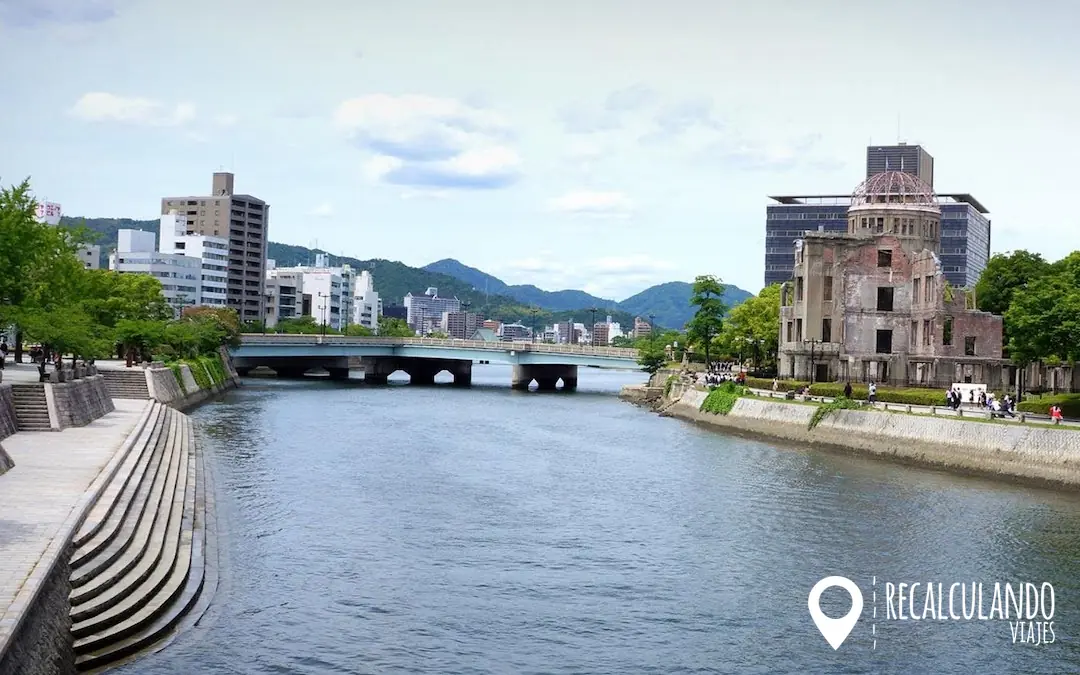
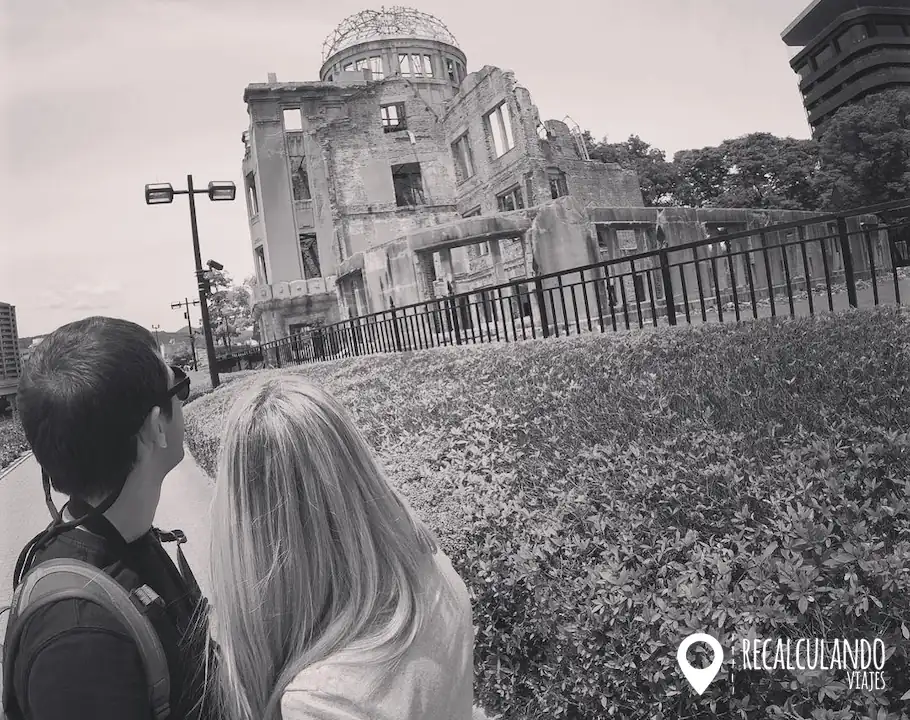
Hiroshima is a city that we all know for its history, and visiting it in person is impactful. The Peace Memorial Park and the famous Atomic Bomb Dome (Genbaku Dome), a World Heritage site, are a stop that leaves you thinking. It’s not a “pretty” visit in the tourist sense, but it is necessary and deeply emotional.
Worth noting: with the JR Pass you arrive in Hiroshima by train at no extra cost, and from there you continue to Miyajimaguchi to take the ferry. Our advice is to dedicate the morning to Hiroshima and the afternoon to Miyajima, so you arrive on the island to see the sunset and the tide change. It was exactly what we did and the combination seemed perfect to us.
All the info: Things to do in Hiroshima (Click Here)
Things to consider before visiting Miyajima
Some practical tips we learned that will serve you well:
- Arrive early or stay until the afternoon: this way you avoid the crowds and, incidentally, you can see the tide change.
- Comfortable footwear: if you plan to hike Mount Misen or wander the trails, you’ll be walking quite a bit.
- Protect your belongings from the deer: seriously, they eat paper.
- Check the tides: we already said it, but we repeat it because it’s key to your experience.
- Don’t forget your travel insurance: for Japan, we always travel covered. Check out our guide to the best travel insurance so you can go with peace of mind.
Frequently asked questions about things to do in Miyajima
What is the best time to see the floating Torii?
It depends on what you want to see. At high tide, the Torii seems to float, ideal for the classic photo. At low tide, you can walk to its base. It’s best to check the tide table and, if you can, see both moments.
How do I get to Miyajima from Hiroshima?
Take the JR Sanyo line to Miyajimaguchi station (about 20-25 minutes) and from there a 10-minute ferry to the island. With the JR Pass, both the train and the JR ferry are included.
Can Miyajima be visited in one day?
Yes, totally. In one day you can see the Torii, the shrine, the deer, the temples, and the shopping street without rushing. If you want to go up Mount Misen at a leisurely pace, it’s better to add more time or stay overnight.
How much does it cost to enter the Itsukushima Shrine?
Admission to the shrine is around 300 yen for adults. The Senjokaku costs about 100 yen separately, and the Daisho-in temple is free.
Do you have to pay to go up Mount Misen?
Hiking up is free on any of the three trails. The cable car costs about 1,840 yen round trip and closes around 4:00 PM, so plan accordingly.
Are the Miyajima deer dangerous?
They aren’t aggressive, but they are very curious and bold. They may try to eat your maps, brochures, or tickets. Keep your things well-secured and enjoy having them nearby.
Conclusion: Miyajima is a must-see in Japan
If you ask us things to do in Miyajima, the short answer is: everything. The whole island is an experience. Between the deer, the floating Torii, the temples hidden in the mountains, and that mystical air you breathe while walking, Miyajima was one of the most magical places on our entire trip through Japan.
We would gladly return a thousand times over. We still have Mount Misen to explore and need to see the Torii at high tide, so we already have an excuse to return. If you’re lucky enough to plan your trip to Japan, don’t miss this island. We say it from the heart: you won’t regret it.
Are you planning your route through the country? Check out our complete guide to Japan and start dreaming of your next adventure. Have a great trip!
ℹ️ **Full Transparency**
This article contains affiliate links. If you book through these links, we may receive a small commission at no additional cost to you. We only recommend services we use on our trips and trust. This helps us keep this blog free and continue creating useful content for you. Thank you for your support!
🔗 Resources & Useful Links for your trip to Miyajima
Do you have questions or want to add your own recommendations on things to do in Miyajima?
💬 Leave a comment or write to us, we love reading about other travelers’ experiences.
Thank you very much for being part of this adventure!— Nanu & Facu 🌎 | Recalculando Viajes 💜