| 27 min read | by Nanu y Facu | Blog, Europe, Germany
Travel to Berlin in short: plan 3 days for the essentials (4–5 if you add Potsdam), stay in Mitte or Friedrichshain, budget €90–140 per person per day and get from BER airport to the centre in 30–40 minutes by train with a €5 ABC ticket.
We spent three nights in Berlin in mid-June and came away feeling we’d seen a city unlike any other in Europe. Berlin isn’t pretty in the classic sense: it doesn’t have Prague’s intact old town. What it has is recent history everywhere: a wall that split the world in two, buildings rebuilt on ruins, and former border neighbourhoods that are now the liveliest part of the city.
In this guide we cover everything you need to plan your trip to Berlin: how to get there and get around, where to stay, what it costs, the 20 best things to do, itineraries from 1 to 5 days and a map with every place marked.
FREE🚶♀️➡️Free walking tour of Berlin in English ➜ Click Here🚶 — no cost, just the tip you want to leave.
🌍 Travel Insurance: 5% Off with IATI Seguros! 🌟
Take advantage of this offer and travel safe.
Berlin trip at a glance
| Category | Key details |
|---|---|
| How many days | 3 days for the essentials · 4 or 5 to add museums and a day trip to Potsdam |
| Budget | €90–140 per person per day (sharing a room, with meals and transport) |
| Best time to go | May to September (June and July have light until 21:30) · December for the Christmas markets |
| From the airport | FEX, S9 or regional trains to the Central Station in 30–40 min · ABC ticket €5.00 |
| Getting around | BVG single AB ticket €4.00 · 24-hour AB ticket €11.20 (2026 prices) |
| Must book | Reichstag dome (free, online registration) |
| Language and currency | German and euro (€); English works almost everywhere |
📑 In this guide · 30 sections
- Berlin trip at a glance
- How to get to Berlin
- Getting around Berlin
- Where to stay in Berlin
- Best time to travel to Berlin
- Travel insurance for Berlin
- The 20 best things to do in Berlin
- 1. The Brandenburg Gate, Berlin’s symbol
- 2. The Reichstag and its glass dome
- 3. The Holocaust Memorial
- 4. Potsdamer Platz, the Berlin that reinvented itself
- 5. The Tiergarten and the Victory Column
- 6. Unter den Linden and Bebelplatz
- 7. Museum Island and Berlin Cathedral
- 8. Alexanderplatz and the TV Tower
- 9. Gendarmenmarkt, Berlin’s most beautiful square
- 10. Checkpoint Charlie
- 11. The Berlin Wall at the East Side Gallery
- 12. The Oberbaum Bridge
- 13. Kreuzberg
- 14. Hackescher Markt and Dead Chicken Alley
- 15. A boat trip on the Spree
- 5 more things to do in Berlin
- The Berlin Wall
- Where to eat in Berlin
- Berlin itinerary
- Berlin in 1, 2, 4 or 5 days
- Day trips from Berlin
- Map of the 20 things to do in Berlin
- Berlin travel FAQ
How to get to Berlin
By plane. All flights land at Berlin Brandenburg Airport (BER), in fare zone C, about 25 km from the centre. The FEX express train, the S9 S-Bahn and several regional trains leave from the terminal; the trip to the Central Station (Hauptbahnhof) takes 30–40 minutes. You need an ABC ticket, which costs €5.00 in 2026. If you travel with an AB ticket and get checked, the fine is €60.
By train. Berlin has direct trains to Prague, Vienna, Amsterdam, Warsaw and Munich, among others. If you’re planning a route through Central Europe, it combines very well with Warsaw and Krakow, a few hours away.
By car. You don’t need one in the city and we’d avoid it: parking is expensive and the centre is a low-emission zone. If you’re touring the rest of Germany, though, renting is the best way to get around.
Getting around Berlin
BVG public transport (U-Bahn, S-Bahn, trams, buses and even a few ferries) is among the best in Europe and works with zones: A is the centre inside the S-Bahn ring, B the rest of the city and C the metropolitan area, which includes the airport and Potsdam. An AB ticket covers almost everything in this guide. Prices since 1 January 2026:
| Ticket | Price |
|---|---|
| Single AB | €4.00 |
| Single ABC (airport) | €5.00 |
| Short trip (Kurzstrecke) | €2.80 |
| 4-trip ticket AB | €12.40 (€3.10 per trip) |
| 24-hour ticket AB | €11.20 (worth it from the third trip of the day) |
| Deutschlandticket (monthly, all of Germany) | €63.00 |
One change in 2026: the 7-day ticket is gone. For a week, chain 24-hour tickets, buy the monthly one or the Deutschlandticket. Berlin is also flat and full of bike lanes, so cycling is a great alternative.
Is the Berlin WelcomeCard worth it?
The official tourist card combines unlimited public transport with up to 50% off at more than 170 attractions. It comes in 48-hour, 72-hour and 4-, 5- or 6-day versions, for zones AB or ABC, plus a 72-hour version that includes the Museum Island museums.
Our take: do the maths first. It pays off if you’ll visit several paid museums and viewpoints. If your trip is like ours, mostly outdoors and free, single 24-hour tickets or the 4-trip ticket work out cheaper. The museum version has lost appeal since the Pergamon closed, and if you’ll use the card for the airport you need the ABC version: the AB one can’t be extended later.
To stay connected without hunting for wifi, we always travel with a Holafly eSIM, which activates in five minutes.
Where to stay in Berlin: best areas
Almost everything in this guide is in a handful of neighbourhoods, so where you stay changes the trip quite a bit:
- Mitte: the historic centre. Almost everything is walkable and transport is excellent. The most convenient for a short stay, but also the priciest and least local.
- Kreuzberg: young vibe, amazing food and friendlier prices. Ideal if you want nightlife and don’t mind noise.
- Friedrichshain: next to the East Side Gallery, well connected and the best balance of price and atmosphere in the city.
- Prenzlauer Berg: quiet, with cafés and squares. The best option for families.
- Charlottenburg: more residential, a bit far from the historic centre but with very good prices and direct transport.
City tax: Berlin charges 7.5%% of the net accommodation price, excluding breakfast and extras. Since 2025 it also applies to business trips and there is no longer an exemption for stays over 21 days. Sometimes it’s included in the booking and sometimes it’s charged at check-in, so read the small print.
Where to stay in Berlin: map and prices
Compare prices and locations in real time for your travel dates:
Best time to travel to Berlin
To explore Berlin on foot, the weather rules. We went in mid-June and found it ideal: pleasant temperatures, packed terraces and light until 21:30, which gives you practically an extra afternoon every day. July and August are the hottest months, and also the busiest and most expensive.
May and September are the safe bet for good weather with fewer crowds. Autumn is lovely in the Tiergarten, although it rains often. Winter is genuinely harsh, with short days and sub-zero temperatures, but December has some of the best Christmas markets in Europe: see our guide to the best Christmas markets in Europe.
Travel insurance for Berlin
Germany is in the European Union, so EU citizens can use the European Health Insurance Card. But it only covers the basics in public healthcare: no repatriation, lost luggage, trip cancellation or missed flights. If you’re travelling from outside the EU, you have no public cover at all.
After nine years of travelling, insurance is the last thing we’d cut. We always use IATI, and through our link you get a 5% discount. Compare the options in our travel insurance guide.

The 20 best things to do in Berlin
A tip that applies to the whole city: distances are deceptive. The TV Tower is visible from everywhere and always seems five minutes away, but it isn’t. Plan your days by area and use public transport freely; it works incredibly well. The first 15 places are ones we visited ourselves; the last 5 we didn’t get to, and we say so.
1. The Brandenburg Gate, Berlin’s symbol
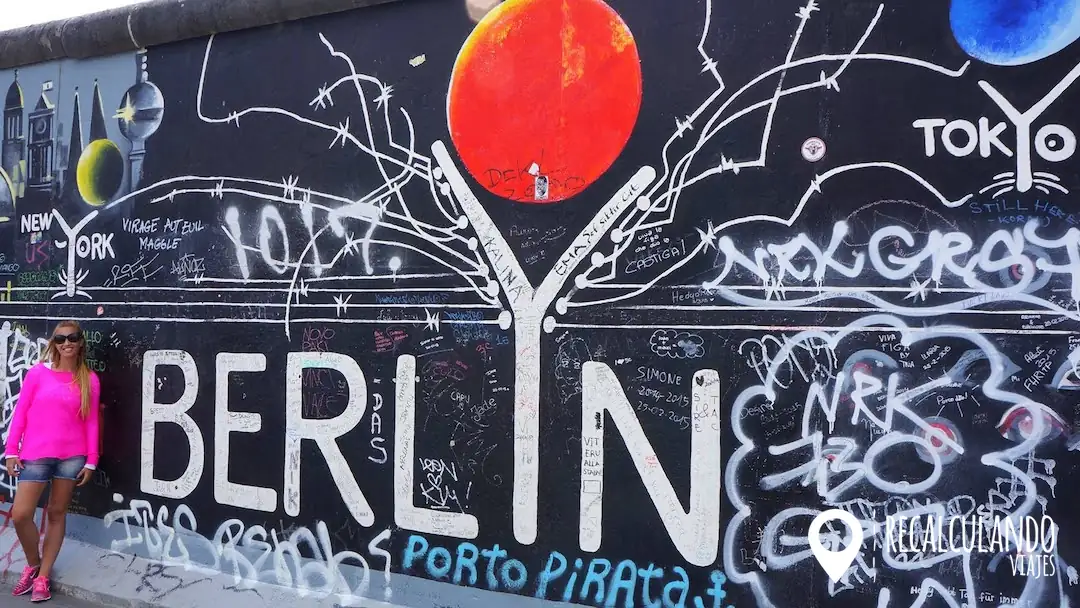
If we had to pick just one thing to see in Berlin, it would be this. The Brandenburger Tor was built in the late 18th century as a gateway to the city and was trapped in no man’s land during the Wall years: it stood right on the border, and neither East nor West could get close.
Today Pariser Platz is always full of people and street musicians. We went twice: mid-morning, with the sun in our faces and lots going on, and at sunset. We liked the second much more: the stone turns warm and the quadriga on top, with the goddess of victory and her four horses, stands out beautifully against the sky.
Tip: walk through the gate and 100 metres towards the Tiergarten. There are fewer people on that side and your photo comes out without a forest of phones.
2. The Reichstag and its glass dome (free, but you must book)
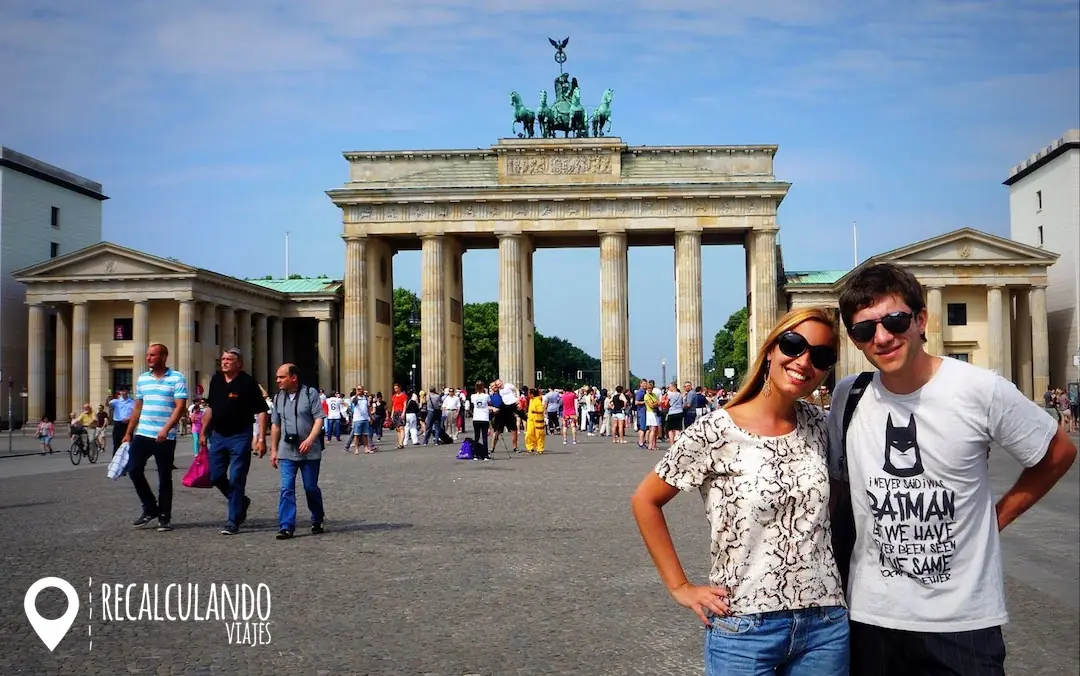
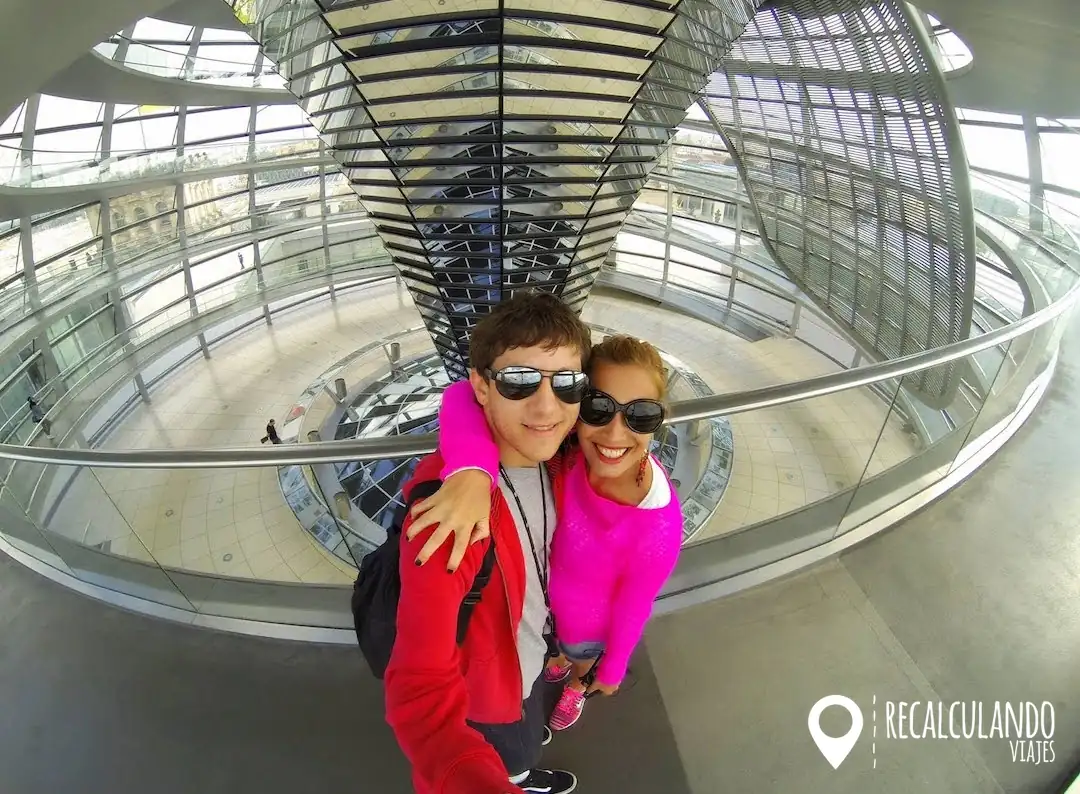
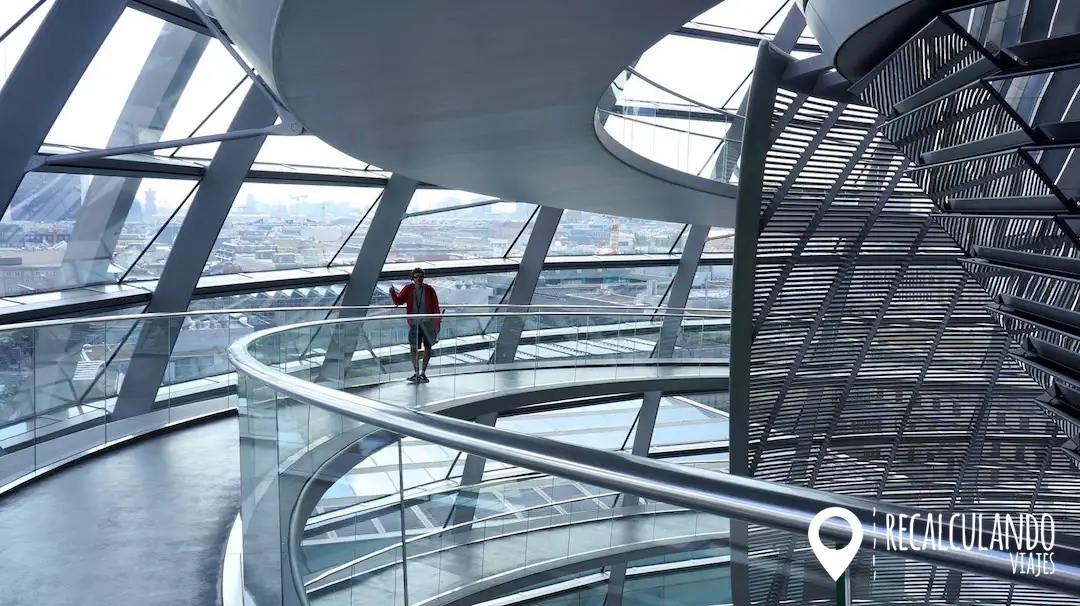
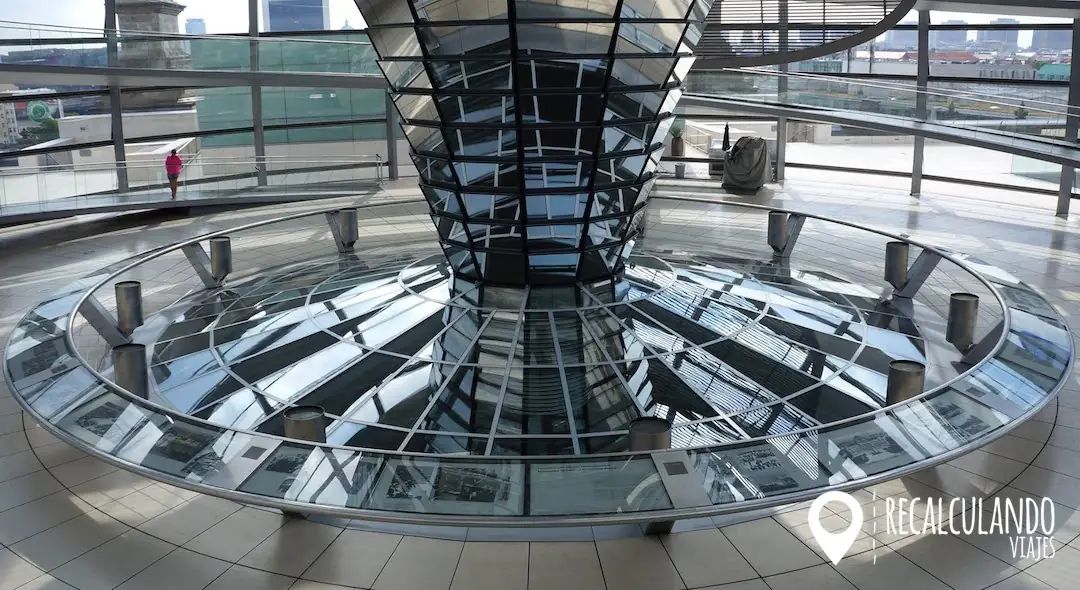
Two minutes from the Brandenburg Gate is the Reichstag, home of the German Parliament, and for us one of the most impressive sights in Berlin. The original building dates from 1894; it burned in 1933, was wrecked in the war and spent decades without a dome. The current glass-and-steel dome was designed by Norman Foster in the 1990s, with a clear symbolism: from the top, visitors literally look down on the chamber where Parliament debates.
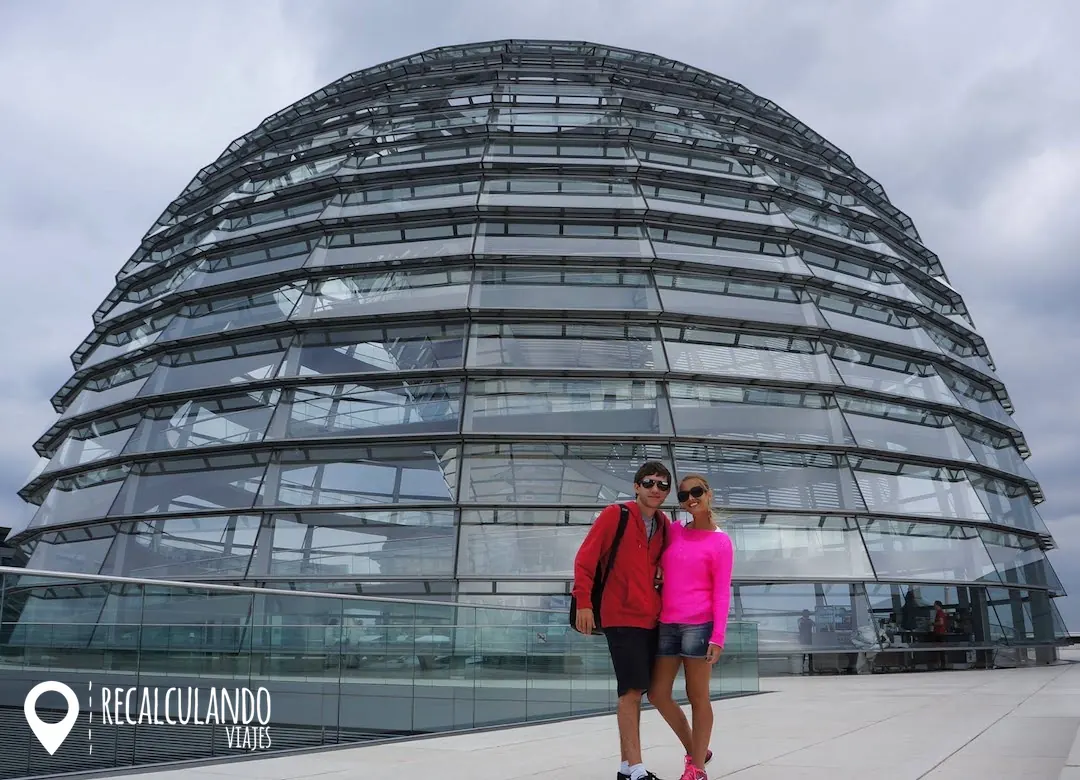
Going up is free, but you must register in advance on the Bundestag website with your name and ID number. You can book up to two hours before, although in high season the good slots go weeks ahead. The roof terrace is open daily from 8:00 to 24:00, with last entry at 22:00. Bring the same ID you booked with.
The dome closes several times a year for maintenance and cleaning (the roof terrace stays open), so check the dates on the official Bundestag website before you plan your days.
3. The Holocaust Memorial
A block from the Brandenburg Gate is the Memorial to the Murdered Jews of Europe: 2,711 grey concrete blocks of the same length and width but different heights, on undulating ground. From outside it looks orderly, almost harmless. As you walk towards the centre, the ground drops, the blocks rise above your head, the street noise fades and you’re alone between concrete walls. It’s uncomfortable, and that’s exactly the point.
It’s open-air, open 24 hours and free. Underneath is the Information Centre, with stories of specific families and identified victims; entry is also free, though it has opening hours and often a queue. We went early, with almost nobody around, and recommend doing the same. It’s a memorial, not a park: a little common sense with photos.
👩⚕️👨⚕️ A must-have for stress-free travel! 🌎✈️ ➜ Get a Quote, Compare & Buy
4. Potsdamer Platz, the Berlin that reinvented itself
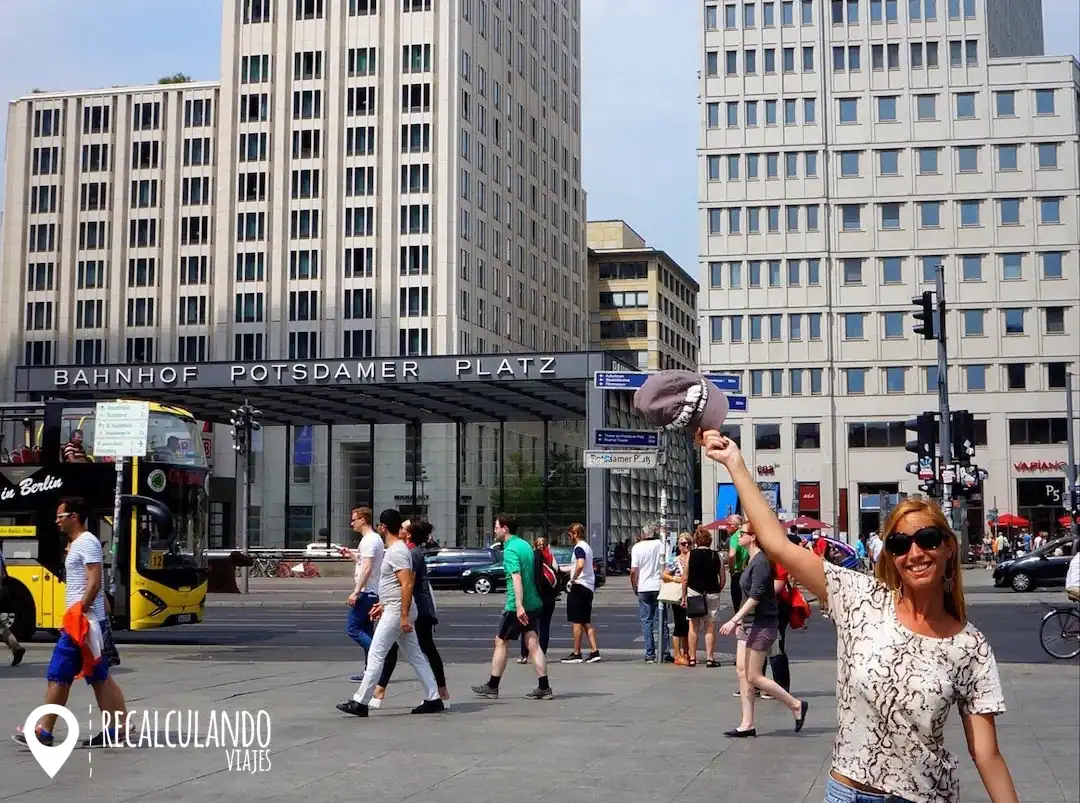
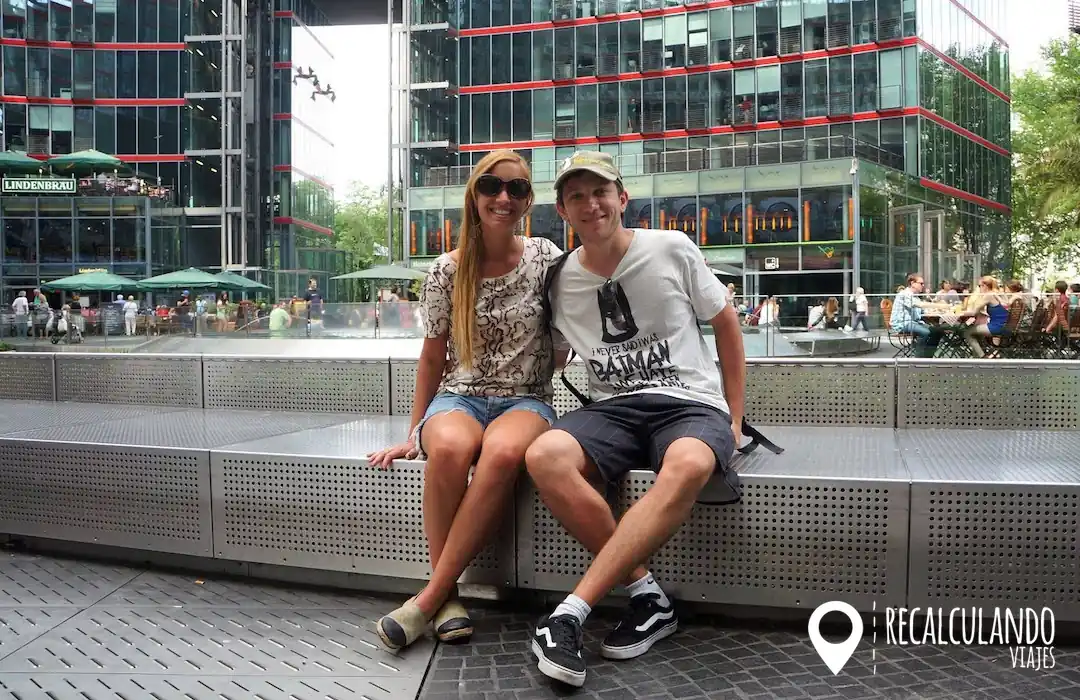
Before the war this was the busiest junction in Europe, with the continent’s first traffic light. After 1945 it was rubble and, once the Wall went up, a wasteland with watchtowers. Today it’s glass skyscrapers, cinemas, offices and the huge canopy over the Sony Center.
It’s not Berlin’s most charming area, but after the Holocaust Memorial and the Brandenburg Gate it carries real weight. The Wall’s route is marked on the ground with a double row of cobblestones, and a few original fragments still stand on the pavement, covered in gum and graffiti.
Tip: a good place for lunch. Around the Sony Center there are options for every budget and, if it rains, the canopy saves the day.
5. The Tiergarten and the Victory Column
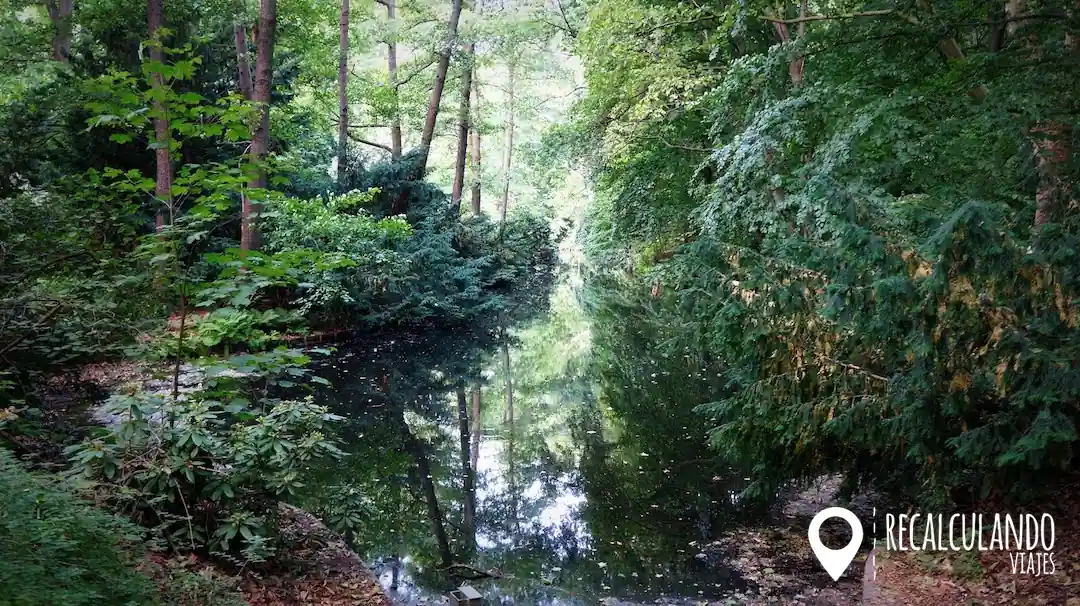
The Tiergarten was the surprise of the trip: more than 200 hectares of park in the middle of the city, with paths under huge trees, lakes, little bridges and Berliners lying on the grass as soon as the sun comes out. After World War II it was stripped bare: residents cut down almost every tree for heating in the winter of 1946. What you see today was replanted from scratch.
In the middle, on a giant roundabout, stands the Siegessäule (Victory Column), with the golden statue many know from the film Wings of Desire. You can climb it: 285 narrow spiral steps, no lift, and one of the best views of the city at the top. Tickets are cheap, paid at the base, with no booking needed.
6. Unter den Linden and Bebelplatz
Unter den Linden is the city’s grandest avenue and links the Brandenburg Gate with Museum Island, passing Humboldt University, the opera house, embassies and neoclassical buildings.
Halfway along is Bebelplatz, a square that at first glance has nothing. That’s the point: in the middle of the paving there’s a glass panel and, if you look down, you see a white room with empty shelves underground. It’s the memorial to the 1933 book burning, when about 20,000 books were destroyed in this very square; the shelves hold exactly that many. One of the subtlest and most powerful memorials we’ve seen in Europe, and lots of people walk right past it.
Tip: look for the bronze plaque with Heinrich Heine’s line from 1821, warning that where books are burned, people will be burned in the end.
7. Museum Island and Berlin Cathedral
Museum Island (Museumsinsel) is a World Heritage Site with five huge museums on a small piece of land surrounded by the Spree: the Pergamon, the Neues Museum, the Altes Museum, the Alte Nationalgalerie and the Bode-Museum. We’re not big museum-goers unless it’s essential, so we explored it from outside, through the Lustgarten, the park in front of the cathedral.
Important: the Pergamon Museum has been fully closed since October 2023. The Pergamon Altar hall and the north wing are due to reopen on 4 June 2027, and the Ishtar Gate won’t be seen again until the 2030s. Meanwhile, “Pergamonmuseum. Das Panorama” opposite the island shows original pieces and a 360° recreation of the ancient city.
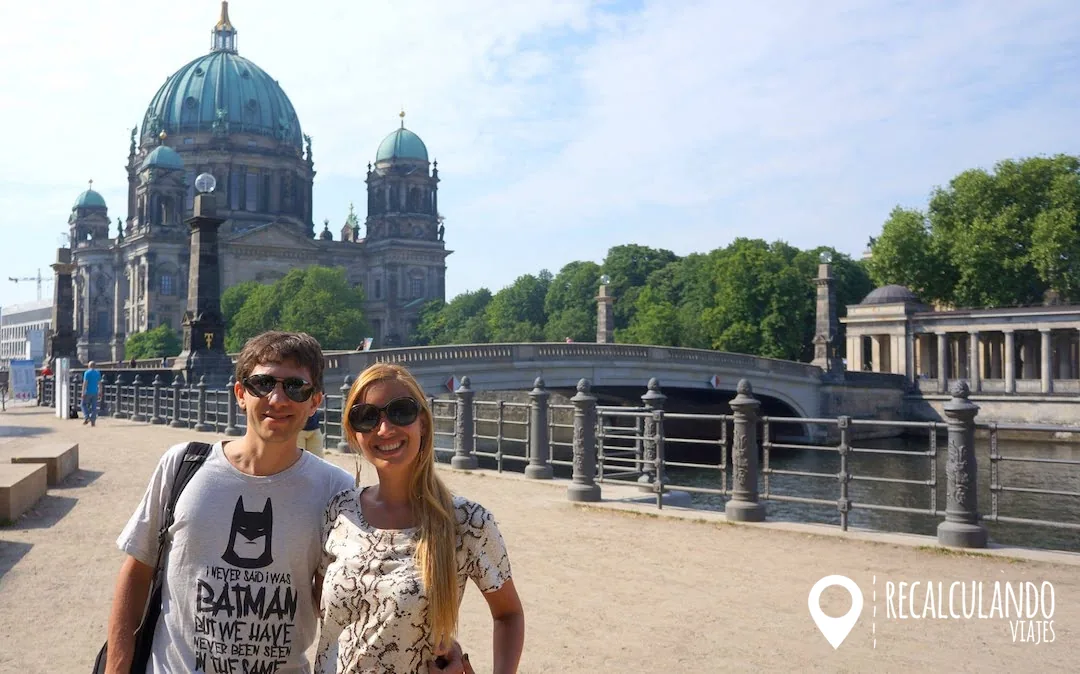
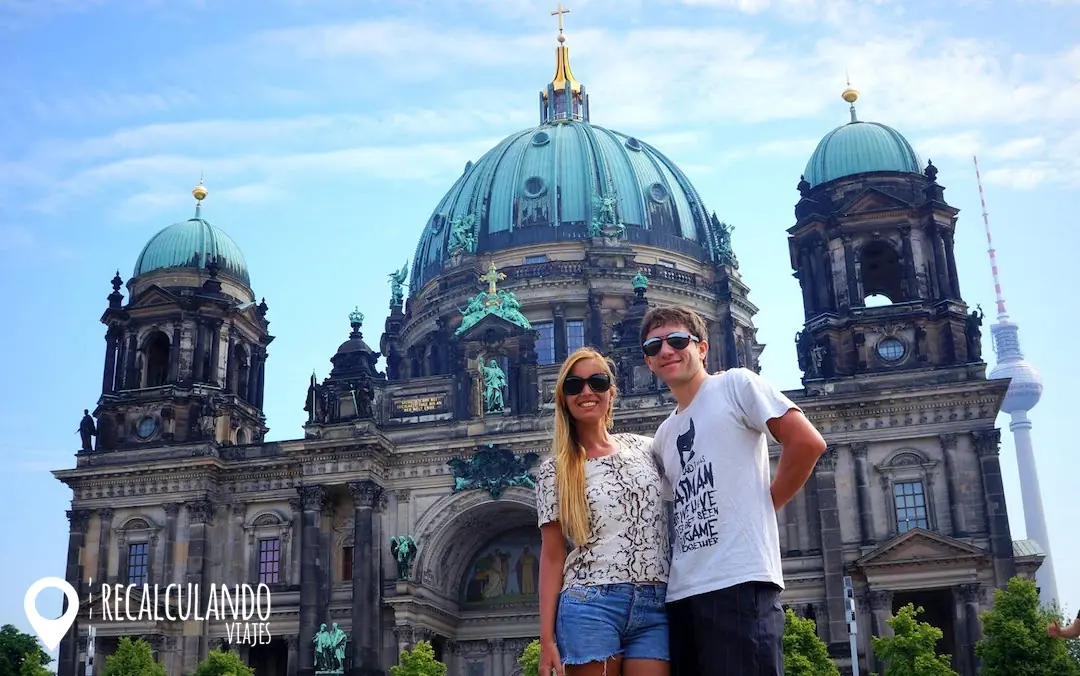
What left us speechless from outside was Berlin Cathedral (Berliner Dom), with its huge green dome reflected in the river. It dates from the early 20th century, was badly damaged in the war and restored over decades. You can pay to climb to the dome’s outer gallery for a 360° view; we settled for the view from the Lustgarten and the bridge, which is already stunning.
8. Alexanderplatz and the TV Tower
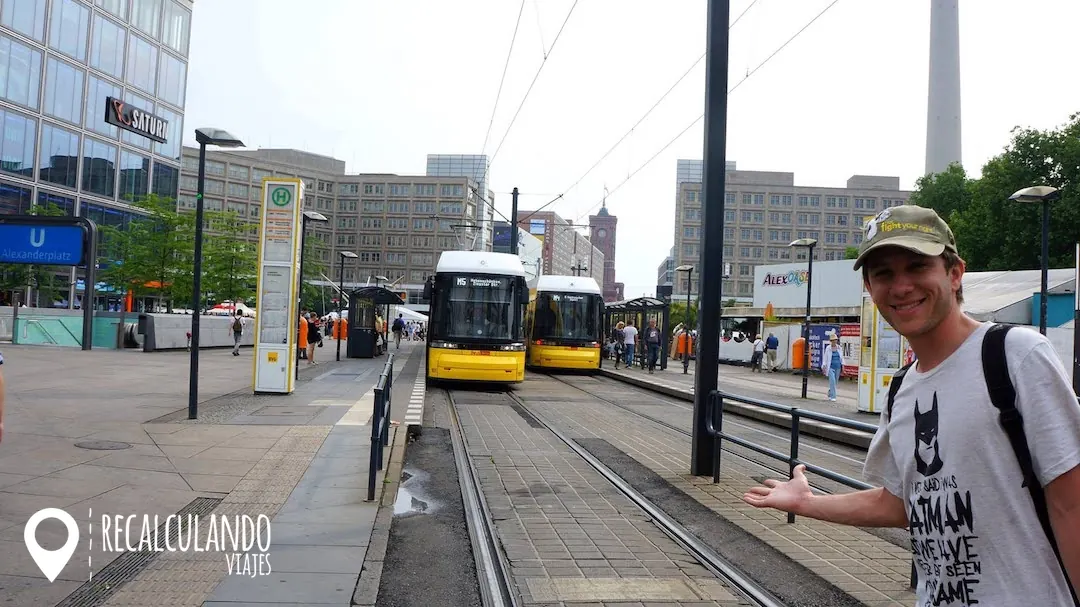
Alexanderplatz is the heart of former East Berlin, and you’ll pass through it again and again because almost every U-Bahn and tram line stops here. The square itself is socialist concrete, shops and skaters, but two things save it.
First, the World Clock (Urania Weltzeituhr), with the time in the world’s major cities and a model of the solar system on top; it’s the classic Berlin meeting point.
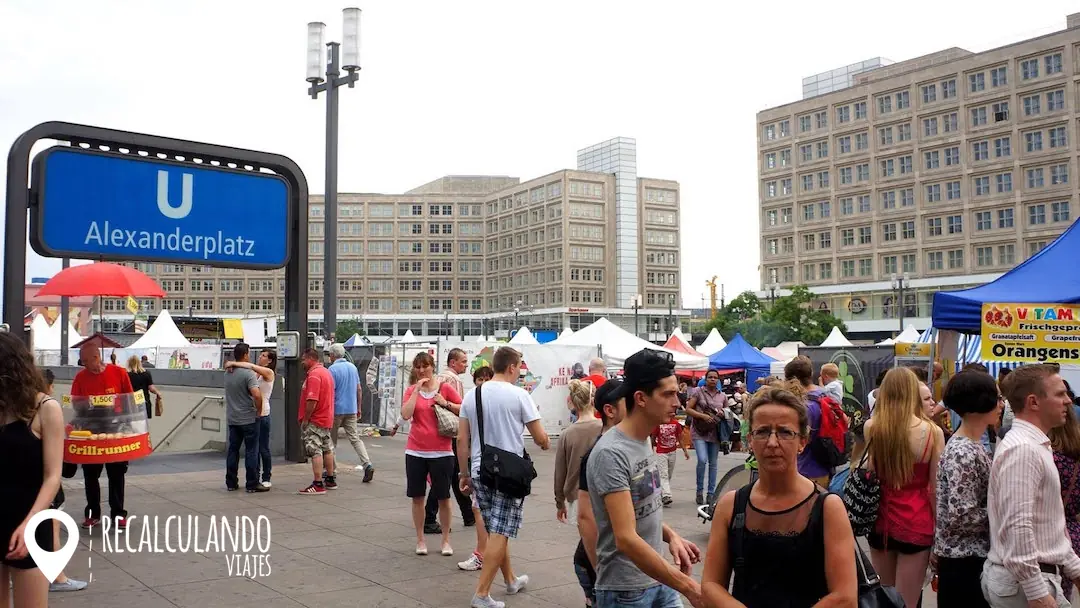
Second, the Fernsehturm, the TV Tower: 368 metres, the tallest structure in Germany, built by the GDR in 1969 to show off its technology. The viewing deck is at 203 metres, reached in 40 seconds; it opens from 9:00 to 23:00 from March to October, and from 10:00 the rest of the year. Tickets are around €25, and skip-the-line ones a bit more. In high season, buy online with a time slot. We didn’t go up, but if you want the most panoramic view of the city, this is it. Next to it are the Red Town Hall (Rotes Rathaus) and the Neptune Fountain.
➜ SKIP-THE-LINE TICKETS FOR THE BERLIN TV TOWER (CLICK HERE)
9. Gendarmenmarkt, Berlin’s most beautiful square
Two almost twin churches, the German and French Cathedrals, frame the square, with the Konzerthaus and its grand staircase in the middle. It’s where Berlin looks most like a classic European capital. It reopened in March 2025 after about two years of renovation, fully accessible and with a new promenade on Charlottenstrasse.
See it twice: by day for the symmetry of the two towers, and at night, when the lit facades transform it. In December it hosts one of the loveliest Christmas markets in Germany, one of the few with a (symbolic) entry fee, so it’s much less crowded than the rest.
10. Checkpoint Charlie
The checkpoint between the American and Soviet sectors, and the only crossing for foreigners and diplomats. The famous 1961 tank standoff happened here, with the two superpowers aiming at each other fifty metres apart. Today you see a replica hut, sandbags, the flag and the “You are leaving the American sector” sign in four languages.
To be honest, it’s the most touristy and least moving place on this list: souvenir shops, people selling supposed bits of the Wall and an ordinary road junction. We include it for its history, and because the city has approved a plan to turn the area into a public square with a proper Cold War museum.
Tip: two blocks away is the Topography of Terror, a free open-air documentation centre on the site of the former Gestapo headquarters, with an original stretch of the Wall.
11. The Berlin Wall at the East Side Gallery
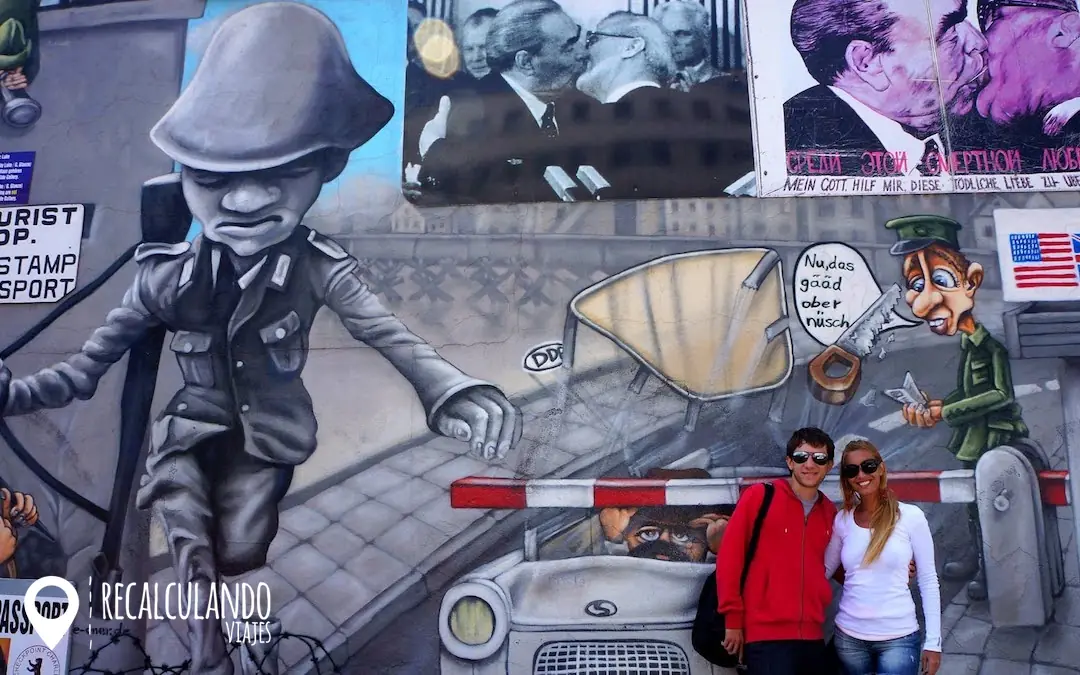
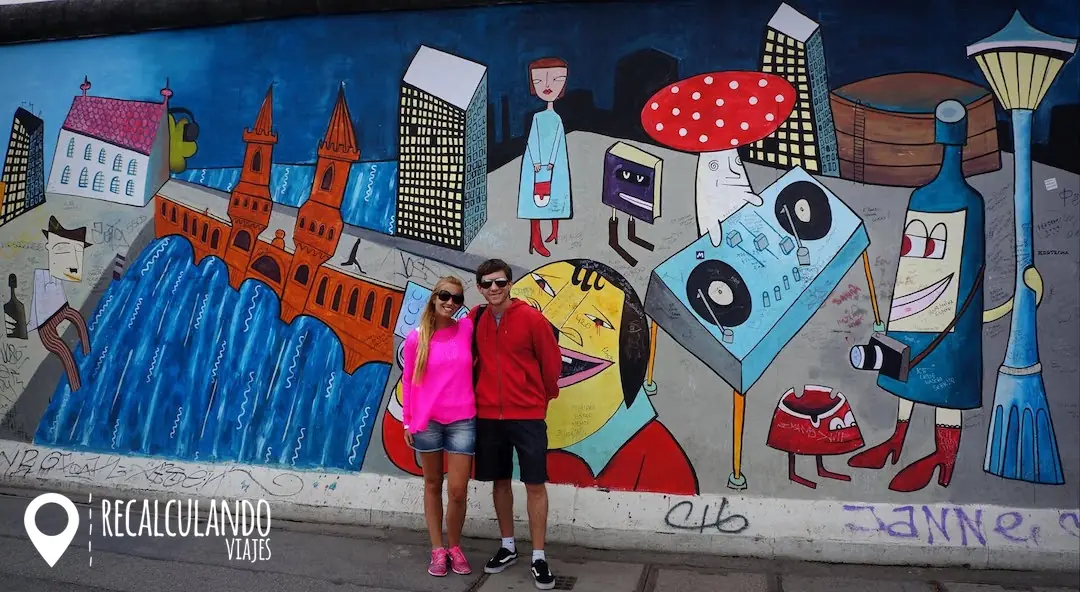
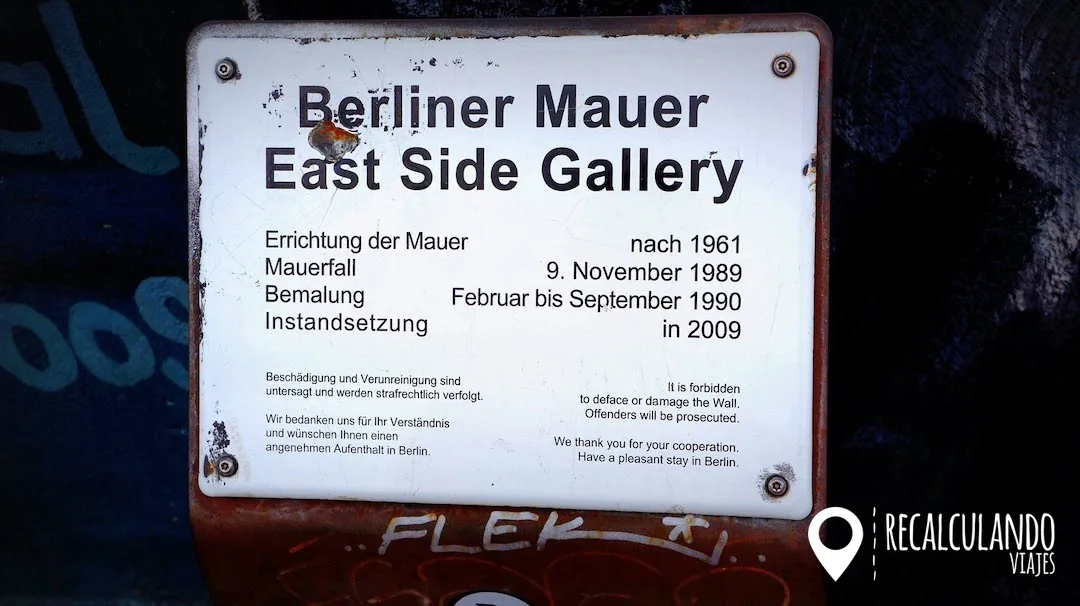
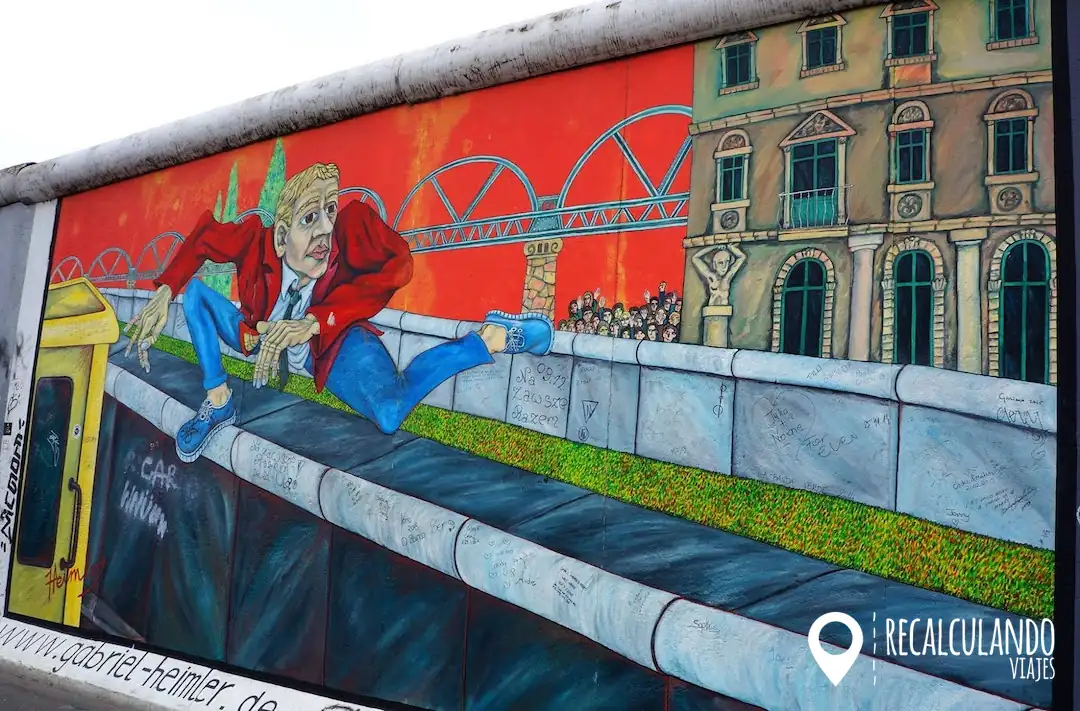
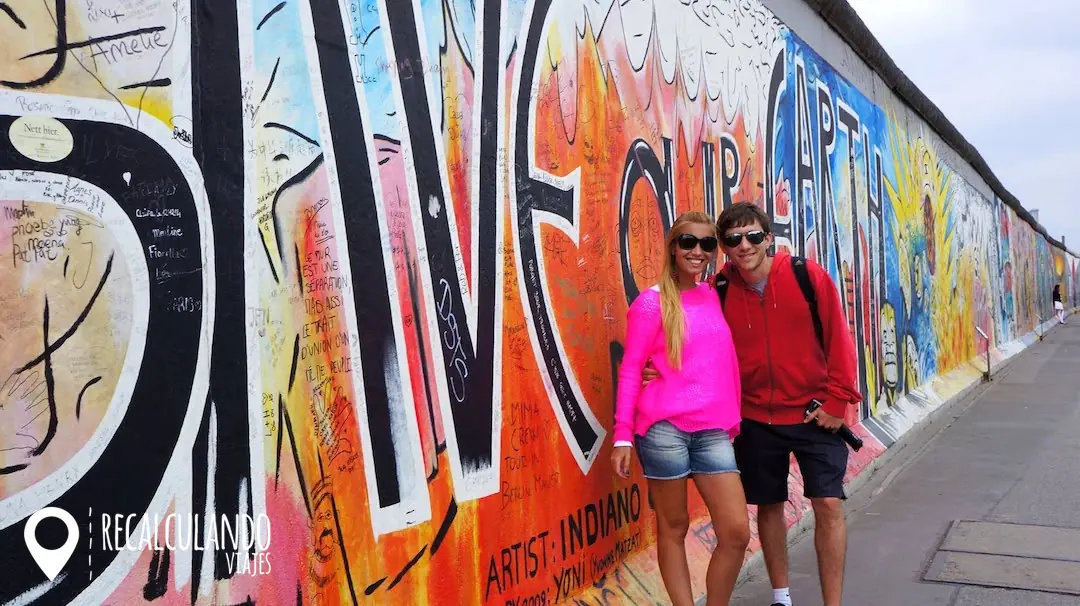
Of all the places we saw in Berlin, this one stayed with us most. Of the Wall’s 155 km, the longest surviving stretch is 1.3 km along the Spree, between Ostbahnhof and Warschauer Strasse. In 1990 more than a hundred artists from around the world painted its east side, which until then had been blank because it faced the death strip. That’s how the East Side Gallery, the longest open-air gallery in the world, was born.
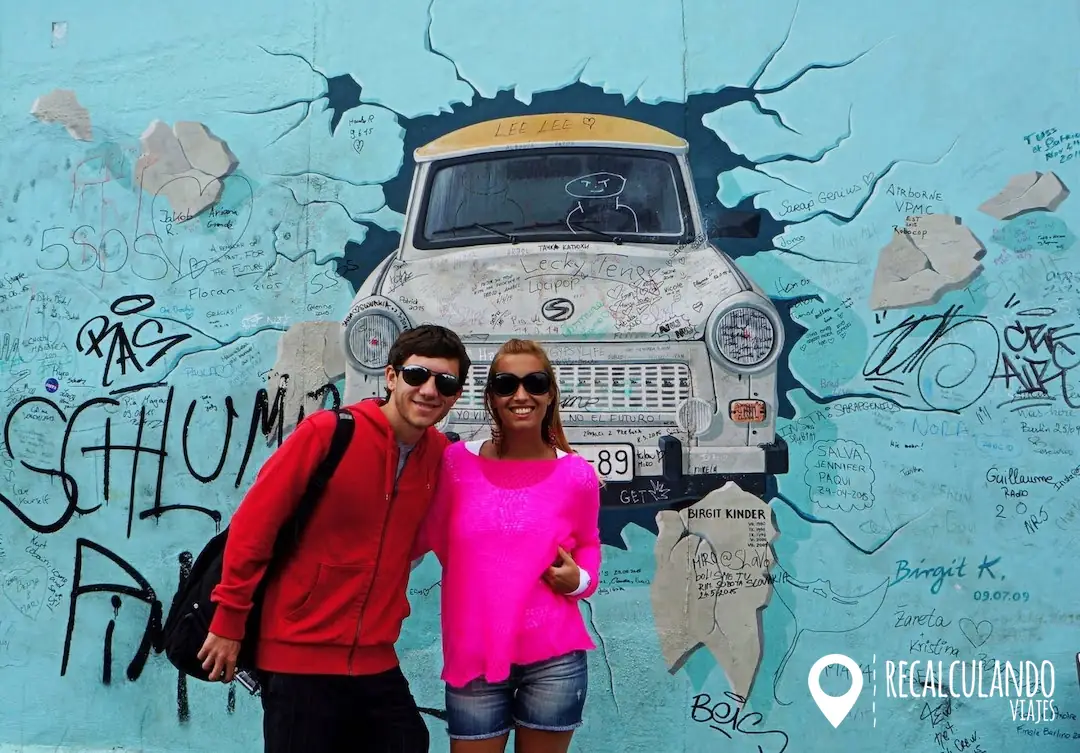
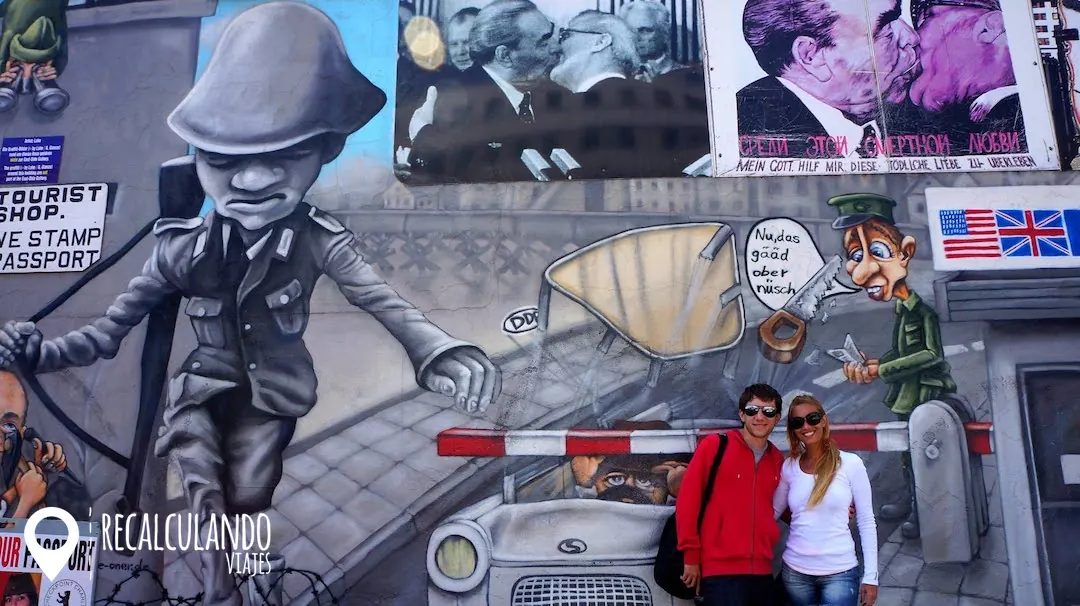
It’s free, open 24 hours and takes about an hour at an easy pace. There’s the Brezhnev–Honecker kiss, the Trabant breaking through the concrete and dozens more murals, many of them restorations of the originals.
For us, this is where the Wall really makes sense. Not because of the famous murals, but because you stand next to it and see it’s an ordinary 3.5-metre concrete wall you could touch, and that for 28 years it decided the lives of the people on both sides. We left pretty quiet.
Tip: go early. From midday it fills with groups taking photos in front of every mural.
12. The Oberbaum Bridge
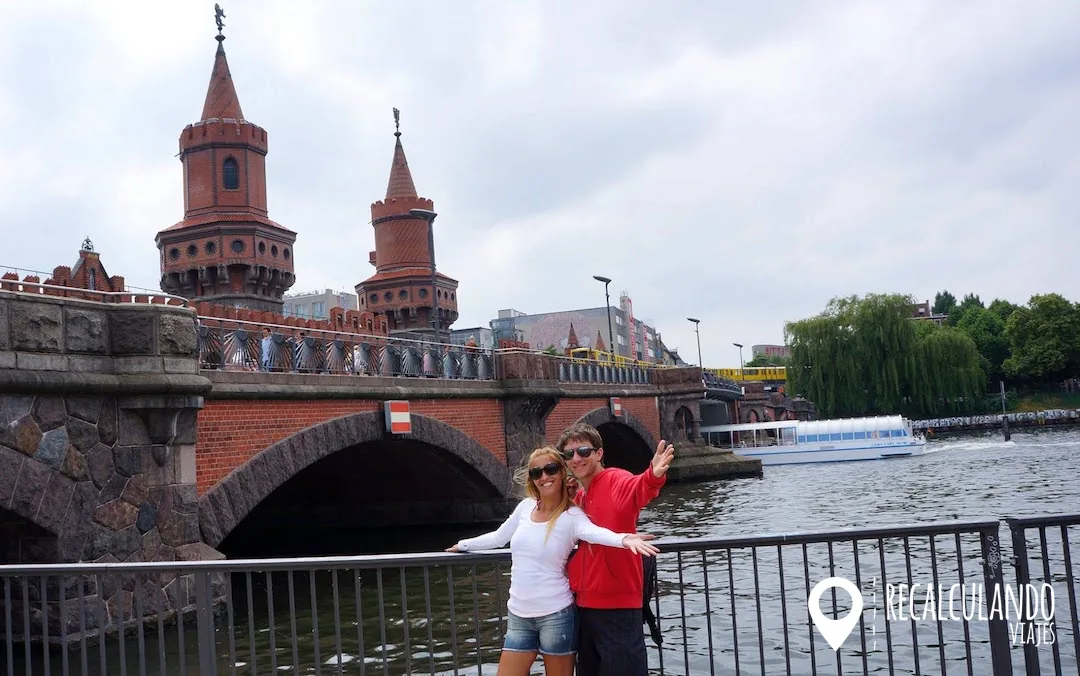
Just past the end of the East Side Gallery is the Oberbaumbrücke, one of Berlin’s lesser-known must-sees: an 1896 red-brick bridge with towers and battlements that looks like a medieval castle, though it’s pure late-19th-century neo-Gothic. The U1 runs on the upper deck and cars, bikes and pedestrians below.
During the division it was the border between Kreuzberg (West) and Friedrichshain (East) and stayed cut for decades. Today it’s a symbol of reunification. We crossed it at sunset, with the sun going down over the Spree and the yellow U-Bahn passing overhead every few minutes. For photos, the best spot is the riverside path towards the East Side Gallery.
13. Kreuzberg: Kottbusser Tor, the Turkish market and Görlitzer Park
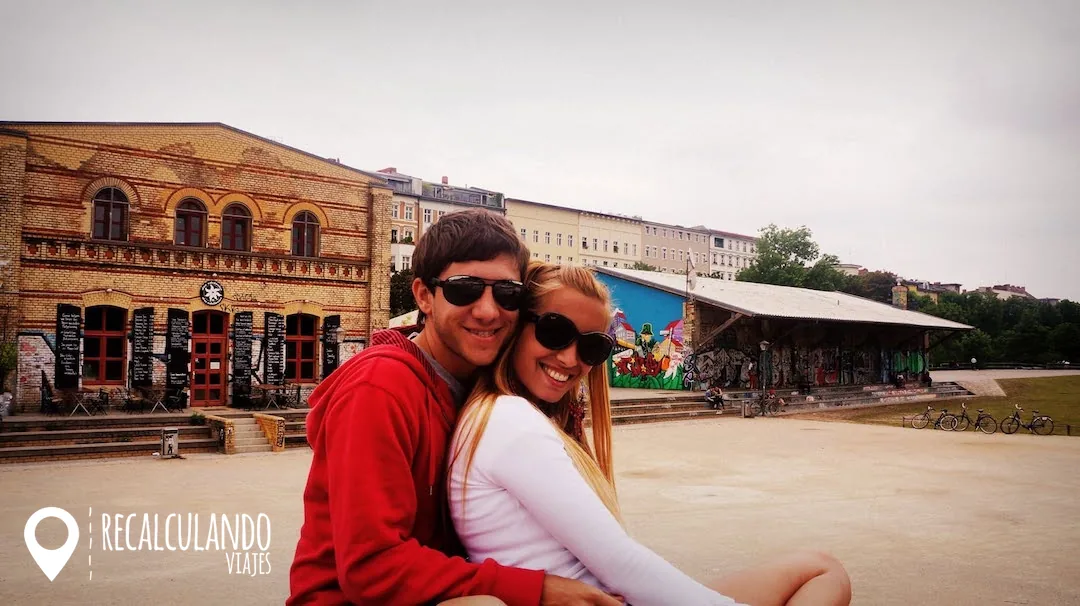
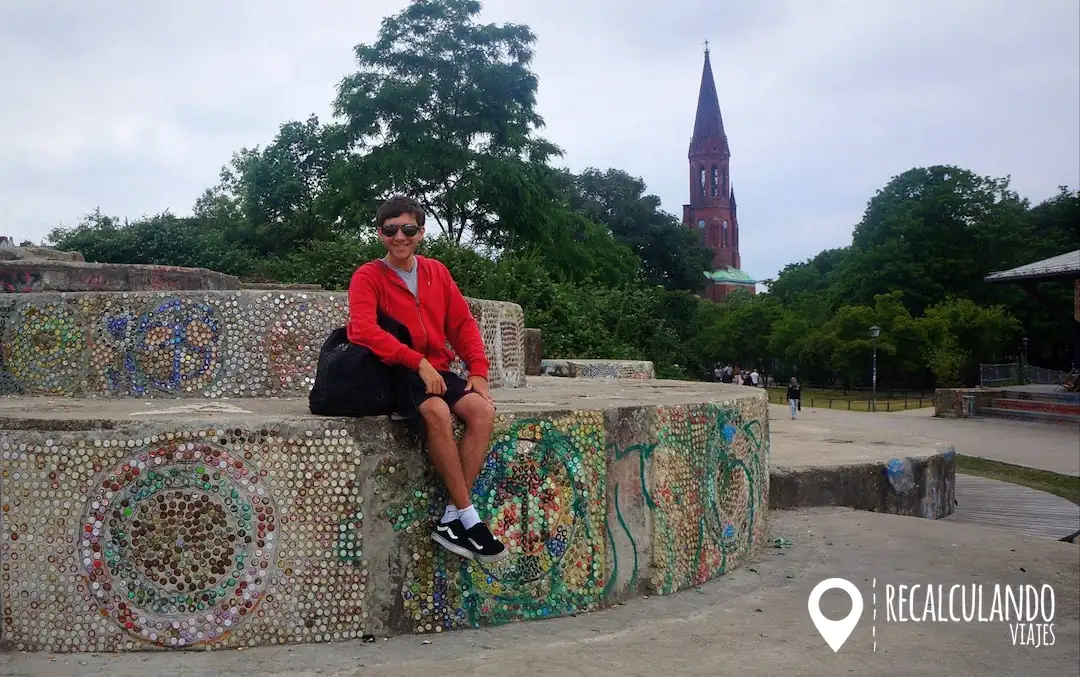
Kreuzberg was our favourite neighbourhood, and we’d spend a whole afternoon here. It was the Turkish immigrant quarter, pushed up against the Wall, and over the years became the city’s alternative heart: graffiti everywhere, bars in old workshops, markets and people sitting on every step.
Start at Kottbusser Tor, with its chaotic mix of kebab shops, greengrocers and neighbours. On Tuesday and Friday afternoons the Turkish market sets up along the Landwehr Canal, with spices, fabrics, cheese and vegetables at prices you won’t find in the centre. The other magnet is Görlitzer Park, the “Görli”, a huge open space that fills with locals, families, speakers and cheap beer as soon as the sun comes out.
2026 update: the park is known for drug dealing, and the Berlin Senate fenced it and closed it at night from 1 March 2026. On 1 June 2026 the Berlin Administrative Court suspended that measure, so the park must stay open at night until the main case is decided. This can change from one month to the next, so check close to your trip. We had no problems by day; at night, use the same common sense as in any big city.
14. Hackescher Markt and Dead Chicken Alley
North of Museum Island is the old Jewish quarter (Scheunenviertel). Around Hackescher Markt there are design shops, cafés and the Hackesche Höfe: eight restored, interconnected courtyards with beautiful Art Nouveau tiled facades. Entry is free.
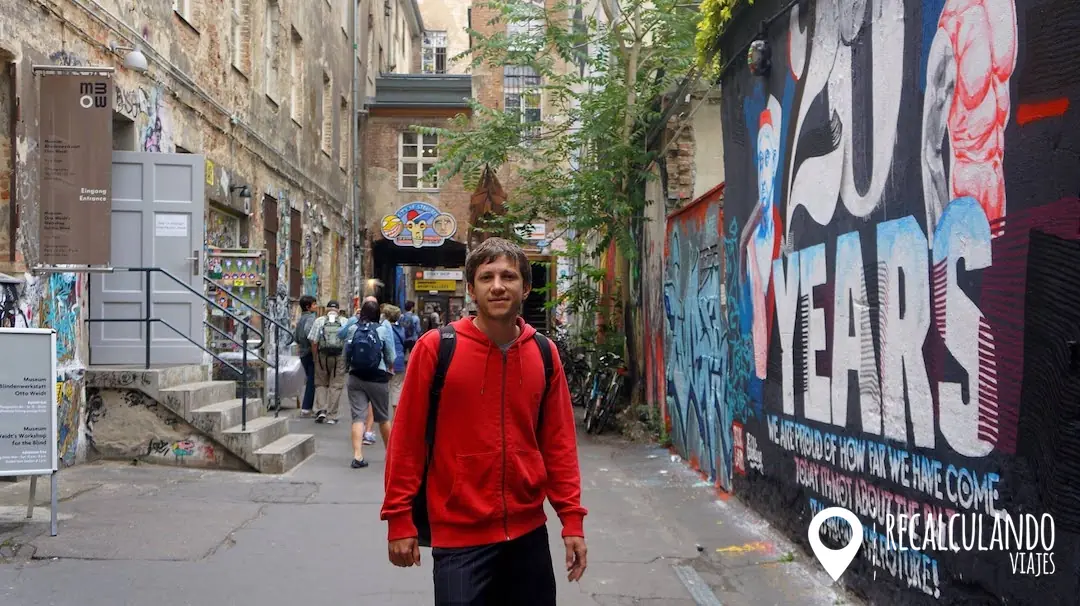
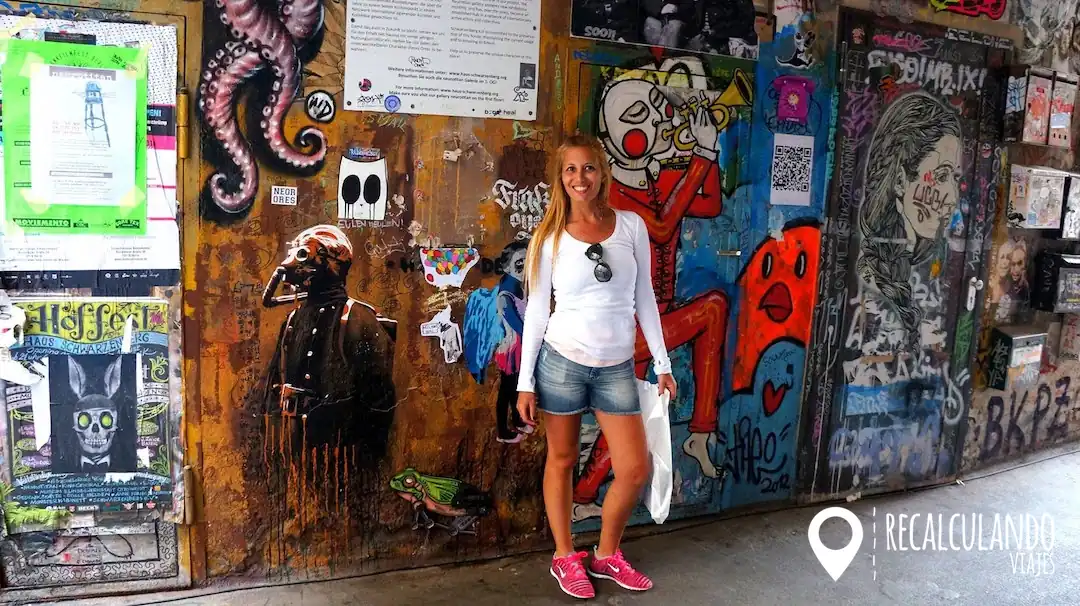
Right next door, and our favourite corner, is Haus Schwarzenberg, better known as Dead Chicken Alley: a narrow passage covered in graffiti, stickers, metal sculptures and street art, layer upon layer. You go through a door and pass from polished, restored Berlin to the chaotic squat Berlin of the nineties. The same building houses the Otto Weidt museum, about the man who hid blind and deaf Jewish workers during the Nazi era.
Tip: there’s no big sign. It’s at Rosenthaler Strasse 39, next to the entrance to the Hackesche Höfe.
15. A boat trip on the Spree
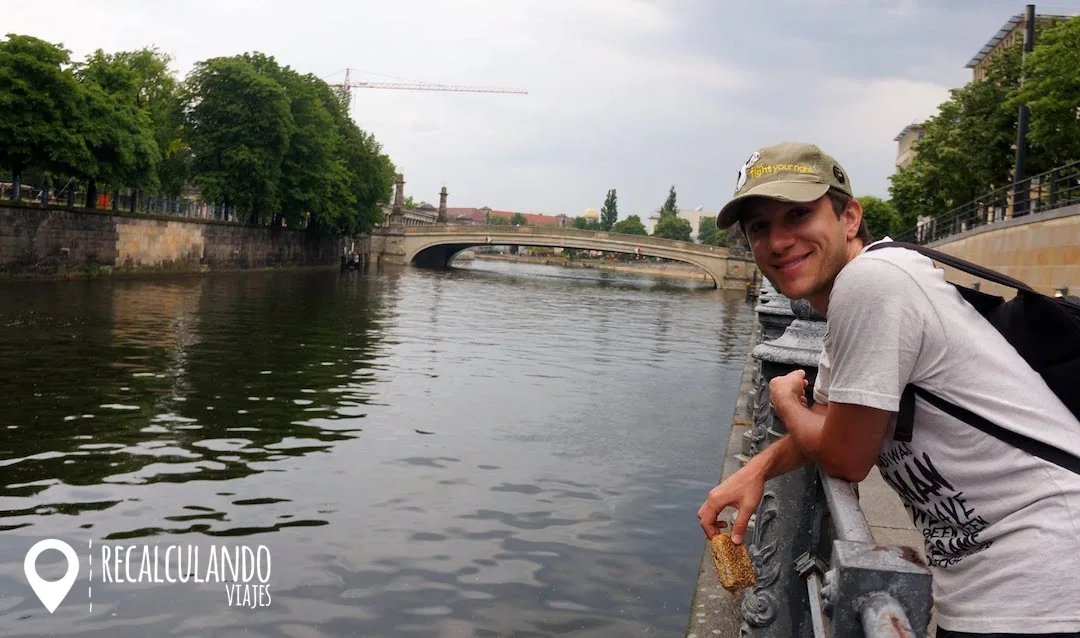
The best way to rest your legs. Short trips last about an hour and leave every half hour from several piers (Museum Island and Nikolaiviertel are the handiest), passing the cathedral, the government quarter, the Central Station and the Reichstag. There are also three-hour trips out to Charlottenburg. If you’d rather not, the free alternative is walking the riverbank between the Reichstag and the Central Station: grass, steps down to the water and Berliners having a drink in the sun. One of our favourite moments of the trip.
5 more things to do in Berlin (the ones we missed)
An honest note: we didn’t visit the next five places. Three nights weren’t enough for everything, and we’d rather tell you than pretend. We include them because they’re on every list and make sense if you stay longer.
16. The Berlin Wall Memorial on Bernauer Strasse
If the East Side Gallery is the Wall as art, the Gedenkstätte Berliner Mauer is the Wall as a system. Along 1.4 km of the street where people jumped from windows in 1961, a full section of the border was rebuilt: the outer wall, the death strip, the lighting, the patrol paths and an original watchtower, plus a documentation centre with a viewing platform and the Chapel of Reconciliation. It’s all free and open-air. Take the U8 to Bernauer Strasse or the S-Bahn to Nordbahnhof.
17. Nikolaiviertel
The city’s oldest quarter, around St Nicholas’ Church, and also the most deceptive: it was destroyed in the war and the GDR rebuilt it entirely in 1987 for Berlin’s 750th anniversary, mixing historic facades with prefab concrete in an old style. Cobbled lanes and beer halls, five minutes’ walk from Alexanderplatz.
18. Tempelhofer Feld
Tempelhof airport, famous for the 1948–49 Berlin Airlift, closed in 2008. Instead of selling the land, Berliners voted in a referendum to keep it as it is: 355 hectares of runways open to the public. People cycle, skate, fly kites and picnic on the runways. It’s free and open from sunrise to sunset.
19. Treptower Park and the Molecule Man
Following the Spree from the East Side Gallery, you reach Treptower Park in half an hour on foot, passing the Molecule Man, three 30-metre aluminium figures standing in the river. Inside the park is the Soviet War Memorial, a huge monument to the Red Army soldiers killed in the Battle of Berlin. Free entry.
20. Mauerpark on a Sunday
Also part of the Wall strip, today it hosts Berlin’s biggest flea market on Sundays, with vintage clothes, vinyl, furniture and food stalls, and the famous open-air karaoke in the amphitheatre from mid-afternoon, weather permitting. It’s in Prenzlauer Berg, very close to the Bernauer Strasse memorial, so the two combine perfectly in one morning.
With more time: Kurfürstendamm and the KaDeWe department store, the Kaiser Wilhelm Memorial Church with its bombed tower left in ruins on purpose, Charlottenburg Palace and its gardens, or the Berliner Unterwelten bunkers, which you can only visit on a guided tour booked ahead.



The Berlin Wall: what’s left and where to see it
The Wall went up overnight on 13 August 1961 to stop people leaving the Soviet sector for the West. It wasn’t one wall but a system: two parallel walls with a death strip in between, watchtowers, floodlights, wire and patrol paths, 155 km encircling West Berlin, which became an island inside the GDR. It fell on 9 November 1989 and within months almost all of it was demolished. Today it’s much less visible than people expect. These are the five places where you can still see it:
- East Side Gallery: the longest stretch, 1.3 km painted in 1990 (number 11 above).
- Bernauer Strasse: the one that explains it best, with a full rebuilt section and an original watchtower (number 16).
- Topography of Terror: the rawest, about 200 metres of original wall with no murals or restoration, rebar sticking out. Free, two blocks from Checkpoint Charlie.
- Potsdamer Platz: a few original panels on the pavement and the double row of cobblestones marking the route, which you cross again and again around the centre.
- Mauerpark: part of the death strip turned park, with a stretch of the inner wall now used as a free graffiti wall.
One thing that surprised us: the bits of wall sold at the Checkpoint Charlie souvenir stalls are, overwhelmingly, recently painted concrete. For a real souvenir, take a photo.
Where to eat in Berlin: kebab, currywurst and markets
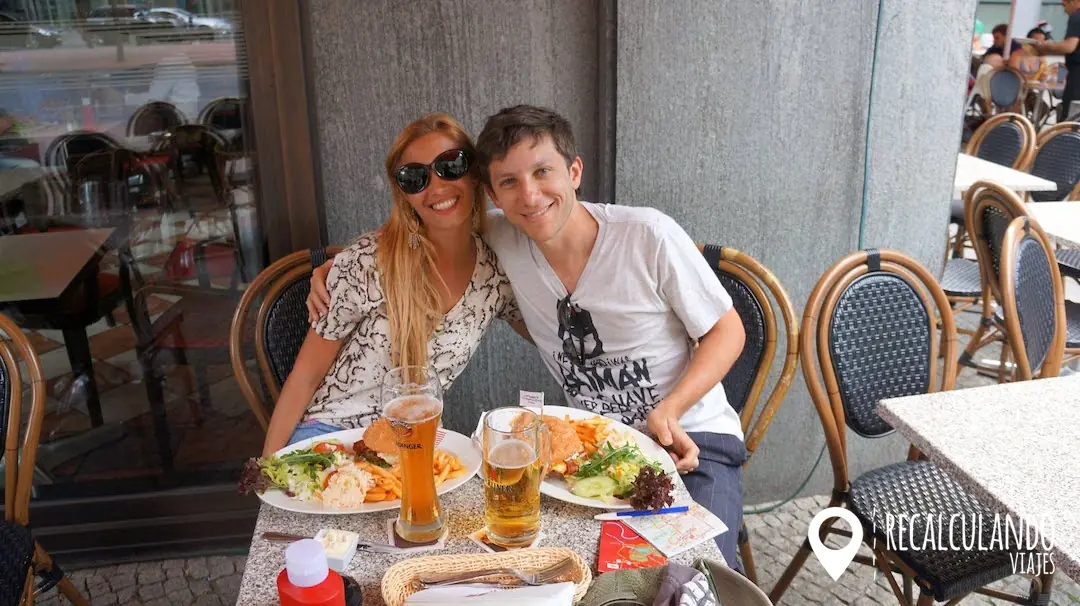
Eating in Berlin is cheap and varied, one of the things that surprised us most. €8–12 gets you a good meal almost anywhere.
Döner kebab, Berlin’s most local dish (that isn’t German)
Berlin has more than a thousand döner places. Meat on a vertical spit comes from the 19th-century Ottoman Empire, but the kebab in bread, to take away, was born here in the 1970s thanks to Turkish workers. The best are in Kreuzberg and Neukölln, around Kottbusser Tor, for a few euros; the most famous stalls in the centre, like the one on Mehringdamm, often have queues of half an hour or more.
Markthalle Neun and the markets
Markthalle Neun in Kreuzberg is an 1891 covered market revived in 2011. Check the day: Street Food Thursday runs on Thursdays from 17:00 to 22:00, the big fresh market is on Fridays and Saturdays, and it’s closed on Sundays. Add the Turkish market on Tuesdays and Fridays and the Mauerpark flea market on Sundays.
Tip: many small places in Germany are still cash only (nur Bar). Carry some euros even if you pay by card for everything else.
Currywurst
Sliced sausage with curry ketchup and fries or a bread roll, invented in post-war Berlin in 1949 and sold at any Imbiss (street stall) for €4–5.
Berlin itinerary: 3 days, day by day
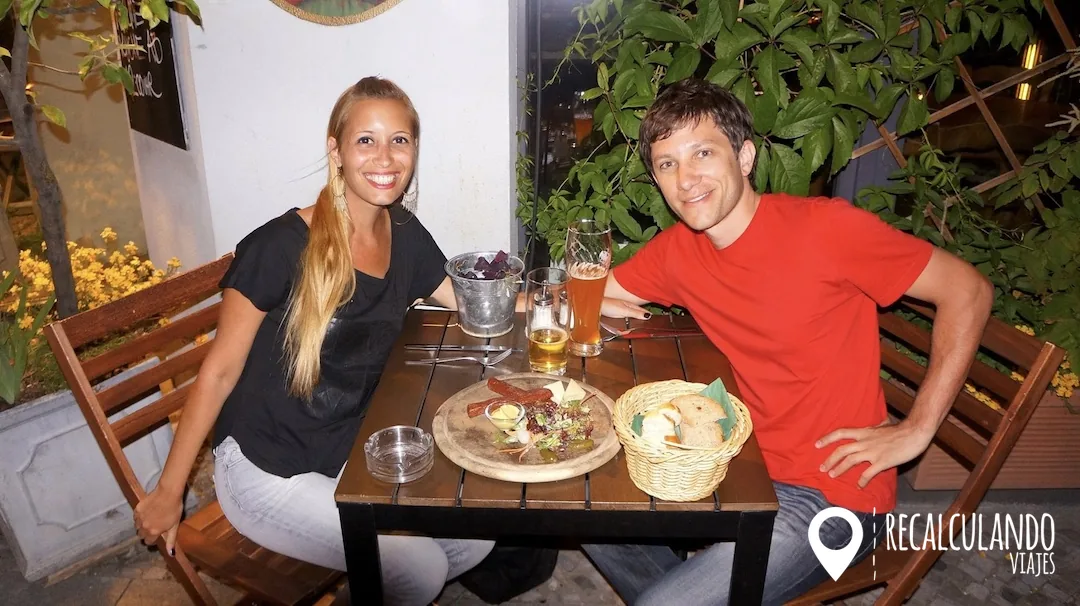
Three nights felt like the reasonable minimum to see Berlin without rushing. This is the itinerary we did, adjusted with what we learned along the way.
Day 1: monumental Berlin
Start early at the Holocaust Memorial, while it’s still empty, then the Brandenburg Gate and the Reichstag (with your booking done, ideally in the morning). Walk through the Tiergarten to the Victory Column, climb the 285 steps and head back to Potsdamer Platz for lunch. In the afternoon, Checkpoint Charlie and the Topography of Terror, and end at Gendarmenmarkt as the sun goes down. About 10 km of walking, so comfortable shoes.
Day 2: Unter den Linden, Museum Island and Alexanderplatz
Start at Bebelplatz and walk Unter den Linden to Museum Island (if you want a museum, today’s the day; remember the Pergamon is closed). Continue to the Lustgarten and Berlin Cathedral, cross to the Nikolaiviertel and finish the morning at Alexanderplatz. In the afternoon, head north to Hackescher Markt, the courtyards and Dead Chicken Alley, and end with a boat trip on the Spree.
Day 3: the Wall, Kreuzberg and neighbourhood life
Our favourite day. East Side Gallery first thing, then over the Oberbaum Bridge into Kreuzberg. Kebab for lunch around Kottbusser Tor, the Turkish market if it’s Tuesday or Friday (or Markthalle Neun on a Thursday), and the afternoon in Görlitzer Park or the neighbourhood streets. If day 3 is a Sunday, swap the morning for the Bernauer Strasse memorial and the Mauerpark flea market and karaoke, a few blocks apart, and leave Kreuzberg for the afternoon.
Berlin in 1, 2, 4 or 5 days
1 day: stay in Mitte. Holocaust Memorial, Brandenburg Gate, Reichstag from outside (dome slots go weeks ahead), Unter den Linden, Museum Island, Berlin Cathedral and Alexanderplatz. If you have energy left at sunset, take the U-Bahn to the East Side Gallery: fifteen minutes, and the thing you’ll remember most.
2 days: do day 1 and day 3 of our itinerary: the monumental axis first, then the Wall and Kreuzberg. Intense but very doable, especially in summer.
On short trips, don’t try to climb the TV Tower, the Victory Column and the Reichstag dome. One viewpoint is plenty, and each takes an hour to an hour and a half with queues.
4 days: add a full-day trip to the 3-day itinerary: Potsdam for palaces and gardens, or Sachsenhausen if you’re interested in the history of Nazism. Both are less than an hour from Berlin.
5 days: do both trips, plus half a day at Tempelhofer Feld on a rented bike and half a day at the Bernauer Strasse memorial. With extra time, Treptower Park and Charlottenburg Palace.
Day trips from Berlin
- Potsdam: 40 minutes by train (ABC ticket). The former summer residence of the Prussian kings, with Sanssouci Palace and gardens. The best choice if you can only do one.
- Sachsenhausen concentration camp: an hour north, in Oranienburg. Entry is free, but a guide helps you understand what you’re seeing. A very hard and very necessary visit.
- Dresden: just over two hours by train. A baroque city rebuilt stone by stone after the 1945 bombing. Doable in a day, but tight.
We didn’t do any of the three because of our dates, so take this as reference rather than first-hand experience.
Map of the 20 things to do in Berlin
We made a map with all 20 places in this guide, so you can open it on your phone while you walk. The first fifteen are in a fairly small area between Mitte, Kreuzberg and Friedrichshain; the last five spread outwards. That’s the good news about Berlin: the city is huge, but the essentials are close together and walkable.
Berlin travel FAQ
How many days do you need in Berlin?
3 full days are enough for the essentials: monumental Berlin, Museum Island, the Wall and Kreuzberg. Plan 4 or 5 days if you want museums at a slower pace or a day trip to Potsdam. We stayed 3 nights and left wanting more.
Is Berlin expensive to visit?
It’s one of the most affordable capitals in Western Europe. You can eat well for €8–12 at any Turkish place, public transport is reasonable and several top sights are free: the Holocaust Memorial, the East Side Gallery, the Reichstag dome and the Tiergarten. Budget €90–140 per person per day, accommodation included.
How do you get from Berlin airport (BER) to the city centre?
The FEX express train, the S9 S-Bahn and several regional trains run from the BER terminal to the Central Station in 30 to 40 minutes. The airport is in fare zone C, so you need an ABC ticket (€5.00 in 2026). If you’re caught with an AB ticket, the fine is €60.
Is the Reichstag dome free?
Yes. You need to register in advance on the official Bundestag website with the name and ID number of each visitor. You can book up to two hours before, but in high season the good slots go weeks ahead. Bring the same ID you registered with.
Is the Pergamon Museum open?
No. The Pergamonmuseum has been fully closed since October 2023. The Pergamon Altar hall and the north wing are scheduled to reopen on 4 June 2027, and the Ishtar Gate won’t be on display again until the 2030s. Meanwhile you can visit “Pergamonmuseum. Das Panorama”, opposite Museum Island.
Where can you see the original Berlin Wall?
The longest surviving section is the East Side Gallery, 1.3 km painted along the Spree. There are also original remains at Potsdamer Platz, the Topography of Terror and, above all, the Berlin Wall Memorial on Bernauer Strasse, where a full section of the border was rebuilt with its death strip and a watchtower.
What is the best area to stay in Berlin?
Mitte is the most practical for a short trip, because almost everything is walkable. Kreuzberg and Friedrichshain are cheaper, with a much better neighbourhood feel, and only a few stops from the centre. Prenzlauer Berg is the quietest option for families.
Is the Berlin WelcomeCard worth it?
It depends on your plans. It pays off if you’ll visit several paid museums and viewpoints, since it includes unlimited public transport and up to 50% off at more than 170 attractions. If your trip is mostly outdoors, single 24-hour tickets work out cheaper. If you’ll use it for the airport, buy the ABC version.
When is the best time to travel to Berlin?
May to September for good weather; June and July have very long days, with light until about 21:30. July and August are the busiest and most expensive. December is cold but has some of the best Christmas markets in Europe.
Conclusion: why Berlin will surprise you
Berlin isn’t a postcard city; it’s a city to understand. Every corner tells you something: a double line of cobblestones, a stretch of painted concrete, empty shelves under a glass panel, a glass dome from which citizens look down on their Parliament.
With three days, do monumental Berlin first, Unter den Linden and the island second, and the Wall and Kreuzberg third. With four or five, add a day trip and the five places at the end of the list. Book the Reichstag dome as soon as you have dates, check it isn’t closed for maintenance, and bring really comfortable shoes. Berlin left us wanting to come back, which is the best sign a destination can leave.
ℹ️ **Total Transparency**
This article contains affiliate links. If you book through these links, we may receive a small commission at no additional cost to you. We only recommend services that we use on our trips and that we trust. This helps us keep this blog free and continue creating useful content for you. Thank you for your support!
🔗 Resources & Useful Links for your trip to Berlin
Do you have questions or want to add your own recommendations on travel to Berlin?
💬 Leave a comment or write to us, we love reading about the experiences of other travelers.
Thank you very much for being part of this adventure!— Nanu & Facu 🌎 | Recalculando Viajes 💜