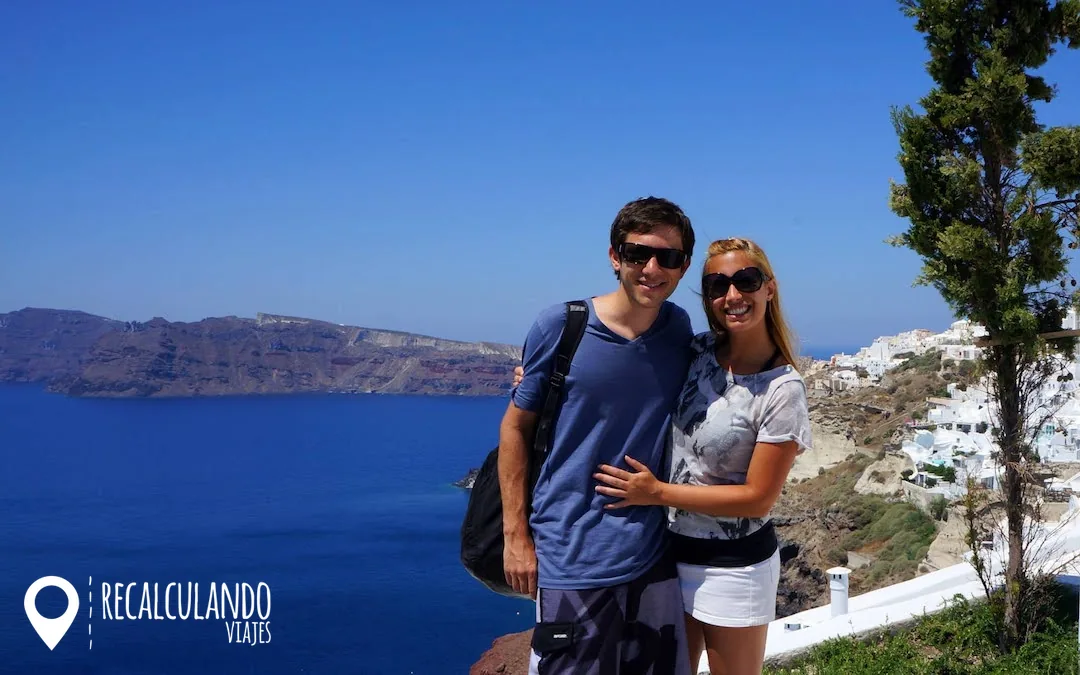
If you are looking for things to do in Santorini, we’ll tell you from our own experience: we spent three nights on the island at the beginning of July, with a rental car, and traveled from end to end. In this guide, you will find the 20 places we liked the most, a map with everything marked, itineraries for 1 to 3 days, where to stay, and how to get around without going crazy.
Santorini is one of those islands that you see a thousand times in photos and still surprises you when you have it in front of you. The caldera, the small white villages hanging from the cliff, the black and red beaches… and yes, the crowds too. That’s why at the end we leave you the tricks that worked for us to avoid the swarms of people.
FREE🚶♀️➡️Free walking tour of Fira, Santorini ➜ Click Here🚶 — no cost, just the tip you want to leave.
🌍 Travel Insurance: 5% Off with IATI Seguros! 🌟
Take advantage of this offer and travel safe.
Things to do in Santorini summary
| Category | Key information |
|---|---|
| Best time | May, June, September, and early October. |
| Recommended duration | 3 full days to explore the island at a relaxed pace. |
| Daily budget | €100 – €180 per person in high season. |
| Language / Currency | Greek / Euro (€). |
| Main transport | Rental car (recommended) or KTEL bus network. |
| Must-sees | Oia (get up early), Fira, Caldera, Ammoudi, and the Akrotiri lighthouse. |
| Tip to avoid crowds | Visit iconic spots before 9:00 AM. |
| Strategic accommodation | Fira (convenience) or Imerovigli/Firostefani (balance of views and price). |
1. Oia, the most famous village in the Cyclades
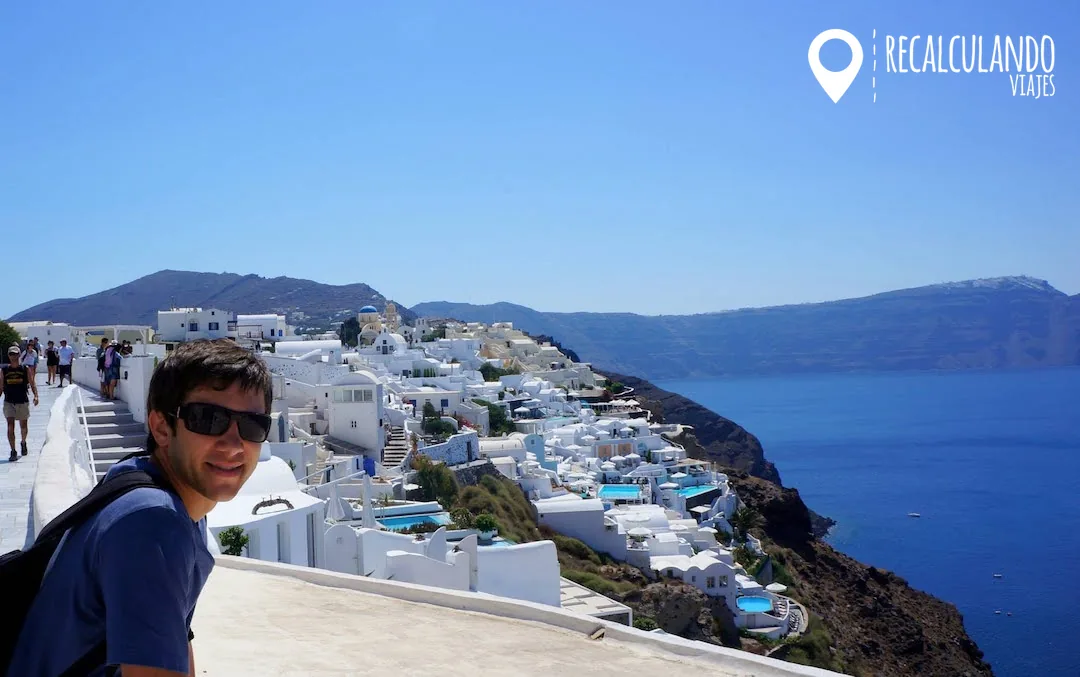
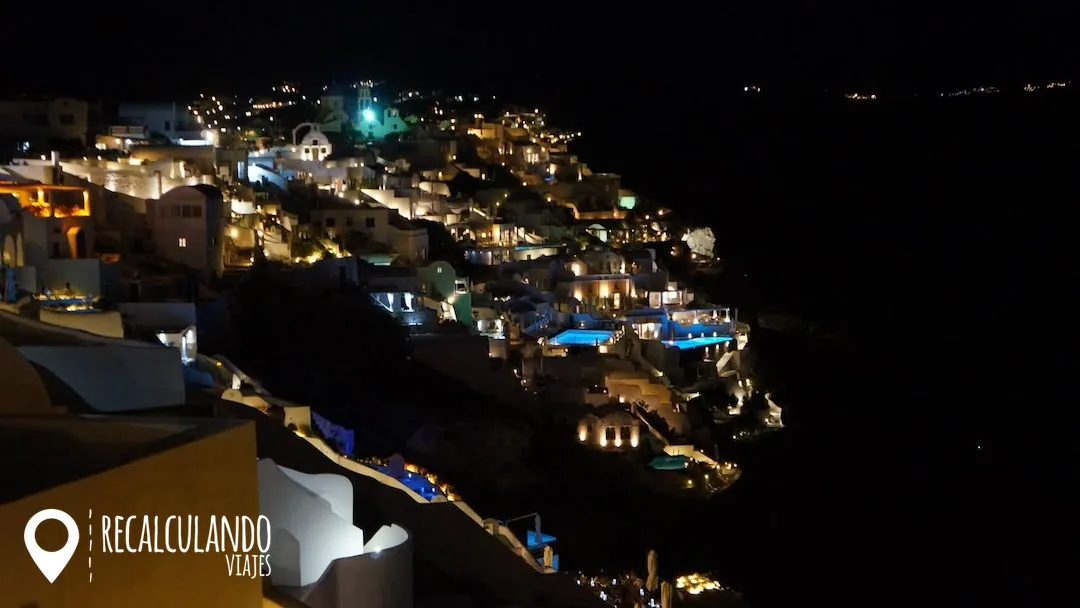
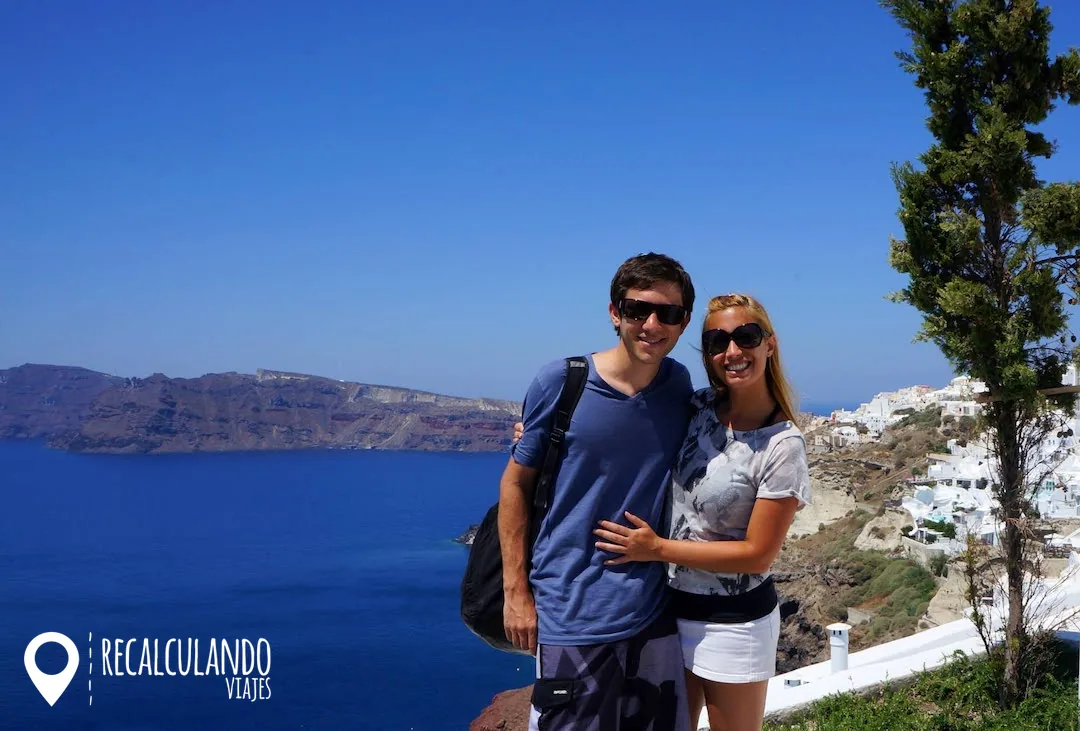
We start with the obvious, because it is truly worth it. If we had to choose just one thing to do in Santorini, this would be it. Oia is the postcard of Greece: whitewashed houses, blue domes, windmills, and that Aegean blue that doesn’t seem real. It is located at the northwest end of the island, about 11 km from Fira.
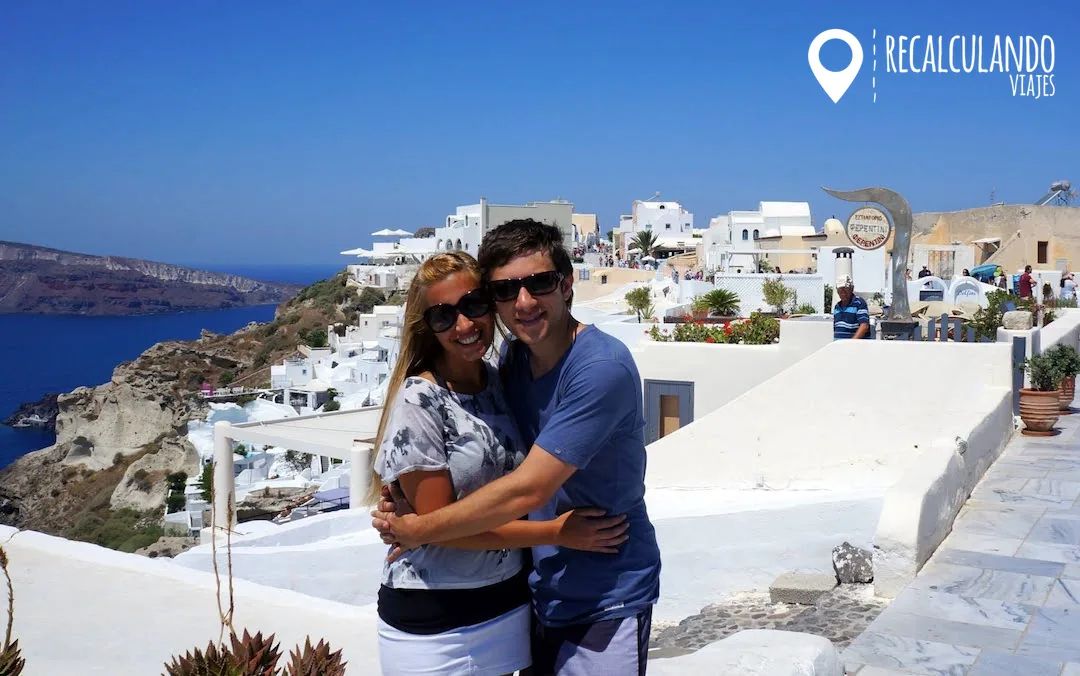
We went several times, and the difference was huge. The first time we arrived near sunset and the main streets were packed: lines to take a photo, people pushing, impossible to walk quietly. The second time we returned at 8 in the morning and it was another village. Literally. You can walk the pedestrian path that crosses Oia from end to end without crossing almost anyone, hear the roosters, and watch how the sun hits the domes from the other side.
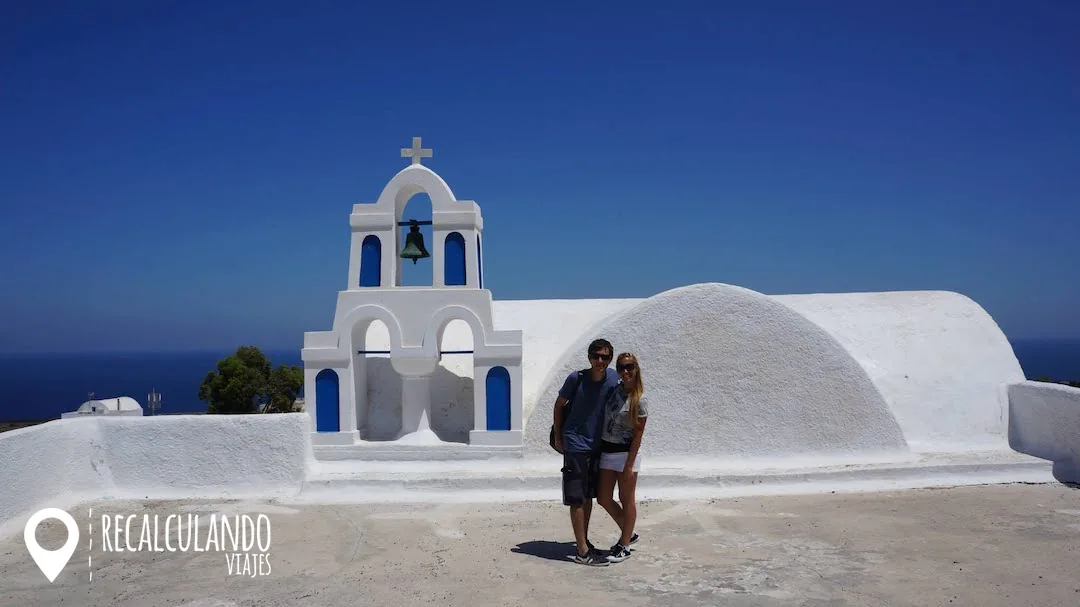
Our advice, if you have to choose only one from this article: visit Oia early in the morning. You can come back at sunset if you want, but the beautiful Oia, the one from the photos, exists before 9:00 AM.
TIPS: parking in Oia is a serious problem in summer. We left the car in the lot at the entrance of the village and walked for a few minutes. If you come by bus, the stop is in the same place.
2. Sunset from the castle of Oia
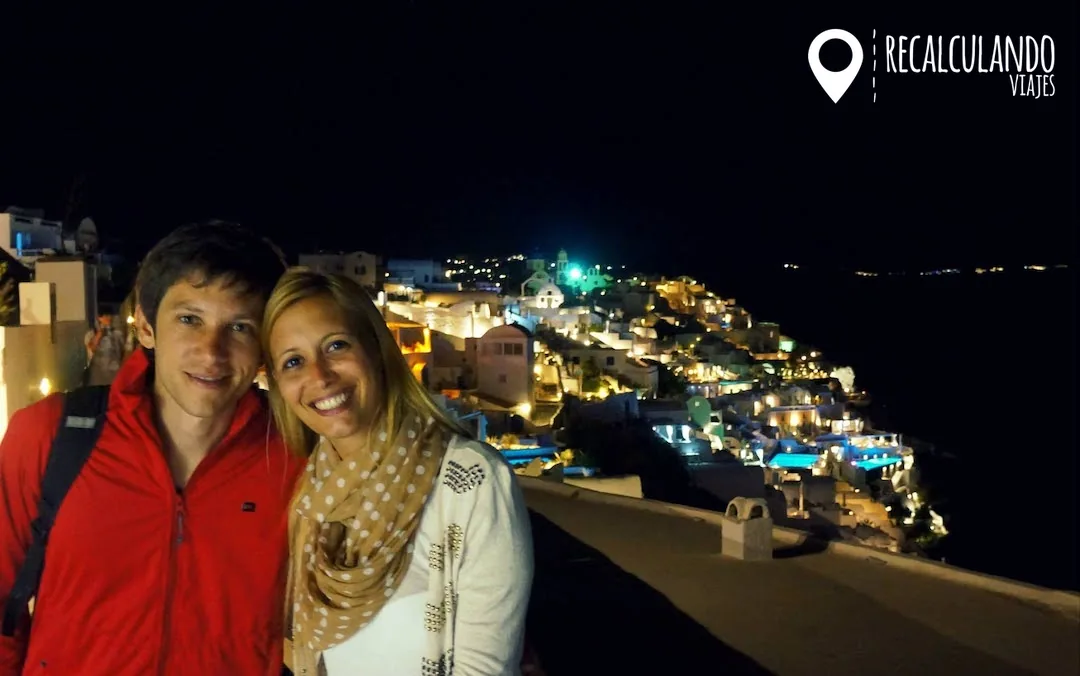
The famous sunset in Oia is watched from the ruins of the Venetian castle of Agios Nikolaos, at the tip of the village. And here is our honest opinion: it is spectacular, yes, but the experience is heavily conditioned by the amount of people. We saw people sitting in the ruins from five in the afternoon to save a spot.
We ended up watching it from a little further back, on the path that goes down towards the port, and the view was almost the same without so many people. Another alternative that many travelers recommend is to watch it from the sea, on a sailboat excursion through the caldera.
Practical fact: in July, the sun sets around 8:45 PM. Plan to be in position an hour earlier if you want a decent spot, and have patience afterward, because the exit from the village is a bottleneck.
3. The port of Oia – Ammoudi, one of the essentials in Santorini
Below Oia, at the foot of the cliff, is Ammoudi. You go down about 300 steps and it’s one of the corners that we liked the most on the whole island. Down there is a tiny little port with fishing boats, huge red rocks falling into the water, and taverns with tables practically in the sea.
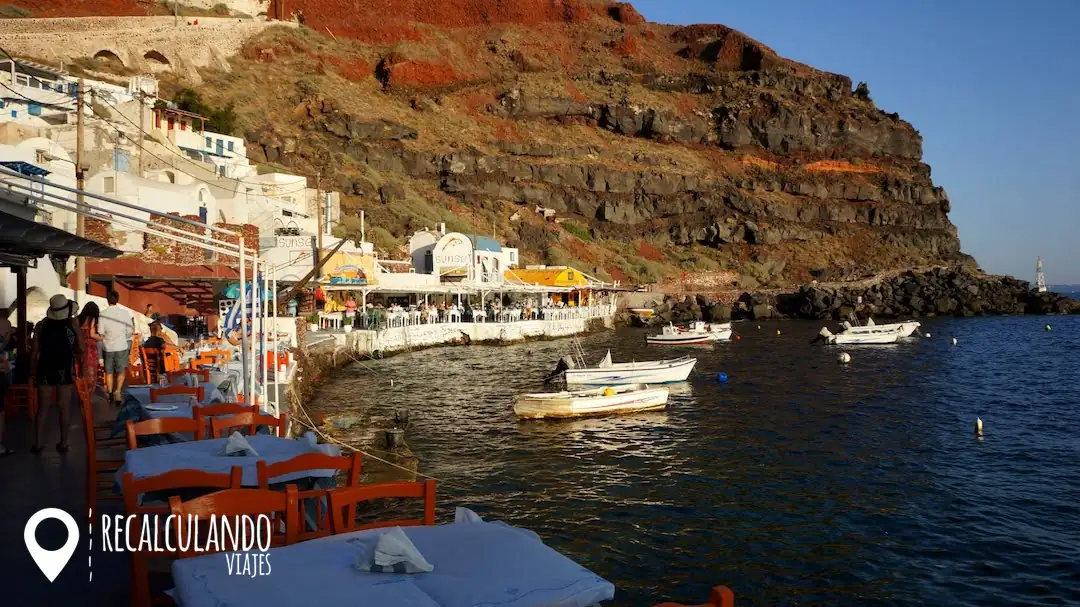
We went down in the mid-afternoon and stayed for a long while. The water there is transparent and there is a rock platform from where people dive headfirst; we just watched, hahaha. A short path also leads to the little island of Agios Nikolaos, which you cross by a small stone bridge.
Keep in mind: climbing those 300 steps with 35 degrees is not very easy but good for the workout. If you don’t want to walk, there is a shuttle and also taxis that go up the road. And if you go by car, you can drive down, although the parking down there is very small.
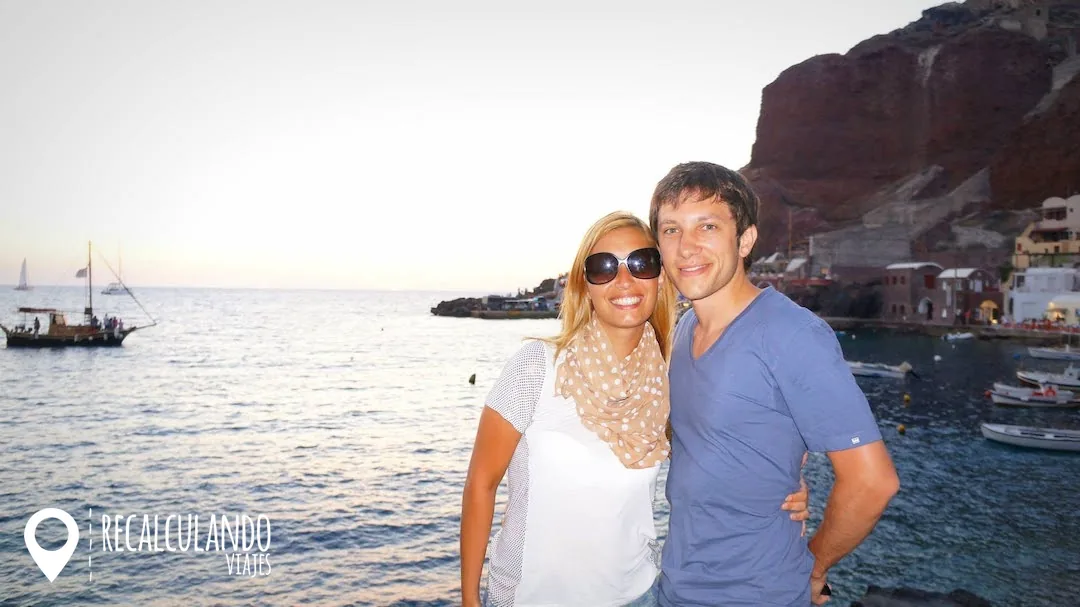
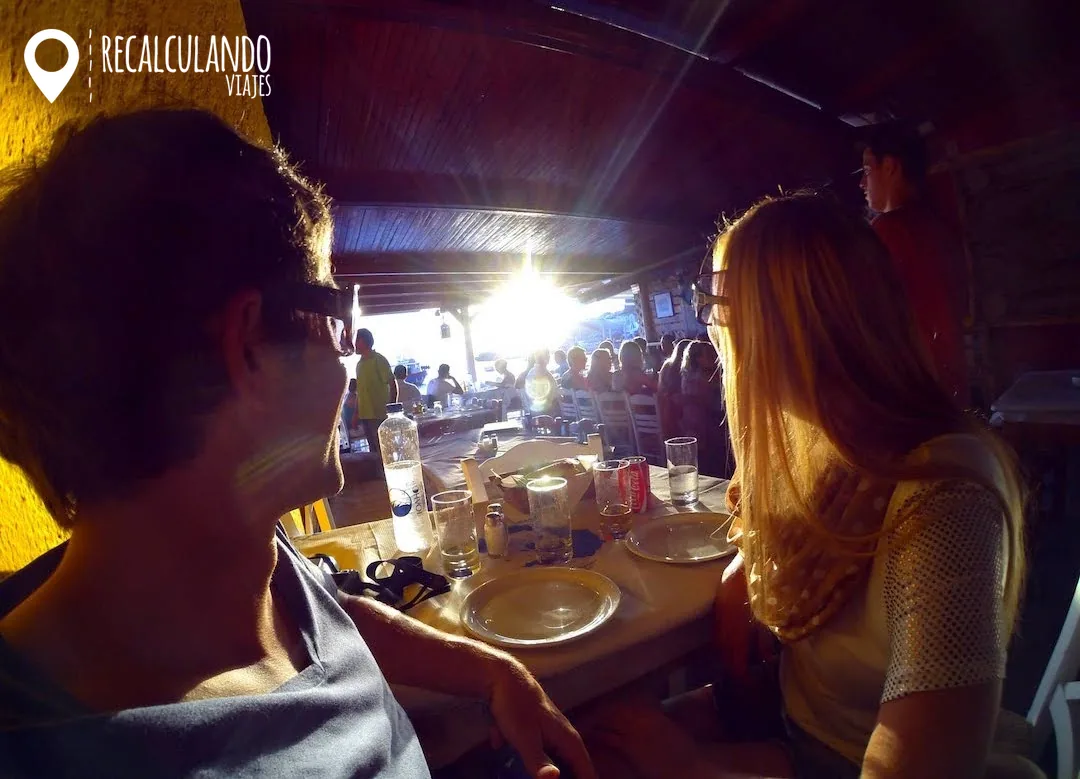
From here we also saw the sunset in the small port, eating fresh fish in a tavern. Unforgettable moments!
4. Finikia, the quiet village next to Oia
This was our unexpected discovery. Finikia is less than a kilometer from Oia, right next to it, and yet there was almost no one. It is a village of houses carved into the volcanic rock, narrow streets, bougainvilleas, and total calm.
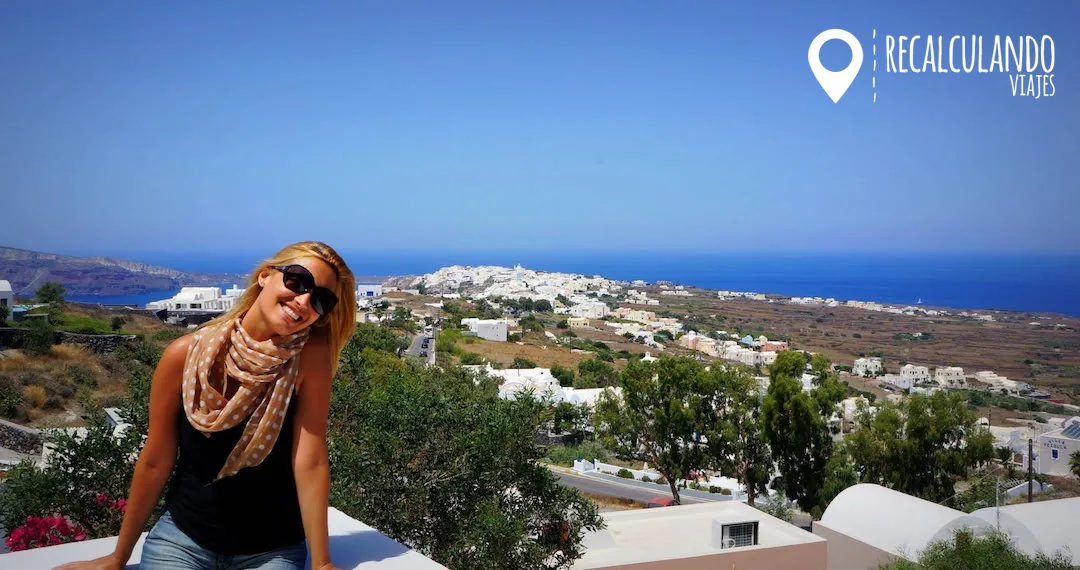
We arrived almost by chance looking for parking and ended up walking the whole thing. It doesn’t have “attractions” or famous viewpoints: it has a cute church, some beautiful restored houses, and that silence that you don’t find in the rest of Santorini in July. We loved it.
If you are wondering what to visit in Santorini beyond the postcards, this is exactly the type of place. Ten minutes of walking from Oia and the atmosphere changes completely.
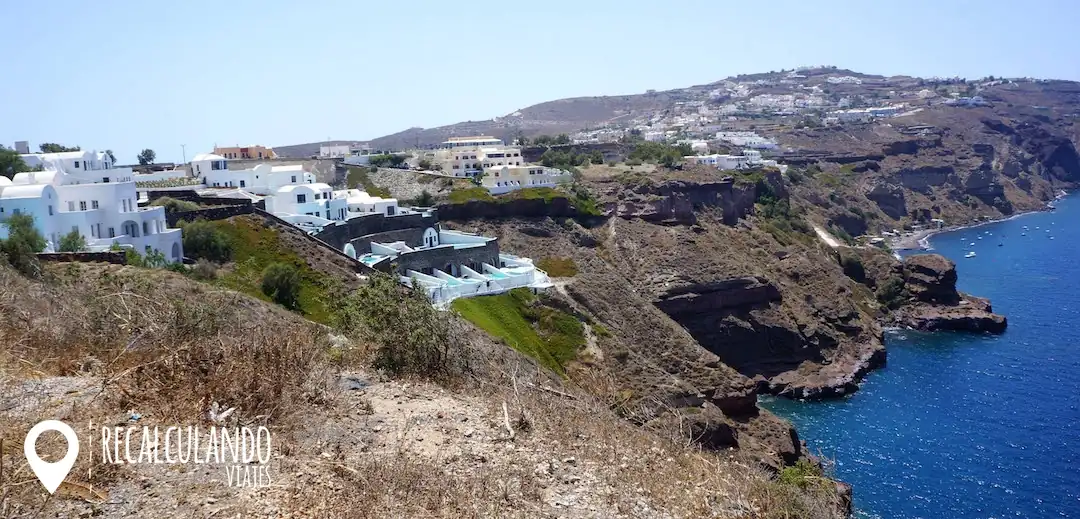
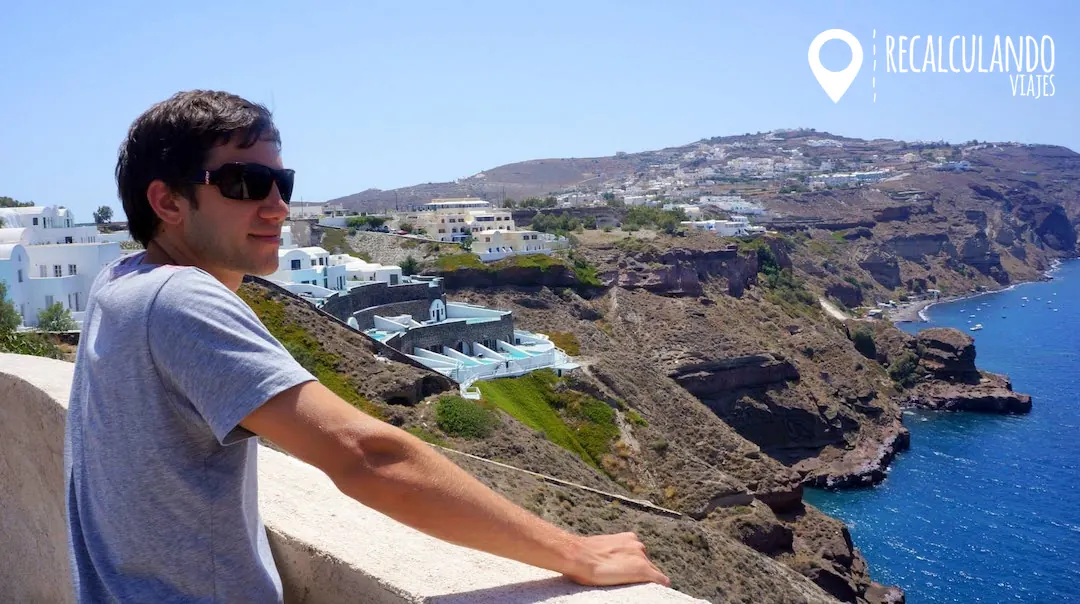
5. Fira, the capital and its walk along the caldera
Fira is the island’s hub: here you find the bus station, banks, shops, and most services. We dedicated a whole afternoon to it, left the car in one of the parking lots at the entrance, and walked through it.
The best thing about Fira is the promenade that borders the caldera. You walk along a natural balcony 260 meters above the sea, with cruise ships below looking like toys and the volcano in front. The streets of the center are full of shops, jewelry stores, and terraces; we really liked going through the side streets, where prices drop significantly and there are fewer people.
Fira is also the center of the island’s nightlife. When the sun goes down, the area around Erythrou Stavrou Street fills with bars and clubs that stay open late, and it is practically the only place in Santorini where you find movement after midnight. Oia, on the other hand, shuts down as soon as the last sunset group leaves.
We also passed by the Metropolitan Orthodox Cathedral, with its white patio and arches, which is one of the most photographed postcards of the village. And if you are interested in the archaeological side, here is the Museum of Prehistoric Thera (about €10, closed Tuesdays), where frescoes and objects found in Akrotiri are exhibited. We didn’t go in, but many travelers recommend it as a supplement to the site.
👩⚕️👨⚕️ A must-have for stress-free travel! 🌎✈️ ➜ Get a Quote, Compare & Buy
6. The cable car and the 588 stairs of the Old Port
From the Old Port of Fira (Gialos), three paths lead up to the village: the cable car, the stairs, and the donkeys. Let’s break it down.
The cable car saves 220 meters of elevation in about three minutes and is the most comfortable option. According to the official price list, a one-way ticket costs €10 per adult, €5 for the reduced fare (children 6-12 years old), and €5 per suitcase. There is no round trip: two separate tickets are purchased. When there are cruise ships in the port, the line can be 30 to 60 minutes, so it’s better to book online.
The Karavolades stairs are 588 zigzagging steps. Walking down is doable; walking up at high noon in July, better not. Watch out for the floor, which is often slippery.
And the donkeys: we didn’t use them and we recommend you don’t either. Greece tightened the regulations for 2025-2026, with a 100 kg limit per rider, a ban on working between 1:00 PM and 5:00 PM in July and August or when temperatures exceed 35 degrees, and fines of up to €30,000 per animal. The cable car costs the same and no one pays for it with their back.
7. Firostefani and the Church of the Three Bells
Firostefani is the natural continuation of Fira to the north, a ten-minute walk along the edge of the caldera. It is quieter, more residential, and with just as good views. We did that stretch on foot and recommend it: the path is flat, well-marked, and the views change all the time.
The most photographed point is the Church of Agios Theodoroi, better known as the Three Bells of Fira, with its blue dome and white bell tower framed against the caldera. It is just below the main path and most people walk by without seeing it, so look for the signs.



8. Imerovigli and the Skaros Rock
Following the same path for about 20 more minutes you reach Imerovigli, the highest village of the caldera and the one that usually wins all the “best view in Santorini” polls. From here, the trail leads to Skaros, a huge rock where the medieval fortress that protected the island from pirates once stood.
We didn’t do the full hike to the tip of Skaros, but many travelers point to it as one of the best walks on the island: it’s about 20-30 minutes of descent and ascent along a stone path, with no shade, to the chapel of Theoskepasti. If you do it, go early or late in the afternoon and bring water.
On the way, just before reaching the village, is The Heart of Santorini: a metallic sculpture in the shape of a heart looking out into the void that has become one of the most photographed points on the island. It is free and there is usually a line of people waiting for their turn for the photo, so if you go early, you’ll get it without anyone behind you.
Imerovigli is also the village that many choose to stay in if they want views of the caldera without the noise of Fira or the prices of Oia.
9. The path from Fira to Oia, the best walk in Santorini
This is the star walk of the island and one of the things to do in Santorini that we were most recommended before arriving. Path number 9 connects two of the most famous places to see in Santorini while skirting the entire rim of the caldera: it is about 10 kilometers and between 3 and 4 hours of walking, depending on how often you stop to take photos (which will be many).
We did the first section, from Fira to Firostefani and from there to Imerovigli, which is about 3 kilometers and completely paved: easy to walk, even in sandals, and the views are already spectacular. We recommend that bit to anyone, even if you don’t plan to do the full trail.
After Imerovigli things change. The path turns into dirt and loose stone, it goes up and down quite a bit, and there isn’t a single spot of shade along the way. Those who did the whole thing agree on two tips: leave very early in the morning or start in the mid-afternoon to arrive in Oia just in time for sunset, and carry between a liter and a half and two liters of water per person.
TIPS: do it in the Fira → Oia direction, because the elevation gain plays in your favor and you end up in the best possible place. For the return, the Oia-Fira bus runs every 20 or 30 minutes and costs €2.20, so there’s no need to backtrack. And closed-toe footwear, yes or yes: the loose stone of the final stretch is treacherous.
10. Red Beach, one of the most famous things to do in Santorini
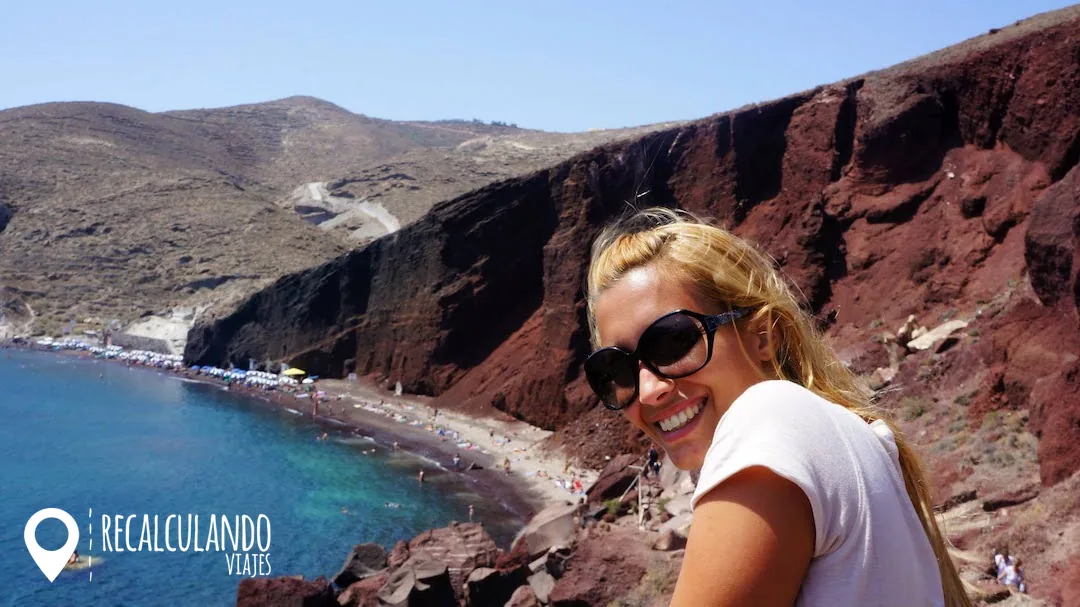
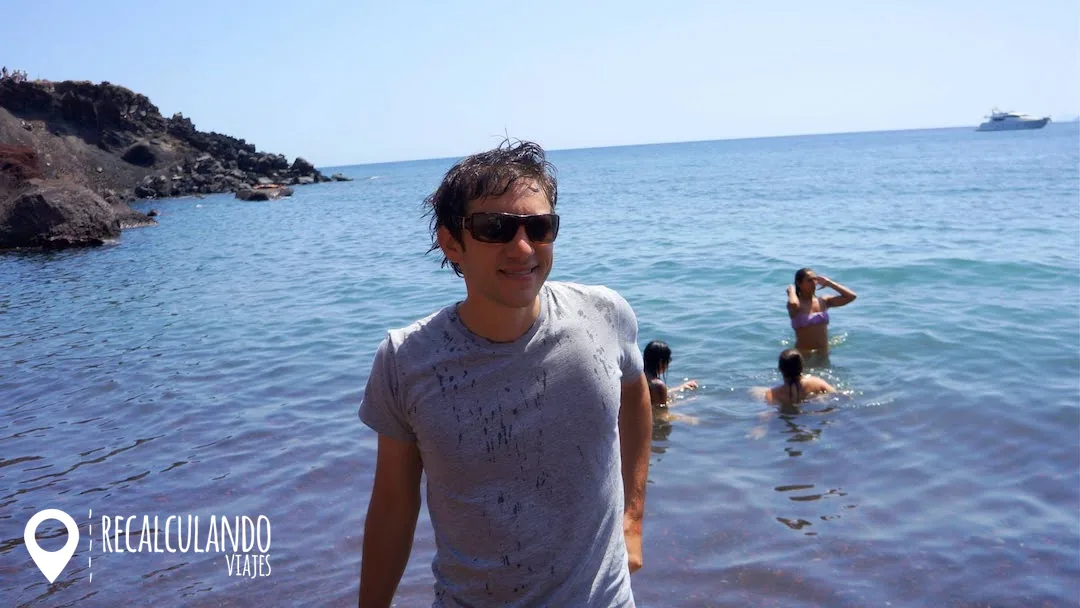
Red Beach (Kokkini Paralia) is in the south, next to the village of Akrotiri, and it is probably the most Martian image of the island: cliffs of oxidized red lava falling onto turquoise water and a beach of dark sand and pebbles. It really is impressive.
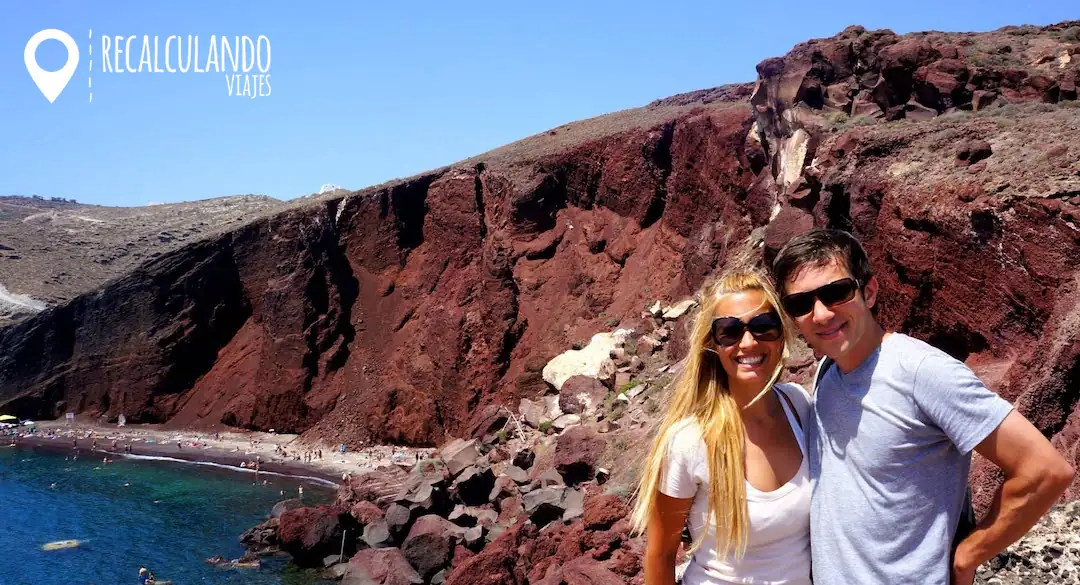
Now, the important part: access is officially restricted due to the risk of rockfalls, and it is not a decorative warning. There are marked areas, signs, and sections of the path that are closed depending on the state of the terrain.
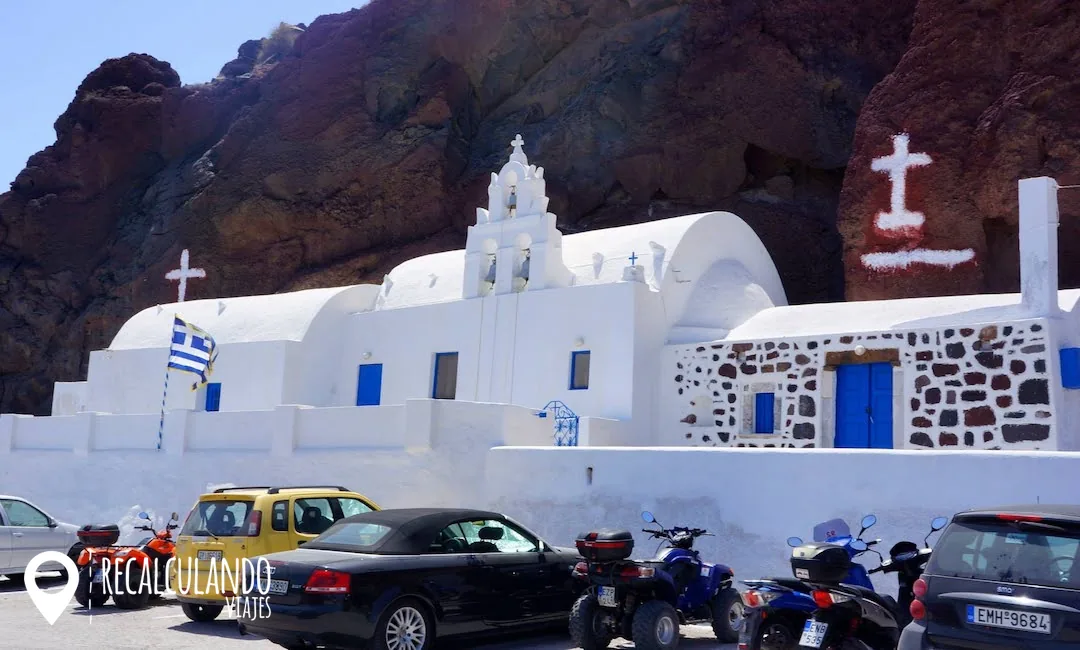
We left the car in the free parking next to the white church (very cute), walked the ten-minute path to the viewpoint, and at that time it was possible to go down to the beach. The panoramic view from the viewpoint is the best of all, and on top of that, it’s the safe one.
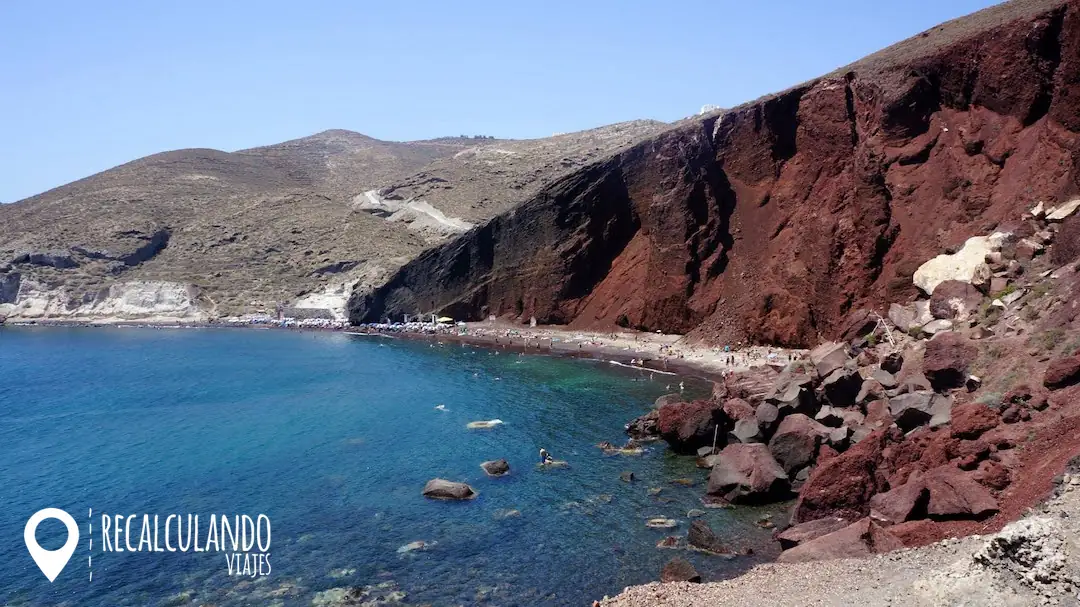
If you want to reach the sand without going through the unstable path, small boats leave from Akrotiri port that drop you off at the beach for about €5-8 and usually combine Red Beach with White Beach. Always check the time of the last boat before getting on.
Keep in mind: there is no shade, no umbrellas, no bar. Bring water, a hat, and closed-toe shoes; flip-flops on that path are a bad plan.
11. White Beach (Aspri Paralia)
A few hundred meters from Red Beach, following the coast, is White Beach, wedged between light-colored stone cliffs. The contrast with the previous one is tremendous: red on one side, white on the other, and in between fifteen minutes of navigation.
We didn’t go down to this one, because you can only get there by boat (no path) and that day we preferred to continue towards the south. Those who know it describe it as more secluded and with better water for swimming than the Red one. The same boats that go to Red Beach do the circuit of the two, with the option of getting off at one and coming back later.
12. Vlychada, the lunar beach of the south
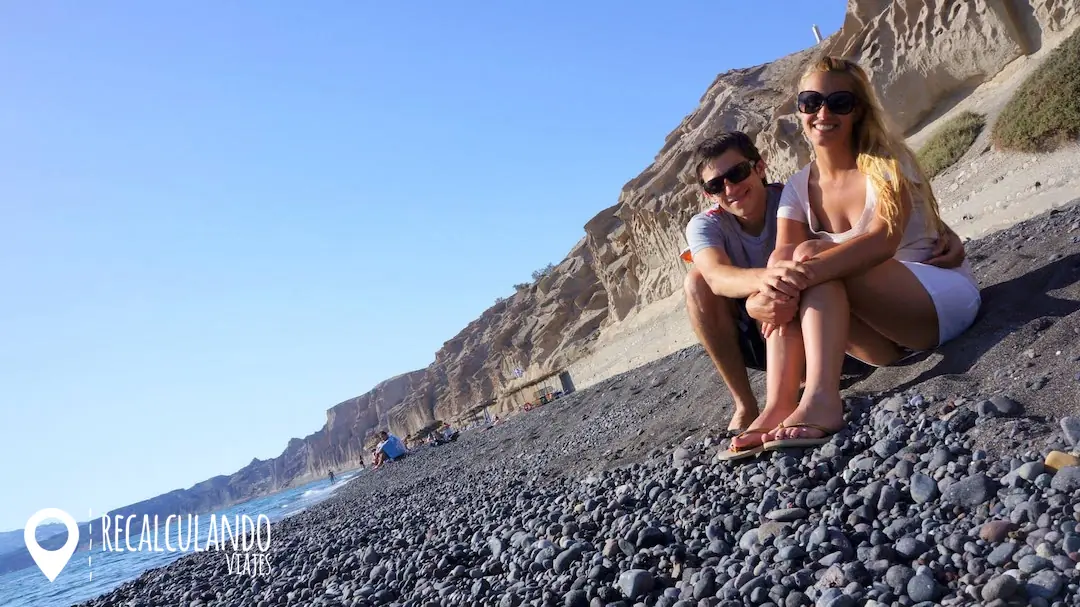
If there is one beach on the island that we loved, it is this one. Vlychada is on the south coast and looks like nothing else: behind the black sand rises a wall of white volcanic tuff that the wind eroded for centuries until it looks like a lunar landscape, full of folds and strange shapes.
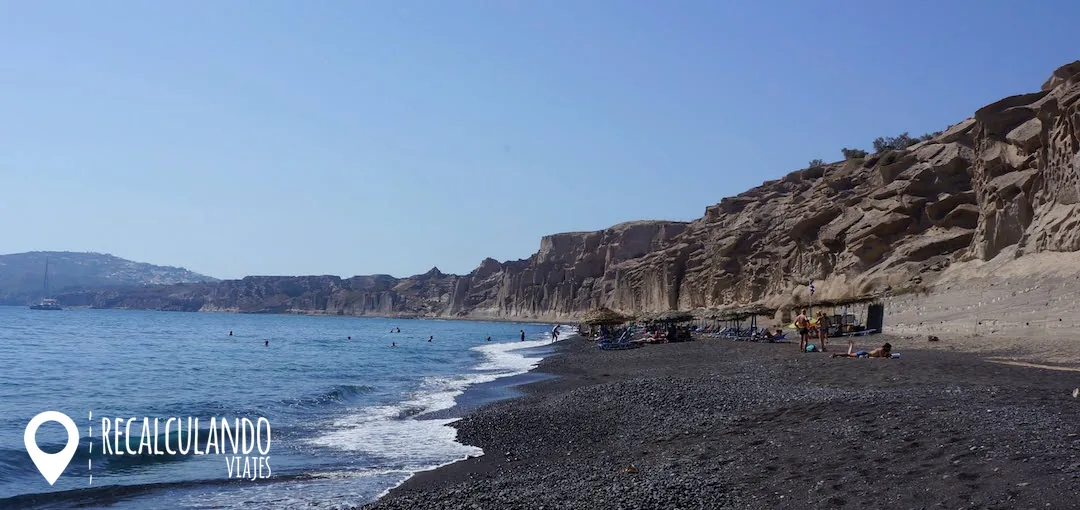
We went in the mid-morning and it was quiet, much more so than Perissa or Kamari. It is a long beach, with some beach bars and loungers in the central part and completely empty stretches if you walk a little. The water is cold and deepens quickly, fair warning.
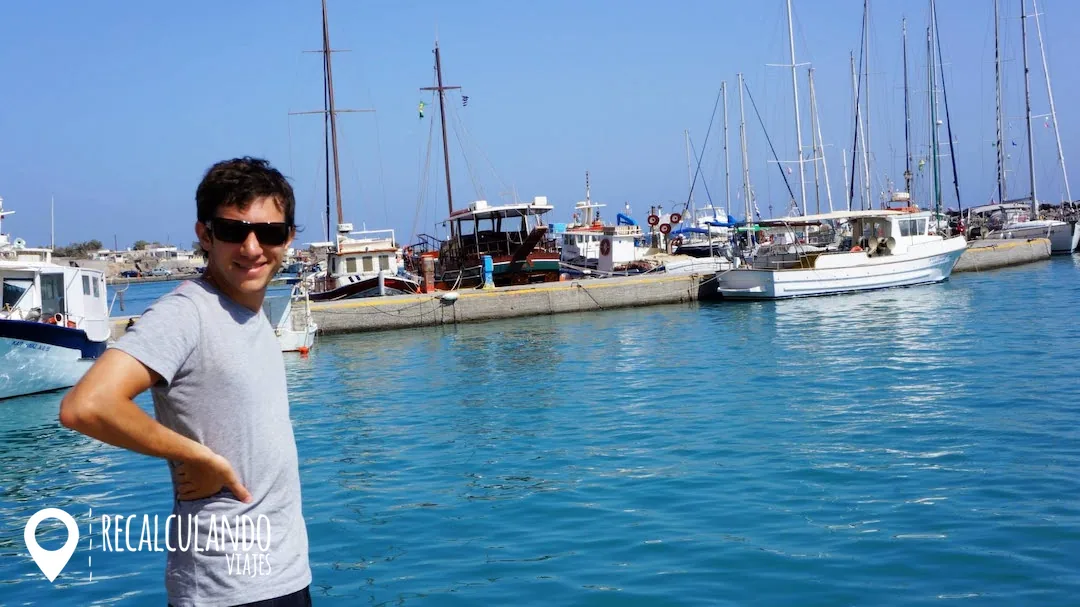
Next to it is the Vlychada marina, with fish restaurants and a much more local atmosphere. For us, one of the most worthwhile stops in the whole south and one of the things to do in Santorini that appears least in guidebooks.
13. Perissa and Perivolos, the liveliest black beaches
Perissa and Perivolos are actually the same very long black volcanic sand beach, at the foot of Mount Mesa Vouno. It is the most developed beach area in Santorini: beach bars, loungers, water sports, rentals of all kinds, and many young people.
We drove by and stopped for a while. It’s not our style of beach, but you can understand perfectly why it works: the black sand gets very hot (bring proper sandals, it burns), the water is deep immediately, and there are services everywhere. If you are traveling with children or want a comfortable beach day, it is the best option on the island.
The bus from Fira costs €2.70 and takes about 25 minutes. It is one of the most expensive routes in the network, but it works well.
14. Kamari and Mount Mesa Vouno
On the other side of the same mountain is Kamari, the other great black beach of Santorini, with a long promenade full of taverns and hotels. The rock of Mesa Vouno falling directly into the sea at the southern end gives it a postcard very different from that of Perissa.
Kamari seemed a bit more orderly and family-friendly than Perissa. It is also the starting point of the path that goes up to Ancient Thera, and from here the taxis and 4x4s that make that ascent along the winding road depart.
A nice detail: in Kamari, one of the last open-air drive-in cinemas in Greece operates. We didn’t go, but it is one of those things that people who stay for several days often mention as a good night plan.
15. The Akrotiri Archaeological Site
Akrotiri is the “Pompeii of the Aegean”: a Minoan city from the Bronze Age that was buried under the ashes of the 17th-century BC eruption and was preserved almost intact. Paved streets, two and three-story houses, drainage systems, pottery, and frescoes.
We are not into museums unless they are essential, and that day we chose the coast. But it is one of the few archaeological sites that appear recommended in practically every guide, so here is the info. The site is covered by a modern bioclimatic roof, with raised walkways, and is visited in the shade, something that is appreciated in August.
After the seismic episode in early 2025, which forced the preventive closure of twenty museums in the Cyclades, Akrotiri was the last to reopen: it returned to receiving visitors on April 11, 2025, once the safety inspections of the roof were completed.
Practical facts: the high season entrance is around €20. The summer hours are from 8:00 AM to 8:00 PM, except Mondays and Thursdays, when it closes at 3:30 PM. Since 2024, entry is by reserved time slot, so it is best to buy the ticket online on the official website for Greek archaeological sites. Check hours before going, as they change by season.
16. Akrotiri Lighthouse, sunset without crowds
At the southwestern end of the island, at the end of a road that keeps getting narrower, is the Akrotiri lighthouse. It is the furthest point of all and, for our taste, one of the best things to do in Santorini if you are interested in the landscape more than the postcard.
We arrived almost at the end of the afternoon and there were four cars. Four. From the cliff, you can see the entire caldera, Thirasia in front, and the open sea on the other side. No shops, no lines, just wind and that white lighthouse from 1892.
Many travelers point to it as the alternative to the Oia sunset, and after having seen both we understand why. It doesn’t have the blue domes, but it doesn’t have a thousand people pushing each other either. The final road has some dirt sections, so go slow.
17. Pyrgos, the village with the best view of the interior
Pyrgos was the island’s capital until the 19th century and is one of the best-preserved villages in Santorini. It climbs up a hill in the geographical center of the island, with whitewashed houses piled around the remains of a Venetian castle.
We climbed all the way to the top through streets that get narrower and every step is worth it: from the Kasteli you can see the whole island, from sea to sea, with Fira on one side and the black beaches on the other. On a clear day, you can even distinguish other islands of the Cyclades.
It is a village that almost doesn’t appear in cruise itineraries, so you can walk around quietly even in July. It seemed to us the best mid-morning plan of all we did inland.
18. Megalochori and Santorini’s wine wineries
Megalochori is another traditional inland village, with captain houses, patios with arches, and bell towers standing alone in the middle of the squares. Very nice to walk for half an hour and have something without paying caldera prices.
Surrounding it is the island’s wine heart. The Santorini vineyard is unique: vines are cultivated in the ground, twisted into a basket shape (kouloura) to protect them from the wind and take advantage of the fog’s humidity. From there comes the Assyrtiko, a dry and mineral white, and the Vinsanto, a sweet wine made from sun-dried grapes that is a thousand-year-old tradition of the island.
We stopped at one of the wineries on the road to Pyrgos, more for the view than the tasting. Tastings usually cost around €20-35 depending on how many wines are included, and several wineries in the area have terraces with a view of the caldera at sunset. It’s one of the best things to do in Santorini if you like wine.
19. Emporio, the most labyrinthine medieval village
Emporio is the largest inland village in Santorini and the one that best preserves its medieval old town. Its Kasteli is a maze of narrow alleys, covered passageways, and stairs that fold back on themselves: houses were built attached to each other forming a continuous wall, with no windows facing outward, to defend against pirates.
We passed through Emporio driving on our way to the southern beaches and we wanted to walk through it calmly. Those who walk it describe it as the most authentic village on the island, with the Venetian tower Goulas in the middle of the old town and a row of windmills on the hill behind, from where you see the entire south coast.
It is one of the things to do in Santorini that almost doesn’t appear in quick itineraries, and also one of the few where prices are still those of a Greek village and not a postcard destination. If you go by car, it is a very easy stop to combine with Perissa or Pyrgos.
20. The volcano Nea Kameni and the hot springs
The Santorini caldera is literally the crater of one of the largest eruptions in history, and in the middle, two black islets emerge: Nea Kameni and Palea Kameni. Nea Kameni is still active (its last eruption was in 1950) and you can climb on foot to the edge of the crater.
We prioritized exploring the island by car and didn’t do this excursion, but it is one of the most requested and those who do it highly recommend it. The usual circuit leaves from the Old Port of Fira or Athinios, lasts between 3 and 6 hours, and combines the climb to the volcano with a dip in the sulfurous hot springs of Palea Kameni, where you have to swim about 30-40 meters from the boat. The longer routes add Thirasia, the small island across, much quieter and with taverns in the port.
Watch out for two things: the entrance to the volcano geological park costs €5 per person and is almost never included in the boat ticket, it is paid in cash upon disembarking. And for the hot springs, no white swimwear: sulfur and iron oxide will dye it orange forever.
Itineraries: things to do in Santorini in 1, 2 or 3 days
| Time | Recommended route |
|---|---|
| Cruise scale (5-6 h) | Cable car to Fira, walk along the caldera, bus to Oia, streets and viewpoint, return with plenty of time |
| 1 day | Oia early + Ammoudi + Finikia in the morning; Fira and the caldera walk in the afternoon; sunset in Oia or the lighthouse |
| 2 days | Day 1: Oia, Ammoudi, Finikia, Fira. Day 2: full south (Red Beach, Vlychada, Akrotiri lighthouse) with a stop in Pyrgos |
| 3 days | The previous two + Day 3: Akrotiri, black beaches of Perissa or Kamari, wineries and Megalochori, or volcano excursion |
An organizational TIP: we left the beaches and the south for the car day, and the caldera villages for the walking days. Mixing both things in the same day is wasting a lot of time on the road.
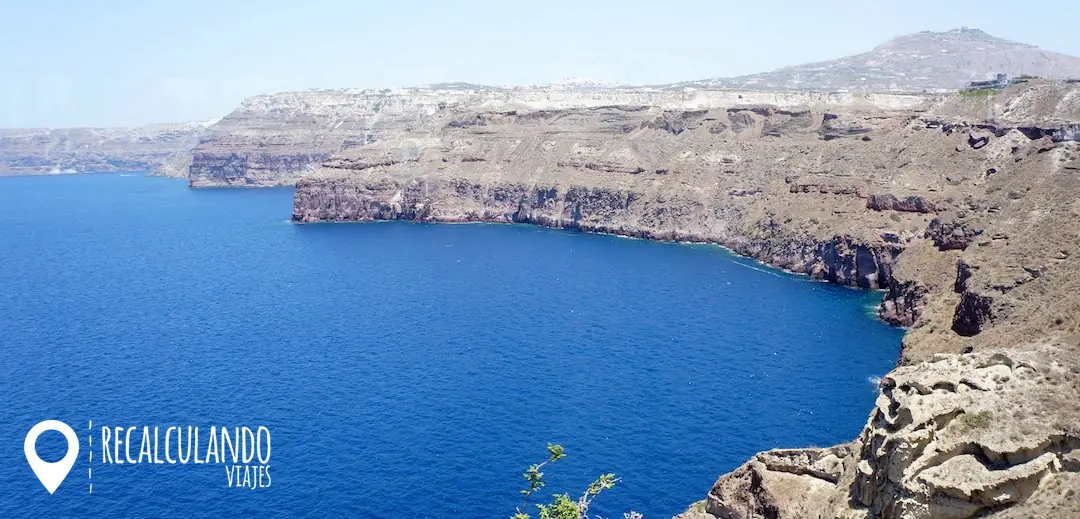
Where to stay in Santorini
The area where you stay determines quite a lot about the things to do in Santorini each day, in addition to the budget:
- Oia: the most beautiful and the most expensive. Ideal if you are going for a few days and want the postcard view from the room.
- Fira: the most practical. It is the center of all buses, has the largest offer of restaurants, and more reasonable prices. It’s where we stayed.
- Firostefani and Imerovigli: caldera views, quiet environment, and a ten or twenty-minute walk from Fira. Very good quality-price-view ratio.
- Kamari and Perissa: the most economical on the island and directly on the beach. If you come without a car, you stay far from the caldera.
- Megalochori, Pyrgos, and Emporio: inland villages, authentic and cheap, but you need a vehicle yes or yes.
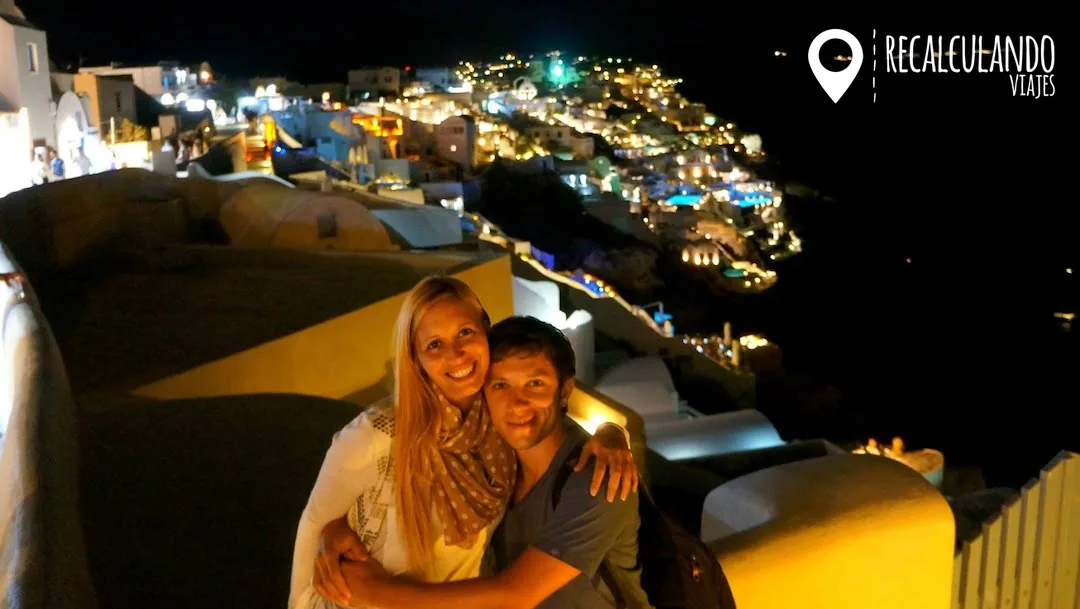
What type of accommodation to choose in Santorini
Beyond the area, in Santorini there are three distinct categories and the price difference between them is huge:
- Cave houses (yposkafa): houses carved into the volcanic rock, the traditional accommodation of the island. They are cool in summer even without air conditioning and usually have a terrace with a view of the caldera. It is the most typical and what most people are looking for.
- Hotels with infinity pool over the caldera: the photo you see on Instagram. In Oia and Imerovigli, in July and August, they start at high three-digit figures per night. If it’s your special trip, fine; if not, there are options with just as good views without a private pool.
- Studios and apartments in Kamari or Perissa: the most economical on the island, right on the beach, and with a good bus connection to Fira. You lose the view of the caldera, but the savings are big.
If you are traveling on a honeymoon or looking for tranquility, Imerovigli and Firostefani are the most balanced bet: top views, silence at night, and prices quite a bit more reasonable than Oia.
Advice: Santorini sells out. It is one of those destinations where booking three or four months in advance is not an exaggeration, especially if you are looking for something with a view of the caldera in July or August.
Where to Stay in Santorini: Map and Prices
In this map below, with zoom, you can see the available accommodation with prices compared by area in Santorini:

How to get to Santorini
There are two ways, and both are easy.
By plane: Thira Airport (JTR) is 6 km from Fira and receives direct flights from Athens (about 45 minutes) and, in summer, from several European capitals. From the airport to Fira, there is a bus for €2.20.
We arrived in Santorini by plane from Rome.
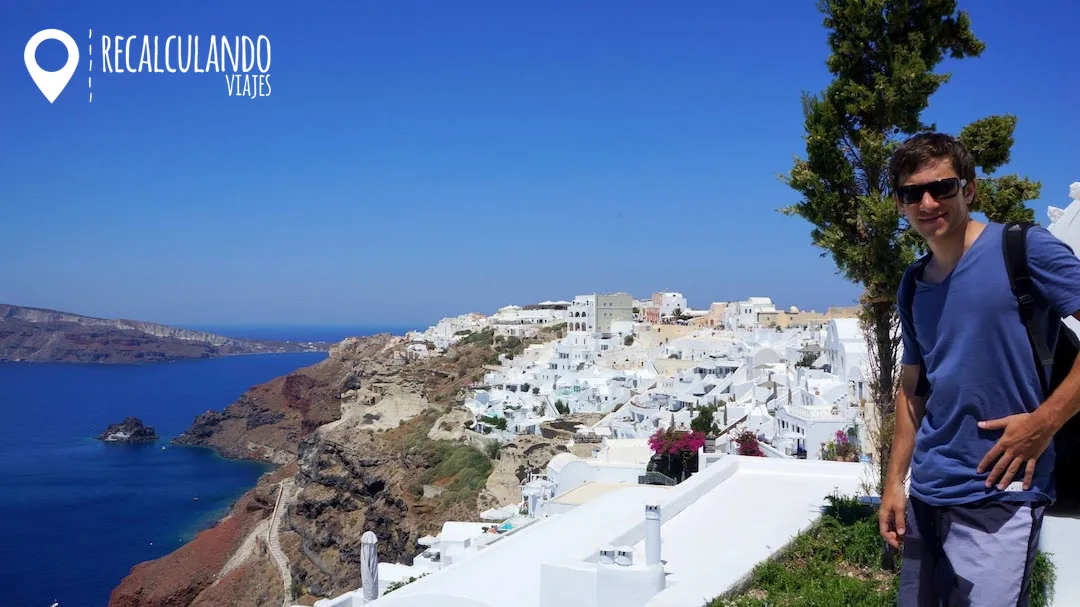
By ferry: ferries from Piraeus arrive at the port of Athinios, about 8 km from Fira. In summer there are up to eight daily departures; fast ferries take about 5 hours and conventional ones can take 8 to 11, with tickets from about €46 approx. We left Santorini by ferry to another island (Milos) and it is the most beautiful way to enter/exit the caldera: the ship goes between the cliffs and you don’t know where to look.
If you are coming from other islands, Santorini is very well connected with Milos, Mykonos, and Crete, which were the ones we combined in trips through Greece.
If you arrive by cruise ship: keep in mind that since 2025 a disembarkation fee of €20 per person applies between June 1 and September 30 (€12 in April, May, and October, and €4 in winter). In addition, the island applies a daily cap of 8,000 cruise passengers, which for 2026 is calculated on the total capacity of each ship. Translated: there are fewer stops and somewhat less overcrowding in Oia and Fira.
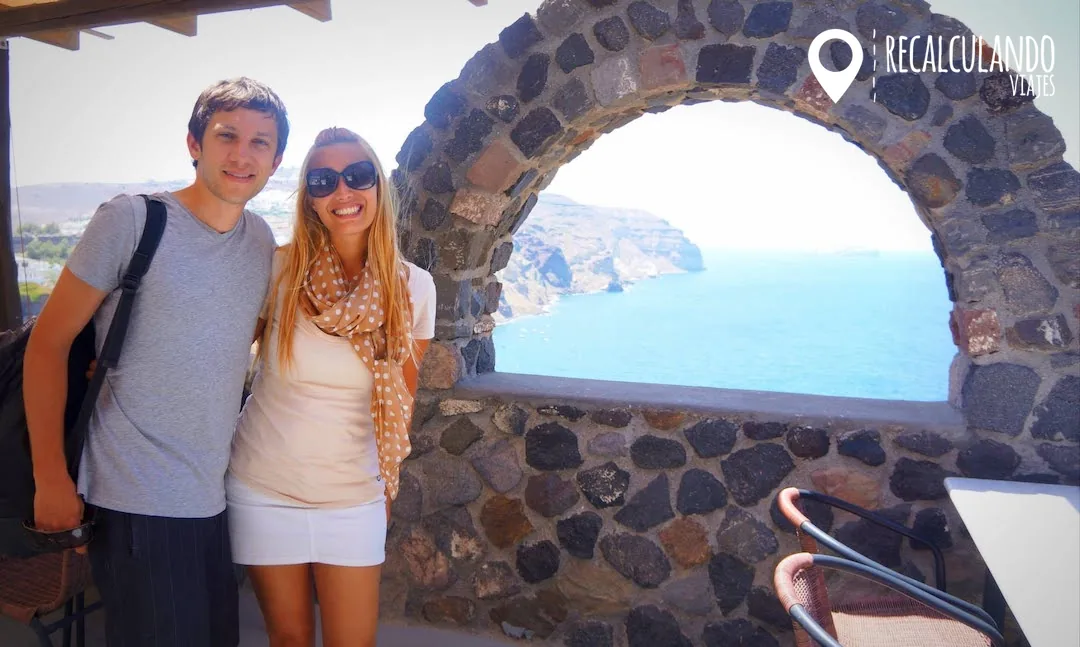
How to get around Santorini
We rented a car for all three days and would do it again. It is the most comfortable way to chain the things to do in Santorini that are far from the caldera. The island is barely 18 km long, the distances are short, and it gives you total freedom for the beaches of the south, the lighthouse, and the inland villages, which are precisely the places where buses don’t reach well.
What is true: parking in Oia and Fira in high season is a sport. And the streets of the villages are very narrow, so get a small car.
The alternative is the KTEL buses, which work well and are very cheap: between €2.20 and €2.70 per trip, with the central station in Fira. The important detail is that almost all lines pass through Fira, so to go from Oia to Perissa, for example, you have to transfer and pay two tickets. In summer the Fira-Oia bus runs every 20 or 30 minutes.
➜ Transfers in Santorini (Santorini Thira Airport / Athinios Port & more)
Quads and motorcycles are very popular, although on the winding roads and with the Aegean wind, they are not the most comfortable option. And there is no Uber or Bolt on the island: only taxis, which are few and fill up quickly.
For mobile data, an eSIM saves you the process of getting a local SIM as soon as you arrive.

What to eat in Santorini
Greek cuisine is intense and direct, and in Santorini, there are also own products that you won’t find on other islands.
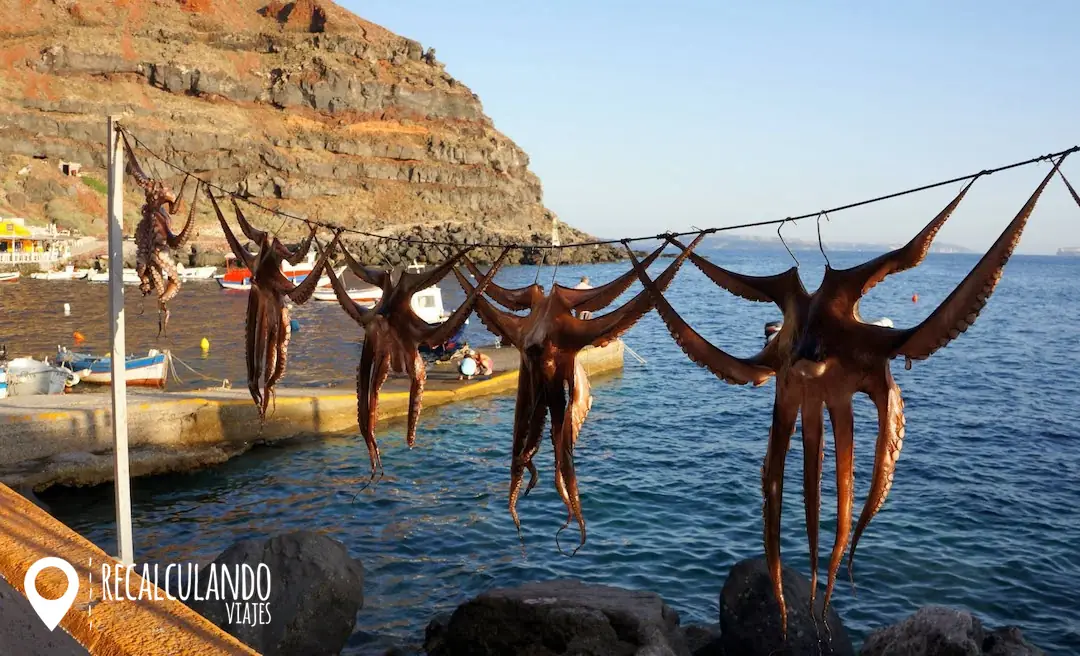
- Santorini cherry tomatoes: small, sweet, and cultivated without irrigation in volcanic soil. The base of domatokeftedes, fried tomato croquettes that are the most typical dish on the island.
- Fava: yellow split pea puree with olive oil, onion, and lemon. It is ordered as a starter and it’s addictive.
- Moussaka: the classic Greek dish of eggplant, meat, and gratin béchamel.
- Souvlaki and gyros: the most economical to eat on the go, between €4 and €7 for the filled bread.
- Greek salad: with feta, tomato, kalamata olives, and oregano. Simple and perfect.
- Baklava and loukoumades: the two desserts that must be tried yes or yes. Loukoumades are fried donuts dipped in honey, served warm.
- To drink: Assyrtiko with meals, Vinsanto for dessert, and ouzo if you are up for strong anise. If you prefer beer, Donkey is the local craft beer and is on almost every menu on the island.
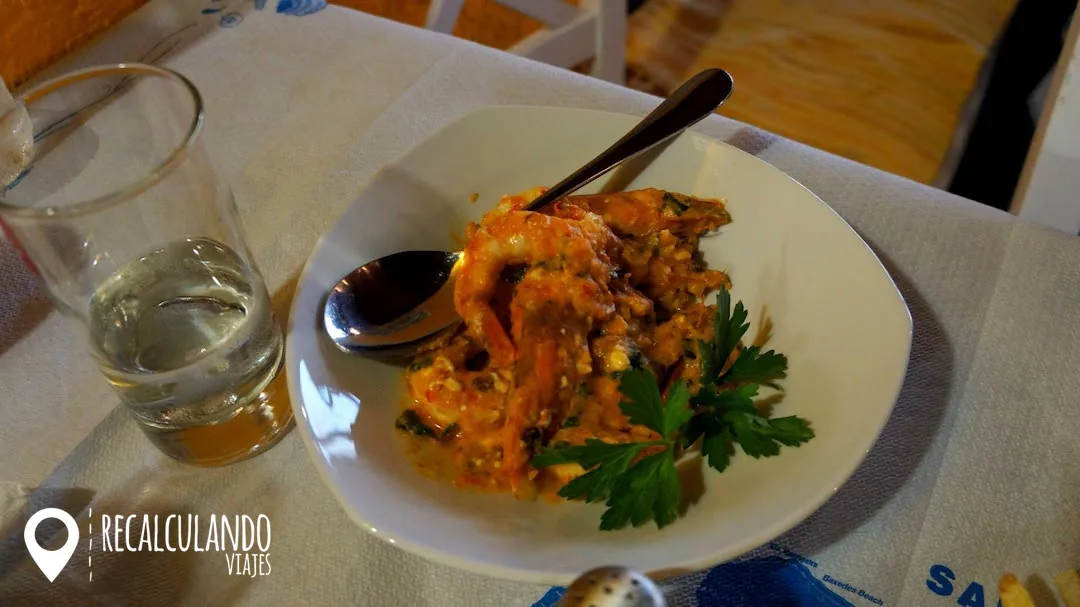
Where to eat in Santorini by area
We are not going to recommend restaurants by name because we didn’t try enough to do so honestly, but we can tell you how prices work depending on where you go:
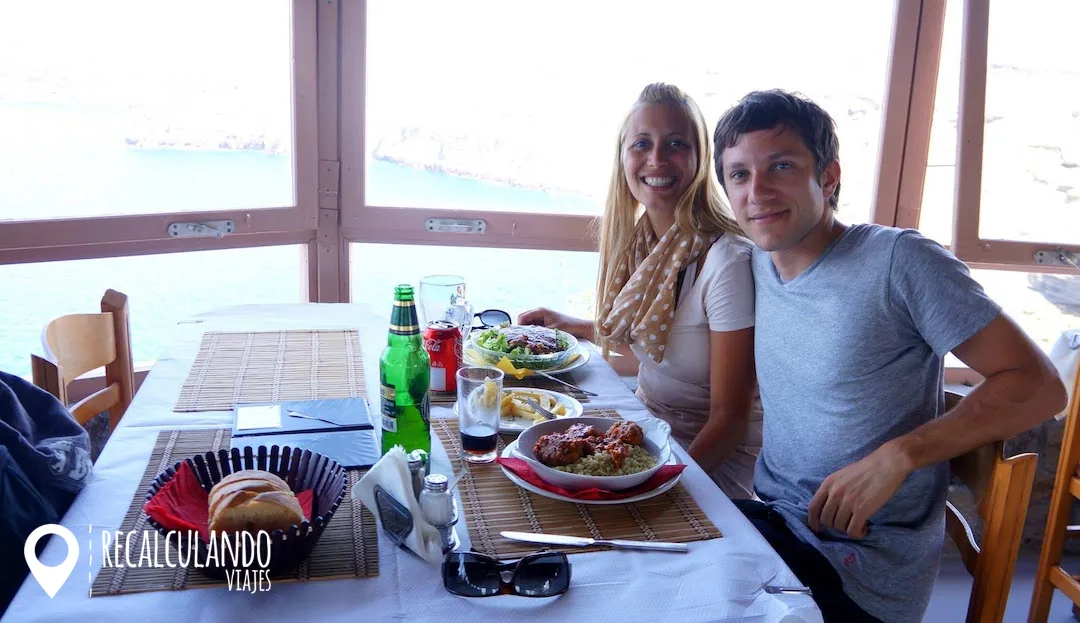
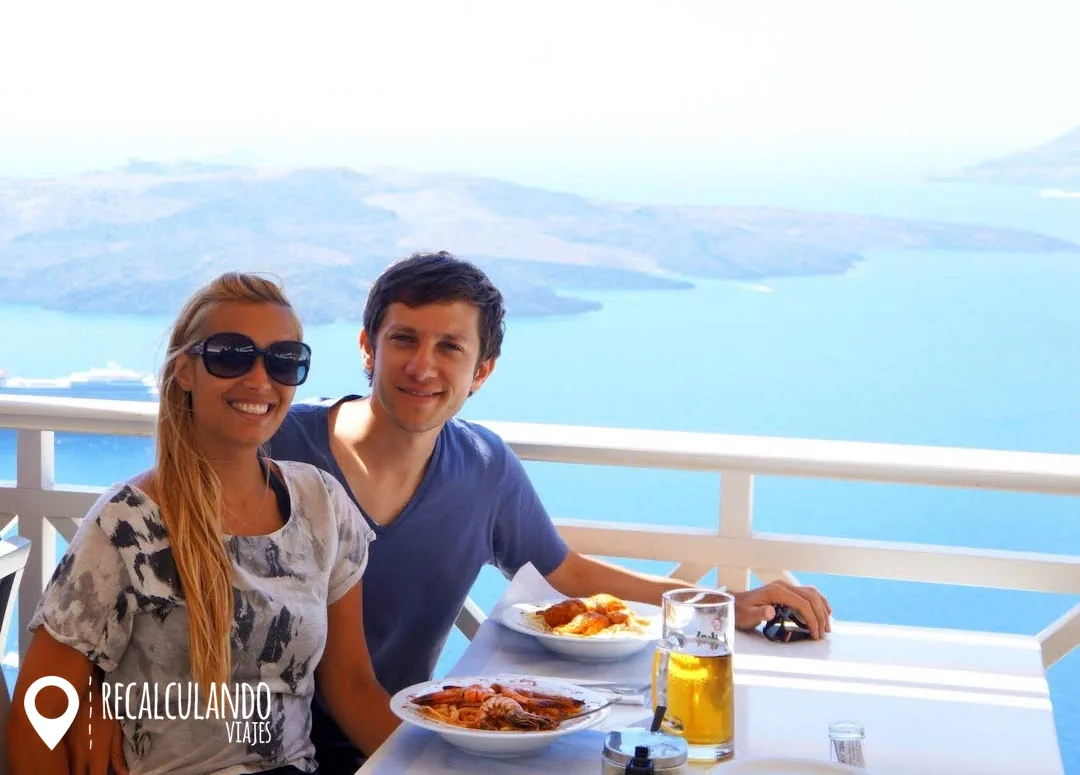
- Terraces with a view of the caldera (Oia, Fira, Imerovigli): this is where you pay the most. Between €25 and €40 for the main course, and a good part of that is the view. In Oia at sunset, it is advisable to book days in advance.
- Inner streets of Fira: as soon as you move two blocks away from the edge of the cliff, the same dish drops to €12-18. That’s where we ate almost always.
- Ammoudi and Vlychada marina: fresh fish sold by weight, with tables by the water. Ask the price per kilo before ordering, as the bills skyrocket there.
- Inland villages (Pyrgos, Megalochori, Emporio): the best value for money on the island and the most local crowd. If you have a car, it is worth going down to have dinner in one of these villages.
- On the go: a gyros or souvlaki costs between €4 and €7 and solves a lunch perfectly.
Travel insurance for Santorini
Greece is a country in the European Union, so with the European Health Insurance Card you have basic public attention covered if you are a European resident. The thing is that in Santorini the public system is very limited: there is a health center in Fira and, for anything serious, you are referred by plane or boat to Athens or Crete. That transfer is not covered by the card.
We never travel without insurance, and on an island with this geography, even less.
We have used IATI Seguros for years on our trips. It covers medical expenses, repatriation, rescue, and transfer between islands, and it is contracted online in five minutes. With a link for our readers, you have a 5% permanent discount on the IATI rate.
If you want to compare coverage and prices before deciding, we have a complete guide on the best travel insurance for Europe with all options analyzed.

Excursions from Santorini
If you don’t want to rent a car or prefer that the logistics be resolved for you, these are the excursions that are done the most on the island:
- Caldera cruise at sunset: sailboat or catamaran with stops to swim, food on board, and the sunset seen from the water, without the crowd of Oia.
- Nea Kameni volcano and hot springs: half a day from the Old Port of Fira, with a climb to the crater and a dip in the thermal springs.
- Wine tour: visit to three wineries with tasting of Assyrtiko and Vinsanto, usually at the end of the afternoon.
- Island tour in one day: Oia, Pyrgos, Akrotiri, and the southern beaches in one day, ideal if you arrive by cruise ship.
- Thirasia excursion: the island across, almost without tourism, to see what Santorini was like forty years ago.
- Diving and snorkeling: the volcanic bottoms of the caldera are quite particular, with walls that drop vertically and caves. There are diving baptisms for beginners and snorkeling outings from Perissa and Vlychada.
Curiosities of Santorini you might not know
Some things we learned while visiting the things to do in Santorini and that quite change the meaning of what you are looking at:
- The island was round. Before the Minoan eruption, about 3,600 years ago, Santorini was a circular island called Strongili (“the round one”). The explosion sank the center and what you see today as a cliff is literally the internal wall of the crater.
- The name comes from a saint. “Santorini” is a corruption of Saint Irene, the name the Venetians gave it in the Middle Ages. The official Greek name remains Thira.
- Almost no fresh water. The island has no rivers or springs and is supplied by desalination plants. Tap water is not drinkable: in Santorini, you buy it bottled, without exception.
- White and blue are not just aesthetic. Lime was used to reflect the sun and disinfect the walls, and the blue of the domes came from a cheap pigment called loulaki which was mixed with that same lime.
- Akrotiri could be Atlantis. The hypothesis that the Minoan city buried by the eruption inspired Plato’s story of Atlantis is one of the most repeated among archaeologists. No one proved it, but no one ruled it out either.
Church / Red Beach parking
Map of Santorini: things to do
Here we leave you the map with the 20 things to do in Santorini marked, plus the parking lots, bus stops, and viewpoints that we used. You can open it on your mobile and follow it while you travel.
Frequently asked questions about things to do in Santorini
How many days are needed to see Santorini?
Three full days are enough to see the caldera villages, the southern beaches, and the inland villages without rushing. In two days you see the essentials (Oia, Fira, and the Akrotiri area) and in just one, it is better to concentrate on Oia and Fira.
What is the best time to travel to Santorini?
May, June, September, and early October are the best months: there is good weather for swimming, prices drop compared to July and August, and there are far fewer people. July and August are the months with the most heat, the most crowds, and maximum prices.
Is it necessary to rent a car in Santorini?
It is not essential, but it changes the trip a lot. With a car, you reach the southern beaches, the Akrotiri lighthouse, and the inland villages, which are the places where buses don’t reach well. If you are only going to see Oia and Fira, KTEL buses solve everything for €2.20 to €2.70 per trip.
Can you go down to the Red Beach of Santorini?
Access to the sand is officially restricted due to the risk of rockfalls, and there are marked areas and warning signs. The safe option is to stay at the viewpoint, which also has the best panoramic view, or get there by boat from the port of Akrotiri for about €5-8.
How much does the Fira cable car cost?
A one-way ticket costs €10 per adult, €5 for the reduced fare for children 6-12 years old, and €5 per suitcase. There is no round-trip ticket: you have to buy two separate trips. When there are cruise ships in the port, the line can exceed half an hour.
How long does it take to walk from Fira to Oia?
The path that joins Fira with Oia along the edge of the caldera is about 10 kilometers long and takes 3 or 4 hours depending on how often you stop. The first stretch to Imerovigli is paved and easy; then the path is dirt and loose stone, without shade. It is better to do it early or in the mid-afternoon and return by bus for €2.20.
What is the most beautiful thing in Santorini?
For us, Oia first thing in the morning, when the groups haven’t arrived yet, and the port of Ammoudi at sunset. If you look for pure landscape and no people, the Akrotiri lighthouse and Vlychada beach are the two places that surprised us most on the whole island.
Where is it better to stay in Santorini, Oia or Fira?
Fira is more practical and cheaper: it’s the center of all buses, there are more restaurants, and the views of the caldera are just as good. Oia is more beautiful and quieter at night, but also much more expensive and worse connected. Firostefani and Imerovigli are the middle point.
Things to do in Santorini in one day?
It is best to start in Oia very early, go down to the port of Ammoudi, and pass through Finikia; then go to Fira to walk the caldera promenade in the afternoon. If you have energy left, the sunset can be seen from the castle of Agios Nikolaos or from the Akrotiri lighthouse, which has much fewer people.
Conclusion: our opinion on things to do in Santorini
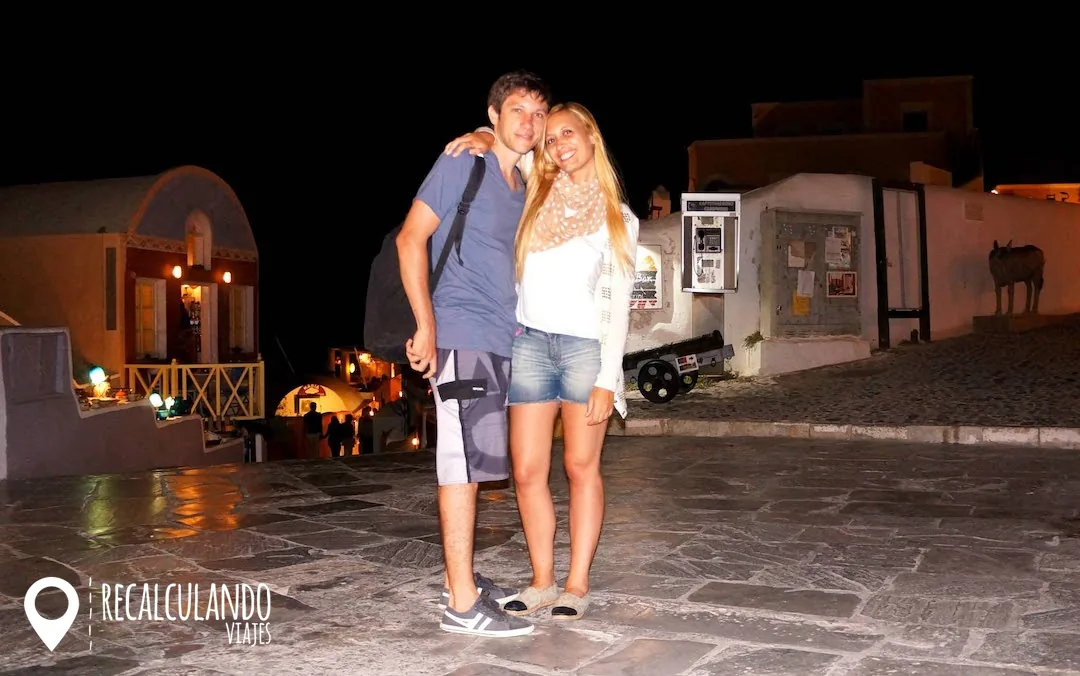
Santorini has a reputation for being overrated and always full, and both things are partially true. But it is also true that the landscape of the caldera looks like nothing we have seen in nine years of traveling, and that if you organize your schedule well, the island gives you moments that make the whole trip worth it: Oia at eight in the morning, the Akrotiri lighthouse with four cars, Vlychada almost empty, Ammoudi at sunset.
Our honest summary: don’t go in August if you can avoid it, rent a car, get up early, and dedicate at least three days to it. With that formula, these 20 things to do in Santorini are truly enjoyed.
If you are building a longer route through the Greek islands, here are the ones we combined on this same trip: Milos, Zante, Lefkada, Cefalonia, and Paxos. And if you are just starting to plan, here is our guide on how to plan your trip step by step.
Have you been to the island? Tell us in the comments which was your favorite place, we love reading you. Have a great trip!
ℹ️ **Total Transparency**
This article contains affiliate links. If you book through these links, we may receive a small commission at no additional cost to you. We only recommend services that we use on our trips and that we trust. This helps us keep this blog free and continue creating useful content for you. Thank you for your support!
🔗 Resources & Useful Links for your trip to Santorini
Do you have questions or want to add your own recommendations about things to do in Santorini?
💬 Leave your comment or write to us, we love reading other travelers’ experiences.
Thank you very much for being part of this adventure!— Nanu & Facu 🌎 | Recalculando Viajes 💜