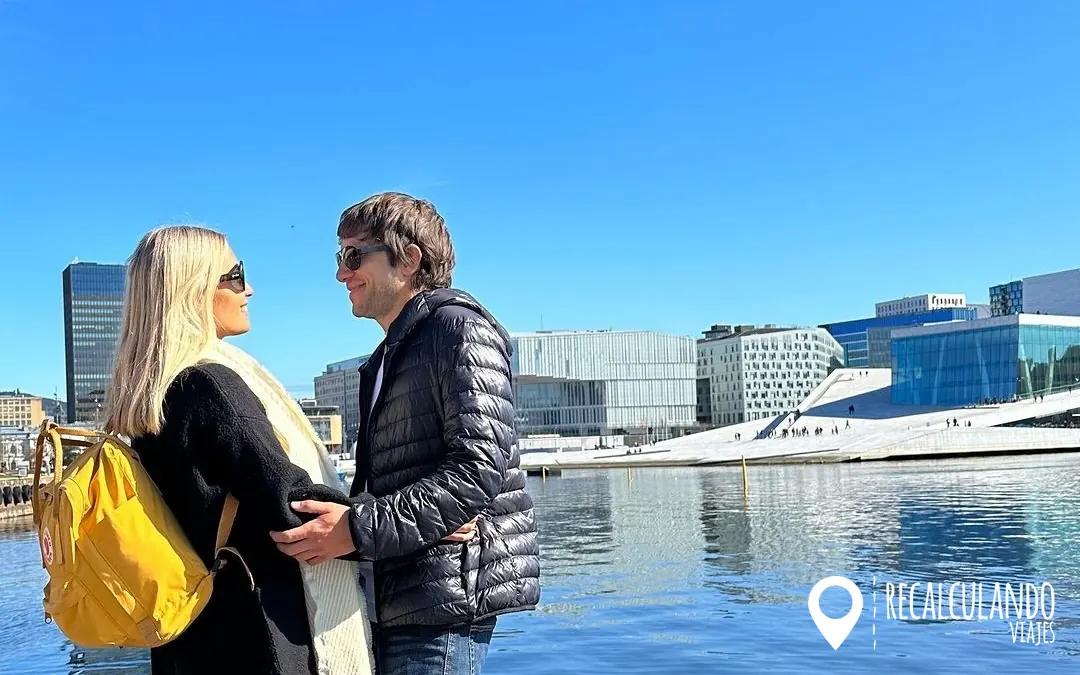
If you are planning a trip to Scandinavia and wondering things to do in Oslo Norway, you have come to the right place. We spent 2 nights in the Norwegian capital in mid-April, arriving by train from Copenhagen, and we were surprised by how much there is to explore in such a short time. Oslo is a city that seduces you slowly: first with its tranquility, then with its beauty, and finally with that unique mix of nature, architecture, and Nordic culture that you won’t find anywhere else.
We loved the city very much. Visiting it in good spring weather gave everything a different hue. The clean streets, the fjord present on almost every corner, and that calm yet vibrant energy of the locals… left us wanting to come back. In this guide, we tell you everything we saw, what we recommend, and some tips so you can make the most of your visit.
🌍 Travel Insurance: 5% Off with IATI Seguros! 🌟
Take advantage of this offer and travel safe.
Summary: Things to do in Oslo – Norway
| Category | Key details |
|---|---|
| Best time | Spring and summer; days are long and the weather is more pleasant for walking. |
| Transport | City ideal for exploring on foot. We recommend the train from Copenhagen/Malmo and using transport passes (24/48h) for the rest of the network. |
| Free must-sees | Oslo Opera House, Vigeland Park, Akershus Fortress, Royal Palace, and City Hall. |
| Budget | Expensive destination. We suggest shopping at supermarkets and prioritizing free activities to optimize expenses. |
| Ideal time | 2 days for the essentials; 3 to 4 days to explore bohemian neighborhoods and specialized museums. |
| Featured areas | Aker Brygge (harbor), Grünerløkka (bohemian vibe), and Tjuvholmen (modern architecture). |
| Practical tip | Consider the Oslo Pass if you plan to visit several paid museums. |
How to get to Oslo and get around the city
We arrived in Oslo by train from Copenhagen, and it was an experience we recommend without hesitation. The journey takes approximately 8 hours, but the landscape you see from the window—especially when entering Norwegian territory—is from another world. Forests, lakes, and small snowy (or blooming, depending on the season) villages make the trip almost an attraction in itself.
The train arrives directly at the Oslo Central Station (Oslo S), which is in the heart of the city. From there, you can move around on foot to many points of interest, or use the metro, tram, and buses that make up a very efficient public transport network. The most practical thing is to buy a 24 or 48-hour transport card, which includes all means.
Oslo is also a very friendly city to get around on foot. In our case, we walked almost everywhere. The distance between the harbor, the center, and the Aker Brygge neighborhood is very comfortable. Keep in mind: transport prices and everything in Norway in general are quite high, so it is better to plan your budget well.
Things to do in Oslo in 2 days: the city’s must-sees
If you have 2 days in Oslo (like us), you can see quite a lot without rushing too much. The important thing is to prioritize what you really can’t miss and not try to do everything. Oslo is not a city for rushing: it is for enjoying.
The Oslo Opera House: the building that looks like an iceberg
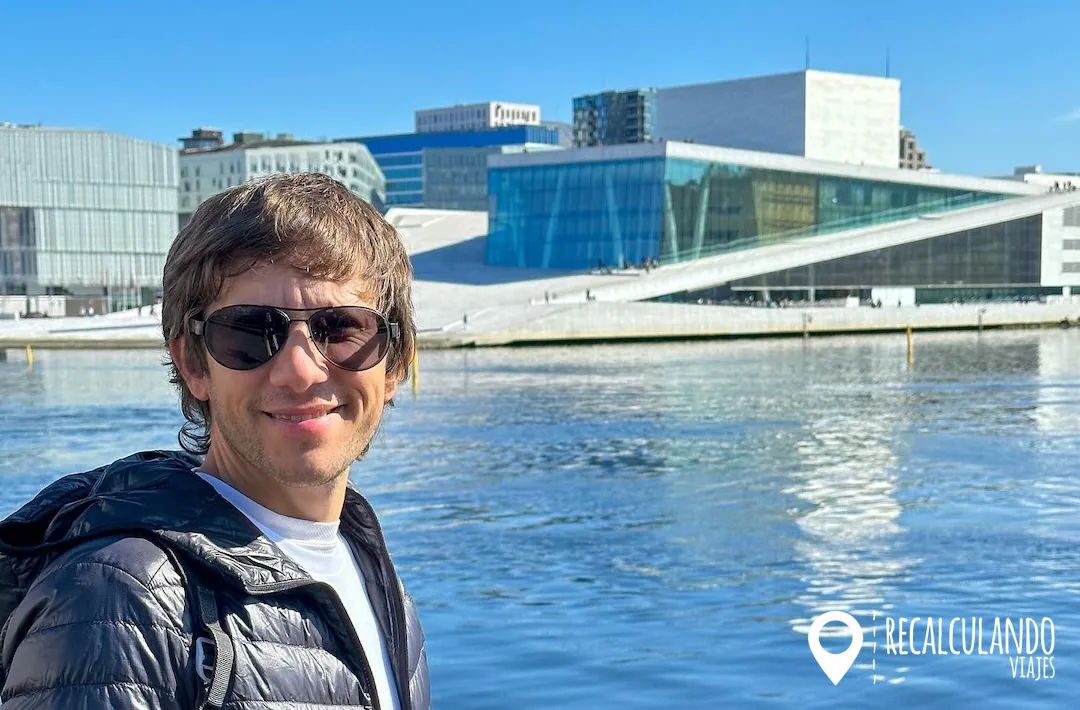
This is, without a doubt, one of the most impressive stops in the city. And it’s FREE to enter! The Oslo Opera House building has a completely original shape: it looks like an iceberg 🧊 emerging from the frozen waters of the fjord. When you see it for the first time from afar, you can’t believe something like this is real.
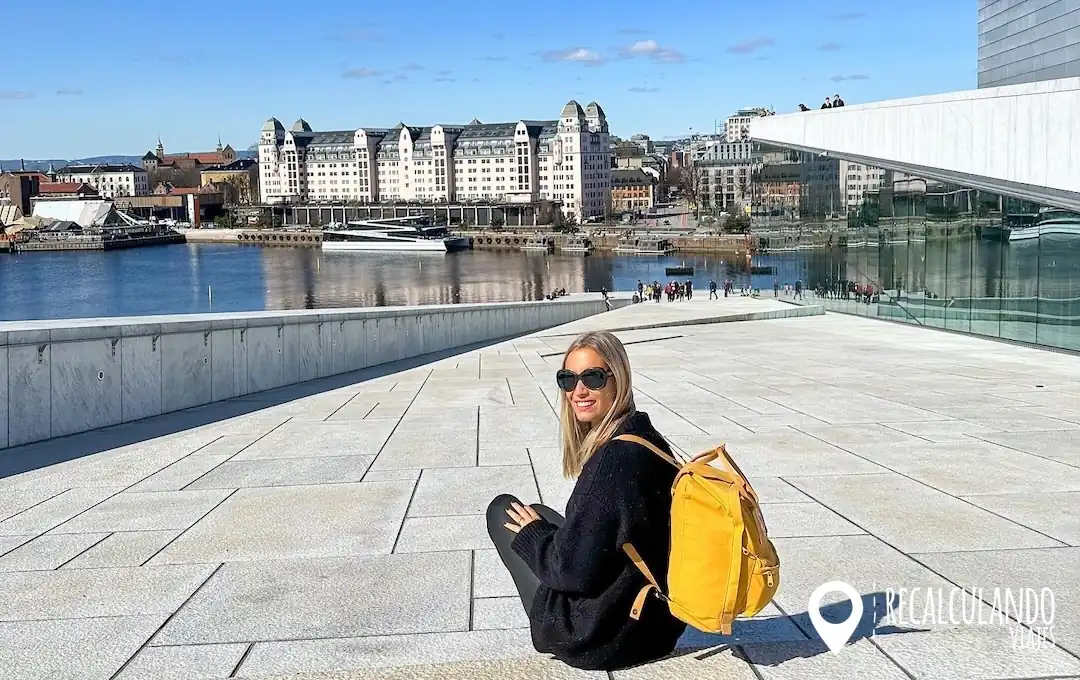
The most special thing is that thanks to its sloping design, you can walk up to the roof of the building and wander around it with total freedom. The views from above are incredible: the Oslo Fjord, the boats in the harbor, the city center, and the hills in the background. We went up at noon and spent a good while enjoying that very different panorama.
It is worth visiting at different times of the day: in the morning to have the place quieter, or at sunset when the light gives a spectacular golden color to all that white architecture. Don’t miss it under any circumstances.
Aker Brygge and the Oslo Fjord
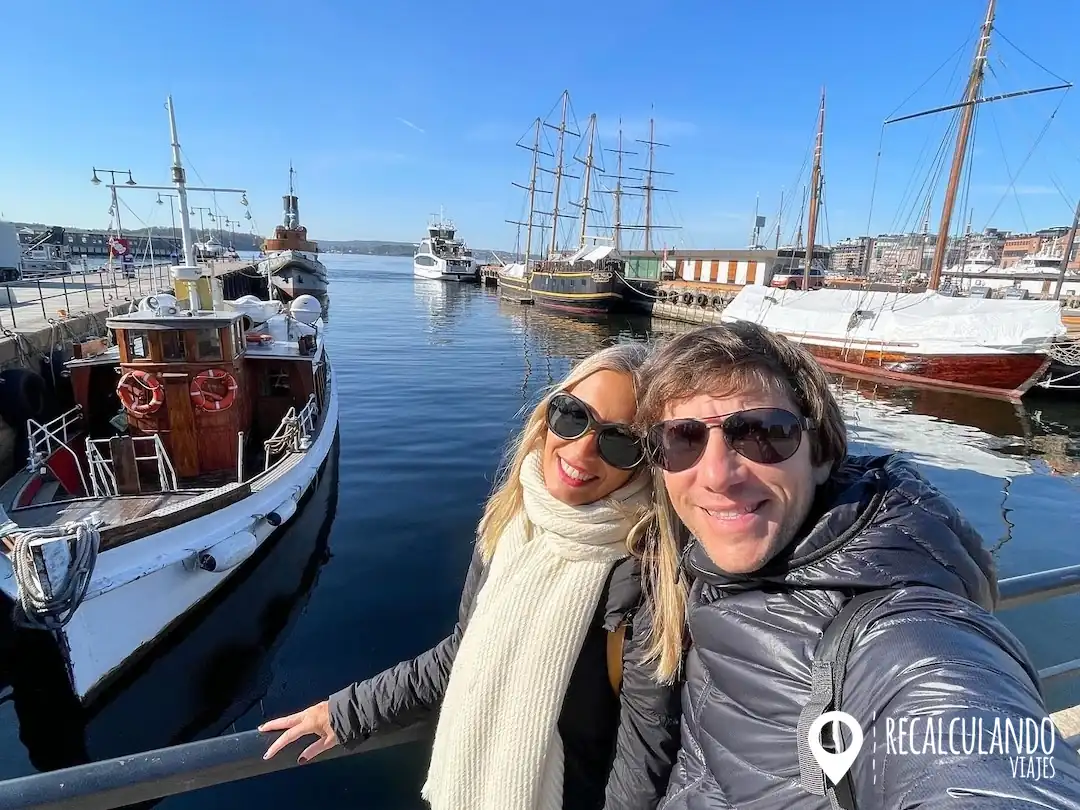
The Aker Brygge neighborhood is the renovated harbor area of Oslo, and it has become one of the most vibrant places in the city. There are restaurants, bars, shops, and a very pleasant promenade to walk along the fjord. The view of the Oslo Fjord from here is beautiful, especially in spring when the sky is clear.
The Oslo Fjord itself is calmer than the famous fjords in the west of the country, but it has its own particular charm. In the warm season, you can even take the small ferries that connect to nearby islands, like Hovedøya or Gressholmen, where many locals go to picnic or swim. We didn’t go to the islands due to lack of time, but it is something that remained on our list for next time.
Oslo City Hall (Rådhuset)
The Oslo City Hall building is one of the most recognizable in the city. Its two red brick towers dominate the harbor landscape and have an imposing presence. What many people don’t know is that inside there are huge murals that tell the history of Norway, and admission is free.
Many travelers recommend going in to see it, especially for the main hall with its paintings. For us, it was a quick but attractive stop: the photos from the square in front of the building, with the fjord in the background, turn out spectacular.
Akershus Fortress
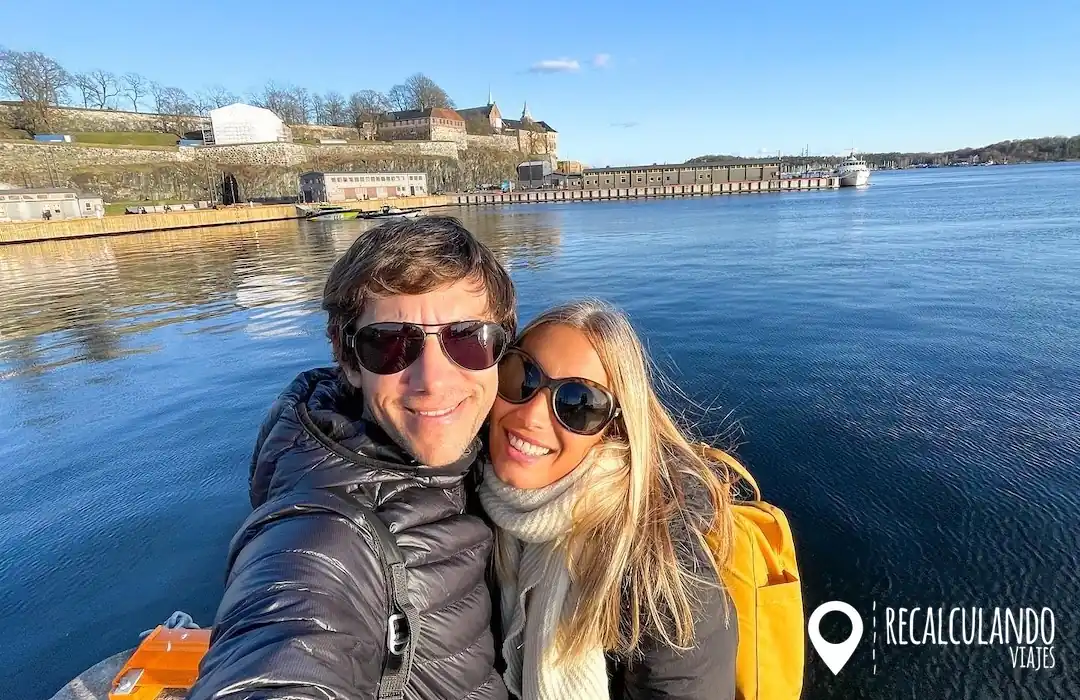
The Akershus Fortress is one of the most important medieval structures in Oslo. It is located right on the fjord, in a strategic position that gives it privileged views of the harbor. From its walls, you can see all the movement of the fjord, the ferries, and the cruise ships. Access to the outer gardens and walls is free, so it is worth taking a look.
The fortress was built in the 13th century and had different uses throughout history: royal castle, prison, and military headquarters. Today it is a historical monument that coexists with the modern neighborhood that surrounds it. We visited it in the afternoon and the warm light of the golden hour gave it an almost cinematic appearance.
Karl Johans Gate: Oslo’s main promenade
Karl Johans Gate is the main artery of Oslo. This pedestrian street connects the Central Station with the Royal Palace, passing through the heart of the historic center. Along the way, you will find shops, cafes, the national theater, and the University of Oslo. It is the place where the daily life of the city flows.
We walked through there several times during our stay and there was always something going on: musicians, street markets, people having coffee on the terraces. In spring, with the trees in bloom and the locals enjoying the sun, it has a very special energy. Reaching the end of the street, the Royal Palace appears imposing at the end of a very well-maintained park.
The Royal Palace and Palace Park
The Royal Palace in Oslo (Slottet) is surrounded by a very large and well-maintained park called Slottsparken. The combination of the neoclassical architecture of the palace with the greenery of the park makes this corner one of the most photogenic in the city. The changing of the guard that happens every day at 1:30 PM is one of the small shows that visitors often enjoy.
The park itself is ideal for sitting for a while, enjoying the outdoors, and taking a break between visits. In April there were people on the grass taking advantage of the Nordic sun, which feels especially valuable after the long winter. We had a great time walking around there without rush.
👩⚕️👨⚕️ A must-have for stress-free travel! 🌎✈️ ➜ Get a Quote, Compare & Buy
Things to do in Oslo in 1 day: the express route
If you only have one full day in Oslo, you can take a quite satisfactory express route. We put together the order that would have been ideal for us:
- Early morning: The Oslo Opera House. Arrive before the groups to enjoy the roof in peace and the best views of the fjord.
- Mid-morning: Akershus Fortress. Walk along the walls and enjoy the views of the harbor.
- Noon: Aker Brygge. Have lunch at one of the restaurants with a view of the fjord (yes, it will be expensive, but once in a lifetime…).
- Afternoon: Karl Johans Gate walking quietly to the Royal Palace.
- Sunset: Return to the Opera House to see it with the golden light. It’s worth double!
With this walking tour, you cover the most important points of the city without rushing too much. The best thing about Oslo is that the distances are manageable and everything has a very pleasant urban coherence.

Things to do in Oslo in 3 or 4 days: for those with more time
If you have more than 2 days, Oslo opens up many more possibilities. With extra time you can immerse yourself in some experiences that make the city truly special.
The Grünerløkka neighborhood
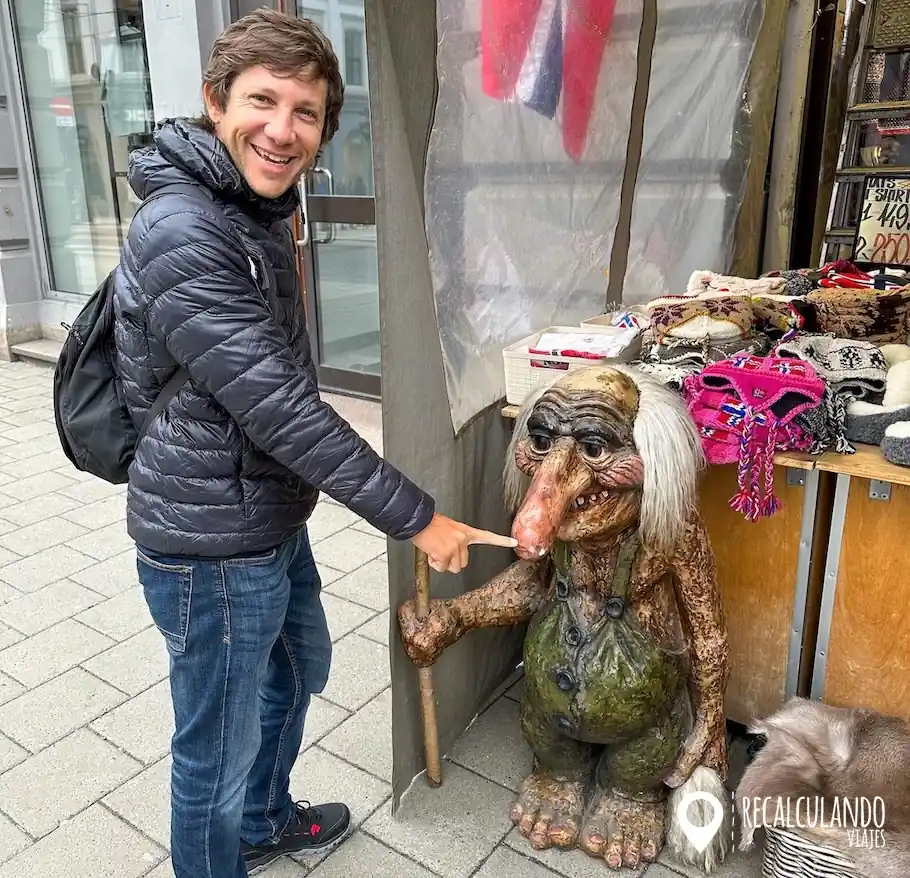
Grünerløkka is the cool and bohemian neighborhood of Oslo. It is full of trendy cafes, vintage clothing stores, independent art galleries, and flea markets on weekends. It is the place where the city’s young people live and hang out. If you want to escape the classic tourist circuit, this neighborhood is your best option. The atmosphere is relaxed and very authentic.
We took a quick look because it was near our route, and we liked the energy of the neighborhood a lot. If we had more time, we would have definitely dedicated a whole morning to it.
The Tjuvholmen neighborhood and the Astrup Fearnley Museum
Right next to Aker Brygge is the Tjuvholmen neighborhood, one of the most modern urban developments in Oslo. It has very interesting contemporary architecture, urban beaches, and the Astrup Fearnley Museum of modern art, whose building signed by Renzo Piano is already a work of art in itself. The area is perfect for walking and discovering Oslo from another perspective.

Vigelandsparken: the sculpture park
Vigeland Park (Vigelandsparken) is the largest open-air sculpture park in the world designed by a single artist. Gustav Vigeland created more than 200 sculptures in bronze, granite, and iron that represent the human condition in all its forms. Access to the park is completely free and many travelers consider it one of the must-sees in Oslo.
If you like green spaces and art, it will be a very original experience. Mind you: for us who are not very big on museums or “classic” cultural visits, it would probably be a short stop, but we understand that many people consider it essential.
The Viking Ship Museum
For lovers of history and Viking culture, the Viking Ship Museum (Vikingskipshuset) is a visit that is worth it. Many travelers recommend it as one of the best museums of its kind in the world, with real ships from over 1000 years ago that are incredibly well preserved.
Keep in mind that the museum has an entrance fee and that the original building is being renovated, so it is advisable to check the current status before going. If you are passionate about Norway and Viking history, don’t miss it.



Practical tips for visiting Oslo
After our experience, here are the most useful tips for your trip to Oslo to go perfectly:
- Oslo is expensive. Very expensive. Prepare yourself mentally and in your budget. A coffee can cost the equivalent of 4-5 USD, and eating in a restaurant for two can easily exceed 100 EUR. Shopping at supermarkets for breakfast and some lunch is a smart strategy.
- The Oslo Pass can be convenient if you plan to enter several museums. It includes unlimited public transport and access to many attractions. Calculate if it suits you according to your itinerary.
- Spring and summer are the best times to visit: the days are very long (the midnight sun in summer is incredible!) and the city comes to life with its people outdoors.
- Walk as much as you can. The historic center is very compact and is enjoyed much more on foot than by transport.
- The weather in April can be variable. We were lucky with good weather, but always carry a jacket and something waterproof just in case.
- The train from Copenhagen is a highly recommended option if you are coming from Scandinavia. The experience of the trip itself already justifies the choice.

Where to stay in Oslo: Map and Prices
On the map below you can move, zoom, and filter by your dates to see real accommodation prices in Oslo:
How to continue the trip from Oslo: the route towards the fjords
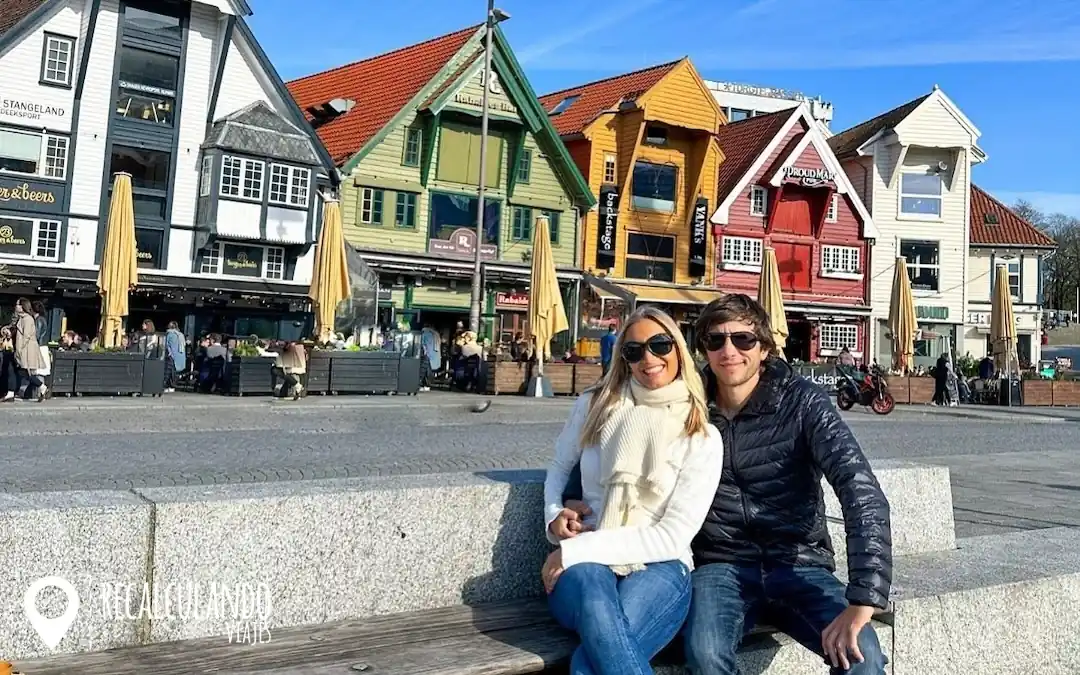
We used Oslo as a starting point to explore the rest of Norway. From there we took the train to Stavanger, which is the gateway to the impressive Lysefjord and the famous Preikestolen (Pulpit Rock). If you want to know more, we have our complete guide on things to do in Stavanger with everything you can’t miss in that area.
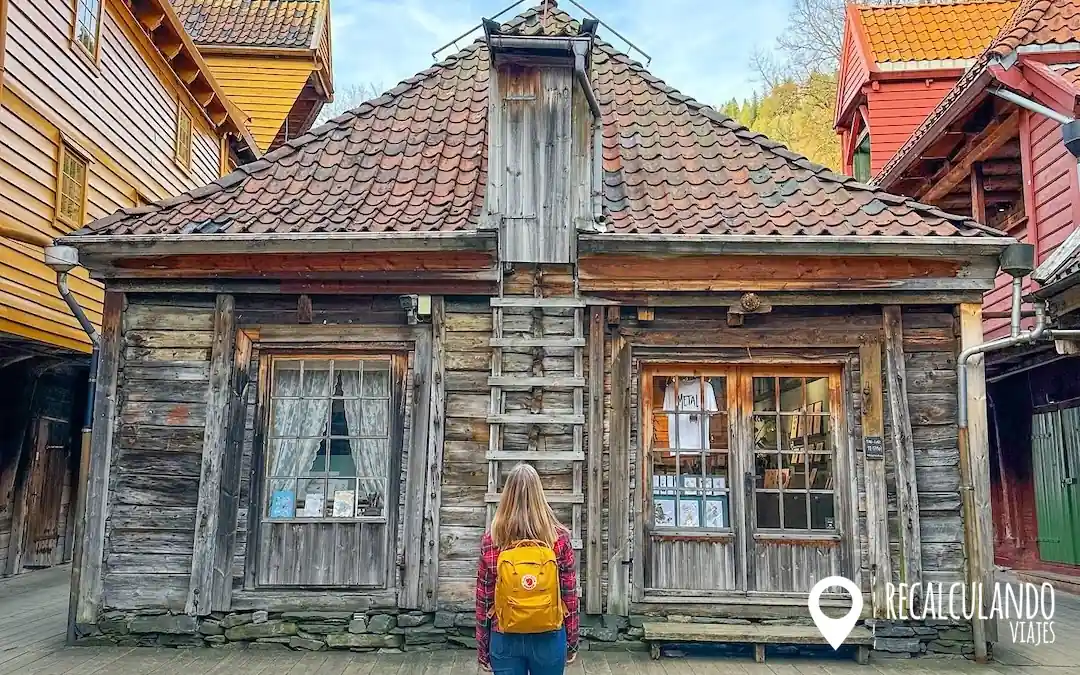
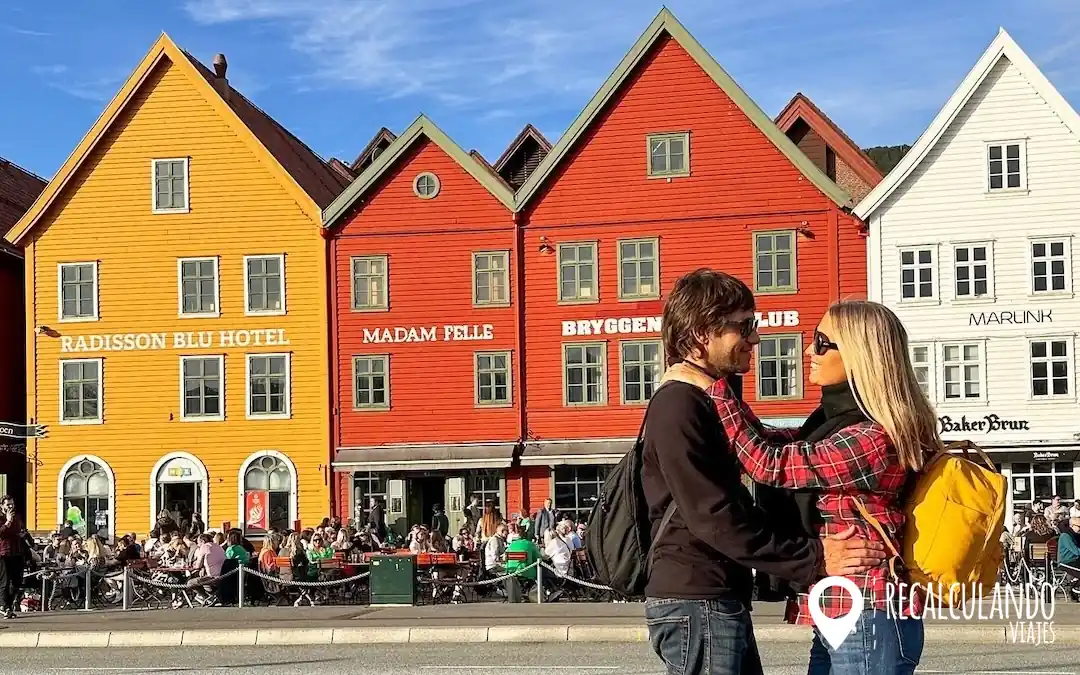
From Stavanger, we continued to Bergen, considered the gateway to the Norwegian fjords and one of the most beautiful cities in Europe. Bryggen, the historic neighborhood of Bergen with its colorful wooden houses, remained in our hearts. If you are interested, we recommend reading our guide on things to do in Bergen and our note on Bryggen in Bergen, one of the most photogenic places in the whole country.
You can also continue exploring other Nordic destinations. If you arrived in Oslo from Denmark like us, perhaps you are also interested in everything Scandinavia has to offer. It is a region that catches you!
Things to do in Oslo (Video)
Frequently asked questions about things to do in Oslo Norway
How many days do I need to visit Oslo?
With 2 days you can see the main attractions of Oslo: the Opera House, Aker Brygge, Akershus Fortress, and the historic center. With 3 or 4 days you can also explore Vigeland Park, the Grünerløkka neighborhood, and take an excursion to the fjord islands. If you only have 1 day, it is still worth it: with good organization you cover quite a lot.
Is it expensive to visit Oslo?
Yes, Oslo is one of the most expensive cities in Europe. Accommodation, food, and transport have quite high prices. However, many of the most iconic attractions—like the Opera House and Vigeland Park—are free. Planning the budget well and taking advantage of supermarkets, you can enjoy the city without the wallet crying too much.
What is the first thing to see in Oslo?
Without a doubt, the Oslo Opera House. It is the modern symbol of the city, free admission, and the views from the roof are simply incredible. Combine it with a walk through Aker Brygge and the fjord to have a perfect first impression of Oslo.
What is the weather like in Oslo in spring?
In April and May, Oslo starts to wake up from winter. Temperatures hover around 5-12°C, the days lengthen quite a bit, and the city comes to life. There may be days of rain or cold, so we always recommend wearing layers and something waterproof. We were lucky with sunny days and it was a completely different experience from how we would imagine a Nordic city.
Can you go to Oslo by train from Copenhagen?
Yes, and it is a highly recommended option. The journey takes approximately 8 hours and the scenery is beautiful. It is a more sustainable way to travel and the Nordic train experience has its own charm. We did it and we wouldn’t change that decision for anything.
What can you see in Oslo that is free?
Quite a bit more than you think. The roof of the Oslo Opera House, Vigeland Park, Akershus Fortress (exterior), the Royal Palace and its park, the City Hall (interior included), Aker Brygge, and the entire fjord promenade are completely free. With these options, you can have a full and very satisfying day without spending almost anything on tickets.
Oslo will surprise you: it is very worth visiting
If someone had asked us before going if Oslo was worth it, we probably would have hesitated: “only 2 nights in such an expensive city?”. But after experiencing it, the answer is a resounding yes. Oslo is a city that surprises you with its balance between modernity and nature, between the cosmopolitan and the quiet, between the expensive and the free.
We know that Norway in general can intimidate due to prices, but there are ways to enjoy it without it being crazy for the budget. And what it offers—that fjord present in every corner, that architecture that leaves you open-mouthed, that quality of life that is felt in the environment—is priceless.
If you are planning a tour of Scandinavia, don’t leave Oslo out. And if you can, continue your trip to Stavanger and Bergen: the combination of the three cities is one of the most impressive routes we have done in all our years of travel. To better plan your complete itinerary, you can also check our complete guide to Norway and our section on how to plan your trip from scratch.
Are you already looking forward to visiting Oslo Norway? Tell us in the comments what doubts you have or what caught your attention the most!
ℹ️ **Total Transparency**
This article contains affiliate links. If you book through these links, we may receive a small commission at no additional cost to you. We only recommend services we use on our travels and trust. This helps us keep this blog free and continue creating useful content for you. Thank you for your support!
🔗 Resources & Useful Links for your trip to Oslo
Do you have questions or want to add your own recommendations on things to do in Oslo?
💬 Leave your comment or write to us, we love reading the experiences of other travelers.
Thank you so much for being part of this adventure!— Nanu & Facu 🌎 | Recalculando Viajes 💜