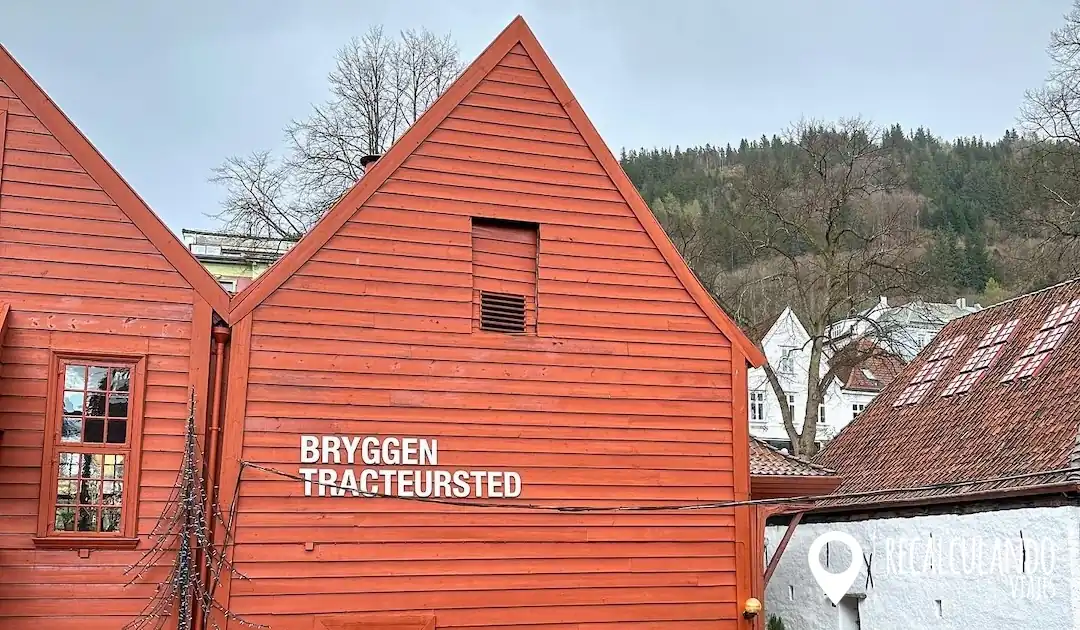
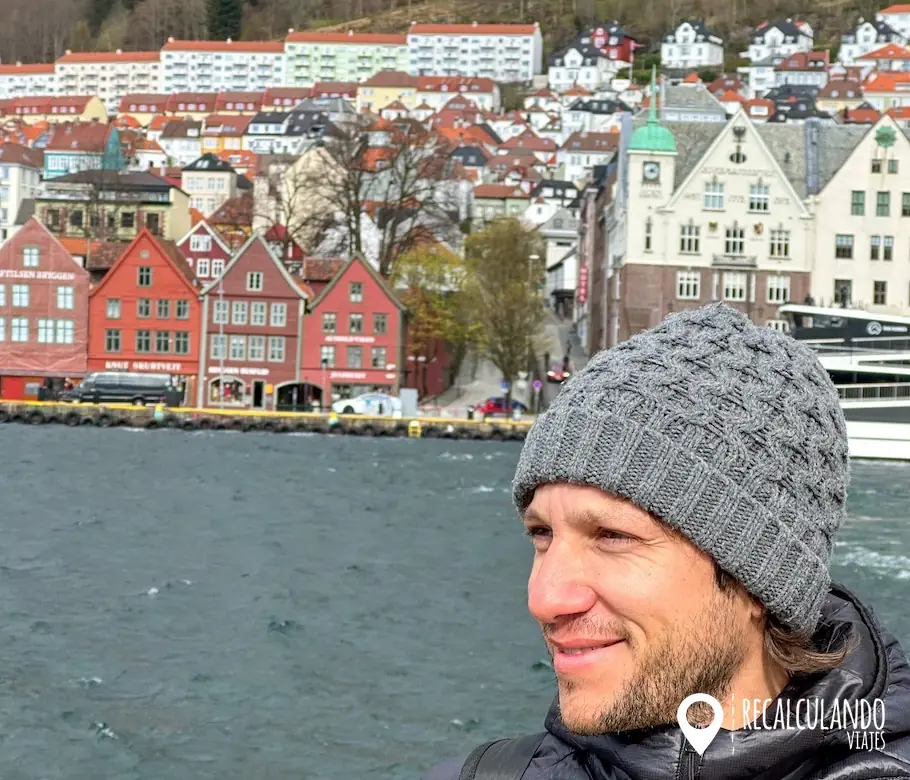
If there is one place in Norway that left us speechless, it was Bryggen Bergen. When we arrived in Bergen after a bus trip from Stavanger—with two ferries included and landscapes that looked like something out of a movie—the first thing we did was walk towards the harbor. And there it was: a row of colorful wooden houses reflected in the water, as if time had stood still somewhere in the 14th century. We have been traveling as digital nomads for over 9 years, and rarely has a neighborhood impacted us so much from the get-go.
In this article, we tell you everything you need to know to visit Bryggen in Bergen: its history, things to do in, how to get there, the best time to visit, and much more. Take note because it’s a destination you can’t miss!
FREE🚶♀️➡️Free tour of Bergen with a guide in English ➜ Click Here🚶 — no cost, just the tip you want to leave.
Summary: Things to do in Bryggen Bergen | Norway
| Category | Key Detail |
|---|---|
| What is it? | Ancient harbor district and UNESCO World Heritage site. |
| Location | East bank of the Vågen harbor, in the center of Bergen, Norway. |
| Main attraction | 14th-century colorful wooden facades and its labyrinthine alleyways. |
| Must-sees | Bryggens Museum, the harbor houses, the internal passages, and Schøtstuene. |
| Visit time | 2 to 3 hours (up to half a day if including museums). |
| Best time | Spring (April-May) for the balance between light and fewer tourists. |
| Admission | Free access to the neighborhood; museums require paid tickets. |
| How to get there | On foot from the center; connections via airport, train from Oslo, or bus from Stavanger. |
| PRO Tip | Explore beyond the first line of facades by entering through the narrow passages. |
🌍 Travel Insurance: 5% Off with IATI Seguros! 🌟
Take advantage of this offer and travel safe.
What is Bryggen Bergen and why is it so special?
Bryggen is the old wharf neighborhood of Bergen, located on the east bank of the Vågen harbor. Its name in Norwegian simply means “the wharf,” but there is little simple about this place. It is one of the best-preserved historical districts in Northern Europe, and since 1979, it has been part of the UNESCO World Heritage list.
What makes Bryggen unique is the combination of living history, architecture of vibrant colored wood, and an atmosphere that invites you to lose yourself in narrow alleyways. It is not an open-air museum or a tourist reconstruction: its buildings house shops, galleries, restaurants, and craft workshops. It is a breathing neighborhood.
For us, Bergen was already known as the gateway to the Norwegian fjords, but Bryggen gives the city a historical and cultural dimension that goes far beyond the natural landscape. If you travel to Norway and don’t stop by here, you are missing something fundamental.
History of Bryggen: From Hanseatic trade to today
The history of Bryggen is deeply linked to the Hanseatic League, the powerful trading network that dominated Northern Europe during the Middle Ages. Bergen was one of the four great Hanseatic offices—along with London, Bruges, and Novgorod—and from this harbor, Norwegian dried cod was exported to all of Europe.
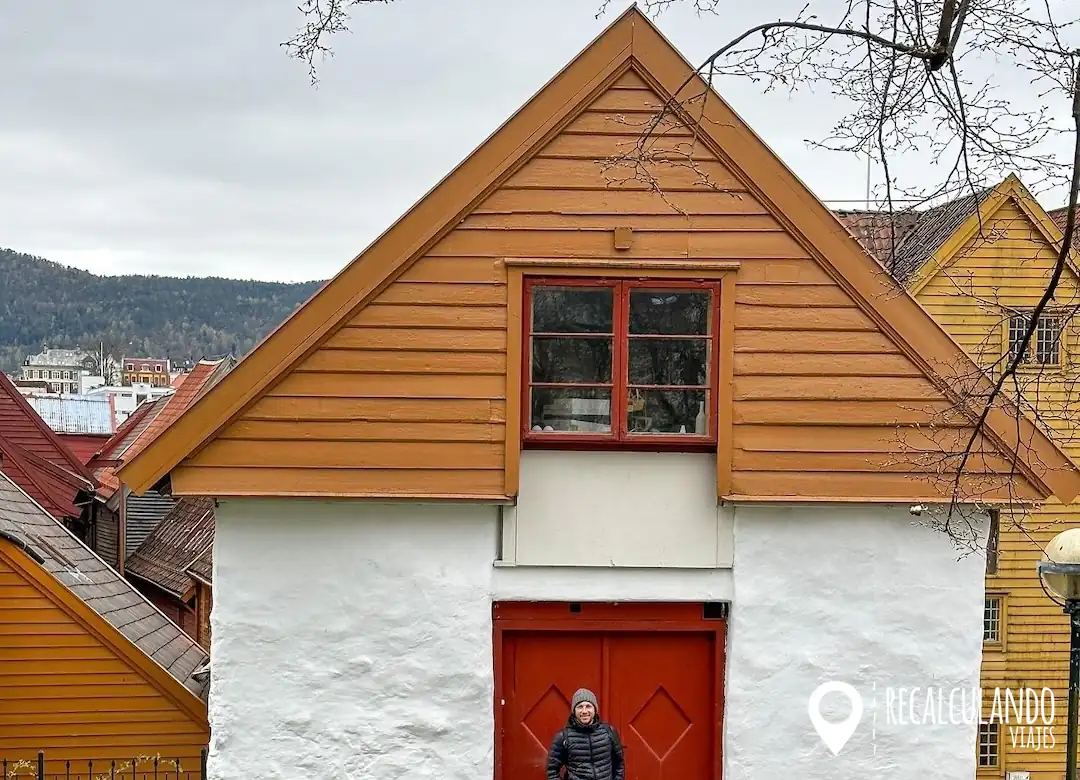
The first settlements in this area date back to the 11th century, but it was in the 14th century that Bryggen took the form we know today. The German merchants of the Hansa built their houses and warehouses following a very particular pattern: rows of narrow, tall buildings, arranged perpendicularly to the sea, with shared internal courtyards where commercial activity took place.
Over the centuries, Bryggen suffered numerous fires—something very common in cities with so many wooden constructions. The most devastating was in 1702, which destroyed a large part of the neighborhood. However, it was always rebuilt following the same medieval plans and techniques. Today, the Bryggen Project is the official restoration program working to preserve these unique structures.
Walking through Bryggen is literally walking through centuries of commercial history, guild conflicts, and medieval daily life. That makes it different from any other historical neighborhood we have visited.
Things to do in Bryggen Bergen: The must-sees
Bryggen is not huge, but there is a lot to discover if you take the time to explore it well. These are the spots you cannot miss:
The colored facades of the harbor front
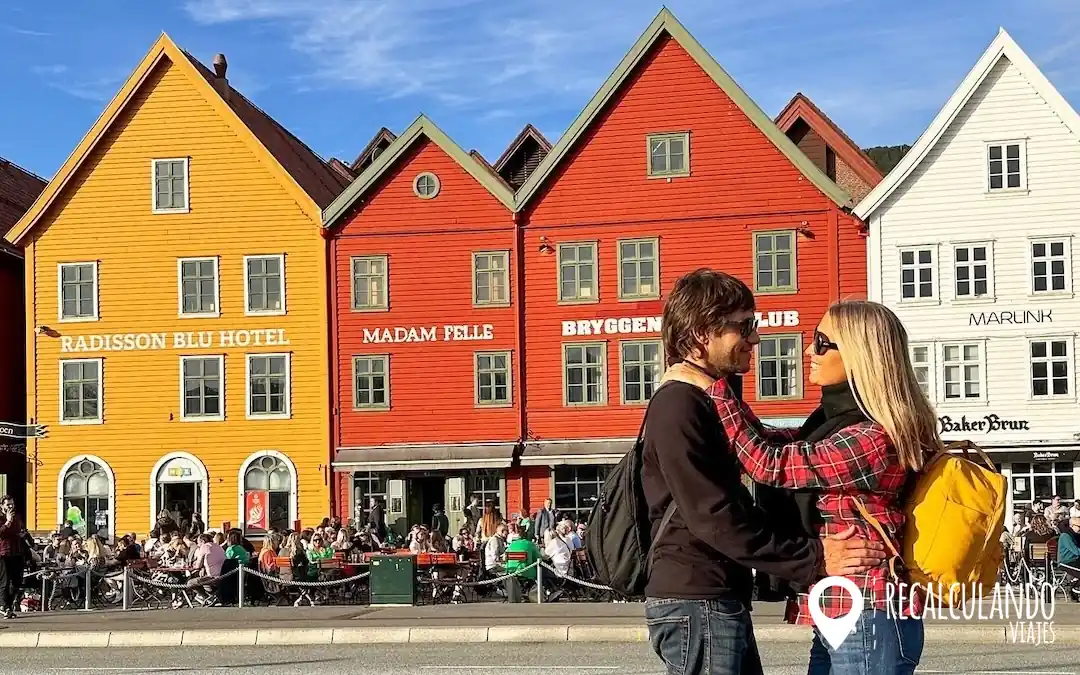
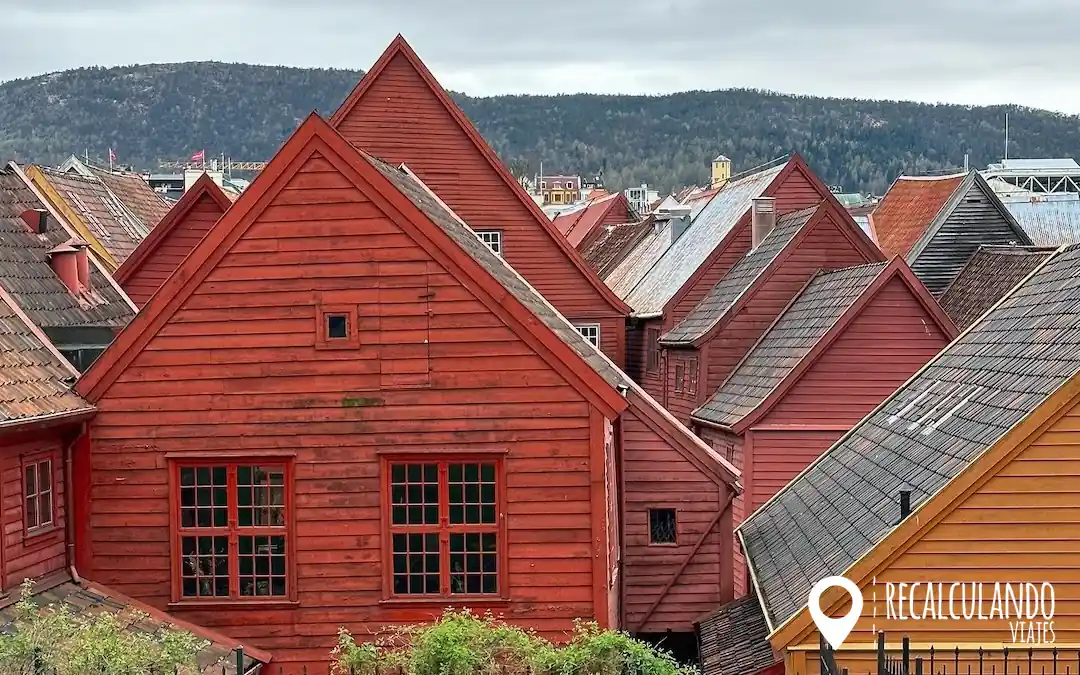
The most iconic image of Bergen—and probably one of the most photographed in Norway—are the colorful wooden houses facing the harbor. Reds, yellows, ochres, oranges: each building has its own tone. This first line of facades is what you will see upon arriving at the harbor, and the effect is immediate. If you can, arrive early in the morning when there are fewer people and the sunlight hits the facades head-on. In our case, we arrived at the end of April and the light was spectacular even at that time.

The internal alleyways: the heart of Bryggen
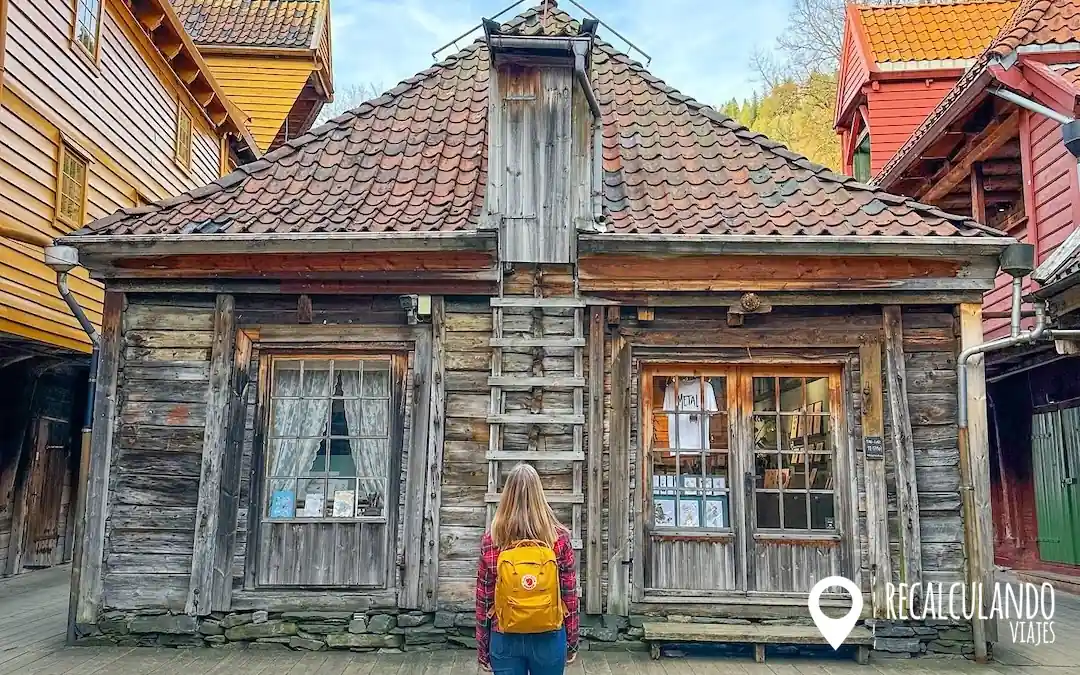
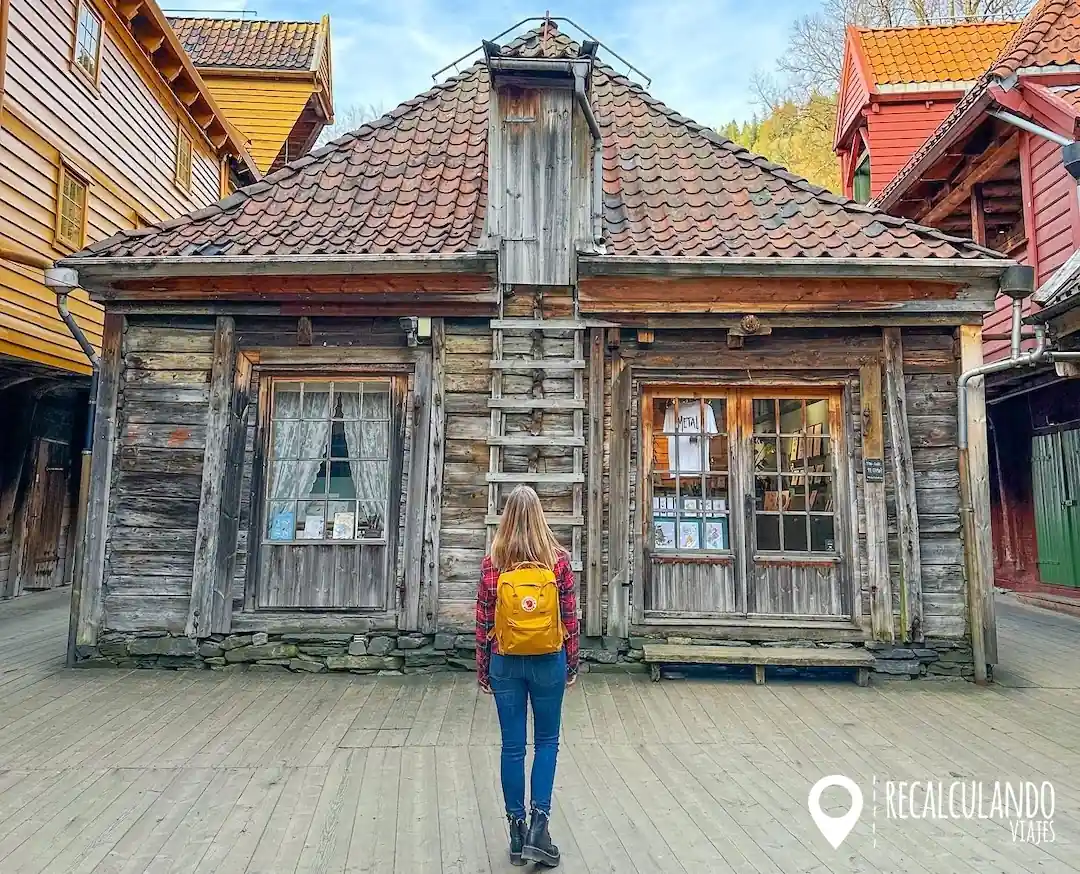
What many tourists don’t know is that behind the harbor facades lies a labyrinth of passages and alleyways that deserve just as much, if not more, attention. These narrow passages—some are less than a meter wide—connect the different internal courtyards of the Hanseatic complexes. You have to stoop in some sections, look up to see how the buildings almost touch each other, and pay attention to every detail: the wooden floorboards, the original beams, the marks from past fires.
This is where you find the most interesting shops: small art galleries, craft workshops, Scandinavian design businesses. We bought some glassware, a beanie, and a pine-scented candle—yes, we are those kinds of tourists—and we don’t regret it at all.
Bryggens Museum
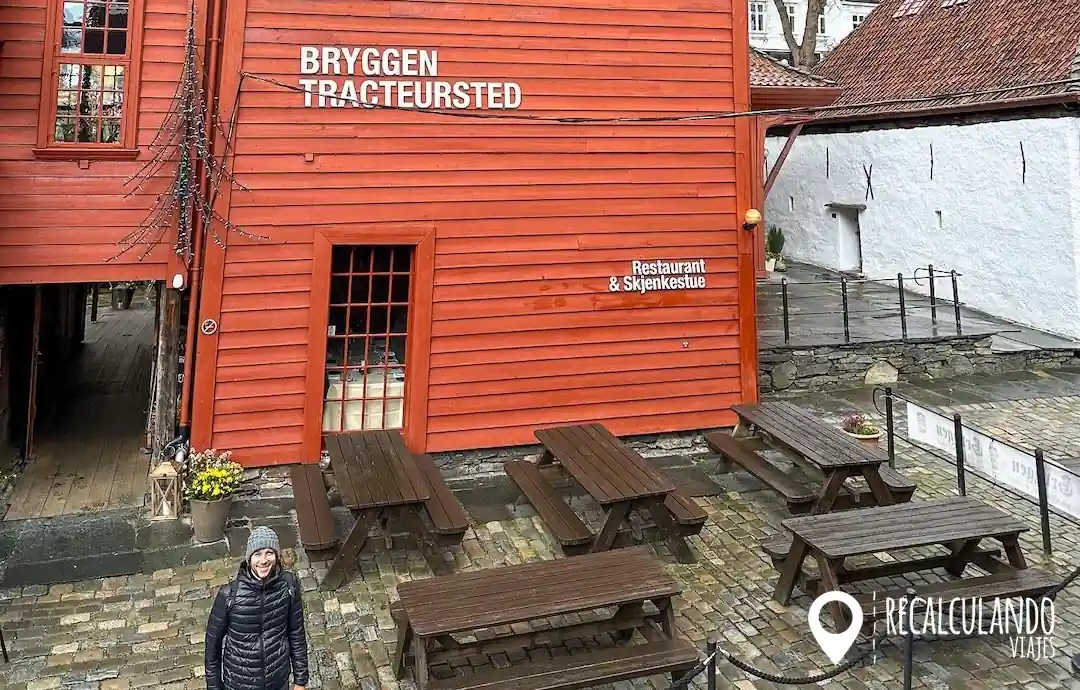
Just north of the historic district, you will find the Bryggens Museum, built over the archaeological excavations carried out after the fire of 1955. The museum exhibits the remains of the oldest medieval structures in Bergen—dating back to the 12th century—and offers a fascinating perspective on what daily life was like in the city during the Hanseatic era. Admission costs around 120 NOK (about 10 euros).
Schøtstuene: The merchants’ meeting rooms
The Schøtstuene are the only meeting buildings from the Hanseatic era preserved in Bergen. They were places where German merchants gathered to do business, but also to socialize—with their own strict, hierarchical rules. Today it functions as a museum and is a direct window into the culture of the medieval guilds. It is a few steps from the main neighborhood.
Hanseatic Museum (Hanseatisk Museum)
Although at the time of our visit it was in the process of reopening after a renovation, the Hanseatic Museum is a must-reference regarding the life of Hanseatic League merchants in Bergen. It is located in one of the oldest and best-preserved buildings in Bryggen. We recommend checking the opening status before planning your visit.
👩⚕️👨⚕️ A must-have for stress-free travel! 🌎✈️ ➜ Get a Quote, Compare & Buy
How to tour Bryggen: Practical tips
Bryggen can be perfectly explored on foot, and you don’t need more than two or three hours to see it well, although if you stay exploring shops, having a drink in its bars and museums, you can easily spend half a day. We give you some tips that worked for us:
- Arrive early: Mornings are much quieter, especially if there are cruise ships in the harbor. Cruise tour groups usually arrive between 10:00 AM and 12:00 PM.
- Explore inwards: Don’t just stay in the front facades. Head into any alleyway you see leading inward, and you will discover the real Bryggen.
- Walk without a map: Bryggen is small, and getting lost is part of the experience. There is no danger of actually getting lost.
- Bring an umbrella: Bergen is one of the rainiest cities in Europe. Even in spring, showers are frequent.
- Check which museums are open: Some have reduced hours outside of peak season.
FREE🚶♀️➡️Free tour of Bergen with a guide in English ➜ Click Here🚶 — no cost, just the tip you want to leave.
Bryggen Bergen and its connection to the Norwegian fjords
One of the reasons Bryggen has such historical relevance is precisely its function as a harbor. From this wharf, ships departed and arrived connecting Norway with the rest of Europe, bringing spices, textiles, and wine, and carrying dried cod, which was the great Norwegian export product.
Today, that same harbor is the starting point for excursions to the famous Norwegian fjords. If you plan to take an excursion from Bergen—to the Sognefjord, the Hardangerfjord, or the Nærøyfjord—you will depart from the harbor area, with Bryggen in the background. The combination of history and nature that Bergen offers from this point is, honestly, hard to beat.
If you want more information on things to do in Norway, in our Norway guide you will find everything you need to plan your trip.
All the information on ➜ Things to do in Bergen in the complete guide (CLICK Here)



How to get to Bryggen Bergen
Bryggen is in the heart of Bergen, on the Vågen harbor. From any central point in the city, you can reach it on foot in a few minutes. But to get to Bergen itself, you have several options:
By plane
Bergen Airport Flesland (BGO) has flights from major European cities and also domestic connections with Oslo and other Norwegian cities. From the airport, you can take the Bybanen (light rail) which leaves you in the center in about 45 minutes, or the Flybussen (express bus) which is somewhat faster. When leaving Bergen, we flew directly to Gran Canaria from this airport.
By train
The Bergen-Oslo train is one of the most spectacular rail journeys in the world. The trip lasts about 7 hours and traverses the Hardangervidda plateau with mountain landscapes, snow, and lakes that are incredible. If you have time, it is highly recommended for the scenery!
By bus from Stavanger
This is the option we chose and we recommend it without hesitation. The NOR-WAY Bussekspress bus connects Stavanger with Bergen with a journey of approximately 5-6 hours. The unique feature is that the bus boards two ferries during the route, which makes the trip a little adventure with fjord views included and unique landscapes. The price is about 35 EUR per person. We bought the tickets online without any problem.
If you are coming from Stavanger and want to know things to do before leaving, check out our Stavanger guide with all the must-sees.
By boat or cruise ship
Bergen is one of the most visited ports by cruise ships touring the Norwegian fjords. If you arrive by cruise ship, Bryggen is practically the first thing you will see when disembarking. The view of the ship entering the harbor with Bryggen in the background is spectacular.

📸 Views of Bryggen and the mountains of Bergen ♥️

The best time to visit Bryggen Bergen
Bergen has a reputation—deservedly so—for being a rainy city. The weather here is unpredictable almost all year round, but there are clearly better times to visit:
- Summer (June-August): It is the high season, and for a reason. The days are very long (you get 18-20 hours of daylight), the weather is milder, and all attractions are in full operation. The downside is the number of tourists, especially cruise ship passengers.
- Spring (April-May): Our personal recommendation. We visited Bergen at the end of April and it was perfect: fewer tourists, somewhat lower prices, days already quite long, and the city waking up after winter. A downpour or two, yes, but nothing dramatic.
- Autumn (September-October): The foliage colors are very beautiful and there are fewer tourists than in summer, although the weather starts to get grayer.
- Winter (November-March): Not the ideal time for Bryggen, but if you want to see the Northern Lights and don’t mind the cold, Bergen can be an interesting base.
Where to eat near Bryggen
The Bryggen area and the fish market (Fisketorget) have options for all budgets, although it must be said that Norway is generally expensive. Some references:
- Fisketorget (Fish Market): A few meters from Bryggen, it is the ideal place to try fresh seafood, salmon, and local fish. There are more economical stalls and more formal restaurants. We ate there and the fish is delicious.
- Bryggeloftet & Stuene: One of the most classic restaurants in Bryggen, inside a historical building. Specialized in traditional Norwegian cuisine.
- Bare Vestland: A more modern option with a focus on local ingredients from the western region of Norway.
To manage your budget in Norway—which can easily get out of hand—our travel budget app is a very practical tool to track your spending day by day.
Where to sleep in Bergen: Map and Prices
Bryggen as part of an itinerary through Norway
Bergen and Bryggen fit perfectly as part of a broader itinerary through Norway. We spent almost two weeks including Oslo, Stavanger, and Bergen, and it was an ideal combination. Each city has its own personality and they complement each other very well.
From Bergen, you can also take day trips to the fjords, or take the famous Flåm railway (Flåmsbana), one of the most spectacular rail journeys in Europe. If you are going to spend several days in the city, take the opportunity to go up to Mount Fløyen on the funicular: the views from above are impressive and Bryggen is right below.
Don’t forget to purchase travel insurance for Europe before leaving. In Norway, medical care is world-class, but the costs without insurance can be very high. We always travel with coverage and we never regret it.
🛡️ Travel safely through Norway with IATI Insurance
For any trip through Europe, we always purchase our insurance with IATI Insurance. As Recalculando Viajes readers, you get an exclusive 5% discount, cumulative with current promotions.
Tours and Trips en Bergen
FREE🚶♀️➡️Free tour of Bergen with a guide in English ➜ Click Here🚶 — no cost, just the tip you want to leave.
Three Swords of Stavanger and its connection to Norwegian history
If you arrive in Bergen from Stavanger as we did, combine the visit with a stop at the famous Three Swords monument in Hafrsfjord. It is one of the most powerful symbols of Norwegian history and is a few kilometers from Stavanger. A perfect complement to understanding Viking history before immersing yourself in the Hanseatic legacy of Bryggen.
Bryggen: A Must-See neighborhood in Bergen [Video]
Frequently Asked Questions about Bryggen Bergen
What is Bryggen in Bergen, Norway?
Bryggen is the old wharf neighborhood of Bergen, famous for its colorful wooden houses that date back to the Hanseatic era (14th century). It has been a UNESCO World Heritage site since 1979 and is one of the most important historical sites in Norway.
How much time should I dedicate to Bryggen?
With two or three hours, you can walk through the alleyways and see the main facades. If you add visits to the museums (Bryggens Museum, Schøtstuene), plan for a full half-day to take full advantage of the area.
Is there an entrance fee for Bryggen?
Walking through the neighborhood and the alleyways is completely free. The internal museums have paid admission: the Bryggens Museum costs about 120 NOK (about 10 euros). We recommend checking updated prices before the visit.
What is the best time to visit Bryggen Bergen?
Summer (June-August) is the time with the best weather and most activity, but also the most crowded. Spring (April-May) is an excellent alternative with fewer tourists and days already quite long.
How do I get to Bryggen from the center of Bergen?
Bryggen is in the very center of Bergen, on the Vågen harbor. From any point in the historic center, you can walk there in less than 10 minutes. It is practically impossible not to cross paths with it if you are in the city center.
Is it safe to visit Bryggen?
Bergen is one of the safest cities in Europe and Bryggen is no exception. You can walk quietly through its alleyways at any time of day without any problems. The only care to be taken is with the uneven ground of the internal passages, especially if it rains.
What other places should I visit in Bergen besides Bryggen?
Bergen has a lot to offer: the Fisketorget fish market, Mount Fløyen with its funicular, the Nordnes neighborhood, KODE (art museums), and fjord excursions. You can perfectly combine Bryggen with these other attractions in a 3-4 day stay.
𝒟𝓇ℯ𝒶𝓂 🫧 𝓊𝓃𝓉𝒾𝓁 𝒾𝓉’𝓈 𝓎ℴ𝓊𝓇 𝓇ℯ𝒶𝓁𝒾𝓉𝓎 ✨🦋
Conclusion: Bryggen Bergen, a mandatory stop on any trip to Norway
After traveling through dozens of countries, we still think that Bryggen Bergen is one of those places that stays with you. It is not the most grandiose or the most spectacular site in terms of scale, but it has something that very few historical places manage to have: it feels alive. The open shops, the artisans working, the cats sunning themselves on thresholds, tourists and locals mixing in the alleyways. It is not a stage frozen in time but a breathing neighborhood.
If you are planning a trip to Norway, don’t think about it too much: Bergen must be on your itinerary and Bryggen is its historical heart. Arrive early, head into the alleyways, have a coffee with a harbor view, and let yourself be enveloped by that unique atmosphere that mixes the medieval past with the Norwegian present.
Do you want to know more about how to organize your trip to Norway or things to do in Bergen? Check out our complete Norway guide and things to do in Bergen, and don’t forget to review our traveler tips with practical advice that we have learned over these more than 9 years of travel. Have a great trip!
ℹ️ **Full Transparency**
This article contains affiliate links. If you book through these links, we may receive a small commission at no additional cost to you. We only recommend services that we use on our trips and that we trust. This helps us keep this blog free and continue creating useful content for you. Thank you for your support!
🔗 Resources & Useful Links for your trip to Bergen
Do you have questions or want to add your own recommendations on things to do in Bryggen or Bergen?
💬 Leave your comment or write to us, we love reading about the experiences of other travelers.
Thank you very much for being part of this adventure!— Nanu & Facu 🌎 | Recalculando Viajes 💜