If you’ve ever wondered things to do in Busan, the short answer is: a lot. It is the second largest city in South Korea and has everything a traveler could wish for: urban beaches, Buddhist temples perched over the sea, seafood markets, and a coastal vibe completely different from the city of Seoul. We arrived from Jeju Island on a Korean Air flight that landed at Gimhae Airport, and from the very first moment, Busan won us over with its unique energy, which is more relaxed and authentic.
We stayed for seven nights in the Millac The Market area, a neighborhood with a lot of local life, which allowed us to get to know the city in a way that goes beyond the usual tourist circuits. In this guide, we share everything we discovered: the must-see spots, the secrets we found by chance, and practical tips to make the most of your visit.
Summary: Things to do in Busan
| Question | Answer |
|---|---|
| How many days are needed? | With 3 to 4 days you can see the main attractions, but 5 to 7 days is ideal to enjoy beaches, temples, and excursions at a more relaxed pace. |
| Is it worth visiting Busan? | Yes, absolutely. It is one of the most complete cities in South Korea, combining beaches, culture, gastronomy, and unique viewpoints. |
| What is the best time to visit? | Spring and autumn are ideal due to the pleasant weather. Summer is perfect for the beach, although it is hotter and more crowded. |
| Is it an expensive destination? | Moderate. In general, it is cheaper than Seoul, especially for accommodation and local food. |
| Can it be explored on foot? | Partially. Some areas are walkable, but it is advisable to use public transport to move between neighborhoods. The distances are not short. |
| Where should I stay? | In Haeundae if you are looking for beach and a tourist atmosphere, or in Seomyeon for a central and well-connected location. |
| What is a must-see in Busan? | The beaches of Haeundae and Gwangalli, Gamcheon Culture Village, Jagalchi Market, and Haedong Yonggungsa Temple. |
🌍 Travel Insurance: 5% Off with IATI Seguros! 🌟
Take advantage of this offer and travel safe.
How to Get from Seoul to Busan: KTX, Bus, and Flight
Before starting with the must-see places, here is the most practical question: how to get to Busan from Seoul. They are the two most important cities in South Korea, and practically all travelers make this journey.
By KTX train: the best option
The KTX train (Korea Train Express) is undoubtedly our number one recommendation. It takes about 3 hours to reach Busan Station from Seoul Station, with comfortable seats, Wi-Fi, and views of the Korean landscape. Trains depart almost every 30 minutes during the day.
The price is around 50,000-60,000 won per person in standard class (about 35-45 USD). You can buy tickets online in advance on the Korail website or at station kiosks with options in English.
By intercity bus
The bus is quite a bit slower (between 4 and 5 hours depending on traffic) but cheaper: around 25,000-30,000 won. It departs from the Gangnam Terminal (Express Bus Terminal) in Seoul. It is a good option if you have time and want to save a bit.
By flight
There are domestic flights between Gimpo Airport (Seoul) and Gimhae Airport (Busan), but counting transfers, check-in, and waiting times, the total time is usually similar to the KTX with a cost that is often higher. It only makes sense if you find a very low fare.
From Jeju to Busan:
In addition, Busan has the Gimhae International Airport (PUS), which receives domestic and international flights. We flew from Jeju with Korean Air, a journey of just 50 minutes that costs much less if you book in advance. From the airport, the Busan metro connects you to the city center in about 40 minutes for about 1,700 KRW.
Our recommendation: KTX always. Fast, comfortable, punctual, and with views. Book a few days in advance for peak weekend times.
Haeundae: The Most Famous Beach in Busan
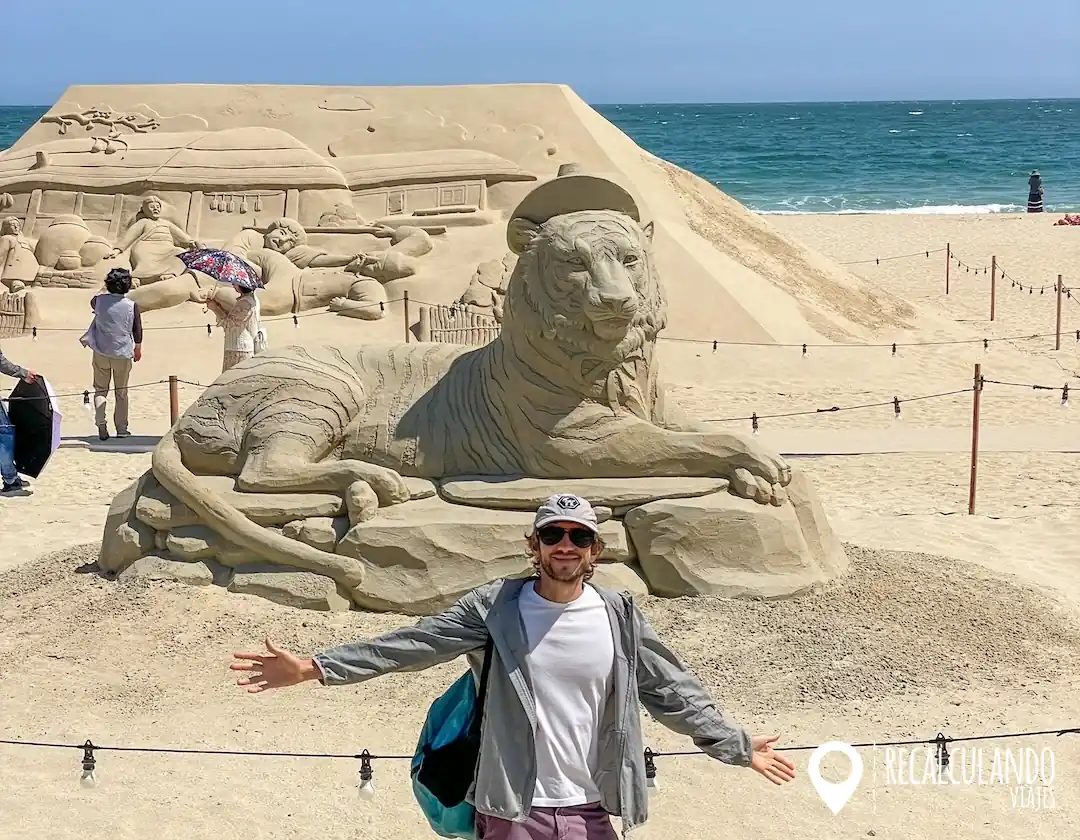
When we talk about things to do in Busan, Haeundae is the first name that appears on every list, and for good reason. This white sand beach stretches for nearly two kilometers in the heart of the city, surrounded by skyscrapers, luxury hotels, and an impressive number of restaurants and bars. In June, when we visited, the atmosphere was already lively although it was not yet the peak of the Korean summer, which arrives in July and August.
What surprised us most about Haeundae was the contrast: on one side, the blue sea with swimmers and surfboards; on the other, the modern city silhouetted against the sky (a panorama you don’t see in many places in the world). If you want to avoid the denser crowds, arrive early in the morning or go on weekdays. The Haeundae neighborhood also has very active nightlife, with bars and clubs that stay open very late.
Marine City and the Sea Promenade
A few minutes walking from the main beach, the Marine City neighborhood offers a different perspective: modern mirrored buildings reflected in the water, a well-maintained waterfront, and an atmosphere that is quieter than the beach. It is an ideal walk for the afternoon, especially at sunset, when the colors become spectacular.
Haeundae Blueline Park: Colorful Cabins with Sea Views
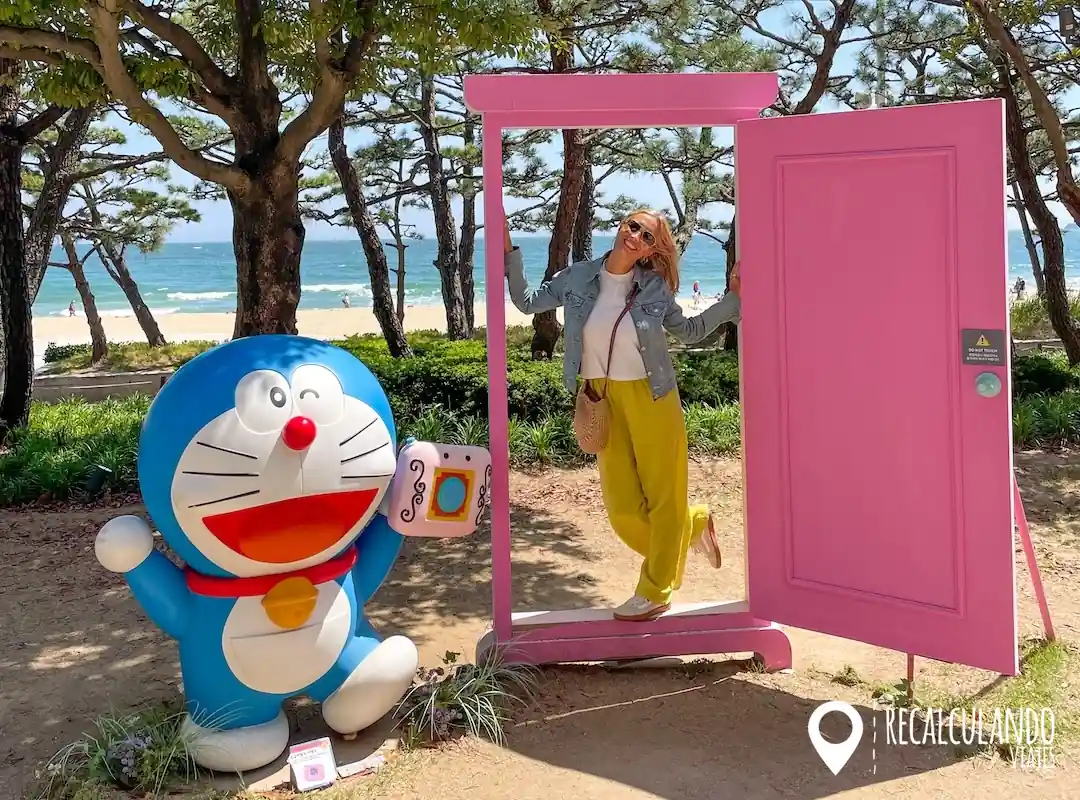
One of the most original experiences we discovered in Busan was the Haeundae Blueline Park. It is an old railway track converted into a tourist attraction that combines two options:
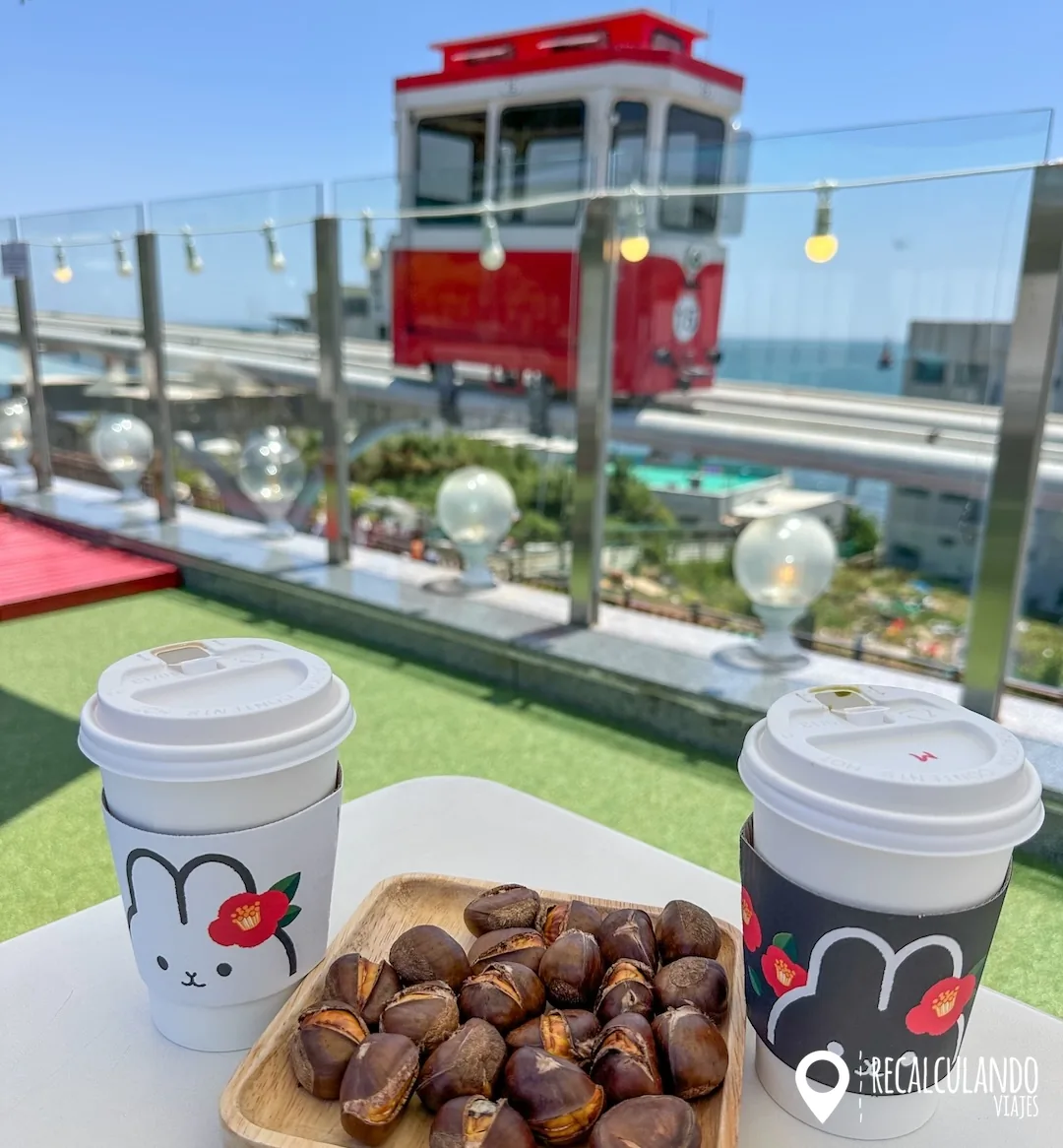
- A cable car/colorful capsule type carriage that travels between pine trees and along the cliff’s edge over the sea. The image of those colorful cabins sliding over the cliff is one of the coolest and most unique postcards of all Busan.
- A picturesque train that makes the same route below.
The route goes from Mipo Station to Cheongsapo, covering about 4.8 kilometers of rugged and beautiful coastline. We chose to go by cable car/capsule and return walking along the coastal path that runs along the tracks, which takes approximately 30 minutes at a leisurely pace. That return walk is a plan in itself: the path winds between rocks, pine trees, nature, with the sea in the background and views that change at every turn.
Note: Book the cable car/capsule in advance/online because tickets sell out fast, especially on weekends.
Cheongsapo Daritdol Skywalk: Walking Over the Sea
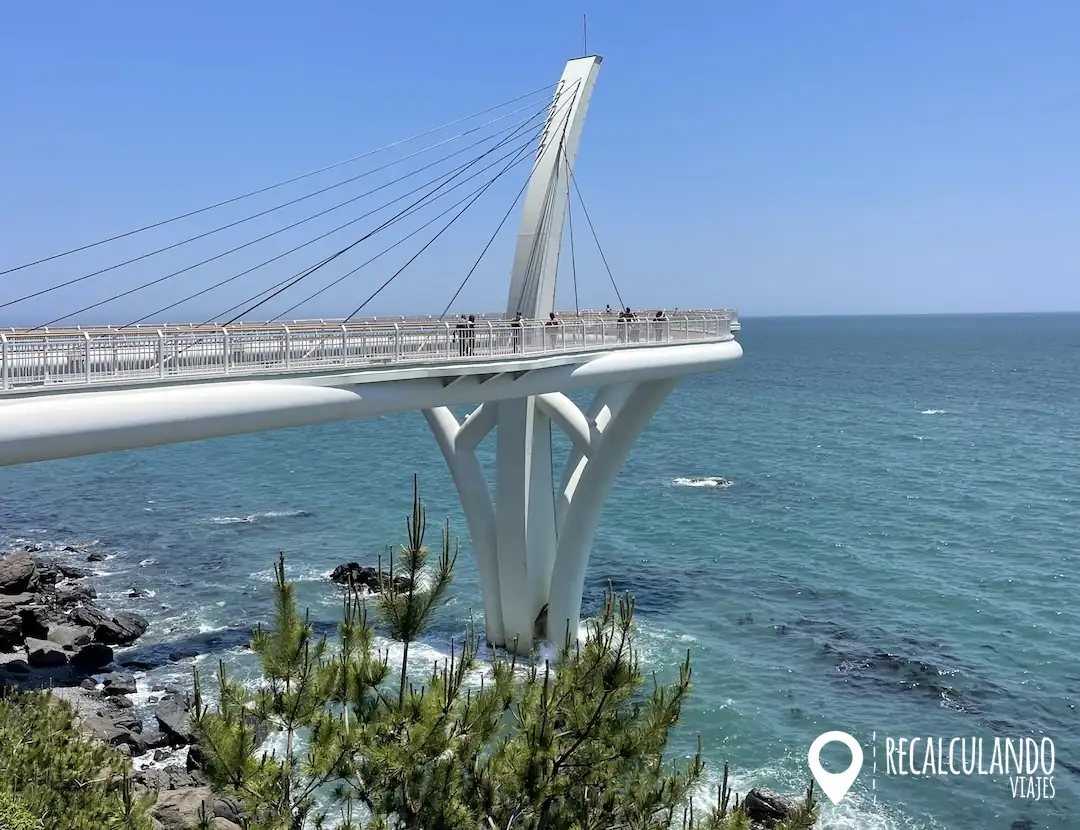
Upon arriving in Cheongsapo, when we were returning along the Blueline Park path, we found another surprise: the Daritdol Skywalk, a glass platform that extends over the sea from the top of the cliff (located about halfway).
Walking on the transparent floor with the water crashing against the rocks several meters below has a personal challenge aspect to it that is impossible to resist. The structure is circular at the end, which allows for a full 360-degree loop of views of the Busan coastline.
Admission is free and the viewpoint is open all year round. Combining it with Blueline Park on the same morning or afternoon is the perfect plan to make the most of this part of the coast.
Gwangalli Beach: Beaches and Views of the Illuminated Bridge
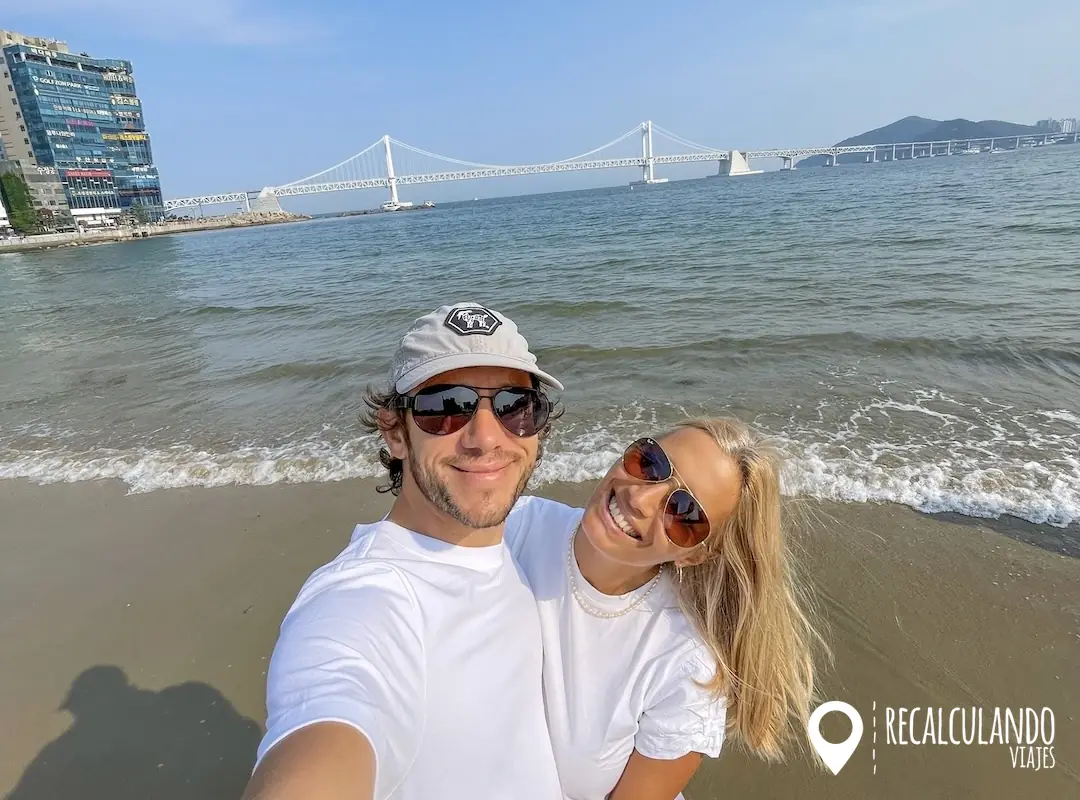
If Haeundae is the most famous beach, Gwangalli is the most photogenic. From its slightly darker sandy shore, you have a direct view of the Gwangan Bridge, a massive structure that lights up at night with thousands of colored lights. We went several nights and the visual spectacle was memorable: people sit on the beach with folding chairs, local beer, and grilled squid, watching the illuminated bridge as if it were a natural theater.
Tip: Night drone show Busan: they have great night drone shows at this beach (between 1500/2000 drones). Gwangalli M Drone Light Show
Gwangalli Neighborhood
The neighborhood surrounding Gwangalli, especially the street parallel to the beach, is full of cafes with sea views, bars with terraces, and seafood restaurants. It is one of the favorite areas for young Koreans and one of our favorites due to its mix of a relaxed atmosphere and interesting culinary proposals.
👩⚕️👨⚕️ A must-have for stress-free travel! 🌎✈️ ➜ Get a Quote, Compare & Buy
Haedong Yonggungsa Temple: A Must-See by the Sea
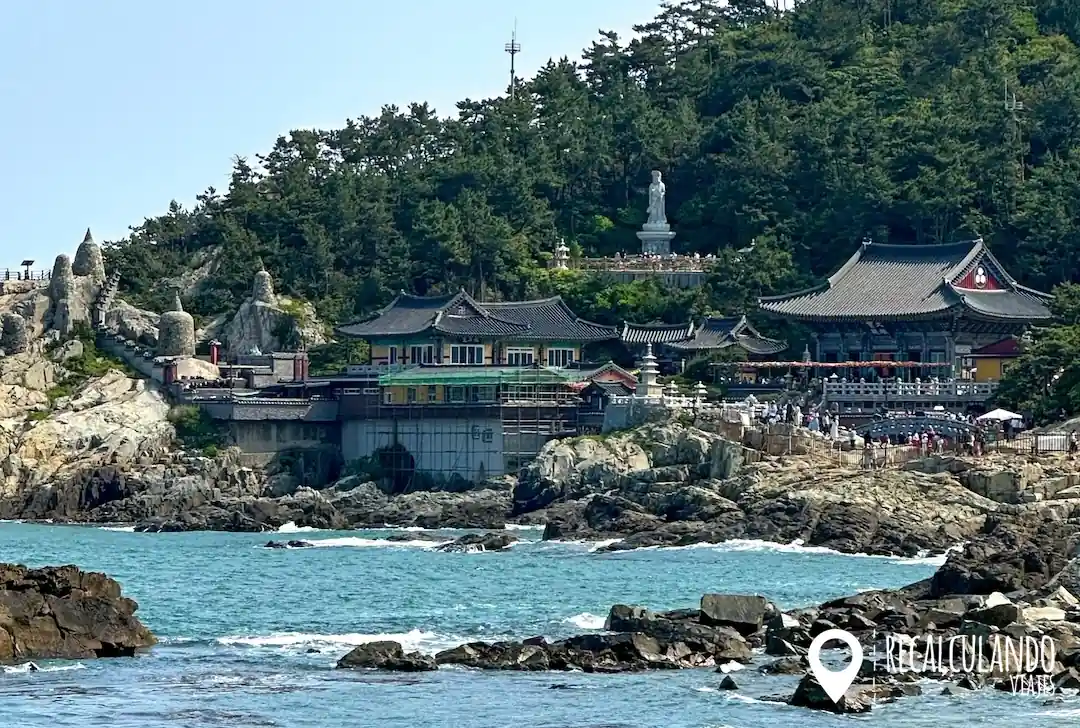
This is undoubtedly one of the most striking places in all of South Korea. The Buddhist temple Haedong Yonggungsa was built in the 14th century on a rocky headland directly over the sea, and the combination of traditional Korean architecture with the marine landscape is simply extraordinary. You have to arrive via a staircase surrounded by statues of the Korean zodiac and a huge figure of a white Buddha looking out to the ocean.
The best part is that the temple is active: while tourists take photos, Buddhist faithful pray and light incense. This coexistence between the sacred and the tourist happens in a very organic way, without tension.
To avoid the highest concentration of visitors, we recommend arriving before 9 in the morning or around noon on weekdays. Admission is free.



Gamcheon Culture Village: The Neighborhood of Colors
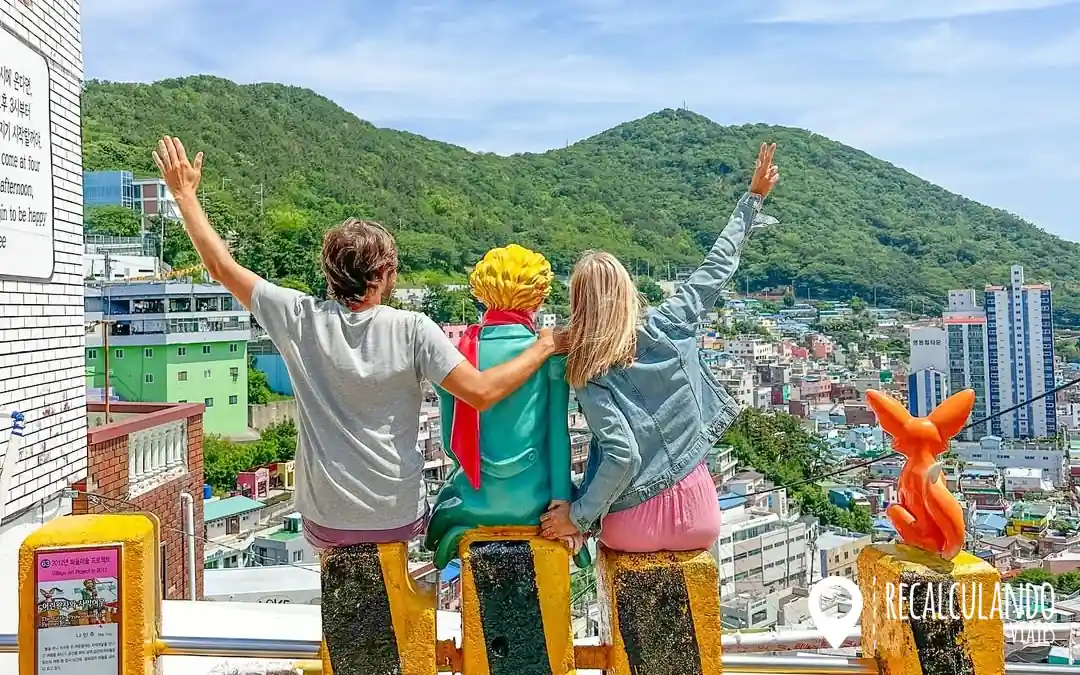
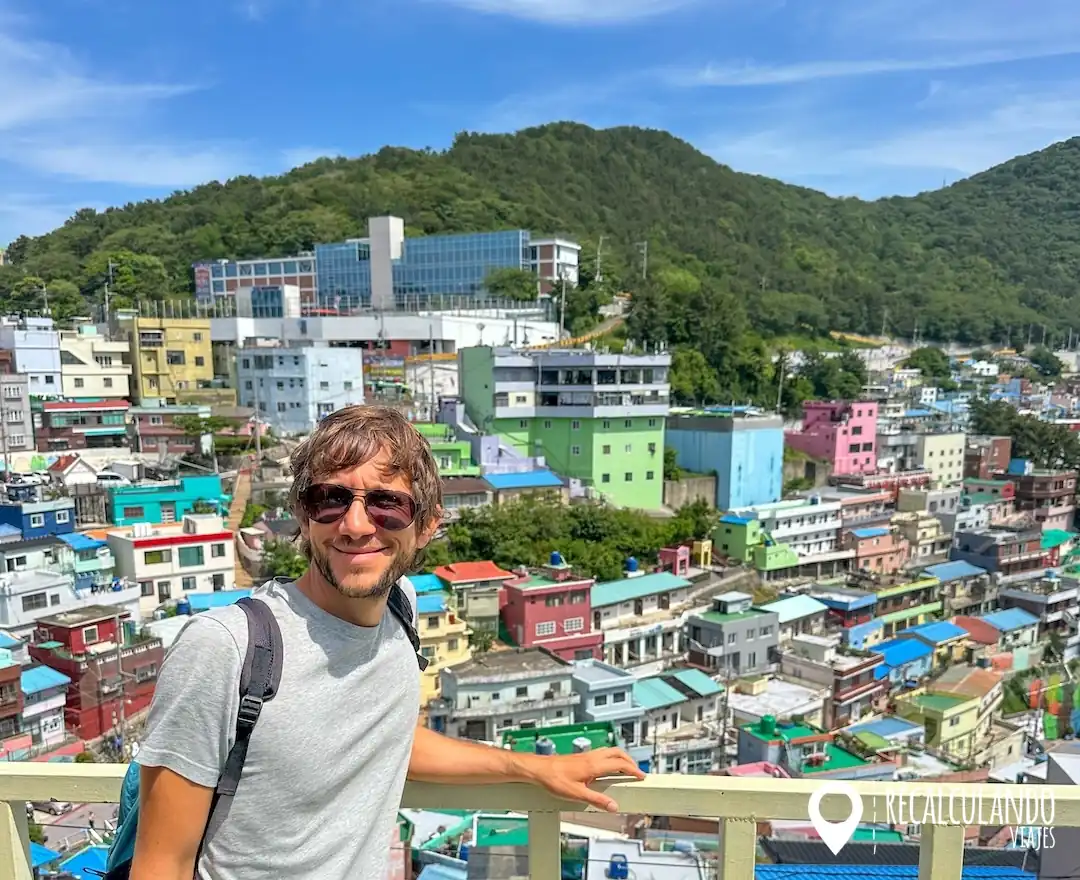
Gamcheon is one of those places that generate divided opinions: some see it as a jewel, others as a theme park. Our experience was positive: yes, there are many tourists, but the neighborhood has a real history behind it. It was born as a refugee settlement during the Korean War, built on the side of a hill with tiny houses painted in every imaginable color. Today it is an inhabited neighborhood where historical residents coexist with artists’ studios, galleries, and small businesses.
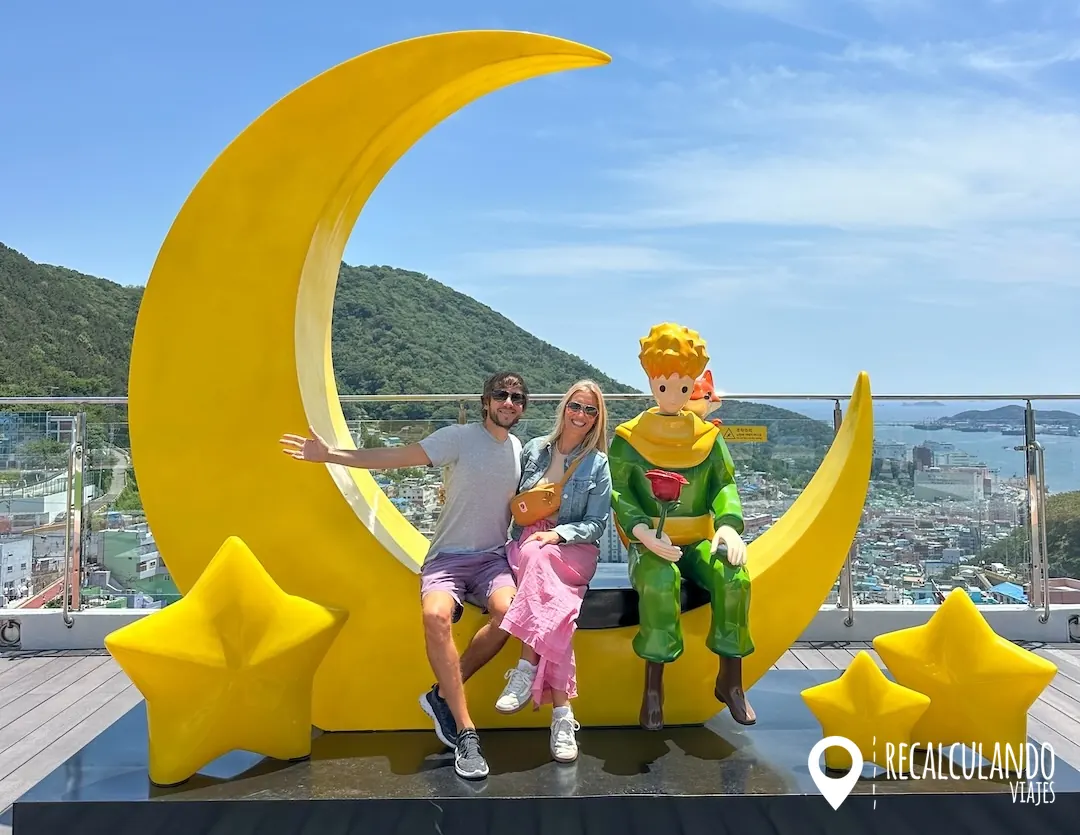
The official tour begins at the tourist office, where they give you a map with the points of interest. There are murals, sculptures, cafes with panoramic views, and several viewpoints from which you can see the whole neighborhood at once, with the port of Busan in the background. Wear comfortable shoes because the climbs are steep and the pavement is uneven.
Jagalchi Market: The Largest Seafood Market in Korea
Jagalchi is the largest seafood market in South Korea and one of the most important in all of Asia. It is quite an experience: the smell of the sea, the noise of the tanks with water where octopuses and live fish swim, the saleswomen offering you a taste of lobster or king crab. The ground floor is the traditional market with open-air stalls; the upper floor has restaurants where you can eat what you bought downstairs, prepared on the spot.
The prices are very reasonable compared to tourist restaurants, and the freshness of the product is incomparable.
Nampo-dong Neighborhood
Right next to Jagalchi stretches Nampo-dong, the liveliest commercial neighborhood in central Busan. Pedestrian streets full of clothing stores, street food, cinemas, and street food stalls. BIFF Square, the heart of the famous Busan International Film Festival, which is held every October and turns the city into one of the great cinematographic centers of Asia, operates here.
Beomeosa: The Great Temple in the Mountains
If Haedong Yonggungsa is by the sea, Beomeosa is in the mountains. This great Buddhist complex, founded in the year 678 during the Silla dynasty, is located on the slopes of Mount Geumjeongsan, surrounded by forest. Arriving by metro and then by local bus is already part of the experience: you leave the urban city behind and arrive in a completely different environment, of pines and bamboos.
The temple itself is impressive: several pavilions of red and green lacquered wood, large Buddha statues, ritual bells, and an atmosphere of stillness that contrasts sharply with the hustle and bustle of the city. In June, the forest surrounding the temple was at its greenest and the combination with the traditional architecture was beautiful. Admission is free and the site is very spacious, so allow at least two hours to explore it well.
Things to do in Busan: The Port and the Dongbu Ichon District
The port of Busan is the largest in Korea and one of the busiest in the world. From the coastal promenade you can see the huge container ships entering and leaving, an image that conveys the industrial scale of the city well. The old port area, near the train station, has some historic buildings from the Japanese colonial period that contrast with the surrounding modern architecture.
For an aerial perspective of the entire port and bay, the Songdo Cable Car offers a spectacular view. The route goes from Amnam Park to Songdo Beach, a lesser-known beach than Haeundae but equally beautiful.

What to eat in Busan: Flavors You Can’t Miss
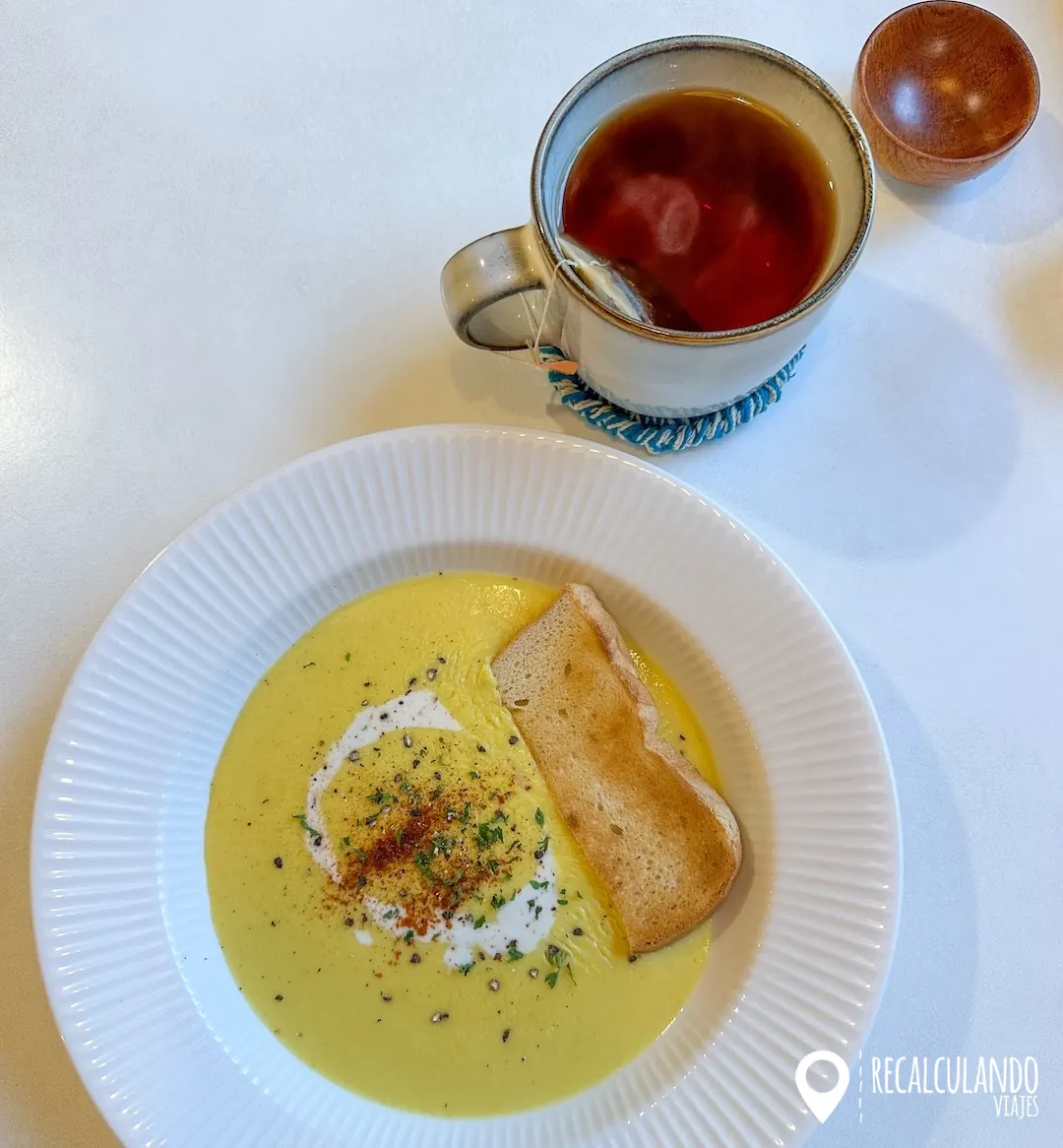
Busan’s cuisine has its own identity within Korean gastronomy. Being a port city, seafood and fish are the absolute protagonists. In addition to sashimi and haemul pajeon, a kind of thick pancake with seafood that is one of the most typical dishes in the region.
There are some dishes that are almost mandatory:
- Milmyeon: wheat noodles in cold broth, a dish that was born in Busan during the Korean War and is today a symbol of the city.
- Dwaeji Gukbap: pork soup with rice, the locals’ favorite breakfast and one of the cheapest dishes you will find.
- Eomuk (odeng): fish cake skewers in hot broth, the quintessential street food of Busan.
- Seafood Bibimbap: the coastal version of the classic Korean bibimbap, with octopus, mussels, and other seafood delicacies.
If you are interested in Asian gastronomy in general, you may find our article on japanese food useful, where we explain how to navigate the flavors and culinary cultures of East Asia.
Olive Young and Korean Face Masks: Essential Shopping in Busan
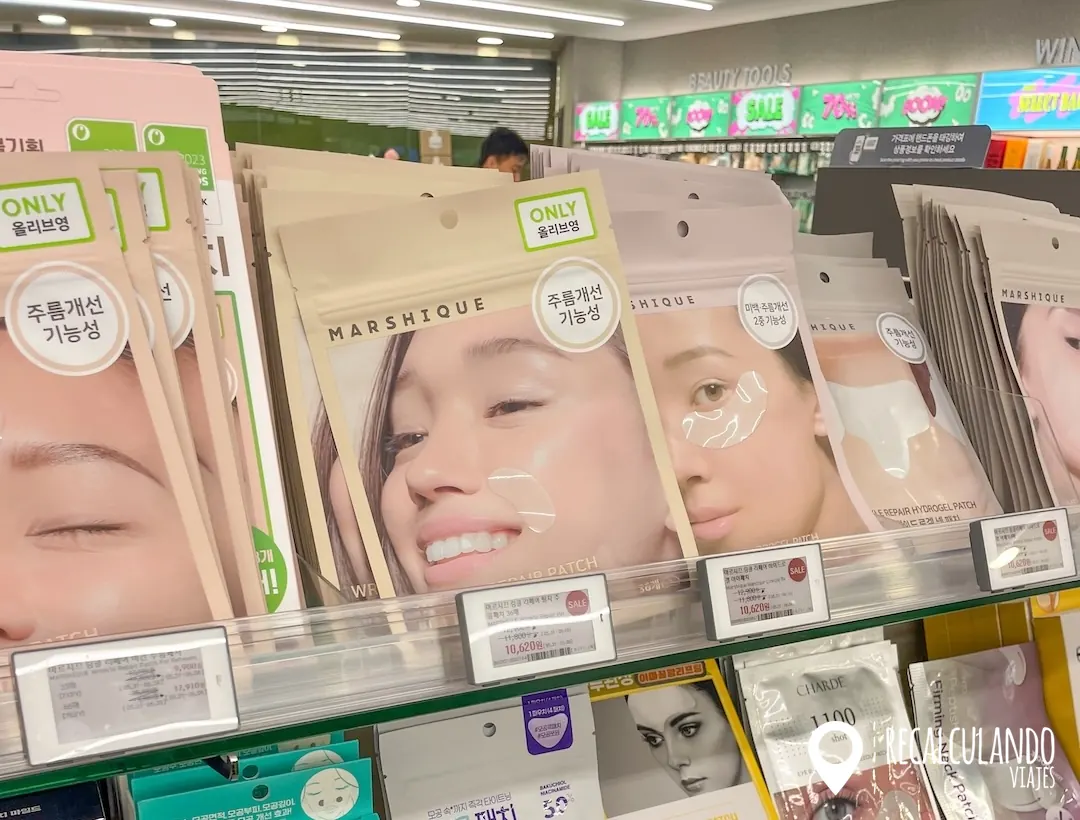
South Korea is the mecca of skincare, and Busan is no exception. If there is a mandatory stop for those who want to take something special home, it is Olive Young, the Korean perfume and cosmetics chain that has stores in almost every neighborhood of the city.
We went in “just to look” at the Haeundae store and Nanu made several little purchases: the famous Korean fabric face masks are the most practical and inexpensive souvenir. There are moisturizing, brightening, collagen, green tea, and a variety of ingredients that never ends.
The price is around 1,000–2,500 KRW per unit (less than 2 dollars). It is also worth exploring the lines of serum, stick creams, and Korean sunscreens, which have a formulation far superior to what you can get in other countries at that price. Olive Young is basically a cosmetics pharmacy with style, and browsing it is an experience in itself.
If you are going to buy at Olive Young, take your passport so they can deduct the Tax directly from your purchase.
Busan in June: The Best Time to Visit
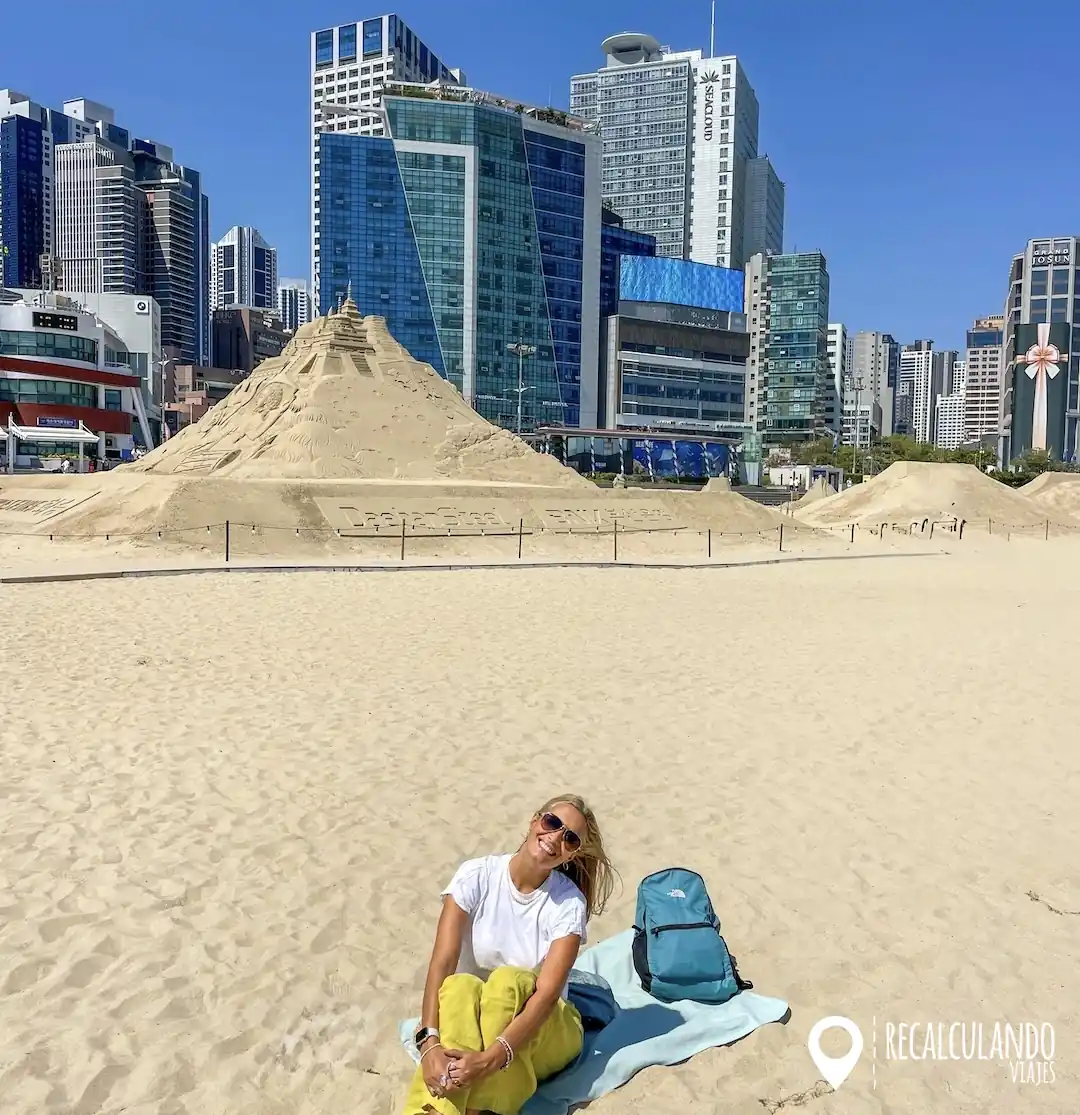
June is, in our opinion, one of the best months to visit Busan. Temperatures are pleasant (between 20 and 27 degrees), the sea starts to get warmer for swimming, and the crowds of peak summer or the extreme heat and humidity of July and August haven’t arrived yet. The rainy season (changma) starts at the end of June, so if you travel at the beginning of the month, the chances of good weather are high.
What you should keep in mind is that South Korea has a very humid climate in summer, so bring light and breathable clothing. A couple of rainy days are also possible, so a light raincoat doesn’t take up much space in the backpack and can save an excursion.
How to Get Around the City
Taxis are another reasonable option for short trips; Kakao Taxi (the Korean equivalent of Uber) works perfectly and is very reliable.
Busan Metro
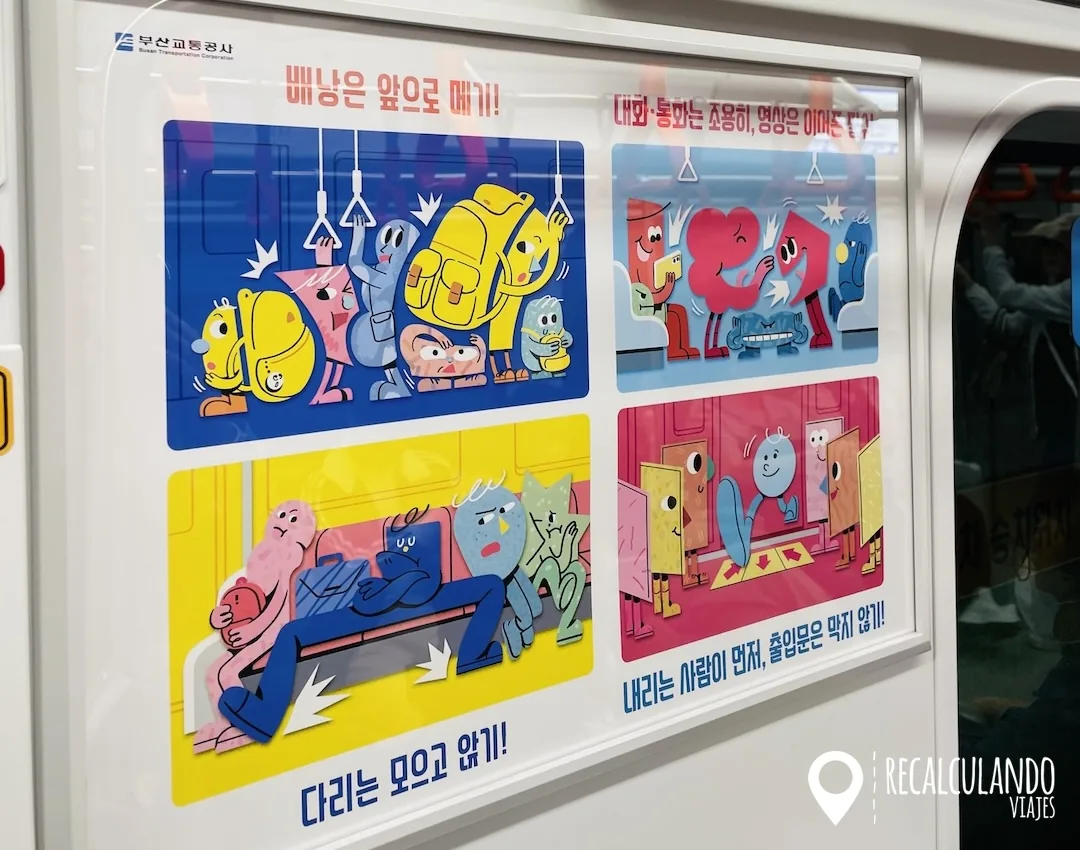
The Busan metro is clean, punctual, and very easy to use: all stations have signs in English and maps of the lines are available in the official app. To move around with greater freedom, we recommend loading a T-money card or a specific Busan card that works on both the metro and the buses.
Where to Stay in Busan: the Best Neighborhoods by Style
The choice of neighborhood to stay in changes the Busan experience a lot.
We stayed in the Millac The Market area, in the Gwangalli neighborhood, and it was an excellent decision: being a few blocks from the beach and the illuminated bridge gave our stay a very particular atmosphere, younger and with a lot of neighborhood life. Gwangalli has a very active dining and bar scene. The area has good metro connections (Gwangan station) to all points of interest (about 12 blocks away). That said, to get around, we recommend checking taxi prices. Several times we took a taxi because it cost a little more, but it was much faster and left us at the door.
These are the main areas to stay according to the type of trip:
Haeundae: for beach and tourist atmosphere
It is the most touristy area and also the most expensive. Luxury hotels facing the sea, restaurants on every corner, and active nightlife. Ideal if the beach is your priority and you don’t mind paying a little more. In summer it gets very crowded, so book in advance.
➜ Check Accommodation Prices in Haeundae (CLICK HERE)
Seomyeon: the best central location
Our recommendation for most travelers. Seomyeon is the commercial and transport hub of Busan: direct metro to all neighborhoods, dining options for all budgets, and more reasonable accommodation prices than Haeundae. It is where we stayed (Millac The Market area) and it worked perfectly as a base.
➜ Check Accommodation Prices in Seomyeon (CLICK HERE)
Gwangalli: for a young and photogenic atmosphere
If you want to wake up near the most photogenic beach in Busan and have cafes and bars with views of the bridge just steps from your accommodation, Gwangalli is your area. Quieter than Haeundae, with a lot of local atmosphere.
➜ Check Accommodation Prices in Gwangalli (CLICK HERE)
Nampo-dong / Jagalchi: to experience the most authentic Busan
The most historic and popular area, near the seafood market. Cheaper accommodation and a very local energy. Perfect if you want to get away from the standard tourist circuit.
Where to Sleep in Busan: Map & Prices
On the map below, you can zoom in, move around, and filter by your travel dates to see real-time accommodation prices in Busan.
Recommended Hotels in Busan
Below are some featured accommodations that you can check for your visit:
Luxury hotel located in Seomyeon, with excellent views and direct access to the metro.
Check availability and prices on Booking.com
On the beachfront in Haeundae, with casino and spa. A complete experience.
Check availability and prices on Booking.com
With views of the beach in Haeundae, restaurants, and shops nearby.
Check availability and prices on Booking.com
Excursions From Busan: Jeonju and More
Busan is an excellent base for exploring the south of South Korea. One of the most recommended excursions is to visit Jeonju, the historic city famous for its hanok village (traditional house neighborhood) and for being the cradle of bibimbap (if you can stay a night, much better). By KTX train, the journey takes less than two hours and allows for a comfortable full-day excursion. We stayed a few days in Jeonju and we highly recommend it!
➜ More Info: Things to do in Jeonju and its beautiful Hanoks
Other nearby options include Gyeongju, the former capital of the Silla kingdom, with its royal tombs and ancient temples; and Geoje Island, known for its coastal landscapes and its naval shipyards, a coexistence of nature and heavy industry.
Budget and Practical Tips for Visiting Busan
Busan is quite affordable compared to other similar Asian cities. A traveler with a moderate budget can get around comfortably with about 60-90 USD per day including accommodation, metro transport, and meals at local restaurants.
Eating in markets or at restaurants without an English menu is usually much cheaper than establishments geared toward tourism.
Some tips we learned during our week in the city:
- Wi-Fi is very good throughout South Korea; you can also rent a pocket Wi-Fi at Gimhae Airport at very reasonable prices. Otherwise, here is a 5% discount on ESIM
- Download the Kakao Map and Naver Map apps before arriving: they are much more complete than Google Maps for getting around Korea.
- Many museums and temples are free or have very low-cost entry.
- Always carry some cash (Korean won): some small markets and restaurants do not accept cards.
- The language can be a barrier in more local areas, but young Koreans usually speak basic English and are very kind to tourists.
For Asia in general, we also always recommend hiring good Travel Insurance before leaving: medical care in Korea is excellent but can be expensive for foreigners without coverage.
How Many Days Do You Need in Busan? Recommended Itinerary
One of the questions that comes up most is how many days to dedicate to Busan and how to organize them. The answer depends on the time you have available, keeping in mind that there are many nearby places to explore but several require about 45 minutes to reach. Regardless, here are three proposals that we put together based on our real experience in the city: one for a stopover day, another for a weekend, and a third for those who have three full days and want to get to know it well.
Busan in one day? Only if there is no other option: Things to do in Busan in 1 Day
If you are just passing through and only have one day, prioritize: Haedong Yonggungsa in the morning, Gamcheon at noon, and Gwangalli at sunset/night. Leave Haeundae for another trip.
- Early morning: Blueline Park from Mipo to Cheongsapo in the colorful carriage and a brief visit to the Daritdol Skywalk.
- Walk back along the coastal path from Cheongsapo to Mipo (40 minutes with sea views).
- Or choose the temple area by the sea, Haedong Yonggungsa.
- Noon: lunch in the Haeundae neighborhood, walk along the beach.
- Afternoon: Gamcheon Culture Village to see the colorful neighborhood from the viewpoints.
- Night: Dinner on the coast of Gwangalli Beach with views of the beach and illuminated Gwangan Bridge. Or the Jagalchi market area.
Things to do in Busan in 2 Days
Two days allow you to add some of the city’s most special places, such as the temple by the sea and the night beach at Gwangalli.
- Day 1 — North coast and neighborhoods:
- Morning: Haedong Yonggungsa temple, arrive before 9 to avoid crowds.
- Noon: Blueline Park (Mipo–Cheongsapo carriage) and Daritdol Skywalk.
- Afternoon: Haeundae beach and walk through Marine City at sunset.
- Night: Gwangalli Beach with the illuminated Gwangan Bridge in the background, dinner at the waterfront bars.
- Day 2 — Historic center and culture:
- Morning: Jagalchi market (arrive early to see the market in full swing) and breakfast with dwaeji gukbap.
- Afternoon: Gamcheon Culture Village, at least two hours to explore it well.
- Late afternoon/night: Nampo-dong and BIFF Square to close the trip.
Busan in 3 days: the essentials: Things to do in Busan in 3 Days
With three days in Busan you can combine the big classics with quieter experiences and some less touristy corners. This is the pace we recommend so you don’t feel like you ran the whole time.
- Day 1 — Beach and north coast:
- Morning: Haedong Yonggungsa temple.
- Noon: Blueline Park and Cheongsapo Daritdol Skywalk.
- Afternoon: Haeundae Beach and Marine City neighborhood.
- Night: dinner in Gwangalli with views of the illuminated bridge.
- Day 2 — Culture and markets:
- Morning: Jagalchi market, local breakfast, wandering around Nampo-dong.
- Afternoon: Gamcheon Culture Village.
- Night: explore the nightlife of Seomyeon.
- Day 3 — Mountains and tranquility:
- Morning: Beomeosa temple on Mount Geumjeongsan, bring comfortable shoes for the trails.
- Afternoon: walk through the Songdo cable car and Songdo beach.
- Night: last dinner at the market with milmyeon and eomuk to say goodbye properly.
Busan in 5 days: to go at a more relaxed pace
With 5 days you can repeat beaches, do the excursion to Gyeongju (the former capital, just 1 hour away by train), explore the Seomyeon neighborhood calmly, and dedicate an afternoon to the Igidae Park viewpoints with views of the entire coast. We had 7 nights and we didn’t have extra time.
Frequently Asked Questions about Things to do in Busan
How many days are enough to visit Busan?
With three or four days you can see the main attractions of Busan: Haeundae, Gwangalli, Gamcheon, Jagalchi, and some temple. If you want to get to know the city in more depth and take some excursions to the surroundings, a week is ideal. We were there for seven nights and still felt there were things left to discover.
What is a must-see in Busan?
Among the must-sees of Busan are:
- Haeundae Beach and Gwangalli Beach
- Gamcheon Culture Village
- Jagalchi Seafood Market
- Haedong Yonggungsa Temple (by the sea)
- Busan Tower and Yongdusan Park
- Songdo Skywalk
Busan combines sea, culture, gastronomy, and unique viewpoints, making it one of the most complete destinations in South Korea.
What is special about Busan and why is it famous?
Busan is famous for being the second-largest city in South Korea and its main port. What makes it special is its unique mix of:
- Urban beaches
- Traditional seafood markets
- Temples by the sea
- More relaxed atmosphere than Seoul
It is also known for events like the Busan International Film Festival, one of the most important in Asia.
How to get from Seoul to Busan?
The fastest option is the KTX train, which connects Seoul Station with Busan Station in approximately 2 hours and 30 minutes. There are also low-cost domestic flights, although the train is usually more convenient due to the central location of both stations. Intercity buses are the cheapest alternative but take about 4 hours.
Is Busan cheaper than Seoul?
In general terms, yes. Accommodation and food are usually somewhat cheaper in Busan than in the capital. Seafood markets offer excellent value for money, and public transport is very affordable throughout the city.
What differentiates Busan from Seoul?
The main difference is the lifestyle. While Seoul is a modern, fast-paced megacity, Busan has a more coastal, relaxed, and nature-oriented atmosphere. Here, life revolves more around the sea, local gastronomy, and a less frantic pace.
What language is spoken in Busan?
The official language is Korean, and the Busan dialect (satoori) has its own characteristics that even Koreans from other regions sometimes notice. In tourist areas and with young people, basic English works well. Learning a few words in Korean (like annyeonghaseyo for hello or gamsahamnida for thank you) always generates a very positive reaction from the locals.
What is the best time to visit Busan?
Spring (April-May) and autumn (September-October) are the most recommended moments due to the weather and tourist influx. June is also very good. The months of July and August are the most crowded and humid due to the Korean summer. Winter (December-February) is cold but allows you to see the city without crowds.
Can you visit Busan with children?
Absolutely yes. Busan is a very family-friendly city: the beaches, the Sea Life Busan aquarium, the Lotte World Adventures amusement park, and the markets are perfect for all ages. Public transport is very safe and easy to use even with children.
What differentiates Busan from Seoul?
Busan has a much more coastal and relaxed character. While Seoul is a megacity with a frantic pace, Busan combines urban energy with sea culture: people spend time on the beaches, eat fresh seafood in the markets, and have a very close relationship with the water. It is also a city that preserves more of the identity of the south of Korea, with its own dialects and particular culinary traditions.
Conclusion: Busan, a City that Surprises
Knowing things to do in Busan is just the starting point; the true richness of this city appears when you let yourself be carried away by its neighborhoods, its markets, and its people. In our seven days there, we discovered a city that perfectly balances the modern and the traditional, the urban and the natural, the known and the unexpected.
Busan is not Seoul and that is exactly what makes it special. If you already know the Korean capital and want to see another side of the country, or if it is your first time in Korea and you want to start with something different, Busan will exceed your expectations. That is exactly what happened to us, and we will surely be back.
If your trip through Asia includes Japan, don’t miss our article on things to do in Tokyo or our guide to things to do in Takayama, two destinations that combine perfectly with a getaway to South Korea.
ℹ️ **Total Transparency**
This article contains affiliate links. If you book through these links, we may receive a small commission at no additional cost to you. We only recommend services we use on our trips and trust. This helps us keep this blog free and continue creating useful content for you. Thank you for your support!
🔗 Resources & Useful Links for your trip to Busan
Do you have questions or want to add your own recommendations on things to do in Busan?
💬 Leave your comment or write to us, we love reading about the experiences of other travelers.
Thank you very much for being part of this adventure!— Nanu & Facu 🌎 | Recalculando Viajes 💜