| 28 min read | by Nanu y Facu | Belgium, Blog, Europe
If you are looking for things to do in Ghent, here are the 18 must-see places in Belgium’s most underrated city, with a map, updated 2026 prices, the maths on the CityCard and an itinerary to see it in one day. We arrived by train from Amsterdam (in Spanish) in mid-June and left with a very strange feeling: we liked Ghent even more than Bruges.
And we saw Bruges on the same day. But Ghent has something the postcards do not tell you: it is medieval and beautiful, and it is also alive, with students, bars and legal graffiti. It is not an open-air museum. It is a real city.
FREE🚶♀️➡️Free walking tour of Ghent ➜ Click Here🚶 — no cost, just the tip you want to leave.
🌍 Travel Insurance: 5% Off with IATI Seguros! 🌟
Take advantage of this offer and travel safe.
Quick facts before you start
| Category | Key details |
|---|---|
| Best time to go | From May to September. June and September are ideal: very long days and fewer people |
| Recommended days | 1 day for the essentials; 2 if you want to visit museums without rushing |
| Budget | €60-90 per person per day, not including accommodation |
| Language | Dutch (Flemish). Almost everyone speaks perfect English |
| Currency | Euro (€). You can pay by card everywhere |
| Getting there | Direct train from Brussels in 30-36 minutes or from Zaventem airport in 55 minutes |
An important clarification: you can explore the whole historic centre on foot. Almost every place on this list of things to do in Ghent is within a 15-minute walk, so you will not need transport except to get there from the station.
📑 In this guide · 31 sections
- Quick facts before you start
- 1. Graslei and Korenlei, the heart of Ghent
- 2. St Michael’s Bridge and the three towers
- 3. St Michael’s Church, the tower that was left unfinished
- 4. St Bavo’s Cathedral and the Mystic Lamb
- 5. The Belfry, the World Heritage bell tower
- 6. Ghent City Hall, two buildings in one
- 7. Castle of the Counts of Flanders
- 8. Korenmarkt, the hub of Ghent
- 9. St Nicholas’ Church, one of the free things to do in Ghent
- 10. Stadshal and Emile Braun Square
- 11. Groot Vleeshuis, the medieval meat market
- 12. Patershol, Ghent’s prettiest neighbourhood
- 13. Vrijdagmarkt and the Dulle Griet café
- 14. Werregarenstraat, graffiti alley
- 15. The Klein Begijnhof, a World Heritage beguinage
- 16. A boat trip on the canals
- 17. Portus Ganda and the Reep walk
- 18. Citadelpark, the MSK and S.M.A.K.
- Is the CityCard Gent worth it? The real numbers
- Ghent in one day
- Free things to do in Ghent
- Ghent at Christmas
- What to eat in Ghent
- Where to stay in Ghent
- Where to stay in Ghent: map and prices
- How to get to Ghent
- Travel insurance for Ghent
- Day trips from Ghent
- Map of the things to do in Ghent
- Frequently asked questions about things to do in Ghent
1. Graslei and Korenlei, the heart of Ghent
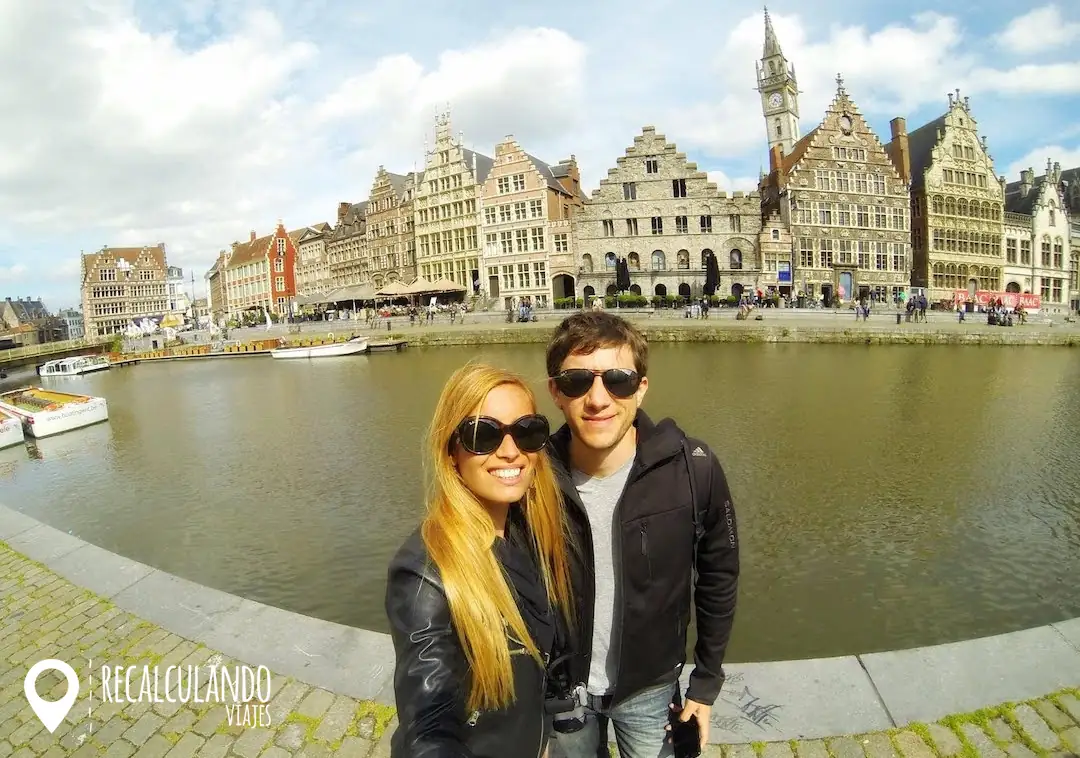
If you only have one hour in the city, spend it here. Graslei and Korenlei are the facing quays on the River Lys and they form Ghent’s most famous postcard: a row of guild houses from the 12th to the 17th centuries, each with its stepped façade, reflected in the water.
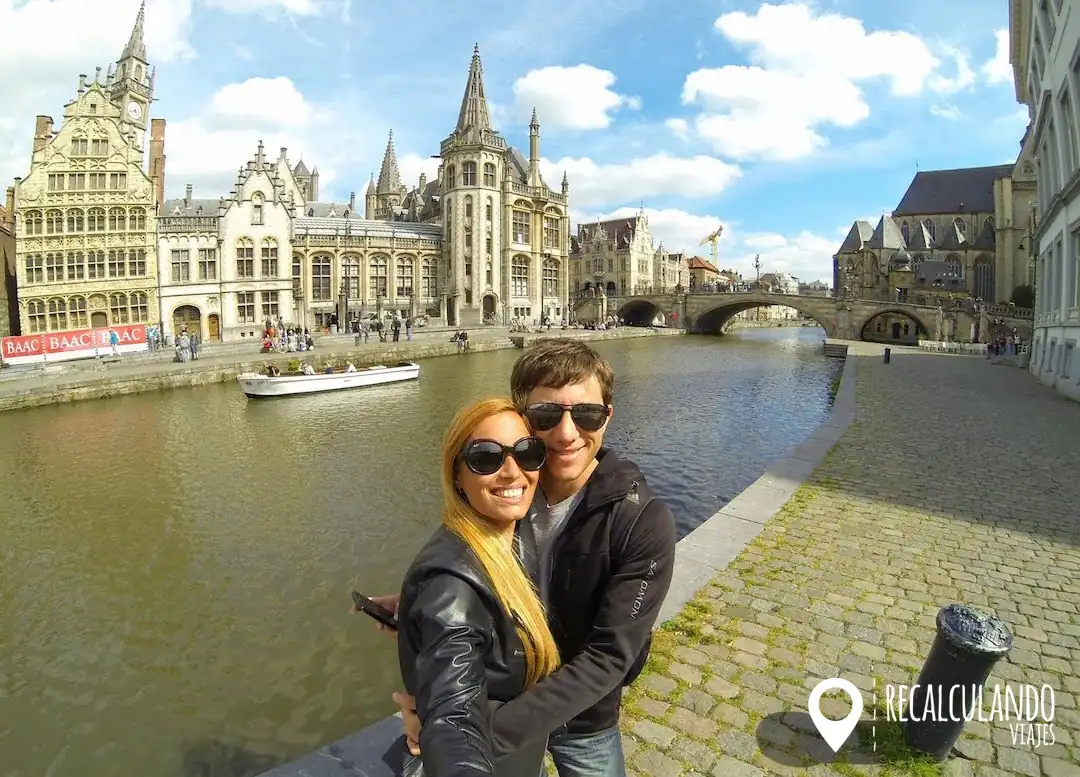
And it is not a stage set. On Graslei, people sit on the stone steps with a beer, their feet almost touching the water, until it gets dark.
TIPS: the best photo of Graslei is taken from Korenlei, and vice versa. In June, with daylight until almost 10 pm, you have plenty of time to come back twice.
2. St Michael’s Bridge and the three towers
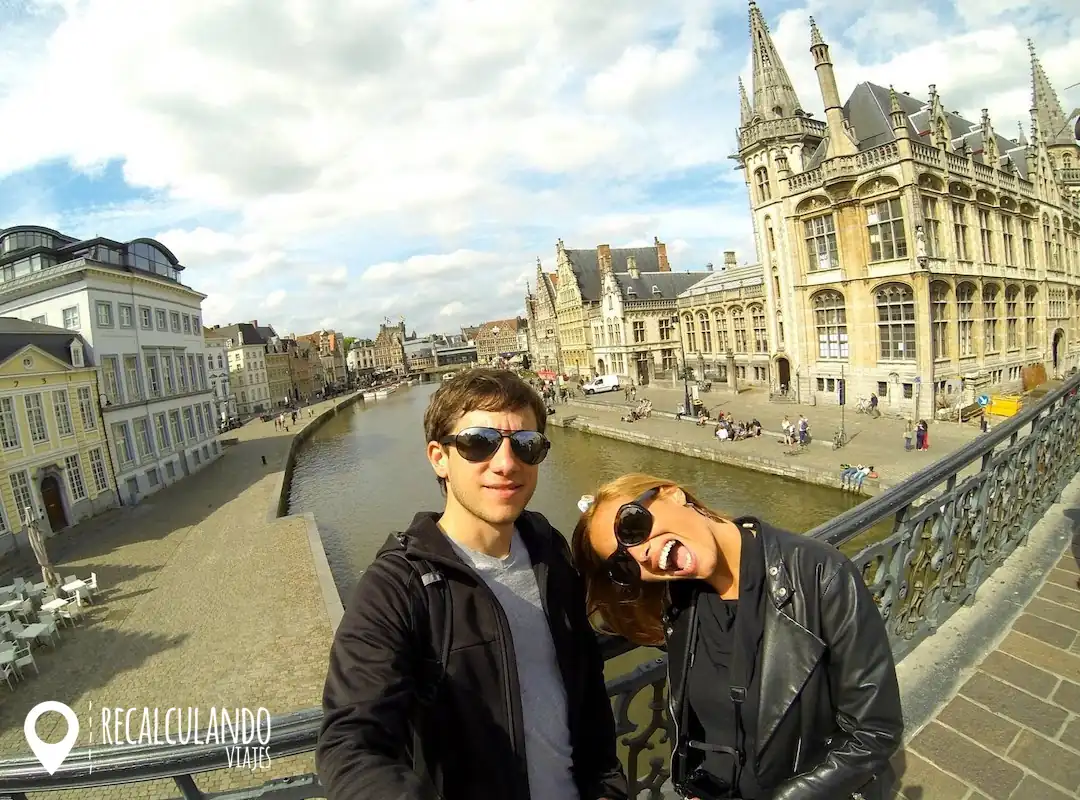
Sint-Michielsbrug is probably the best free viewpoint in Belgium. From the middle of the bridge you see the three towers that define Ghent’s skyline lined up: St Nicholas’ Church, the Belfry and St Bavo’s Cathedral, one behind the other in perfect perspective.
It is no coincidence: the bridge was built in the early 20th century with that effect in mind, for the 1913 World Exhibition. And if you turn 180 degrees, you have Graslei and Korenlei at your feet.
Good to know: it is always full of people taking photos. Go before 10 am or at sunset, because at midday it is hard to find a gap at the railing.
3. St Michael’s Church, the tower that was left unfinished
Right next to the bridge is Sint-Michielskerk, and it has a story that made us smile: its tower was going to be the tallest in Ghent, even taller than the Belfry, but they ran out of money in the 16th century and the work was never finished. That is why today it has that flat, oddly proportioned top, as if its tip had been cut off.
You can see it perfectly from the bridge and from Graslei. Entry is free and inside there is a Christ on the Cross by Van Dyck, although the opening hours are irregular and depend on the season.
4. St Bavo’s Cathedral and the Mystic Lamb
St Bavo’s Cathedral (Sint-Baafskathedraal) is the most important building in the city, not for its Gothic architecture but for what it holds inside: The Adoration of the Mystic Lamb, the polyptych the Van Eyck brothers finished in 1432, considered one of the most influential paintings in the history of art.
Entry to the cathedral is free and worth it even if you do not pay for the altarpiece: the vaults, the baroque pulpit and the side chapels already justify the time. We are not museum people unless they are unmissable, so we stuck to the free part, but many travellers recommend the full visit to the visitor centre.
2026 prices and opening hours (checked on St Bavo’s Cathedral official website):
- The Mystic Lamb only (25 minutes): €12.50
- Augmented reality tour + altarpiece (60 minutes): €16. Children’s version €8 for under-12s
- Cathedral: free. Monday to Saturday from 8:30 am to 5:30 pm; Sundays from 1 pm to 5:30 pm
- Visitor centre: Monday to Saturday from 10 am to 5 pm; Sundays from 1 pm to 5 pm
Latest update: since May 2023 the third and final phase of the altarpiece’s restoration has been under way. Seven panels in the cathedral have been temporarily replaced by very high-quality photographic reproductions, and the upper register is being restored in public view at the Museum of Fine Arts (MSK), with completion expected in spring 2027. In other words: today you will not see the polyptych complete in its original version. It is no reason not to go, but it is worth knowing before you pay.
5. The Belfry, the World Heritage bell tower
At 91 metres, the Belfry is Ghent’s tallest tower and it is on UNESCO’s World Heritage list as part of the belfries of Belgium and France. At the very top is the golden dragon, the symbol of the city for centuries.
You can go up, and there is something to be grateful for: there are about a hundred steps to the first floor and from there a lift. It is not the stair torture of other European towers. Mind you, the lift only goes up; you walk down.
2026 price: €13 for an individual ticket, €6.50 for 19 to 25-year-olds, €2.60 for 13 to 18-year-olds and free up to age 12. It opens every day from 10 am to 6 pm, with last ticket sales at 5 pm. It closes on 24, 25 and 31 December and 1 January.
Good to know: if you have already climbed the Belfry in Bruges, this one will feel repetitive. Save your money and enjoy the free views from St Michael’s Bridge, which are almost as good.
👩⚕️👨⚕️ A must-have for stress-free travel! 🌎✈️ ➜ Get a Quote, Compare & Buy
6. Ghent City Hall, two buildings in one
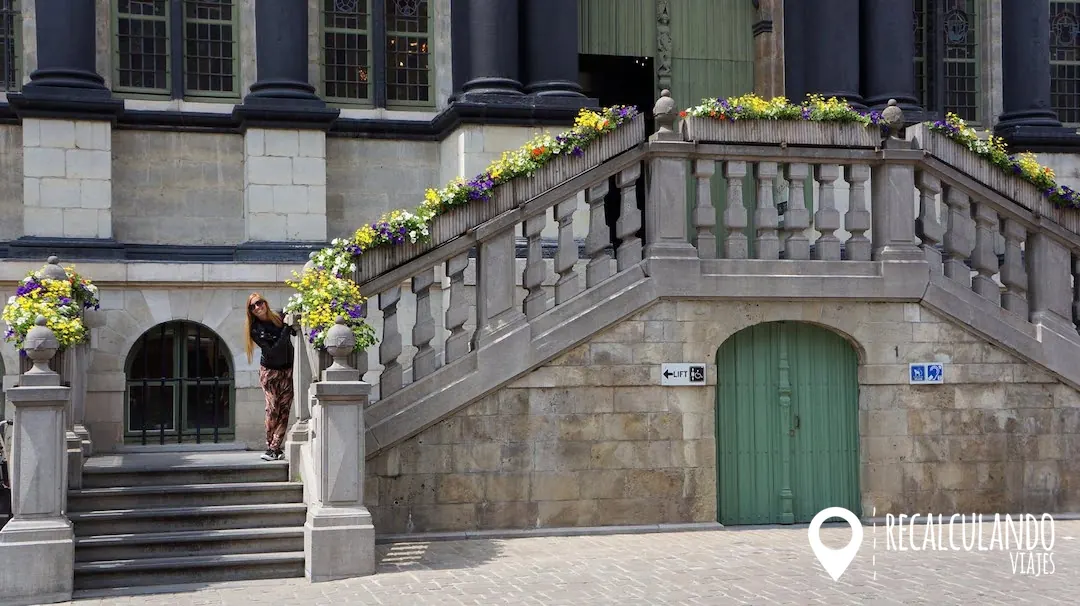
The Stadhuis is the strangest building in the centre, and you need to see it from a corner to understand it. The façade facing the Hoogpoort is pure flamboyant Gothic, heavily ornate, from the early 16th century. Turn the corner onto the Botermarkt and suddenly you find a completely different Renaissance façade, sober and with classical columns.
It is not a whim: work began in 1518 in the Gothic style, stopped because of a lack of funds and the wars of religion, and when it resumed decades later the fashion had changed. It ended up as a building with two faces from two different centuries.
The interior can only be visited on a guided tour, so the usual thing is to see it from outside. And that is enough: it is one of those façades you keep looking at for a long time.
7. Castle of the Counts of Flanders (Gravensteen)
The Gravensteen is one of those things you do not expect to find in the middle of a city: a medieval castle with a moat, walls and a keep, planted among houses and bars. Philip of Alsace had it built in 1180 and its history is wild: it was a count’s residence, a mint, a court, a prison and even a textile factory with workers’ housing inside.
We did not go in. You can walk all the way around the outside for free. Many travellers recommend the audio guide, which is included in the ticket and is known for being very entertaining. Inside there is a museum of weapons and torture instruments, and from the walls you can see the whole city.
2026 price and opening hours (data from Historische Huizen Gent, the body that runs the castle):
- Individual ticket: €15. The price has gone up
- €7.50 for 19 to 25-year-olds; €3 for 13 to 18-year-olds; free up to age 12
- Open every day from 10 am to 6 pm. Last admission: 4:40 pm
- Audio guide included
The square in front of it is Sint-Veerleplein, and it is worth staying a while: it is one of the most photogenic in Ghent, with the baroque façade of the old fish market and its Neptune carved over the entrance. The tourist office is also there, which is where you buy the CityCard.
Little-known TIP: if you buy your castle ticket online you get a code for the Belgian railways’ Discovery Ticket: a 40% discount on a same-day return train to Ghent.
8. Korenmarkt, the hub of Ghent
The Korenmarkt is the square where everything comes together. It was the grain market for centuries —hence the name— and today it is the hub of the centre: the main tram stop, the row of terraces and the point where all the routes cross.
On one side is the old post office building, with its neo-Gothic tower, now a shopping arcade. And on the other, St Nicholas’ Church. It is the liveliest square in the city and also the most touristy: this is where you will find the highest prices for food and drinks.
Good to know: if you arrive by tram from the station, this is your stop. Everything else is within walking distance from here.
9. St Nicholas’ Church, one of the free things to do in Ghent
Sint-Niklaaskerk is our favourite church in the city and, on top of that, entry is free. It is pure Scheldt Gothic, in blue Tournai stone, from the 13th century. What makes it special is the central lantern tower: instead of coloured stained glass, it lets white light in from above and the interior is lit in a very unusual, almost theatrical way.
It is right next to the Korenmarkt, so you are sure to pass it.


10. Stadshal and Emile Braun Square
This one is controversial. The Stadshal is a contemporary wood and concrete pavilion opened in 2012 in the middle of the medieval centre, between the Belfry and St Nicholas’ Church. The city was split in two when it was built.
It is a huge roof, open on all four sides, that shelters you from the Belgian rain and frames the Gothic towers. In winter an ice rink is set up underneath, and around it is the Emile Braunplein, the meeting point for most free tours. It is the kind of urban planning decision that sets Ghent apart from a museum city: here they keep building.
11. Groot Vleeshuis, the medieval meat market
The Groot Vleeshuis is a 15th-century building that served as a covered meat market, with a wooden beamed roof that is still intact. Today it is the home of East Flanders regional products: cheeses, cured meats, local mustard and beers from the area.
Entry is free and the roof alone makes it worth it. It is a step from the Groentenmarkt, the square where they sell cuberdons (locals call them neuzekes, “little noses”): purple cone-shaped sweets, hard on the outside and liquid inside. Try at least one.
12. Patershol, Ghent’s prettiest neighbourhood
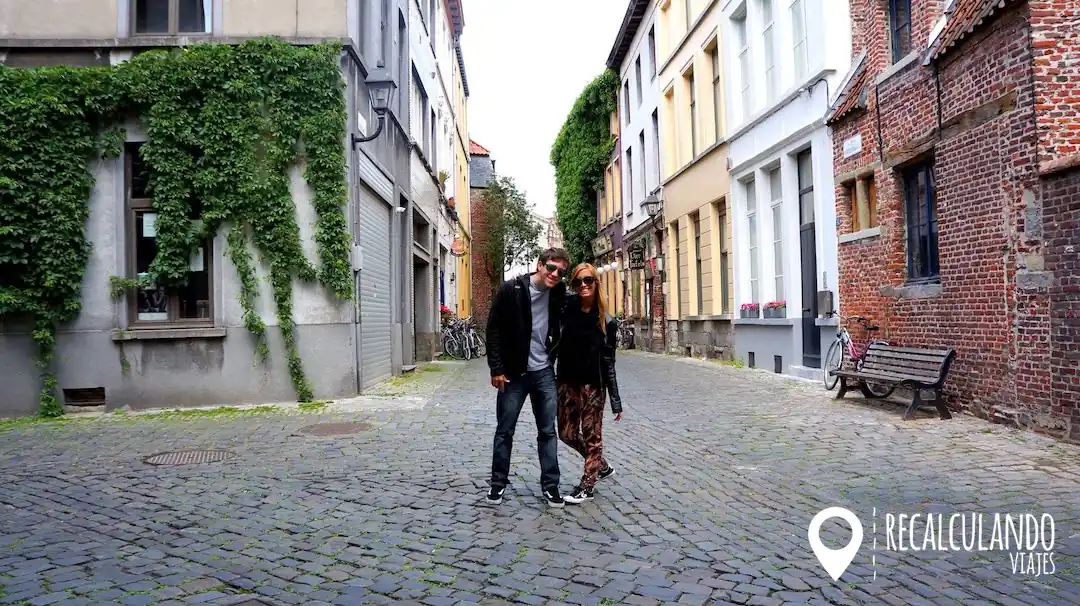
If there is one corner we loved among all the places to see in Ghent, it is Patershol: a maze of 17th-century cobbled lanes behind the castle, which forty years ago was practically abandoned and today is Ghent’s food district.
The main streets are pedestrian and narrow, with low brick houses and ivy. You can walk all of it in twenty minutes and there is nothing “to see”: no monuments, no tickets to pay. You just walk. And that is the charm.
TIP: it is the best area to eat well, with lots of restaurants in a few blocks.
13. Vrijdagmarkt and the Dulle Griet café
The Vrijdagmarkt is the largest square in the centre and the most political: this is where the guilds met, the counts were proclaimed and revolts were organised. In the middle stands the statue of Jacob van Artevelde, the 14th-century guild leader, pointing towards England.
Today it is a square of terraces. And on one side is Dulle Griet, one of the most famous bars in Belgium, with more than 500 beers. Its tradition: if you order the “Max van ‘t Huis”, the 1.2-litre glass with a wooden stand, you have to leave a shoe as a deposit. They hoist it up in a basket hanging from the ceiling and give it back when you return the glass in one piece. The name comes from the original Dulle Griet: a wrought-iron bombard more than 5 metres long displayed in the open air near the square.
Yes, it still applies in 2026 and they accept any kind of footwear. We do not usually tell you which bar to go to, but this is pure Ghent folklore.
14. Werregarenstraat, graffiti alley
This is one of the things to do in Ghent that surprised us most. Werregarenstraat is a pedestrian alley about a hundred metres long between the Korenmarkt and the Hoogpoort where painting graffiti is completely legal. Anyone can pick up a spray can and paint over whatever is there.
The result is that the street changes every week. Walls, floor, pipes, letterboxes: everything painted, layer upon layer. When we went by there were people painting live, in the middle of the medieval old town. Very Ghent.
15. The Klein Begijnhof, a World Heritage beguinage
Ghent has three beguinages, and two of them are on UNESCO’s World Heritage list as part of the Flemish beguinages inscribed in 1998. The most accessible and the prettiest is the Klein Begijnhof Onze-Lieve-Vrouw ter Hoyen, from the 13th century.
It is a world of its own: a walled enclosure with little white brick houses, small gardens, a baroque church and absolute silence fifteen minutes from the centre. People still live there, so please be discreet: no noise and do not go into the private gardens.
Entry is free and it is by far the most peaceful of the places to see in Ghent. Coming from the bustle of the Korenmarkt, the contrast is striking.
16. A boat trip on the canals
It is the tourist activity par excellence and one of the things to do in Ghent that appears most in guides. The boats leave from Graslei and the Groentenmarkt, and do a 40 or 50-minute guided tour along the Lys and the Lieve to the Rabot towers and back.
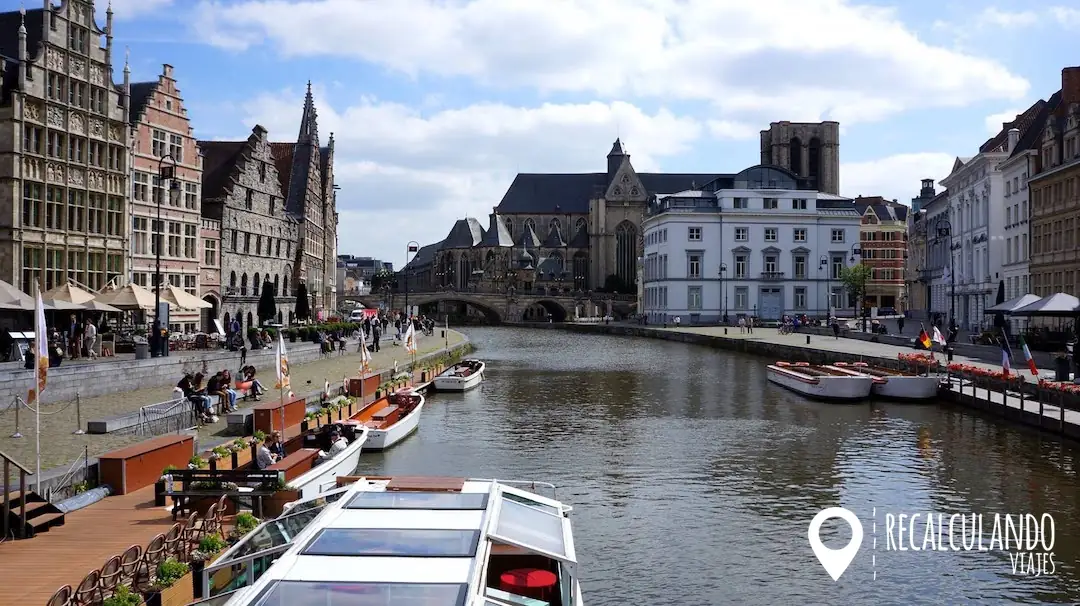
2026 price: about €11 per person for the 40-minute tour from Graslei. Departures are every 15 or 20 minutes in high season and you do not need to book. Hours: from 1 April to 2 November, every day from 10 am to 6 pm; the rest of the year, from 11 am to 4 pm.
We did not do it for lack of time, but many travellers recommend it as the best way to understand why Ghent was a trading power: the city was built facing the water.
17. Portus Ganda and the Reep walk
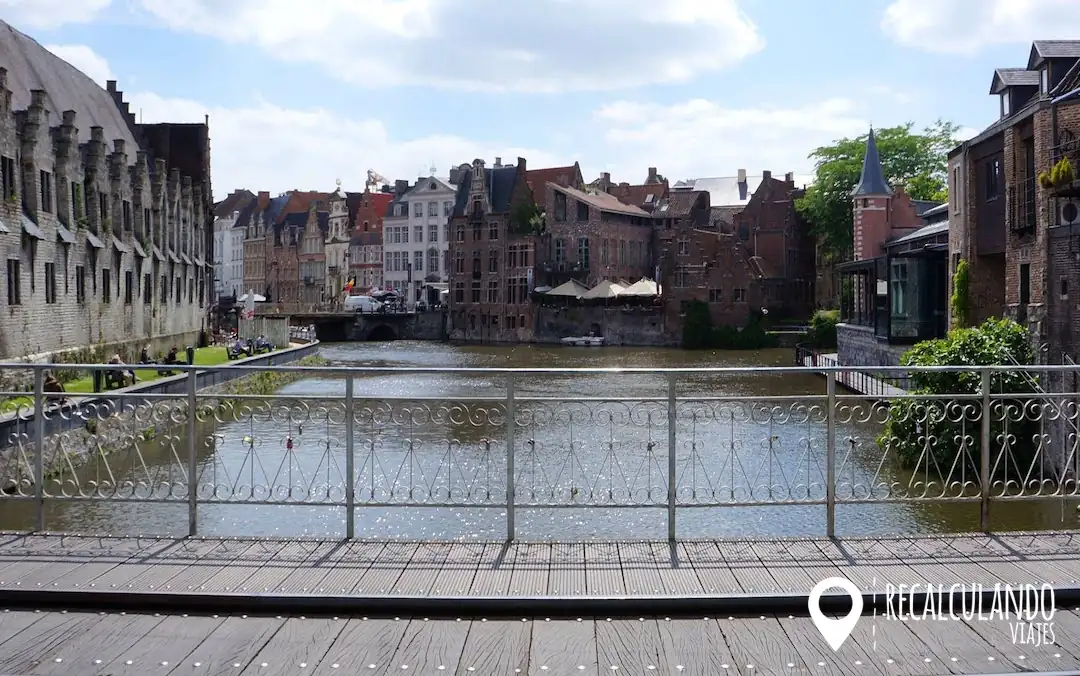
Portus Ganda is where the Lys and the Scheldt meet, and it is where the city was born: the name “Ganda” comes from there, which meant confluence in Celtic. Today it is a very quiet marina, not touristy at all, where you can tell that Ghent is a university city and not a stage set.
The interesting part is how you get there: along the Reep, a canal that was covered with concrete for decades and that the city reopened in 2018. It is now a pedestrian walk with wooden steps down to the water that fills up with students in summer.
18. Citadelpark, the MSK and S.M.A.K.
Citadelpark is the city’s green lung, a twenty-minute walk from the centre or two tram stops. Inside are Ghent’s two big museums, facing each other:
- MSK (Museum of Fine Arts): Flemish painting from the Middle Ages to the 20th century. It is also where the upper register of the Mystic Lamb is being restored in public view
- S.M.A.K.: contemporary art, one of the most respected museums of its kind in Belgium
As we said, we are not big on museums, so we do not tell you this from our own experience. Many travellers recommend the MSK as unmissable if you are interested in Flemish painting.
2026 news worth noting: the Design Museum Gent has been closed since March 2022 for a huge renovation, and it reopens on 3 October 2026 with a new wing called DING, whose ground floor will be free to enter. If you travel after that date, add it to your list. If you travel before, do not waste time going to the door: it is still closed.
Is the CityCard Gent worth it? The real numbers
This is the question we get asked most, so we did the maths with the official 2026 prices.
Current price: €49 for 48 hours and €55 for 72 hours. It includes one entry to the Gravensteen, the Belfry, MSK, S.M.A.K., STAM, the Industry Museum, St Peter’s Abbey, Huis van Alijn and several more; unlimited De Lijn public transport within Ghent; a guided boat trip; one day of bike hire; and the hop-on hop-off water tram.
Two important details:
- The Mystic Lamb is not included: the card gives you a €10 discount on the ticket, and online booking is compulsory, choosing the CityCard option before you buy
- It is not sold online. You can only buy it in person: the tourist office on Sint-Veerleplein, hotels, museums and De Lijn sales points
Now the example costs, for a typical one-day visit:
| Item | Separately | With the 48 h CityCard |
|---|---|---|
| Castle of the Counts | €15 | Included |
| Belfry | €13 | Included |
| Boat trip | €11 | Included |
| Mystic Lamb | €12.50 | €2.50 |
| Public transport | ~€5 | Included |
| Total | €56.50 | €51.50 |
Our conclusion, straight up: for a single day the card barely breaks even, and only if you do the castle, the tower and the boat all on the same day. If you are passing through, like us, and do not go into museums, do not buy it: you lose money.
Now, if you stay two or three days and like museums, everything changes. Adding the MSK, STAM and S.M.A.K., the difference becomes clear, and the bike hire and the boat tip the balance. Under-18s: do not buy it, because they get into almost all the city’s museums for free.
TIP: the first Thursday of each month is Late Thursday and most museums stay open until 10 pm. If you activate the card that day, you get extra hours out of it.
Ghent in one day: a tried-and-tested itinerary
We did Ghent in one day and it was enough for the important things. This is the order we would follow so as not to cross the city twice:
- Morning (9 am to 12 pm): tram to the centre, St Bavo’s Cathedral, the Belfry and the Stadshal
- Midday (12 to 2 pm): Werregarenstraat, Korenmarkt, St Nicholas’ Church and lunch
- Afternoon (2 to 5 pm): St Michael’s Bridge, Graslei, Korenlei, Groot Vleeshuis, cuberdons at the Groentenmarkt, the Gravensteen and Patershol
- Last hours (5 to 8 pm): Vrijdagmarkt, Klein Begijnhof and back to Graslei for sunset
If you travel in winter, with daylight until 5 pm, drop the Klein Begijnhof and Portus Ganda and the day still fits comfortably. To plan the rest of the route, take a look at our guide on how to plan your trip (in Spanish).
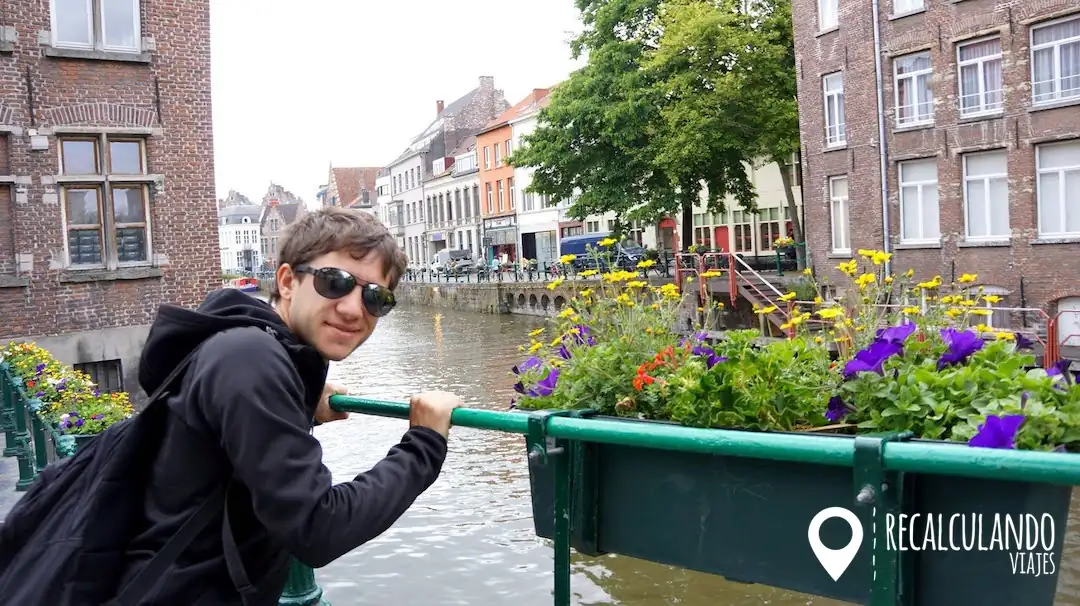
Free things to do in Ghent
One of the city’s best pieces of news: almost all of the best things cost nothing. With this list you have a full day covered without paying for a single ticket:
- Graslei, Korenlei and St Michael’s Bridge
- St Bavo’s Cathedral (the nave, without the altarpiece)
- St Nicholas’ Church
- The outside of the Castle of the Counts and the whole walk around the moat
- Werregarenstraat, graffiti alley
- Klein Begijnhof, a World Heritage Site
- Groot Vleeshuis and the Groentenmarkt
- Patershol, Vrijdagmarkt and the Dulle Griet cannon
- Stadshal, Portus Ganda and the Reep walk
- Citadelpark
Add the free tours, which leave from the Emile Braunplein or the foot of the Belfry. They work on tips, so they are not really free: budget €10-15 per person if the guide was good. They are worth it to find your bearings at the start of the day.
There is also a free evening tour of Ghent, to see the city when the day-trippers have gone.
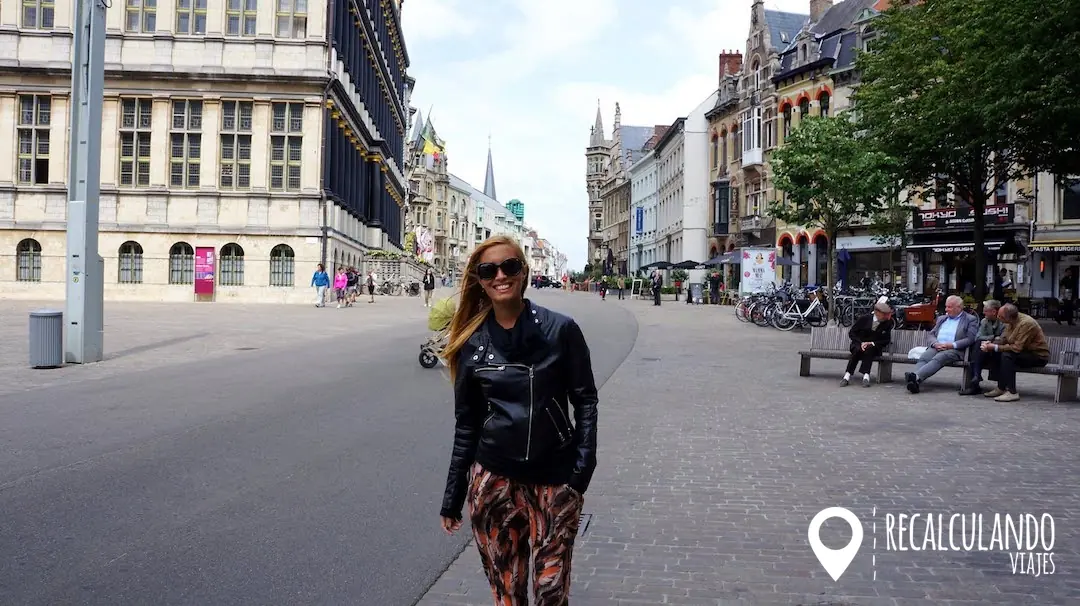
Another essential: staying connected. If you come from outside the European Union, an eSIM gets you off roaming in two minutes. We use Holafly with the code RECALCULANDOVIAJES for a 5% discount. The rest of the active codes are on our discounts page.
Ghent at Christmas: a different city
In December, Ghent is transformed. The Gentse Winterfeesten are the city’s most visited event: more than 150 wooden chalets between Sint-Baafsplein, the Botermarkt, Klein Turkije and the Korenmarkt, with an ice rink under the Stadshal and a big wheel on the Korenmarkt. Entry to the market is free and you only pay for what you eat and drink.
New for 2026: until now the market closed on 31 December. From this edition it runs until the last Sunday of the Christmas holidays, well into January. If your trip falls in the first days of the year, now you will make it.
And if you can choose the year, note the Lichtfestival: Ghent’s light festival is held every three years and the next edition is planned for 2027. The whole city becomes a trail of light installations and it is free. There is no edition in 2026, so do not look for it.
That said, it is really cold and damp. Check our packing checklist before you pack, because the Belgian winter feels colder than the thermometer says.
What to eat in Ghent
Eating well is part of what there is to see in Ghent, even if it does not appear on any list of monuments. The city is known as Europe’s vegetarian capital —it has promoted “Veggie Thursday” for years— but it keeps its traditional Flemish cuisine. What you should not miss:
- Cuberdons (neuzekes): the purple cone-shaped sweets from the Groentenmarkt. The city’s sweet emblem
- Waffles: there are two in Belgium and they are not the same. The Brussels waffle is rectangular, light and eaten with toppings; the Liège waffle is smaller, irregular and has caramelised pearl sugar inside.
- Belgian chocolate: look for the artisan chocolate shops in the centre and avoid the chains on the Korenmarkt, which charge twice as much for the same thing
- Waterzooi: Ghent’s signature stew, with chicken or fish, in a creamy broth with vegetables
- Stoverij: beef stewed in Belgian beer, almost always with chips
- Tierenteyn: the artisan mustard still sold loose since 1790
- Gruut beer: brewed in the city without hops, with a blend of herbs
Where to stay in Ghent
Our recommendation is clear: sleep inside the Korenmarkt – Vrijdagmarkt – Graslei triangle. It is the area closest to the main things to see in Ghent, the centre is largely pedestrian and everything is five minutes away. It is more expensive than the outskirts, but it gives you the city at night, when Ghent is lit up and empty of day-trippers.
TIP: Ghent gets a lot of day-trippers from Brussels and Bruges, so by 6 pm the city empties out. Staying the night completely changes the experience.

Where to stay in Ghent: map and prices
Below is a map with available accommodation and up-to-date prices so you can compare areas before booking:
How to get to Ghent
Ghent does not have its own airport, so you arrive by train. And in Belgium the train is very fast, cheap and leaves every few minutes.
| From | Duration | Approximate price |
|---|---|---|
| Brussels (Central, Midi or Nord) | 30-36 minutes | €10-12 per journey |
| Bruges | 25-30 minutes | €7-10 per journey |
| Antwerp | 50-60 minutes | €10-13 per journey |
| Amsterdam | 2 h 30 to 3 h 30 (with a change) | From €30 if you book ahead |
Up to six trains an hour leave Brussels every day of the year, so do not even bother planning times: just turn up and take the next one. We came from Amsterdam in mid-June and, although it is long, it is a comfortable journey. If you are planning the Dutch leg, our Netherlands section (in Spanish) will help.
From Brussels airports
Belgium has two airports and the difference between them is huge when it comes to reaching Ghent:
- Brussels-Zaventem (BRU), the main one: there is a direct train to Gent-Sint-Pieters from the airport’s own station, on level -1. It takes between 55 minutes and 1 h 10, runs every half hour and costs about €17-20. It could not be more convenient: you get off the plane, take the lift and you are already on the platform
- Brussels-Charleroi (CRL), the low-cost one: it is much further away and has no train of its own. You have to take the shuttle bus to Charleroi-Sud station and from there the train to Ghent. About 2 h 20 in total. If the fare is only slightly cheaper than flying to Zaventem, it is not worth it
Good to know: if you fly to Charleroi, the Belgian railway’s combined ticket already includes the shuttle bus. If you buy them separately, you pay for the shuttle on top.
From the station to the centre
This is the fact most people overlook: Gent-Sint-Pieters station is 3-4 km from the historic centre, not right next to it as in Bruges. You have three options:
- Tram line 1: the most practical. It leaves from the station and drops you at the Korenmarkt in 15 minutes
- On foot: 35-40 minutes along a not very attractive avenue
- By bike: Ghent is a total cycling city and there is bike hire at the station
Good to know: the centre is inside a low emission zone (LEZ) and foreign vehicles must always register, even those that comply with the rules. Leave the car at a P+R on the edge of the city, which includes public transport to the centre. If you are touring Flanders by car, you can compare car rental prices here.
Travel insurance for Ghent
Belgium is a safe country with excellent healthcare, but if you are not an EU citizen medical care has to be paid for and it is not cheap: an emergency consultation can easily cost €200. In nine years of travelling we have never gone without cover.
We always travel with IATI Seguros: it covers you from minute zero, assistance is available 24 hours a day and in most cases you do not have to pay up front. With our link you get a permanent 5% discount using the code RECALCULANDO.
The code only applies if you go in through this link. If you are already on the IATI website, enter it manually in the discount field before paying.
If you want to compare before deciding, we wrote a guide to the best travel insurance for Europe (in Spanish), with the cover that really matters and the cover that is just filler.

Day trips from Ghent: Bruges and Brussels
Here is our honest opinion, because it is the question we get asked most: Ghent and Bruges can be combined in one day, but it is not ideal. We did it and it worked, although in a rush. They are 25 minutes apart by train, so logistically it is very easy; the problem is that each city deserves its time.
If you only have one day for both, the split we recommend is: morning in Bruges, which fills up with tour groups from 11 am, and afternoon and evening in Ghent, which is when it is at its best. The other way round works worse.
And an honest comparison: Bruges is more perfect and more of a postcard, but also more touristy. Ghent is bigger and more real. If we had to choose only one, we would pick Ghent.
Other options from Ghent:
- Brussels: 30 minutes by train
- Antwerp: one hour by train. Belgium’s other underrated city
- Flanders Fields (Ypres): a full day around the First World War sites
If you prefer to go with a guide, you can see the day trips available in Ghent with free cancellation. More ideas for the rest of your trip in our Belgium and Europe sections.
Map of the things to do in Ghent
We made a map with the 18 places to see in Ghent from this guide, in itinerary order, so you can open it on your phone as you walk. Everything is within a twenty-minute walk, except Citadelpark and Portus Ganda.
Frequently asked questions about things to do in Ghent
How many days do you need to see Ghent?
With one full day you see the essentials: the historic centre can be explored entirely on foot. If you want to go into the castle, climb the Belfry and see the Mystic Lamb without rushing, two days is ideal. We did it in one day and it was enough, but we were left wanting more.
Which is better, Ghent or Bruges?
Bruges is more perfect and picture-postcard, but also much more touristy. Ghent is bigger and has its own university life, so it does not empty out when the day-trippers leave. If you have to choose only one, we pick Ghent. But both are worth it. Ideally, see both: they are 25 minutes apart by train.
How much does it cost to enter the Castle of the Counts of Flanders?
An individual ticket to the Gravensteen costs €15 in 2026, with an audio guide included. 19 to 25-year-olds pay €7.50, 13 to 18-year-olds €3 and it is free up to age 12. It opens every day from 10 am to 6 pm, with last admission at 4:40 pm.
Can you see Ghent for free?
Yes, and very well. Graslei, Korenlei, St Michael’s Bridge, the cathedral nave, St Nicholas’ Church, the outside of the castle, Werregarenstraat and the Klein Begijnhof cost nothing. With that you have a full day without paying for a single ticket.
How do you get to Ghent from Brussels?
By direct train from Brussels Central, Midi or Nord to Gent-Sint-Pieters, in 30 to 36 minutes and for about €10-12 per journey. There are up to six an hour, so you do not need to book. From the station, tram line 1 drops you at the Korenmarkt in 15 minutes.
Is it worth paying to see the Mystic Lamb?
It depends on how interested you are in Flemish painting. Bear in mind that a restoration has been under way since 2023: seven panels have been replaced by photographic reproductions and the upper register is being restored in public view at the MSK, with completion expected in spring 2027. A ticket to the altarpiece only costs €12.50 and the augmented reality version €16.
Is the CityCard Gent worth buying?
It depends on how many days you stay. It costs €49 for 48 hours and €55 for 72 hours. For a one-day visit it barely breaks even, and only if you do the castle, the belfry and the boat trip. For two or three days visiting museums such as the MSK, STAM and S.M.A.K., it is clearly worth it. Under-18s do not need it because they get into almost all museums for free.
How do you get to Ghent from Brussels Airport?
From Brussels-Zaventem there is a direct train to Gent-Sint-Pieters from the airport’s own station, in 55 minutes to 1 h 10, every half hour, for about €17-20. From Charleroi you have to combine the shuttle bus to Charleroi-Sud and then the train, about 2 h 20 in total.
When is the best time to visit Ghent?
From May to September, with June and September the most balanced: very long days and fewer people than in July. December is a beautiful alternative for the Gentse Winterfeesten. And from 16 to 25 July 2027 it is the Gentse Feesten, with the city in festival mode.
Conclusion: why Ghent won us over
After going through the 18 places to see in Ghent in this guide, the conclusion is simple: it is one of those cities you visit “in passing” and end up regretting you did not give it more time. That is what happened to us.
It has the medieval old town you are looking for, the towers, the canals and the guild houses reflected in the water. But it also has thousands of students, an alley where graffiti is legal and a bar that asks for a shoe in exchange for a beer. Medieval and modern at the same time: that mix is very rare.
If you are planning your route through Belgium, do not leave it as a three-hour stop between Brussels and Bruges. Give it a full day. And if you can, sleep one night: at six in the evening, when the coaches leave, Ghent becomes something else.
Have you been? Did we leave any place out? Tell us in the comments: we always update these guides with your suggestions.
ℹ️ **Total Transparency**
This article contains affiliate links. If you book through these links, we may receive a small commission at no additional cost to you. We only recommend services that we use on our trips and that we trust. This helps us keep this blog free and continue creating useful content for you. Thanks for your support!
🔗 Resources & Useful Links for your trip to Ghent
Do you have questions or want to add your own recommendations on things to do in Ghent?
💬 Leave your comment or write to us, we love reading other travelers’ experiences.
Thank you very much for being part of this adventure!— Nanu & Facu 🌎 | Recalculando Viajes 💜