
| 11 min read | by Nanu y Facu | Blog, Travel Tips
Wondering how to plan a trip without missing anything? We have been travelling the world for more than 9 years (55 countries since 2017) and, trip after trip, we have fine-tuned the tools we use to organise everything. In this guide we walk you through the order we follow and the resources we use at every step: budget, entry requirements, travel insurance, accommodation, transport, car rental, flights, mobile data and tours. Updated in November 2026.
🌍 Travel Insurance: 5% Off with IATI Seguros! 🌟
Take advantage of this offer and travel safe.
Summary: how to plan a trip in 2026
| Category | Key details |
|---|---|
| Budget and dates | Free travel budget calculator |
| Entry requirements | EES operating since 10 April 2026; ETIAS expected in the last quarter of 2026 |
| Travel insurance | IATI, with 5% off through our link |
| Accommodation | Booking to compare and Airbnb for whole apartments |
| Transport | Omio, Rome2Rio and Google Maps |
| Car rental | DiscoverCars |
| Flights | Google Flights and Skyscanner |
| Mobile data | Holafly eSIM |
| Tours | Civitatis, with guided tours and excursions in English |
📑 In this guide · 11 sections
1. Start with your budget and dates
Before you look at flights or accommodation, put numbers on your trip: how much you can spend and how many days you have. With clear numbers from day one it is much easier to choose a destination, a season and a type of accommodation. You can use our free travel budget calculator (in Spanish).
Once you have a destination, our free packing checklist helps you make sure you forget nothing.
2. Entry requirements for Europe in 2026: EES and ETIAS
If you are not a citizen of the European Union and you travel to Europe for a short stay (up to 90 days in any 180-day period), two new systems are worth knowing about before you book:
- EES (Entry/Exit System): it operates in all Schengen countries and digitally records your passport details, your facial image, your fingerprints and your entry and exit dates.
- ETIAS: an online travel authorisation that travellers from countries that do not need a visa to enter the Schengen area (for example, US and UK citizens) will have to apply for before departure, and which will also cover Cyprus. It is expected to start in the last quarter of 2026 and the exact date has not been announced yet. There will be a one-time fee, and it will be valid for 3 years or until your passport expires, whichever comes first.
When ETIAS is up and running, apply only through the official website or the official app. Until then, be wary of websites offering to process it for you.
3. Travel insurance: don’t leave without cover
Travel insurance is an essential requirement for travelling without worries. If you already have cover through your credit card, call to check the limits and the maximum length of cover. If you need to buy a policy, we travel with IATI Seguros: through our link the 5% discount is applied automatically, with no code to enter. Plans and prices depend on your country of residence, so check what is available for you when you get your quote.
Insurance has worked well for us on several trips, for example in Poland, Spain and Portugal: we were told which medical centre to go to (and paid nothing) or sorted it out through reimbursement when there was none nearby. We never had a problem.
What to know before you buy
- Schengen visa: if you need one, you must show medical travel insurance with minimum cover of €30,000 valid across the whole Schengen area.
- In an emergency, the first thing to do is call the insurer on the contact number in your policy.
- It is not health insurance: travel insurance gets you through the emergency.
- Long treatments and prostheses are usually excluded from cover.
- Buy it before you leave home.
Get your IATI quote with 5% off
➜ More info: Best travel insurance: how to choose it


4. Accommodation: how we search
After flights, accommodation is usually the biggest expense of a trip, and for us a good home base matters a lot. Our “where to stay” guides, such as where to stay in Budapest and where to stay in Dublin, can help you choose well, and you will find more advice in our travel tips.
Booking: compare prices and review scores
On Booking we compare prices and look for deals. For short stays we search for hotels or apartments for 2 people and check that they include wifi, that they are close to the main sights and which payment method they accept.
- Look at each property’s review score and always read the reviews.
- Some properties offer “pay at the property” (no prepayment), which many travellers find useful.
Airbnb: whole apartments and longer stays
On Airbnb hosts rent out their home, an apartment or a room. We started using it in March 2014, on our first trip to Europe, and we have used it in many destinations since. We usually rent whole apartments; for a few days, and to save money, we have also used private rooms.
5. Getting around: from the airport to your accommodation and between cities
Once your accommodation is booked, think about how you will get there: from the airport, the train station or the bus terminal, and then between cities. Don’t leave it to the last minute.
Airport-to-hotel transfers with Civitatis
To get from the airport to your accommodation without hassle you can book a private or shared transfer with Civitatis, with the price fixed before you leave.
➜ BOOK YOUR AIRPORT-HOTEL TRANSFER ON CIVITATIS (CLICK HERE)
Omio: trains, buses and flights in Europe
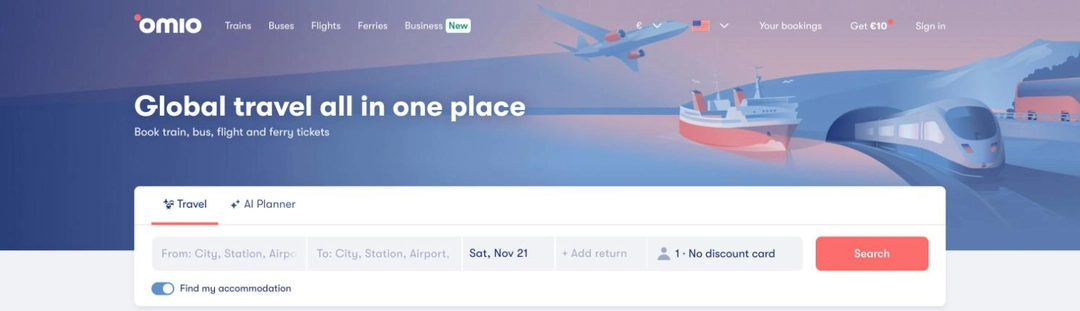
With Omio you can compare schedules and prices for trains, buses and flights in one place, which is very handy for planning routes between European cities.
Rome2Rio: every way to get there
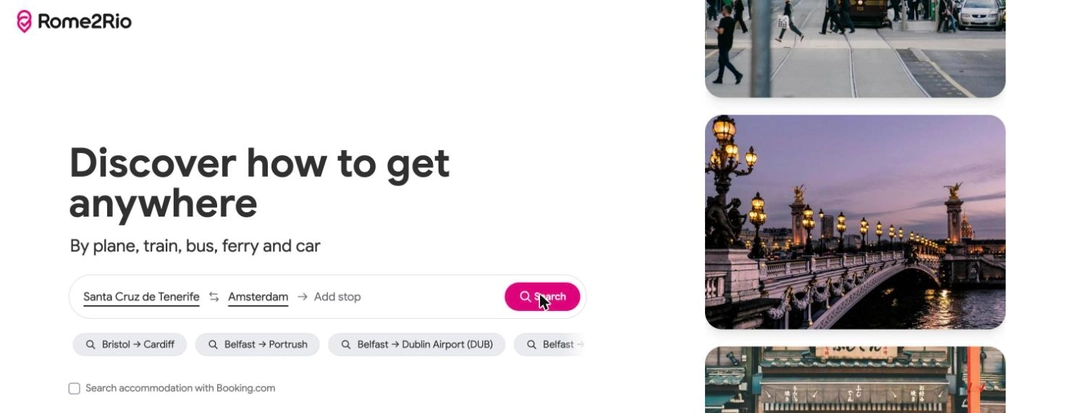
With Rome2Rio you enter your starting point and where you want to go, and it shows you the options and combinations of transport (plane, train, bus and car) with an estimated price.
Google Maps: the app we use the most
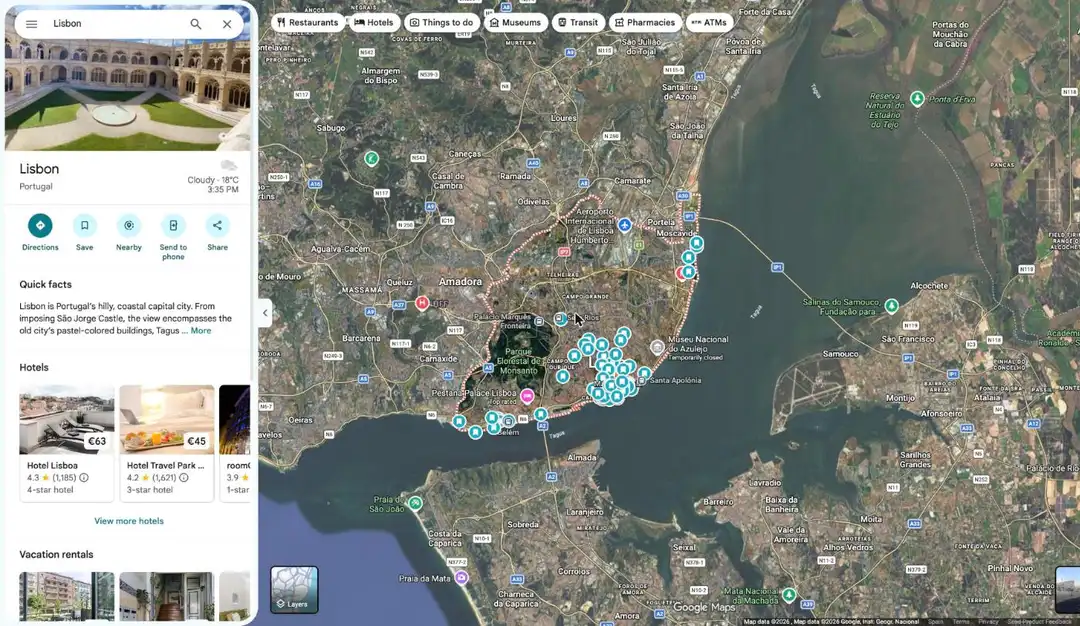
Google Maps is the app we use the most day to day: before the trip to plan, during the trip to get around on foot, by public transport or by car, and after the trip to create the custom maps on Recalculando. It works online and offline, on the computer and on your phone, and in many cities it shows public transport, timetables and connections.
Important in China: Google services are blocked and the maps have a location offset, so in Beijing and Shanghai it did not work well for us to find our way around. We used other apps there, such as Baidu.
6. Car rental
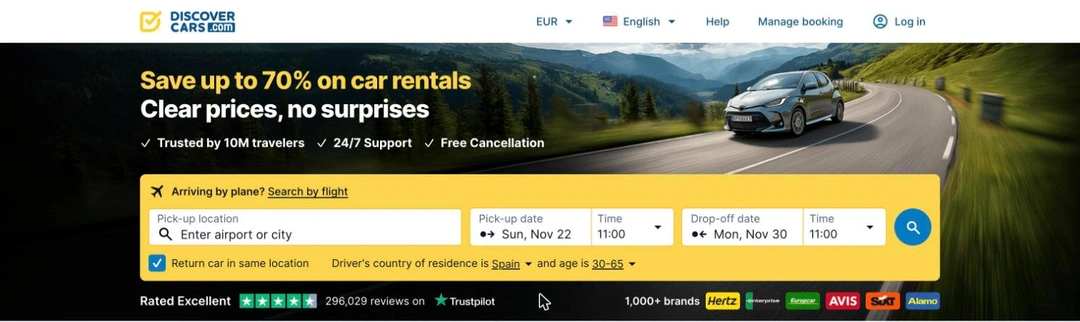
When we want to rent a car, it is one of our first searches: we compare prices on DiscoverCars and sometimes also check the direct price on the website of the cheapest company.
Companies we have used in Europe
- Goldcar: very cheap, but read all the conditions carefully.
- Sixt
- Hertz
- Budget
Renting a car in New Zealand
You drive on the left and the cars have the steering wheel on the right, which is very different from the US and most of Europe. Don’t be afraid: like everything, you get used to it, but pay close attention and drive rested and calm.
In our case the car was an automatic, so the gearbox was not a problem, and when we picked it up they made us do a practice lap. The roads are excellent and the scenery is stunning. To drive we used our Argentine driver’s licence together with an International Driving Permit; always check which documents each country requires.
Our experience with Ace Rental Cars: we booked online and the office is outside the airport. They had a very good price compared with the main brands: it comes out a little cheaper because the cars are usually not new, but they were perfectly maintained, clean and automatic. We rented in Auckland for almost a month and returned the car in Christchurch; they picked us up at our accommodation at no cost and we had no problems at all. For us, a company we can recommend.
Don’t miss the video: driving in New Zealand.
7. How to find cheap flights
Finding cheap flights is always a challenge, but there are good tools to help.
Google Flights
Google Flights lets you search for cheap flights, see which airlines fly a route, compare prices by date and explore a map with prices. You can also select several airports to find the best price. We find it highly recommendable.

Skyscanner
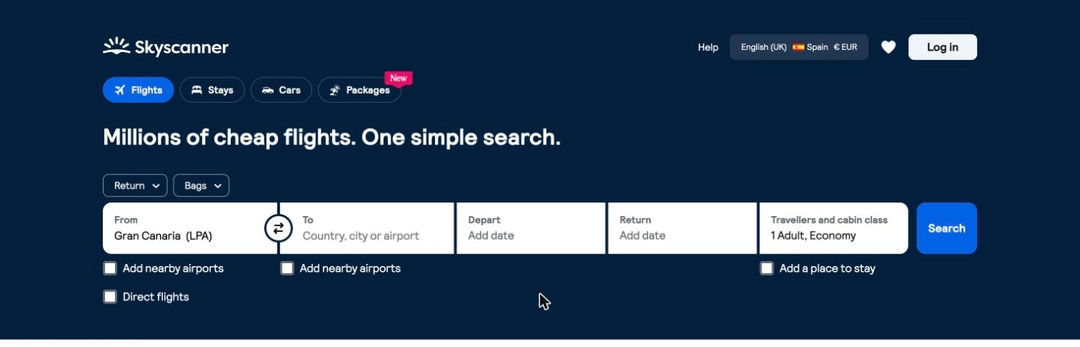
Skyscanner is a flight search engine covering many airlines and multi-city trips. It shows the price for a whole month or the cheapest month, lets you add nearby airports and set up price alerts.
8. Mobile data: eSIM for travel
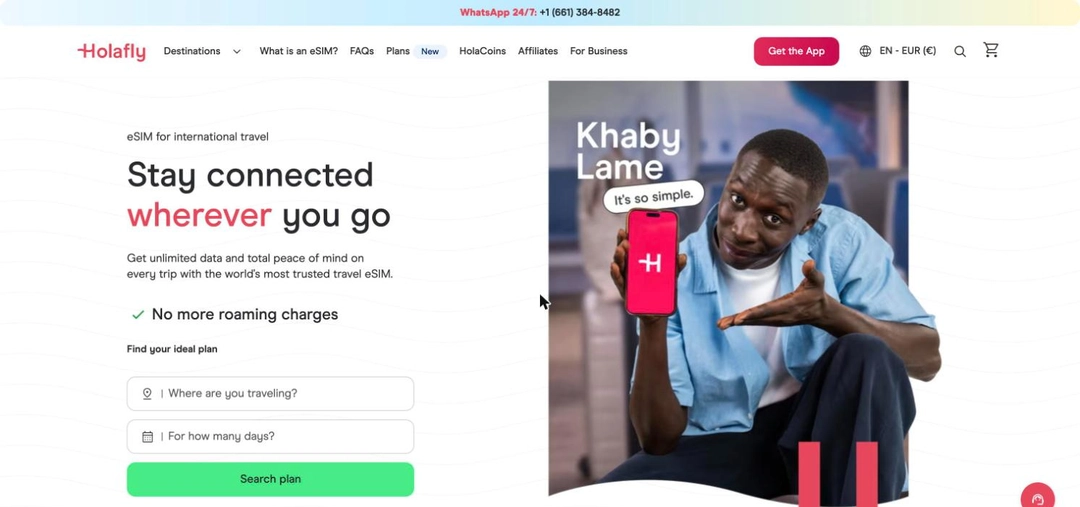
Arriving in another country with data from the first minute saves you from hunting for a SIM card shop and relying on wifi. With an eSIM you install the plan before you travel and activate it when you land. We recommend Holafly, with 5% off through our link. Before buying, check that your phone supports eSIM and is unlocked.
10. Accessories we pack
People often ask us which accessories we carry day to day. This is our list:
- Portable external hard drive (Western Digital, 4 TB, USB 3.0), to store photos, videos and files.
- Packing organisers for your suitcase or backpack: a set of 6 in different sizes, for dirty clothes or toiletries.
- Tripod for phone and camera, 106 cm, with a Bluetooth remote, a phone holder and a carry bag.
- WiFi range extender with external antennas, useful when the router in your accommodation is far from your room; it happened to us in some places.
And so you forget nothing, use our free packing checklist.
Frequently asked questions about how to plan a trip
How do I plan a trip step by step?
Set your budget and dates, check the entry requirements, buy travel insurance, book flights and accommodation and, finally, organise how you will get around, mobile data, a rental car if you need one, and tours.
What is the EES and when did it start?
The Entry/Exit System (EES) digitally records the passport details, facial image, fingerprints and entry and exit dates of non-EU travellers on short stays. According to the European Commission, it has been fully operational in all Schengen countries since 10 April 2026.
When does ETIAS start?
According to the European Commission, it is scheduled for the last quarter of 2026 and the exact date will be announced later. When it exists, apply only through the official ETIAS website or app. There will be a one-time fee, and it will be valid for 3 years or until your passport expires, whichever comes first.
Do I need travel insurance to visit Europe?
If you need a Schengen visa, you must prove you have medical travel insurance with minimum cover of €30,000 valid across the whole Schengen area. In other cases, check the entry requirements of the country. Either way, we recommend always travelling with insurance.
Where can I find cheap flights?
We use Google Flights, which lets you compare prices by date and explore a map with prices, and Skyscanner, which shows the cheapest month and lets you set price alerts.
What should I check when booking accommodation?
The review score and what other travellers say, whether it includes wifi, how close it is to the sights and the payment method. Some properties offer “pay at the property”, so you pay when you arrive.
Conclusion: plan ahead and travel with peace of mind
Planning a trip well is a matter of going step by step: budget, entry requirements, insurance, accommodation, transport and flights. With these tools, which we use ourselves on our trips, you will have the essentials sorted before you leave. If you need ideas for choosing a destination, start with our complete guide to Europe.
ℹ️ **Total Transparency**
This article contains affiliate links. If you book through these links, we may receive a small commission at no additional cost to you. We only recommend services that we use on our trips and that we trust. This helps us keep this blog free and continue creating useful content for you. Thank you for your support!
🔗 Resources & Useful Links for your Trips
Do you have questions or want to add your own recommendations on how to plan a trip?
💬 Leave a comment or write to us, we love reading about the experiences of other travelers.
Thank you very much for being part of this adventure!— Nanu & Facu 🌎 | Recalculando Viajes 💜