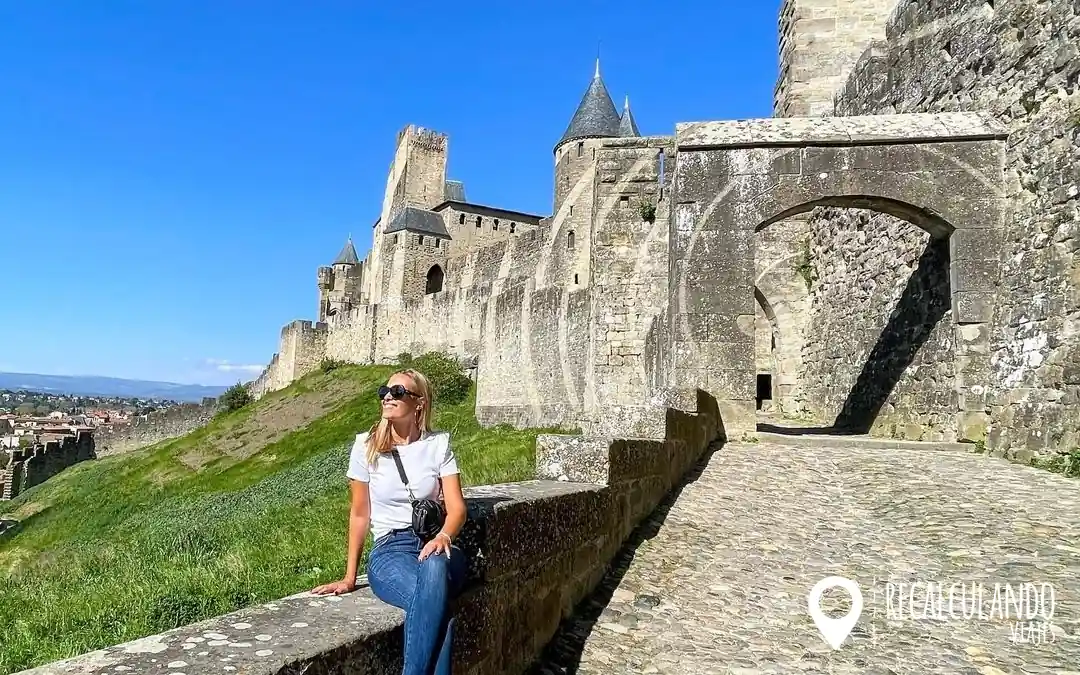
If you’ve ever dreamed of walking the streets of a medieval castle that looks like it came out of a storybook, then Carcassonne is the place you’re looking for. We are Recalculando Viajes, a couple of Argentine digital nomads who have been traveling the world for more than 8 years, and when we arrived in this city in southern France… we were simply speechless. We fell in love with it so much that we stayed for 10 whole days, and in this guide, we are going to tell you absolutely everything about things to do in Carcassonne so you can make the most of every minute of your visit.
Declared a UNESCO World Heritage Site in 1997, Carcassonne is one of the best-preserved medieval cities in the world. With its towers, walls, cobblestone alleys, and a history spanning more than two thousand years, this place has something special that surprises from the first glance. Ready to explore it with us?
Summary: Things to do in Carcassonne
| Question | Answer |
|---|---|
| How many days are needed? | We recommend at least 2 days; 3 is ideal to enjoy the citadel and the Canal du Midi without rushing. |
| Is Carcassonne worth visiting? | Yes, absolutely. It is one of the best-preserved medieval complexes in Europe and a feast for history lovers. |
| What is the best time? | Spring and autumn. Avoid July and August if you don’t want to share the walls with thousands of people and suffer the southern heat. |
| Is it an expensive destination? | Moderate. Eating inside the Cité is expensive, but there are excellent options in the Bastide Saint-Louis (Lower Town). |
| Can it be explored on foot? | Yes, the historic center is 100% pedestrian. Just be prepared for the hills and cobblestones (wear comfortable shoes). |
| Where should you stay? | Inside the Citadel for a storybook experience, or in the Lower Town to stay on budget and be close to the station. |
| What are the must-sees? | The Cité, the Château Comtal, the Basilica of Saint-Nazaire and a walk along the Canal du Midi. |
🌍 Travel Insurance: 5% Off with IATI Seguros! 🌟
Take advantage of this offer and travel safe.
The Medieval City of Carcassonne: The Heart of It All
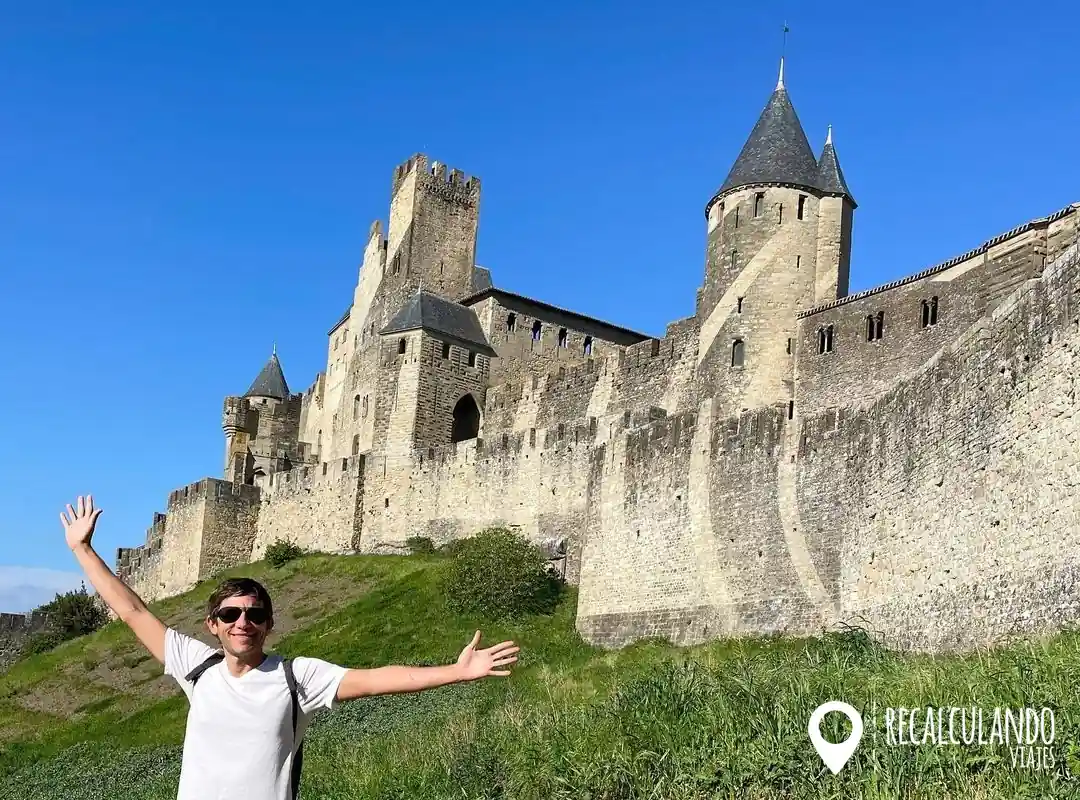
It’s impossible to talk about things to do in Carcassonne without starting with its most prized jewel: the Cité Médiévale. This walled city that appears on a hill is, without a doubt, one of the most impressive medieval complexes in all of Europe. It has a double wall with 52 towers, a perimeter of almost 3 kilometers, and a history that begins back in Roman times.
The first thing to know is that access to the Cité is completely free. Yes, you read that right. You can enter, walk through its streets, take photos, and soak up the medieval atmosphere without paying a single euro. What does have a cost is visiting the interior of the Château Comtal and walking the walls from the inside, but we’ll talk more about that later.
Practical tip: if you stay near the Cité (as we did for 10 days), you will be able to enjoy that magic at any time of the day or even at night (highly recommended). Waking up with a view of the medieval towers is priceless.
Porte Narbonnaise
The main gate to enter is the Porte Narbonnaise, and it is the most photogenic. As soon as you cross that gate, the modern world disappears. The cobblestone streets, stone facades, craft shops, and restaurants with terraces surround you in a unique atmosphere.
The best time to visit? Early in the morning or at sunset, when the light is magical and tour groups haven’t yet invaded the alleys.
Porte d’Aude
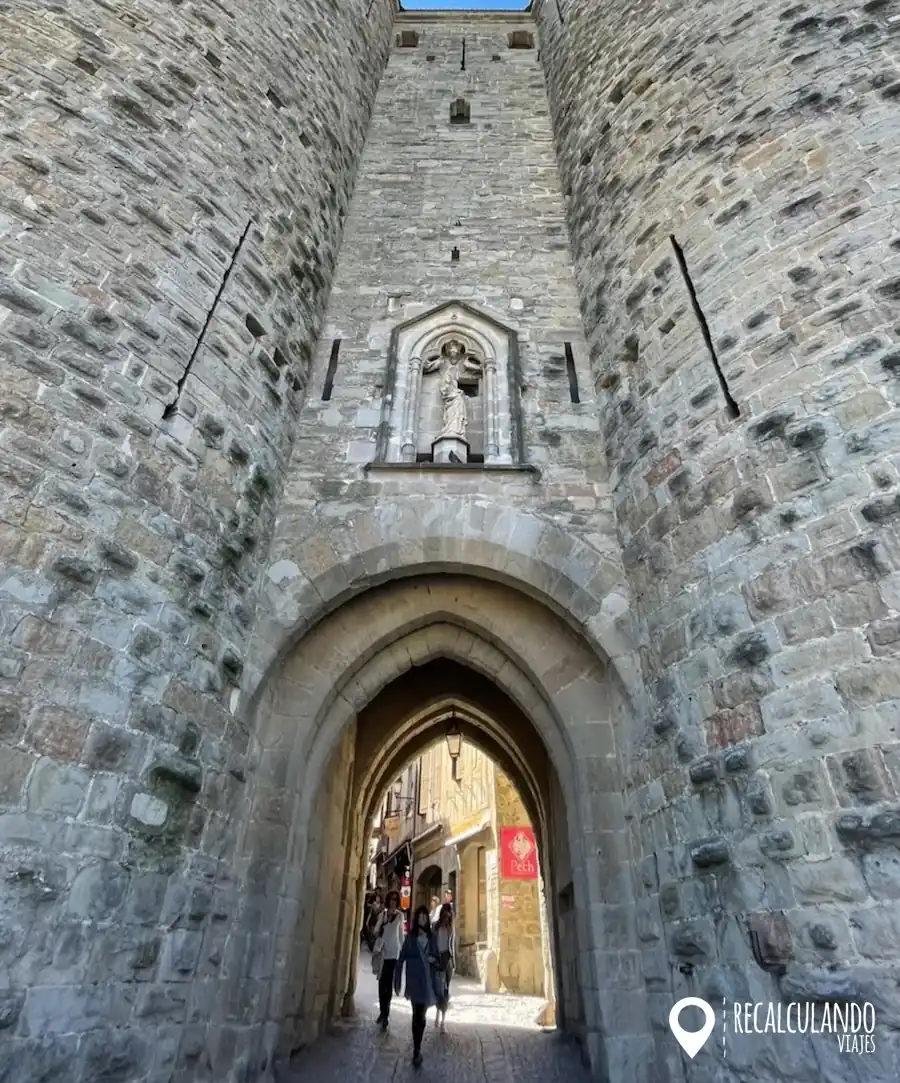
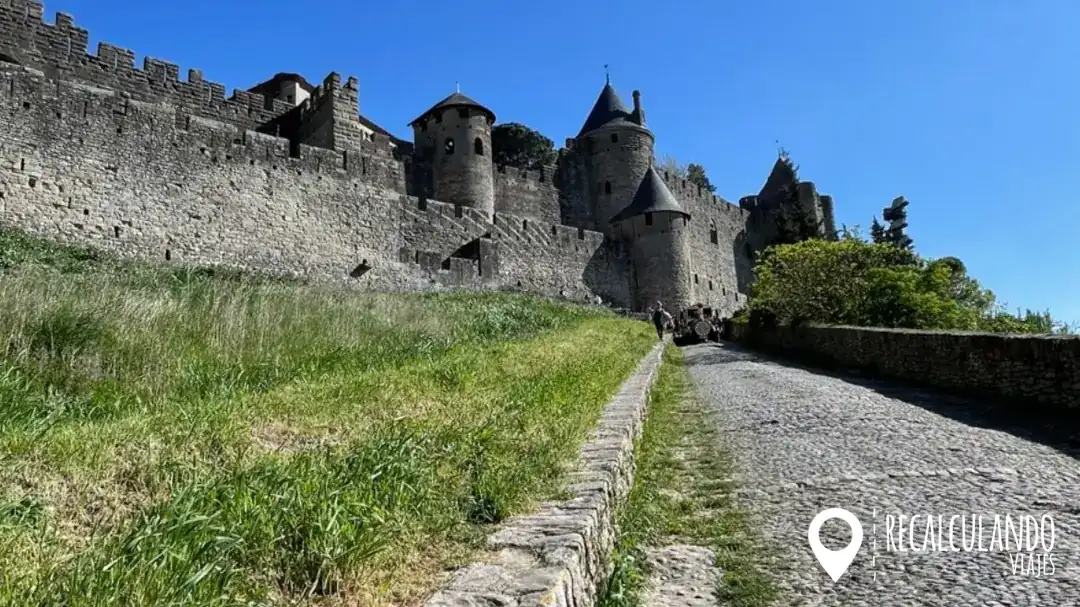
The Porte d’Aude was, without a doubt, our favorite entrance to the medieval city. Much less crowded than the main one, it has a more authentic and quiet air that makes you feel like you are discovering a secret corner of Carcassonne. Surrounded by vegetation and with incredible views, arriving this way is almost like traveling back in time. If you want to avoid crowds and have a more special experience, we recommend entering or exiting through this gate at least once.
☝️ Mind you, for this gate, the path is all uphill.
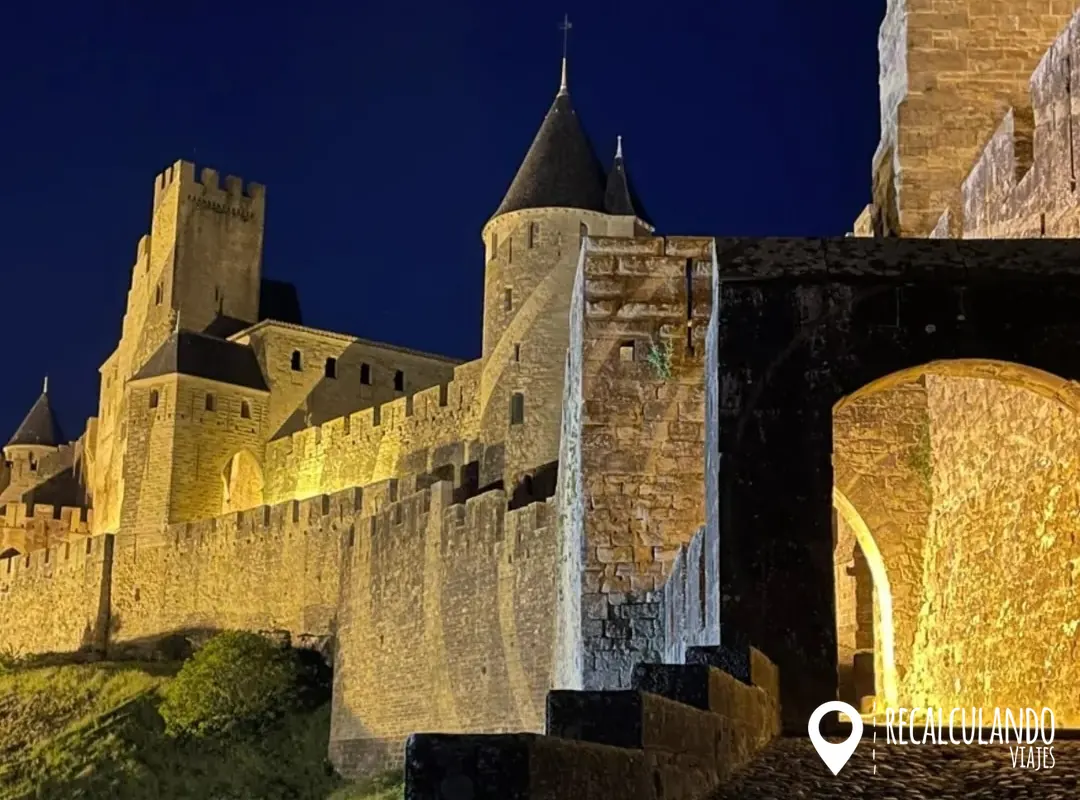
Château Comtal: The Fortress Within the Fortress
Inside the Medieval City is the Château Comtal, which is basically a fortress within a fortress. It was built in the 12th century by the Counts of Carcassonne and later reinforced by the kings of France. Today it serves as a museum and is one of the city’s must-sees.
The entrance costs around 13 euros per person (2026 price), and includes access to the palace, the archaeological museum, and a section of the walk along the walls.
The tour of the outer walls from the castle takes approximately one hour, and the views you get are simply spectacular: the Languedoc countryside, the Pyrenees in the background on clear days, and the lower city of Carcassonne.
Inside the museum, you will find medieval sculptures, archaeological pieces, and an illuminated model of the city that helps you understand what the Cité was like in its heyday. For history lovers, it is a total pleasure.
- Hours: 9:30 AM to 5:00 PM (low season) / until 6:30 PM (high season)
- Price: ~13€ adults / free for those under 18
- Recommendation: Arrive before 10 AM to avoid queues
🛡️ Travel safely in France with IATI Insurance
For any trip through Europe, we always book our insurance with IATI Insurance. As readers of Recalculando Viajes, you get an exclusive 5% discount, which can be combined with current promotions.
The Basilica of Saint-Nazaire: Romanesque and Gothic Art in One Place
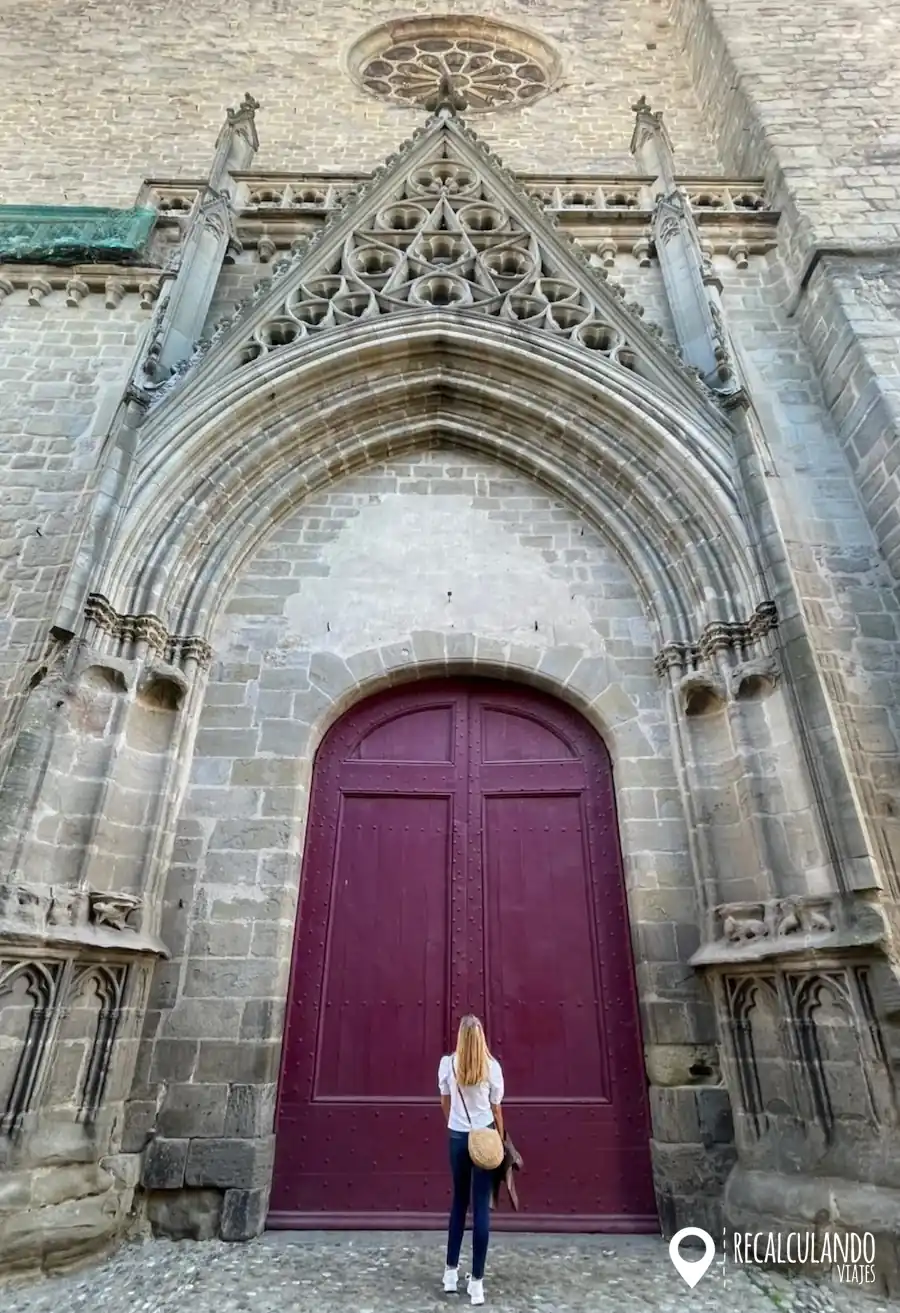
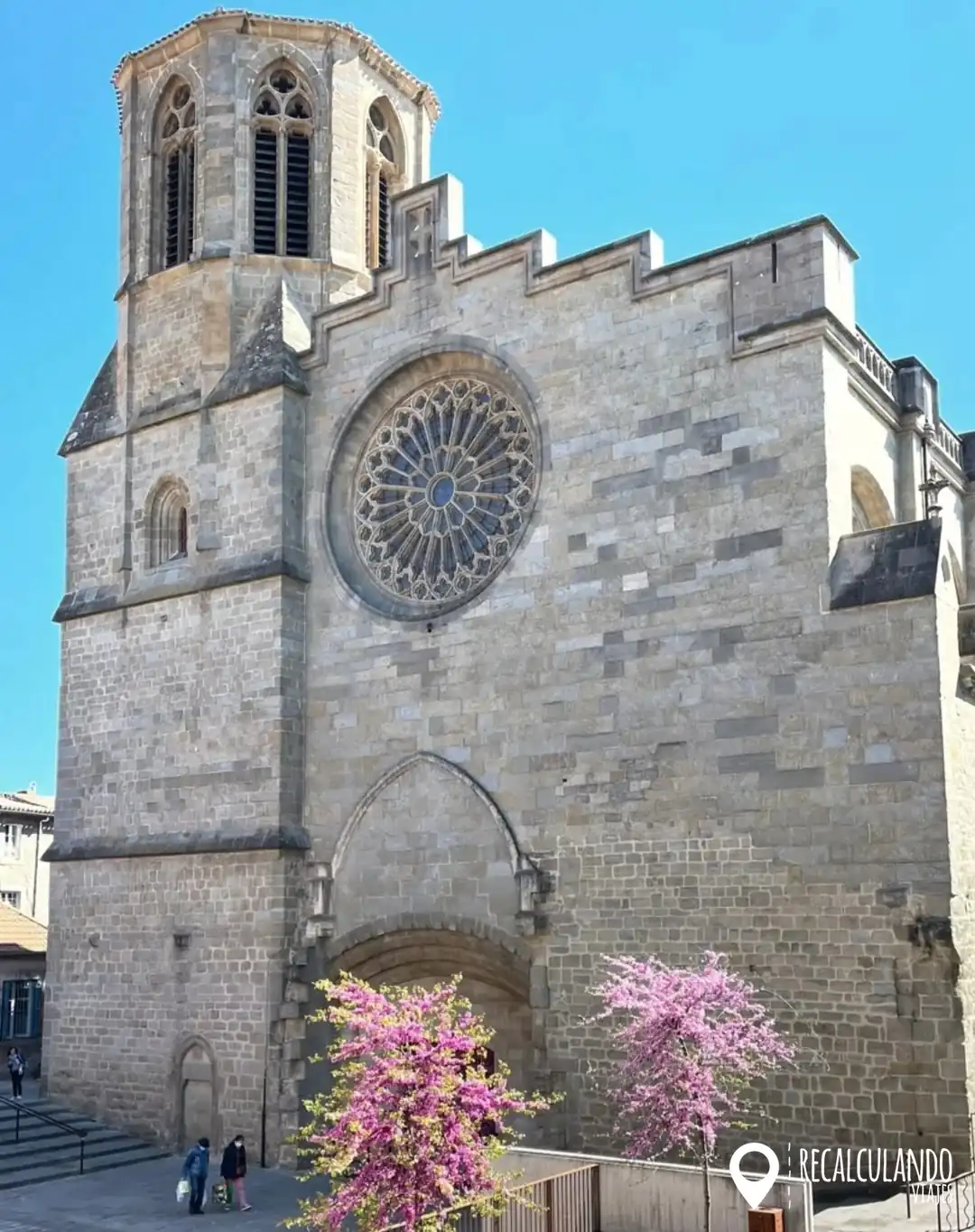
Inside the Cité, hidden in the quietest part of the medieval city, is the Basilica of Saint-Nazaire, an architectural jewel.
This basilica is a unique example where the Romanesque style (in the main nave, from the 12th century) and the Gothic style (in the transept and the choir, from the 13th to 14th centuries) coexist. The transition between both styles is visible to the naked eye and is fascinating for any architecture enthusiast. The Romanesque nave has that characteristic solidity and sobriety, while the arms of the transept open up with the lightness typical of the Gothic style.
But what struck us the most were its medieval stained-glass windows. They are among the most beautiful and best-preserved in France, and when the sunlight hits them in the mornings… it is simply sublime. They say they are over 700 years old, and seeing them in person gives a sense of connection to history that no photo can convey.
The entrance is free, and the interior invites silence and contemplation. There are signs asking for silence, which we truly appreciate. If you go on a Sunday, you can attend mass and hear the chants within that incredible space.
The Walls and Towers: A Walk Through Medieval Military History
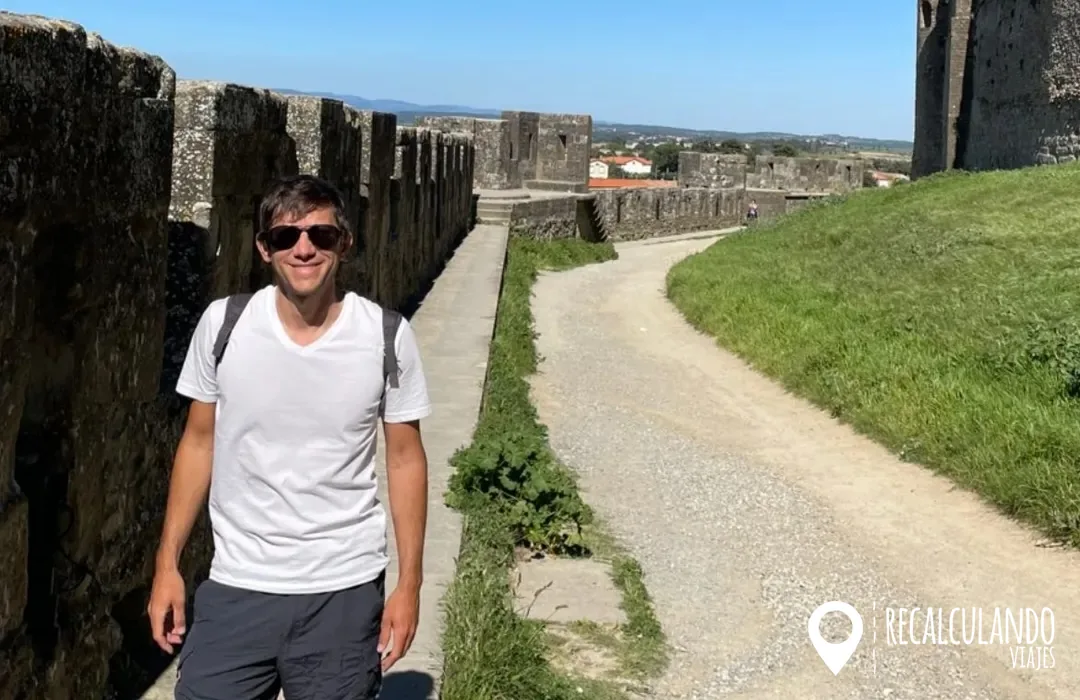
One of the most exciting moments of our 10-day stay was walking the walls of the Cité. With a ticket to the Château Comtal, you can walk part of the parapet walk (the path on top of the walls), otherwise there are several free sections.
The Cité has a double wall system with a walkway between the two called les lices, which in the Middle Ages served to trap the enemy who managed to break through the first defense. Walking through that space is a very unique experience: on one side are the inner walls with the towers, and on the other, the outer walls. In some sections, vegetation grows between the stones and gives it an air of romantic neglect that we loved.
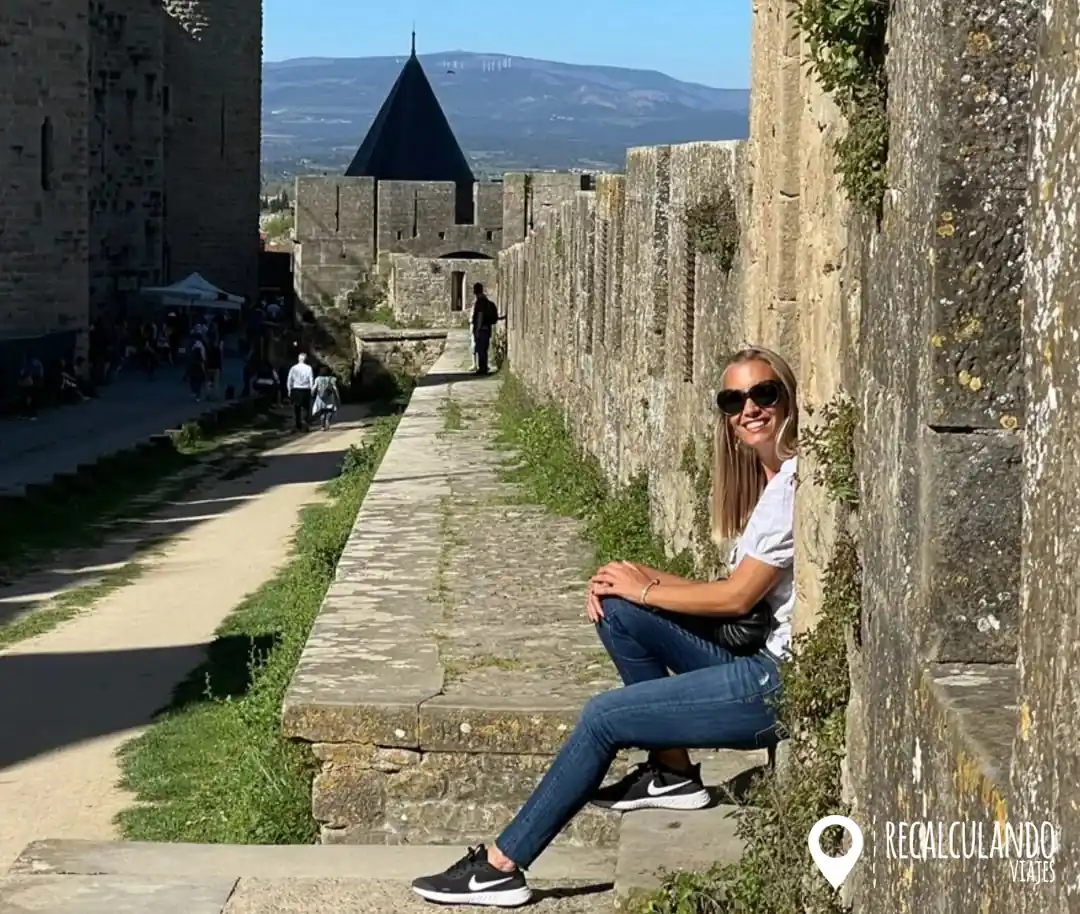
In total, the Cité has 52 towers from different styles and eras, reflecting the different construction periods. Some have that circular shape characteristic of Gallic or Roman architecture, while others are clearly medieval. The architect Viollet-le-Duc, who restored the city in the 19th century, added elements that are recognizable today (such as the conical peaks of some towers) that generate debate among historians, but which have become part of the visual identity of Carcassonne.
The Pont Vieux: The Best Viewpoint of the Medieval City
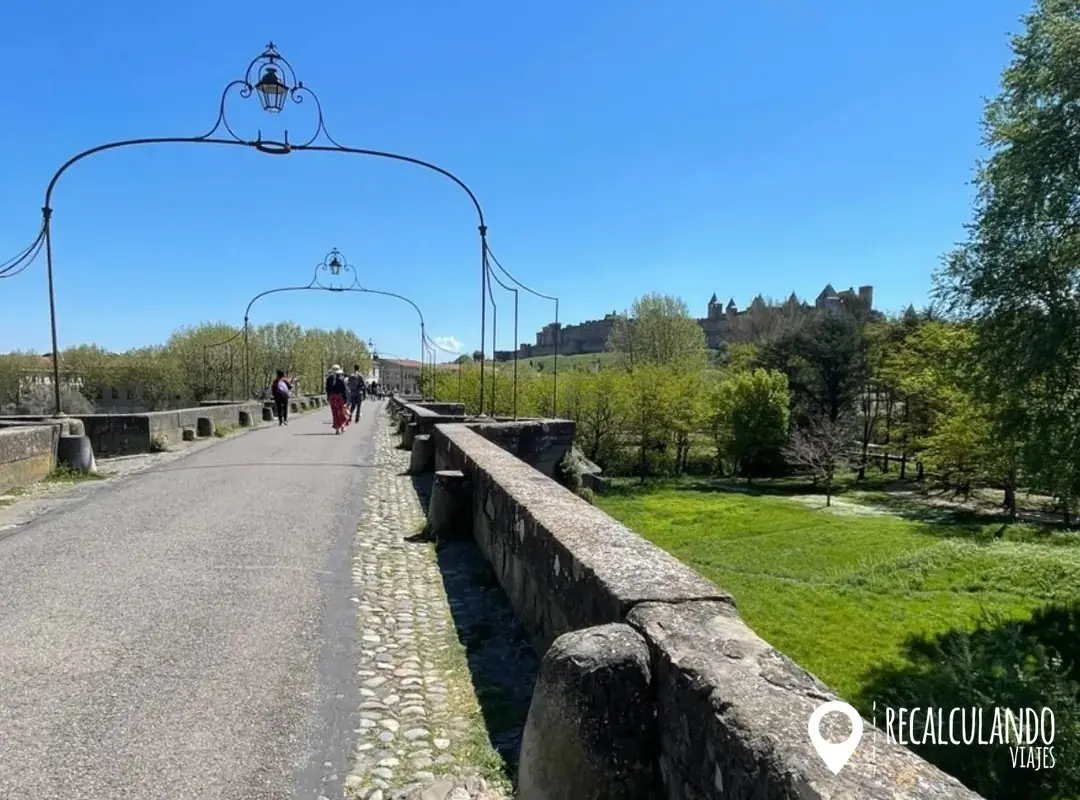
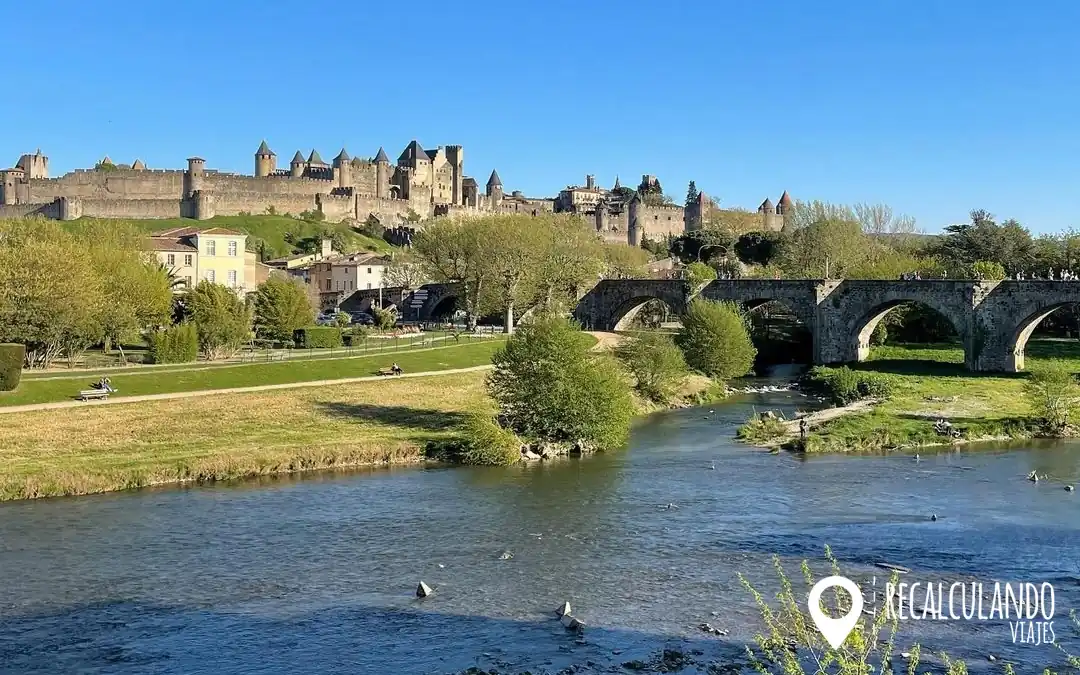
If there is one photo that everyone takes from Carcassonne, it is the view of the Cité from the Pont Vieux (Old Bridge), a 14th-century pedestrian bridge that crosses the Aude River and connects the lower city with the Trivalle neighborhood at the foot of the medieval hill.
This stone bridge has semicircular arches and a perfect perspective over the walls and towers of the Cité. At sunset, when the sun tints the medieval stones orange and pink, the image is absolutely unreal. We went several times at different times of the day and never got tired of that view.

The walk from the Pont Vieux to the Medieval City along Rue Trivalle is very picturesque. It is a quiet street, quite far from the massive tourist circuit, with colorful houses and small gardens. An ideal way to reach the Cité while avoiding the most crowded path.
On the sides of the bridge, there are small green spaces where people sit to rest, read, or simply watch the Aude River pass by. In spring and summer, the place is full of life and has a very relaxed atmosphere. Entry is free and open 24 hours.
The Bastide Saint-Louis: The Lower City That Few Visit
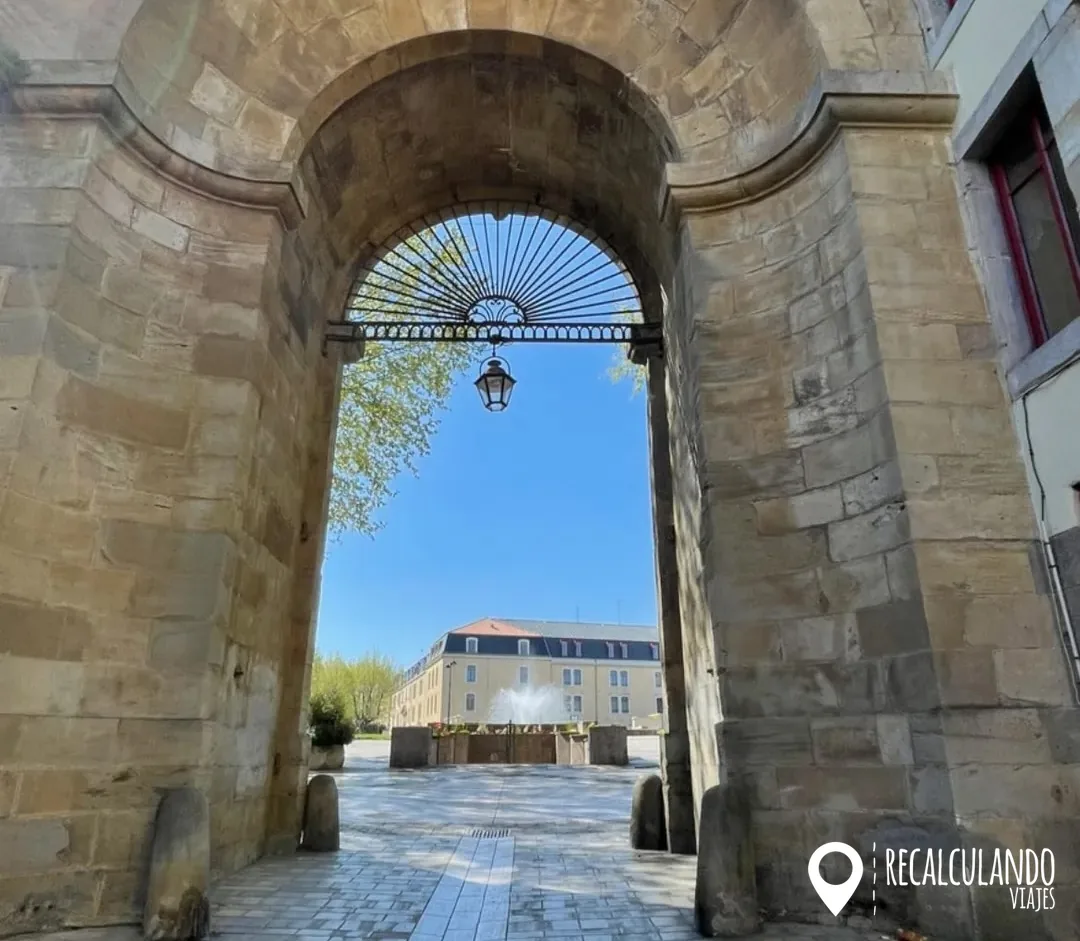
Many tourists make the mistake of going to Carcassonne, seeing the Cité, and leaving without exploring the Bastide Saint-Louis, which is the lower city built in the 13th century by the French King Louis IX (Saint Louis). And in truth, they miss out on something very special.
This part of Carcassonne has a completely different architecture: it is a city planned in a grid, with wide boulevards, plazas with trees, and 19th-century bourgeois buildings. Its central axis is the Boulevard Barbès and the elegant Place Carnot, where a very lively market is held on Tuesdays, Thursdays, and Saturdays.
In the Bastide, you will find the authentic daily life of Carcassonne: cafes where locals have their morning coffee, boulangeries with fresh-out-of-the-oven croissants, shops with regional products, and restaurants that are much more economical and genuine than those inside the Cité. It is the perfect contrast.
We spent hours walking around the Bastide and discovering charming corners. The Place Carnot Market is especially recommended: local producers sell cheeses, cured meats, wines from the Languedoc, honey, fruits, and vegetables. Everything is delicious and at local prices.
👩⚕️👨⚕️ A must-have for stress-free travel! 🌎✈️ ➜ Get a Quote, Compare & Buy
The Canal du Midi: World Heritage Site Along the Water’s Edge
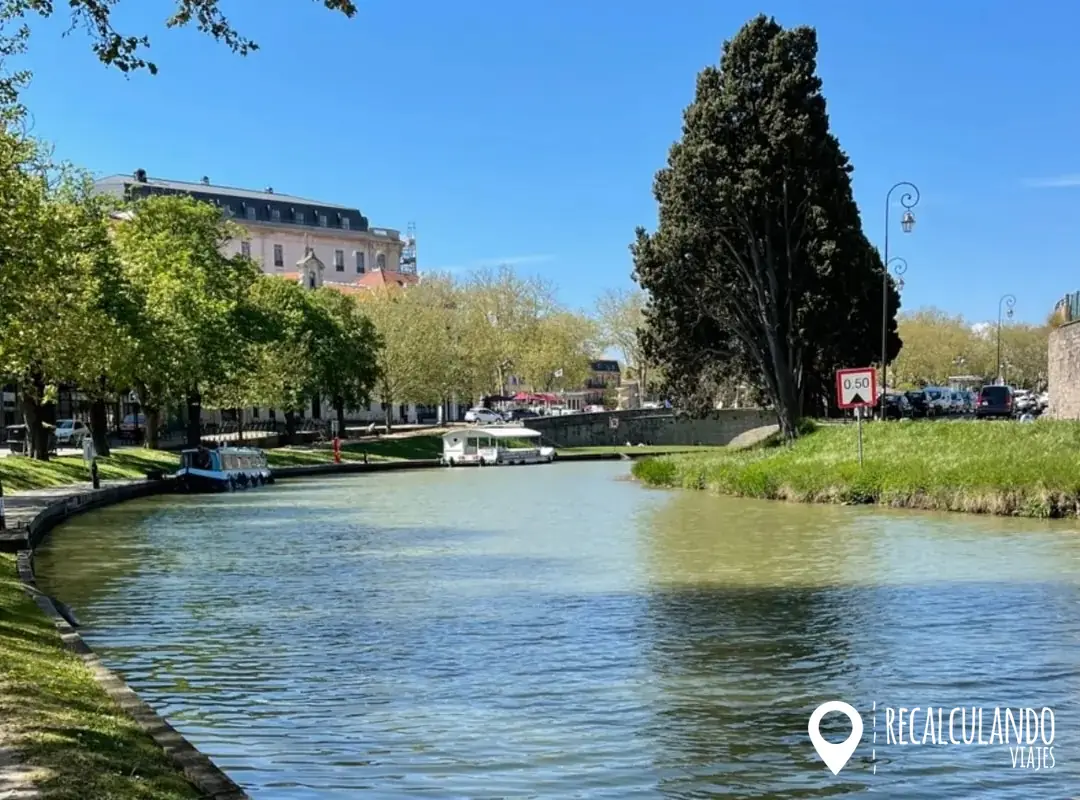
A few minutes’ walk from the Bastide Saint-Louis is the Canal du Midi, another wonder declared a World Heritage Site by UNESCO. This canal was built in the 17th century by Pierre-Paul Riquet and connects the Atlantic with the Mediterranean over 240 kilometers.
In Carcassonne, the canal passes along an avenue of century-old plane trees that create a spectacular green tunnel. On summer afternoons, families, cyclists, and couples stroll along its banks while the barges pass slowly. It has a completely different atmosphere to that of the Cité, more relaxed and daily, but equally beautiful.
From Carcassonne, you can take boat trips along the canal. There are different durations: from short one-hour trips to half-day excursions that reach the nearest locks. It is a very pleasant experience and a different way to understand the historical importance of this 17th-century engineering feat.
There are also cycling routes that follow the canal for kilometers. If you feel like exercising and seeing the Languedoc landscape in a different way, renting a bike and pedaling along the canal is a fantastic option.
The Fireworks Spectacular of July 14th
If you are lucky enough to be in Carcassonne on July 14th (French National Day), you will witness one of the most famous fireworks shows in France. The event is called “L’Embrasement de la Cité” and consists of a simulation of the burning of the medieval city, accompanied by top-tier fireworks launched from the walls themselves.
The Cité lights up in an intense red while the fireworks explode in the dark sky. The show lasts about 30 minutes and attracts more than 400,000 people each year, making it one of the biggest events in southern France. You have to arrive early to get a good spot on the banks of the Aude or on the bridges.
We weren’t there at that time, but people say it is an absolutely magical experience that changes your perception of the city forever. If you can plan your visit for that date, do it without hesitation!



Things to do in Carcassonne at night: Unique photos!
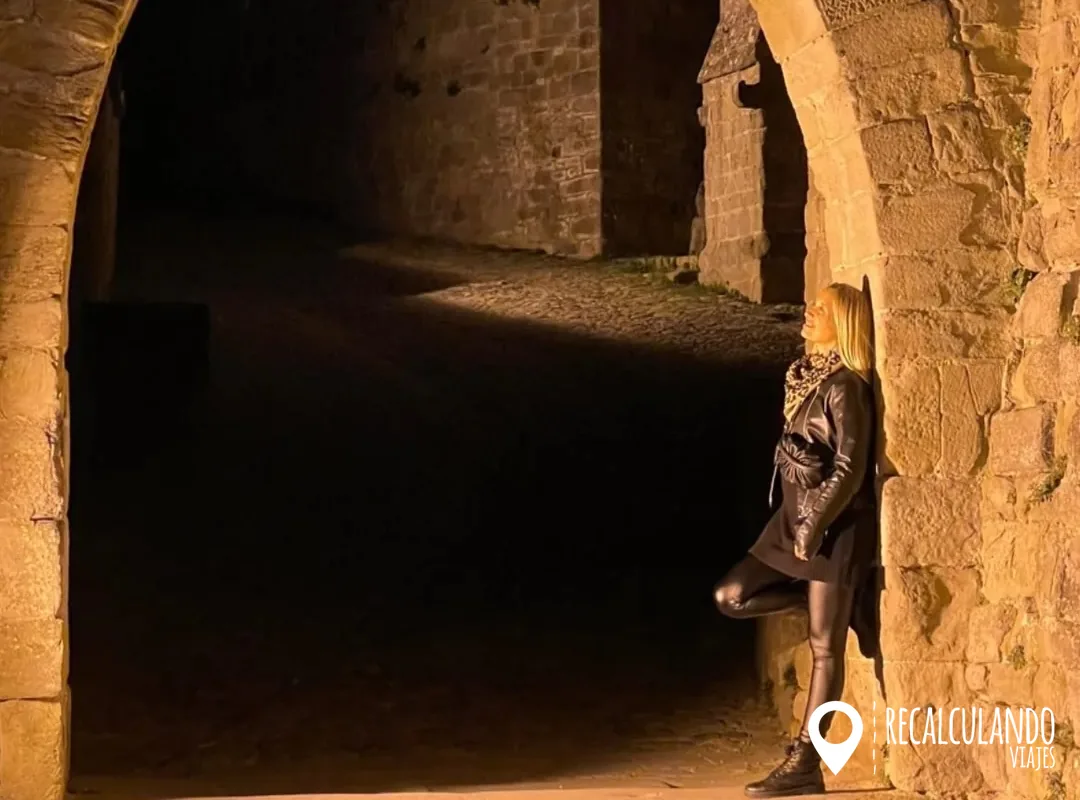
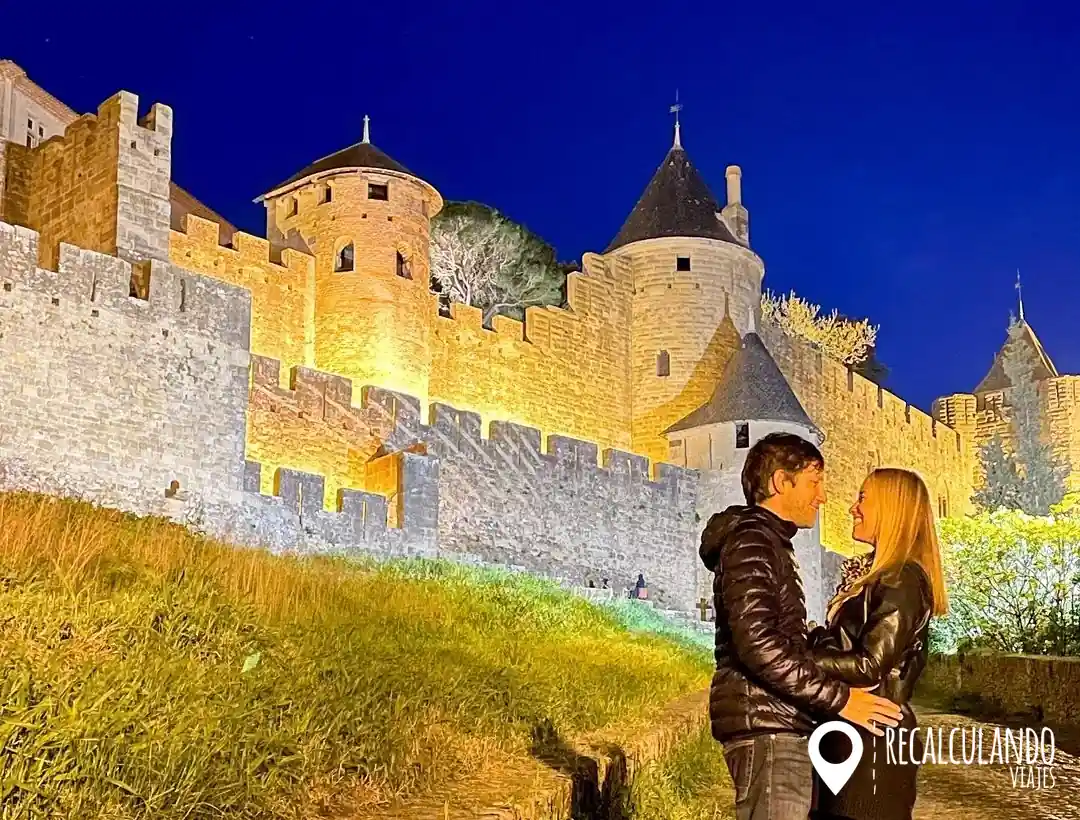
Something you can’t miss is going for a walk and taking photos at night. When the sun goes down, the city lights up in a magical way: the walls, the towers, and the alleys take on an even more medieval air. Plus, there are far fewer people, so it’s the perfect time to capture images without the crowds and enjoy a much more peaceful atmosphere. For us, it was one of the most special moments of the trip.
Local Gastronomy: Cassoulet and Blanquette de Limoux
Talking about Carcassonne without mentioning its gastronomy would be a crime. The Languedoc region has a powerful, hearty, and delicious cuisine, and the star dish is the cassoulet: a stew of white beans cooked slowly with different types of meat (usually confit duck, pork sausage, and lamb). There is a historical dispute between Carcassonne, Castelnaudary, and Toulouse over who makes the best cassoulet, but in any of the good restaurants in the Cité or the Bastide, you will find an excellent version.
To drink, the local wine of the Corbières and Minervois denominations is very good and quite affordable. You must also try the Blanquette de Limoux, which is a sparkling wine produced in a nearby village and which, according to legend, is the origin of all sparkling wines in the world (including Champagne).
Some restaurants we recommend without hesitation:
- La Demeure du Cassoulet (inside the Cité): excellent cassoulet and very friendly service.
- Le Cachotier (inside the Cité): classic dishes with local products and a vegan menu.
- L’escargot: snails inside the Cité.
- Le Bistrot d’Alice: (The Bastide) local food, cheeses.

Excursions From Carcassonne: Cathar Castles, Lake and the Mediterranean Sea
One of the great advantages of Carcassonne is its strategic location, which makes it a perfect base for excursions around the region. Since we stayed for 10 days, we were able to make the most of this advantage.
The Cathar Castles
Less than an hour from Carcassonne are the famous Cathar castles, medieval fortresses built on high crags and mountain peaks that belonged to the followers of the Cathar heresy, persecuted and destroyed by the Albigensian Crusade in the 13th century. The most impressive ones are:
- Château de Peyrepertuse: huge fortress perched on a rocky ridge, with impressive views.
- Château de Quéribus: vertical tower on a cliff, perfect for dramatic photos.
- Château de Lastours: four castles in a row on a hill, just 20 km from Carcassonne.
Visit Albi in a day
If you are visiting Carcassonne and have a car, an excellent option is to take a day trip to Albi, one of the least-known jewels of southern France. A little over an hour away, Albi will surprise you with its impressive historic center declared a World Heritage Site, where the majestic Cathedral of Saint Cecilia of Albi and the charming atmosphere along the Tarn River stand out.
If you want to plan your visit, don’t miss our complete guide on ➜ Things to do in Albi.
Spend the afternoon at Lake Lac de la Cavayère
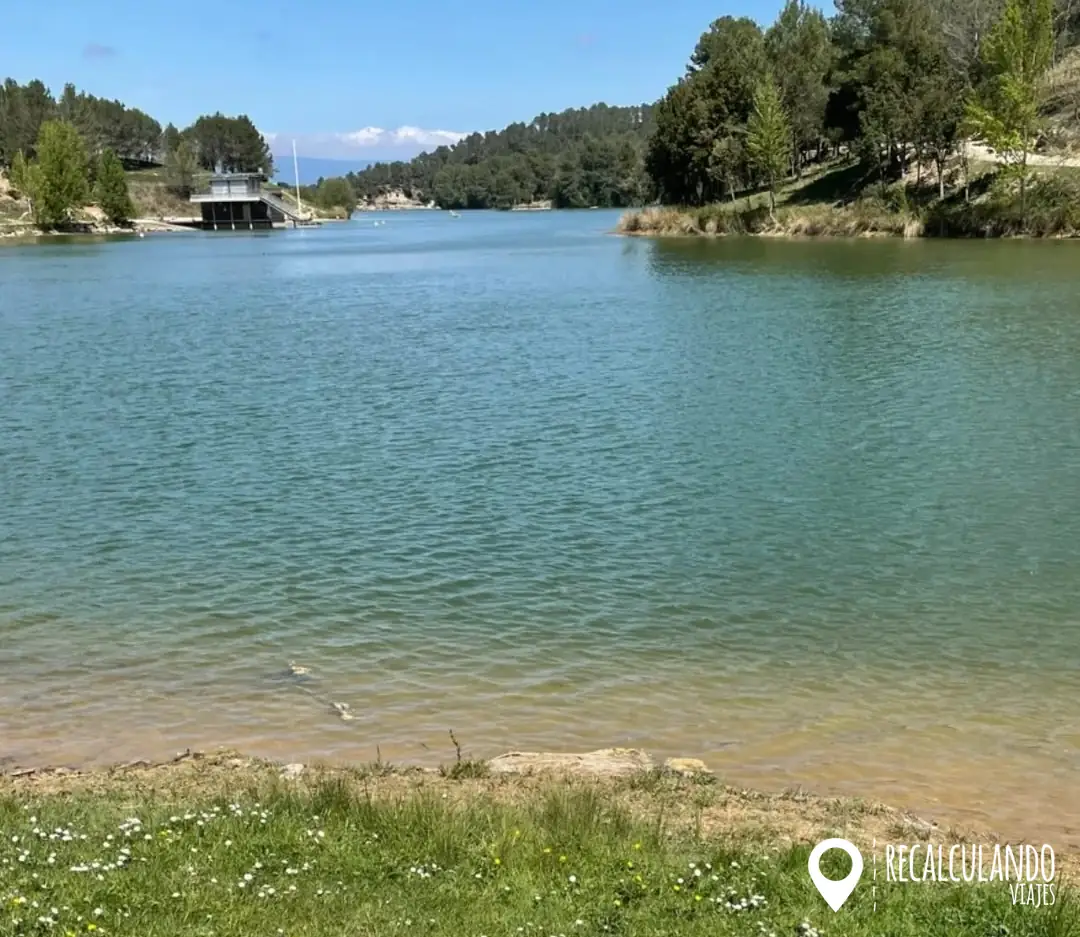
If you have some extra time on your itinerary, an excursion to Lake Cavayère is an ideal plan to disconnect from the medieval atmosphere. Just 10 minutes from Carcassonne, this lake offers artificial beaches, walking trails, and activity options like kayaking or zip-lining. We went one afternoon and found it the perfect contrast: after days of walls and historic streets, a bit of nature and relaxation adds a lot to the trip.
The Mediterranean
About 80 km from Carcassonne is the Mediterranean Sea and the Languedoc-Roussillon coast. The beaches of Narbonne-Plage, Leucate or Gruissan are great options for a beach day. The water is crystal clear and in high season, the atmosphere is very lively.
How to Get to Carcassonne and Get Around the City
Getting to Carcassonne is quite simple. The city has its own airport (Carcassonne Airport), although with flights mainly limited to European destinations. The most comfortable option for those coming from other French cities is the train: from Toulouse it is almost 1 hour, from Montpellier around 1h20, and from Paris by TGV about 4-5 hours.
- From Toulouse: 1 hour by train
- From Montpellier: ~1:30
- From Barcelona: 3 hours
- From Paris: ~4-5 hours.
Once in Carcassonne, the lower city (Bastide) and the Medieval City are connected on foot in about 20-25 minutes. There is also a free bus service in summer that makes the trip. Having a car can be useful for excursions to the Cathar castles, as public transport to those areas is very limited.
To get around within the Cité, everything is on foot: the medieval streets are not intended for cars (except for residents). We went by car and made sure it included parking.
The truth is that getting lost walking through its alleys without a map is one of the most pleasant experiences this place offers.

Best time to visit
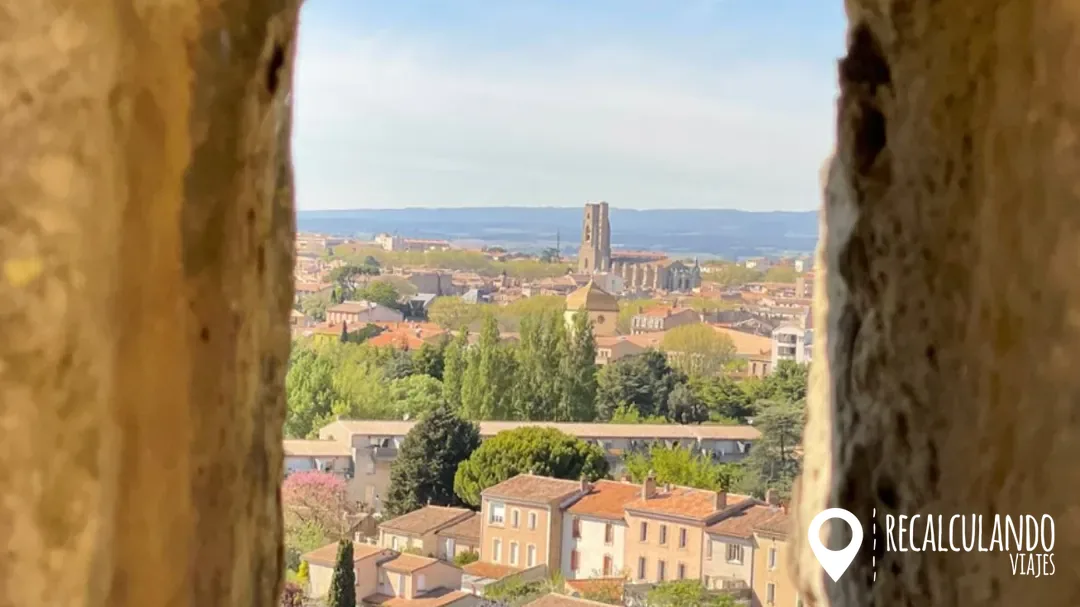
The best time to discover things to do in Carcassonne is spring or autumn.
In summer there is more atmosphere, but also many people.
We went outside the high season (mid-April) and it was ideal.
Where to Stay in Carcassonne: Inside or Outside the Cité?
This is perhaps the most important question when planning the visit. There are two main options and each has its advantages.
Staying inside the Cité: It is the most special experience, but also the most expensive. At sunrise and after 6:00 PM (when the day tourists leave), the Cité is transformed: the alleys are left almost deserted, the atmosphere is magical, and you can explore at your own pace. We did it and we 100% recommend it, especially if you are going to stay for several days. Hotels like the Hôtel de la Cité (total luxury) or smaller boutique accommodations are available in different price ranges.
We stayed at the foot of the Castle, on Rue Barbacane and it was wonderful! A unique place.
Staying in the Bastide: It is much cheaper, has more dining and service options, and the connection to the Cité is easy. Ideal if the budget is tight or if you prefer a more “local” experience.
Accommodation in Carcassonne Map with prices:
Practical Tips For Visiting Carcassonne
- Best time to go: Spring (April-June) and autumn (September-October). Summer is very crowded and hot. In winter it has a special charm but many things close.
- Avoid crowds: Arrive at the Cité before 9:00 AM or after 5:00 PM. Midday in high season can be overwhelming.
- Comfortable footwear: The cobblestone streets are beautiful but hard on the feet. Comfortable sneakers, always.
- Water: Bring a reusable water bottle. There are fountains in the Cité.
- Book in advance: In July and August, hotels and restaurants fill up. Book everything weeks in advance.
- Combined ticket: Access to the Château Comtal includes the walls. Buy the ticket directly at the castle ticket office.

Things to do in Carcassonne (Video)
Frequently Asked Questions About Things to Do in Carcassonne
How many days are enough to visit Carcassonne?
With 2 days you can see the main attractions: the Cité, the Château Comtal, the Basilica of Saint-Nazaire, the Pont Vieux and the Bastide. If you want to take excursions to the Cathar castles or the sea, calculate at least 3 or 4 days. We stayed 10 days and we didn’t get bored for a moment, although we are nomads with free time to explore without rushing.
Do you have to pay to enter the Medieval City of Carcassonne?
No, access to the Cité Médiévale (the walled city) is completely free. What does have a cost is entering the Château Comtal and walking the interior walls, which has a price of approximately 13€ per adult.
How to get to Carcassonne from Spain?
From Barcelona by car, it is approximately 3 and a half hours via the AP-7 motorway crossing through La Jonquera. There is also a train from Barcelona (with a change in Narbonne or Perpignan), although the journey is longer. From Madrid, the most comfortable way is to fly to Toulouse and from there take the train (50 minutes).
What can you do at night in Carcassonne?
At night, the illuminated Cité is absolutely spectacular. There are several restaurants and bars inside the walls. The Bastide has more nightlife with bars and music venues. In summer, there are sound and light shows in the Cité and different cultural events.
What typical food should you not miss in Carcassonne?
The cassoulet is mandatory: that bean stew with duck confit and cured meats is the region’s signature dish. You also have to try the local foie gras, the Languedoc cheeses, the wine from the Corbières and Minervois denominations, and the Blanquette of Limoux if you are a fan of sparkling wines.
Can you visit Carcassonne in winter?
Yes, and it has a very special charm: fewer tourists, lower prices, and an almost mystical atmosphere, especially on foggy days. The downside is that the Château Comtal and some attractions have reduced hours, and several restaurants and shops inside the Cité close. But for photography and history lovers, winter in Carcassonne can be an incredible experience.
Conclusion: Carcassonne, a City That Makes You Fall in Love Forever
After 10 days living in and around Carcassonne, we can tell you with total conviction that this city is one of the most extraordinary destinations we have visited in France. It doesn’t matter if you are passionate about medieval history, French gastronomy, hiking, or simply getting lost in beautiful streets: Carcassonne has something for everyone.
The combination of the Cité Médiévale with its castle and basilica, the tranquility of the Bastide Saint-Louis, walks along the Canal du Midi, and excursions to the Cathar castles create a complete, rich, and deeply memorable travel experience. And if you add the cassoulet and local wine to that… what more could you ask for?
We hope this guide on things to do in Carcassonne is very useful for planning your trip. If you have any questions, leave them in the comments and we will gladly answer them. Have a good trip and may the medieval adventure await you!
ℹ️ **Total Transparency**
This article contains affiliate links. If you book through these links, we may receive a small commission at no additional cost to you. We only recommend services that we use on our trips and that we trust. This helps us keep this blog free and continue creating useful content for you. Thank you for your support!
🔗 Resources & Useful Links for your trip to Carcassonne
Do you have questions or want to add your own recommendations on things to do in Carcassonne?
💬 Leave your comment or write to us, we love reading about other travelers’ experiences.
Thank you very much for being part of this adventure!— Nanu & Facu 🌎 | Recalculando Viajes 💜