The Krka Waterfalls are one of Croatia’s absolute must-sees, and in this guide, we’ll tell you everything to organize your visit to Krka National Park: updated prices, opening hours, which gate to enter, where to stay, and the 12 must-see places in the park with a map. We visited at the end of July, on a one-day road trip from Trogir during the nearly two months we spent traveling around Croatia. Is it worth it? Absolutely… but there are some things to keep in mind that we’ll share below.
🌍 Travel Insurance: 5% Off with IATI Seguros! 🌟
Take advantage of this offer and travel safe.
Krka Waterfalls – Croatia Summary
| Category | Key details for your visit |
|---|---|
| Best time | May, June, and September (ideal weather and fewer crowds). |
| Recommended time | 1 full day for the essentials; 2 days for the northern area. |
| 2026 Entrance | €40 (summer), €20 (mid-season), and €7 (winter). |
| Access gates | Lozovac (ideal for cars, free parking) or Skradin (picturesque entrance by boat). |
| Must-see | Skradinski Buk, Visovac Island, Roški Slap, and the Burnum amphitheater. |
| Important note | Swimming in the waterfalls has been strictly prohibited since 2021. |
| Language and currency | Croatian (English widely spoken) and Euro (€). |
1. Skradinski Buk, the most famous of the Krka waterfalls
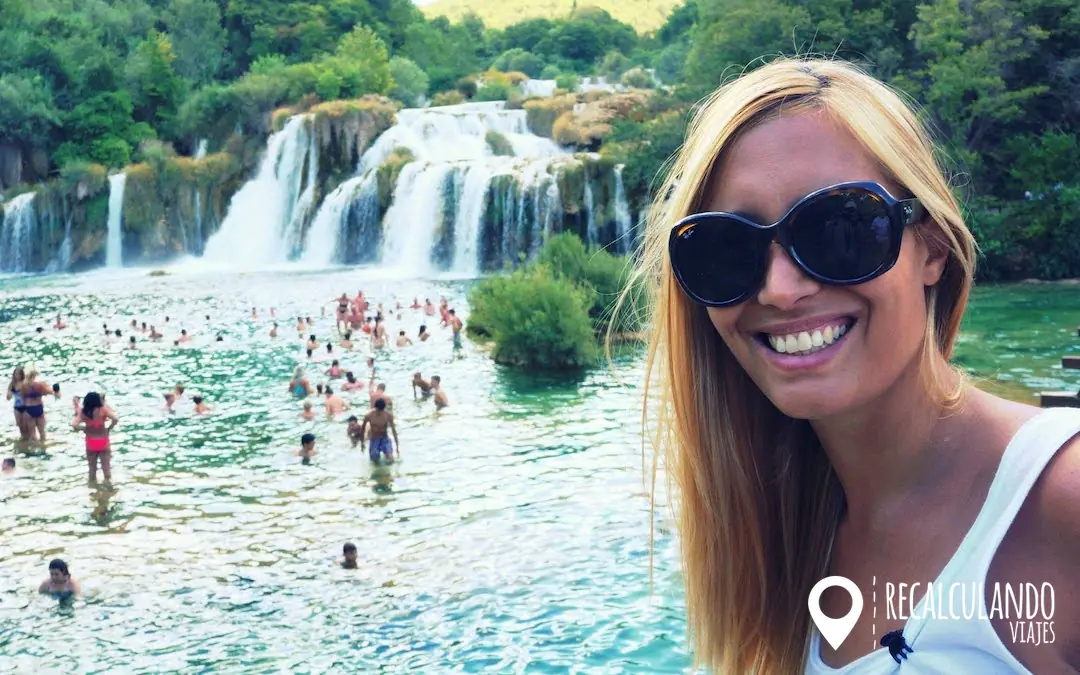
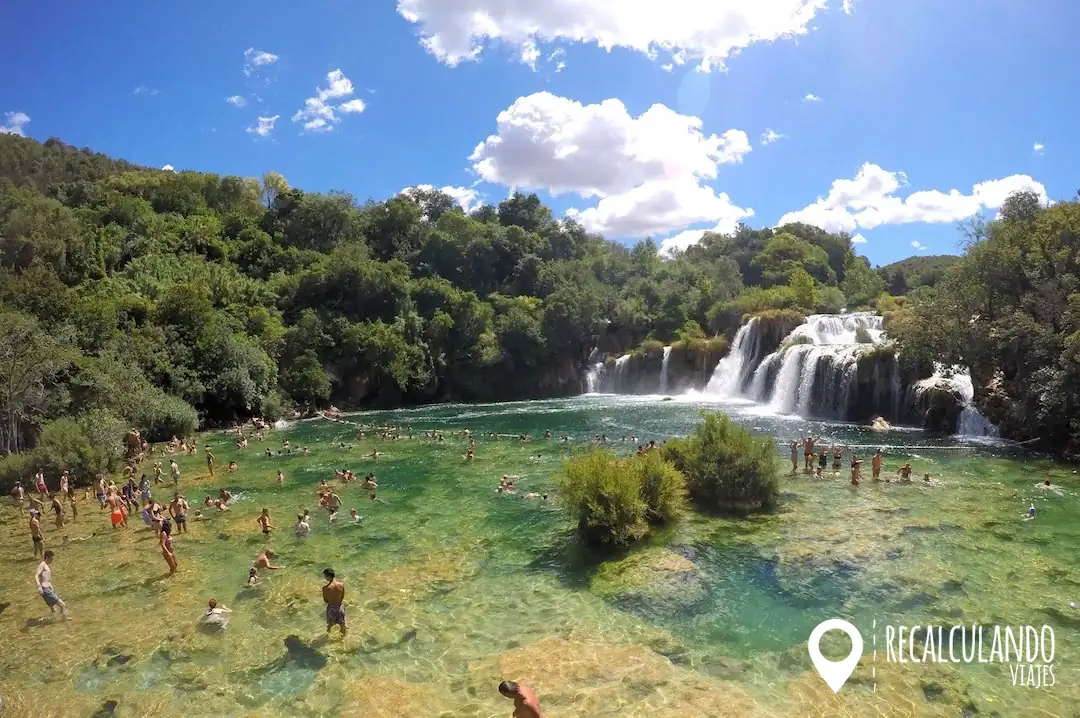
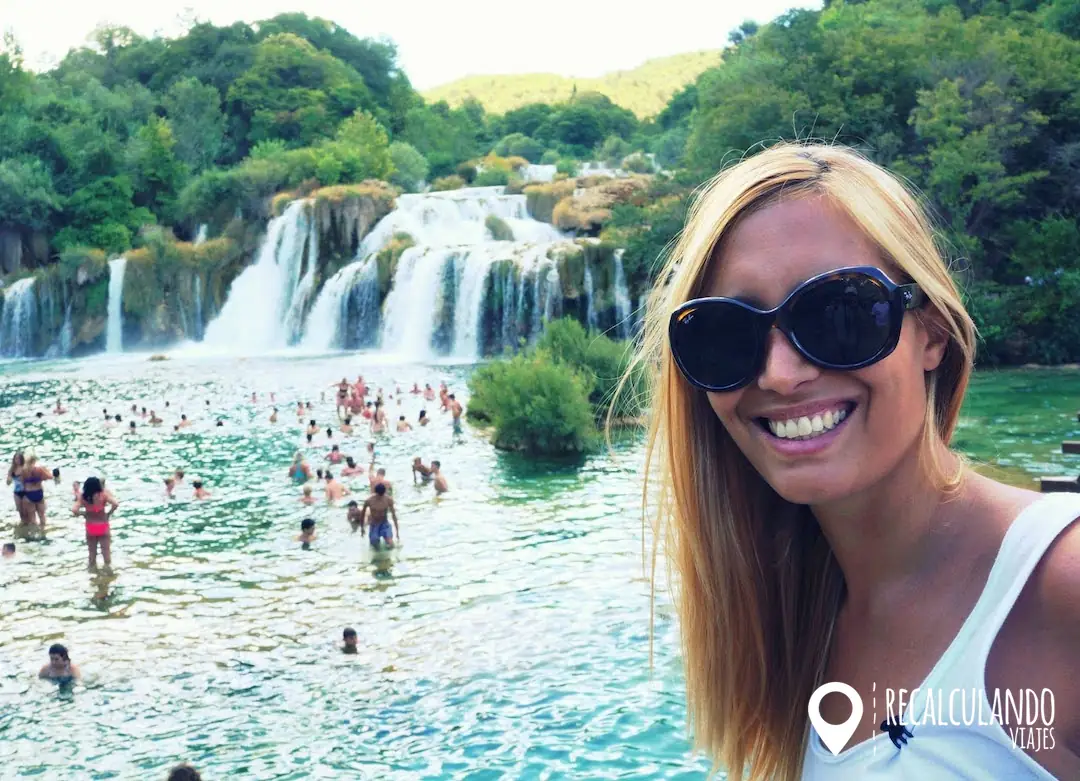
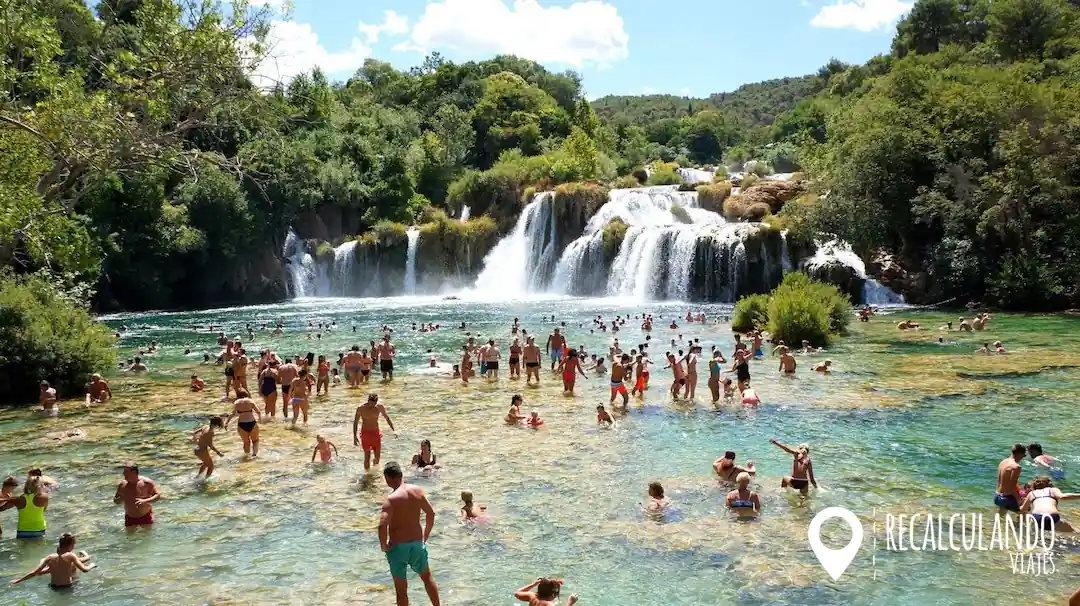
We start with the star among the Krka waterfalls. Skradinski Buk is a succession of tiered waterfalls cascading through lush greenery into a huge, turquoise natural pool. It’s one of those postcards you’ve seen a thousand times in photos… and in person, it’s even more impressive.
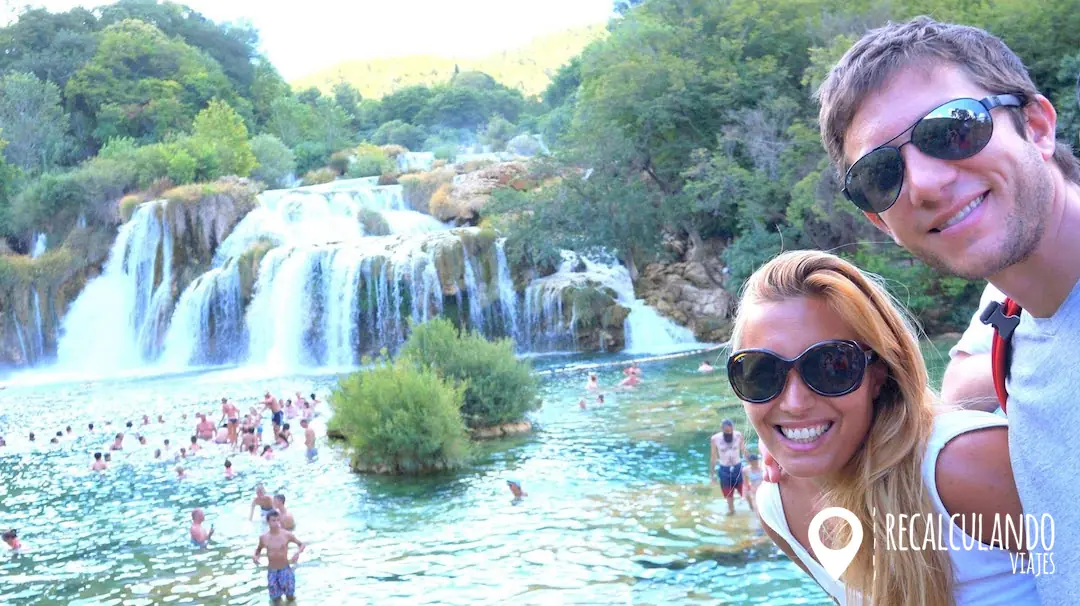
We arrived early to escape the heat of late July, and it was the best decision of the day: we were able to see the main waterfall almost without anyone around and in beautiful light. A while later, the place got very crowded. If you’re traveling in summer, get there early or enter after 3:00 PM, when tickets are also cheaper.
An important fact: since 2021, swimming is no longer allowed at Skradinski Buk. We mention this because it’s no longer possible to do so. This decision was made to protect the ecosystem.
2. The circular wooden boardwalk route
The best way to tour Skradinski Buk is via a circular path of wooden boardwalks almost 2 kilometers long that crosses the river, the channels, and the vegetation. It’s very easy to do, has no difficulty, and can be completed in an hour and a half to two hours, stopping in every corner.
We loved this walk: you are literally walking over the water, listening to the roar of the Krka waterfalls, and seeing fish everywhere. Each bend in the trail offers a different waterfall. One thing: in peak summer, there are sections where you move slowly due to the number of people, so be patient and enjoy the surroundings.
3. The water mills and the ethnographic village
Within the Skradinski Buk route, you will come across a set of restored stone houses that used to serve as water mills. For centuries, the local inhabitants used these to grind wheat by harnessing the power of the river.
Today, it is a small ethnographic collection where you can see how the mills, looms, and fulling mills of the Šibenik region worked. We found it a nice complement to the natural landscape: it gives historical context to the place and is very well themed. Additionally, there are stalls where you can buy local products.
4. The viewpoints of Skradinski Buk
Along the circular route, there are several viewpoints from which you can see the main waterfall in all its splendor. The most photographed one is the one in front of the large drop of water, where the river opens up into dozens of streams flowing down through the vegetation.
In our case, we stayed for a good while at the main viewpoint taking photos and just watching… the sound of the water is hypnotic.
TIP: if you enter via Lozovac, the trail that goes down to the waterfall already offers incredible panoramic views of the Krka River canyon, so have your camera ready from the very first minute.
5. Skradin, the most picturesque entrance gate
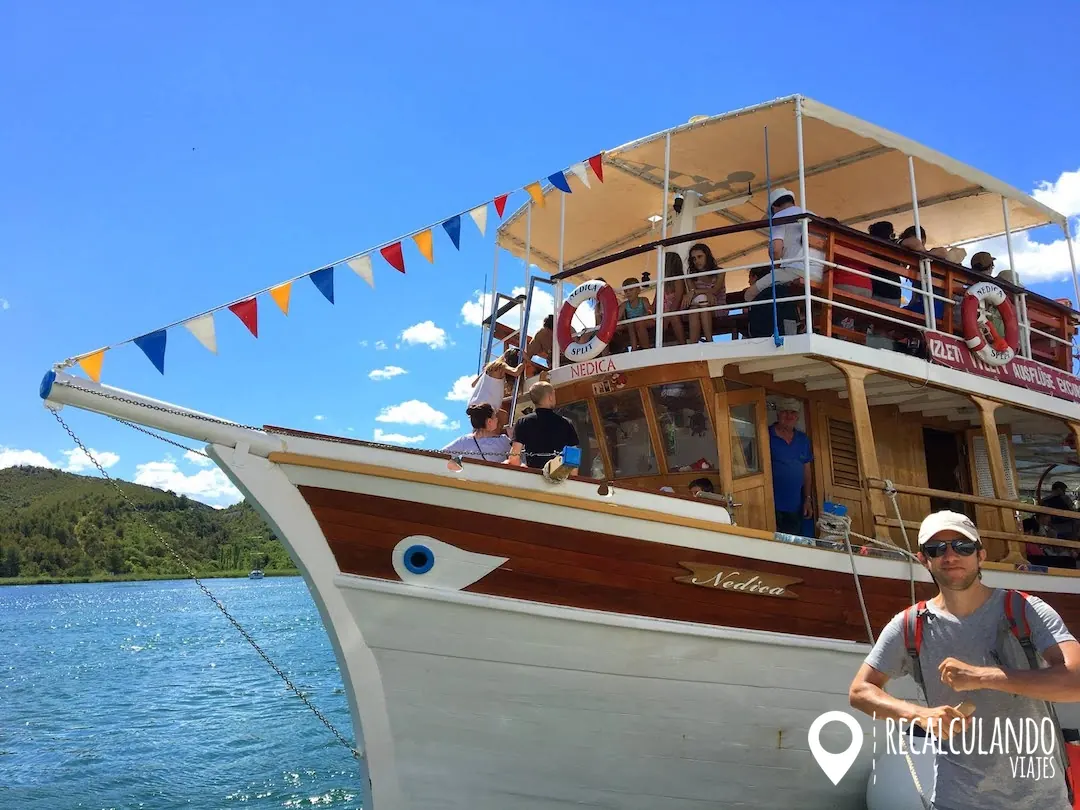
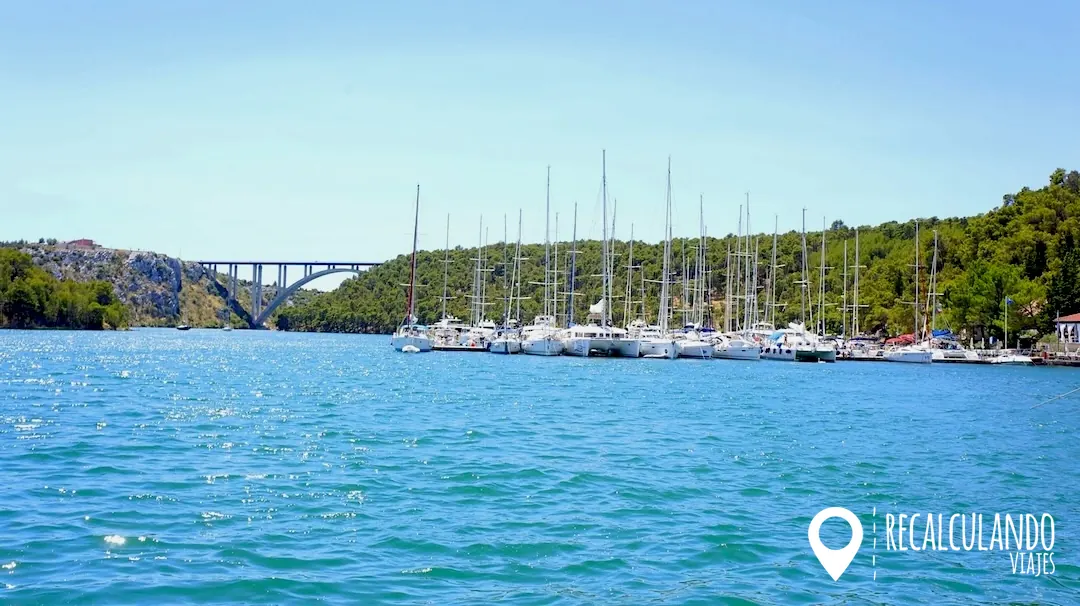
Skradin is a small town of stone houses on the banks of the river, and one of the two main entrances to the park. From its harbor, the national park boats depart, taking you to Skradinski Buk in about 25 minutes of navigation, a journey included in the entrance fee between April and October.
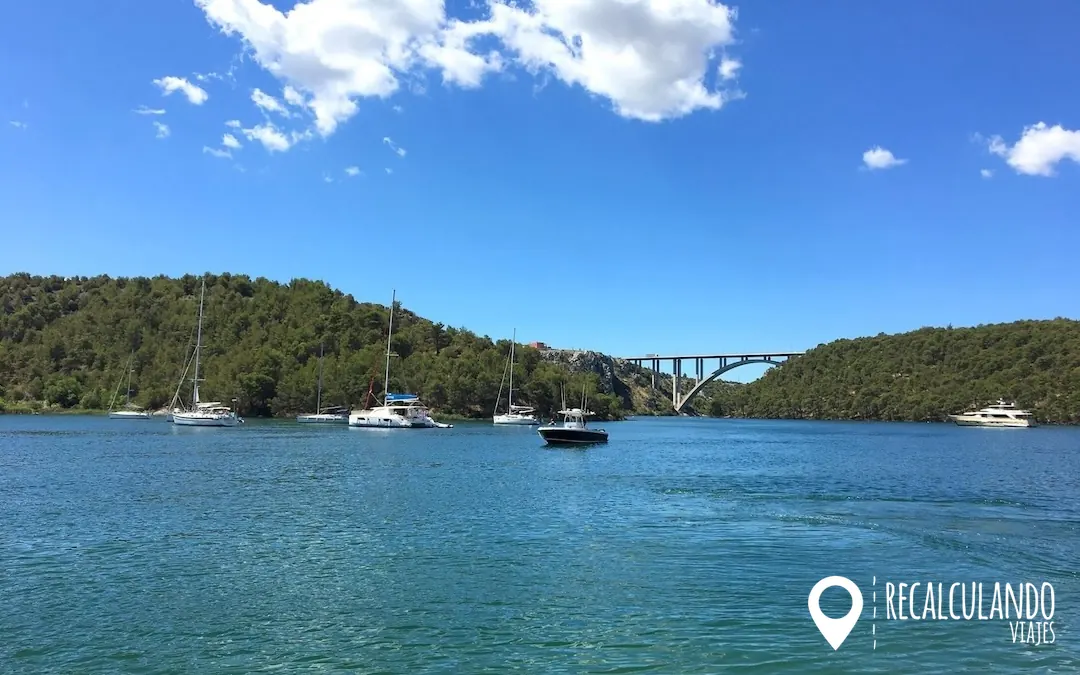
We entered through here, precisely because of that boat trip through the river canyon, which is beautiful. Many travelers choose to enter through Lozovac because parking is usually free by car. The town itself is worth a stroll: it has a very nice waterfront, a fortress with views, and a reputation for good cuisine.
6. Visovac Island, one of the Krka must-sees
Upstream from Skradinski Buk, in the middle of a lake surrounded by hills, appears one of the most iconic images of Croatia: Visovac Island, with its Franciscan monastery founded in the 15th century. It is tiny, just a handful of cypress trees, the church, and the convent… and for that very reason, it is so photogenic.
It is visited via boat excursions that leave from the Skradinski Buk pier (around €15 for the 2-hour tour, in addition to the entrance fee). Many travelers recommend it as the perfect complement to the waterfalls, because it includes a guided visit to the monastery, which houses a library and very well-preserved historical objects.
👩⚕️👨⚕️ A must-have for stress-free travel! 🌎✈️ ➜ Get a Quote, Compare & Buy
7. Roški Slap, the park’s other great waterfall
If Skradinski Buk is the most famous of the Krka waterfalls, Roški Slap is the quiet alternative. It consists of a series of 12 tiered waterfalls extending over 450 meters, with a final drop of about 22 meters flowing into Lake Visovac.
It is located in the northern part of the park and can be reached by car via its own entrance or with the 4-hour boat excursion from Skradinski Buk (about €20), which combines Visovac and Roški Slap in the same trip. Many travelers point out that there are far fewer people here than in the southern area, so if you are looking for nature in a quiet mode, this is your place.
8. The Ozidana pećina cave
Very close to Roški Slap, climbing a staircase of more than 500 steps carved into the canyon wall, you reach the Ozidana pećina cave. Inside, archaeological remains were found showing it was inhabited more than 5,000 years ago, and today it functions as a small interpretation site.
The climb requires effort, but those who do it agree that the views of the Krka River canyon from above are among the best in the entire park. One of those things to do in Krka that almost no one has on their radar.
9. The Krka Monastery
In the northernmost part of the park, near the town of Kistanje, the Orthodox Krka Monastery is hidden, built over Roman-era catacombs that can also be visited. It is an active pilgrimage site, surrounded by a green, silent landscape on the banks of the river.
We didn’t go during our visit because we prioritized the waterfalls, but many travelers recommend it as the more spiritual and lesser-known side of the park, ideal if you are traveling with your own car and have plenty of time.
10. Burnum, the Roman amphitheater
Yes, you read that right: inside Krka National Park, there is a Roman amphitheater. Burnum was a military camp of the Roman Empire, and the arches of the headquarters and the amphitheater where the legionaries trained and were entertained are still preserved.
It is located in the northwestern area of the park, accessible by car, and is usually combined with the Manojlovac waterfall viewpoint, which is just a few minutes away. For history buffs, it is a very special stop: it is not common to see Roman ruins in the middle of a natural park.
11. Manojlovac Waterfall, the tallest on the Krka River
Although Skradinski Buk takes all the fame, the tallest waterfall in the park is Manojlovac, with nearly 60 meters of total drop in a series of tiered falls inside an imposing canyon. It can be viewed from a viewpoint near Burnum, without the need for long hikes.
Keep in mind: in peak summer, part of its flow is diverted to a hydroelectric plant, so it might have little water. Those who saw it in the spring, during the thaw, claim it is a spectacle on par with the most famous waterfalls in Europe.
12. The fortresses of Nečven and Trošenj
Guarding the river canyon from both banks, the medieval fortresses of Nečven and Trošenj are another historical corner of the park. They were built by noble Croatian families to control the river crossing, and today their ruins remain overlooking the precipice.
They can be visited with the boat excursion departing from Roški Slap or by arriving by car via inland roads. Don’t expect restored castles: the charm lies in the views of the canyon and imagining life on the frontier of other times.



Itinerary for visiting Krka in one day
With one full day, it’s enough to see the main things to do in Krka, just as we did. This would be our recommended itinerary:
- 8:00 — Arrival at the Lozovac entrance (free parking) and park bus to Skradinski Buk.
- 8:30 to 11:00 — Circular boardwalk route at a calm pace: main waterfall, viewpoints, and water mills.
- 11:30 — Boat excursion to Visovac Island (2 hours) from the Skradinski Buk pier.
- 14:00 — Lunch in Skradin or a picnic in designated areas.
- Afternoon — If you still have energy: Roški Slap and the Ozidana cave by car, or a relaxed stroll around Skradin.
If you have two days, add the entire northern area: Krka monastery, Burnum, Manojlovac, and the fortresses. And if you are putting together a larger route through the country, in our Croatia guide, you have all our articles to combine the park with the coast and the islands.
May, June, and September (fewer people and good water flow)
1 full day
€40 adults in summer (€30 after 3:00 PM) / €20 in April, May, and October / €7 in winter
By car: 1 hr from Split or Trogir, 15 min from Šibenik
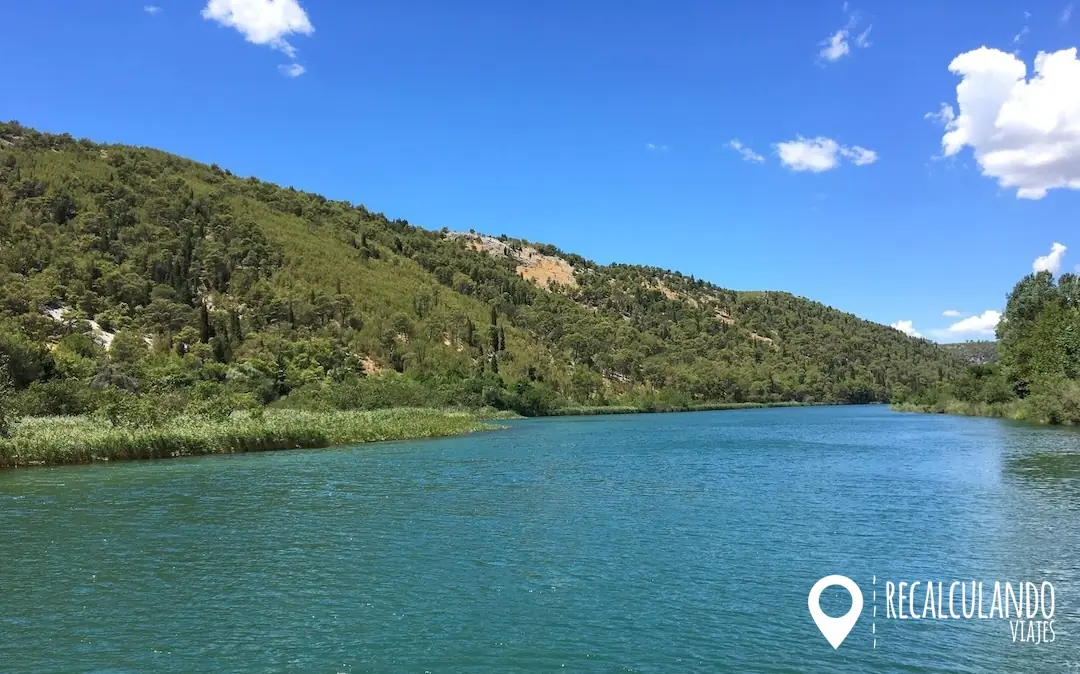
Where to stay near Krka National Park
These are the best areas depending on the trip you are planning:
- Skradin: to stay steps away from the boat entrance and wake up without stress. Village accommodation, quiet, and with good gastronomy.
- Šibenik: only 15 minutes by car from the park, it’s a beautiful historical city that is also worth a visit on its own, with its World Heritage cathedral.
- Trogir or Split: if you are touring the Dalmatian coast, both work perfectly as a base, an hour away from the park.
- Zadar: about 50 minutes away, ideal if you are coming down from northern Croatia.
In our case, we stayed in Trogir and it was a great plan: we combined the waterfalls with a historic center that looks like a movie set. We tell you everything about that city in our guide on things to do in Trogir.
On this map, you can compare accommodations near Krka by area and see prices:
How to get to Krka National Park
The park is located in the Dalmatia region, about 10 km from Šibenik (you will see it signposted as Krka National Park), and has two main entrances:
- Lozovac: the main entrance if you are going by car, with free and ample parking. From there you go down to Skradinski Buk on the park’s free bus (from April to October) or walking along a trail of less than 1 km. From November to March, the bus does not run, but you can go down in your own car to the lower parking lot, right next to the boardwalks.
- Skradin: you enter by sailing, with the boat included in the entrance fee from April to October. The town’s parking lot is private and paid.
We went by rental car from Trogir and it took us just an hour by highway, a very comfortable trip. From Split, it’s also more or less an hour (85 km) and from Zadar about 50 minutes. It is, by far, the most practical way to move around Dalmatia.
If you don’t drive, there are regular buses from Šibenik and Split to Skradin and Lozovac, as well as organized excursions that we leave below. And a connectivity tip: to have data in Croatia without surprises, we use eSIMs. With the code RECALCULANDOVIAJES you get a 5% discount on the Holafly eSIM.
Entrance tickets, prices, and opening hours for Krka National Park
The general admission ticket gives access to all the places to see in Krka and internal transfers included. One detail to keep in mind: there is no cheaper ticket just for Skradinski Buk (which is what most people visit), although there is a reduced ticket that covers only the northern area of Roški Slap and Burnum. These are the 2026 prices for adults:
| June to September | €40 (€30 after 3:00 PM) |
| April, May, and October | €20 |
| November to March | €7 |
| Youth from 7 to 18 years old | €15 in summer / €12 in mid-season / €4 in winter |
| Under 7 years old | Free |
Tickets can be purchased at the box office at each access or in advance on the official park website. Be careful with one detail if you buy online: it will ask you to choose which gate you are going to enter through (Skradin or Lozovac), so define that beforehand. In July and August, it is advisable to buy in advance to avoid queuing in the heat… we bought ours at the ticket office early and got through, but a while later, the queue was already significant.
Regarding opening hours, the park is open 365 days a year (except December 25th and 26th): the Skradinski Buk area operates from 8:00 AM to 8:00 PM in mid-summer and from 9:00 AM to 4:00 PM in winter, with intermediate hours the rest of the year. The northern area (monastery and Burnum) closes from November to March, so if you are traveling in winter, check it before on the official website.
How to get around the park
Once inside, everything is explored on foot along very well-signposted paths and boardwalks. Internal transfers between the entrances and Skradinski Buk (bus from Lozovac and boat from Skradin) are included in the entrance fee from April to October.
Boat excursions within the park are paid separately and depart from the Skradinski Buk pier: Visovac (2 hrs, €15), the Čikola River canyon (45 min, €10), or the combo Visovac + Roški Slap (4 hrs, €20). They operate from April to October and you don’t need to book them far in advance: they are organized on the day.
The most flexible alternative to see several areas is the car: from Lozovac to the Stinice pier (the point closest to Visovac Island) there are about 28 km of good road, and from there to Roški Slap another 11 km. With your own vehicle, you can combine Skradinski Buk, Visovac, and Roški Slap in about 5 hours of total visiting time, managing your own pace. For the northern area (Burnum, Manojlovac, monastery), the car is directly the only option.
What to eat in Krka and the surroundings
Inside the park, there are stalls and cafes near Skradinski Buk for a quick bite, but the true culinary experience is in Skradin. The town is famous throughout Croatia for Skradin risotto, a veal risotto that is cooked over low heat for hours and that many travelers describe as one of the best dishes in Dalmatia.
In our case, we were cautious and brought water and some food from Trogir: with the July heat and so much walking, we were very grateful for it. Inside the park, prices are those of a tourist area, so a picnic is always a good idea.
Map of Krka waterfalls and park locations
To help you locate everything easily, on this map we have marked the Krka waterfalls and the 12 places in this guide, along with the park entrances and parking lots. You will notice that Skradinski Buk concentrates several points in the southern area, while Roški Slap, the monastery, and Burnum are to the north.
Travel insurance for Croatia
Croatia is a very safe destination, but medical care for tourists can be extremely expensive, and between wet boardwalks, trails, and very hot days, it’s better to be covered. We always travel with insurance and in our comparison of the best travel insurance for Europe, we tell you in detail why we chose IATI years ago.

Excursions to Krka National Park
If you don’t want to drive or depend on bus schedules, organized excursions to the Krka waterfalls are a great option: they depart from Split, Trogir, Šibenik, and Zadar, and include transportation, a guide, and free time in the park. They usually combine Skradinski Buk with a stop in Skradin or Šibenik, and in many, the entrance fee is already included, so you don’t have to worry about the lines.
If your base is Trogir, as was ours, there are also excursions to Krka departing from Trogir, a very convenient option so you don’t have to move the car.
And if you have more time on the Dalmatian coast, don’t miss our guides to the nearby islands: things to do in Hvar and the incredible Brela beach, two stops that we loved on our Croatian route.
Frequently asked questions about Krka waterfalls
How much does the entrance to Krka National Park cost in 2026?
General admission costs €40 for adults from June to September (€30 if you enter after 3:00 PM), €20 in April, May, and October, and €7 in the winter months. Children under 7 enter for free and youth from 7 to 18 years old pay a reduced rate.
Is it possible to swim in the Krka waterfalls?
No, since January 2021, swimming is prohibited at Skradinski Buk and in the rest of the park’s waterfalls to protect the ecosystem. A very popular alternative is to take a dip in Skradin, just outside the park limits.
How much time is needed to see the best of Krka?
A full day is enough to explore the circular route of Skradinski Buk, the mills, and a boat excursion to Visovac. If you want to add Roški Slap, the Krka monastery, and Burnum, two days is ideal.
What is better, to enter via Lozovac or Skradin?
Lozovac is the best option if you are traveling by car, because parking is free and access to Skradinski Buk is direct. Skradin is ideal if you are looking for the most picturesque experience, entering by boat through the river canyon with the trip included in the entrance fee from April to October.
What is better, Krka or Plitvice Lakes?
They are different parks: Plitvice is larger and more spectacular in terms of the number of lakes, while Krka is more accessible from the coast, more compact, and perfect for a day trip from Split, Trogir, or Zadar. If you can, visit both.
What is the best time to visit Krka National Park?
May, June, and September are the ideal months: the waterfalls have a good flow, the weather is pleasantly warm, and there are fewer people than in mid-summer. In July and August, it is advisable to get up early or enter after 3:00 PM, when the entrance fee is also cheaper.
Where is it best to buy park tickets?
You can buy them at the box offices at each access or in advance on the official park website. If you buy online, you have to choose the entrance gate (Skradin or Lozovac). In July and August, it is advisable to buy in advance to avoid queues.
Is it possible to tour Krka with a baby stroller?
The circular route of Skradinski Buk can largely be done with a stroller, although there are sections with boardwalks and steps where it gets complicated. If you are traveling with a baby, the most comfortable thing is to carry a baby carrier.
What should you bring to visit Krka National Park?
Comfortable footwear with good grip, a hat, sunscreen, and water, especially in summer. No special equipment is needed: the boardwalks are suitable for anyone with normal mobility, and inside the park, there are stalls to buy food and drinks.
Conclusion
Krka National Park was one of the excursions we enjoyed the most during our two months in Croatia. Walking along the boardwalks over the turquoise water, listening to the roar of Skradinski Buk, and discovering that the park even hides a Roman amphitheater make it a must-see in Dalmatia.
We hope this guide to the Krka waterfalls and its 12 must-see places helps you organize your visit: get up early, bring water, comfortable shoes, and a desire to walk. And if you have any questions about things to do in Krka or about your route through Croatia, write to us in the comments…
Other articles for your trip to Croatia
- 22 must-see things to do in Dubrovnik (with map)
- 18 Must-See Things to Do in Primosten (with Map)
- 21 must-see things to do in Split (with map)
- 18 essential things to do in Rab (with map)
- Plitvice Lakes, Croatia: Complete guide to visiting the National Park [2026]
- 15 Best things to do in Croatia (with map)
- 16 essential things to do in Brac (with map)
- 15 essential things to do in Dugi Otok, Croatia (with map)
ℹ️ **Total Transparency**
This article contains affiliate links. If you book through these links, we may receive a small commission at no additional cost to you. We only recommend services we use on our travels and trust. This helps us keep this blog free and continue creating useful content for you. Thank you for your support!
🔗 Resources & Useful Links for your trip to Krka waterfalls
Do you have questions or want to add your own recommendations on things to do in Krka?
💬 Leave your comment or write to us, we love reading the experiences of other travelers.
Thank you very much for being part of this adventure!— Nanu & Facu 🌎 | Recalculando Viajes 💜