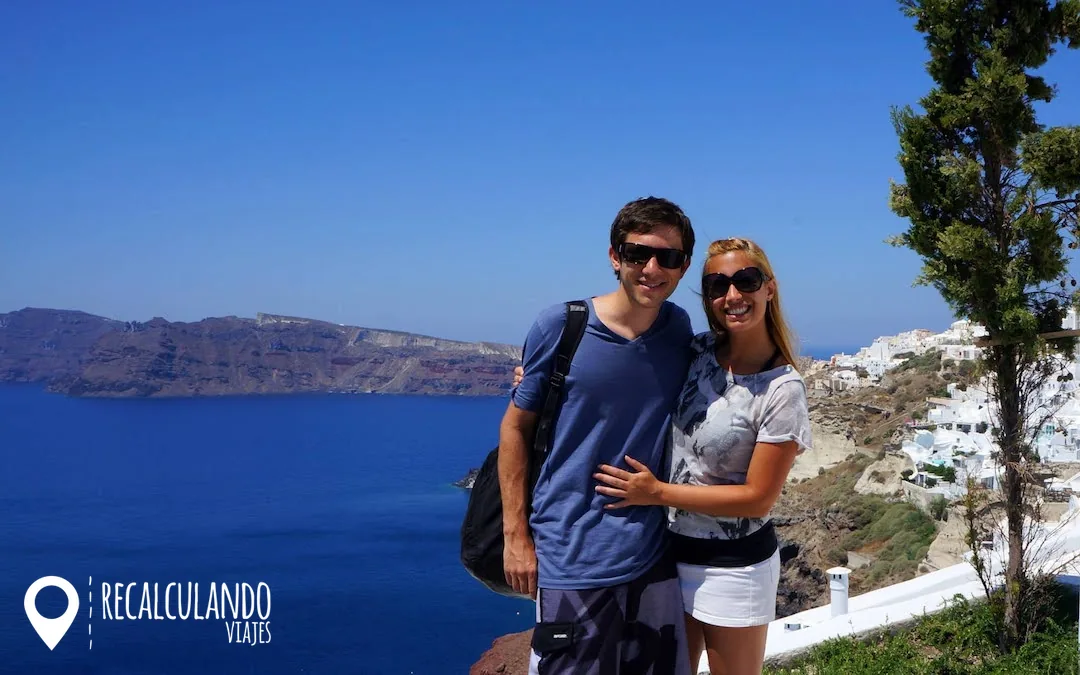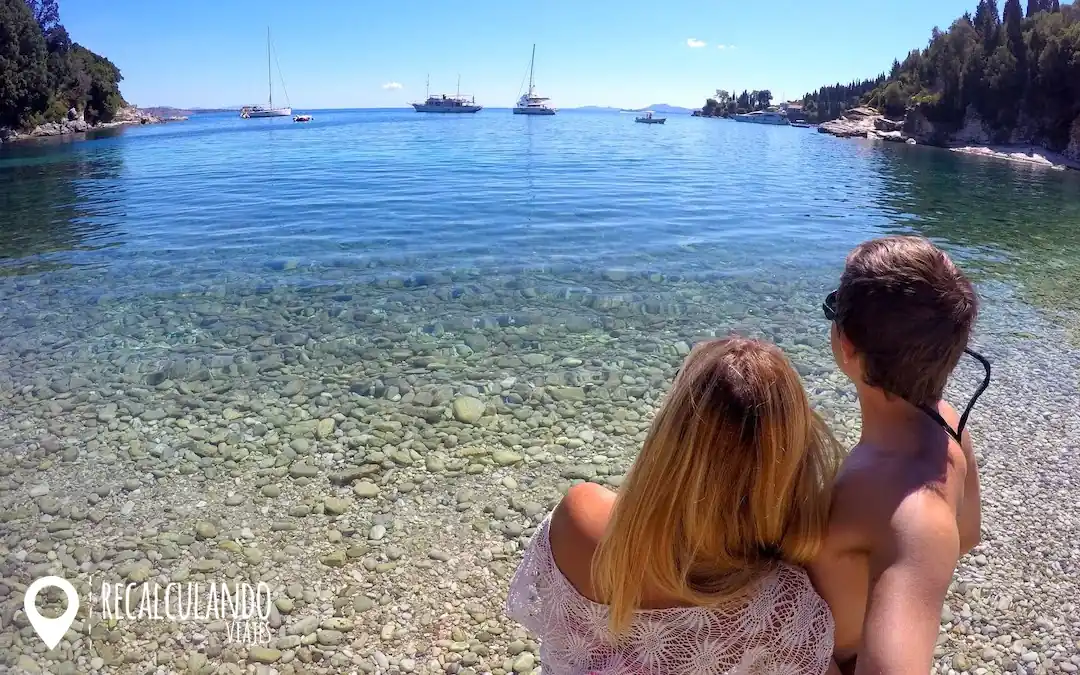
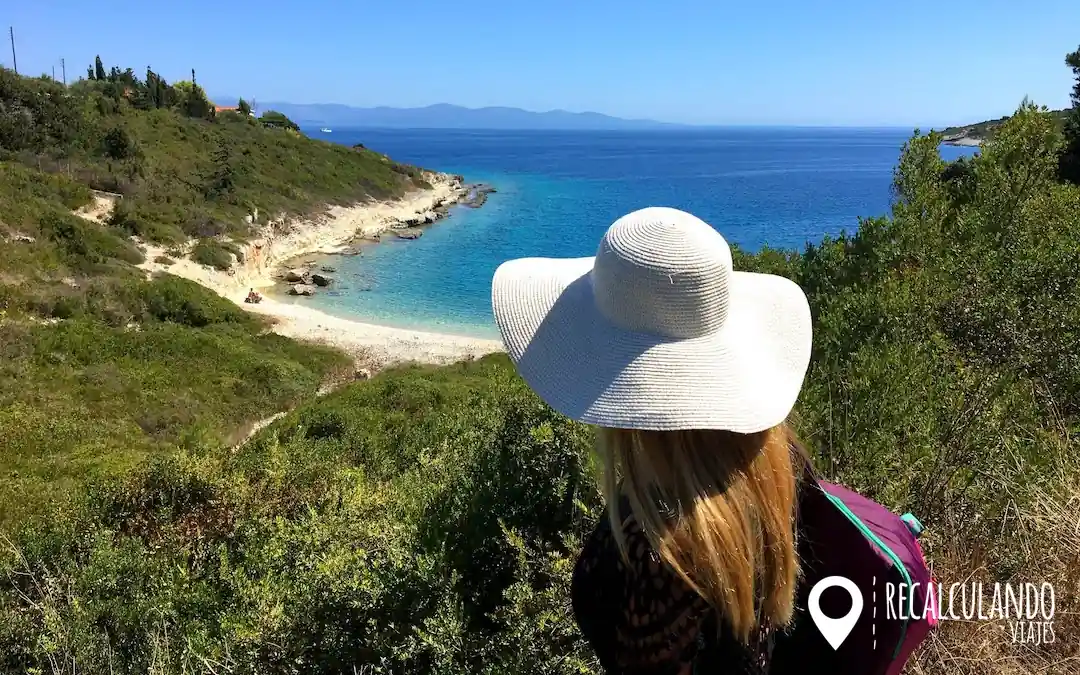
Things to do in Paxos was the first question we asked ourselves when we got off the ferry in Gaios, and twelve days later we loved it. In this guide, we share, with a map included, the 15 unmissable spots on this Ionian island: what to do, where to stay, how to get there, and everything you need to set up your own itinerary. If you are organizing your trip, you might also find our note on how to plan your trip step by step helpful.
We are a couple of Argentinian digital nomads; we’ve been traveling the world for over nine years, and in Paxos, we stayed for 12 days in mid-September, touring the entire island by car. As part of a trip of more than two months through the Ionian islands (Corfu, Paxos, Lefkada, Kefalonia, and Zakynthos), Paxos ended up being, without planning it, one of the places where we most wanted to return.
🌍 Travel Insurance: 5% Off with IATI Seguros! 🌟
Take advantage of this offer and travel safe.
Summary: Things to do in Paxos
| Category | Detail |
|---|---|
| Destination | Paxos, Ionian Islands, Greece |
| Best time to visit | May, June, and September (avoiding July and August) |
| Recommended duration | 3 to 4 days minimum (5 to 6 days ideal) |
| Estimated budget | 60 – 90€ per person/day |
| Language / Currency | Greek / Euro (€) |
| Must-sees | Gaios, Lakka, Longos, Erimitis Beach, and Blue Caves |
| How to get there | Ferry from Corfu or from Igoumenitsa (mainland Greece) |
| Internal transport | Rental car or scooter (highly recommended) |
| Key excursion | Antipaxos (Voutoumi and Vrika beaches) by water taxi |

1. Gaios, the capital of Paxos
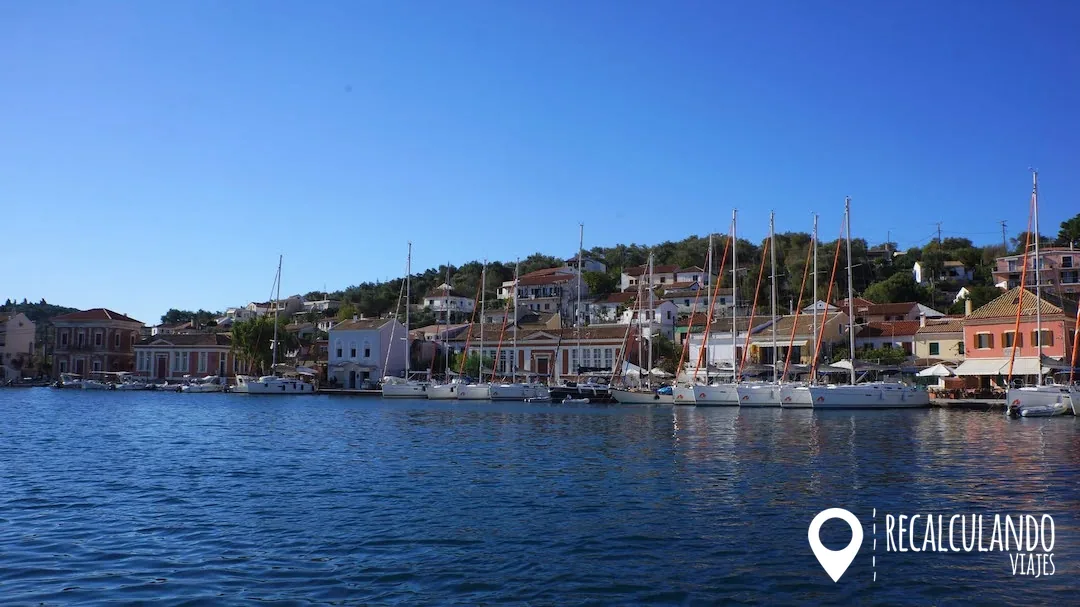
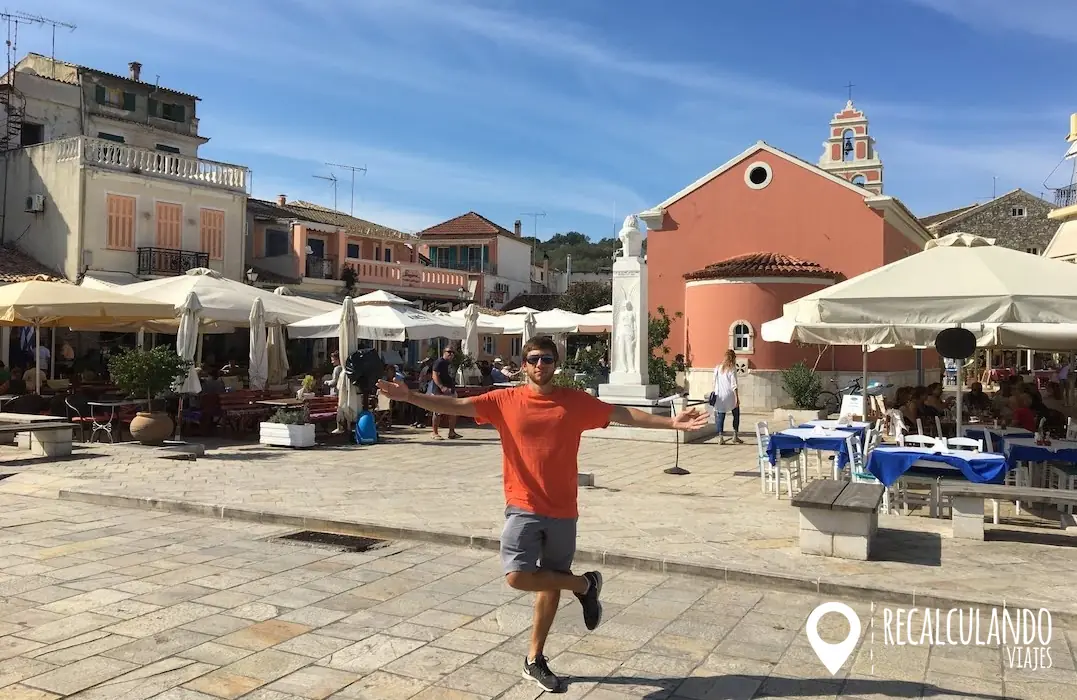
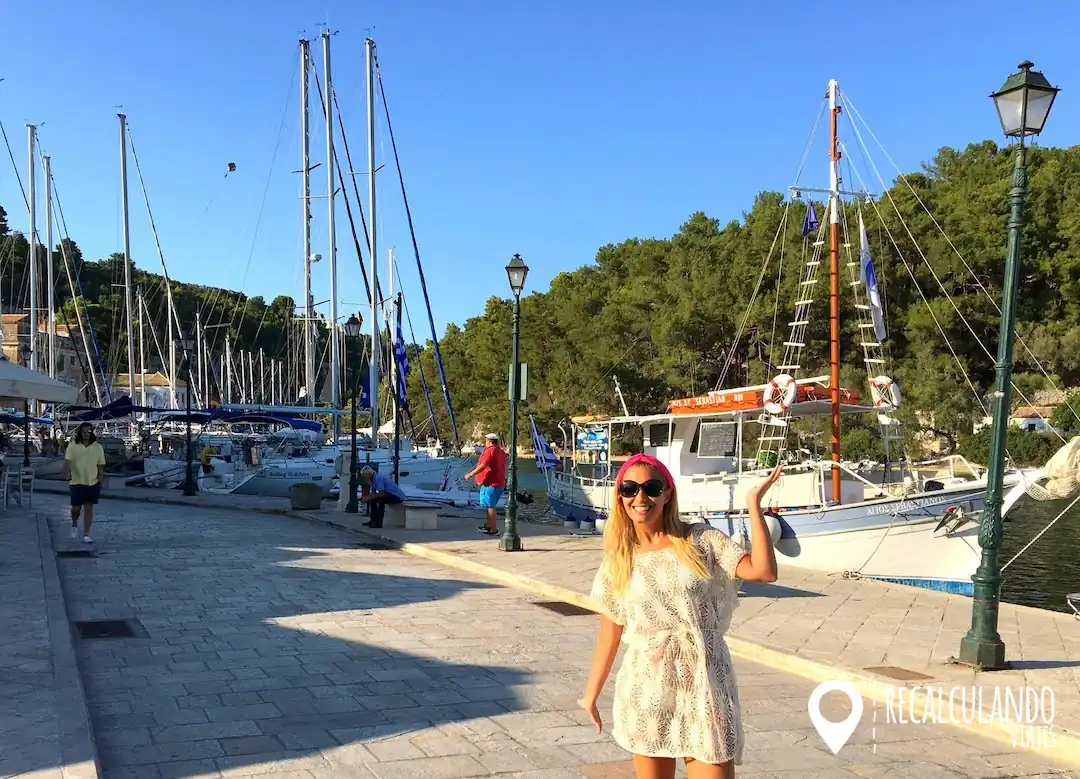
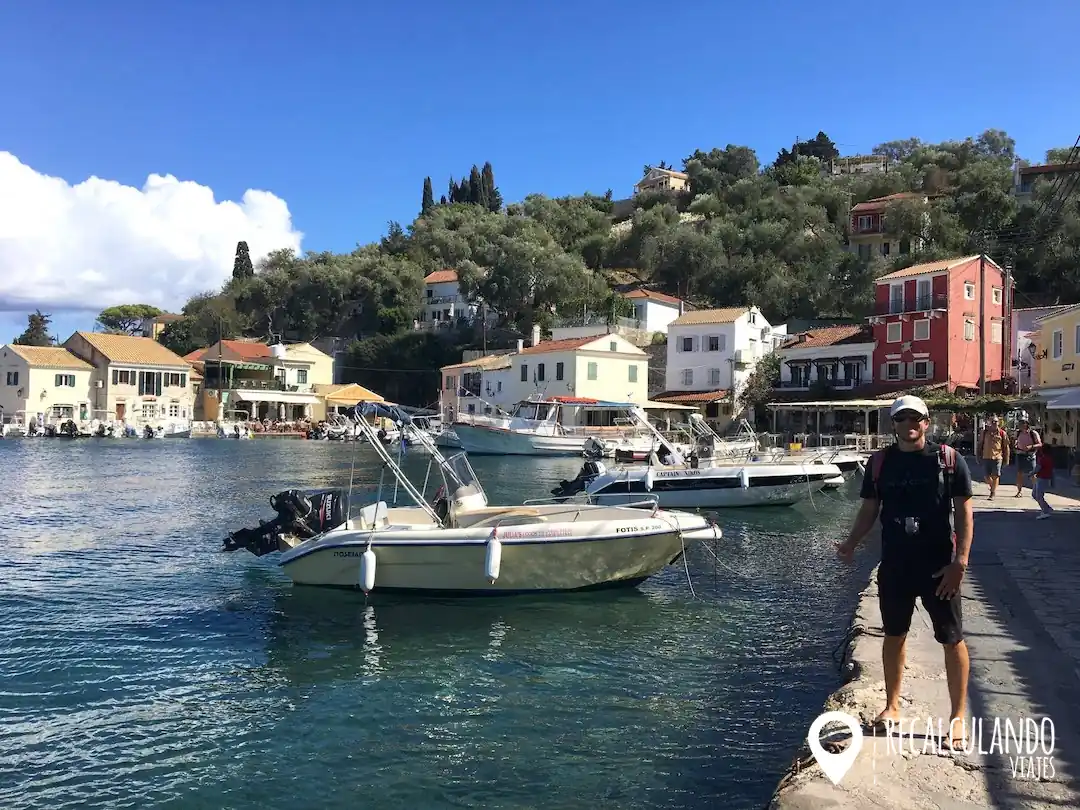
Gaios was the first thing we saw of the island as soon as we got off the ferry, and honestly, we loved it from our very first walk along the pier. It is the largest town in Paxos, with two-story houses painted in pastel tones, Venetian-style balconies, and a small port protected by two tiny islands, Agios Nikolaos and Panagia, which act as a natural breakwater.
2. Tripitos Arch
About three kilometers south of Gaios, through olive groves and along a fairly uneven dirt road, you reach one of the great natural landmarks of Paxos: Tripitos Arch. It is what remains of a sea cave that collapsed centuries ago, and today it forms a limestone rock bridge that rises about 20 meters above the water. You can walk on top of it (carefully, because it is narrower than it looks in photos) or see it from below, on one of the boat trips that tour the west coast on the way to the Blue Caves. Many travelers arriving on the island by car mark it as a mandatory stop before continuing to the rest of the southwest coast.
3. The museums of Gaios
Paxos is not an island of nightlife or grand attractions, but it does have some history kept in three small museums, all in Gaios. The Folk Museum gathers everyday objects and fishing instruments that show how islanders lived a century ago, the Paxos Historical Museum exhibits findings ranging from Ancient Greece to Ottoman rule, and the Olive Press Museum is dedicated to olive oil, the most important economic activity on the island. We are not huge museum-goers unless they are free or truly essential, but many travelers recommend them for an afternoon of heat or rough seas.
4. The island of Agios Nikolaos and its Venetian castle
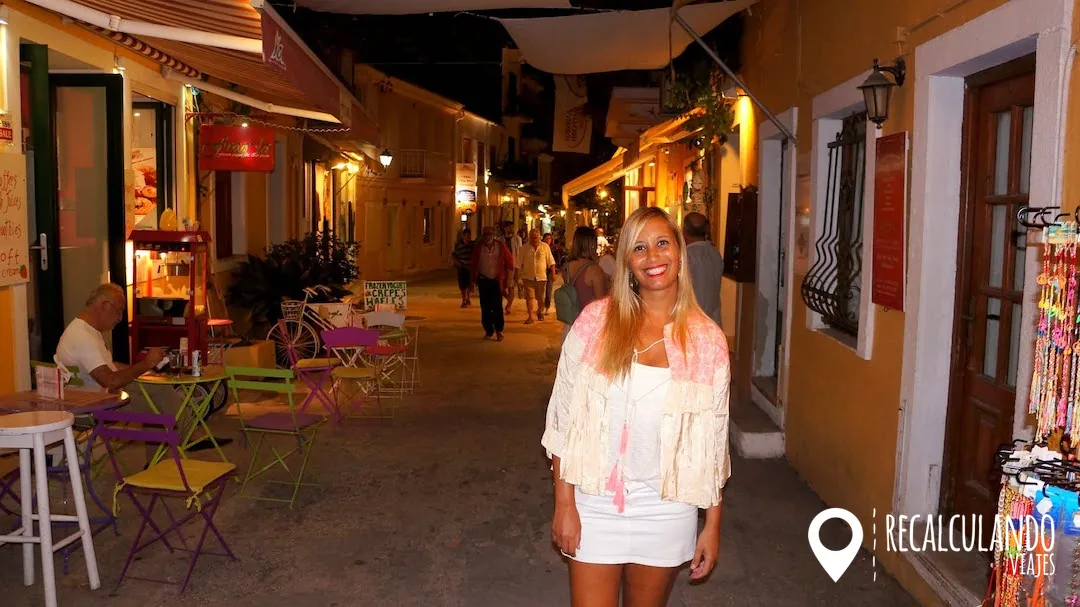
Opposite the port of Gaios, so close that it looks like you could swim across, is the islet of Agios Nikolaos. It acts as a natural breakwater for the port and hides a Venetian castle built in 1423, in addition to a windmill from the same period. You can reach it in a few minutes on one of the boats leaving from the main pier, and the visit takes no more than an hour. It is a short trip, ideal to combine with a return to Panagia, the other island in the port.
5. The island of Panagia and its monastery
Panagia is the sister island to Agios Nikolaos, also within the closed gulf formed by the port of Gaios. Up there is a monastery dedicated to the Virgin that, according to the locals, gets filled with people every August 15th for the most important religious procession in the island’s calendar. The rest of the year it is a quiet, almost empty place, perfect for a short walk with views of the port and, on clear days, Corfu in the background.
6. Mongonissi Beach
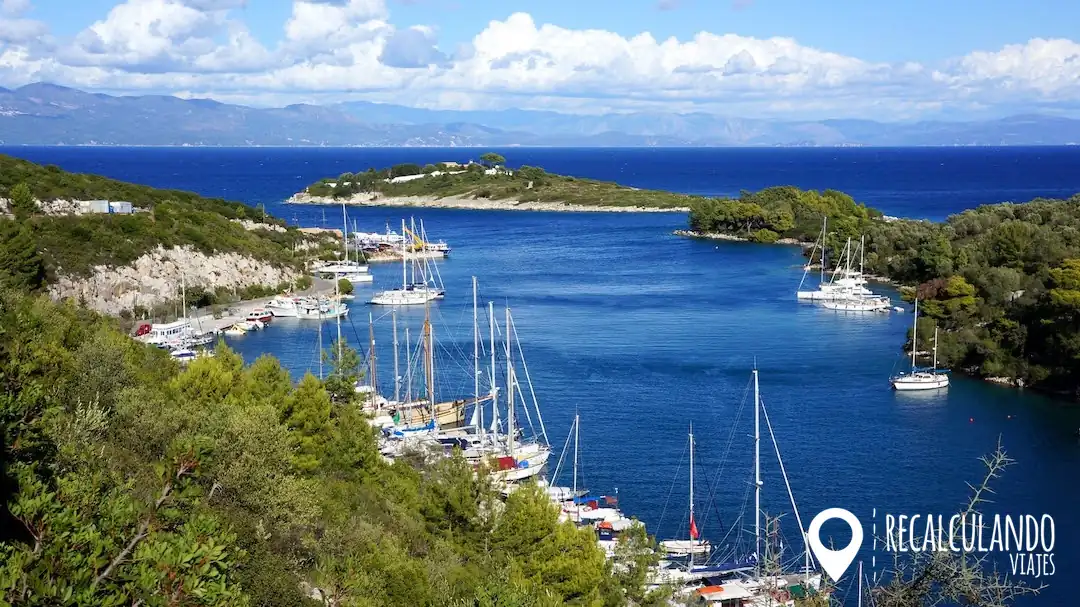
About 4 kilometers from Gaios is Mongonissi, one of the few “organized” beaches in Paxos and practically the only one with some sand among so many pebbles. The water is always protected and transparent, there is a tavern with sea views, and you can rent sun loungers for a few euros (or for free if you eat at the beach restaurant). Since it is tucked into a small natural harbor, it is common to see water taxis and the occasional private yacht coming and going. It is easily reached by car or water taxi from Gaios.
7. Lakka, the northern town
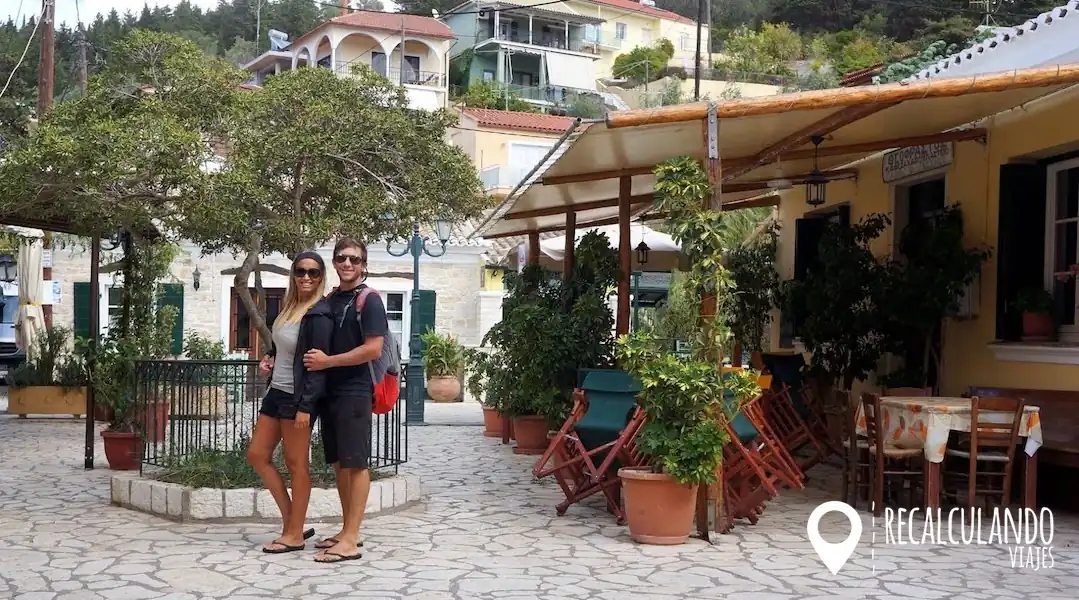
Lakka is at the northern tip of the island, nestled in a bay closed between the blue of the Ionian Sea and olive groves. Of the three towns in Paxos, it is, for us, the most picturesque: the houses with Venetian influence, the promenade full of sailboats, and that feeling of a small town where everyone greets each other.
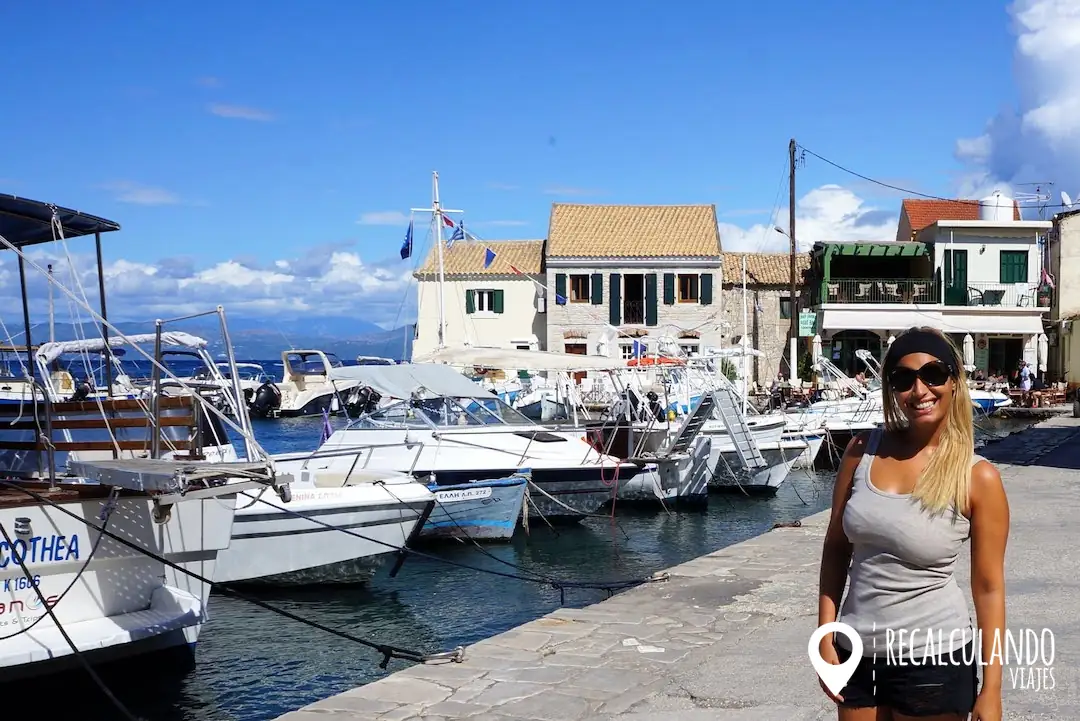
Most boat excursions to the caves and the most beautiful beaches on the west coast depart from here, so if you like getting around by boat, it is worth staying in this area. At sunset, with boats swaying in the bay and the port bars starting to fill up, we understood why so many people choose to stay here instead of Gaios.
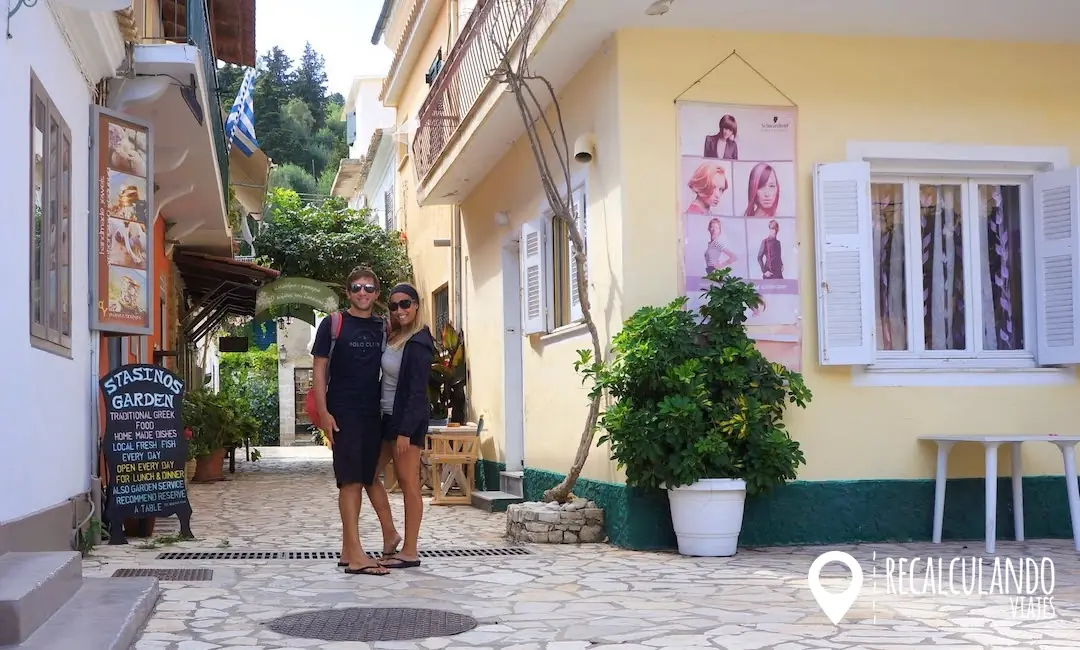
Beaches near Lakka: Harami and Kanoni
On the west side of Lakka bay, there are two small beaches ideal for a quiet afternoon: Harami and Kanoni. Both have shallow water and natural shade from trees, so they are a good option if you are traveling with children or simply prefer to avoid the more crowded beaches on the island.
8. Monodendri Beach
On the north coast, near Lakka, is Monodendri, the other “organized” beach on the island along with Mongonissi. It is a pebble bay with two beach bars that offer sun loungers included if you buy something. The water is crystal clear blue and the olive trees reach almost to the shore, so there is natural shade for midday. It is a medium-sized beach, quiet during the week, and a good spot to stop after touring Lakka.
👩⚕️👨⚕️ A must-have for stress-free travel! 🌎✈️ ➜ Get a Quote, Compare & Buy
9. Longos (Loggos), the most photogenic town
If we had to choose just one town to recommend in Paxos, it would probably be Longos. It is smaller than Gaios and Lakka, just a handful of colorful houses around a pebble bay, but it has a charm that you feel as soon as you get out of the car. There are no nightclubs or noise: just a couple of bars, taverns with water views, and souvenir shops. Behind the town, paths through olive groves lead to hidden coves that almost no one reaches by car. Every year, between late August and early September, Longos organizes a classical music festival that gives the town some extra life in the low season. We stayed there several afternoons just to watch how the light changed over the water.
10. The beaches of Levrechio and Kipiadi
Very close to Longos are two pebble beaches that barely appear in classic guides: Levrechio, small and surrounded by trees that reach the shore, and Kipiadi, a bit larger and significantly less crowded than the island’s “organized” beaches.
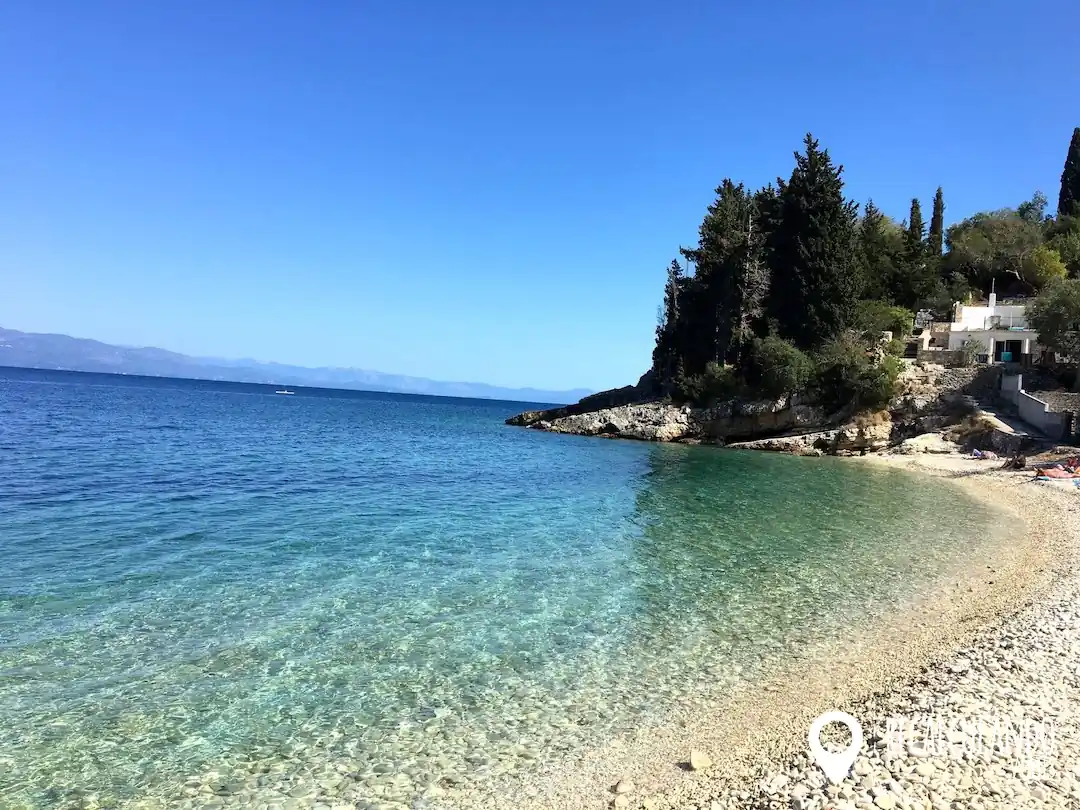
Levrechio Beach – Things to do in Paxos
Kipiadi can be reached by car or scooter, and then you have to walk about 10-15 minutes along a path. Nearby is also Kipo, even smaller and quieter. Neither of the two has infrastructure, so if you go, you must bring water, an umbrella, and something to eat. Before setting out to explore these more hidden beaches, review our packing checklist so you don’t forget anything essential.
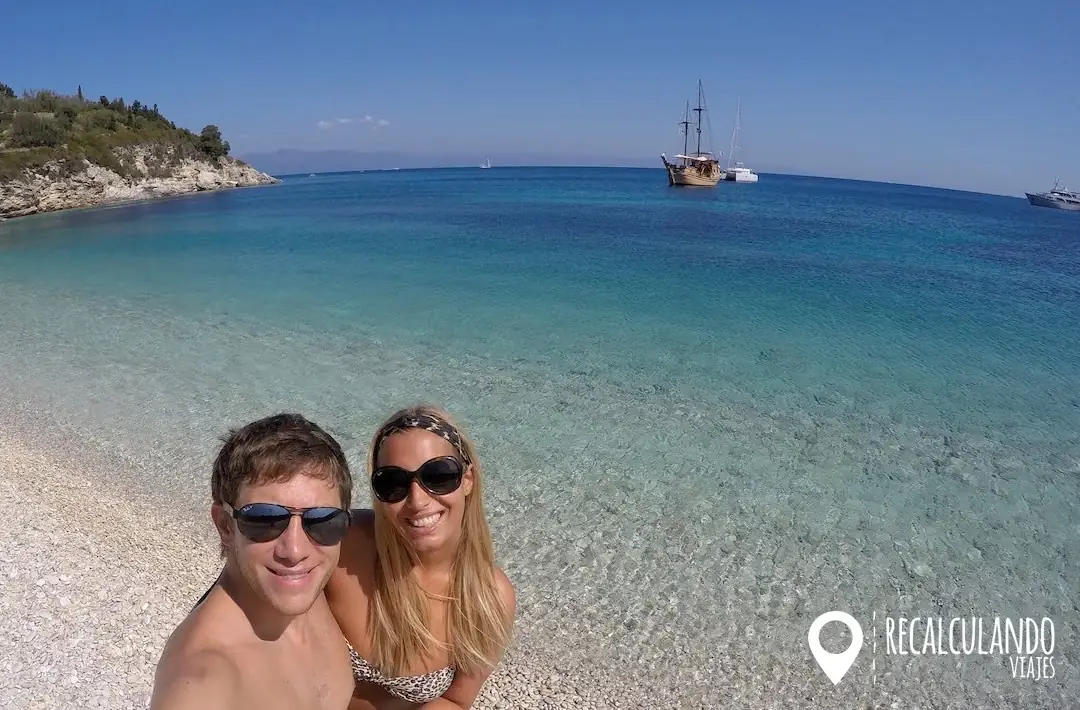
Kipiadi Beach – Paxos
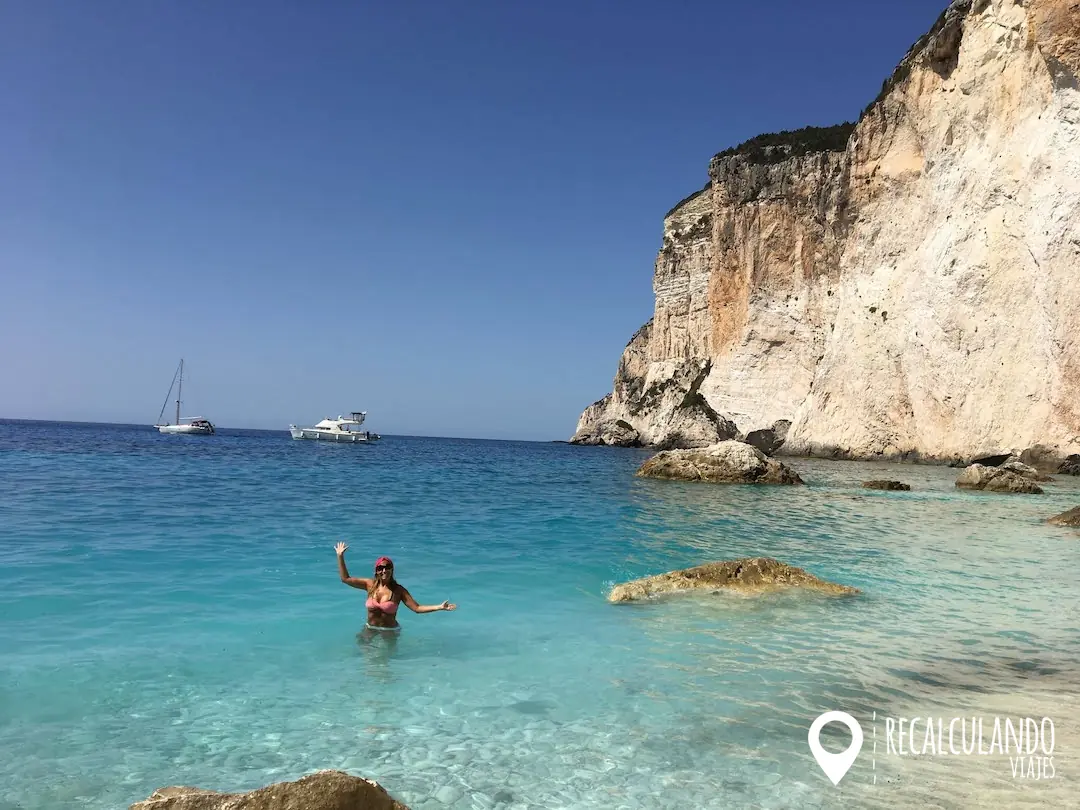
11. Erimitis Beach, Cliffs and the best sunset on the island
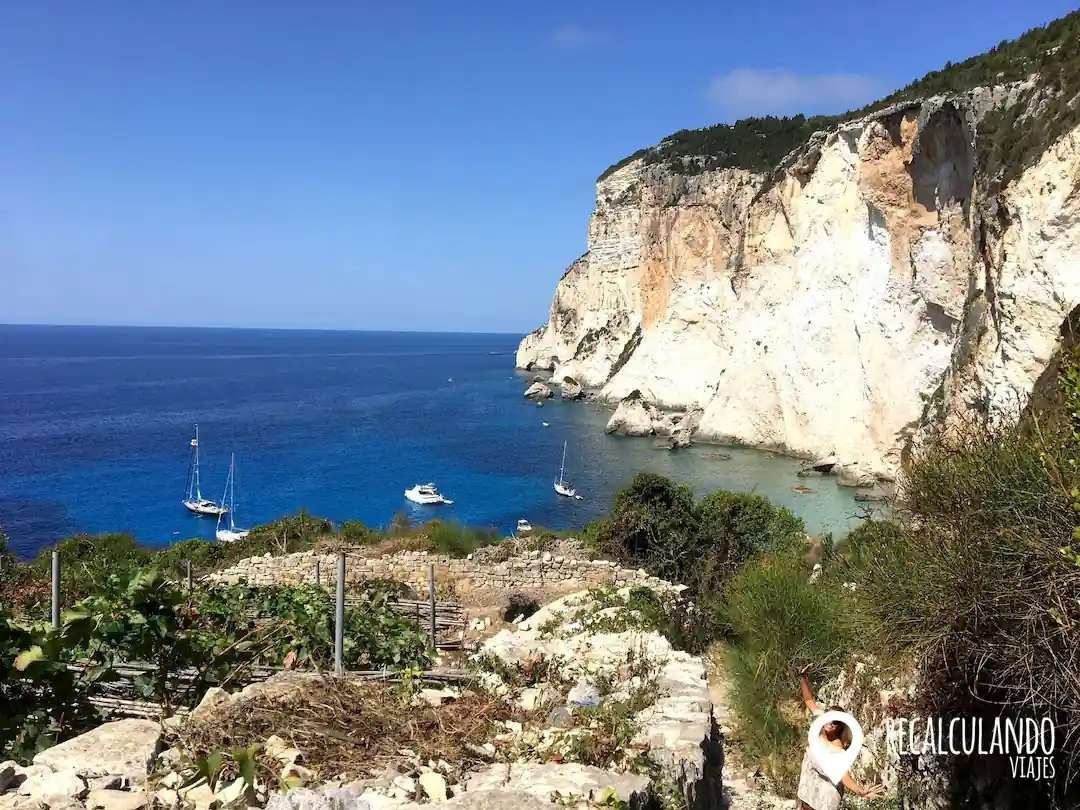
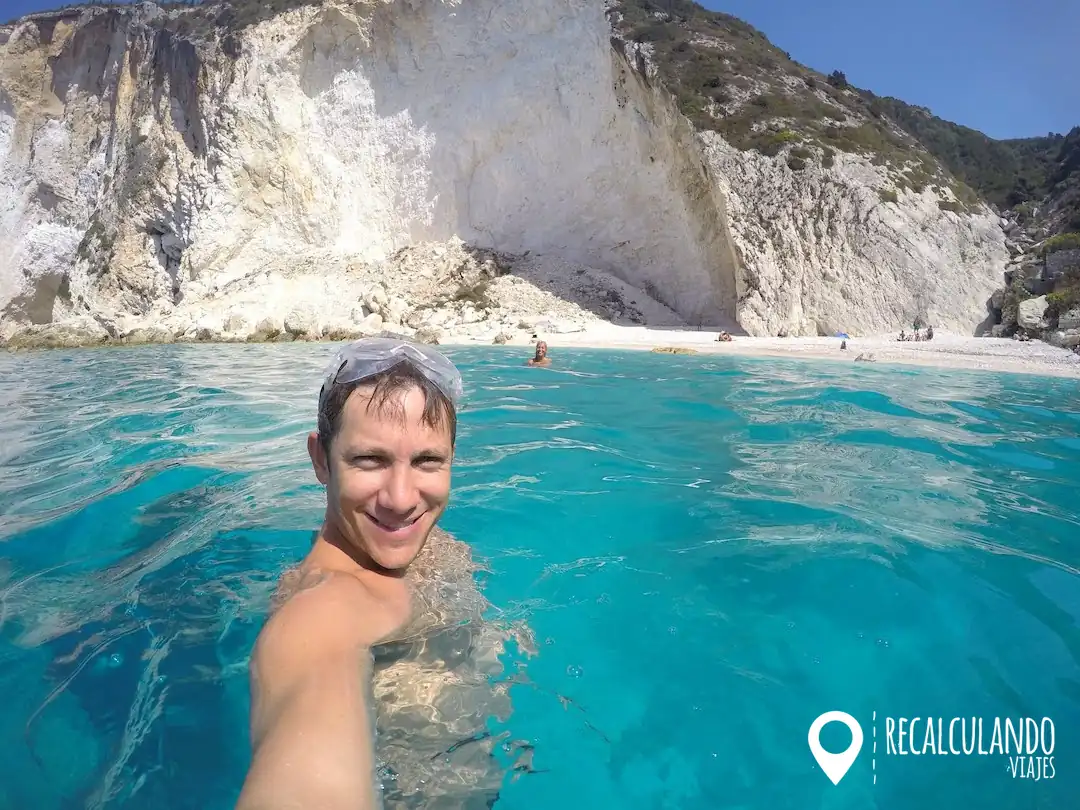
The east coast of Paxos is all quiet pebble coves, but the west is a different story: white limestone cliffs that the sea has been carving for centuries. Erimitis is the most famous postcard of that coast. The beach was only born in 2007, when a part of the cliff collapsed and left a bay framed by white rock walls. It is reached from the village of Magazia, down a fairly steep dirt path (not suitable for all footwear).
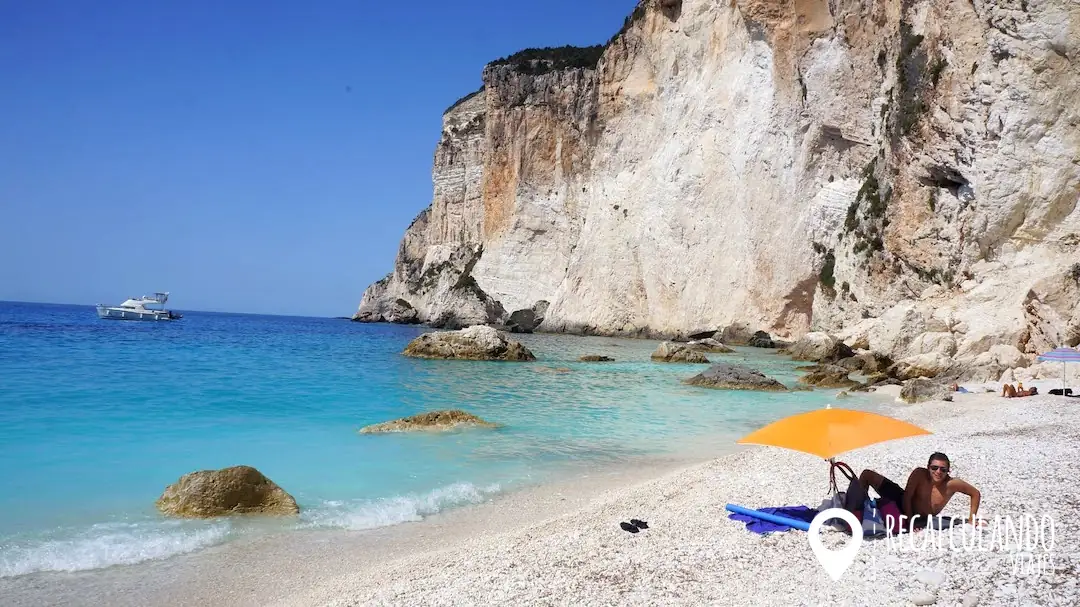
Before going down, it is worth looking at the old 18th-century oil mill, which was in operation until 1960 and is today converted into a small exhibition space. Once on the coast, above the cliff, there is a bar-restaurant for those who prefer to watch the sunset with a drink in hand instead of going down to the beach. At dusk, the white rock is dyed orange and pink, and it is no coincidence that it is the most recommended place on the island to watch the sun set over the Ionian, with Corfu drawn on the horizon.
12. The Blue Caves: Ipapanti and Ahai
The entire west coast of Paxos is full of sea caves, but the most famous are the Blue Caves, especially Ipapanti and Ahai. They can only be seen from the water, either on a group excursion from Gaios or Lakka, on a boat with a skipper, or by renting your own boat for a few hours. The light that filters under the water creates a gradient of blues that gives the caves their name, and some boats make a stop to swim or dive inside them. Legend has it that Poseidon had a marble palace hidden in one of these caves, which adds some mythology to the trip. Most excursions departing from Corfu to Paxos and Antipaxos include this stop as one of the highlights of the day.
13. Antipaxos and Voutoumi Beach
Only 15-20 minutes by water taxi from the port of Gaios is Antipaxos, the little sister of Paxos: just 4 kilometers long, covered in vineyards, and with less than a hundred permanent inhabitants. There is no accommodation on the island, so it is visited as a day trip. Private water taxis leave from the square in Gaios (not the ferry port) at 10:00, 11:00, and 12:00, returning at 15:00, 17:00, and 18:00, for about 15€ round trip; it is best to confirm times at the pier because they change according to the number of people or the season.
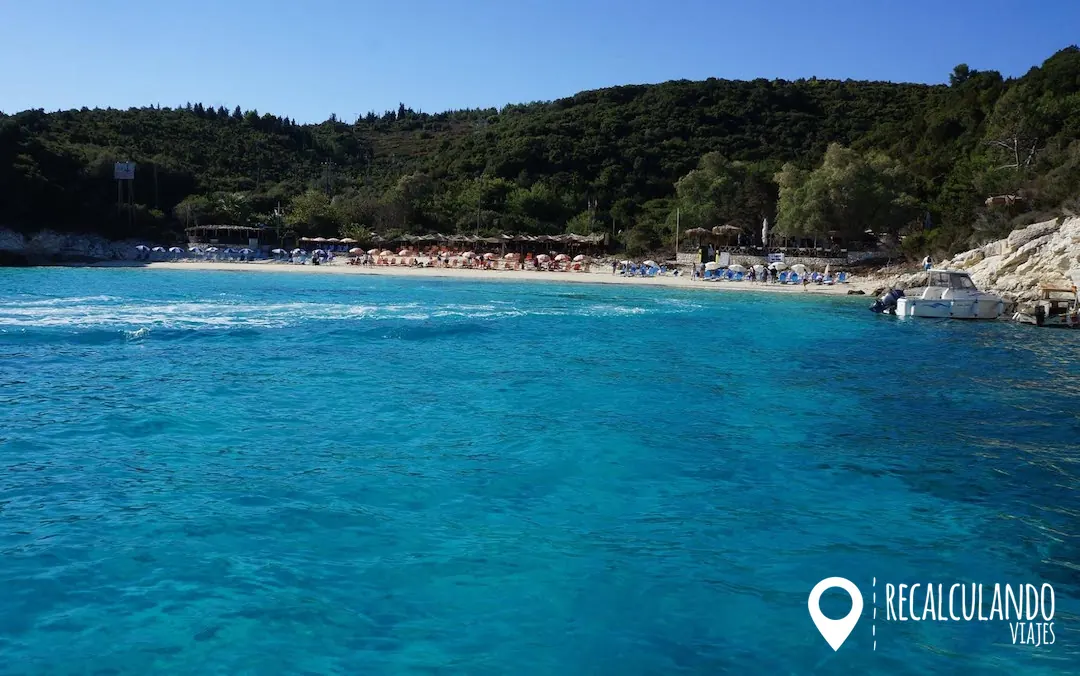
Voutoumi Beach is the most famous beach in Antipaxos, a horseshoe-shaped bay with turquoise water that looks like it’s from the Caribbean and white pebbles that contrast with the intense green of the vegetation. We went one morning early, before the large boats arrived from Corfu, and it was great; in high season Antipaxos fills up quickly. If you can choose, the best time is very early in the morning, or directly outside of July and August, when the island regains some of the calm that made it famous.

14. Vrika Beach, the other gem of Antipaxos
A short walk from Voutoumi (about 20 minutes along a path) or directly by water taxi from Gaios is Vrika, considered by many to be the most beautiful beach in the entire Ionian Sea. It enters the water with a gentle slope, ideal for going with children, and its bright turquoise tones are what end up in all the photos of Antipaxos. Since it is somewhat overshadowed by Voutoumi, it usually has fewer people, although in high season it is not spared from the midday crowds. There is only one tavern on the beach, so don’t expect many dining options.
15. Touring Paxos by car among infinite olive groves
If there is something you cannot miss doing in Paxos, it is simply driving at your own pace along the main road that crosses the island from end to end among ancient olive groves. We rented a car as soon as we arrived and toured the entire island for all twelve days: we stopped wherever we wanted and discovered that the island, just 10 kilometers long, has much more to offer than it seems at first glance. For those who prefer to walk, the path connecting Gaios with Lakka is one of the most recommended, with sea views for much of the route. Paxos has about three thousand inhabitants spread across small settlements where livestock is still raised and homemade wine is produced, so driving from town to town is also a way to get to know the island beyond the beaches.



Best time to travel to Paxos
The best time to go to Paxos is from May to September, when most taverns, accommodations, and ferry connections are open. July and August are the months with the least rain and the warmest sea (25-30°C), but also the most crowded and expensive, especially in Antipaxos and at the “organized” beaches. May, June, or the second half of September provide a better balance between climate, price, and fewer people. We were there in mid-September and we still had spectacular beach days, with much less movement than in the middle of August. If you travel in high season, book accommodation and a car several weeks in advance: the offer on the island is small and runs out quickly.
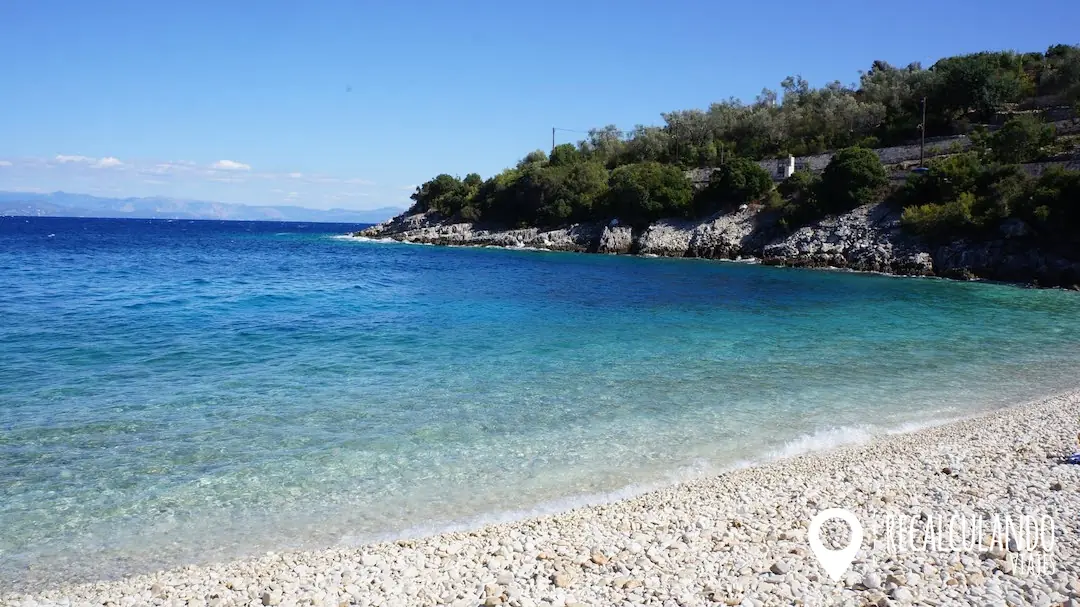
Kaki Lagkada Beach Paxos
How many days do you need in Paxos?
3 to 4 days is enough to see the three towns, a couple of beaches, and add the excursion to Antipaxos and the Blue Caves. If you also want to explore the west coast calmly, go down to Erimitis for sunset, and lose yourself on the paths among olive groves, calculate at least 5 or 6 days. We stayed twelve, by car and without rushing, and the island gave us much more than we expected upon arrival. Whatever your plan is, the more days you stay, the sooner you should book accommodation: the offer in Paxos is small and in high season it runs out quickly.
Itinerary: things to do in Paxos in 1 day
If you only have one day in Paxos – most common if you come on a day trip from Corfu and are not sleeping on the island – this is the route that pays off the most:
- Morning: Blue Caves (Ipapanti and Ahai) by boat, with a swimming stop.
- Mid-morning: Antipaxos, Voutoumi or Vrika beach, a long hour in the water.
- Midday and afternoon: Gaios, to have lunch in a port tavern and walk through the town before returning to Corfu.
It is almost word for word the route that most organized excursions from Corfu take (we tell you more in the excursions section below), so if you don’t have a car and aren’t planning to stay the night, hiring one of these tours is the simplest way not to miss anything in a few hours.
Itinerary: things to do in Paxos in 3 days
With your own car and three days, it is enough to see the three towns, several beaches, and Antipaxos without rushing. This is how we would organize it:
Day 1: Gaios and the south of the island
Start with Gaios: walk along the port and cross by boat to the islands of Agios Nikolaos and Panagia. If you like museums, add the three in Gaios. In the afternoon, drive to Tripitos Arch and end the day at Mongonissi Beach.
Day 2: Lakka, the Blue Caves and sunset at Erimitis
Move north to Lakka, and from there add a boat trip to the Blue Caves (half day). In the afternoon, go down to Monodendri beach or Harami and Kanoni, and close the day at Erimitis to see the best sunset on the island.
Day 3: Longos and excursion to Antipaxos
Dedicate the morning to Longos and its nearby beaches, Levrechio and Kipiadi. After lunch, cross by water taxi to Antipaxos to spend the afternoon in Voutoumi and Vrika before returning to sleep in Paxos.
Where to sleep in Paxos
Gaios is the most practical option if you want to be close to everything: restaurants, the water taxi port to Antipaxos, and good connections to the rest of the island. Lakka is the best base if your plan is to move by boat every day, and Longos is ideal if you are looking for something quieter and with less movement. In any of the three towns, you will find everything from simple studios to villas with pools, but since the offer is limited for how small the island is, it is advisable to book well in advance, especially if you are traveling in July or August. A highly rated option near Gaios, for example, are the Electra Villa & Pool Studios, about two kilometers from town and with their own pool, ideal if you prefer something quiet but close to everything.
We stayed at Galazio Sunset Villas: ground floor apartment, very comfortable and complete. The owner Spiros is very friendly, he coordinated the car rental for us at a good price, it has a pool, a quiet place among an olive grove road, highly recommended (this does require a car or scooter to get there). You can ➜ Book Here

Where to Stay in Paxos? Map & Prices
On the map below, you can zoom in, move around, and filter by your travel dates to see real-time accommodation prices in Paxos.
How to get to Paxos
Paxos does not have its own airport, so arriving always involves going through Corfu. Corfu Airport (CFU) receives direct flights from various European cities in high season, and from there you have to take a ferry to Gaios.
The ferry companies covering the route, mainly Kerkyra Lines and Joy Cruises, make between 5 and 13 daily crossings in high season, with a duration of between 45 minutes and 1 hour and 45 minutes depending on the ship. Prices start from about 20-35€ per foot-passenger way, and vary depending on the date and how far in advance you book. You can also arrive by ferry with a car from Igoumenitsa, on the Greek mainland, in about an hour.
We arrived from Corfu, after touring the island for a couple of weeks, and we recommend buying the ticket a few days in advance in high season because the times fill up quickly.
TIP: to not depend on bar wifi, we traveled with a Holafly eSIM with unlimited data for Greece. With the code RECALCULANDOVIAJES you get a 5% discount. ➜ Get your eSIM for Greece here.
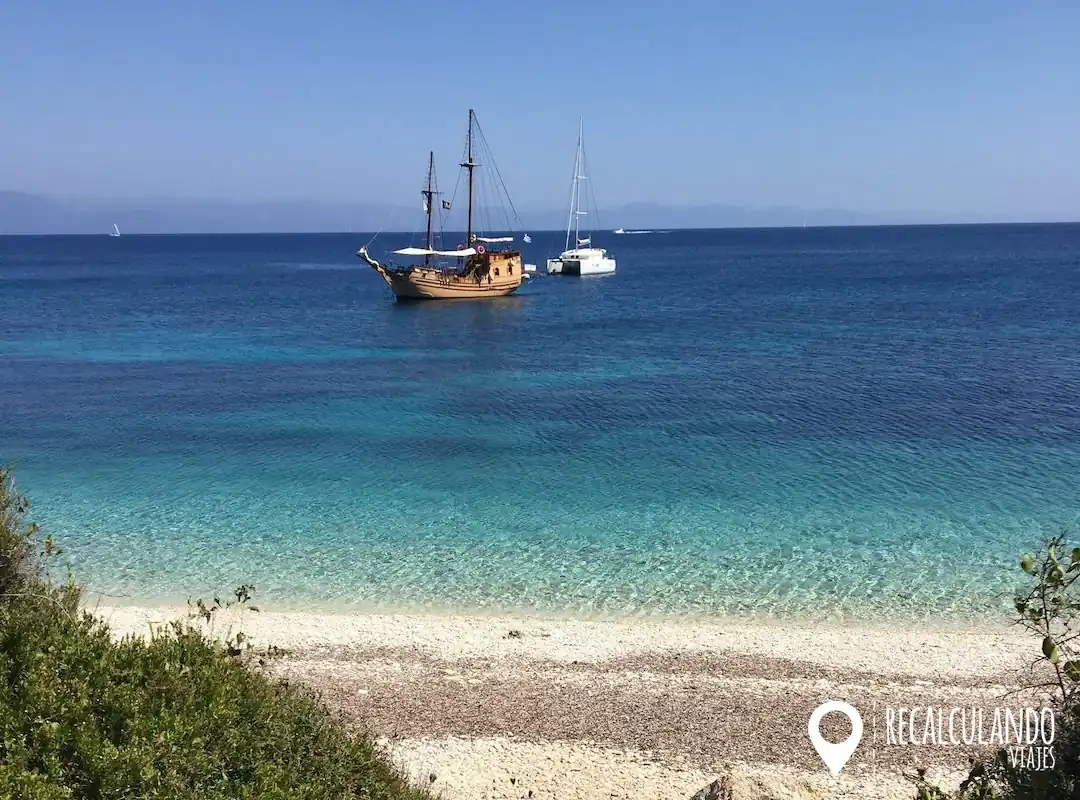
How to get around Paxos
Public transport in Paxos is scarce, so if you want to see more than just the three main towns, renting a car or a scooter is practically mandatory. We rented a car as soon as we got off the ferry and toured the entire island at our own pace during the twelve days we were there. The offer is local, with family agencies in Gaios and Lakka, so it is best to book in advance in high season because availability is limited.
There is a local bus that connects Gaios with the main villages from Monday to Friday, but with limited schedules. There are also taxis, although there are only a few on the entire island and it is advisable to book them via WhatsApp in advance. That is why most end up opting for the rental car or scooter.

What to eat in Paxos
The gastronomy of Paxos has the basis of all Ionian cuisine: fresh fish, its own olive oil (the island is one of the main producers in Greece), and some typical dishes that you won’t find in the rest of the country. Bourdeto is a spicy fish stew cooked in tomato and olive oil, very popular throughout the Ionian area.
Sofrito, a veal dish in a garlic, vinegar, and white wine sauce, is another classic that we tried several times during our days there.
Other typical dishes that you will find in almost any tavern are horta (a salad of cooked wild herbs, with olive oil and lemon), kavourmas (a cured pork sausage, typical of the Ionian islands), and revithada, a chickpea stew with onion and herbs that is also a classic in other islands of the archipelago. The taverns of Gaios, Lakka, and Longos offer homemade versions of all these dishes, almost always with a view of the water, and the prices are significantly more accessible than on more touristy islands like Corfu or Santorini.

Where to eat in Paxos
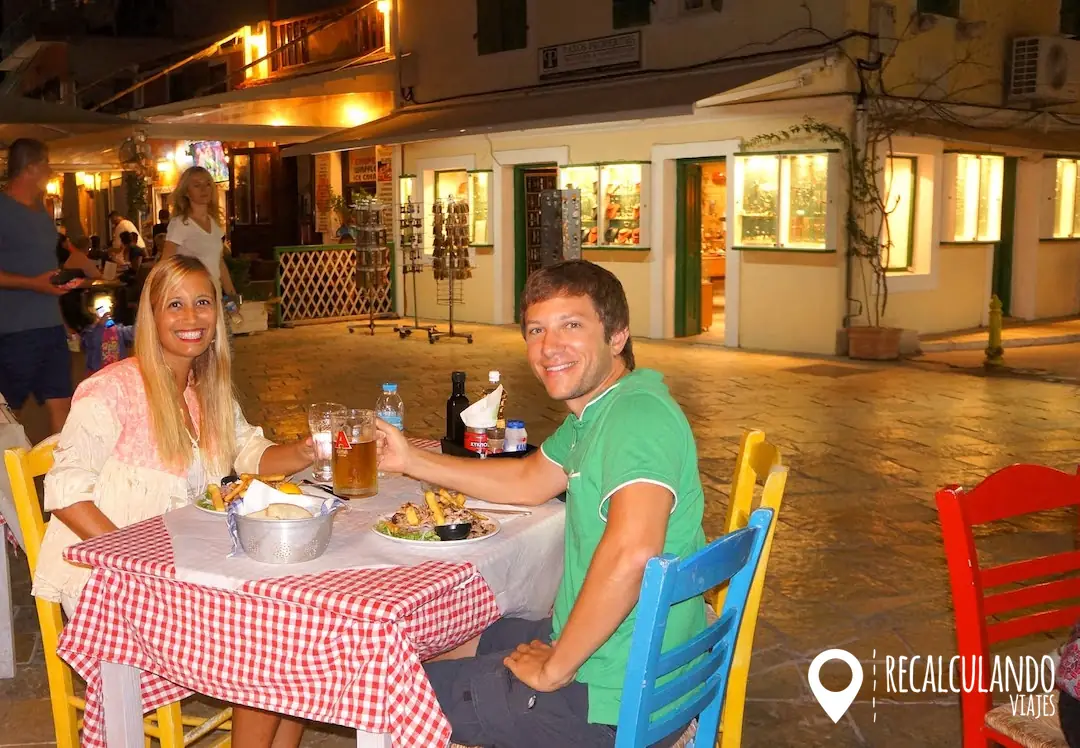
If you are looking for specific names to write down, these are some taverns highly rated by other travelers and local guides. In Lakka, Paxoimadi has a good reputation for its fresh fish and seafood with sea views. In Magazia, Averto is a family option to try sofrito and bourdeto. In Longos, O Gios stands out for its homemade food with views of the port. And in Gaios, Mambo combines Mediterranean and international cuisine on a terrace over the promenade. If you cross to Antipaxos, on Voutoumi beach there are two taverns facing the water to stop at before returning.
Travel insurance for Paxos
Greece is part of the Schengen area, so having travel insurance with medical coverage of at least 30,000€ is not just recommended: in practice, it is a requirement to be able to enter without problems. We have been traveling for more than nine years with IATI Insurance and, with our link, you get a permanent 5% discount on any of their policies, which is added to the specific promotions they usually have on dates like Easter or Black Friday. If you want to compare coverages before deciding, we also leave you our complete guide to travel insurance for Europe.
If you are from Argentina and prefer to pay in pesos and in installments, the alternative we usually recommend is GoAssistance, which allows you to finance travel assistance in interest-free installments.
➜ Quote your travel insurance with IATI with 5% Discount (Here)

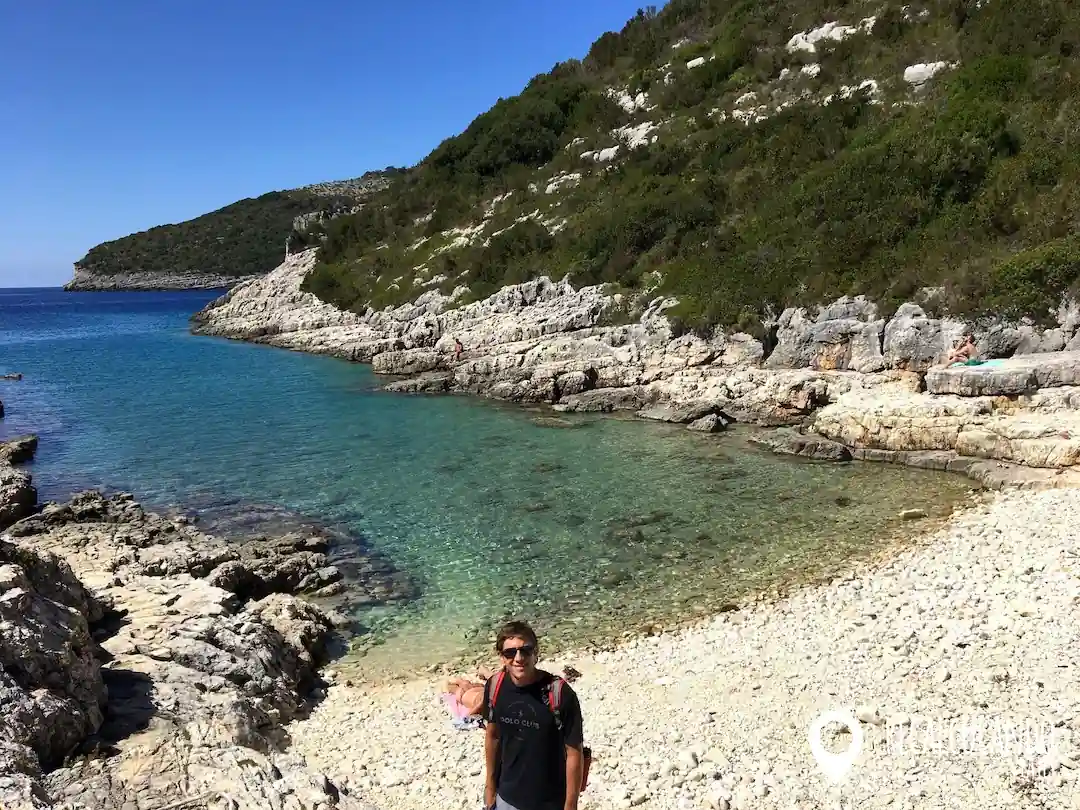
Avlaki Beach – Paxos Greece
Excursions from Paxos
The classic excursion to see Paxos and Antipaxos in a single day departs from Corfu and includes a stop at the Blue Caves, beach time in Antipaxos, and a walk through Gaios or Lakka. It is a great option if you have few days in the area and are not going to sleep on the island, although we prefer to stay for several days to be able to tour everything more calmly. If your base is Corfu, it is advisable to book this type of excursion in advance to ensure your spot in high season.
May, June, and September
3 to 4 days minimum
60-90€ per day per person
Greek / Euro (€)
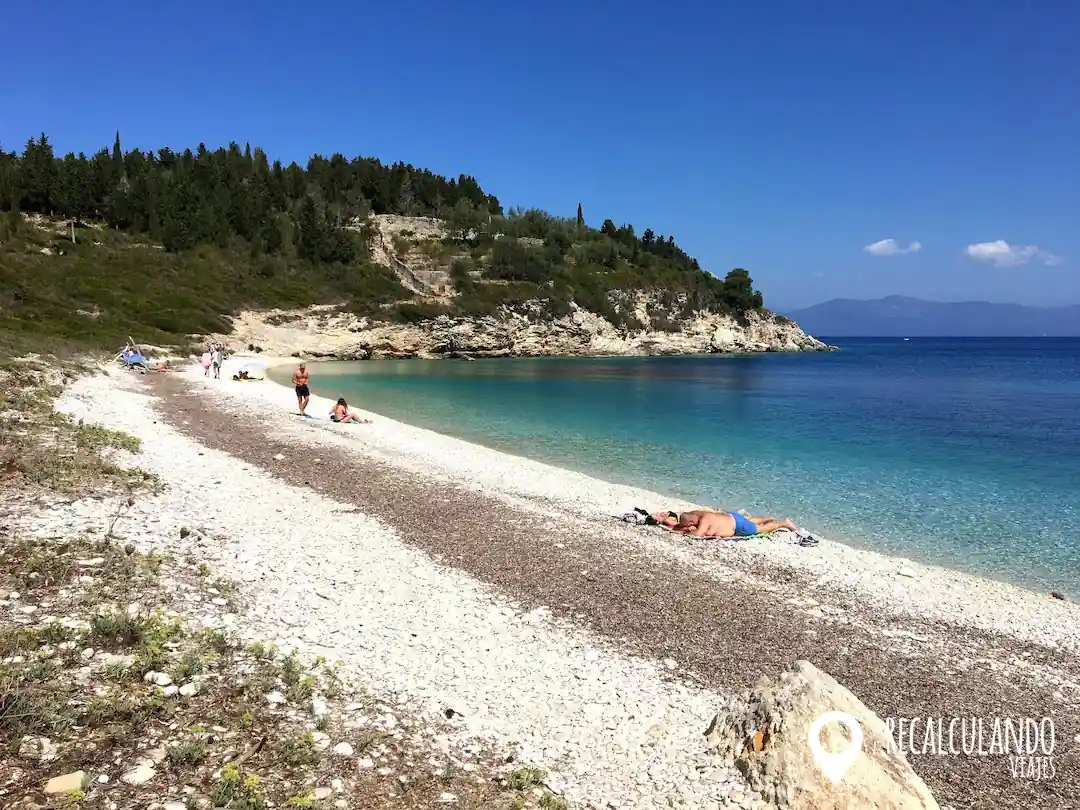
Kipiadi Beach
Map of things to do in Paxos
So you don’t miss any of these 15 places, we made a map with all the points mentioned in this article: the three towns, the beaches, the caves, and the access to Antipaxos. It will be useful whether you go by car or if you prefer to move around by tour.
Frequently Asked Questions about Paxos
How many days are needed to see Paxos?
3 to 4 days is enough to get to know the three main towns, a couple of beaches, and do the excursion to Antipaxos and the Blue Caves. We stayed twelve days touring the island by car and we didn’t have a single day too many.
How do you get to Paxos from Corfu?
By ferry from the port of Corfu or from Lefkimmi, with a duration of between 45 minutes and almost 2 hours depending on the ferry company and the type of boat. You can also arrive by ferry with a car from Igoumenitsa, on the Greek mainland.
What is the best time to go to Paxos?
May, June, and September offer the best balance between good weather and fewer tourists. July and August are the months with less rain, but also the most crowded and expensive.
Can you visit Antipaxos without a car?
Yes, in fact it is the only way: there are no cars on the island. You get there by water taxi from the port of Gaios, with a trip of 15 to 20 minutes.
Is it necessary to rent a car in Paxos?
It is not mandatory, but highly recommended. Public transport is limited and the island has a lot to see beyond the three main towns, something that is better enjoyed with the freedom of a car or a scooter.
Does Paxos have sandy beaches?
Almost all are pebble. The exception is Mongonissi, with artificial sand, and the beaches of Antipaxos, such as Vrika and Voutoumi, which do have natural sand.
How much does the water taxi from Gaios to Antipaxos cost?
It is around 15€ round trip per person. Private water taxis depart from the main square of Gaios, generally at 10, 11, and 12 noon, with returns at 15, 17, and 18 hours, although it is advisable to confirm the schedules at the pier because they may vary according to demand.
Where can you eat well in Paxos?
Gaios, Lakka, and Longos have traditional taverns with fresh fish and typical dishes such as sofrito and bourdeto. Some highly rated options are Paxoimadi in Lakka, O Gios in Longos, and Mambo in Gaios.
Conclusion: why Paxos is worth visiting
Paxos is not the Greek island of little blue and white houses that you see everywhere: it is smaller, greener, and significantly less known, and for that very reason, it is enjoyed differently. Between centuries-old olive groves, towns that still breathe like real villages, and a sea that changes color according to the time of day, we quickly understood why so many travelers end up staying more days than planned. We hope this guide with the 15 things to do in Paxos helps you build your own itinerary, whether you visit it on a day trip from Corfu or stay, like us, much longer than you expected. If after this island you want to continue exploring the area, in our section on Greece, you will find the rest of the destinations we visited throughout the Ionian islands.
Other articles for your trip to Greece
- 20 essential things to do in Santorini (with map)
- 25 essential things to do in Corfu (with map, prices and itineraries)
- 20 essential things to do in Mykonos (with map and itineraries)
- 11 must-visit things to do in Antipaxos (with map)
- 18 must-see things to do in Lefkada (with map)
- 18 must things to do in Zante (with map)
- 15 essential things to do in Crete (with map / Itinerary)
- Things to do in Kefalonia: 15 Must-See Places (Complete 2026 Guide)
ℹ️ **Total Transparency**
This article contains affiliate links. If you book through these links, we may receive a small commission at no additional cost to you. We only recommend services we use on our trips and trust. This helps us keep this blog free and continue creating useful content for you. Thank you for your support!
🔗 Resources & Useful Links for your trip to Paxos
Do you have questions or want to add your own recommendations on things to do in Paxos?
💬 Leave your comment or write to us; we love reading about the experiences of other travelers.
Thank you very much for being part of this adventure!— Nanu & Facu 🌎 | Recalculando Viajes 💜