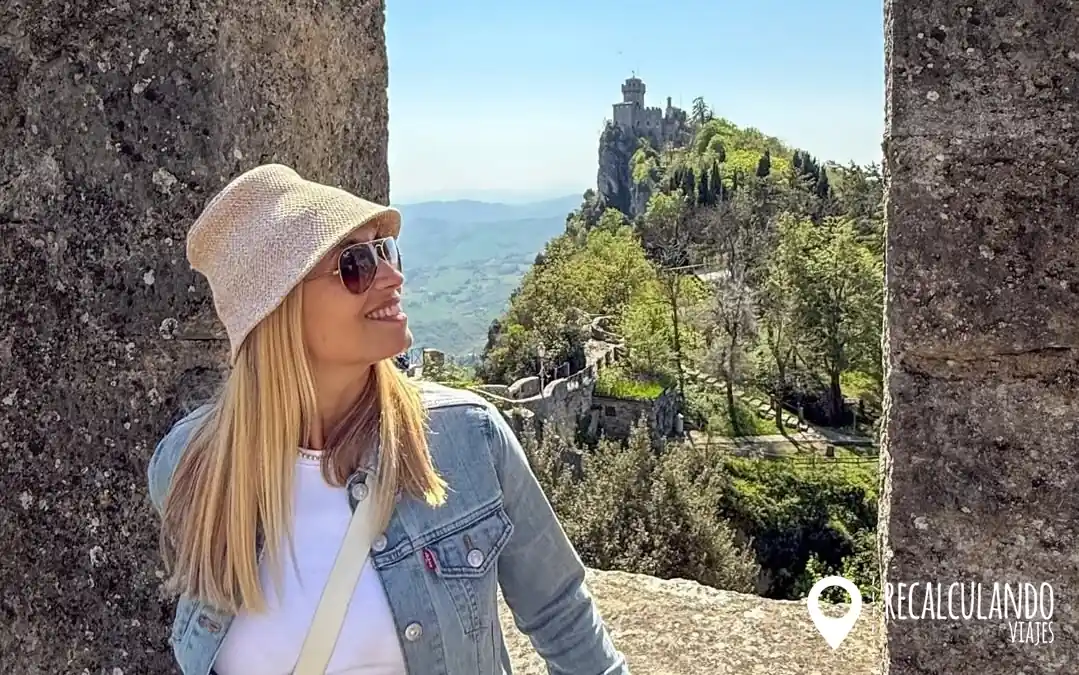
When we planned a getaway from the Italian Adriatic coast, we didn’t expect San Marino to leave us so speechless. We arrived by car from Riccione on an April morning and, honestly, what we found was one of those destinations that stay etched in your memory forever. If you are looking for things to do in San Marino, you’ve come to the right place: in this guide, we’ll tell you everything we experienced, from the medieval towers to the viewpoints with impossible views, so you can make the most of every minute of your visit.
San Marino is the third smallest country in the world and one of the most curious in Europe. Nestled between the hills of the Emilia-Romagna and Marche regions, this independent microstate has over 1,700 years of history and an energy that blends the medieval with the touristic in a way that, when done right, is fascinating. Ready to climb Mount Titano?
Summary: Things to Do in San Marino
| Category | Key Details for Travelers |
|---|---|
| Destination | San Marino (independent microstate and UNESCO World Heritage Site). |
| Ideal Duration | 1 full day (enough to explore the main highlights). |
| Must-See Attractions | The Three Towers (Guaita, Cesta, and Montale), Piazza della Libertà, and the Palazzo Pubblico. |
| Unique Experience | Walk along the Passo delle Streghe (Witches’ Pass) with Adriatic Sea views. |
| How to Get There | By car or bus from Rimini or the Adriatic coast (approx. 40–50 minutes). |
| Gastronomy | Fresh pasta, piadina, beans with pork, and the traditional dessert torta tre monti. |
| Money-Saving Tips | Buy a combined ticket for the towers, visit during the low season (April/October), and arrive early. |
| Fun Fact | You can get an official passport stamp as a tourist souvenir. |
How to Get to San Marino from the Adriatic Coast
We arrived by car from Riccione, and the truth is it was easier than we thought. The journey takes between 40 and 50 minutes depending on traffic, and the route along the SS72 is quite direct. You can also arrive from Rimini, which is about 30 kilometers away and has direct tourist bus connections to the historic center of San Marino.
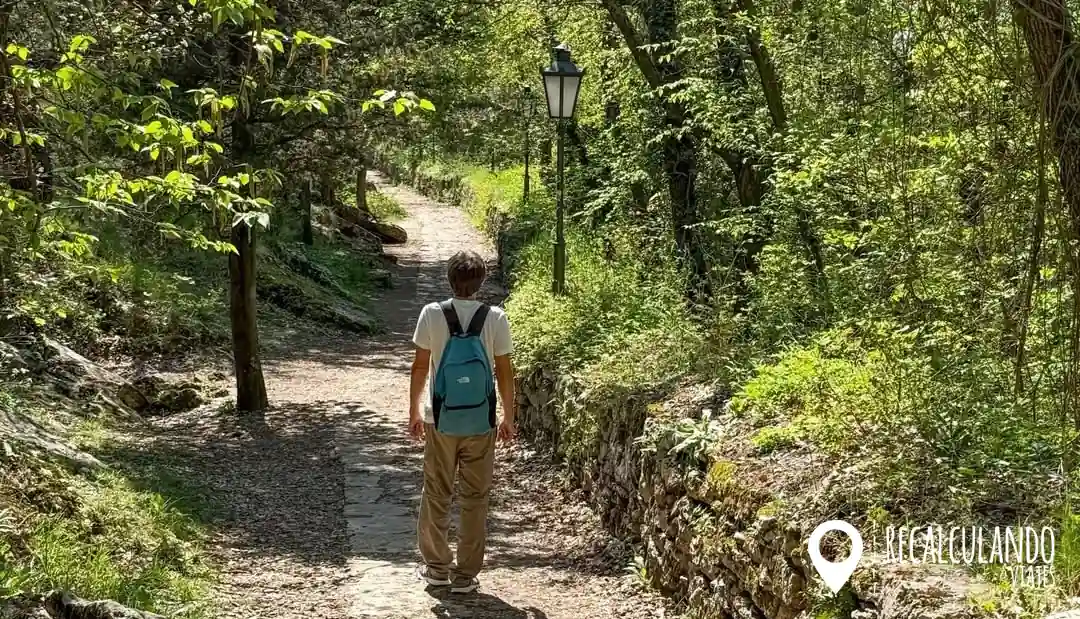
If you go by car, as we did, the most practical thing is to leave the car in one of the paid parking lots located at the base of Mount Titano or on the outskirts of the historic center. From there, you can walk up or take the cable car (funivia) that connects Borgo Maggiore with the historic city. We walked up, and it was an experience in itself: the path through the greenery and the views of the valley are beautiful.
🌍 Travel Insurance: 5% Off with IATI Seguros! 🌟
Take advantage of this offer and travel safe.
Parking and Logistics
There are several parking lots available. That said, depending on the season, some tend to fill up, so it’s best to go early.
The best parking in San Marino for us was Parking 9 (Parcheggio P9 on Google Maps): it has elevators and drops you off right by the main entrance, Porta San Francesco. It also has free restrooms. The price is 1.50 EUR per hour. We paid 4.50 for 4 hours.
Parking Prices in San Marino (2026 P9)
PARKING / STAY DURATION — RATES (€)
- Grace period: first 30 minutes of parking
- 30 minutes free
- 1 hour — €1.50
- 2 hours — €3.00
- From the 3rd to the 5th hour — €4.50
- Over 5 hours / daily rate — €8.00
Another option: The parking lots near the cable car stop in Borgo Maggiore (cable car price 7 euros round trip) or directly at the foot of the pedestrian access. The price is around 1-2 euros per hour. Once at the top, the entire historic city can be easily explored on foot.
Things to Do in San Marino: The Must-See Sights
The historic center of San Marino was declared a UNESCO World Heritage Site in 2008, along with Mount Titano. This already gives you an idea of the caliber of what you will find. But beyond the official recognition, what surprised us most was the authenticity of the place: medieval walls, cobblestone alleys, and fortresses that seem to have come out of a storybook.
1. The Three Towers: Guaita, Cesta, and Montale
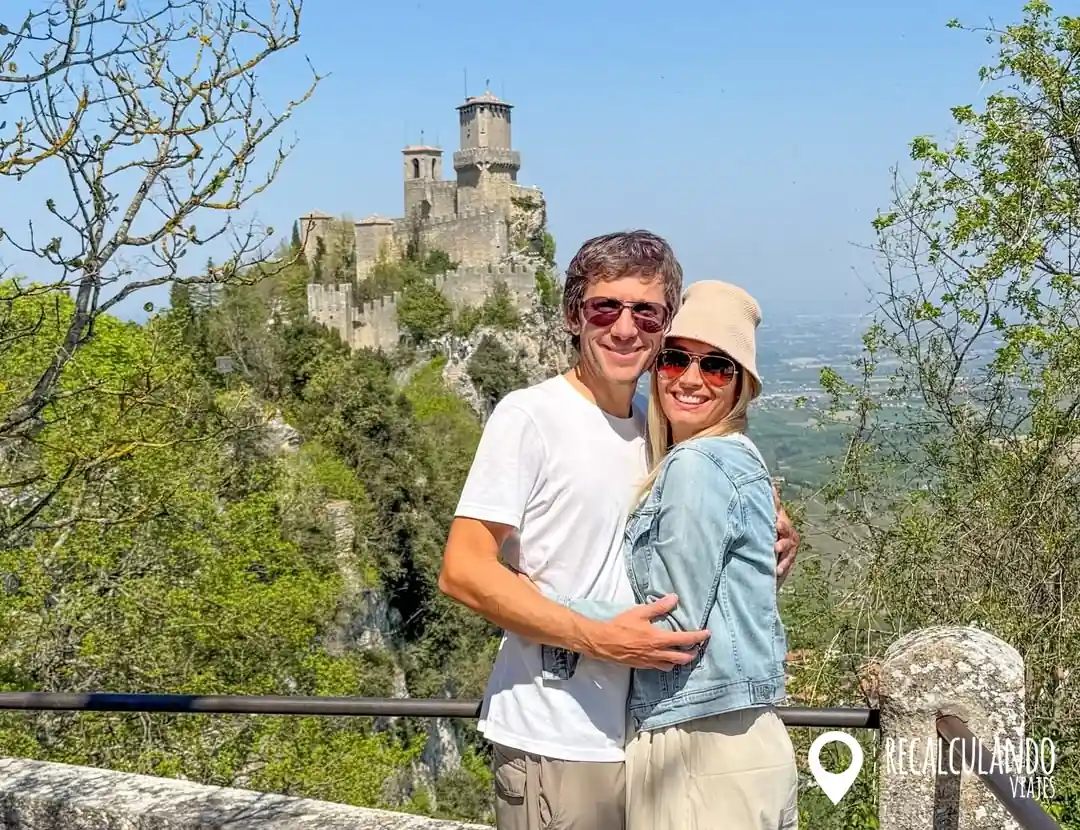
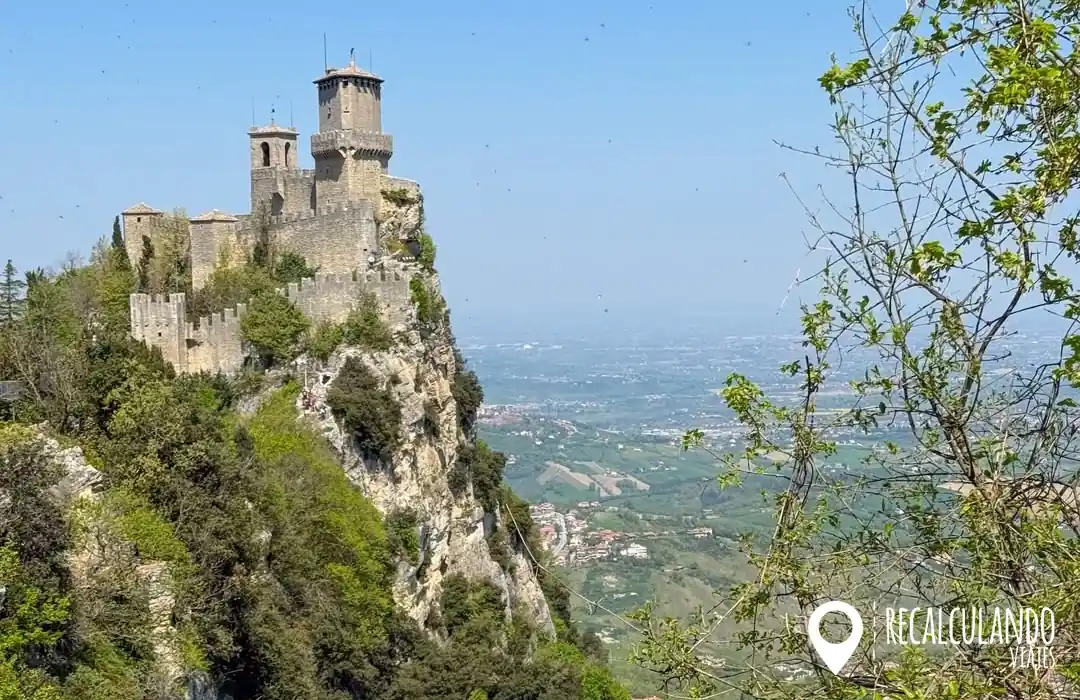
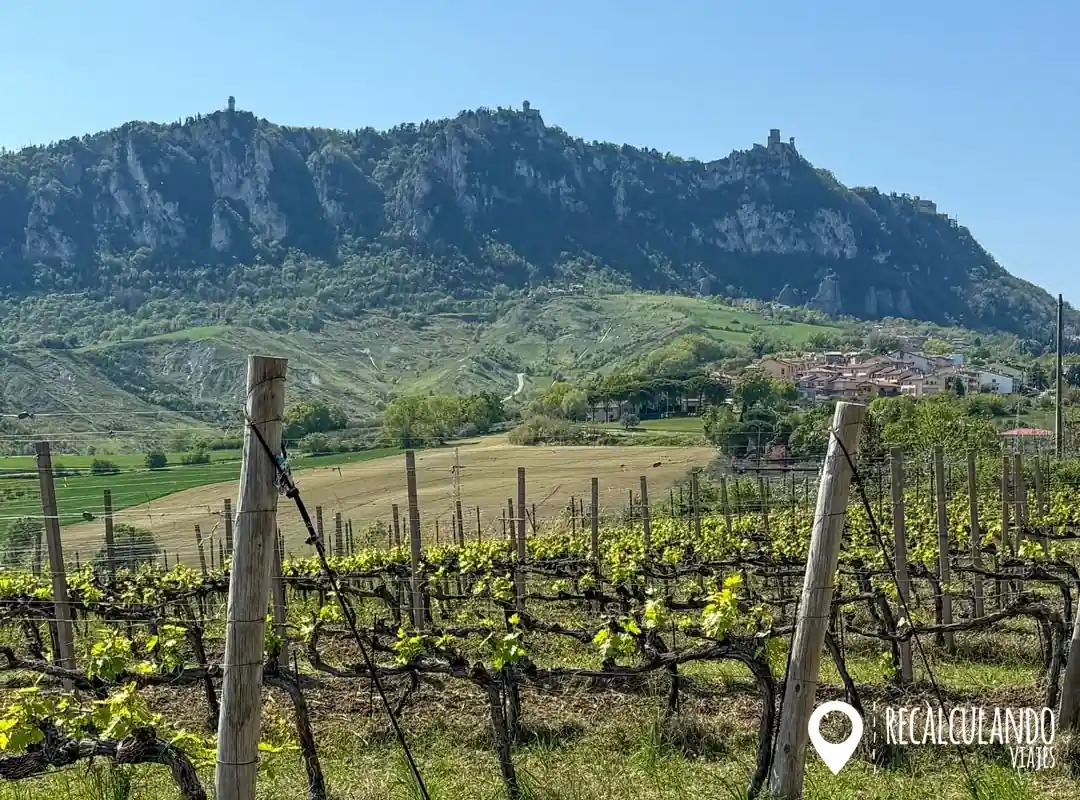
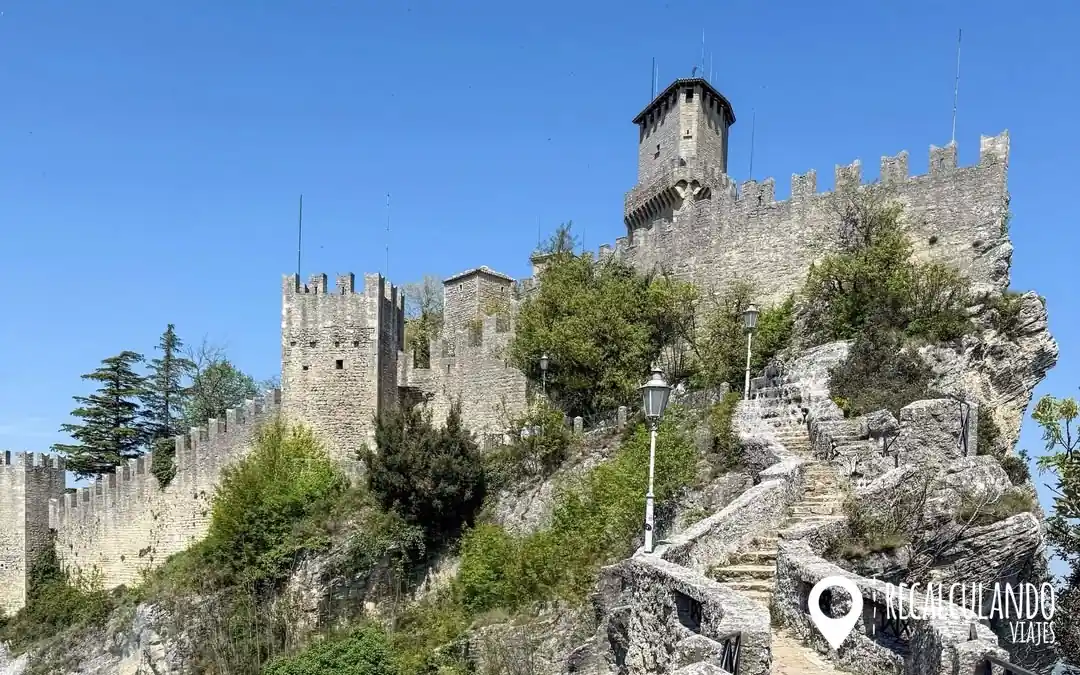
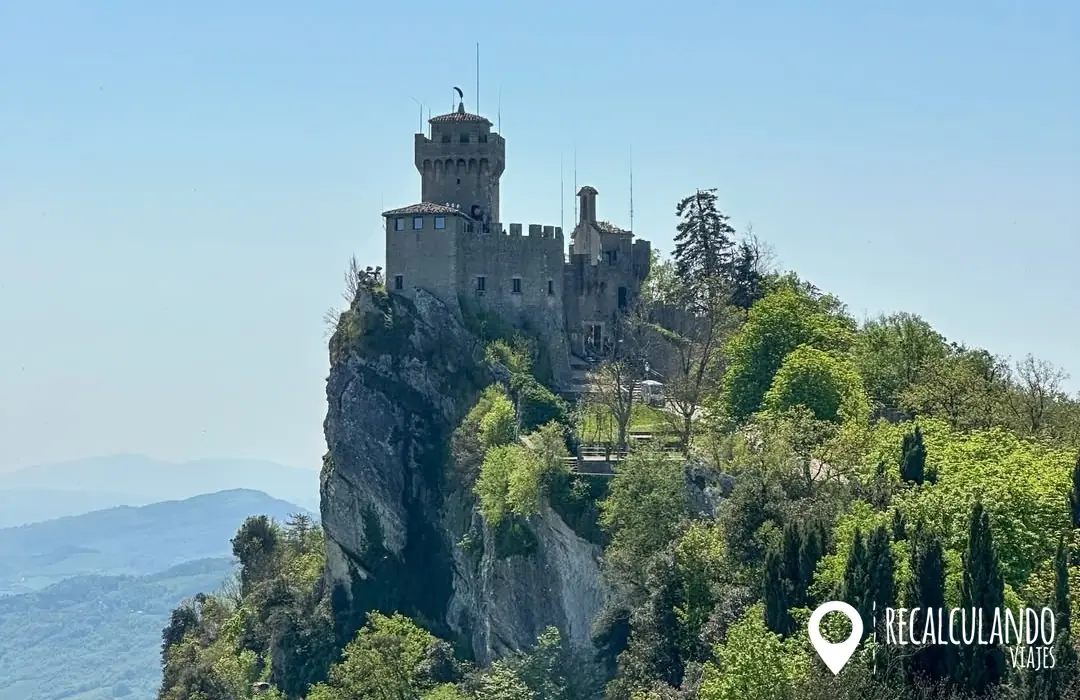
They are the absolute symbol of San Marino and appear on its flag. The three towers are built on the three peaks of Mount Titano and are visible from kilometers away.
- La Guaita (First Tower): It is the oldest, from the 11th century, and the most visited. You can enter and climb to the top for one of the best panoramic views of the country and the Italian countryside. There is a small entrance fee.
- La Cesta (Second Tower): Located at the highest point of Mount Titano, it houses a museum of medieval weapons. The walk between Guaita and Cesta is one of the most beautiful sections of all San Marino: you follow the wall with views on both sides of the mountain.
- La Montale (Third Tower): It is not open to the public, but it can be seen from the outside, and the path that leads to it is equally beautiful.
Entrance prices: Full ticket, 11 euros Includes admission to the first tower, second tower, Public Palace (if open), State Museum, St. Francis Art Gallery, National Gallery, and Stamp and Coin Museum.
From 4 PM: Ticket 5 euros
Updated info: Link
2. Piazza della Libertà and the Palazzo Pubblico
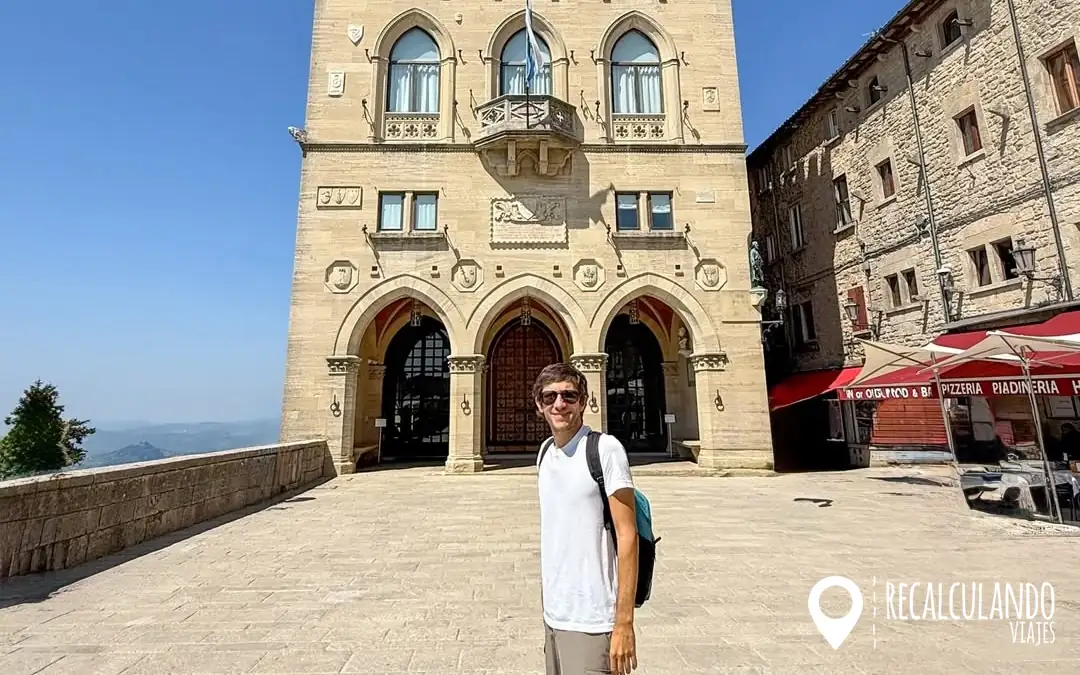
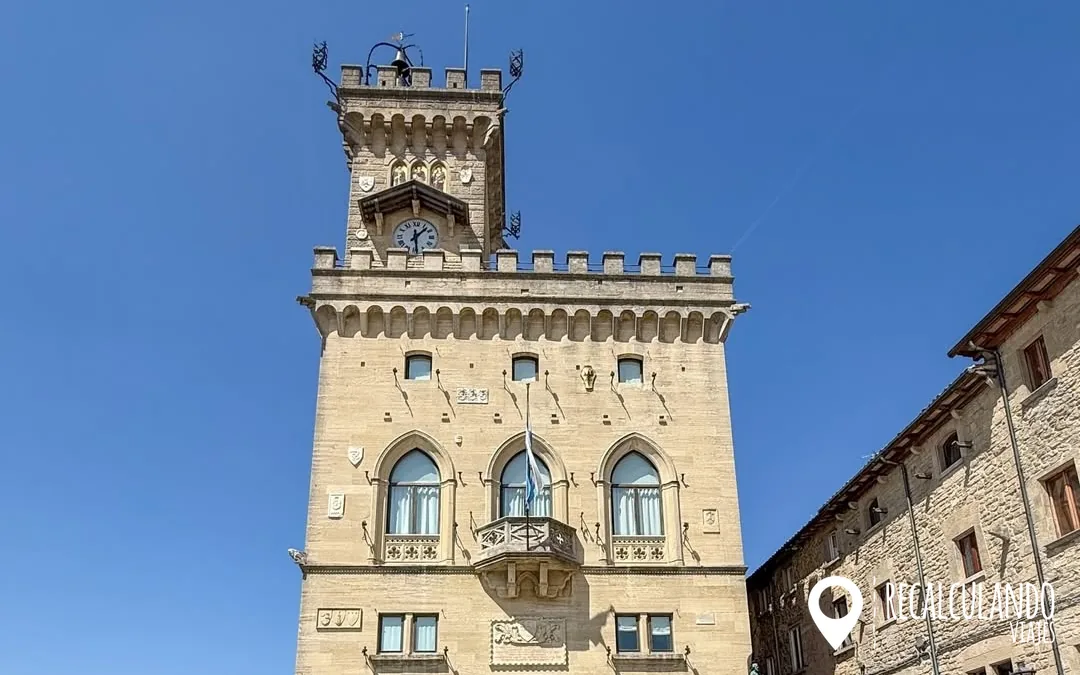
The main square of San Marino is the Piazza della Libertà (Liberty Square), the civic heart of the country. The Palazzo Pubblico—the seat of the Sammarinese government—dominates the square with its 19th-century neo-Gothic facade. If you happen to be there for the changing of the guard, which occurs at specific times depending on the season, it is a colorful and very photogenic spectacle. The square itself is small but very welcoming, with views over the valley and surrounded by restaurants and souvenir shops.
3. Via Consolare and the Historic Center
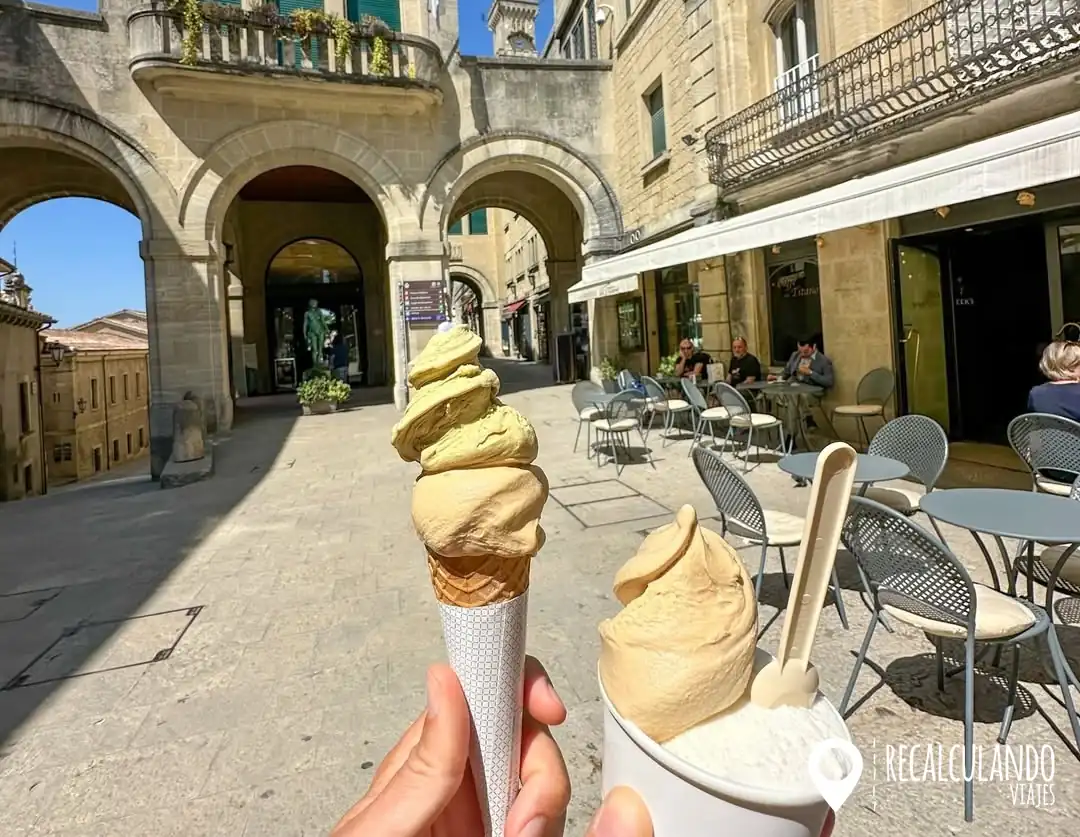
Wandering through the cobblestone streets of the historic center is, in itself, one of the great attractions of San Marino. Via Consolare is the main artery, filled with shops, ice cream parlors, and restaurants. You have to be patient with the number of tourists in high season, but if you arrive early—as we did, arriving at 9 AM—you can enjoy it with much more peace and quiet.
The alleys branching off the main street are perfect for getting lost for a while: you will find nearly intact medieval corners, small churches, and hidden viewpoints with spectacular views.
4. Basilica of the Saint and the Church of St. Francis
The Basilica di San Marino is the main religious temple of the country, dedicated to the founder, Saint Marinus. Built in neoclassical style in the 19th century, it houses the relics of the saint. Its interior is serene and worth visiting for at least a few minutes. A few steps away is the Church and Museum of St. Francis, which houses an interesting collection of sacred art, including paintings from the 14th to the 17th centuries.
5. The Viewpoints and the Walls
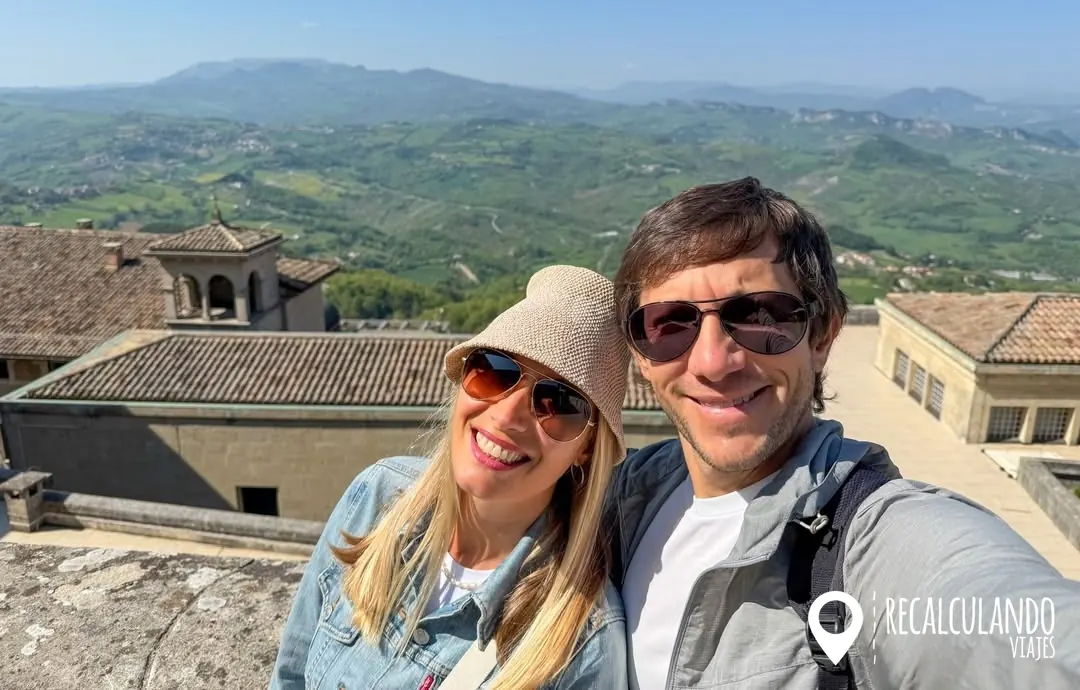
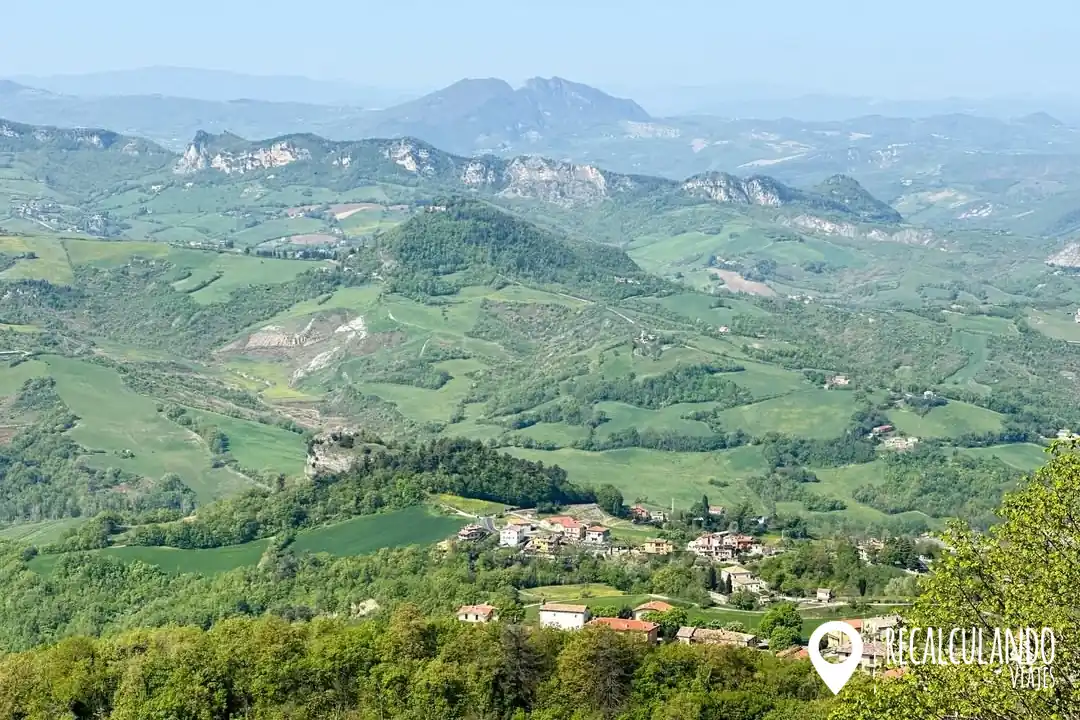
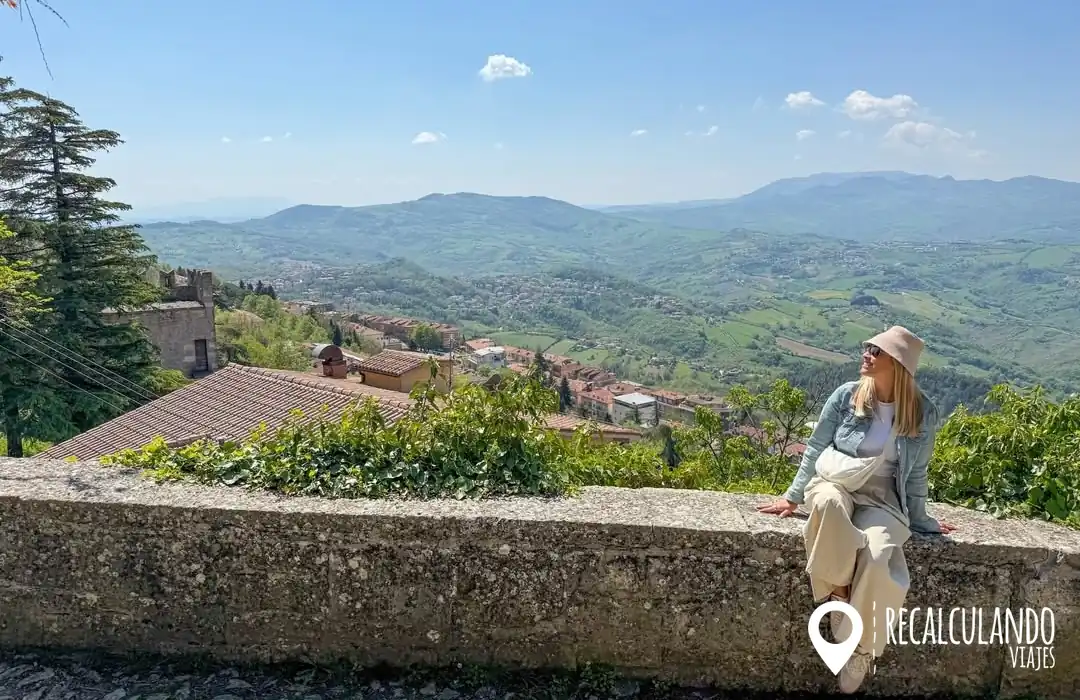
One of the greatest pleasures of San Marino is simply walking along the paths that surround the walls and stopping at every viewpoint. The views range from the Adriatic Sea—on clear days, like our April day, you can see it perfectly—to the Apennines to the west. It is impressive to think that you are standing in a microstate of barely 61 km² with such a panorama at your feet.
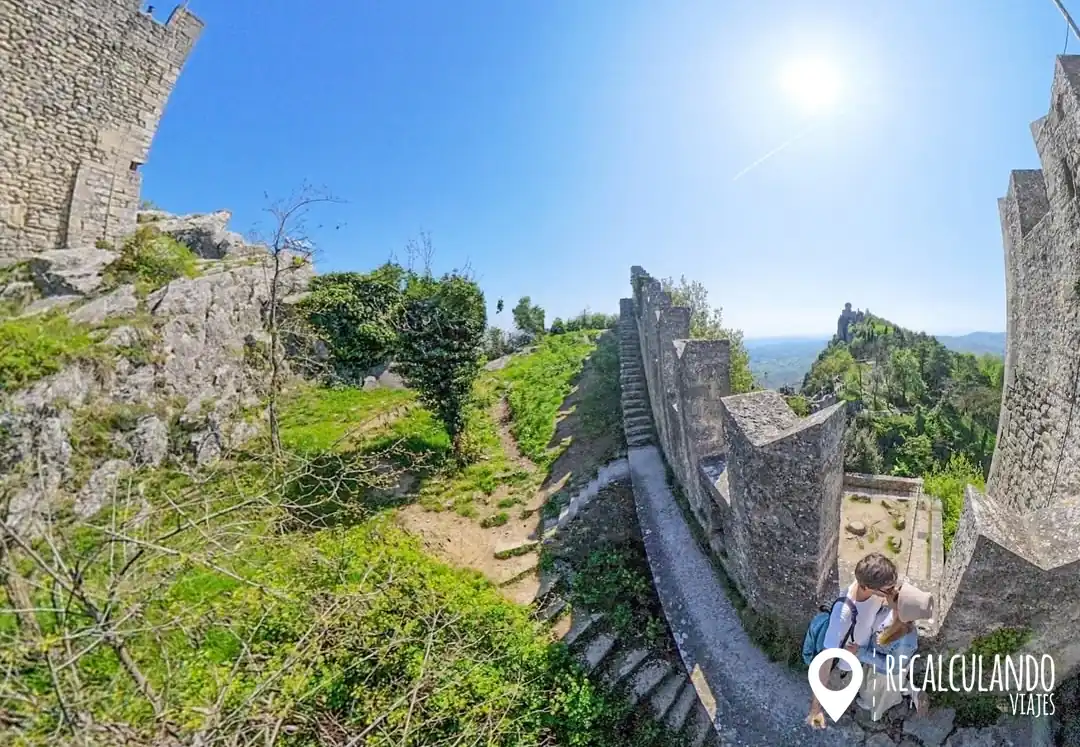
The Passo delle Streghe (Witches’ Pass), the path that connects Guaita to Cesta following the ridge of the wall, is one of the most memorable walks we did during our visit. It is not physically difficult, but it does require being careful on the steps in some sections.
👩⚕️👨⚕️ A must-have for stress-free travel! 🌎✈️ ➜ Get a Quote, Compare & Buy



Museums in San Marino That Might Interest You
If you have extra time or the weather is not good, San Marino has several interesting museums concentrated in the historic center.
- State Museum: Archaeological and historical collection covering everything from prehistory to the modern era.
- Museum of Medieval Weapons (in Cesta Tower): Interesting collection of armor, swords, and crossbows. Highly recommended if you enter the second tower.
- Museum of Curiosities: A bit quirkier but entertaining, especially if you are traveling with children.
- Stamp and Coin Museum: San Marino issues its own stamps and euro coins that are highly sought after by collectors. Worth it for those interested.
Where to Eat in San Marino
San Marino’s gastronomy shares many similarities with the cuisine of Emilia-Romagna, the surrounding Italian region. You will find fresh pasta, grilled meats, and good local wines. That said, being in such a touristy area, prices are higher than in nearby Italian cities.
An affordable alternative is to eat a piadina—the typical flatbread of the region, filled with cold cuts and cheeses. For something more formal, several restaurants offer the Sammarinese menu with typical dishes like fagioli con le cotiche (beans with pork rinds) or torta tre monti, the country’s most famous dessert.
Shopping and Souvenirs in San Marino
San Marino is known for having lower prices on some products thanks to its special tax regime. Especially for:
- Local spirits and wines: You can find the famous San Marino liquor at good prices.
- Tobacco: Much cheaper than in Italy. Many Italian tourists come specifically for this.
- Decorative weapons and medieval replicas: Miniature swords, shields, and armor are the most typical souvenirs.
- Stamps and euro coins: For collectors, these are a treasure.
- Leather purses and bags
Practical Tips for Visiting San Marino in One Day
Visiting San Marino in one day is perfectly feasible and is, in fact, how the vast majority of tourists do it. Here are our tips for making the most of your day:
- Arrive early: The first hours of the morning are the quietest. We arrived at 10 AM, and it was great at first (not high season), and quieter towards the third tower.
- Wear comfortable shoes: The streets are cobbled and generally uphill, with quite a bit of elevation gain. Thin-soled shoes will suffer.
- Set aside time for the towers: Between waiting, climbing, and the views, count on at least 2 hours just for the Guaita and Cesta towers.
- Carry some cash: Although many places accept cards, some smaller stalls and museums prefer cash.
- Avoid weekends in July and August: The influx of tourists in high season is very large. April, when we went, is ideal.
- Stamp your passport: San Marino offers an official passport stamp at certain designated points for a fee, even though it is part of the Schengen area. It is a unique souvenir.
San Marino in One Day: Suggested Itinerary
So you don’t waste time organizing yourself on the spot, here is the itinerary we followed, which worked perfectly:
- 9:00 AM – Arrival and parking. Walk up to the historic center.
- 9:30 AM – Walk through Piazza della Libertà and the Palazzo Pubblico.
- 10:00 AM – Visit to the Guaita Tower (First Tower). Climb to the top for panoramic views.
- 11:00 AM – Walk along the Passo delle Streghe to the Cesta Tower.
- 11:30 AM – Visit to the Cesta Tower and the Museum of Medieval Weapons. Reach the third tower (the walk through the greenery is very nice and relaxing).
- 12:30 PM – Lunch in the historic center.
- 2:00 PM – Free time exploring the alleys, shopping, and viewpoints.
- 3:30 PM – Descent and return.
How Much Does It Cost to Visit San Marino?
Entering San Marino is free, as there is no formal border. The main costs are the entrance fees to monuments and museums. As a guideline:
- Combined entrance to Guaita + Cesta towers: around 11 euros per person
- Parking: 1-2 euros per hour
- Cable car (if you use it): around 7 euros round trip
- Lunch: between 10 and 20 euros per person depending on the restaurant type
In total, you can have a very complete visit for less than 40-50 euros per couple including food, which is very good for a European destination.
Travel Insurance for Visiting San Marino and Italy
If you are planning a trip through Italy and the surrounding areas—or a longer tour through Europe—don’t forget to purchase good travel insurance before you leave. We always travel with IATI Seguros, which has very complete coverage for travelers. Plus, with our exclusive link, you can get a 5% discount that stacks with other active promotions.
→ Buy your travel insurance with IATI and use our exclusive 5% discount

Where to stay in San Marino: Map and Prices
Frequently Asked Questions about Things to Do in San Marino
How much time is needed to visit San Marino?
A full day is more than enough to see the main attractions: the three towers, the historic center, the Piazza della Libertà, and the viewpoints. If you want to visit several museums in detail, you might need a little more time, but most travelers do it as a day trip from Rimini or Riccione.
Is a passport needed to enter San Marino?
There is no passport control at the border with Italy, as San Marino is part of the Schengen area de facto even if it is not an EU member. However, you can get an official passport stamp at designated points within the country, which is a very popular souvenir among visitors.
How to get to San Marino from Rimini?
From Rimini, you can get there by direct tourist bus (Bonelli Bus), which operates in high season and takes approximately 1 hour. You can also drive in about 30-40 minutes along the SS72. There is no direct train to San Marino.
What is the best time to visit San Marino?
Spring (April-May) and autumn (September-October) are the best times: pleasant weather, fewer tourists than in summer, and more affordable prices. Summer is high season and the historic center can get very crowded. In winter, some tourist services have reduced hours.
What currency is used in San Marino?
San Marino uses the euro as its official currency, although it issues its own euro coins that are highly sought after by collectors. Sammarinese coins have the same value as Italian ones but are much harder to find outside the country.
Can you visit San Marino in a day from Riccione?
Totally, and that is exactly what we did. Riccione is just 40-50 minutes by car from San Marino. You can leave at 9 AM, spend the whole day, and be back in time for dinner. It is one of the best excursions from the Italian Adriatic Riviera.
Is it worth visiting San Marino?
Absolutely yes. It might seem like a very small, touristy destination at first, but the views from Mount Titano, the medieval architecture, and the curiosity of being in one of the oldest countries in the world make it a truly special experience. We left delighted and recommend it without hesitation.
Conclusion: San Marino, a Surprisingly Great Destination
Knowing Things to do in San Marino is the first step to making the most of this unique destination. From the imposing medieval towers that crown Mount Titano to the cobblestone alleys with views of the Adriatic, San Marino is much more than a simple tourist spot: it is a place with centuries of history and an identity of its own that can be felt in every corner.
We arrived without very high expectations and left completely in love. If you are planning a trip along the Italian Adriatic coast or northern Italy in general, don’t forget to include San Marino in your route. A day trip from Riccione, Rimini, or even Bologna is more than enough to discover everything it has to offer.
Have you already visited San Marino? Do you have any questions about the trip? Leave us your comment below, we love reading them!
If you found this guide useful, you can also read our articles on Thing to do in Strasbourg, Things to do in Florence, what to see in Hallstatt and our complete guide to France. And if you still don’t have your travel insurance, don’t forget to read our guide to the best travel insurance for Europe.
ℹ️ **Full Transparency**
This article contains affiliate links. If you book through these links, we may receive a small commission at no additional cost to you. We only recommend services we use on our own trips and trust. This helps us keep this blog free and continue creating useful content for you. Thanks for your support!
🔗 Resources & Useful Links for your trip to San Marino
Do you have questions or want to add your own recommendations on what to see in San Marino?
💬 Leave your comment or write to us, we love reading about the experiences of other travelers.
Thank you so much for being part of this adventure!— Nanu & Facu 🌎 | Recalculando Viajes 💜